Establishing and maintaining a backyard orchard requires careful planning, particularly when it comes to irrigation. Watering is crucial for tree health, fruit production, and overall orchard success. There are several irrigation methods to choose from, each with its advantages and drawbacks. In this article, we’ll explore the pros and cons of three common irrigation methods: drip irrigation, overhead irrigation, and hand watering. Additionally, we’ll discuss the importance of watering newly transplanted trees and the role of irrigation during fruit production to maximize yields. 🍏🍊
Drip Irrigation 💦
Drip irrigation is a highly efficient method that delivers water directly to the root zone through a network of tubing and emitters.
Pros ✅:
- Water efficiency – Minimizes water waste by targeting the root zone, reducing evaporation and runoff.
- Reduced weed growth – Since water is applied directly to the trees, surrounding weeds receive less moisture, reducing competition.
- Minimizes disease risk – Drip irrigation keeps the foliage dry, decreasing the chances of fungal diseases.
- Customizable – Can be adjusted based on tree needs, soil type, and weather conditions.
Cons ❌:
- Initial setup cost – Requires investment in tubing, emitters, and possibly a filtration system.
- Maintenance – Emitters can clog over time due to mineral buildup or debris.
- Limited coverage – Does not provide additional cooling benefits or humidity that some trees may benefit from.
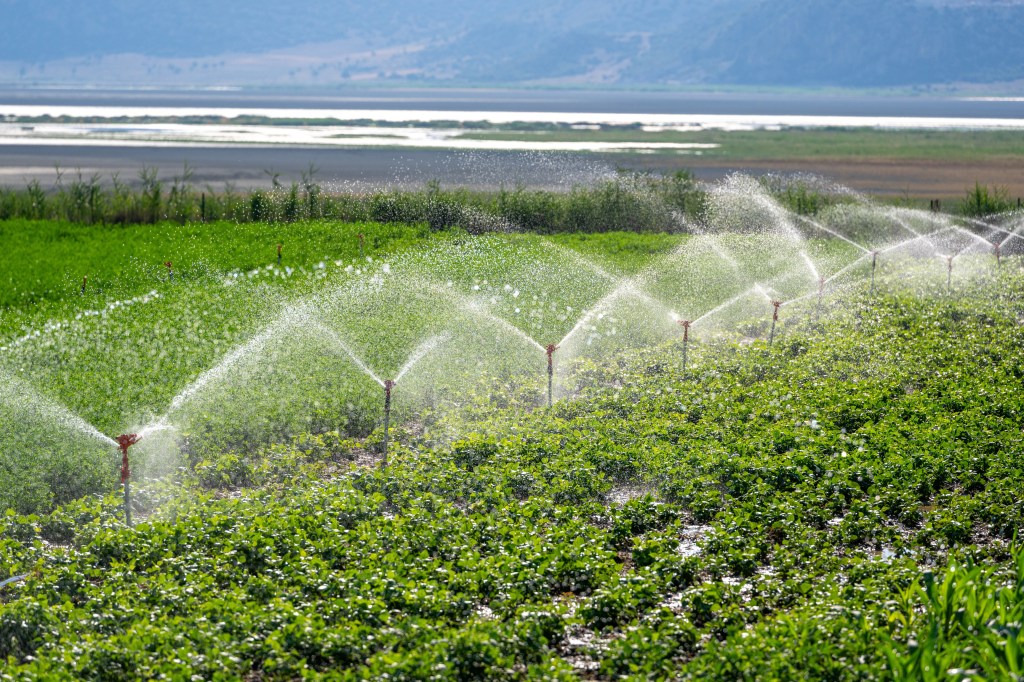
Overhead Irrigation 🌧️
Overhead irrigation involves sprinklers or spray heads that distribute water over a broad area, mimicking rainfall.
Pros ✅:
- Even coverage – Useful for watering multiple trees at once, ensuring uniform moisture distribution.
- Cooling effect – Helps reduce heat stress on trees during hot weather.
- Easier to set up – Can be integrated with an existing sprinkler system for convenience.
Cons ❌:
- Water waste – Increased evaporation and wind drift reduce efficiency.
- Encourages disease – Wet foliage can promote fungal and bacterial diseases such as powdery mildew and fire blight.
- Can lead to runoff – If applied excessively, water may run off before penetrating deeply into the soil.
Hand Watering 🚿
Hand watering with a hose or watering can allows for a personal, controlled approach to irrigation.
Pros ✅:
- Targeted watering – Ensures water reaches where it’s needed most, especially for young or newly transplanted trees.
- Minimal equipment required – No special setup is needed beyond a hose or watering can.
- Opportunity for observation – Allows gardeners to check trees for pests, disease, and soil moisture conditions while watering.
Cons ❌:
- Time-consuming – Requires frequent attention, particularly during hot weather.
- Inconsistent watering – The effectiveness depends on the gardener’s diligence and knowledge of tree needs.
- Not practical for large orchards – Can be overwhelming when managing multiple trees.
The Importance of Watering After Transplanting 🌳
Newly transplanted trees are vulnerable to transplant shock, where roots struggle to establish in the new soil. Proper watering is essential to improve their survival rate. Here’s why:
- Encourages root establishment – Consistent moisture helps roots grow deeper and stabilize the tree.
- Reduces stress – Hydrated trees experience less wilting and leaf drop.
- Boosts nutrient uptake – Water helps dissolve nutrients, making them more accessible to developing roots.
For the first few weeks, frequent deep watering is recommended. A slow soak around the root ball ensures moisture reaches deep into the soil, where roots can access it. 💧🌱
Watering During Fruit Production 🍎🍑
Adequate irrigation during fruit development is crucial for achieving high yields and quality produce. Proper watering ensures:
- Consistent fruit sizing – Water stress can lead to small or misshapen fruit.
- Prevention of fruit drop – Insufficient water can cause trees to shed fruit prematurely.
- Enhanced flavor and texture – Well-watered fruit trees produce juicy, flavorful fruit. 🍉🍋
During fruit production, it’s best to maintain steady moisture levels rather than allowing soil to dry out completely. Sudden fluctuations in soil moisture can lead to issues such as fruit cracking in apples and tomatoes. 🍏
Conclusion 🌿
Choosing the right irrigation method for your backyard orchard depends on factors like tree variety, climate, and available resources. Drip irrigation is an excellent choice for efficiency and disease prevention, while overhead irrigation offers broad coverage but can increase disease risks. Hand watering provides control but requires significant time investment. Regardless of the method, ensuring proper watering during transplanting and fruit production is essential for orchard success. By tailoring your irrigation strategy, you can optimize tree health and enjoy a bountiful harvest year after year. 🍇🍈
#GardeningTips #OrchardCare #DripIrrigation #FruitTrees #WateringWisely #SustainableGardening #BackyardOrchard #HomegrownFruit #GardenLove

 Ty Ty Plant Nursery's Blog
Leave a comment