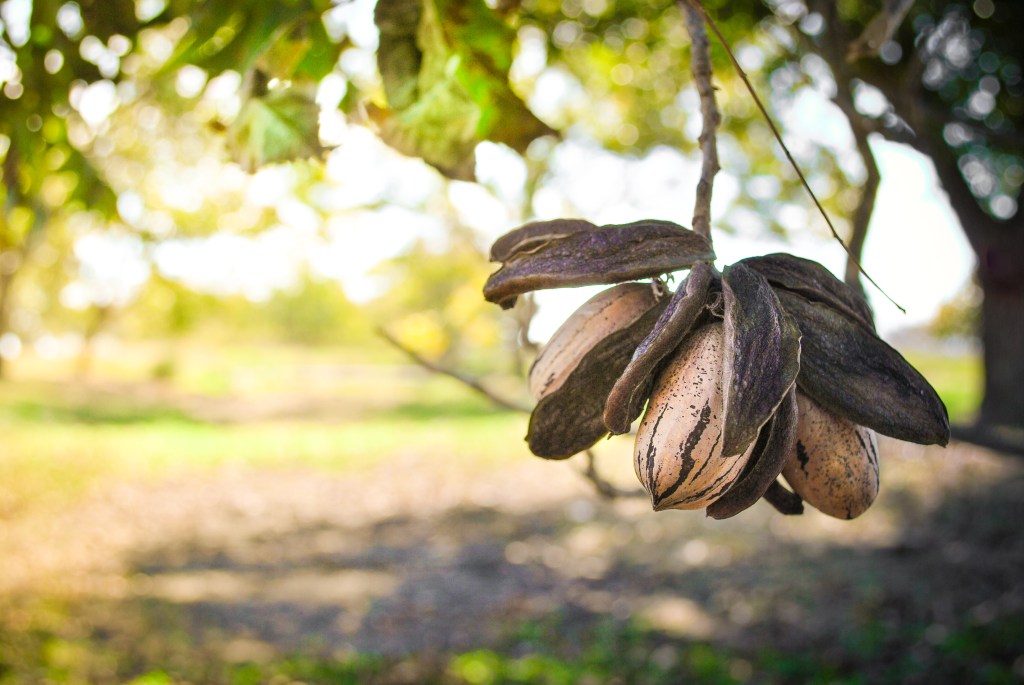
Pecan trees are a treasured part of many southern and backyard orchards—but even these hardy giants need a little spring prep to stay healthy, productive, and pest-free. Getting your pecan trees ready now can lead to stronger growth, better pollination, and a heavier nut harvest later this year. Here are the top 5 things to do to your pecan trees to get them ready for spring!
1. Prune for Structure, Strength & Airflow ✂️
Late winter to early spring is the best time to prune pecan trees before they leaf out.
✅ Remove dead, damaged, or diseased branches
✅ Thin out crossing or rubbing limbs
✅ Focus on developing a strong central leader and wide angles for major branches
✅ Open up the canopy for better sunlight and airflow
This will reduce pest and disease issues and help the tree focus energy on productive limbs.
2. Clean Up Debris & Old Nuts Around the Tree 🍂
Clearing the area under and around your tree is essential to reduce overwintering pests and diseases.
✅ Rake up fallen leaves, branches, and leftover nuts
✅ Remove and destroy any mummified nuts or husks
✅ Refresh mulch to help conserve moisture and control weeds
✅ Keep mulch 2–3 inches away from the trunk to prevent rot
A clean orchard floor is the first line of defense against pecan weevils, scab, and fungal problems.
3. Apply Dormant Oil & Preventative Sprays 🌿🛡️
Before bud break, apply dormant oil spray to help control pests like scale, mites, and overwintering insects.
✅ Apply on a calm, dry day when temps are above 40°F
✅ Follow up with a zinc-based or copper spray if you’ve had disease issues
✅ Never spray on new foliage or during bloom
Preventive care now can save you serious headaches in summer.
4. Fertilize with the Right Nutrients 💪
Pecan trees are heavy feeders, and spring is the time to give them a boost.
✅ Apply a balanced fertilizer (10-10-10 or 16-16-16) in early spring
✅ Use Nutra Pro Fertilize Packs for slow-release nutrition
✅ Broadcast fertilizer around the drip line, not at the base
✅ Consider supplementing with zinc sulfate, which is critical for pecan tree health
Fertilizing early supports flower and nut development.
5. Check for Pollination Needs 🌰🐝
Many pecan trees require cross-pollination from a different type (Type I vs. Type II) to produce a good nut crop.
✅ Confirm you have compatible pollinator varieties nearby
✅ Plan to plant an additional tree if needed
✅ Encourage pollinators by planting wildflowers or native plants nearby
Proper pollination = more nuts in the fall!
Final Thoughts 🌞
Spring is a busy time for gardeners and growers—and your pecan trees are no exception. With some timely pruning, cleanup, fertilizing, and pest prevention, you’ll set the stage for a healthy, productive growing season.
🛒 Need pecan trees, fertilizers, or sprays? Shop Ty Ty Plant Nursery, LLC for top-quality trees and orchard essentials—delivered fast and backed by a FREE One-Year Plantsurance Policy! 🌿✅
#PecanTreeCare #SpringOrchardPrep #TyTyPlantNurseryLLC #GrowYourOwnNuts #BackyardOrchard #PruneAndFertilize #OrganicGardening #NontoxicGardening #CrunchyMom #EdibleGarden #HealthyHomegrown #PecanHarvest #SouthernGardening #FruitTreeTips #RealFoodMama #NutTreeCare

 Ty Ty Plant Nursery's Blog
Leave a comment