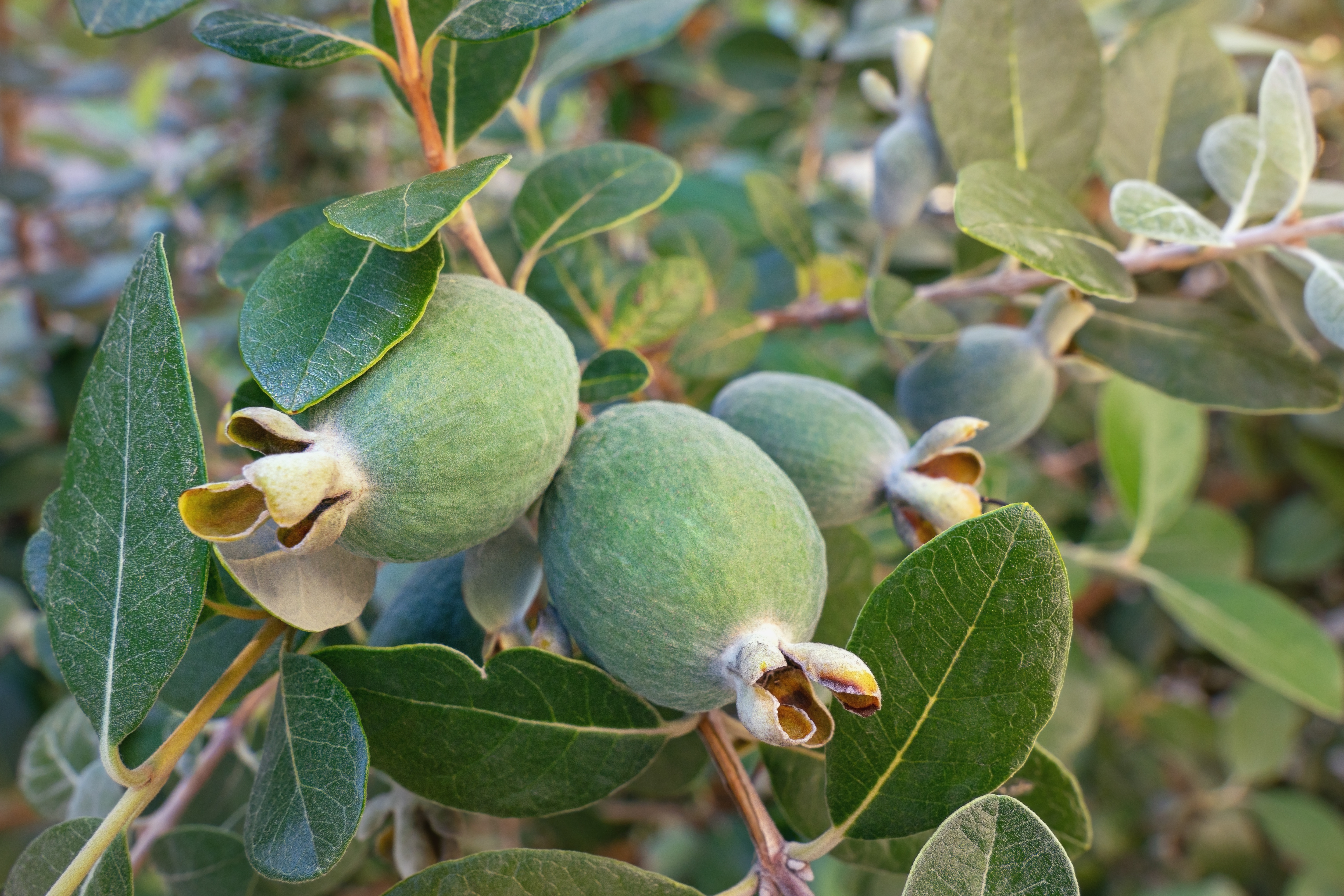
Pineapple guava (Feijoa sellowiana) is a tropical-tasting, evergreen fruit that’s as ornamental as it is delicious. With its fragrant flowers, minty-sweet fruit, and adaptability to container growing, pineapple guava is perfect for patios, balconies, or backyard landscapes. But to enjoy a strong spring flush and fruitful summer, your plant needs the right care as the season begins. Here are the top 5 things to do to your pineapple guava plant to get it ready for spring!
1. Prune for Shape and Flower Production ✂️
Pineapple guava plants respond well to pruning, especially in early spring before vigorous new growth starts.
✅ Remove any dead, damaged, or leggy branches
✅ Thin out crowded stems to improve airflow and light penetration
✅ Shape your plant to encourage bushiness and contain size (especially in pots)
✅ Avoid heavy pruning, which can delay fruiting
A tidy, well-shaped plant will flower more consistently and fruit more reliably.
2. Clean Up and Refresh Mulch 🍂
As winter fades, it’s important to clear the area around your plant and give it a clean foundation for new growth.
✅ Rake up fallen leaves or old mulch from around the base
✅ Pull weeds that may compete for nutrients or moisture
✅ Add a fresh 2–3 inch layer of mulch (bark, compost, or straw)
✅ Keep mulch a few inches from the trunk to prevent rot
Mulch helps conserve moisture, regulate soil temperature, and reduce weeds as spring warms up.
3. Feed with Balanced Fertilizer for Healthy Growth 🍽️
Spring feeding gives pineapple guava a strong start as it enters its most active growth phase.
✅ Apply a balanced fertilizer (10-10-10) or a fruit tree formula
✅ For potted plants, use slow-release options like Nutra Pro Fertilize Packs
✅ Repeat every 6–8 weeks during the growing season
✅ Don’t overfeed—too much nitrogen can delay flowering
Feeding now supports flower bud formation and lush foliage.
4. Water Consistently as Temperatures Rise 💧
Pineapple guava is drought-tolerant once established but performs best with steady moisture during active growth.
✅ Begin regular watering as the weather warms and new leaves emerge
✅ Water deeply, but allow the top few inches to dry between waterings
✅ Use Soil Moist Transplant Mix in containers to retain moisture and reduce watering frequency
✅ Avoid soggy roots by ensuring your pot or planting site has excellent drainage
Consistent moisture is especially important during flowering and fruiting.
5. Prepare for Flowering and Pollination 🌸🐝
Pineapple guava flowers are edible, beautiful, and lead to fruit—but only if pollinated.
✅ Encourage pollinators like bees and hummingbirds with companion flowers nearby
✅ For container plants or poor pollination areas, consider hand-pollinating flowers with a soft brush
✅ If your plant is young, don’t worry—fruit production typically begins 3–4 years after planting
Boosting pollination efforts now can lead to a better harvest later.
Final Thoughts 🌞
Pineapple guava is a low-fuss plant that rewards early-season prep with sweet fruit and ornamental beauty. With just a little pruning, feeding, watering, and attention to pollination, your plant will thrive and produce well into the season.
🛒 Looking to add pineapple guava to your patio or upgrade your care routine? Shop Ty Ty Plant Nursery, LLC for high-quality plants and garden essentials—plus a FREE One-Year Plantsurance Policy with every order! 🌿✅
#PineappleGuavaCare #SpringGardenPrep #GrowFeijoa #TyTyPlantNursery #BackyardOrchard #FruitTreeCare #SmallSpaceFruit #EdibleContainerGarden #CrunchyMomLife #OrganicGardening #HealthyHomegrown #GrowYourOwnFruit #UrbanHarvest #SunroomGarden #SlowLiving #NontoxicGardening #FruitFreedom #RealFoodMama #TropicalFruitAtHome #PatioOrchard

Leave a Reply