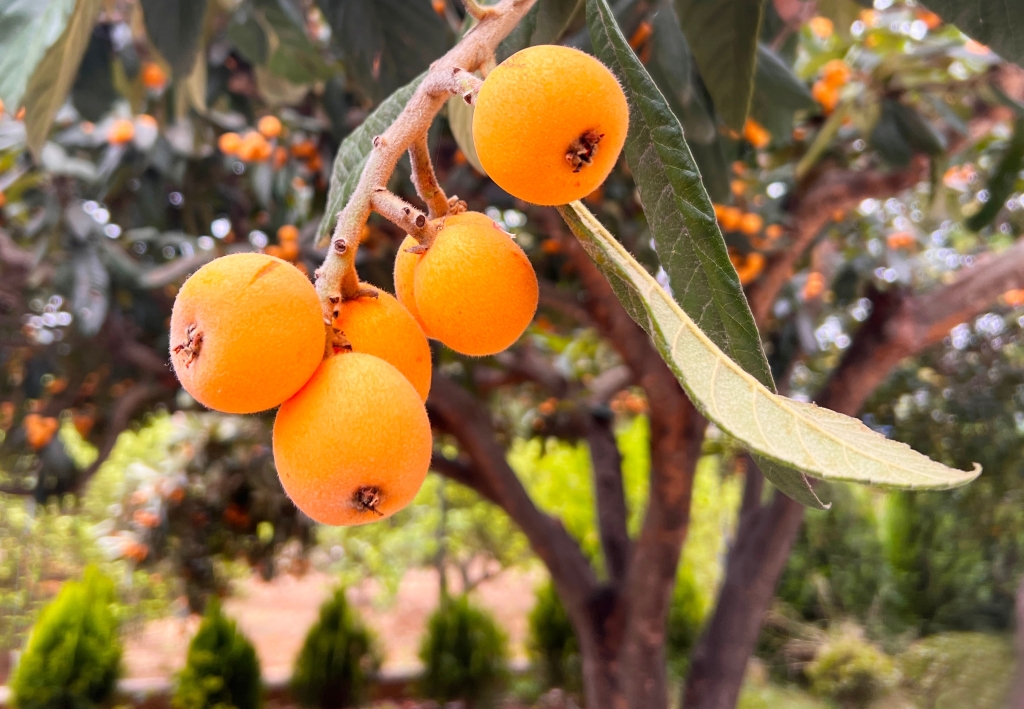
Loquat trees (Eriobotrya japonica) are early bloomers that often set fruit in late winter or early spring, making spring prep absolutely essential! Whether you’re growing a loquat tree in the ground or in a container, these sweet, tropical-tasting fruits need the right care to ensure healthy growth, successful fruit set, and vibrant blooms. Here are the top 5 things to do to your loquat tree to get it ready for spring.
1. Prune for Shape and Airflow ✂️
Loquats respond well to light pruning, especially in early spring after fruiting or bloom.
✅ Remove any dead, broken, or frost-damaged branches
✅ Thin the canopy to improve airflow and sunlight penetration
✅ Maintain a strong structure and compact shape—especially important for container-grown trees
✅ Avoid heavy pruning while fruit is forming
Pruning promotes better fruit quality and helps keep your tree productive and manageable.
2. Clean the Ground and Refresh Mulch 🍂
A clean growing area helps reduce disease and pest issues.
✅ Rake up fallen leaves, spent flowers, and any fruit remnants
✅ Weed around the base of the tree to reduce competition
✅ Apply 2–3 inches of fresh mulch to insulate roots and retain moisture
✅ Keep mulch a few inches away from the trunk to prevent rot
Mulch also protects shallow roots and keeps the soil temperature stable as spring warms up.
3. Feed for Lush Growth and Sweet Fruit 🍽️
Loquat trees are moderate feeders, and spring is the ideal time to give them a nutritional boost.
✅ Apply a balanced fertilizer (10-10-10 or similar) in early spring
✅ For container-grown trees, use Nutra Pro Fertilize Packs for steady, slow-release feeding
✅ Add compost or organic matter to enrich the soil naturally
✅ Water in your fertilizer to help it absorb
Feeding now encourages healthy foliage and maximizes fruit set if your tree is blooming or developing fruit.
4. Water Consistently as Weather Warms 💧
Loquats don’t like soggy roots, but they do need consistent watering, especially in pots.
✅ Water deeply once or twice a week depending on soil and weather
✅ Allow the top few inches of soil to dry slightly between waterings
✅ Use Soil Moist Transplant Mix in containers to reduce watering frequency and prevent stress
✅ Increase watering if your tree is fruiting to avoid fruit drop
Even moisture is especially important as your tree starts actively growing.
5. Watch for Pests, Frost Damage & Pollination Needs 🐛❄️🌸
Spring is a time of transition—make sure your tree is healthy and ready to fruit.
✅ Inspect for overwintering pests like aphids, scale, or caterpillars
✅ Check for signs of frost damage, especially on new leaves or blooms
✅ Hand-pollinate flowers on indoor or patio trees using a soft brush if bees are scarce
✅ Remove any malformed or shriveled fruits to help the tree focus on the best ones
Staying proactive now helps your tree stay vigorous and productive into summer.
Final Thoughts 🌞
Loquat trees are hardy, productive, and beautiful—but a little spring maintenance makes all the difference in how they grow and fruit. With a few simple steps, you’ll be on your way to a healthy tree and a delicious harvest of tropical-flavored loquats in no time.
🛒 Need loquat trees, fertilizer, or soil supplies? Shop Ty Ty Plant Nursery, LLC for top-quality plants and gardening essentials—plus a FREE One-Year Plantsurance Policy with every tree! 🌿✅
#LoquatTreeCare #SpringGardenPrep #GrowLoquats #TyTyPlantNurseryLLC #BackyardOrchard #CrunchyMom #FruitTreeTips #HealthyHomegrown #SmallSpaceFruit #EdibleGarden #RealFoodMama #FruitFreedom #NontoxicGardening #SunroomGarden #SlowLiving #GrowYourOwnFruit #OrganicGardening

 Ty Ty Plant Nursery's Blog
Leave a comment