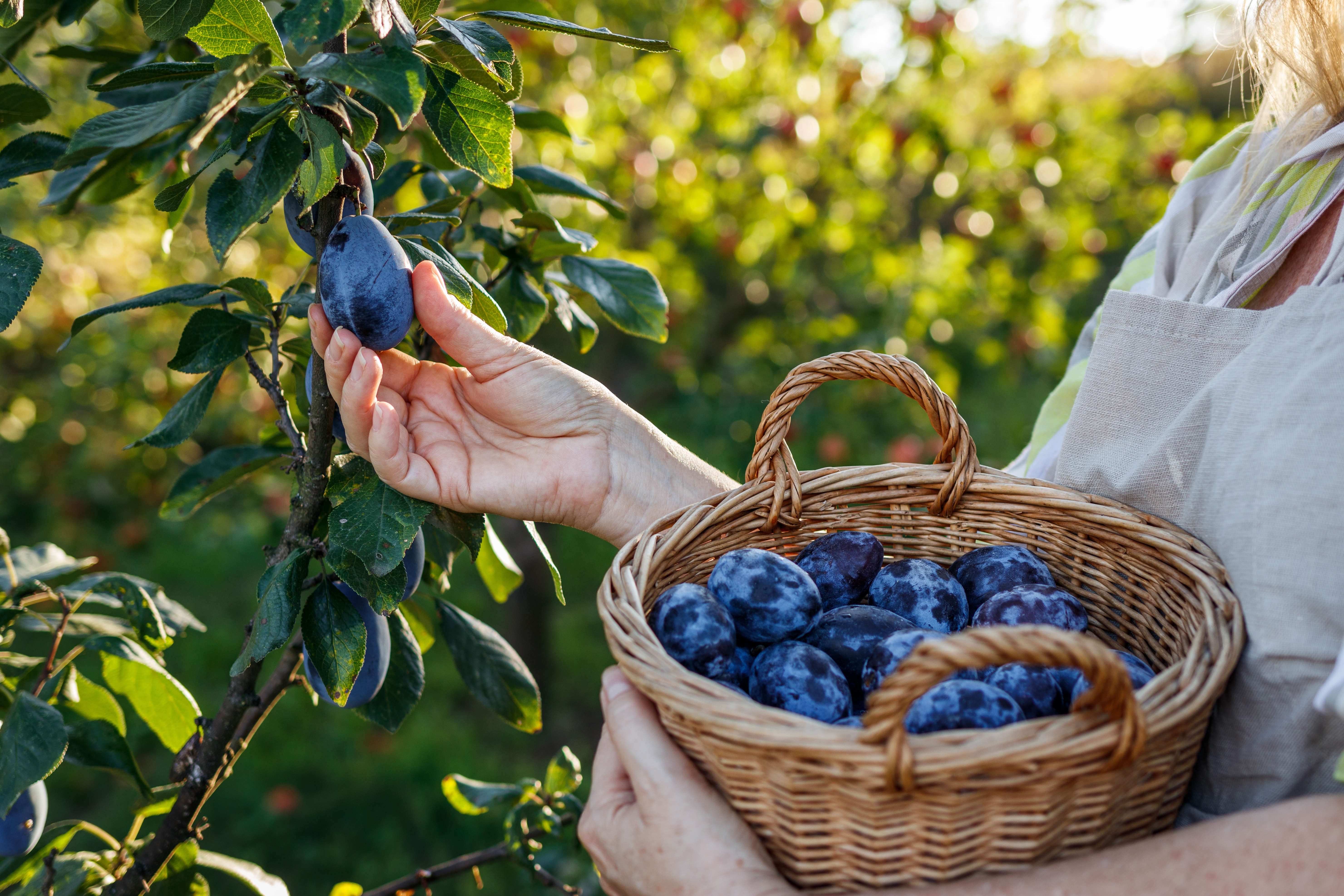
Plum trees are one of the most enjoyable fruit trees you can plant because they give you so much variety in one category. Some plums are sweet and juicy for fresh eating. Some are tart and bold for preserves, baking, and sauces. Some are classic European-style plums, some are Japanese-type plums, and some are hybrids that bring together the best of both worlds.
And that is exactly why plum trees need a little planning. Not every plum behaves the same way. Some are self-pollinating. Some are only partially self-pollinating. Some need a second plum nearby for the best crop. Some are better suited to cooler climates, while others are much more comfortable in warm southern zones. That is why the smartest way to plan plums is by USDA Plant Hardiness Zone.
The USDA Plant Hardiness Zone Map is based on the average annual extreme minimum winter temperature. That minimum temperature affects how cold your winter gets, how early spring wakes up, and how well your plum tree establishes after planting. In this guide, we’ll go zone-by-zone from USDA Zone 3 through USDA Zone 11 and answer:
- When to plant plum trees in your zone and when to buy them
- Why colder zones should pre-order because many people plant in May
- Which plum varieties match your zone best
- How pollination works with self-pollinating, partially self-pollinating, and cross-pollinating plums
- How to plant bare-root plum trees and care for them in year one
All plum varieties in this article come only from Ty Ty Nursery’s Plum Trees category page and the individual variety pages listed there:
Plum Trees for Sale Online at Ty Ty Nursery

USDA Zone Temperature Ranges (Zones 3–11)
- USDA Zone 3: -40°F to -30°F
- USDA Zone 4: -30°F to -20°F
- USDA Zone 5: -20°F to -10°F
- USDA Zone 6: -10°F to 0°F
- USDA Zone 7: 0°F to 10°F
- USDA Zone 8: 10°F to 20°F
- USDA Zone 9: 20°F to 30°F
- USDA Zone 10: 30°F to 40°F
- USDA Zone 11: 40°F to 50°F
Before We Go Zone-by-Zone: The 3 Plum Rules That Decide Your Harvest
If you want plums and not just a nice-looking tree, these three rules matter more than anything:
- Rule 1: Plant the plum that fits your zone. Every plum on Ty Ty’s page starts at USDA Zone 5, and a couple stop at Zone 8.
- Rule 2: Pollination matters. Some plums are self-pollinating, some are partially self-pollinating, and some need another tree nearby.
- Rule 3: Plant at the right time for your zone. Planting too early into frozen soil, or too late into heat, slows establishment and makes year one harder than it needs to be.
Pollination: Self-Pollinating vs Partially Self-Pollinating vs Needs a Partner
Here is the simple way to think about plum pollination:
- Self-pollinating plums can produce fruit with just one tree, though a second plum nearby can still improve fruit size and yield.
- Partially self-pollinating plums can fruit alone, but they usually do better with another plum nearby.
- Not self-pollinating plums need another plum tree nearby for good fruit production.
If you have room for two trees, that is almost always the easiest way to improve consistency and crop size.
Plum Varieties Covered in This Guide (Ty Ty Nursery Only)
These are the plum varieties listed on Ty Ty Nursery’s Plum Trees page, with USDA zones:
- Au Homeside Plum Tree (Zones 5–9)
- Au Producer Plum Tree (Zones 5–9)
- Au Rosa Plum Tree (Zones 5–8)
- Blue Damson Plum Tree (Zones 5–9)
- Crimson Red Plum Tree (Zones 5–9)
- Golden Nectar Plum Tree (Zones 5–8)
- Green Egg Sour Plum Tree (Zones 5–9)
- June Yellow Plum Tree (Zones 5–9)
- Morris Plum Tree (Zones 5–9)
- Santa Rosa Plum Tree (Zones 5–9)
- Stanley Plum Tree (Zones 5–9)
- Wildlife Chickasaw Plum Tree (Zones 5–9)
- Yellow Gold Plum Tree (Zones 5–9)
From the Ty Ty product pages checked, Yellow Gold and Au Producer are self-pollinating, Au Homeside, Golden Nectar, and Santa Rosa are partially self-pollinating, and Morris is not self-pollinating. Stanley’s checked page snippet confirms the variety page exists, but the pollination detail did not appear in the snippet I reviewed, so the safest planning move is still to pair it with another plum if possible.
USDA Zone 3: When to Plant Plum Trees
Zone 3 has extreme winter cold, and none of the plum trees on Ty Ty Nursery’s page are listed below USDA Zone 5. That means Zone 3 is not an appropriate choice for planting these plum trees if you want reliable survival and fruit production.
Even though colder zones often need to pre-order because their real planting window shows up in May, that does not solve the climate mismatch here. The listed plum ranges simply do not extend this far north.
USDA Zone 4: When to Plant Plum Trees
Zone 4 winter minimums are still below the listed range for all the plums on Ty Ty’s page. Every variety begins at USDA Zone 5.
That means Zone 4 is not an appropriate choice for planting these plum trees if you want dependable long-term results.
USDA Zone 5: When to Plant Plum Trees
Zone 5 is where plum growing begins on Ty Ty Nursery’s page. This is the first zone where the full plum category starts to make sense, and it is also where pollination planning becomes especially important because some of the varieties are not fully self-pollinating.
Best time to plant in Zone 5: March through April in many areas, but April through May is common in colder pockets. Plant while the tree is dormant and the soil is workable.
Best time to buy in Zone 5: Pre-order early if you expect to plant in May. This is exactly the kind of zone where waiting can leave you shopping from what is left.
Recommended Zone 5 plums:
- Au Homeside
- Au Producer
- Au Rosa
- Blue Damson
- Crimson Red
- Golden Nectar
- Green Egg Sour
- June Yellow
- Morris
- Santa Rosa
- Stanley
- Wildlife Chickasaw
- Yellow Gold
Zone 5 practical recommendation: If you want the easiest plan, plant Yellow Gold + Santa Rosa or Au Producer + Morris. That gives you one self- or partial-self-pollinating tree plus a second plum to improve overall pollination and crop size.
USDA Zone 6: When to Plant Plum Trees
Zone 6 is a sweet spot for plum growing because the full lineup still fits, and you usually have an easier establishment window than in Zone 5.
Best time to plant in Zone 6: Late February through April. Plant as soon as the soil is workable and not saturated.
Best time to buy in Zone 6: Late winter through early spring.
Recommended Zone 6 plums:
- Au Homeside
- Au Producer
- Au Rosa
- Blue Damson
- Crimson Red
- Golden Nectar
- Green Egg Sour
- June Yellow
- Morris
- Santa Rosa
- Stanley
- Wildlife Chickasaw
- Yellow Gold
Zone 6 recommendation by goal:
- Easy self-fruiting anchor: Yellow Gold or Au Producer
- Big mixed harvest: Santa Rosa + Yellow Gold + Stanley
- Cooking and preserves focus: Blue Damson + Green Egg Sour
- Wildlife value plus orchard function: Wildlife Chickasaw + another plum
USDA Zone 7: When to Plant Plum Trees
Zone 7 is one of the easiest plum zones overall. You can use the full category list here, and warmer conditions make Japanese-leaning and hybrid plum types especially comfortable.
Best time to plant in Zone 7: February through March is ideal. April is still workable, but earlier planting usually establishes better.
Best time to buy in Zone 7: Winter into early spring.
Recommended Zone 7 plums:
- Au Homeside
- Au Producer
- Au Rosa
- Blue Damson
- Crimson Red
- Golden Nectar
- Green Egg Sour
- June Yellow
- Morris
- Santa Rosa
- Stanley
- Wildlife Chickasaw
- Yellow Gold
Zone 7 practical recommendation: If you want a strong home-orchard pair, go with Santa Rosa + Yellow Gold or Au Homeside + Au Producer. If you want one early and one late-feeling flavor profile, June Yellow plus Stanley is also a good mix.
USDA Zone 8: When to Plant Plum Trees
Zone 8 is still a great plum zone, but this is where the plums that stop at Zone 8 deserve a closer look. Au Rosa and Golden Nectar top out here, which makes Zone 8 the warmest listed spot for them. The rest of the list continues through Zone 9.
Best time to plant in Zone 8: January through March. Plant during the coolest season so roots establish before heat arrives.
Best time to buy in Zone 8: Winter through early spring.
Recommended Zone 8 plums:
- Au Homeside
- Au Producer
- Au Rosa
- Blue Damson
- Crimson Red
- Golden Nectar
- Green Egg Sour
- June Yellow
- Morris
- Santa Rosa
- Stanley
- Wildlife Chickasaw
- Yellow Gold
Zone 8 practical recommendation: If you want the safest warm-zone plan, start with Santa Rosa + Yellow Gold or Au Producer + Golden Nectar. Zone 8 is also a very good place to use Wildlife Chickasaw as a supporting orchard plum if you want broader pollination presence and wildlife value.
USDA Zone 9: When to Plant Plum Trees
Zone 9 is the warm edge for most of Ty Ty’s plum list. This is where you want to lean into the plums that clearly continue through Zone 9 and avoid assuming the Zone 5–8 trees will behave the same way in warmer conditions.
Best time to plant in Zone 9: December through February, during the coolest months.
Best time to buy in Zone 9: Winter.
Recommended Zone 9 plums:
- Au Homeside
- Au Producer
- Blue Damson
- Crimson Red
- Green Egg Sour
- June Yellow
- Morris
- Santa Rosa
- Stanley
- Wildlife Chickasaw
- Yellow Gold
Zone 9 practical recommendation: If you want the cleanest warm-edge pair, plant Santa Rosa + Au Producer or Yellow Gold + Morris. If wildlife value matters too, Wildlife Chickasaw is a very natural fit in this zone range.
USDA Zone 10: When to Plant Plum Trees
Zone 10 is outside the listed range for all of the plum trees on Ty Ty Nursery’s page. That means Zone 10 is not an appropriate choice for planting these plum trees for reliable production.
USDA Zone 11: When to Plant Plum Trees
Zone 11 is tropical or near-tropical, and none of the plum varieties on Ty Ty Nursery’s page are listed for USDA Zone 11. That means Zone 11 is not an appropriate choice for planting these plum trees for reliable production.
How to Plant a Bare-Root Plum Tree
Plum trees from Ty Ty Nursery ship bare-root during dormancy. Bare-root planting is excellent because the tree is still asleep and can focus on root establishment after planting. The steps are simple, but the details matter.
Step 1: Choose the best planting location
- Full sun: 6–8+ hours of direct sun is ideal for fruit production.
- Drainage: Plum trees want well-drained soil.
- Soil pH: The product pages checked repeatedly use slightly acidic to neutral well-drained soil in the roughly 6.0–7.5 range.
- Spacing: The product pages checked commonly recommend about 10–12 feet between trees.
Step 2: Dig the hole
Dig a hole at least twice as wide as the root spread and deep enough so roots can sit naturally without bending upward. Keep the best topsoil nearby to use when backfilling.
Step 3: Use Soil Moist Transplant Mix
To help reduce water needs and boost survival due to less shock, use Soil Moist Transplant Mix. Per your instructions, bury it at the bottom of the hole when planting.
Step 4: Fertilize safely with Nutra-Pro 1st Year Fertilizer Packs only
Only fertilize with Nutra-Pro 1st year fertilizer packs during year one. Other granular fertilizers can burn and kill tender new roots. To use Nutra-Pro, simply place the fertilizer pack at the bottom of the hole when planting.
Step 5: Set the tree, backfill, and water in
Set the tree in the hole with roots spread naturally. Backfill with native soil, gently firming to remove air pockets. Water thoroughly after planting to settle soil around roots. Add mulch to conserve moisture, but keep mulch a couple inches away from the trunk to reduce rot risk.
Watering Recommendation for the First Growing Season
Here is the watering schedule you requested, written in practical terms:
- First couple months: water daily or every other day depending on rainfall and soil drainage.
- Once established: water when producing fruit or as needed during dry spells.
Plum trees appreciate steady moisture during establishment. Once they are rooted in, deep watering during dry periods and while sizing fruit is the better long-term pattern.
Ongoing Plum Tree Maintenance and Pruning
Pruning is how you keep a plum tree productive, healthy, and easier to harvest. A crowded canopy can reduce airflow, fruit quality, and ease of picking.
- When to prune: Prune during dormancy or late winter to remove dead or damaged branches and shape the canopy.
- Goal: Strong structure, good airflow, and better sunlight penetration.
- Maintenance: Remove suckers and keep weeds away from the trunk base so the tree does not compete for water.
If you want an easy pruning mindset: remove what is dead, remove what rubs, remove what crowds. Repeat every year.
Protect Plum Trees with Max Growth Tree Shelters
It is good to grow plum trees with Max Growth Tree Shelters to protect the plants. Young trunks are vulnerable to browsing, weather stress, and accidental damage. A shelter helps prevent setbacks during the most vulnerable years.
Where to Buy Plum Trees Online
If you are searching for “plum trees for sale,” “buy plum trees online,” “best plum trees for my USDA zone,” or “self-pollinating plum trees,” the best place to buy them is Ty Ty Nursery.
Browse all plum varieties referenced in this guide here:
Buy Plum Trees Online at Ty Ty Nursery
- Prices up to 68% lower than other nurseries
- Fastest in season shipping (plant in days the Ty Ty way and not have to wait weeks or months with the other guys)
- Free one year plantsurance guarantee other companies charge for this
- Lifetime true to name guarantee, no other nursery offers this
- No need to move heavy pots in out of cars ships right to your door
- Been in business since 1978
- Google top quality store View Google Store Profile
- Excellent trustpilot rating by verified customers Read Trustpilot Reviews
- “A” rating with the BBB View BBB Profile
- Live human plant experts in Ty Ty, GA we do not outsource customer service overseas or use AI like the other companies
Quick zone summary: Zones 3–4 are not appropriate for this plum list. Zones 5–8 can use the full category, though Au Rosa and Golden Nectar top out at Zone 8. Zone 9 should lean into the plums clearly listed through Zone 9, like Santa Rosa, Yellow Gold, Au Producer, Au Homeside, Stanley, Blue Damson, Morris, June Yellow, Green Egg Sour, Crimson Red, and Wildlife Chickasaw. Zones 10–11 are not appropriate for this plum list for reliable production. Across all zones, match the tree to the listed USDA range, plant at the right time for your soil and season, and if you have room, plant more than one plum tree because pollination support usually improves crop quality and size.
Leave a Reply