
Growing your own berries brings incredible satisfaction—fresh fruit straight from your garden, vibrant flavors you can’t find in stores, and the joy of nurturing plants from tiny shoots to productive bushes.
Deciding what to grow isn’t easy because many amazing options are available. Among them are the classic blackberries and raspberries.
Both berries belong to the same plant family and share similar growing characteristics, yet each has distinct preferences that can make or break your harvest.
Understanding these differences will help you obtain bountiful crops and years of delicious homegrown fruit. Follow this guide to compare blackberry and raspberry growing needs so you canget your garden going ASAP.
Sunlight Requirements: Soaking Up the Rays
Both blackberries and raspberries are sun-loving plants that need adequate light to produce sweet, flavorful fruit.
Blackberries thrive in full sun, requiring at least 6-8 hours of direct sunlight daily. They can tolerate some afternoon shade, particularly in extremely hot climates, but morning sun is essential for fruit development and disease prevention.
Plants grown in insufficient light produce fewer berries.
Raspberries also prefer full sun every single day. They need a minimum of 6 hours of direct sunlight but can still produce decent crops with 4-5 hours.
When planning your berry patch, choose the sunniest spot available in your yard. South-facing slopes are ideal as they maximize sun exposure while providing good drainage.
Soil Preferences: Building the Foundation
The foundation of successful berry growing lies in understanding soil requirements.
Blackberries prefer soil with a pH between 5.5 and 6.5, making them more tolerant of neutral conditions than raspberries. They’re also more adaptable to different soil types, growing well in sandy loam, clay loam, and even slightly heavy soils as long as drainage is adequate.
Raspberry Requirements
Raspberries also prefer slightly acidic soil. They need excellent drainage and struggle in heavy clay or waterlogged soils. Sandy loam with plenty of organic matter creates ideal growing conditions.
Raspberries are particularly sensitive to root rot, making soil drainage absolutely critical.
Both berries benefit from soil rich in organic matter. Work 2-3 inches of compost into the planting area before setting out your plants, and continue adding organic mulch around the base throughout the growing season.
Watering Needs: Finding the Right Balance
Proper watering technique significantly impacts berry production and plant health. Understanding each plant’s moisture requirements helps prevent common problems like root rot and drought stress.
Blackberries need consistent moisture but can tolerate dry periods better than raspberries once established. Provide about 1-2 inches of water weekly during the growing season, focusing on deep, infrequent watering rather than frequent light sprinkles.
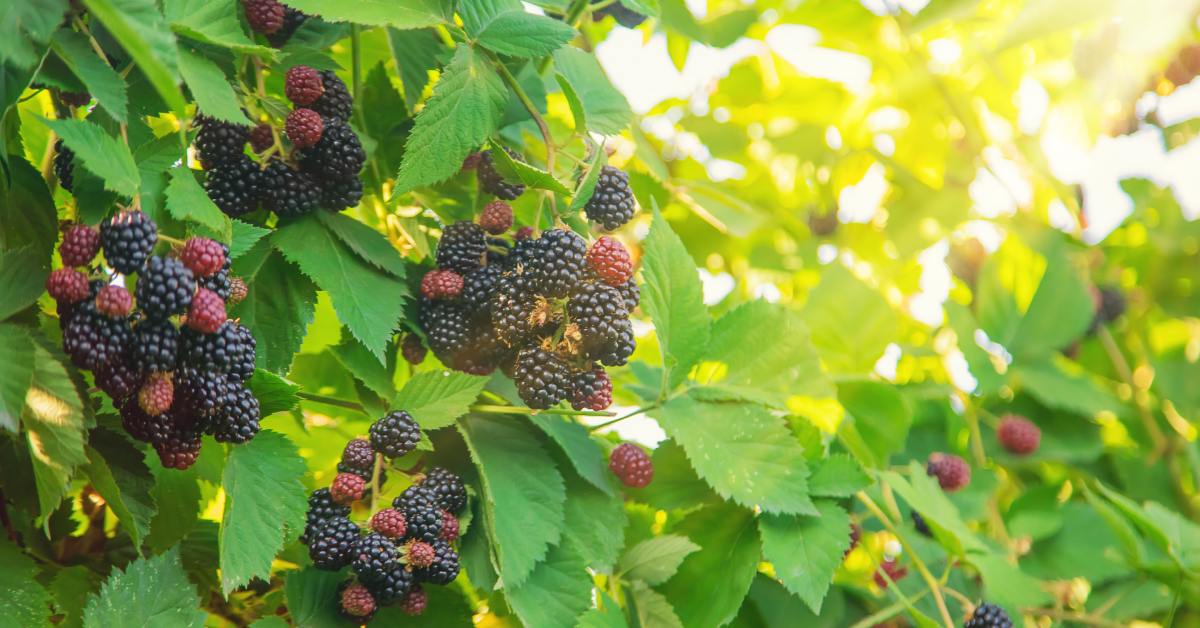
During fruit development, maintain steady moisture to prevent berries from becoming dry and seedy.
Raspberries also require consistent moisture throughout the growing season. They need approximately 1-1.5 inches of water weekly, with particular attention during flowering and fruit development.
These shallow-rooted plants suffer quickly from drought stress, which can significantly reduce fruit size and quality.
Mastering Moisture Retention
For both crops, don’t water from overhead. You should water these plants near the roots to avoid fungal diseases.
Drip irrigation or soaker hoses work exceptionally well for berry patches. Mulching around plants helps retain soil moisture and reduces watering frequency.
Climate and Temperature: Weathering the Seasons
Temperature tolerance and climate preferences vary between these berry types, influencing where they can be successfully grown. Not only do climate preferences vary between both berries, but also between varieties of those berries.
For example, you can find blackberry vines at Ty Ty Nursery that fall under USDA zones in the 6 to 9 range, 7 to 10 range, and more.
Blackberries are generally more heat-tolerant and can handle higher temperatures than raspberries.
Raspberries prefer cooler conditions and are less heat-tolerant than blackberries. Summer-bearing varieties are typically hardy in zones 3-7, while ever-bearing types may extend into zone 8 with proper care.
Pick Your Berries Carefully
Consider your local climate when choosing between these berries. If you experience hot, humid summers, blackberries might be your better option. For cooler regions with moderate summers, raspberries often perform excellently.
Pruning Techniques: Maintaining Healthy Growth
Proper pruning ensures productive plants, good air circulation, and manageable growth. Each berry type requires specific pruning approaches based on its fruiting habits.
Blackberry pruning focuses on managing biennial canes. First-year canes (primocanes) grow vegetatively, while second-year canes (floricanes) produce fruit, then die.
Remove spent floricanes immediately after harvest, and thin primocanes to 4-6 of the strongest per plant.
Raspberry pruning varies by type. Summer-bearing raspberries follow the same biennial pattern as blackberries—remove spent floricanes after harvest and thin primocanes.
Both berries benefit from regular maintenance pruning throughout the growing season. Remove weak, damaged, or crossing canes, and keep the planting area weed-free to reduce competition.
Pest and Disease Management: Keeping Plants Healthy
Comparing blackberry vs. raspberry growing needs will help you find a great fruit for your garden, but pests and diseases can wreak havoc on them.
Prevention remains the best strategy for managing pests and diseases in berry crops. Understanding common problems helps you take proactive measures.
Potential Blackberry Problems
Blackberries face several potential issues, including aphids, spider mites, and cane borers.
Diseases like anthracnose, powdery mildew, and various cane diseases can affect productivity. Good air circulation, proper spacing, and avoiding overhead watering help prevent most fungal problems
Regular inspection allows early detection and treatment of pest issues.

Keep Your Raspberries Safe
Raspberries are susceptible to similar pests but also face unique challenges like the raspberry crown borer and various aphid-transmitted viruses.
Root rot becomes a significant concern in poorly drained soils. Buying certified disease-free plants from reputable nurseries provides the best start for healthy raspberry patches.
For both crops, maintaining garden hygiene by removing fallen fruit and pruned canes helps reduce disease pressure. Beneficial insects can be encouraged through diverse plantings, reducing the need for chemical interventions.
Making Your Berry Decision
Choosing between blackberries and raspberries depends on your specific growing conditions, climate, and personal preferences. Blackberries offer greater tolerance for challenging conditions, heat, and varying soil types.
This makes them ideal for beginning gardeners or those with less-than-perfect growing sites.
Raspberries reward gardeners with exceptional flavor and the possibility of two crops per year with ever-bearing varieties. They’re perfect for cooler climates and gardeners who can provide consistent care and optimal growing conditions.
Consider starting with small plantings of both types if space allows.
This approach lets you compare their performance in your specific conditions and enjoy the unique pleasures each berry brings to your garden and table. With proper care and attention to their distinct needs, both crops will provide plenty of delicious homegrown fruit.

 Ty Ty Plant Nursery's Blog
Leave a comment