Nothing beats the satisfaction of harvesting fresh fruit from your own backyard trees. But what happens when those beautiful apple blossoms develop dark spots, or your peach leaves start curling up like yesterday’s newspaper?
Don’t panic just yet.
Most fruit tree diseases are manageable once you know what you’re dealing with. Identifying common fruit tree diseases and how to treat them becomes much less intimidating when you know what the threats are before they show up on your plants.
This guide will walk you through the most frequent diseases that plague fruit trees, plus give you practical treatment options that actually work. Follow our guide and become a more attentive gardener now.
The Types of Fruit Tree Diseases
Fruit tree diseases fall into three main categories: fungal, bacterial, and viral. Fungal diseases are the most common troublemakers in home orchards.
These sneaky invaders love warm, humid conditions.
They spread through spores that travel on wind, water, or even your gardening tools. The good news? Most fungal diseases respond well to treatment when caught early.
Bacterial diseases are trickier to manage but less common. Viral diseases? They’re rare but unfortunately can’t be cured once they take hold.
Apple Scab: The Spotted Menace
Apple scab shows up as dark, fuzzy spots on leaves and fruit. At first, these spots look innocent enough—maybe just a little dirt or shadowing.
But they’ll spread quickly, turning leaves yellow and causing fruit to crack or become misshapen.
Severe infections can defoliate entire trees by midsummer. The disease loves cool, wet spring weather. If you’ve had a particularly rainy April and May, keep your eyes peeled for these telltale spots.
Treating Apple Scab
Start with cultural practices. Rake up and dispose of fallen leaves in autumn—they harbor overwintering spores. Never compost infected material.
For chemical control, copper-based fungicides work well during dormant season. Once buds break, switch to products containing myclobutanil or propiconazole.
Timing matters here. Apply treatments every 7-14 days during wet spring weather, starting at bud break and continuing through petal fall.
Powdery Mildew: The White Dust Problem
This one’s easy to identify. Powdery mildew looks exactly like someone dusted your tree with flour or baby powder.
The white, powdery coating appears on leaves, shoots, and sometimes fruit. Unlike other fungal diseases, powdery mildew doesn’t need wet conditions to thrive—it actually prefers dry weather with high humidity.
Infected leaves may curl, turn yellow, or drop prematurely. Young shoots can become stunted or twisted.
Managing Powdery Mildew
Good air circulation is your first line of defense. Prune trees to open up the canopy and allow air to flow freely through branches.
Baking soda sprays can help control mild infections. Mix one tablespoon of baking soda with one gallon of water. The final ingredient is dish soap; splash a few drops to help it stick.

Brown Rot: The Fruit Destroyer
Brown rot is every stone fruit grower’s nightmare. This disease attacks blossoms, twigs, and fruit with devastating efficiency.
Infected blossoms turn brown and die, but they don’t fall off the tree—they just hang there like sad reminders.
Twigs develop dark, sunken cankers that can girdle and kill entire branches.
The worst damage happens to ripening fruit. Brown rot creates soft, brown spots that expand rapidly.
Infected fruit eventually mummifies, turning into hard, black “mummies” that cling to branches.
Controlling Brown Rot
Sanitation is crucial. Remove all mummified fruit from trees and the ground.
Prune out infected twigs and dispose of them properly.
Improve air circulation by thinning fruit when it’s about grape-sized. This reduces humidity around developing fruit and makes conditions less favorable for the disease.
Fungicide applications should begin at bloom and continue through harvest. Products containing captan provide good protection when applied according to label directions.
Peach Leaf Curl: The Leaf Twister
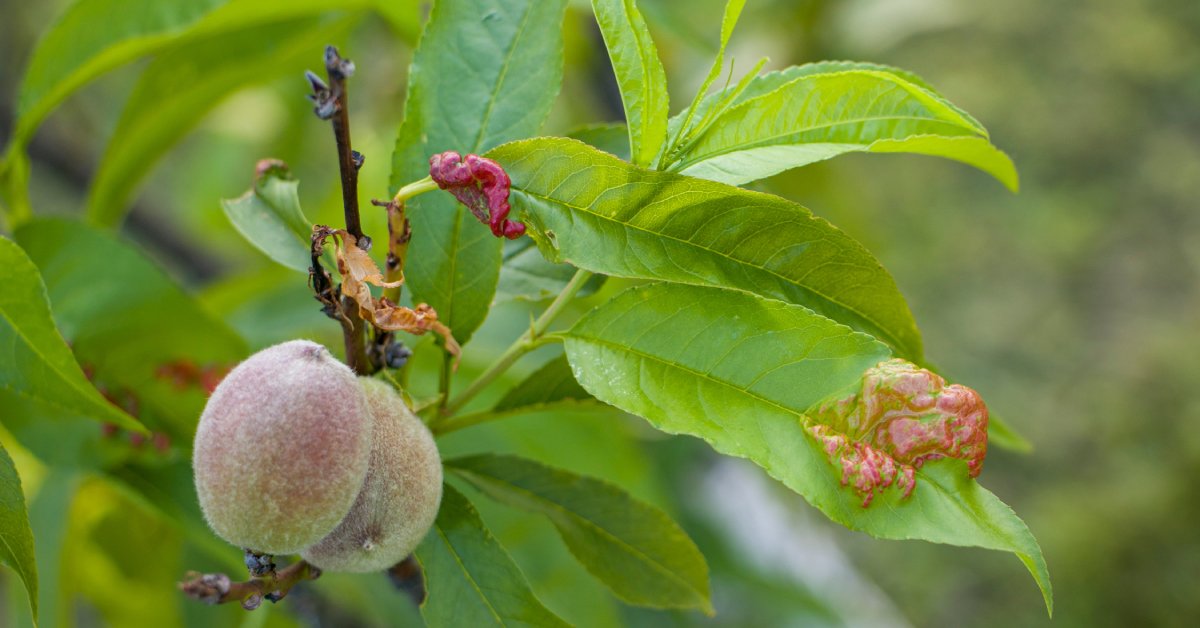
Peach leaf curl creates some of the most dramatic symptoms you’ll see. Infected leaves become thick, puckered, and distorted—hence the name.
The leaves turn reddish or purplish before becoming thick and leathery.
Severely affected leaves will drop off, leaving branches partially or completely bare. This disease attacks only during cool, wet springs.
Once warm, dry weather arrives, the disease stops spreading for the season.
Treating Peach Leaf Curl
The timing window for treatment is narrow but critical. You must apply fungicides during the dormant season, before buds begin to swell.
Copper-based fungicides provide excellent control when applied in late fall after leaf drop or in late winter before bud break.
One well-timed dormant spray usually prevents problems for the entire growing season. Miss this window, and you’ll have to wait until next year to treat effectively.
Prevention Strategies That Actually Work
Navigating the many fruit trees for sale online will be much easier now that you know how to identify and treat their common diseases. However, there is still one more step to take: learning about the best disease prevention methods available.
Choose Resistant Varieties
Modern fruit tree breeding has produced many disease-resistant varieties. Liberty apples resist apple scab, and several peach varieties show good resistance to brown rot.
Compare resistant varieties suited to your climate before planting new trees. This upfront investment saves countless hours of treatment later.
Site Selection Matters
Plant fruit trees in locations with good air circulation and morning sun exposure.
Avoid low-lying areas where cold air and moisture tend to settle. Proper spacing between trees prevents the humid microclimates that many diseases love.
Always follow the recommended spacing guidelines for your specific fruit varieties.
Water Management
Water at soil level rather than overhead sprinkler irrigation.
Wet foliage creates perfect conditions for most fungal diseases to develop and spread. Mulch around trees to reduce soil splashing onto lower branches during rain or watering.
This simple step cuts down on disease spread significantly.

Taking Action Against Tree Troubles
Managing common fruit tree diseases and how to treat them doesn’t have to feel overwhelming. Start with good cultural practices like proper pruning and sanitation.
Monitor your trees regularly during the growing season. Catching problems early makes treatment much more effective and less expensive.
Keep a garden journal noting when diseases appear and what treatments you apply.
This information becomes invaluable for planning next year’s prevention strategy. Remember, healthy trees resist diseases better than stressed ones.
Proper fertilization, adequate water, and good soil drainage all contribute to natural disease resistance.
Leave a Reply