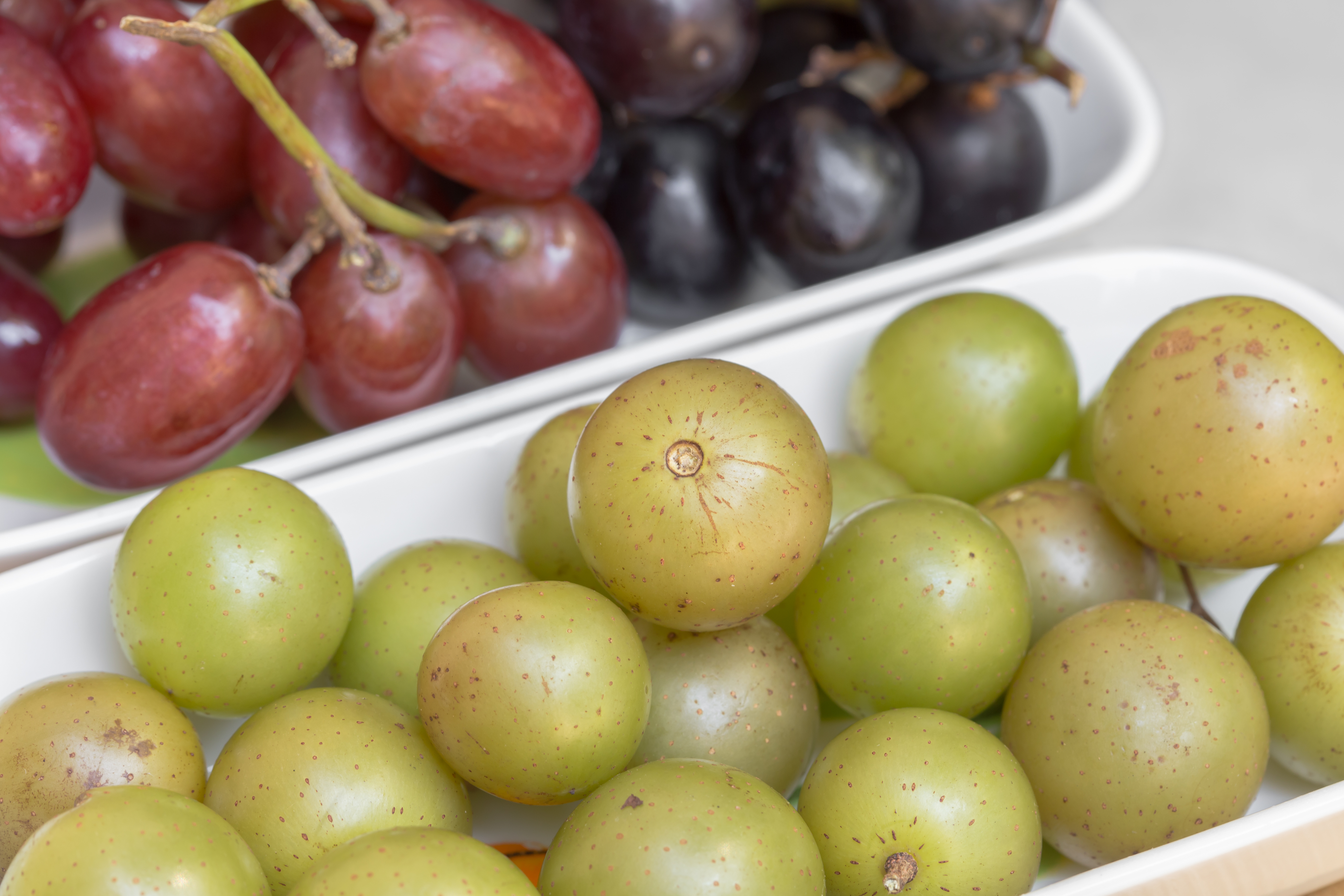
If you have ever wanted to grow grapes at home but needed something tough enough for heat, humidity, and Southern summers, scuppernong grape vines are one of the smartest places to start. They are bold, productive, beautiful on a trellis, and packed with old-fashioned Southern charm. A healthy scuppernong vine can turn a plain fence, arbor, or backyard trellis into something that feels both useful and unforgettable.
But like any fruiting plant, success starts long before the first grapes ripen. You need to know when to plant scuppernong grape vines, where to plant them, what kind of soil they want, how pollination works, how to train them, and what to do in that all-important first year. Get those basics right and scuppernongs can become one of the most rewarding fruits in your landscape.
This guide is built for beginners who want plain-English answers and real-world growing advice. We are going to cover site selection, soil requirements, soil preparation, variety recommendations by USDA zone using the current scuppernong grape vine selections from Ty Ty Nursery, pollination requirements, step-by-step planting instructions, watering, first-year flower removal, pruning, common scuppernong problems, and long-term care. By the end, you will know exactly how to plant scuppernong grape vines the right way.
What Is a Scuppernong Grape?
Scuppernong is a type of muscadine grape, and it is especially famous for its bronze to golden fruit color and rich Southern history. The Ty Ty Nursery page describes scuppernong vines as vigorous, disease-resistant muscadine grapevines that produce large, bronze-colored, sweet grapes for fresh eating, juicing, and winemaking.
That matters for beginners because it helps explain why scuppernongs perform the way they do. They are not bunch grapes like Concord or Niagara. They belong to the muscadine group, which is better adapted to hot, humid climates and generally more at home in the Southeast. UF/IFAS notes that scuppernong is part of the muscadine group, and NC State classifies muscadine grapes under Vitis rotundifolia.
When Is the Best Time to Plant Scuppernong Grape Vines?
The best time to plant scuppernong grape vines is during the dormant season, usually late winter to early spring, before vigorous new growth begins. This is the same general planting rhythm used for muscadine grapes in home gardens across the Southeast. NC State and Mississippi State both present muscadines as vines that establish best when planted into a prepared site with good drainage before the growing season is fully underway.
For most beginners, the easiest rule is simple: plant while the vine is still asleep so it can wake up where it belongs. That gives the roots a chance to settle in before the vine is asked to support strong spring and summer growth.
Current Scuppernong Grape Varieties at Ty Ty Nursery
According to the live Ty Ty Nursery scuppernong page, the current selections are:
- Carlos Scuppernong (M) — USDA Zones 7–9
- Dixie Scuppernong (M) — USDA Zones 7–9
- Fry Scuppernong (F) — USDA Zones 7–9
- Higgins Scuppernong (F) — USDA Zones 7–9
- Magnolia Scuppernong (M) — USDA Zones 7–9
- Summitt Scuppernong (F) — USDA Zones 7–9
- Tara Scuppernong (M) — USDA Zones 6–9
The same page also says scuppernongs thrive in full sun and well-drained soil and are ideal for trellises, fences, and backyard arbors.
Best Scuppernong Grape Varieties by USDA Zone and State
Scuppernongs are warm-climate vines. The live Ty Ty page is very clear that the current lineup centers on USDA Zones 7–9, with Tara extending into Zone 6. If you are outside those zones, the honest beginner answer is that these specific live-page scuppernong varieties are generally not the best outdoor fit from this catalog.
Also remember that many states span more than one USDA zone. Texas, Georgia, Alabama, Mississippi, North Carolina, South Carolina, Tennessee, Virginia, Louisiana, Arkansas, and Oklahoma can all include multiple zones, so always start with your exact local USDA zone first and your state second.
USDA Zone 3
Typical areas: northern Minnesota, North Dakota, South Dakota, Montana, and very cold interior mountain areas.
Recommendation: The current Ty Ty scuppernong lineup is not an appropriate beginner fit for Zone 3. The live page does not list any scuppernong variety for this zone.
USDA Zone 4
Typical areas: northern Wisconsin, northern Michigan, northern New England, and colder inland areas.
Recommendation: Zone 4 is outside the listed range for the current Ty Ty scuppernong page selections.
USDA Zone 5
Typical areas: parts of Pennsylvania, Ohio, Indiana, Illinois, Iowa, Missouri, Kansas, Colorado, Utah, inland Oregon, and inland Washington.
Recommendation: The current Ty Ty scuppernong lineup is generally not the best beginner fit for Zone 5 because the live page starts at Zone 6 only for Tara and Zone 7 for the rest.
USDA Zone 6
Typical areas: parts of Virginia, Maryland, Kentucky, Tennessee, Missouri, Arkansas, Oklahoma, and some North Carolina uplands.
Best current Ty Ty choice: Tara Scuppernong (M).
From the live page, Tara is the only currently listed scuppernong that extends into Zone 6, so it is the safest place to begin for a Zone 6 shopper using this page.
USDA Zone 7
Typical areas: Georgia uplands, Alabama uplands, South Carolina upcountry, North Carolina piedmont, Tennessee, Arkansas, Virginia, and Oklahoma.
Best current Ty Ty choices: Carlos, Dixie, Fry, Higgins, Magnolia, Summitt, and Tara.
Zone 7 is where the full current scuppernong lineup opens up. This is an excellent climate zone for the live Ty Ty selections.
USDA Zone 8
Typical areas: much of Georgia, Alabama, Mississippi, Louisiana, Texas, South Carolina, and parts of Arizona and California.
Best current Ty Ty choices: Carlos, Dixie, Fry, Higgins, Magnolia, Summitt, and Tara.
Zone 8 is classic scuppernong country. Warm summers and long growing seasons line up very well with the live Ty Ty selections.
USDA Zone 9
Typical areas: southern Texas, southern Louisiana, much of Florida, and warmer coastal areas.
Best current Ty Ty choices: Carlos, Dixie, Fry, Higgins, Magnolia, Summitt, and Tara.
Zone 9 is still comfortably inside the listed hardiness range for every current Ty Ty scuppernong on the page.
USDA Zone 10
Typical areas: very warm tropical or near-tropical regions.
Recommendation: The current Ty Ty scuppernong page does not list its scuppernong varieties for Zone 10, so these are not the appropriate beginner choices from the live catalog for that zone.
USDA Zone 11
Typical areas: tropical areas.
Recommendation: The current Ty Ty scuppernong lineup is generally not the right beginner fit for Zone 11 based on the live page.
Pollination Requirements for Scuppernong Grape Vines
This is one of the most important sections in the whole guide because pollination is where many first-time scuppernong growers go wrong. Muscadines and scuppernongs are not all the same when it comes to flower type. NC State says muscadine grapes are dioecious in some cases, meaning male and female plants are separate, but that some cultivars are perfect-flowered and can produce fruit on their own. UGA’s muscadine guide adds that female varieties produce no pollen and should be interplanted with perfect-flowered varieties for proper pollination and fruit set.
On the live Ty Ty scuppernong page, some varieties are marked (M) and some are marked (F). The current page shows Carlos, Dixie, Magnolia, and Tara as M, and Fry, Higgins, and Summitt as F. Based on the extension guidance above and Ty Ty’s own labeling, the safest beginner interpretation is that the F-labeled varieties need one of the M-labeled varieties nearby for dependable fruit set.
That means a simple beginner planting plan would be to pair a female scuppernong like Fry, Higgins, or Summitt with a pollinator-labeled variety like Carlos, Magnolia, Dixie, or Tara. Ty Ty’s own scuppernong and muscadine content also discusses this male and female pollination structure.
The easy beginner takeaway is this: do not plant only a female scuppernong by itself and expect a good crop. Give female vines a compatible pollinator nearby.
Site Selection: Where Should You Plant Scuppernong Grape Vines?
Scuppernong vines want full sun and good internal drainage. The Ty Ty page says they thrive in full sun and well-drained soil. NC State says muscadine grapes will survive and produce on a wide range of soils as long as internal drainage is good, and warns that plant failure can be expected where water stands after heavy rains. Mississippi State says muscadines produce best in full sun on fertile, well-drained soils with good water-holding capacity and that fruit set and size are smaller in shady areas.
That means your best site is sunny, open, airy, and never waterlogged. Good choices include a sunny fence line, a trellis row, or an arbor in an open part of the yard. Bad choices include low wet spots, shade-heavy corners, or anywhere water stands after rain. Clemson also recommends a sunny, well-drained location for muscadines.
Soil Requirements for Scuppernong Grape Vines
Scuppernongs are more forgiving than blueberries, but they still care deeply about drainage. NC State says muscadines can grow on a wide range of soils if internal drainage is good. Mississippi State says the same and adds that plants die where soil remains wet even for short periods after heavy rains. Walter Reeves also notes that muscadines do fairly well on most soil types but should not be planted where water stands after heavy rains.
So the ideal soil is fertile, reasonably moisture-retentive, but still well-drained. Scuppernongs do not need the extreme acidity blueberries need, but they do need a site where roots can breathe.
How to Prepare the Soil Before Planting
Start by clearing the planting area of grass, weeds, and debris. Loosen compacted soil and make sure the site is capable of draining well. If the area holds water, choose another site or improve drainage before planting. NC State is especially blunt here: muscadine vines fail in places where water stands after heavy rains.
Good soil prep is not about creating one tiny soft pocket inside an otherwise bad site. It is about creating a real planting area where roots can grow outward into usable soil.
Trellis and Support Considerations
Even though you did not ask for a full trellis-building section here, it is worth saying plainly that scuppernongs need support. Ty Ty’s page specifically says they are ideal for trellises, fences, and backyard arbors. Walter Reeves notes that muscadines require a minimum of 20 feet of trellis per plant. UGA’s home muscadine materials also emphasize training vines to a trellis and annual pruning to keep production high.
For a beginner, a strong single-wire or simple backyard trellis is usually the easiest path. A fence or arbor can also work as long as it gets strong sunlight and gives the vine enough room to grow without becoming a tangled mess.
How to Plant a Scuppernong Grape Vine Step by Step
Now for the hands-on part. If you are planting a bareroot scuppernong grape vine, here is the beginner-friendly method:
- Soak the roots in a bucket of water for hydration. When your scuppernong vine arrives, soak the roots in a bucket of water before planting to help rehydrate the plant.
- Dig a hole twice the size of the roots. Give the roots room to spread naturally instead of forcing them into a cramped hole.
- Place one unopened 1st Year Nutra Pro Fertilizer Pak and one unopened Soil Moist Transplant Mix at the bottom of the hole. Leave both unopened and place them in the bottom of the planting hole.
- Set the vine in place. Position the roots naturally and keep the vine upright.
- Backfill the hole. Refill the hole with the removed soil.
- Water the vine in thoroughly. This helps settle the soil and remove air pockets.
- Install a Max Growth Vineyard Shelter. This provides added protection for your newly planted vine.
That is the basic formula: hydrate, dig, place the unopened inputs, backfill, water, and protect.
Why Use Nutra Pro 1st Year Fertilizer Paks Instead of Granular Fertilizer?
The first year is not the time to get aggressive with fertilizer. Young scuppernong roots are tender, and overfertilizing is one of the fastest ways to damage a new planting. A slower, controlled approach makes much more sense than dumping granular fertilizer into the planting zone and hoping you guessed correctly.
The reason to use Nutra Pro 1st Year Fertilizer Paks instead of granular fertilizer is that the pak feeds slowly through micro porous holes. That slow release supports the plant gradually without burning the roots. Granular fertilizer the first year is easy to overapply, easy to place too close to the roots, and easy to use badly enough to stunt the vine or kill it. The first year should be about safe root establishment, not forcing a huge top flush of growth.
Watering Scuppernong Grape Vines After Planting
The first two months after planting are critical. For the first two months, water every day or at least every other day, depending on rainfall, temperature, wind, and soil type. If the weather is mild and rainy, you may not need daily watering. If it is hot, dry, or your soil drains quickly, you may need more frequent attention.
If the plant begins to wilt, it is telling you it is thirsty and needs a drink. Newly planted vines do not yet have a broad established root system, so they depend on you during that first stretch.
Once established, watering can taper back and become more rainfall dependent. Increase water attention again once fruiting starts because crop development needs moisture. Mississippi State notes that muscadines produce best on fertile, well-drained soils with good water-holding capacity, which is another way of saying they want moisture without sogginess.
Should You Remove Flowers the First Year?
Yes. If your scuppernong vine begins to flower in the first year after planting, remove the blooms.
This can feel painful because flowers make you think grapes are close, but the first year is not about harvesting fruit. It is about root establishment, trunk development, and getting the vine trained properly. UGA’s home muscadine guidance emphasizes early training and yearly pruning for long-term production, which works best when the young vine is not trying to divide energy between establishment and fruiting too early.
Grow your own fruit is a marathon, not a sprint. Short-term gratification is not worth hurting long-term production.
Ongoing Maintenance for Healthy Scuppernong Vines
Pruning
Scuppernongs need annual pruning. UGA says muscadine fruit are borne on new shoots arising from last year’s growth and recommends pruning back the canes that grew the previous year, leaving about 3 inches to form spurs. It also says to prune in February or early March and not worry if the vines bleed at the cuts.
That means a successful scuppernong is not a “plant it and forget it” vine. You want a strong main trunk, permanent arms on the support, and yearly spur pruning to keep the vine productive instead of overgrown.
Weed Control
Do not let grass and weeds compete heavily around the base of the vine. Young vines do not need extra competition while they are trying to establish.
Canopy Management
Open structure matters. UGA’s muscadine materials note that proper pruning and summer canopy management improve air movement, reduce disease pressure, and make harvesting easier.
Common Scuppernong Problems and How to Treat Them
Poor Drainage
This is one of the biggest killers of muscadines and scuppernongs. NC State and Mississippi State both warn that plant death can occur where soil stays wet or where water stands after rains. The best treatment is prevention through site selection.
Poor Pollination
If you plant a female scuppernong without a pollinator-labeled vine nearby, you may get poor fruit set or none at all. This is not a fertilizer issue or a pruning issue. It is a pollination-planning issue. UGA and NC State both make clear that female muscadines need a self-fertile or perfect-flowered pollinator nearby.
Overgrowth and Neglected Pruning
Many fruiting problems come from vines that were never pruned properly. Scuppernongs are vigorous. If you let them become a dense tangle, production and air movement suffer. UGA repeatedly emphasizes annual pruning as essential for good fruit production.
Shade
Mississippi State says fruit set and size are smaller in shady areas. So if your vine is alive but underperforming, too much shade may be part of the problem.
The best beginner habit is simple: walk your vine often. Look at the leaves, the water status, the structure, and the sunlight exposure. Catching problems early makes everything easier.
Best Place to Buy Scuppernong Grape Vines Online
If you are looking for the best place to buy scuppernong grape vines online, Ty Ty Nursery is a strong place to start for beginners and experienced growers alike. The live category page currently features seven scuppernong selections and explicitly highlights their suitability for home gardens and backyard arbors.
Here is why Ty Ty Nursery stands out:
- Prices up to 68% lower than other nurseries
- Fastest in-season shipping so you can plant in days the Ty Ty way instead of waiting weeks or months.
- Free one year Plantsurance guarantee.
- Lifetime true to name guarantee.
- No need to move heavy pots in and out of cars because plants ship right to your door.
- In business since 1978.
- Google Quality store 4.6 is live for Ty Ty Nursery.
- Trustpilot currently shows 4.5 rating for Ty Ty Nursery.
- BBB currently shows an A rating
- Live human plant experts in Ty Ty, Georgia
You can browse the current scuppernong collection here: Scuppernong Grape Vines at Ty Ty Nursery.
Final Thoughts
Scuppernong grape vines are one of the most rewarding fruits a beginner can grow in the right climate. They are productive, beautiful, and deeply tied to Southern gardens and food traditions. But they reward good planning. Choose a variety that fits your USDA zone. Understand whether it needs a pollinator. Plant in full sun. Prioritize drainage. Train the vine early. Water carefully during establishment. Remove first-year blooms. Prune every year.
Do those things well and your scuppernong vine will not just survive. It will become one of the most useful and satisfying plants in your landscape.
Ready to get started? Explore the current selection of scuppernong grape vines at Ty Ty Nursery, browse the Ty Ty Nursery Planting Tips page, and visit the Ty Ty Nursery homepage for more grape vines, fruit trees, and growing resources.

Leave a Reply