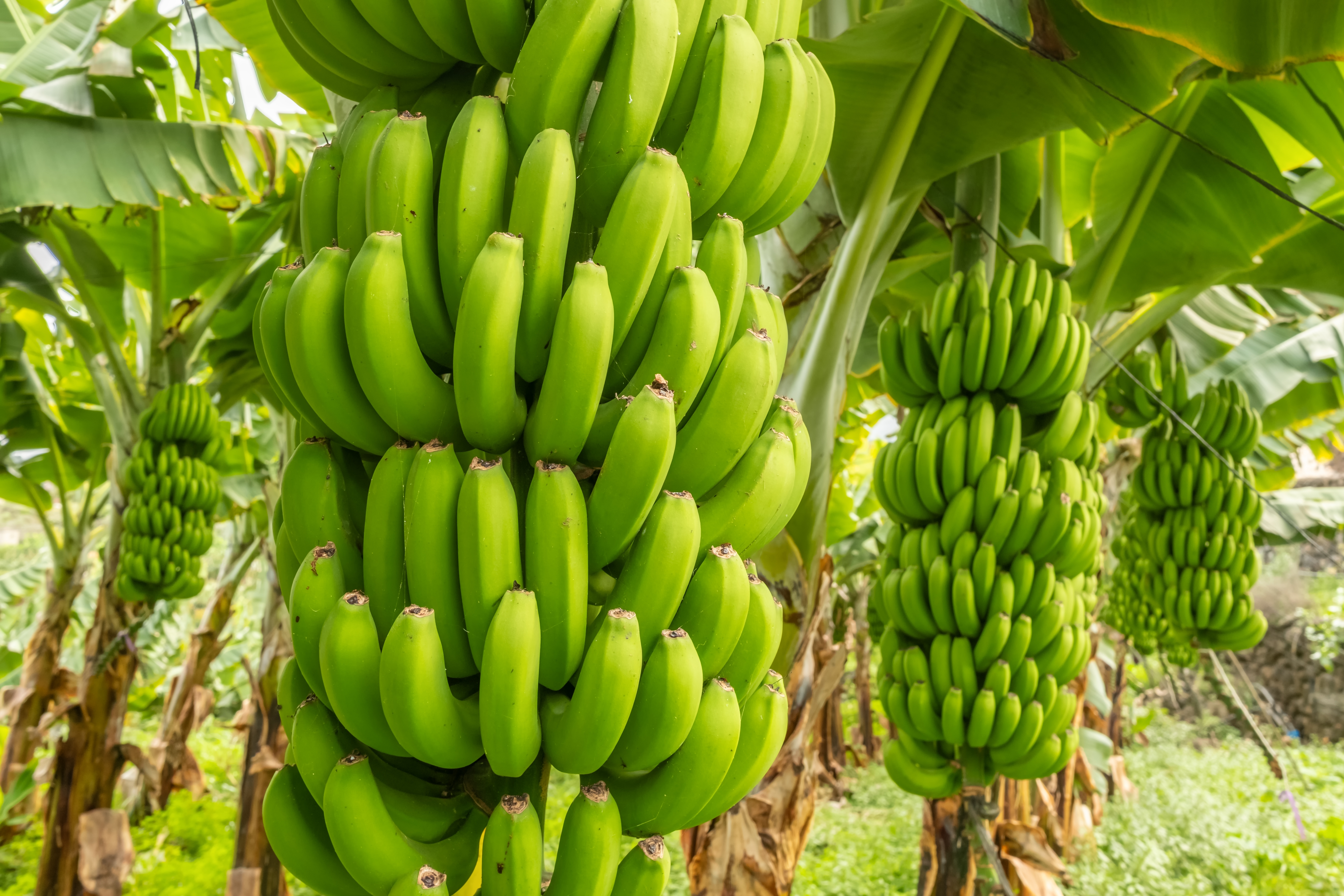
If you have ever wanted your yard to feel a little more tropical, a little more lush, and a lot more fun, banana plants are one of the fastest ways to make that happen. Big leaves, bold structure, dramatic growth, and in the right conditions even homegrown bananas make these plants one of the most exciting things a beginner can grow. They look exotic, but once you understand what they want, banana plants are actually very straightforward. They love heat, light, water, rich soil, and room to grow.
This guide is built for beginners who want clear, practical help instead of vague gardening advice. We are going to cover when to plant banana plants, site selection, soil requirements, soil preparation, banana varieties by USDA zone using the current live Ty Ty Nursery lineup, pollination requirements, how to plant, how to pot a banana plant, how to grow bananas indoors in a sunroom or greenhouse, first-year watering, bloom removal, maintenance, pruning, and common banana problems.
By the end, you will know exactly how to plant banana plants the right way and how to give them the best possible start whether you are growing them outdoors, in containers, or indoors.
Why Banana Plants Are a Great Choice for Beginners
Banana plants bring instant impact. They grow fast, create a tropical look quickly, and can be used as fruiting plants, edible landscape features, privacy plants, patio specimens, greenhouse plants, or indoor container plants depending on the variety and your climate. Ty Ty’s live banana page specifically describes them as fast-growing, low-maintenance plants that thrive in full sun and well-drained soil and are perfect for containers, backyards, and edible landscapes.
Another nice thing for beginners is that bananas do not need complicated pollination planning the way some fruit trees do. Most edible banana cultivars produce seedless fruit parthenocarpically, which means the fruit develops without pollination. UF/IFAS says the rapidly growing ovaries in edible cultivars develop parthenocarpically without pollination into the clusters of fruit we know as bananas, and Michigan State says hybrid bananas are parthenocarpic and do not need to be pollinated to produce fruit.
The main thing beginners need to understand is that bananas are not really trees in the woody sense. They are giant herbaceous plants. That matters because their growth, overwintering behavior, and maintenance are different from a typical fruit tree. Michigan State notes that bananas are not trees but the fruit of the world’s largest herb.
When Is the Best Time to Plant Banana Plants?
The best time to plant banana plants is when temperatures are warm and the risk of cold injury has passed. Because bananas are tropical or subtropical plants, they do not behave like dormant bare-root fruit trees that want cold-season planting. They establish best when soil and air temperatures are warm enough to support active growth. UF/IFAS recommends planting in warm conditions and describes bananas as tropical plants for warm climates, while Illinois Extension notes that bananas are fast growing and demand heat, moisture, and well-drained soil.
For most outdoor growers, spring through early summer is the easiest and safest planting window. If you are in a cooler zone and plan to grow bananas in containers, you can pot them earlier and move them into a sunroom, greenhouse, or bright indoor location until warm weather is stable.
The easy beginner rule is this: plant bananas when warmth has arrived and they can actively grow right away.
Current Banana Varieties at Ty Ty Nursery
According to the live Ty Ty Nursery banana page, the current banana selections are:
- Brazilian Dwarf Banana Tree — USDA Zones 8–11
- Carolina King Banana Tree — USDA Zones 7–10
- Cavendish Dwarf Banana Tree — USDA Zones 8–11
- Golden Rhino Horn Banana Tree — USDA Zones 7–10
- Grand Nain Banana Tree — USDA Zones 9–11
- Mysore Banana Tree — USDA Zones 8–11
- Nam Wah Banana Tree — USDA Zones 8–11
- Patio Dwarf Banana Tree — USDA Zones 3–11
- Rajapuri Banana Tree — USDA Zones 8–11
- Texas Star Banana Tree — USDA Zones 7–11
- Basjoo Cold Hardy Banana Tree — USDA Zones 7–11
- Variegated Musa meta-chimera Banana Tree — USDA Zones 9–10
Ty Ty’s live page also says these varieties are suitable for containers, backyards, and edible landscapes and thrive in full sun and well-drained soil.
Best Banana Plant Varieties by USDA Zone and State
Banana growing is all about climate. In warm zones, many bananas can be grown outdoors year-round. In cooler zones, bananas may need to be grown in containers and brought into a sunny room or greenhouse for winter. Your request specifically called for that distinction, and it is the right way to think about bananas. If a banana is not recommended outdoors in your zone, it may still be a great container or greenhouse plant. Ty Ty’s live page supports that approach because it explicitly notes that banana plants are well suited for containers.
USDA Zone 3
Typical areas: northern Minnesota, North Dakota, South Dakota, Montana, and colder interior mountain regions.
Best current Ty Ty choice: Patio Dwarf Banana Tree for container growing indoors, in a sunroom, or in a greenhouse.
From the live Ty Ty page, Patio Dwarf is the only current banana listed all the way down to Zone 3. Outdoors, true tropical bananas are not a practical year-round fruiting choice here, but a compact patio banana can still be grown in a container and moved indoors for winter.
USDA Zone 4
Best current Ty Ty choice: Patio Dwarf Banana Tree for container and indoor growing.
Zone 4 growers should generally think of bananas as container plants or greenhouse plants, not permanent in-ground tropical fruit plants. Patio Dwarf is the current live-page fit that extends here.
USDA Zone 5
Best current Ty Ty choice: Patio Dwarf Banana Tree for container, sunroom, or greenhouse culture.
In Zone 5, you can absolutely enjoy bananas as seasonal patio plants and overwinter them indoors. NC State notes that Musa basjoo can be grown as a container plant and brought indoors before frost into a sunny room. That general indoor-overwintering logic is useful here for compact banana selections too.
USDA Zone 6
Best current Ty Ty choice: Patio Dwarf Banana Tree for container growing. Basjoo may be grown outdoors in some protected situations only if local winter survival is realistic, but Patio Dwarf remains the safer beginner container choice from the page.
Zone 6 is still largely a container-and-overwintering banana zone for most fruiting varieties on the Ty Ty page.
USDA Zone 7
Best current Ty Ty choices: Carolina King, Golden Rhino Horn, Patio Dwarf, Texas Star, Basjoo Cold Hardy.
Zone 7 is where the live Ty Ty banana lineup begins to open up outdoors. Carolina King, Golden Rhino Horn, Texas Star, and Basjoo are all listed for Zone 7, while Patio Dwarf works almost anywhere. Basjoo is especially useful if your main goal is tropical foliage and cold hardiness. NC State notes that Musa basjoo rhizomes can be hardy to about minus 10 degrees Fahrenheit with proper pruning and mulch protection, though top growth dies back in winter in colder zones.
USDA Zone 8
Best current Ty Ty choices: Brazilian Dwarf, Carolina King, Cavendish Dwarf, Golden Rhino Horn, Mysore, Nam Wah, Patio Dwarf, Rajapuri, Texas Star, Basjoo.
Zone 8 is where outdoor banana growing becomes much more realistic for a broad range of Ty Ty’s current lineup. Many fruiting varieties enter the picture here, and this is a strong zone for gardeners who want both tropical foliage and edible fruit potential.
USDA Zone 9
Best current Ty Ty choices: all current listed varieties, including Grand Nain and Variegated Musa meta-chimera.
Zone 9 is excellent banana country from the current Ty Ty catalog. Warmth, long growing seasons, and the ability to keep many types outdoors year-round make this one of the most flexible banana zones.
USDA Zone 10
Best current Ty Ty choices: Brazilian Dwarf, Carolina King, Cavendish Dwarf, Golden Rhino Horn, Grand Nain, Mysore, Nam Wah, Patio Dwarf, Rajapuri, Texas Star, Basjoo, Variegated Musa meta-chimera.
Zone 10 supports nearly the entire current live-page banana lineup and is a prime outdoor banana zone.
USDA Zone 11
Best current Ty Ty choices: Brazilian Dwarf, Cavendish Dwarf, Grand Nain, Mysore, Nam Wah, Patio Dwarf, Rajapuri, Texas Star, Basjoo.
Zone 11 is fully tropical banana territory for many fruiting types from the current page.
Pollination Requirements for Banana Plants
Banana pollination is refreshingly simple for beginners. Most edible bananas do not need pollination to produce fruit. UF/IFAS says edible cultivars develop fruit parthenocarpically without pollination, and Michigan State says hybrid bananas are parthenocarpic and do not need to be pollinated to produce fruits. Ask Extension also states that banana plants can fruit without needing a second banana as a pollinator.
That means you do not need two banana plants for pollination the way you might with apples, pears, or chestnuts. If your banana is mature enough, healthy enough, warm enough, and grown under the right conditions, it can fruit without a pollination partner. The bigger barriers are usually climate, light, warmth, and time to maturity rather than pollination.
Site Selection: Where Should You Plant Banana Plants Outdoors?
Bananas want full sun, warmth, rich soil, and good drainage. Ty Ty’s page says full sun and well-drained soil. Illinois Extension says bananas prefer full sun to light shade and demand moist, well-drained soil. UF/IFAS says bananas grow best in a warm location with full sun and protected from cold winds. Penn State’s Master Gardener article adds that bananas love full sun, heat, and humidity.
That means a good outdoor banana site is sunny, warm, fairly protected from strong winds, and never waterlogged. Wind matters because banana leaves tear easily. Illinois Extension specifically says banana leaves tatter easily in the wind, so some protection is helpful.
Good outdoor sites include:
- A full-sun bed with rich, well-drained soil
- A south-facing warm spot near a patio or wall
- An edible tropical garden with irrigation
- A protected landscape bed out of harsh wind
Soil Requirements for Banana Plants
Bananas prefer rich, well-drained soil with plenty of organic matter. UF/IFAS says bananas need soils with good drainage and are very sensitive to flooding, while the UF/IFAS blog says bananas prefer rich, well-drained soil with a pH between 5.5 and 7.0. Illinois Extension also says bananas demand moist, well-drained soil.
That means the ideal banana soil is:
- Rich in organic matter
- Moist but well-drained
- Loose enough for roots to expand
- Not flood-prone
Bananas are heavy feeders and thirsty growers, but they do not want to sit in stagnant water. That combination is important. They like moisture, not swamp conditions. Illinois Extension specifically calls them heavy feeders, and UF/IFAS warns that flooding is a major problem.
How to Prepare the Soil Before Planting
Start by clearing grass and weeds from the planting area. Loosen the soil, remove rocks and debris, and improve the planting zone so roots can move outward easily. If your soil is poor, sandy, or low in organic matter, work on improving the broader planting area rather than just one small hole. UF/IFAS’s banana blog says poor drainage or very sandy soil should be improved with organic matter such as compost or peat moss.
The goal is not to create one tiny luxury pocket in the middle of bad ground. The goal is to create a planting area where a fast-growing, hungry banana can actually thrive.
How to Plant a Banana Plant Step by Step
Now for the hands-on part. Here is the beginner-friendly planting process for a banana plant:
- Soak the roots in a bucket of water for hydration. When your banana plant arrives, soak the roots in a bucket of water to help rehydrate it before planting.
- Dig a hole twice the size of the roots. Give the roots room to spread naturally instead of forcing them into a tight space.
- Place one unopened 1st Year Nutra Pro Fertilizer Pak and one unopened Soil Moist Transplant Mix at the bottom of the hole. Leave both unopened and place them at the bottom of the planting hole.
- Set the plant in place. Position the roots naturally and keep the plant upright.
- Backfill the hole. Refill with the removed soil.
- Water the plant in thoroughly. This settles the soil and helps remove air pockets around the roots.
That is the basic formula: hydrate, dig, place the unopened inputs, backfill, and water in thoroughly.
How to Pot a Banana Plant
If you are growing bananas in a cooler zone, in a greenhouse, or in a sunroom, container growing is often the smartest move. Ty Ty’s live banana page specifically says banana plants are perfect for containers. NC State says Musa basjoo can be grown as a container plant and brought indoors before frost, and Illinois Extension says container-grown bananas can be brought indoors and enjoyed as houseplants during winter if given lots of light and humidity.
To pot a banana plant well:
- Choose a container with good drainage holes.
- Use a rich, well-drained potting medium.
- Choose a pot large enough to support fast root growth and plant stability.
- Set the banana at the same growing depth it was at before.
- Water thoroughly after potting.
Container bananas need a mix that holds moisture but still drains freely. Indoor and greenhouse banana growers often use rich mixes with organic matter and added drainage components. While some non-extension gardening sources go into mix recipes, the most consistent extension-backed principle is this: rich and well-drained is the target.
How to Grow a Banana Plant Indoors
Yes, you can grow a banana plant indoors, especially compact types. But indoor banana growing only works well if you respect what the plant is trying to be: a tropical heat-loving giant herb that wants lots of light and moisture.
Illinois Extension says container-grown bananas can be brought indoors and enjoyed as houseplants in winter if given lots of light and humidity, and recommends the brightest location possible. NC State says Basjoo can be brought into a sunny room for overwintering.
Indoor banana requirements include:
- Bright light: the brightest window, sunroom, or greenhouse you have.
- Warm temperatures: bananas do not like cold rooms.
- Humidity: indoor air can be too dry, especially in winter.
- Even moisture: keep the soil moist but not waterlogged.
- Space: even dwarf bananas are not tiny forever.
Indoors, expect some leaf browning or leaf loss during the transition from outdoor summer conditions to indoor winter conditions. Illinois Extension says some leaf loss and browning are normal when container bananas are brought indoors. That does not automatically mean the plant is dying.
How to Maintain an Indoor Banana Plant
Indoor banana care is about managing light, moisture, and space. Put the plant in the brightest location possible. Water when needed so the root zone stays evenly moist, but do not let the plant sit in a saucer full of stagnant water. Keep humidity up as much as reasonably possible. Illinois Extension specifically says grouping plants can help raise humidity around them.
You should also expect indoor bananas to grow more slowly than outdoor summer bananas unless they are in a very bright, warm greenhouse or sunroom. A sunny sunroom or greenhouse is usually the easiest indoor-style environment for long-term success because it offers the combination of light and warmth bananas crave.
Why Use Nutra Pro 1st Year Fertilizer Paks Instead of Granular Fertilizer?
The first year is not the time to get aggressive with fertilizer. Bananas are heavy feeders eventually, but a newly planted banana still has tender young roots that can be damaged by too much fertilizer too quickly. That is why a slower, controlled first-year feeding approach makes more sense than dumping granular fertilizer into the planting zone and hoping the rate is right.
The reason to use Nutra Pro 1st Year Fertilizer Paks instead of granular fertilizer is that the pak feeds slowly through micro porous holes. That slow release helps support the plant gradually without burning the roots. Granular fertilizer the first year is easy to overapply, easy to place too close to the roots, and easy to use badly enough to stunt the plant or kill it. Year one should be about safe root establishment, not forcing explosive growth at any cost.
Watering Banana Plants After Planting
The first two months after planting are critical. For the first two months, water every day or at least every other day, depending on rainfall, temperature, wind, and soil type. If the weather is mild and rainy, you may not need daily watering. If it is hot, dry, or your soil drains quickly, you may need more frequent attention.
If the plant begins to wilt, it is telling you it is thirsty and needs a drink. Newly planted bananas do not yet have a large established root system, so they depend on you during this stage.
Once established, watering can taper back and become more rainfall dependent, but bananas remain moisture-loving plants. Illinois Extension says bananas demand moist, well-drained soil, and UF/IFAS emphasizes regular moisture while warning against flooding. Increase water again once fruiting starts because fruit development is a high-demand stage.
Should You Remove Blooms the First Year?
Yes. If your banana plant begins flowering in the first year after planting, remove the bloom.
This may feel counterintuitive because the whole point of a fruiting banana is eventually to get fruit. But the first year is about root establishment, plant size, and overall vigor. Grow your own fruit is a marathon, not a sprint. Short-term gratification is not worth weakening long-term production.
Ongoing Maintenance for Healthy Banana Plants
Pruning and Cleanup
Bananas do not need pruning like apples or peaches, but they do benefit from cleanup. Remove torn, badly damaged, or fully spent leaves as needed. After a fruiting pseudostem finishes, it is typically removed so energy can go into the next generation of pups. UF/IFAS describes banana plants as growing from a mat with suckers and replacement stems, which is part of normal banana management.
Pup Management
Bananas often produce pups or suckers around the base. That is normal. Some are kept for future growth and some may be thinned depending on your space and fruiting goals.
Feeding and Growth
Bananas are heavy feeders once established. Illinois Extension specifically says they are heavy feeders and should be fertilized regularly through the growing season. That is one more reason they do best in rich soil.
Wind Protection
Because the leaves tear easily, wind exposure should be watched long term. A somewhat protected site usually produces a better-looking plant.
Common Banana Problems and How to Treat Them
Transplant Shock and Leaf Damage
Bananas can show stress after shipping or after moving between environments. Indoor transition often causes some browning or leaf loss. Illinois Extension says this is normal when moving container bananas indoors for winter.
Cold Damage
Cold is one of the most common banana problems in non-tropical climates. Basjoo is useful for colder zones because the rhizome can survive cold when properly protected, but many fruiting bananas are far less tolerant. NC State specifically notes Basjoo’s rhizome hardiness with protection.
Poor Drainage
UF/IFAS warns that bananas are very sensitive to flooding. If roots stay wet too long, the plant declines. The best treatment is prevention: plant in well-drained soil.
Low Light Indoors
Indoor bananas that stretch, stall, or lose vigor often simply do not have enough light. The brightest location possible is the standard to aim for.
The best beginner habit is simple: walk your banana plants often. Look at leaf color, moisture, new growth, and the condition of the base. Catch problems early.
Best Place to Buy Banana Plants Online
If you are looking for the best place to buy banana plants online, Ty Ty Nursery is a strong option for beginners and experienced growers alike.
Here is why Ty Ty Nursery stands out:
- Prices up to 68% lower than other nurseries
- Fastest in-season shipping so you can plant in days the Ty Ty way instead of waiting weeks or months.
- Free one year Plantsurance guarantee.
- Lifetime true to name guarantee.
- No need to move heavy pots in and out of cars because plants ship right to your door.
- In business since 1978
- Google Quality Store 4.6 Rating
- Trustpilot currently shows 190 reviews
- BBB currently shows an A rating
- Live human plant experts in Ty Ty, Georgia
You can browse the current banana collection here: Banana Plants at Ty Ty Nursery.
Final Thoughts
Banana plants are one of the most exciting things a beginner can grow because they combine speed, drama, and usefulness in a way very few plants do. Choose a variety that fits your USDA zone. If your zone is too cold, grow bananas in a container and overwinter them in a bright sunroom or greenhouse. Plant in full sun with rich, well-drained soil. Water carefully during establishment. Remove first-year blooms. Give indoor bananas lots of light and warmth. Watch for cold and drainage problems.
Do those things well and your banana planting will not just survive. It will become one of the most eye-catching and satisfying parts of your garden or indoor growing space.
Ready to get started? Explore the current selection of banana plants at Ty Ty Nursery, browse the Ty Ty Nursery Planting Tips page, and visit the Ty Ty Nursery homepage for more fruit plants, tropicals, and growing resources.

Leave a Reply