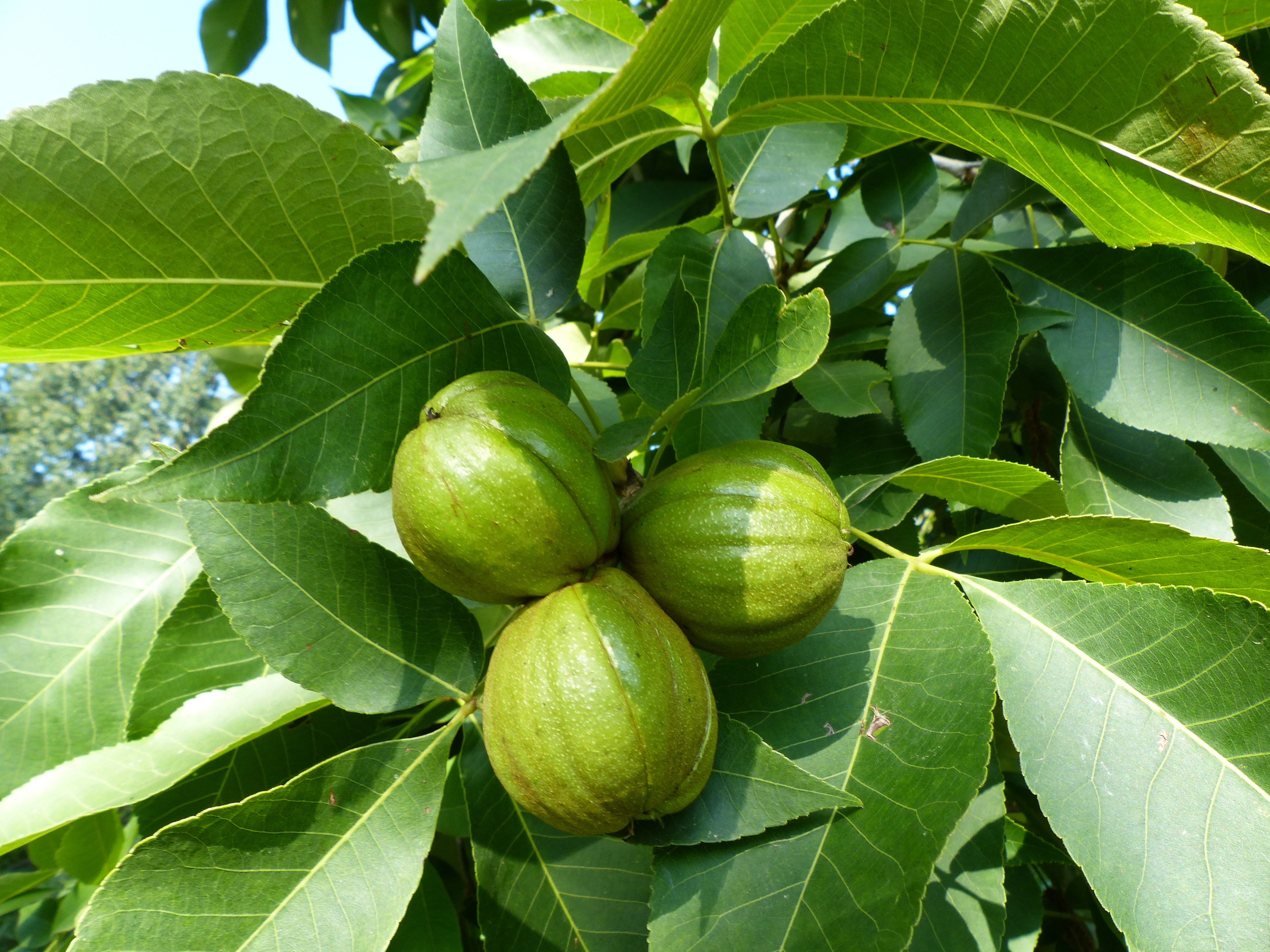
If you planted a Hickory Tree this year, late summer is not the time to forget about it just because the hottest part of the growing season is beginning to wind down.
Actually, the end of summer is one of the most important transition periods your young hickory will go through during its first year.
A newly planted Hickory Tree may not always put on the dramatic top growth people expect from a young tree. That does not necessarily mean it is doing poorly. Hickories are famous for developing substantial root systems, including strong taproots, and a lot of the important first-year work can be happening underground where you cannot see it.
During spring and early summer, we are excited to see buds open, leaves expand, and new shoots grow. As fall gets closer, however, the goal changes.
We want that new growth to begin maturing.
We want the root system healthy.
We want the planting area free from heavy grass and weed competition.
And we want the young hickory gradually preparing itself for colder weather instead of being pushed into another flush of tender growth right before winter.
At Ty Ty Nursery, we tell customers to focus on three things with first-year Hickory Trees:
- Keep the establishing root system properly watered without drowning it.
- Protect the root zone, taproot, and young trunk with mulch, weed control, and basic tree protection.
- Stop pushing unnecessary late growth with nitrogen or heavy pruning and let the tree naturally harden for fall.
Those three jobs will do far more for a first-year Hickory Tree than constantly fertilizing, digging around the roots, or trimming branches simply because fall is approaching.
If you are planning a nut orchard, wildlife planting, large shade-tree landscape, farm, homestead, or naturalized property, you can shop Hickory Trees for sale online at Ty Ty Nursery and compare Shagbark Hickory, Shellbark Hickory, Water Hickory, White Hickory, current sizes, and USDA growing zones.
Why the First Year Matters So Much for Hickory Trees
Hickories are not short-term plants.
These are trees you plant for the future.
A mature Hickory Tree can become a large, impressive shade tree. Depending on the species, it may eventually provide edible nuts, wildlife food, brilliant fall color, valuable habitat, and one of the strongest hardwoods found in North America.
Some hickories can live for centuries.
That makes the first year seem pretty small in the grand scheme of things, but it is still important.
The tree needs to recover from transplanting.
It needs to establish a permanent root system.
It needs to develop a sturdy trunk and branch framework.
It needs to adapt to the soil and moisture conditions on your property.
And it needs to make it through its first winter in good condition.
This is why I would not judge a first-year hickory only by height.
A tree that did not grow three feet above ground may still have made tremendous progress below ground.
Hickories Put a Lot of Energy Into Their Roots
This is one of the most important things to understand about growing Hickory Trees.
Shagbark Hickory seedlings are known for developing a substantial taproot early in life.
That root can grow much faster than the visible stem during the establishment years.
This is one reason young hickories can appear slow compared with some fast-growing shade trees.
The tree is investing in a foundation.
That is not wasted energy.
A deep, well-developed root system is part of what eventually helps an established hickory tolerate drought and stand firmly through wind.
It also explains why mature hickories can be difficult to transplant.
Once you plant a Hickory Tree, choose the site carefully.
This is not a tree I would casually plan to move five years later.
What a Hickory Tree Is Doing in Late Summer
During spring and early summer, new shoots are tender and relatively flexible.
As summer progresses, those shoots begin maturing.
The wood firms up.
Buds mature.
Leaves continue producing carbohydrates.
Some of those carbohydrates are stored in the roots, trunk, and branches and will help support the tree during dormancy and next spring’s growth.
Eventually shorter days and cooler temperatures signal the tree to begin its seasonal shutdown.
That process is natural.
You do not have to force it.
The best thing you can do is maintain good growing conditions while avoiding practices that encourage excessive tender growth too late in the year.
1. Get Late-Summer Hickory Tree Watering Right
The first late-summer priority is water.
Newly planted trees need dependable moisture because their roots have not yet spread through a large volume of surrounding soil.
An established hickory can become relatively drought tolerant depending on species and site.
A first-year hickory is different.
It still needs help.
Do Not Stop Watering Because September Arrived
The calendar does not know what your soil looks like.
Late August and September can still be extremely hot and dry.
If the root zone is drying several inches below the surface, keep watering.
Do not intentionally drought-stress a first-year tree because you think that will make it go dormant.
Shorter days and cooler temperatures will trigger the seasonal transition.
Drought is simply another stress the young tree has to overcome.
After the First Few Months, Weekly Deep Watering Is Often a Better Pattern
During the earliest weeks after planting, a tree may need frequent watering while the root ball and surrounding soil settle.
Once the tree has been planted for several months, watering can usually shift toward deeper, less frequent irrigation.
For many first-year trees, a thorough weekly watering during dry weather is more useful than repeatedly splashing the surface.
Actual frequency depends on your soil, rainfall, heat, and tree size.
Do not turn “once a week” into a rule that ignores the weather.
Check the Soil Before Watering
Push your finger several inches into the soil around the root zone.
If the soil is still cool and moist, wait.
If it is beginning to dry, water thoroughly.
The surface can be misleading.
A hot afternoon can dry the top inch while plenty of moisture remains below.
A quick thunderstorm can do the opposite: everything looks wet, but the rain ran off before soaking deeply enough to help the roots.
Ty Ty Nursery recommends paying attention to the actual conditions around the tree instead of watering because a calendar reminder went off.
Water Slowly and Deeply
A slow trickle is one of the best ways to water a young Hickory Tree.
Use a hose on a gentle flow, drip irrigation, or another method that allows water to infiltrate gradually.
You want moisture moving into and around the root zone.
You do not want half the water running across the lawn.
Move the hose around the root area rather than leaving one tiny spot permanently saturated.
Expand the Watered Area as Roots Establish
A tree root system does not remain inside the original planting hole.
Roots are trying to grow outward into native soil.
As the season progresses, expand the area receiving water.
This encourages the young Hickory Tree to develop a broader root system rather than concentrating roots only where irrigation is applied.
Good Drainage Matters for Most Hickories
Shagbark, Shellbark, and White Hickory generally perform best where the roots have access to moisture without remaining continually saturated.
Deep, fertile, well-drained soil is especially good for Shagbark Hickory.
If water remains standing around your tree for days after rain or irrigation, pay attention.
Roots still need oxygen.
Water Hickory Is the Important Exception
Not every hickory wants the same site.
Water Hickory, Carya aquatica, naturally grows in moist bottomlands, swamps, floodplains, and areas with higher water tables.
If you have a low or seasonally wet area, Water Hickory may be much better suited to that location than Shagbark Hickory.
This is exactly why choosing the right hickory species matters.
Do not take care advice written for a dry upland Shagbark site and apply it blindly to a Water Hickory growing beside a pond.
Do Not Keep an Upland Hickory in a Permanent Mud Hole
At the same time, a newly planted Shagbark or White Hickory should not remain in a basin of water.
A planting hole in heavy compacted clay can sometimes collect irrigation and behave almost like a bucket.
If the soil is still saturated, another round of watering is not helping.
Let the root zone drain.
Gradually Reduce Irrigation as Fall Arrives
As temperatures cool, the tree’s water use decreases.
The soil also stays moist longer.
Let your watering schedule stretch naturally.
If fall rain becomes regular, supplemental irrigation may not be needed for a while.
If September and October remain dry, keep monitoring.
The objective is to enter winter with healthy soil moisture without keeping roots unnecessarily wet.
Keep Watering During a Dry Fall Until the Ground Cools
Do not assume leaf drop means the roots instantly stop working.
Roots can remain active while soil temperatures are still favorable.
If autumn is unusually dry, continue watering young trees until the ground becomes cold or frozen in colder climates.
That can make a meaningful difference in first-winter survival.
If you are comparing species for your property, visit Ty Ty Nursery’s Hickory Trees for sale.
2. Protect the Root Zone, Taproot, and Young Trunk
The second major late-summer job is protecting everything you spent the growing season establishing.
Young hickories do not need to compete with a lawn, get hit by a string trimmer, or have their root zone repeatedly dug up.
A little cleanup now can make the tree much easier to care for through fall.
Keep Grass Away From the Young Tree
Grass looks harmless above ground.
Below ground, turf has a dense fibrous root system that is extremely good at taking water and nutrients from the upper soil.
A newly planted Hickory Tree is trying to establish roots in that exact area.
Remove turf and weeds from a broad circle around the tree.
The cleaner root zone will make watering more efficient and reduce competition.
Use About Three Inches of Organic Mulch
A roughly three-inch layer of organic mulch is one of the simplest things you can do for a newly planted tree.
Wood chips, shredded bark, or pine needles can work well.
Mulch slows moisture loss.
It suppresses weeds.
It helps buffer extreme soil temperatures.
It reduces compaction.
And it creates a protective area around the trunk where mowers and string trimmers do not need to go.
Spread Mulch Wide, Not High
A wide mulch ring is useful.
A mulch volcano is not.
Spread the material outward across the root zone.
Keep the root flare and lower trunk visible.
Do not pile mulch directly against the bark.
Too much mulch can keep the root zone overly wet, reduce oxygen movement, and encourage roots to develop in the mulch instead of the soil.
Hickory Taproots Are a Reason to Avoid Unnecessary Digging
Hickories are famous for developing substantial taproots.
That root architecture helps explain why established trees can be sturdy and drought tolerant.
It also means you should leave the root zone alone as much as practical.
Do not repeatedly dig around a young hickory.
Do not plan to move it next year because you changed your mind about the location.
Choose the site carefully and let the roots establish.
Do Not Cultivate Deeply Around the Tree
If weeds appear, hand pull them or use shallow methods.
Aggressive cultivation can damage developing roots.
Mulch should do much of the weed-control work for you.
Protect the Trunk From Lawn Equipment
One hit from a string trimmer can cause more damage than an entire month of imperfect watering.
Young bark is relatively thin.
A wide mulch ring gives you a visual buffer between the tree and lawn equipment.
Do not let anybody mow right up against the trunk.
Check Stakes and Ties
If your tree required temporary staking, inspect it before fall.
A tie that was loose in spring can become tight after several months of growth.
Nothing should be cutting into the bark.
Use soft, flexible ties.
The tree should still be able to move slightly in the wind because that movement encourages trunk strength.
Remove Unnecessary Stakes When the Tree Is Stable
Staking is temporary support.
It should not become a permanent part of the tree.
If the root system has stabilized the trunk and the tree can remain upright without assistance, long-term staking may do more harm than good.
Check the tree rather than automatically leaving the support in place for years.
Protect Hickory Trees From Deer
If you are planting hickories for wildlife, you may find yourself in the funny position of protecting your wildlife tree from wildlife.
That is normal during establishment.
Deer may browse young growth.
Bucks may rub antlers against thin trunks.
A tree shelter or wire cage can provide protection until the tree is large enough to handle pressure better.
Rabbits and Rodents Can Damage Young Bark Too
During winter, rabbits and voles may chew bark around a young trunk.
If they remove bark all the way around the tree, the hickory can become girdled.
Where rodent pressure is high, use an appropriate trunk guard.
Keep grass and weeds down around the tree because thick vegetation provides hiding places.
Check Tree Guards Before Winter
A guard should not be tight.
It should not trap wet leaves against the bark.
It should not hide a vole nest.
Check protection periodically and adjust it as the trunk expands.
Inspect the Leaves While They Are Still on the Tree
Late summer is a good time to take a close look at foliage.
Most Hickory Trees have relatively few serious disease problems compared with many fruit trees.
Still, leaves can be affected by spots, insects, drought stress, nutrient problems, and ordinary weather damage.
One imperfect leaf is not an emergency.
Look for patterns.
Is the whole canopy yellowing early?
Are several branches wilting?
Are insects repeatedly stripping foliage?
Is the soil saturated?
Diagnose before treating.
Some Hickory Insects Are Part of the Native Ecosystem
Hickories are valuable host plants for several native moths and butterflies.
Shagbark Hickory, for example, supports Luna moths, hickory horned devils, and other native insects.
Do not assume every caterpillar on a Hickory Tree needs to be sprayed.
A healthy tree can tolerate some feeding.
If you planted native trees partly for wildlife value, those insects are part of the reason the tree matters.
3. Stop Pushing Late Growth and Let the Hickory Harden Off
The third late-summer priority may be the easiest one to understand and one of the hardest to follow.
Leave a healthy first-year tree alone when it no longer needs your help.
More fertilizer does not automatically mean more health.
More pruning does not automatically mean better structure.
Late summer is when restraint becomes useful.
Do Not Push Hickory Growth With Late Nitrogen
University of Minnesota Extension specifically warns against applying nitrogen in late summer unless a tree has a documented nutrient deficiency.
The reason is straightforward.
Nitrogen can encourage tender new growth.
That new growth may not have enough time to harden before winter weather arrives.
If your first-year Hickory Tree is healthy, do not try to force another growth flush in August or September.
Slow Top Growth Can Be Normal for Hickory
This deserves repeating.
A young hickory may be putting an impressive amount of energy into roots rather than height.
Shagbark seedlings are known for developing large taproots while top growth can remain comparatively slow.
That is the biology of the tree.
Do not respond to normal slow establishment by pouring on nitrogen.
If Growth Was Poor, Find the Cause Before Fertilizing
Ask a few questions.
Was the tree watered consistently?
Is it planted too deeply?
Is grass competing around the root zone?
Does the site stay waterlogged?
Is the tree receiving enough sunlight?
Has deer browsing removed the new growth?
Was the trunk damaged?
Is the soil unusually deficient?
Fertilizer cannot fix all of those problems.
Use a Soil Test Instead of Guessing
If the tree appears nutrient deficient, have the soil tested.
Different hickory species naturally occur across a broad range of soils.
Shagbark Hickory performs particularly well in deep, fertile soil.
Water Hickory naturally occupies wet bottomlands.
White Hickory can adapt across a surprisingly broad climate range.
Knowing your soil is much more useful than throwing fertilizer around because you want faster growth.
Newly Planted Trees Usually Do Not Need Heavy Fertilization
A first-year tree should be concentrating on root establishment.
Many newly planted trees need little or no fertilizer during the planting year unless a soil test indicates a genuine deficiency.
Water, proper planting depth, weed control, mulch, and root protection matter more.
Do Not Heavily Prune a First-Year Hickory in Late Summer
A young tree does not need to be sculpted into a finished mature form during its first summer.
Remove dead or broken wood when necessary.
Beyond that, allow healthy growth to remain.
Structural training can begin after the tree has had time to establish.
Late summer is not the time for major canopy reduction.
Why Healthy Leaves Still Matter
The leaves are still producing carbohydrates.
Those carbohydrates support the root system and developing woody tissue.
Removing large amounts of healthy foliage late in summer takes away part of the tree’s energy-producing system right when it is preparing for winter.
Leave useful foliage alone.
Let Natural Fall Color Happen
Hickories are famous for fall color.
Depending on species and weather, foliage can turn brilliant shades of yellow and gold before dropping.
That is not the tree failing.
That is one of the reasons people plant Hickory Trees.
Once fall genuinely arrives, enjoy it.
A Bare Hickory Tree in Winter Is Normal
Hickories are deciduous.
They are supposed to stand leafless during winter.
A tree does not need green leaves in January to prove it is alive.
Dormancy protects the plant through cold weather.
Know Which Hickory Tree You Planted
Not every hickory belongs in exactly the same location.
This is important because the current Ty Ty Nursery Hickory Tree selection includes species adapted to very different sites.
Shagbark Hickory Tree
Shagbark Hickory, Carya ovata, is one of the most recognizable hickories because mature bark separates into long shaggy plates.
The nuts are sweet and richly flavored.
Ty Ty Nursery currently lists Shagbark Hickory for USDA Zones 5–10.
It prefers deep, fertile, moist but well-drained soil and becomes drought tolerant once established.
Shagbark is a true long-term tree, capable of living for generations.
Shellbark Hickory Tree
Shellbark Hickory, Carya laciniosa, is sometimes called Kingnut Hickory because of its large nuts.
Ty Ty Nursery currently lists Shellbark Hickory for USDA Zones 5–9.
It naturally occurs in river valleys and moist woodland sites and appreciates rich soil with dependable moisture.
If nut size is important and you have room for a large tree, Shellbark deserves consideration.
Water Hickory Tree
Water Hickory, Carya aquatica, is the specialist for wet locations.
Ty Ty Nursery currently lists it for USDA Zones 5–9.
It naturally grows in bottomlands, floodplains, swamps, and areas with higher water tables.
The nuts are more important to wildlife than to most people because the flavor is generally less desirable than Shagbark or Shellbark.
For wetland restoration, wildlife habitat, erosion control, and naturally moist ground, Water Hickory can be an excellent choice.
White Hickory Tree
White Hickory, also called Mockernut Hickory, is currently listed by Ty Ty Nursery as Carya alba.
Ty Ty Nursery lists it for USDA Zones 3–11, giving it the broadest listed zone range in the current Hickory Tree selection.
It develops a large shade canopy and produces thick-shelled nuts with sweet kernels.
It is a strong choice for large landscapes, wildlife plantings, and long-term shade.
You can compare all four selections through Ty Ty Nursery’s Hickory Trees for sale.
Hickory Pollination and Future Nut Production
If nuts are your long-term goal, planning for pollination early is smart.
Hickory trees produce separate male and female flowers on the same tree, but flowering timing can reduce self-pollination.
Planting another compatible Hickory Tree nearby can improve your opportunity for good nut set.
Ty Ty Nursery recommends cross-pollination on its current Hickory Tree product listings.
You do not need to wait until the trees are old enough to flower before discovering that another hickory would have been useful.
Plan the orchard while the trees are young.
Do Not Plant Hickories Too Close Together
These can become large trees.
Shagbark Hickory can mature into a substantial shade tree with a very broad crown.
Shellbark can become even larger.
Think in decades rather than looking only at the space occupied by a three-foot sapling.
Do not plant several hickories six feet apart simply because they fit today.
Nut Production Takes Patience
Hickories are not the fastest nut trees to begin producing.
That is part of the tradeoff for planting a long-lived native hardwood.
Do not expect a first-year tree to do anything related to nut production.
Your job right now is roots and structure.
Nut production comes after the tree reaches maturity.
Why Hickory Trees Are Valuable for Wildlife
Hickories are outstanding wildlife trees.
The nuts provide food for squirrels, deer, turkey, and numerous other animals.
The leaves serve as host material for native caterpillars.
The canopy provides nesting and shelter.
Older bark can create additional habitat.
If you are planting a property for wildlife rather than only human food production, hickories deserve a place in the plan.
Hickory Trees Are Also Excellent Native Shade Trees
A mature hickory makes a statement.
These are not disposable landscape plants.
A well-positioned tree can eventually provide shade for a house, pasture, park, farm lane, or large backyard.
The dense canopy creates summer shade, and the yellow fall foliage can be spectacular.
Just remember the mature size.
Do not plant a giant Hickory Tree directly under power lines or several feet from a foundation because it looks small today.
Late-Summer Hickory Tree Health Inspection
Before fall, spend a few minutes looking carefully at the tree.
Check the Leaves
Are they mostly green and healthy?
Is there widespread premature yellowing?
Are insects consuming large portions of the canopy?
Are leaves wilting despite wet soil?
One damaged leaf means very little.
A pattern across the whole tree deserves attention.
Check the Trunk
Look for mower injury.
Look for string-trimmer wounds.
Look for tight ties.
Look for deer rubs.
Look for bark cracking or obvious mechanical damage.
The trunk is the permanent connection between your roots and canopy.
Protect it.
Check the Root Flare
The base of the trunk should widen where it meets the soil.
Do not bury the root flare beneath soil or mulch.
A tree planted too deeply can struggle for years.
Check the Mulch
Is it still roughly three inches deep?
Has it washed away?
Has somebody piled another six inches against the trunk?
Late summer is a good time to correct the mulch before fall.
A First-Year Hickory Tree Late-Summer Checklist
- Check soil moisture several inches below the surface.
- Water deeply during dry weather while roots are establishing.
- Shift toward weekly watering after the earliest establishment period when conditions allow.
- Adjust irrigation for rainfall, heat, and soil type.
- Gradually reduce irrigation as temperatures cool.
- Continue watering through a dry fall until the ground becomes cold.
- Remember that Water Hickory naturally tolerates wetter sites than upland hickories.
- Keep grass and weeds away from the root zone.
- Maintain approximately three inches of organic mulch.
- Spread mulch wide rather than piling it against the trunk.
- Keep the root flare visible.
- Avoid digging aggressively around the developing taproot and root system.
- Keep mowers and string trimmers away from young bark.
- Inspect stakes and ties.
- Protect young trees from deer, rabbits, and rodents where necessary.
- Inspect foliage for widespread pest or disease symptoms.
- Avoid unnecessary late-summer nitrogen fertilizer.
- Use a soil test before making major fertility changes.
- Remove dead or broken wood when necessary.
- Avoid heavy first-year late-summer pruning.
- Leave healthy foliage working until natural fall leaf drop.
- Plan future cross-pollination if hickory nut production is the goal.
- Give the tree enough permanent space for its mature canopy.
Common Late-Summer Hickory Tree Mistakes
Mistake #1: Assuming Slow Top Growth Means the Tree Is Failing
Hickories devote substantial energy to roots.
Slow first-year shoot growth can be normal.
Mistake #2: Fertilizing Heavily to Make the Tree Grow Faster
Late nitrogen can stimulate tender growth and reduce winter hardening.
Diagnose before feeding.
Mistake #3: Letting a Young Hickory Dry Out
Established trees may tolerate drought well, but a recently planted tree still needs dependable moisture.
Mistake #4: Watering Every Day Regardless of Soil Conditions
Roots need oxygen too.
Check before watering.
Mistake #5: Treating Every Hickory Like Water Hickory
Water Hickory is adapted to wet bottomlands.
Shagbark, White, and many other hickories generally prefer better-drained soil.
Mistake #6: Letting Grass Surround the Trunk
Turf competes with young tree roots and forces lawn equipment dangerously close to the bark.
Mistake #7: Building a Mulch Volcano
Three inches spread widely is useful.
A giant mound against the trunk is not.
Mistake #8: Planning to Move the Tree Later
Hickories develop deep taproots and are notoriously difficult to transplant once established.
Choose the site carefully now.
Mistake #9: Giving the Tree a Major Late-Summer Pruning
Newly planted trees generally need only dead or broken wood removed.
Allow the tree to establish before beginning substantial structural pruning.
Mistake #10: Assuming Fall Yellowing Means the Tree Is Dying
Hickories are deciduous and famous for golden fall foliage.
Seasonal color change is normal.
Frequently Asked Questions About First-Year Hickory Trees
How Often Should I Water a Newly Planted Hickory Tree?
Newly planted trees need regular watering while roots establish. After roughly the first twelve weeks, weekly deep watering during dry conditions is a useful starting point until roots become established. Adjust for rainfall, temperature, soil, and species.
Are Hickory Trees Drought Tolerant?
Many hickories become drought tolerant after establishment. Shagbark Hickory is notably tolerant once rooted. First-year trees still need regular moisture during dry weather.
Do Hickory Trees Like Wet Soil?
It depends on the species. Water Hickory naturally thrives in wet bottomlands and floodplains. Shagbark Hickory prefers deep, fertile, moist but well-drained soil. Choose the species that matches the property.
Should I Mulch a Hickory Tree?
Yes. Approximately three inches of organic mulch around the root zone helps conserve moisture, suppress weeds, and moderate soil temperature. Keep mulch away from direct contact with the trunk and root flare.
Should I Fertilize a First-Year Hickory Tree?
Newly planted trees usually do not require heavy routine fertilizer during establishment. Avoid late-summer nitrogen because it can promote tender growth that does not harden properly before winter. Use a soil test when a nutrient problem is suspected.
Should I Prune a Hickory Tree the First Year?
Remove dead, broken, or badly damaged branches when necessary. Avoid major canopy reduction during the first year. Structural training is better started after the tree has had time to establish.
Why Is My Hickory Tree Growing Slowly?
Hickories naturally develop substantial root systems, including strong taproots, and early shoot growth can be slower than many fast-growing shade trees. Water, sunlight, soil, planting depth, weed competition, and wildlife damage should still be evaluated.
Can Hickory Trees Be Transplanted Easily?
No. Their deep taproots make established hickories difficult to transplant. Choose the permanent planting location carefully while the tree is young.
Do Hickory Trees Need Full Sun?
For strong growth and future nut production, full sun is generally best. Shagbark Hickory can tolerate partial shade but performs well in open sunny locations.
Do Hickory Trees Need Two Trees to Produce Nuts?
Planting another compatible Hickory Tree nearby can improve cross-pollination and nut production. Ty Ty Nursery currently recommends cross-pollination on its Hickory Tree product listings.
How Long Does It Take a Hickory Tree to Produce Nuts?
Hickories require patience and may take many years to reach meaningful nut production. They are long-lived native hardwoods planted for generations, not quick crops. First-year care should focus entirely on root and tree establishment.
When Do Hickory Nuts Ripen?
Depending on species and climate, many hickory nuts mature from September through November. Shagbark fruit commonly ripens in fall.
Are Hickory Nuts Edible?
Many species produce edible nuts. Shagbark and Shellbark are especially prized for sweet, rich kernels. White Hickory also produces sweet kernels inside thick shells, while Water Hickory nuts are generally more valued by wildlife.
Are Hickory Trees Good for Wildlife?
Yes. Hickory nuts feed squirrels, deer, turkey, and other wildlife, while the foliage supports native insects and the mature trees provide valuable cover and habitat.
Where Can I Buy Hickory Trees Online?
You can buy Hickory Trees online from Ty Ty Nursery and compare Shagbark Hickory, Shellbark Hickory, Water Hickory, White Hickory, USDA growing zones, current sizes, and availability.
Why Grow Hickory Trees?
Hickories offer something most fast-growing landscape trees cannot.
Longevity.
Strong native wildlife value.
Edible nuts from selected species.
Dense summer shade.
Beautiful golden fall foliage.
Exceptional hardwood.
And the kind of presence in a landscape that only comes from a large native tree that has been growing for decades.
A Hickory Tree can work in:
- Home nut orchards
- Wildlife habitat
- Large residential landscapes
- Farms and homesteads
- Naturalized areas
- Woodland restoration
- Shade-tree plantings
- Food forests
- Hunting properties
- Wetland restoration with Water Hickory
If you have enough space and the right site, hickory is the kind of tree somebody may appreciate long after you planted it.
Where Is the Best Place to Buy Hickory Trees Online?
If you found this article while searching for Hickory Trees for sale, buy Hickory Trees online, Shagbark Hickory Trees for sale, Shellbark Hickory Trees, Water Hickory Trees, White Hickory Trees, hickory nut trees for sale, or the best online nursery for Hickory Trees, we believe Ty Ty Nursery deserves a serious look.
Ty Ty Nursery has been serving gardeners, orchard growers, wildlife managers, and landowners for decades.
The goal remains straightforward.
Offer a broad selection.
Keep pricing competitive.
Move plants quickly during the appropriate season.
Back plants with strong guarantees.
And give customers access to real plant experts when they need help.
1. Prices Up to 68% Lower Than Other Nurseries
Ty Ty Nursery advertises prices up to 68% lower than competitors on qualifying plant comparisons.
That can make a real difference if you are buying multiple Hickory Trees for wildlife, pollination, shade, or a larger landscape project.
You can compare current Hickory Tree prices at Ty Ty Nursery and review available sizes.
2. Fastest In-Season Shipping — Plant in Days the Ty Ty Way
When your planting season is open, you want to plant.
You do not want to order a tree and then wonder for weeks or months when it might arrive.
Ty Ty Nursery advertises fast in-season shipping, with qualifying plants moving quickly when inventory, plant readiness, weather, and destination conditions allow.
That is what we mean when we say:
Plant in days the Ty Ty way.
Exact shipping timing still depends on plant availability, dormancy, weather, and destination conditions, but fast seasonal fulfillment is an important part of the Ty Ty Nursery model.
3. Free One-Year Plantsurance Guarantee
Living trees face conditions ordinary products never encounter.
They deal with shipping.
They deal with transplanting.
They experience heat, cold, drought, rainfall, soil differences, and everything else that happens outdoors.
Ty Ty Nursery includes a Free One-Year Plantsurance Guarantee on qualifying plants rather than treating basic one-year protection as a separate paid add-on.
Customers should review the current Plantsurance terms and claim requirements so they understand exactly how coverage applies.
4. Lifetime True-to-Name Guarantee
Tree identity matters when you are planting something that may live for generations.
A young Shagbark, Shellbark, Water, or White Hickory may take years to fully demonstrate all of its mature characteristics.
Ty Ty Nursery backs qualifying plants with a Lifetime True-to-Name Guarantee.
That gives customers long-term variety protection on perennial plants that require patience and long-term investment.
5. Hickory Trees Ship Directly to Your Door
You do not have to drive from garden center to garden center hoping somebody carries the species or size you need.
You do not have to wrestle heavy containers into a car or truck.
You do not have to get soil and water all over the cargo area.
When you order Hickory Trees online from Ty Ty Nursery, your trees ship directly to your door during the appropriate season.
That convenience becomes especially valuable when you are planting several trees on a larger property.
6. Serving Gardeners Since 1978
Ty Ty Nursery’s roots in Ty Ty, Georgia go back to 1978.
That represents nearly five decades of growing seasons.
Hot summers.
Hard freezes.
Drought years.
Wet springs.
New plant varieties.
Native-tree favorites.
Mail-order catalogs.
Online shopping.
The way people buy trees has changed enormously.
The basic needs of a healthy tree have not.
7. Google Top Quality Store With a 4.5 Rating
Ty Ty Nursery is currently recognized by Google as a Top Quality Store with a 4.5 store rating.
You can review the current information here:
Store ratings can change as customers add new feedback, so the linked Google profile is the best place to confirm the current score.
8. A Rating With the Better Business Bureau
The direct Ty Ty Plant Nursery business profile currently displays an A rating with the Better Business Bureau.
You can review the current business information here:
View Ty Ty Nursery’s BBB Business Profile
When you are purchasing a tree that may remain on the property for generations, researching the nursery behind it makes sense.
9. Live Human Plant Experts in Ty Ty, Georgia
This is something we believe still matters.
Sometimes a customer does not need another generic response.
They want to explain what their tree is doing to an actual person.
Ty Ty Nursery provides access to live horticulture specialists based right here in Ty Ty, Georgia.
Customers can ask about Hickory Tree species, USDA growing zones, planting, watering, wildlife protection, soil conditions, shipping, and basic tree care.
When somebody has spent an entire summer caring for a young Hickory Tree and suddenly has a question, being able to speak with a real plant expert still has value.
Final Thoughts: Let Your First-Year Hickory Build Its Foundation
If you remember only three things from this guide, remember these.
First, protect the roots.
Keep a newly planted Hickory Tree adequately watered during hot and dry conditions while avoiding permanently saturated soil. Remember that Water Hickory is naturally adapted to wetter sites, while Shagbark and other upland hickories generally appreciate better drainage.
Second, protect the planting area.
Keep grass and weeds away, use a broad three-inch mulch ring, leave the root flare visible, avoid disturbing the developing taproot, and protect the trunk from lawn equipment and wildlife.
Third, let the tree mature.
Do not force another flush of soft growth with unnecessary late nitrogen. Do not heavily prune a first-year tree. Leave healthy foliage working until natural golden fall color and leaf drop arrive.
Water it when it needs water.
Keep the weeds away.
Mulch the roots.
Protect the taproot.
Protect the trunk.
Do not overfertilize.
Do not overprune.
And remember that slow first-year top growth does not automatically mean a Hickory Tree is doing poorly.
Sometimes the most important progress is happening underground.
Do those things and you will give your first-year Hickory Trees a much better opportunity to transition successfully from late summer into fall, make it through winter in good condition, and return ready for another growing season.
If you are ready to add a long-lived native nut tree, wildlife tree, wetland Hickory, or stately shade tree to your property, shop Hickory Trees online at Ty Ty Nursery.
Build the roots first, protect the young tree, and give a Hickory Tree the time it deserves.
Leave a Reply