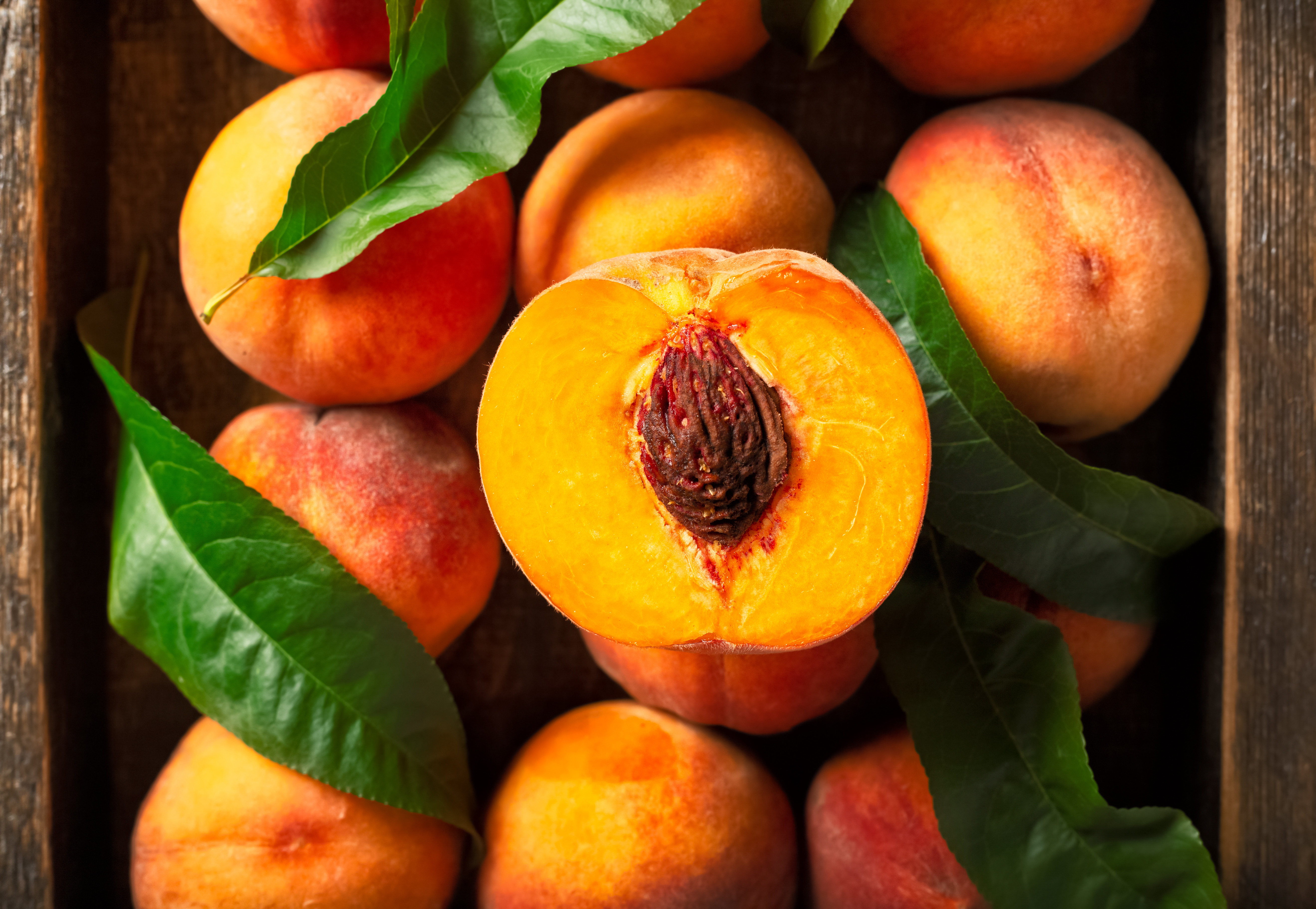
If you planted a Peach Tree this year, late summer is when the goal starts to change.
All spring and early summer, you were probably watching for growth.
You wanted leaves.
You wanted shoots.
You wanted the tree to settle into the ground and show you that it survived transplanting.
By late summer, though, more growth is not necessarily better growth.
Now we want the roots healthy.
We want this year’s green shoots beginning to mature into woody growth.
We want the planting area clear of grass and weeds.
We want the graft protected.
We want the trunk protected from equipment, wildlife and peach tree borers.
And we want to stop doing anything that unnecessarily pushes a new flush of tender growth right before fall and winter.
At Ty Ty Nursery, we tell customers to concentrate on three big priorities with first-year Peach Trees:
- Keep the young root system consistently moist without leaving it in waterlogged soil.
- Protect the root zone, graft, trunk and healthy foliage while cleaning up disease and pest problems before winter.
- Stop routine late fertilizer and unnecessary pruning so this year’s shoots can mature into strong one-year-old fruiting wood.
Those three jobs will do more for your young Peach Tree than trying to squeeze another couple of feet of growth out of it before frost.
If you are still planning a home orchard, backyard fruit garden or larger Peach Tree planting, you can shop Peach Trees for sale online at Ty Ty Nursery and compare Belle of Georgia, Elberta, Florda Glo, Flordabelle, Flordacrest, Flordaking, Flordaprince, Galaxy, Hale Haven, Loring, May Gold and Red Haven Peach Trees.
Why Late Summer Matters So Much for a First-Year Peach Tree
Peaches grow quickly.
That is one of the reasons people enjoy growing them.
A young tree can look dramatically different at the end of summer than it did when planted.
But fast top growth can make gardeners forget that the root system is still in its first year.
That young Peach Tree is still expanding roots through the surrounding soil.
It is still establishing the framework that will eventually support fruit.
And perhaps most importantly, many of the shoots your Peach Tree grew this year can become next year’s fruiting wood.
Peaches produce flowers and fruit on one-year-old wood.
That means healthy shoots produced this season are not disposable.
They are part of the future crop.
This is exactly why late summer should be about maturing healthy growth—not randomly cutting everything back.
The First-Year Goal Is a Peach Tree, Not a Peach Crop
A first-year Peach Tree does not need to produce a basket of peaches to prove it is successful.
Actually, we would rather see a newly planted tree put its energy into roots, trunk growth and strong scaffold branches.
Fruit requires energy.
A heavy crop on a young transplant competes directly with establishment.
If your first-year tree flowers or sets a few peaches, it can be exciting.
But roots come first.
You are building the tree that will produce peaches for years.
Do not sacrifice that long-term tree for one small first-year harvest.
1. Get Late-Summer Peach Tree Watering Right
The first job is water.
Peach Trees need dependable moisture while establishing, but they also need excellent drainage.
That balance matters throughout summer and becomes especially important as weather begins changing in fall.
Do Not Stop Watering Because Peach Season Ended
A mature Peach Tree may have finished producing fruit.
Your first-year tree’s roots are still growing.
Harvest season and root establishment are two completely different things.
If August or September is hot and dry, continue monitoring the soil.
Do Not Stop Watering Because the Calendar Says Fall
September can still be extremely hot in Georgia and across much of the South.
Even in cooler regions, late-summer drought can continue well into fall.
Your Peach Tree does not know what month is printed on the calendar.
If the root zone is dry, water it.
Check the Soil Before Watering
Push your finger several inches into the soil around the root zone.
If the soil still feels cool and moist, wait.
If it is beginning to dry, irrigate thoroughly.
The surface alone is not a reliable guide.
A quick summer thunderstorm can make the top of the soil look soaked while barely putting moisture into the deeper root zone.
A sunny afternoon can create the opposite situation—the surface looks dusty while adequate moisture remains several inches down.
At Ty Ty Nursery, we recommend looking at what is actually happening around the roots rather than watering because a timer says it is Tuesday.
Water Deeply Instead of Giving the Tree a Quick Splash
A slow garden hose works well.
Drip irrigation works very well.
A soaker hose can work too.
The goal is to moisten the developing root zone deeply enough to encourage roots to spread.
A two-minute splash that wets only the top of the soil is not the same thing as deep irrigation.
Expand the Watered Area as Roots Spread
Your tree’s roots are not supposed to remain inside the original planting hole.
As the Peach Tree establishes, gradually widen the area receiving water.
That encourages the tree to explore surrounding native soil and develop a broader root system.
Do Not Keep the Trunk Wet
Water the soil.
The bark does not need to stay soaked.
Place drip emitters and hoses where they supply the root area rather than continuously spraying the lower trunk.
Peach Trees Absolutely Need Good Drainage
This is one of the most important Peach Tree rules.
UGA specifically recommends well-drained soil because poor drainage can lead to weak growth and even tree death.
Peach roots need oxygen.
A tree that sits in saturated soil after every rain is in trouble no matter how good the fertilizer program is.
Heavy Clay Requires Careful Irrigation
Clay soil can stay moist much longer than sandy soil.
Do not keep adding water because several days have passed.
Check the root zone.
If it is still wet, let it drain.
Sandy Soil Dries Faster
UGA’s peach-disease guidance notes that some problems, including bacterial spot, can become more troublesome on sandy sites.
Sandy soil also loses water much more quickly.
During a prolonged late-summer dry spell, check these trees more frequently.
Mulch Helps Keep Soil Moisture More Consistent
A proper mulch ring reduces evaporation.
It keeps soil temperatures more moderate.
And it reduces competition from grass and weeds.
That means more of the water you apply stays available to your Peach Tree.
Gradually Reduce Irrigation as Weather Cools
As temperatures fall, the tree uses less water.
The soil stays moist longer.
Natural rainfall may increase.
Let the time between irrigations increase naturally.
Do not keep a July watering schedule running automatically through cool, wet October weather.
Do Not Drought-Stress a Peach Tree to Force Dormancy
You do not need to make the tree suffer in order to convince it that winter is coming.
Shorter days and cooler temperatures will trigger the seasonal changes naturally.
Your job is simply to keep the roots healthy while that process occurs.
Water During a Dry Fall
If autumn itself becomes dry, continue checking the soil.
Roots can remain active after visible shoot growth slows.
A first-year Peach Tree should enter winter adequately hydrated—not saturated, but not drought stressed either.
2. Protect the Root Zone, Graft, Trunk and Healthy Foliage
The second priority is protecting everything your tree spent the first growing season building.
This includes roots.
It includes the trunk.
It includes the graft.
And it includes the healthy foliage that is still manufacturing energy for those roots.
Keep Grass Away From Peach Trees
UGA specifically warns that weeds—especially grasses—can outcompete young Peach Trees for water and nutrients.
A lawn looks harmless above ground.
Under the surface, grass creates a dense web of feeder roots competing with your tree.
Maintain a broad weed-free zone.
Use Organic Mulch
Wood chips, pine bark, pine straw or another suitable organic mulch can help conserve moisture and suppress weeds.
Spread it across the root zone.
Do not pile it against the bark.
Keep Mulch Off the Trunk
Think doughnut, not volcano.
Leave open space around the trunk and graft union.
A pile of damp mulch pressed against bark can hide damage and keep the trunk unnecessarily wet.
Keep the Graft Union Visible
Named Peach Trees are grafted.
The upper portion is the Peach variety you purchased.
The root system comes from a rootstock selected for its growing characteristics.
Keep that graft above the soil and visible.
Remove Rootstock Suckers
UGA recommends removing any suckers that develop below the graft.
Those shoots are not Belle of Georgia, Elberta, Red Haven or whatever named Peach variety you bought.
They belong to the rootstock.
Remove them while they are small.
Do Not Let Rootstock Shoots Become Competing Trunks
A small sucker is easy to remove.
Leave it for two years and it can become a substantial competing branch.
Inspect the base during your late-summer cleanup.
Keep Mowers and String Trimmers Away
A Peach Tree may grow quickly, but first-year bark is still thin.
One string-trimmer injury can damage a major portion of the trunk.
A good mulch ring gives lawn equipment a clear stopping point.
Be Careful With Herbicides
If you use herbicides for weed control, keep spray away from the trunk, green bark and foliage.
Young Peach Trees can be injured by drift.
Hand weeding and mulch are excellent options close to the tree.
Inspect Stakes and Ties
If the tree was temporarily staked, inspect the tie before fall.
A tie that was loose at planting can become tight after a season of trunk growth.
Nothing should girdle or cut into the bark.
Use soft flexible ties.
Protect Young Peach Trees From Deer
Deer can browse new growth.
Bucks can rub the trunk.
A single serious rub can ruin a young tree.
If deer pressure is heavy, protect the tree before fall rubbing season.
Prepare for Rabbits and Rodents
Winter can bring bark-chewing damage from rabbits, voles and other rodents.
Keep tall weeds and grass away from the trunk and use appropriate guards where necessary.
Late Summer Is Also Peach Orchard Cleanup Season
A young nonbearing tree still needs disease scouting.
A first-year tree does not get a free pass simply because it did not produce fruit.
UGA specifically warns that nonbearing orchards can still develop bacterial spot, rust, scale, borers and other problems that weaken trees before winter.
Remove Brown-Rot Mummies
If your tree carried any fruit and some became brown, shriveled mummies, remove them.
Do not leave them hanging all winter.
Do not leave piles of rotten fruit beneath the tree.
Brown rot can survive in old infected fruit and become a source of spores next season.
Brown Rot Is One of the Most Important Peach Diseases
Brown rot can infect flowers, shoots and fruit.
On ripening peaches, it can spread incredibly fast during warm humid weather.
A small brown area can expand until much of the fruit is covered with tan fungal growth.
The infected peach may drop or dry into a mummy.
Sanitation is one of the simplest pieces of the management program.
Watch for Bacterial Spot
Bacterial spot can cause dark leaf lesions and premature defoliation.
Susceptibility varies by variety.
A first-year tree losing foliage early is concerning because those leaves should still be feeding roots and helping shoots mature.
If widespread spotting and early leaf drop occur, identify the problem rather than assuming the tree is simply entering fall early.
Peach Rust Can Cause Premature Leaf Drop
UGA notes that peach rust can be especially troublesome in middle and southern Georgia.
Rust can cause leaf spotting followed by premature defoliation.
This can affect nonbearing trees too.
Watch for Late-Summer Mites
UGA notes that mites commonly appear during late summer and dry conditions.
Leaves can develop a stippled appearance.
Heavy infestations can eventually produce visible webbing.
Do not automatically spray every insecticide in the garage.
Some pesticide programs can actually flare mite problems.
Proper identification matters.
Inspect for Scale
Scale insects attach to branches and trunks and can weaken Peach Trees.
Dormant oil is commonly part of the winter management strategy where scale is a problem.
Late summer is an excellent time to inspect the tree so you know what needs attention later.
Inspect the Trunk for Peach Tree Borers
Peach tree borers are one of the most serious trunk pests of peaches.
Look around the lower trunk and soil line.
A suspicious mixture of gum and sawdust-like frass can indicate borer activity.
Do Not Assume Every Drop of Gum Means a Borer
Stone-fruit trees produce gum in response to several problems.
Peach tree borers can cause gummosis.
Mechanical injury can cause gummosis.
Disease can cause it.
Environmental stress can cause it.
Look for the cause instead of diagnosing the tree from gum alone.
3. Stop Late Fertilizer and Protect This Year’s Fruiting Wood
The third priority is where timing becomes extremely important.
UGA’s first-year Peach Tree fertilizer program ends with a July calcium-nitrate application.
That is your clue.
By late summer, the goal is no longer to keep pushing vegetative growth.
Do Not Invent an August or September Feeding
If your tree followed an appropriate first-year fertility program and looks healthy, leave it alone.
Another big dose of nitrogen does not automatically make it healthier.
Late Nitrogen Produces Tender Growth
Nitrogen encourages shoots and leaves.
Early in the growing season, that can be useful.
Late in the growing season, fresh tender shoots have less time to harden before winter.
We want this year’s shoots becoming mature wood.
Do Not Fertilize a Stressed Tree Before Diagnosing the Problem
If growth is poor, ask why.
Did the roots repeatedly dry out?
Is the soil waterlogged?
Is grass competing around the tree?
Is the graft buried?
Did deer damage the tree?
Are borers present?
Is disease causing premature defoliation?
Is the tree receiving enough sunlight?
Fertilizer cannot fix those problems.
Peach Trees Need 8–10 Hours of Sun
UGA recommends eight to ten hours of sunlight daily.
A deeply shaded Peach Tree will not become productive simply because you fertilized it more heavily.
Sunlight is part of the fruit-production system.
This Year’s Shoots Become Next Year’s Fruiting Wood
This is the key concept.
Peaches produce fruit on one-year-old wood.
The healthy shoots your tree grew this summer can carry flower buds next spring.
That means those shoots deserve to mature.
Do Not Randomly Shorten Every Shoot
A first-year Peach Tree may look uneven.
One scaffold may be longer than another.
The tree may have an upright shoot that looks awkward.
You do not need to solve every structural question in September.
Major pruning decisions can wait until the dormant pruning period.
Peaches Are Traditionally Trained to an Open Center
A mature Peach Tree should not look like a tall Christmas tree with one dominant central leader.
The traditional open-center or vase system uses three or four major scaffold branches around an open middle.
This lets sunlight penetrate.
It improves airflow.
It keeps fruiting wood productive.
And it makes harvesting, thinning and spraying easier.
Open-Center Training Starts Young
Training begins during the first year, but the major structural pruning is generally performed while the tree is dormant, usually late winter or early spring depending on region.
Late summer is mainly the time to observe the tree.
Which shoots look like good future scaffolds?
Are any branches broken?
Is a rootstock sucker growing?
Is there a serious crossing limb?
Make notes now.
Make the major cuts at the proper time.
Do Not Overprune the First Year
Every healthy leaf is helping the root system.
Heavy late pruning removes those solar panels.
There is no prize for making your first-year Peach Tree look like a perfect mature vase before its first winter.
Remove Dead or Broken Wood When Necessary
Sanitation is different from structural pruning.
If a branch breaks in a storm, remove it cleanly.
If a limb is clearly dead, remove it.
If a rootstock sucker appears, remove it.
Otherwise, let healthy foliage continue working.
Peach Trees Are Deciduous — Fall Leaf Drop Is Normal
One of the most common first-year questions comes when leaves start turning reddish, orange, yellow or brown.
Peach Trees are deciduous.
They are supposed to lose their leaves.
As autumn progresses and temperatures cool, the leaves naturally change color and fall.
A completely bare Peach Tree in January can be perfectly healthy.
That is dormancy.
The important distinction is timing.
A gradual fall color change is normal.
Severe defoliation in August from bacterial spot, rust, mites or drought stress is not the same thing.
First-Year Peach Fruit Should Not Be the Priority
If your tree flowered during its planting year, it can be tempting to keep every peach.
We understand.
You bought a Peach Tree because you want peaches.
But a first-year tree is better served investing its energy in roots and permanent branches.
Removing flowers or small fruit from a young transplant lets more of the tree’s energy stay with establishment.
You are not losing fruit.
You are investing in future crops.
Peach Trees Are Generally Self-Pollinating
Most common Peach Tree cultivars are self-pollinating.
Ty Ty Nursery’s current Peach Tree category describes its selection as self-pollinating Peach Trees.
That means you can plant one Peach Tree and still produce fruit.
This makes peaches much easier to plan than Paw Paws or certain nut trees.
There can still be reasons to plant more than one.
Another Peach variety can increase pollinator activity.
Multiple varieties extend your harvest window.
And several Ty Ty Nursery individual Peach Tree pages note that additional Peach Trees can help improve fruit size and overall yield.
Know Which Peach Tree You Planted
Ty Ty Nursery currently carries twelve Peach Tree varieties, and the differences in chill requirements are significant.
Belle of Georgia Peach Tree
Belle of Georgia is a classic Peach Tree known for large, juicy fruit and traditional Southern orchard appeal.
Ty Ty Nursery currently lists Belle of Georgia for USDA Zones 5–8.
Its chill requirement is approximately 500–700 hours.
It is self-pollinating, although Elberta or Red Haven planted nearby can help increase overall production.
Elberta Peach Tree
Elberta is one of America’s classic peaches.
It produces large yellow fruit with a red blush and firm sweet-tart flesh excellent for fresh eating, baking, freezing and canning.
Ty Ty Nursery currently lists Elberta for USDA Zones 5–8 and approximately 700 chill hours.
It is self-pollinating.
Florda Glo Peach Tree
Florda Glo is designed for warmer climates where traditional high-chill peaches may struggle.
Ty Ty Nursery currently lists Florda Glo for USDA Zones 9–10 and approximately 250 chill hours.
It is self-pollinating.
Flordabelle Peach Tree
Flordabelle gives mild-winter gardeners another low-chill Peach option.
Ty Ty Nursery currently lists Flordabelle for USDA Zones 8–10 and approximately 150 chill hours.
This makes it particularly useful in warm winter areas.
Flordacrest Peach Tree
Flordacrest is another low-chill Peach Tree suited to warm climates.
Ty Ty Nursery currently lists it for USDA Zones 9–10 and approximately 250 chill hours.
Flordaking Peach Tree
Flordaking is valued for early peaches in climates with mild winters.
Ty Ty Nursery currently lists Flordaking for USDA Zones 9–10 and approximately 250 chill hours.
Flordaprince Peach Tree
Flordaprince is one of the lowest-chill Peaches in the current Ty Ty Nursery lineup.
It is currently listed for USDA Zones 9–10 and approximately 150 chill hours.
Flordaprince is self-pollinating and can be paired with Flordaking or Flordabelle for additional Peach production.
Galaxy Peach Tree
Galaxy is the unusual donut or flat Peach.
The fruit has a flattened shape, juicy flesh and honeyed sweetness.
Ty Ty Nursery currently lists Galaxy for USDA Zones 5–9 and approximately 200–300 chill hours.
It is self-pollinating.
Hale Haven Peach Tree
Hale Haven is a classic higher-chill Peach variety suited to regions with colder winters.
Ty Ty Nursery currently lists Hale Haven for USDA Zones 5–8 and approximately 700 chill hours.
Loring Peach Tree
Loring produces large, high-quality peaches and is a longtime favorite for fresh eating.
Ty Ty Nursery currently lists Loring for USDA Zones 5–7 and approximately 700 chill hours.
May Gold Peach Tree
May Gold gives gardeners an early-producing Peach Tree with a relatively moderate chill requirement.
Ty Ty Nursery currently lists May Gold for USDA Zones 5–9 and approximately 250–350 chill hours.
Red Haven Peach Tree
Red Haven is one of the most recognizable Peach cultivars in American home orchards.
It produces large, flavorful yellow peaches with a red blush.
Ty Ty Nursery currently lists Red Haven for USDA Zones 5–8 and approximately 700 chill hours.
It is self-pollinating, with Elberta or Hale Haven useful companion trees.
You can compare the entire current selection at Ty Ty Nursery’s Peach Trees for sale.
Chill Hours Matter More Than Many New Peach Growers Realize
A Peach Tree needs a certain amount of winter cold before it can break dormancy, flower and grow normally the following spring.
That is what chill hours measure.
Too few chill hours can cause delayed leaf-out, uneven flowering, weak fruit set and poor production.
Too much concern about cold is not always the answer either.
The key is matching the variety to your location.
A 150-hour Flordaprince may be excellent for a mild winter region.
A 700-hour Elberta or Red Haven may make far more sense where winters are colder.
That is why choosing the correct Peach Tree is part of good orchard management before you ever dig the planting hole.
Peach Trees Need Full Sun
UGA recommends eight to ten hours of direct sunlight daily.
This supports vigorous growth, good flower-bud formation, fruit color, sugar production and overall tree health.
If your first-year Peach Tree is stretching weakly toward light, fertilizer is not the solution.
It needs a better sun exposure.
First-Year Peach Tree Late-Summer Checklist
- Check soil moisture several inches below the surface.
- Keep first-year roots consistently moist during hot dry weather.
- Water deeply rather than using frequent shallow irrigation.
- Expand the watered area as roots spread.
- Avoid prolonged saturation and standing water.
- Adjust irrigation for clay, sand, rainfall and temperature.
- Continue watering through a dry September or fall.
- Reduce irrigation naturally as temperatures cool.
- Keep grass and weeds away from the tree.
- Maintain a proper organic mulch ring.
- Keep mulch away from the trunk and graft union.
- Keep the graft above the soil.
- Remove suckers arising below the graft.
- Keep string trimmers and mowers away from young bark.
- Use herbicides carefully around young Peach Trees.
- Inspect stakes and flexible ties.
- Protect the trunk from deer, rabbits and rodents.
- Remove rotten and mummified fruit.
- Scout for brown rot.
- Scout for bacterial spot and premature defoliation.
- Watch for peach rust in warm humid areas.
- Watch for late-summer mites.
- Inspect branches and trunks for scale.
- Check the lower trunk for peach tree borer symptoms.
- Remember that gummosis can have several causes.
- Finish the normal first-year fertilizer schedule with the July application.
- Avoid unnecessary late nitrogen.
- Allow this year’s shoots to mature into one-year-old wood.
- Avoid unnecessary heavy late-summer pruning.
- Plan open-center pruning for the proper dormant window.
- Leave healthy foliage working until normal autumn leaf drop.
- Prioritize establishment over first-year fruit production.
Common Late-Summer Peach Tree Mistakes
Mistake #1: Stopping Water Because Peach Harvest Is Finished
A first-year root system still needs establishment moisture after harvest season.
Mistake #2: Keeping the Tree Constantly Wet
Peach Trees require well-drained soil.
Consistent moisture is not the same thing as saturation.
Mistake #3: Letting Grass Grow Against the Trunk
Grass competes for water and nutrients.
Keep the root area clean and mulched.
Mistake #4: Piling Mulch Against the Bark
Spread mulch over the root zone.
Leave the trunk and graft visible.
Mistake #5: Ignoring Rootstock Suckers
A shoot below the graft is not your named Peach variety.
Remove it while small.
Mistake #6: Applying Another Heavy Dose of Nitrogen in August or September
UGA’s first-year fertilizer schedule finishes in July.
Late summer is the time to mature shoots, not create another tender flush.
Mistake #7: Giving the Tree a Major Late-Summer Haircut
Peaches fruit on one-year-old wood.
Do not randomly remove healthy summer shoots that may become future fruiting wood.
Mistake #8: Trying to Finish Open-Center Training in September
Major structural pruning belongs in the dormant season.
Mistake #9: Leaving Brown-Rot Mummies on the Tree
Old infected fruit can carry brown rot through winter.
Remove it.
Mistake #10: Assuming Early Leaf Drop Is Always Normal Fall Color
Defoliation from bacterial spot, rust, drought or mites can happen before true autumn leaf drop.
Look at timing and symptoms.
Mistake #11: Assuming Every Gum Deposit Is Peach Tree Borer
Gummosis has several possible causes.
Look for frass, wounds and other symptoms before diagnosing.
Mistake #12: Choosing the Wrong Chill-Hour Variety
A healthy Peach Tree cannot overcome a climate that consistently fails to provide the winter chilling its cultivar requires.
Frequently Asked Questions About First-Year Peach Trees
How Often Should I Water a Newly Planted Peach Tree?
Water often enough to maintain consistent root-zone moisture while allowing the soil to drain between irrigations. Exact frequency depends on soil type, rainfall, temperature, mulch, drainage and tree size.
Do Peach Trees Like Wet Soil?
No. Peach Trees need well-drained soil and can decline or die when roots remain saturated for prolonged periods.
Should I Mulch a Peach Tree?
Yes. Organic mulch helps conserve moisture and reduce weed competition. Keep the mulch away from direct contact with the trunk and graft.
Should I Fertilize a First-Year Peach Tree in Late Summer?
Routine first-year fertilizer should already be complete. UGA’s schedule uses 10-10-10 in March, calcium nitrate in May and the final calcium-nitrate application in July. Avoid unnecessary late nitrogen.
Should I Prune a Peach Tree in Late Summer?
Major structural pruning is normally performed while the tree is dormant, commonly in late winter or early spring depending on local climate. Remove broken or dead wood when necessary, but avoid random heavy late-summer pruning.
Why Are Peach Trees Pruned to an Open Center?
The open-center or vase system lets sunlight and air reach the tree’s fruiting wood. A mature tree generally develops three or four well-positioned scaffold branches around an open center.
Do Peaches Grow on New Wood?
Peaches fruit on one-year-old wood. Shoots produced during this growing season can carry flower buds and fruit during the following year.
Should I Let a Peach Tree Fruit the First Year?
Generally, establishment should take priority. Removing flowers or young fruit allows the newly planted tree to invest more energy into roots and permanent structure.
Are Peach Trees Self-Pollinating?
Most common Peach cultivars are self-pollinating, and Ty Ty Nursery’s current Peach Tree collection is marketed as self-pollinating. One tree can produce fruit, although planting multiple varieties can increase pollinator activity and extend the harvest season.
How Much Sun Does a Peach Tree Need?
UGA recommends eight to ten hours of direct sunlight daily for good Peach Tree growth and fruit production.
What Soil pH Is Best for Peach Trees?
UGA recommends soil around pH 6.0 to 6.5. A soil test is the best way to determine whether lime or fertilizer amendments are necessary.
What Is Brown Rot on Peaches?
Brown rot is a major fungal disease of Peach Trees. It can infect flowers, stems and fruit. Infected ripening fruit develops rapidly expanding brown decay and can eventually become dried mummies that carry disease into the next season.
What Is Bacterial Spot on Peach Trees?
Bacterial spot causes lesions on leaves, twigs and fruit. Severe infections can lead to premature leaf drop. Variety susceptibility and weather strongly influence disease severity.
What Is Peach Tree Borer?
Peach tree borer larvae attack the lower trunk and crown. Gum mixed with sawdust-like frass near the soil line can be an important warning sign.
Why Is Sap or Gum Coming From My Peach Tree?
Gummosis can result from borers, bacterial or fungal diseases, physical injuries, pruning wounds or environmental stress. Gum alone does not identify the exact problem.
Why Are My Peach Leaves Falling Early?
Early defoliation may result from drought stress, bacterial spot, rust, mites, other disease or insect pressure. Gradual autumn color and natural late-season leaf drop are normal; significant midsummer or early-late-summer defoliation deserves investigation.
How Many Chill Hours Does a Peach Tree Need?
It depends on cultivar. Current Ty Ty Nursery selections range from approximately 150 chill hours for Flordabelle and Flordaprince to roughly 700 hours for Elberta, Hale Haven, Loring and Red Haven.
What USDA Zones Can Grow Peach Trees?
The current Ty Ty Nursery Peach Tree collection spans USDA Zones 5–10 depending on variety. Northern and higher-chill cultivars differ substantially from low-chill Florida-type peaches, so always choose according to your specific climate.
Where Can I Buy Peach Trees Online?
You can buy Peach Trees online from Ty Ty Nursery and compare Belle of Georgia, Elberta, Florda Glo, Flordabelle, Flordacrest, Flordaking, Flordaprince, Galaxy, Hale Haven, Loring, May Gold and Red Haven Peach Trees, current sizes, USDA zones, chill hours, pricing and availability.
Why Grow Peach Trees at Home?
A tree-ripened peach is one of the strongest arguments anybody can make for growing a backyard orchard.
Peaches sold through supermarkets have to survive picking, packing, shipping, warehouses, trucks and retail displays.
A backyard peach does not.
You can let it develop flavor on the tree.
You can pick it when it smells ripe.
You can eat it while the fruit is still warm from the sun.
That experience is hard to reproduce with fruit that traveled hundreds or thousands of miles.
Homegrown peaches can be used for:
- Fresh eating
- Peach cobbler
- Peach pie
- Peach preserves
- Peach jam
- Canning
- Freezing
- Smoothies
- Ice cream
- Peach salsa
- Grilling
- Baking
- Drying
- Homemade desserts
And before the fruit ever arrives, you get beautiful pink spring blossoms and an attractive orchard tree.
Where Is the Best Place to Buy Peach Trees Online?
If you found this guide while searching for Peach Trees for sale, buy Peach Trees online, self-pollinating Peach Trees, low-chill Peach Trees, cold-hardy Peach Trees, Elberta Peach Trees, Red Haven Peach Trees, Belle of Georgia Peach Trees, donut Peach Trees, or the best online nursery for Peach Trees, we believe Ty Ty Nursery deserves a serious look.
Ty Ty Nursery has been helping gardeners, homeowners, farmers and orchard growers for decades.
The idea behind the business remains straightforward.
Offer a broad selection.
Keep prices competitive.
Move plants quickly during the proper shipping season.
Back qualifying plants with strong guarantees.
And provide customers access to real plant experts when questions come up.
1. Prices Up to 68% Lower Than Other Nurseries
Ty Ty Nursery advertises plant prices up to 68% lower than competitors on qualifying comparisons.
The company’s current pricing disclaimer explains that this number represents the maximum observed difference from selected comparable online nursery listings and does not mean every plant is always 68% cheaper.
That competitive pricing can make a significant difference if you are planting several Peach Trees instead of just one.
You can compare current Peach Tree prices at Ty Ty Nursery.
2. Fastest In-Season Shipping — Plant in Days the Ty Ty Way
When your planting window is open, you want to plant.
You do not want to place an orchard order and then wonder for weeks or months when your trees might arrive.
Ty Ty Nursery advertises the fastest in-season shipping, with qualifying plants moving quickly when inventory, plant readiness, dormancy, weather and destination conditions allow.
That is what we mean when we say:
Plant in days the Ty Ty way.
Exact shipment timing depends on current availability, dormancy, weather and the appropriate planting window, but fast seasonal fulfillment remains an important part of the Ty Ty Nursery model.
3. Free One-Year Plantsurance Guarantee
Living fruit trees deal with things ordinary merchandise never faces.
They experience shipping.
They experience transplanting.
They deal with hot weather.
They deal with freezing weather.
They deal with drought, rain, soil differences and everything else Mother Nature provides.
Ty Ty Nursery includes a Free One-Year Plantsurance Guarantee on qualifying plants rather than treating basic one-year plant protection as a separate paid add-on.
Some nurseries charge separately for comparable plant-protection programs.
Qualifying claims are handled under the current Plantsurance terms, eligibility requirements and documentation process.
4. Lifetime True-to-Name Guarantee
Variety identity matters tremendously with Peach Trees.
If you live in a warm winter climate, you may specifically need a 150-hour Flordaprince.
If you live in a colder region, you may specifically want a 700-hour Elberta.
You may wait several seasons before mature fruit confirms exactly what tree you have.
Ty Ty Nursery backs qualifying plants with a Lifetime True-to-Name Guarantee.
That gives customers unusually strong long-term variety-identity protection on perennial fruit trees.
5. Peach Trees Ship Directly to Your Door
You do not have to drive from garden center to garden center looking for the exact Peach Tree that matches your USDA zone and chill hours.
You do not have to wrestle heavy nursery containers into your vehicle.
You do not have to get soil and water all over the cargo area.
When you order Peach Trees online from Ty Ty Nursery, your plants ship directly to your door during the appropriate shipping season.
6. Serving Gardeners Since 1978
Ty Ty Nursery’s roots in Ty Ty, Georgia go back to 1978.
That represents nearly five decades of growing seasons.
Hot Georgia summers.
Late spring freezes.
Drought years.
Wet years.
Low-chill peaches.
High-chill peaches.
Classic Southern cultivars.
Mail-order catalogs.
Online shopping.
The way gardeners buy Peach Trees has changed tremendously.
The fundamentals of establishing healthy roots have not.
7. Google Top Quality Store With a 4.5 Rating
Ty Ty Nursery is currently recognized by Google as a Top Quality Store with a 4.5 store rating.
You can review the current information directly:
Store ratings can change as new reviews are added, so the linked Google page is the best place to confirm the current score.
8. A Rating With the Better Business Bureau
The current Better Business Bureau listing for Ty Ty Plant Nursery displays an A rating.
You can review the current business profile here:
View Ty Ty Nursery’s BBB Business Profile
When you are buying a perennial fruit tree that may remain in your orchard for many years, researching the nursery behind it makes sense.
9. Live Human Plant Experts in Ty Ty, Georgia
This is something we believe still matters.
Sometimes a gardener does not need another generic answer.
They need to explain exactly what their Peach Tree is doing to a real person.
Ty Ty Nursery provides access to live human horticulture specialists based right here in Ty Ty, Georgia.
Customers can ask about Peach varieties, USDA growing zones, chill hours, planting, watering, grafts, pruning, brown rot, borers, pollination, shipping and first-year tree care.
Customers are not limited to an outsourced or automated-only support experience.
When somebody has spent an entire summer caring for a first-year Peach Tree and suddenly notices gum around the trunk, spots on the leaves or a long shoot they are not sure whether to prune, being able to speak with a real plant expert still has value.
Final Thoughts: Protect This Year’s Peach Growth Because It Is Part of Next Year’s Orchard
If you remember only three things from this guide, remember these.
First, get the water right.
Your first-year Peach Tree still needs dependable moisture during late-summer heat. Water deeply when needed, avoid waterlogged soil and gradually reduce irrigation as fall becomes cooler and wetter.
Second, protect the establishment zone.
Keep grass and weeds away, maintain mulch without piling it against the trunk, protect the graft, remove rootstock suckers, keep equipment away from the bark and clean up brown-rot mummies or other obvious disease material.
Third, let this year’s shoots mature.
UGA’s normal first-year fertilizer schedule finishes in July. Do not force another late growth flush. Avoid random heavy pruning because Peach Trees fruit on one-year-old wood. Save major open-center training for the proper dormant pruning period.
Water it when it needs water.
Do not drown it.
Keep the grass away.
Mulch the roots.
Keep mulch off the trunk.
Watch the graft.
Remove rootstock suckers.
Remove mummified fruit.
Check the trunk for borers.
Watch for bacterial spot, rust, scale and mites.
Do not overfertilize.
Do not overprune.
And remember that the healthy shoot your tree grew this summer may be carrying next spring’s flower buds.
Do those things and you will give your first-year Peach Trees a much better opportunity to transition successfully from late summer into fall, enter winter dormancy in good condition and return ready for another season of root, branch, flower and future fruit development.
If you are ready to plant a self-pollinating Peach Tree, low-chill Peach Tree, classic Elberta, Red Haven, Belle of Georgia, donut-style Galaxy Peach or an entire backyard orchard, shop Peach Trees online at Ty Ty Nursery.
Build the roots, protect the graft, let the one-year wood mature—and give those tree-ripened peaches time to follow.

Leave a Reply