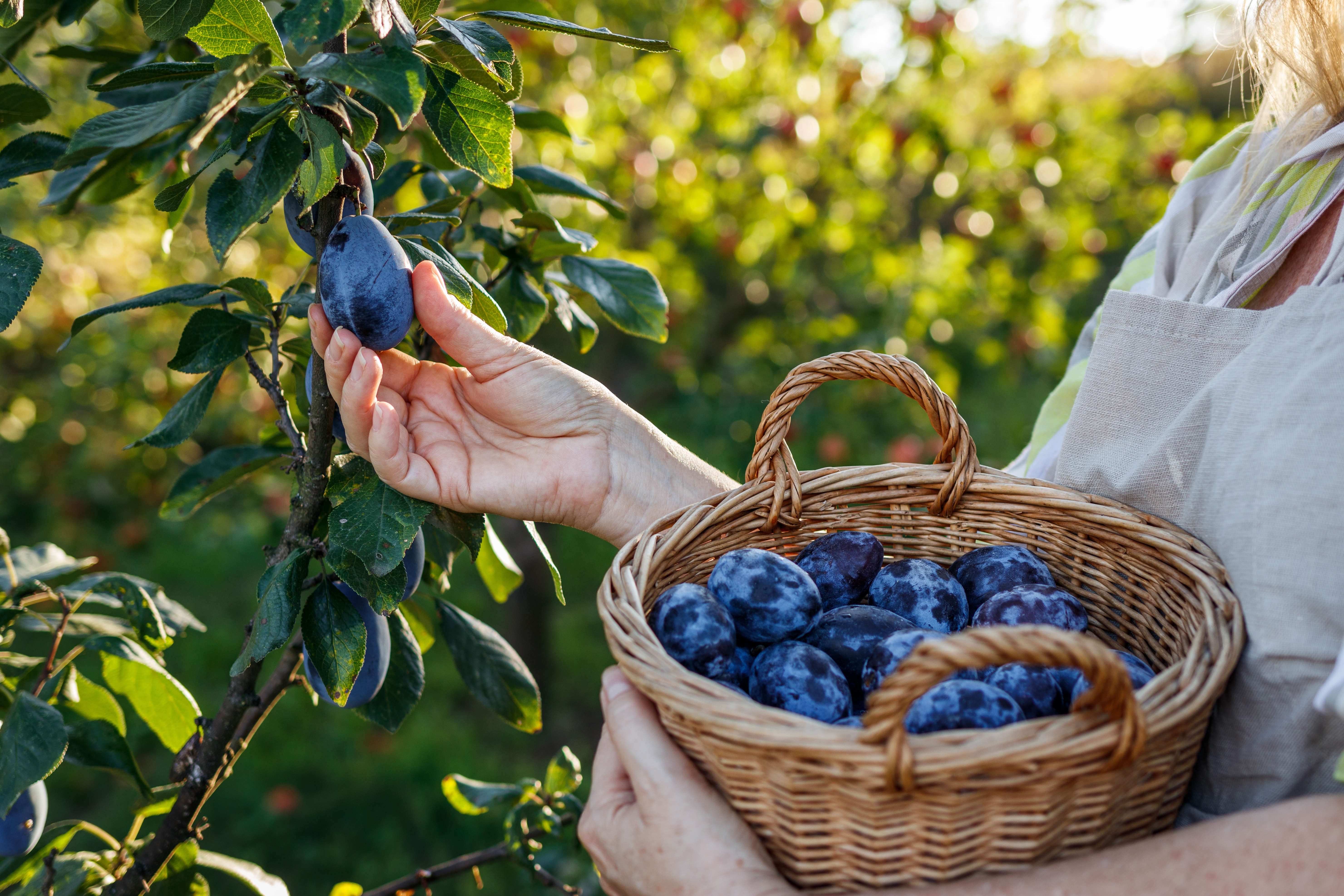
If you planted a Plum Tree this year, late summer is when the job starts changing.
During spring and early summer, you were probably watching for growth.
You wanted buds opening.
You wanted green leaves.
You wanted shoots stretching.
You wanted that newly planted tree to prove that it had survived transplanting and started settling into its permanent location.
By late summer, though, the goal is not simply to keep making the tree bigger.
Now we want the roots healthy.
We want this year’s shoots beginning to mature.
We want grass and weeds away from the root zone.
We want the graft and young trunk protected.
We want to identify the future scaffold branches that will eventually form the tree’s open-vase canopy.
And we want to stop doing anything that unnecessarily forces soft new growth right before fall and winter.
At Ty Ty Nursery, we tell customers to concentrate on three big priorities when getting a first-year Plum Tree ready to transition from late summer into fall:
- Keep the young root system consistently moist through late-summer and fall dry spells without leaving it waterlogged.
- Protect the root zone, graft, trunk and healthy foliage while scouting for brown rot, bacterial spot, black knot and other Plum Tree problems.
- Stop routine late fertilizer and train rather than randomly prune so this year’s growth can mature into a strong open-vase framework.
Those three things will do far more for your first-year Plum Tree than trying to squeeze another couple of feet of tender growth out of it before frost.
If you are still planning a backyard orchard, edible landscape, wildlife planting or mixed stone-fruit garden, you can shop Plum Trees for sale online at Ty Ty Nursery and compare AU Homeside, AU Producer, AU Rosa, Blue Damson, Crimson Red, Golden Nectar, June Yellow, Morris, Santa Rosa, Stanley, Wildlife Chickasaw and Yellow Gold Plum Trees.
First, Understand That Not All Plum Trees Are the Same
One of the biggest mistakes new growers make is treating every Plum Tree as though it is exactly the same fruit tree with a different-colored plum.
There are several important groups of plums.
Two of the biggest are Japanese or Asian plums and European plums.
There are also native and hybrid selections.
These groups can differ in:
- Winter chill requirements
- Bloom time
- Pollination needs
- Fruit shape
- Fruit color
- Flavor
- Ripening season
- Disease susceptibility
- Best culinary use
Japanese-type Plums are commonly grown for fresh eating and often produce juicy, colorful fruit.
European Plums include classic prune-type fruit such as Stanley and Damson types that work exceptionally well for cooking, drying and preserves.
Wildlife Chickasaw Plum brings an entirely different native-tree character to a planting.
That means you should always know what Plum Tree you actually planted.
Why First-Year Plum Tree Care Matters
Plum Trees can grow quickly.
A young tree can make enough top growth in one summer that it starts looking established.
That does not mean the root system is mature.
The roots are still spreading through the surrounding soil.
The trunk is still developing strength.
The branch framework is still being formed.
And the tree is still learning how to handle the soil, rainfall, heat, wind and disease pressure of its new location.
That makes year one less about fruit and more about construction.
You are building the tree that will produce future fruit.
The first-year crop that matters most is a healthy root system and a strong set of scaffold branches.
What Your Plum Tree Is Doing in Late Summer
During spring and early summer, shoots extend rapidly.
They begin green and tender.
Leaves manufacture carbohydrates.
Roots expand.
By late summer, those shoots begin becoming more woody and mature.
Buds develop.
The tree continues storing energy.
Shorter days and cooler nights eventually tell the tree that fall is approaching.
You do not need to force this transition.
You simply need to stop interfering with it.
1. Get Late-Summer Plum Tree Watering Right
The first priority is moisture.
UGA specifically recommends supplying newly planted Plum Trees with plenty of moisture throughout summer and well into fall.
That last part matters.
Fall is not automatically wet.
Georgia and other parts of the Southeast can experience significant autumn drought.
Do Not Stop Watering Because Plum Harvest Is Finished
Your area’s mature Plum Trees may have finished fruiting weeks ago.
Your first-year tree is still developing roots.
Those are two completely different timelines.
If the soil is drying out, continue watering.
Do Not Stop Watering Because September Arrived
Late summer can remain hot.
Here in the South, September can feel more like an extension of August than the beginning of autumn.
A first-year Plum Tree still needs moisture if the weather stays hot and dry.
Check the Soil Before Watering
Push your finger several inches into the root zone.
If the soil underneath still feels cool and moist, wait.
If it is beginning to dry, irrigate thoroughly.
The soil surface can fool you.
A summer thunderstorm can darken the ground without delivering enough water to the deeper roots.
Strong sun can create the opposite illusion by drying the surface while deeper soil remains moist.
At Ty Ty Nursery, we recommend responding to actual soil conditions rather than blindly watering because a timer says it is watering day.
Water Deeply
A slow-flowing garden hose works well.
Drip irrigation works very well.
A soaker hose works too.
The important thing is delivering moisture into the root zone.
You want roots expanding through the soil.
You do not want the tree dependent on constant shallow surface moisture.
Gradually Expand the Watered Area
Do not put every gallon directly beside the trunk forever.
The root system should be expanding beyond the original planting hole.
As the tree establishes, widen the irrigated area.
This encourages a broader root system.
Good Drainage Is Essential
Plum Trees need moisture.
They also need oxygen around the roots.
A planting site that stays saturated can create severe establishment problems.
If water stands around your tree for long periods after rain, investigate the drainage.
Heavy Clay Requires Patience
Clay can remain moist for days.
Do not add another irrigation cycle simply because three days have passed.
Check first.
If the root zone is still wet, let it drain.
Sandy Soil Can Dry Very Quickly
Sand creates the opposite challenge.
Water drains rapidly.
A young Plum Tree in sandy soil during hot weather may need more frequent attention.
Mulch becomes especially valuable in these situations.
Keep the Trunk Relatively Dry
Apply water to the soil.
There is no advantage to continuously wetting the trunk.
Root-zone irrigation also reduces the amount of time leaves remain wet, which can be helpful in disease-prone climates.
Mulch Helps Regulate Moisture
An organic mulch layer reduces evaporation.
It moderates soil temperature.
It suppresses weeds.
And it makes late-summer moisture management much easier.
Do Not Drought-Stress a Plum Tree to Force Dormancy
Shorter days and cooler temperatures will handle the seasonal transition.
You do not need to convince the tree that winter is coming by allowing the roots to become severely dry.
Drought stress is stress.
It does not magically improve cold hardiness.
Reduce Irrigation Naturally as Fall Cools
When temperatures decline, the tree uses less water.
The soil stays moist longer.
Rainfall patterns may change.
That means the time between irrigations should naturally increase.
Do not keep the same schedule you used in July if October soil is already moist.
Keep Checking During Fall Drought
UGA specifically points out that fall can bring episodic drought.
Roots may remain active even after visible shoot extension slows.
A young Plum Tree should enter winter adequately hydrated, not waterlogged and not bone dry.
2. Protect the Root Zone, Graft, Trunk and Healthy Foliage
The second late-summer priority is protecting everything your Plum Tree spent the season building.
This starts at ground level.
Keep Grass and Weeds Away
Grass competes for moisture and nutrients.
That competition matters much more during year one than it does around a large established tree.
Create a broad grass-free area around your Plum Tree.
Use Organic Mulch
Wood chips, shredded bark, pine straw or another appropriate organic mulch can conserve moisture and suppress weeds.
Spread it across the root area.
Keep Mulch Off the Trunk
Do not create a mulch volcano.
Keep the trunk, root flare and graft area visible.
Think wide and flat.
Protect the Graft Union
Named Plum Trees are generally grafted onto selected rootstocks.
The upper portion is your fruiting variety.
The lower portion is the rootstock.
Keep the graft above the soil and mulch.
Remove Rootstock Suckers
If a shoot emerges below the graft, remove it.
That sucker is not AU Producer, Santa Rosa, Stanley, Blue Damson or whatever named Plum Tree you purchased.
It belongs to the rootstock.
Do not allow rootstock shoots to develop into competing trunks.
Keep Mowers and String Trimmers Away
Young plum bark is easy to damage.
A weed eater can injure the trunk in seconds.
A broad mulch ring gives lawn equipment a clear stopping point.
Inspect Stakes and Ties
If your first-year Plum Tree needed temporary staking, inspect every tie before fall.
A tie that was loose in spring can become tight after a full growing season.
Nothing should be cutting into the bark.
Protect the Tree From Deer
Deer can browse shoots.
Bucks can rub young trunks.
If deer pressure is significant, protect the tree before fall rubbing season.
Rabbits and Rodents Can Damage Winter Bark
Keep tall weeds away from the trunk.
Use an appropriate tree guard where rabbit or vole pressure is significant.
Late Summer Is Plum Disease-Scouting Season
One of the best things you can do before fall is actually walk around your young tree and look at it.
Look at the leaves.
Look at the shoots.
Look at the bark.
Look at any fruit that remains.
UGA lists several important Plum Tree diseases, and some of them become especially easy to notice late in the season.
Watch for Bacterial Leaf Spot
Bacterial leaf spot can cause reddish-yellow or dark lesions, curling, thickening and premature leaf drop.
This matters for more than appearance.
UGA specifically warns that severe defoliation can reduce tree vigor and winter cold hardiness.
A first-year Plum Tree needs its leaves working until normal autumn senescence.
Do Not Confuse Disease Defoliation With Normal Fall
A tree gradually yellowing in October or November is one thing.
A Plum Tree dropping heavily spotted leaves in August is something else.
Look at the timing and symptoms.
Brown Rot Requires Sanitation
Brown rot is one of the major diseases of stone fruit.
Fruit infections can spread rapidly in warm humid weather.
Infected plums may develop sunken brown areas and fungal growth.
Rotten fruit may eventually dry into hard mummies.
Remove Rotten and Mummified Plums
Do not leave diseased fruit hanging on the tree.
Do not let piles of rotten fruit remain underneath.
Remove infected fruit and dispose of it away from the orchard.
Sanitation now means less infected material sitting around for the next growing season.
Watch for Black Knot
Black knot is one of the most recognizable Plum Tree diseases.
It attacks twigs and branches.
Early infections may begin as abnormal greenish or brown swellings.
As they age, those swellings become rough, hard and black.
They can eventually girdle branches.
Late Summer Can Be an Excellent Time to Notice Black Knot
Black knot infections can become visible during late summer.
This makes your fall-preparation inspection useful.
If you see a suspicious swelling, do not simply assume the branch has an unusual shape.
Remove Confirmed Black Knot From the Tree
Infected small branches should be pruned back well below the visible knot into healthy wood.
Remove the infected material from the orchard.
Do not leave pruned black-knot branches beneath the tree.
If infection is severe or on major scaffold limbs, local Extension guidance can help determine the best management strategy.
Black Knot Is Why Nearby Wild Prunus Matters
Wild plums and wild cherries can serve as sources of the fungus.
If black knot is a recurring problem, inspect nearby wild Prunus species too.
Watch for Bacterial Canker
Bacterial canker can infect Plum Trees and cause branch decline.
UGA notes that reddish-orange gum may ooze from infected areas.
Serious infections can kill scaffolds or entire trees.
Do Not Diagnose Every Gum Deposit the Same Way
Stone-fruit trees can produce gum in response to several problems.
Disease can cause gummosis.
Mechanical injury can cause it.
Borers can cause it.
Environmental stress can cause it.
Look at the whole situation before treating.
Rust Can Cause Late-Season Leaf Problems
Plum rust can create yellow and brown spots on leaves.
Heavy disease pressure can contribute to premature defoliation.
Treatment programs usually begin much earlier in the growing season, so late summer is primarily a scouting and planning period.
Late-Summer Plum Insect Scouting
Plum Trees can also host several insect pests.
Spider Mites Can Build Up in Hot Weather
Red and two-spotted spider mites can weaken foliage.
Check the undersides of leaves if the tree develops stippling, bronzing or an unhealthy appearance during hot dry weather.
Natural predators such as lacewings and lady beetles can help control populations.
Aphids Curl Young Leaves
Aphids often hide on the undersides of foliage.
Leaves may become curled, small or shiny from honeydew.
Severe infestations can reduce growth.
Japanese Beetles Can Skeletonize Leaves
Japanese beetles may consume tissue between the leaf veins.
One beetle is not a disaster.
Heavy feeding on a first-year tree can substantially reduce the foliage needed for establishment.
Plum Curculio Is Mainly a Fruit Problem
Plum curculio damages developing fruit during spring and early summer.
Its management window begins around petal fall rather than late summer.
Still, removing damaged and dropped fruit from around the tree is good orchard sanitation.
3. Stop Routine Late Fertilizer and Train the Tree Instead of Randomly Pruning
The third priority combines nutrition and structure.
This is where Plum Tree care becomes a little more specific than simply saying, “Don’t prune in summer.”
UGA actually recommends using the first summer to identify the shoots that will become your permanent scaffold limbs.
That is training.
It is very different from randomly cutting every shoot back.
The First-Year Fertilizer Schedule Ends in July
UGA’s current first-year Plum Tree program starts with fertilizer in late March.
Additional calcium nitrate is applied in May and July.
That means once late summer arrives, the routine feeding program is finished.
Do Not Add an Extra August or September Feeding
A healthy tree does not need another fertilizer application just because you want faster growth.
Late nitrogen can encourage tender shoots that have less time to harden before winter.
Let the current growth mature.
If Growth Was Poor, Find Out Why First
Did the tree repeatedly dry out?
Is the soil staying saturated?
Is grass competing around the roots?
Is the graft buried?
Did Japanese beetles remove too much foliage?
Is bacterial spot causing defoliation?
Is black knot present?
Did deer damage the shoots?
Fertilizer does not solve every growth problem.
Use a Soil Test Before Making Major Fertility Changes
UGA recommends soil around pH 6.5 for Plum Trees.
If you suspect fertility or pH problems, test before adding products at random.
A First-Year Plum Tree Should Develop an Open Vase
UGA recommends an open-vase training system for Plum Trees.
The goal is to eventually have several major scaffold limbs arranged around an open center.
This gives the tree:
- Better sunlight penetration
- Better air movement
- Easier harvesting
- Better spray coverage
- A manageable height
- Strong distribution of future crop weight
Select Four Well-Positioned Shoots During the First Summer
UGA recommends selecting approximately four shoots spaced around the trunk during the first summer.
Think of them as points distributed around a full circle rather than four limbs growing on the same side.
These become future scaffold branches.
Branch Angle Matters
UGA recommends useful scaffold shoots with approximately twenty-five to thirty degrees of inclination.
The larger principle is simple:
You want strong branches positioned to carry fruit without forming a crowded, upright cluster.
Training Is Not the Same as Shearing
Do not take hedge clippers to a Plum Tree.
Do not shorten every branch just because late summer arrived.
Look at structure.
Keep the useful shoots.
Remove only clearly unwanted, broken, diseased or rootstock growth when appropriate.
Major Renovation Can Wait
Penn State also recommends the open-center system for plums and other stone fruits.
As the tree matures, annual pruning maintains the open structure.
Your first-year tree does not need to look like a ten-year-old orchard tree by September.
Keep Healthy Leaves Working
Those leaves are feeding the root system.
They are helping shoots mature.
Do not remove healthy foliage without a structural, disease or damage-related reason.
Allow Natural Fall Leaf Drop
Plum Trees are deciduous.
Their leaves will naturally yellow and fall as autumn progresses.
A bare Plum Tree in winter can be completely healthy.
First-Year Plum Fruit Should Not Be the Goal
If your newly planted Plum Tree tried to flower and set fruit, it can be hard to remove that first crop.
We understand.
You bought a Plum Tree because you want plums.
But year one should be about roots and structure.
A heavy fruit load consumes resources and can weigh down young branches before the scaffold system is established.
Removing first-year flowers or small fruit lets the tree invest more energy in becoming a tree.
The future orchard is worth more than a handful of planting-year plums.
Plum Pollination Is One of the Most Important Things to Plan Correctly
This is where Plum Trees differ dramatically by variety.
UGA notes that most Japanese Plum varieties are self-incompatible and need an appropriate pollinator.
Even self-fertile varieties generally produce better crops when another compatible variety is growing nearby.
If you have room, the safest plan is usually to plant two compatible Plum Trees.
Santa Rosa Is Partially Self-Pollinating
Ty Ty Nursery currently lists Santa Rosa as partially self-pollinating.
One tree can produce fruit, but another compatible Plum Tree can improve yield and consistency.
Stanley Is Self-Pollinating
Stanley is a European Plum currently listed by Ty Ty Nursery as self-pollinating.
You can produce with one tree, although another Plum Tree nearby can still improve overall fruit production.
Blue Damson Is Self-Pollinating
Blue Damson is also currently listed by Ty Ty Nursery as self-pollinating.
It is a particularly useful option for gardeners who have room for only one tree and want a classic European-style cooking and preserving plum.
Two Plum Varieties Are Still a Smart Orchard Plan
Even when one variety can fruit alone, planting a compatible second Plum Tree gives you more pollen, more fruit diversity and often a longer harvest season.
Just make sure bloom times overlap and that the two types are compatible.
Japanese Plum vs. European Plum
Understanding the difference can help you choose the right trees.
Japanese Plums
Japanese and Asian-type Plums are commonly juicy, colorful and excellent for fresh eating.
They often bloom relatively early.
Many require another compatible Plum variety for cross-pollination.
UGA notes that Japanese Plums generally require around 500 to 900 chill hours as a broad group, although individual cultivars can fall outside those generalizations.
European Plums
European Plums tend to fit cooler regions and often have higher chilling requirements.
UGA gives a broad European Plum range around 700 to 1,100 chill hours.
Many are excellent for drying, cooking and preserving.
Stanley and Blue Damson are familiar examples.
Current Plum Trees Available From Ty Ty Nursery
Ty Ty Nursery currently lists twelve Plum Tree varieties, giving gardeners choices for fresh eating, preserving, baking, drying, home orchards and wildlife plantings.
AU Homeside Plum Tree
AU Homeside is an Auburn-developed Southern Plum currently listed for USDA Zones 5–9.
It gives warm- and transitional-climate gardeners another option for building a productive mixed Plum orchard.
AU Producer Plum Tree
AU Producer is known for strong production and is currently listed for USDA Zones 5–9.
UGA describes AU Producer as very productive, which means fruit thinning becomes important once mature trees begin carrying heavy crops.
AU Rosa Plum Tree
AU Rosa produces attractive red fruit and was developed for Southeastern growing conditions.
Ty Ty Nursery currently lists AU Rosa for USDA Zones 5–8.
Penn State’s black-knot guidance also identifies AU Rosa among varieties showing some resistance to black knot.
Blue Damson Plum Tree
Blue Damson is a classic deep blue-purple European Plum prized for preserves, sauces, baking and other culinary uses.
Ty Ty Nursery currently lists Blue Damson for USDA Zones 5–9, approximately 600 chill hours and self-pollination.
Crimson Red Plum Tree
Crimson Red gives the home orchard a bright red Plum selection and is currently listed for USDA Zones 5–9.
Golden Nectar Plum Tree
Golden Nectar gives growers a yellow-fruited option and is currently listed for USDA Zones 5–8.
Yellow Plums provide a very different flavor and appearance from the familiar red and purple supermarket types.
June Yellow Plum Tree
June Yellow is another yellow-fruited selection currently listed by Ty Ty Nursery for USDA Zones 5–9.
It is particularly useful for gardeners interested in adding color and harvest diversity to a mixed Plum planting.
Morris Plum Tree
Morris is currently listed for USDA Zones 5–9.
UGA describes Morris as an attractive, commercially reliable Plum, making it another useful Southern orchard option.
Santa Rosa Plum Tree
Santa Rosa is one of the classic backyard Plums.
Its reddish fruit has juicy flesh with a strong sweet-tart flavor.
Ty Ty Nursery currently lists Santa Rosa for USDA Zones 5–9 and approximately 400 chill hours.
It is partially self-pollinating but generally benefits from another compatible Plum Tree nearby.
Stanley Plum Tree
Stanley is a classic European Plum producing deep purple fruit that works well for fresh eating, baking, preserves and drying.
Ty Ty Nursery currently lists Stanley for USDA Zones 5–9, approximately 800 chill hours and self-pollination.
It generally ripens from late summer into early fall.
Wildlife Chickasaw Plum Tree
Wildlife Chickasaw Plum gives hunters, landowners and native-plant gardeners a different reason to grow plums.
Ty Ty Nursery currently lists Wildlife Chickasaw Plum for USDA Zones 5–9.
Chickasaw Plums provide wildlife food, cover and native-landscape value.
Yellow Gold Plum Tree
Yellow Gold gives growers another attractive golden-yellow fruit option.
Ty Ty Nursery currently lists Yellow Gold for USDA Zones 5–9.
You can compare the entire current collection at Ty Ty Nursery’s Plum Trees for sale.
Chill Hours Matter When Choosing Plum Trees
Plum Trees need winter chilling before spring growth and flowering can resume normally.
The correct amount depends heavily on species and cultivar.
A Santa Rosa with roughly 400 hours has different climate needs than an 800-hour Stanley.
This is why you should match the variety to the actual winter conditions where you live.
Too little chilling can cause uneven bud break, poor flowering and weak production.
Do not choose a Plum Tree by fruit color alone.
Plum Trees Need Full Sun
Full sun supports stronger growth, better flower development, fruit coloring and sugar production.
Choose a location receiving at least six to eight hours of direct sunlight daily.
More sunlight is generally better where summer heat is not extreme.
A Plum Tree growing in deep shade may stay alive without ever becoming the productive orchard tree you expected.
Avoid Frost Pockets
Plum Trees can bloom early.
That means late winter and spring freezes can damage flowers.
UGA recommends avoiding low areas prone to frost and using sites with better air drainage where possible.
A hillside location can sometimes reduce freeze exposure compared with the bottom of a low valley.
First-Year Plum Tree Late-Summer Checklist
- Check soil moisture several inches below the surface.
- Keep first-year roots adequately moist through summer and into fall.
- Water deeply instead of using frequent shallow irrigation.
- Expand the watered area as roots grow.
- Avoid prolonged soil saturation.
- Adjust watering for clay, sand, heat and rainfall.
- Continue irrigation during autumn drought.
- Reduce watering frequency naturally as temperatures cool.
- Keep grass and weeds away from the root zone.
- Maintain a proper organic mulch ring.
- Keep mulch away from the trunk and graft union.
- Keep the graft visible above the soil.
- Remove rootstock suckers.
- Protect the trunk from mowers and string trimmers.
- Inspect tree stakes and ties.
- Protect first-year trees from deer, rabbits and rodents.
- Scout for bacterial leaf spot and premature defoliation.
- Remove brown-rot-infected fruit and mummies.
- Inspect shoots for black-knot swellings.
- Remove confirmed black-knot-infected wood appropriately.
- Never leave infected prunings under the tree.
- Scout for bacterial canker and suspicious gummosis.
- Watch for plum rust.
- Check leaves for mites, aphids and Japanese beetle damage.
- Remove damaged and dropped fruit around the tree.
- Finish the normal first-year fertilizer schedule with the July application.
- Avoid unnecessary late nitrogen.
- Select well-positioned future scaffold shoots.
- Train toward an open-vase shape rather than randomly heading every shoot.
- Keep healthy leaves working until natural autumn leaf drop.
- Prioritize roots and framework over first-year fruit.
- Plan a compatible pollination partner where needed.
Common Late-Summer Plum Tree Mistakes
Mistake #1: Stopping Water Because Summer Fruit Season Ended
A first-year root system still needs establishment moisture after harvest.
Mistake #2: Assuming Fall Will Automatically Be Wet
Autumn drought is common in many areas, including Georgia.
Keep checking the soil.
Mistake #3: Keeping the Roots Permanently Soggy
Consistent moisture does not mean waterlogged soil.
Good drainage still matters.
Mistake #4: Letting Grass Grow Against the Trunk
Turf competes for moisture and nutrients and puts lawn equipment beside vulnerable bark.
Mistake #5: Piling Mulch Against the Tree
Keep mulch over the soil and away from the trunk and graft.
Mistake #6: Ignoring Rootstock Suckers
A shoot below the graft is not your named Plum cultivar.
Remove it before it becomes a competing trunk.
Mistake #7: Applying Another Big Dose of Fertilizer in August or September
UGA’s first-year Plum Tree schedule finishes routine feeding with the July application.
Late summer should be about growth maturation.
Mistake #8: Giving the Plum Tree a Hedge-Style Haircut
Train the future scaffolds.
Do not randomly shorten every branch.
Mistake #9: Leaving Brown-Rot Mummies Hanging
Remove diseased fruit before winter.
Mistake #10: Ignoring a Strange Swollen Branch
It may be black knot.
Inspect suspicious branch swellings carefully.
Mistake #11: Thinking August Leaf Drop Must Be Fall
Bacterial spot, rust, mites and other problems can cause premature defoliation.
Early loss of foliage can reduce tree vigor and winter hardiness.
Mistake #12: Assuming Every Plum Is Self-Pollinating
Many Plum varieties require compatible pollen.
Even self-fertile varieties often benefit from another Plum Tree nearby.
Frequently Asked Questions About First-Year Plum Trees
How Often Should I Water a Newly Planted Plum Tree?
Water often enough to maintain consistent root-zone moisture during the first growing season, adjusting for rainfall, heat, soil texture, mulch and drainage. UGA specifically recommends supplying plenty of moisture through summer and well into fall.
Do Plum Trees Like Wet Soil?
Plum Trees need dependable moisture but perform best in well-drained soil. Avoid planting in locations that remain saturated for extended periods.
Should I Mulch a Plum Tree?
Yes. Organic mulch helps conserve moisture and control weeds. Keep the mulch away from direct contact with the trunk and graft union.
Should I Fertilize a Plum Tree in Late Summer?
Routine first-year feeding should already be finished. UGA recommends 10-10-10 in late March and calcium nitrate in May and July. There is no routine August or September feeding in that first-year schedule.
How Should a Young Plum Tree Be Pruned?
Plums are generally trained to an open-vase or open-center structure. UGA recommends selecting four well-positioned shoots during the first summer to become future scaffold branches.
Should I Heavily Prune My Plum Tree in Late Summer?
No. Late-summer first-year care should focus on selecting and training useful scaffold shoots, plus removing dead, broken, diseased or rootstock growth when necessary. Avoid indiscriminate heading or shearing.
What Is Black Knot on Plum Trees?
Black knot is a fungal disease that creates swellings on twigs and branches. Young knots may initially look greenish or brown before becoming hard, rough and black. Infected branches can eventually die.
What Should I Do About Black Knot?
Remove infected branches well below the visible knot into healthy wood and dispose of the infected material away from the orchard. Do not leave infected prunings underneath the tree.
What Is Brown Rot on Plum Trees?
Brown rot is a major fungal disease of stone fruits. It can infect blossoms, twigs and ripening plums. Infected fruit develops brown decay and can eventually dry into mummified fruit that should be removed.
Why Are My Plum Leaves Falling Early?
Premature leaf drop can result from bacterial leaf spot, rust, mites, drought stress or other disease and insect problems. Heavy bacterial-spot defoliation can reduce tree vigor and winter cold hardiness.
Are Plum Trees Self-Pollinating?
It depends on the variety. Stanley and Blue Damson are currently listed by Ty Ty Nursery as self-pollinating, while Santa Rosa is partially self-pollinating. Many Japanese Plum varieties need another compatible tree, and even self-fertile varieties often crop better with a pollinator.
How Many Plum Trees Should I Plant?
If space allows, planting two compatible varieties is usually the safest plan for strong fruit set. It also gives you different fruit flavors and can extend the harvest season.
How Much Sun Does a Plum Tree Need?
Full sun is best. Aim for at least six to eight hours of direct sunlight daily for strong growth and fruit production.
What Soil pH Is Best for Plum Trees?
UGA recommends approximately pH 6.5. A soil test is the best way to determine whether lime or other amendments are actually needed.
What USDA Zones Can Grow Plum Trees?
Ty Ty Nursery’s current Plum Tree collection generally spans USDA Zones 5–9, with AU Rosa and Golden Nectar currently topping out at Zone 8.
How Many Chill Hours Do Plum Trees Need?
Requirements vary widely. Ty Ty Nursery currently lists Santa Rosa around 400 chill hours, Blue Damson around 600, and Stanley around 800. Always choose a cultivar that matches your local winter chilling.
Should I Let a First-Year Plum Tree Produce Fruit?
Root and branch establishment should generally take priority during the planting year. Removing first-year blossoms or young fruit lets the tree invest more energy into its permanent structure.
Where Can I Buy Plum Trees Online?
You can buy Plum Trees online from Ty Ty Nursery and compare AU Homeside, AU Producer, AU Rosa, Blue Damson, Crimson Red, Golden Nectar, June Yellow, Morris, Santa Rosa, Stanley, Wildlife Chickasaw and Yellow Gold Plum Trees, USDA zones, current sizes, prices and availability.
Why Grow Plum Trees at Home?
Plum Trees give backyard growers a lot of options from a relatively manageable fruit tree.
You can grow red plums.
You can grow purple plums.
You can grow yellow plums.
You can grow sweet fresh-eating Japanese types.
You can grow rich European plums for drying and baking.
You can grow native Chickasaw Plums for wildlife.
And before any fruit arrives, you get beautiful spring blossoms.
Homegrown plums can be used for:
- Fresh eating
- Plum jam
- Plum jelly
- Preserves
- Cobblers
- Pies
- Tarts
- Sauces
- Glazes
- Drying into prunes
- Canning
- Freezing
- Juice
- Wildlife plantings
A truly ripe plum picked directly from your own tree also tastes very different from fruit selected early enough to survive commercial shipping.
Where Is the Best Place to Buy Plum Trees Online?
If you found this guide while searching for Plum Trees for sale, buy Plum Trees online, self-pollinating Plum Trees, Japanese Plum Trees, European Plum Trees, Santa Rosa Plum Tree, Stanley Plum Tree, Blue Damson Plum Tree, yellow Plum Trees, Wildlife Plum Trees or the best online nursery for Plum Trees, we believe Ty Ty Nursery deserves a serious look.
Ty Ty Nursery has been helping gardeners, orchard growers, homeowners, farmers and wildlife managers for decades.
The idea behind the business remains straightforward.
Offer a broad selection.
Keep prices competitive.
Move plants quickly during the appropriate shipping season.
Back qualifying plants with strong guarantees.
And provide customers access to real plant experts when questions come up.
1. Prices Up to 68% Lower Than Other Nurseries
Ty Ty Nursery advertises plant prices up to 68% lower than competitors on qualifying comparisons.
The current pricing disclaimer explains that this represents the maximum observed difference in selected comparable online nursery pricing and does not mean every plant is always 68% less expensive.
That competitive pricing can make a real difference with Plums because planting two compatible varieties is often the best pollination plan.
You can compare current Plum Tree prices at Ty Ty Nursery.
2. Fastest In-Season Shipping — Plant in Days the Ty Ty Way
When your planting window opens, you want to plant.
You do not want to place an orchard order and then wonder for weeks or months when your trees might arrive.
Ty Ty Nursery advertises the fastest in-season shipping, with qualifying plants moving quickly when inventory, dormancy, plant readiness, weather and destination conditions allow.
That is what we mean when we say:
Plant in days the Ty Ty way.
Exact timing depends on current availability, dormancy and weather, but fast seasonal fulfillment remains an important part of the Ty Ty Nursery model.
3. Free One-Year Plantsurance Guarantee
Living fruit trees face challenges ordinary merchandise never has to deal with.
Shipping.
Transplanting.
Heat.
Cold.
Drought.
Rain.
Soil differences.
Disease pressure.
Ty Ty Nursery includes a Free One-Year Plantsurance Guarantee on qualifying plants instead of making basic one-year plant protection a separate paid add-on.
Some nurseries charge separately for comparable protection.
Qualifying Plantsurance claims are handled according to current program terms, eligibility requirements and documentation requirements.
4. Lifetime True-to-Name Guarantee
Variety identity matters enormously with Plum Trees.
You may specifically want a self-pollinating Stanley.
You may want a yellow Plum.
You may choose Blue Damson for preserves.
You may choose Santa Rosa for juicy fresh-eating fruit.
It can take years before mature fruit fully confirms the tree’s identity.
Ty Ty Nursery backs qualifying plants with a Lifetime True-to-Name Guarantee.
That provides unusually strong long-term variety-identity protection for perennial fruit trees.
5. Plum Trees Ship Directly to Your Door
You do not have to drive from garden center to garden center trying to find the exact Plum variety or pollination partner you need.
You do not have to wrestle heavy nursery containers into and out of your vehicle.
When you order Plum Trees online from Ty Ty Nursery, your trees ship directly to your door during the appropriate shipping season.
For deciduous fruit trees such as Plums, seasonal shipping depends on dormancy, plant readiness, weather and your destination.
6. Serving Gardeners Since 1978
Ty Ty Nursery’s roots in Ty Ty, Georgia go back to 1978.
That represents nearly five decades of growing seasons.
Hot Southern summers.
Cold winters.
Late spring freezes.
Drought years.
Wet years.
Japanese Plums.
European Plums.
Wildlife Plums.
Mail-order catalogs.
Online shopping.
The way people buy Plum Trees has changed dramatically.
The fundamentals of establishing healthy roots have not.
7. Google Top Quality Store With a 4.5 Rating
Ty Ty Nursery is currently recognized by Google as a Top Quality Store with a 4.5 store rating.
You can review the current information here:
Store ratings can change as new customer feedback is added, so the linked Google page is the best place to confirm the current score.
8. A Rating With the Better Business Bureau
The current Better Business Bureau listing for Ty Ty Plant Nursery displays an A rating.
You can review the current business information here:
View Ty Ty Nursery’s BBB Business Profile
When you are buying perennial fruit trees you hope to grow for many years, researching the nursery behind them makes sense.
9. Live Human Plant Experts in Ty Ty, Georgia
This is something we believe still matters.
Plum questions can get specific very quickly.
Is that swollen branch black knot?
Does this Plum Tree need another variety for pollination?
Should this shoot become a scaffold branch?
Why are the leaves dropping in August?
Should that growth below the graft be removed?
Ty Ty Nursery provides access to live human horticulture specialists based right here in Ty Ty, Georgia.
Customers can ask about Plum varieties, USDA growing zones, chill hours, pollination, planting, watering, black knot, brown rot, pruning, shipping and first-year care.
Customers are not limited to an outsourced or automated-only support experience.
When somebody has spent the entire summer caring for a first-year Plum Tree and suddenly notices a black swelling, premature leaf drop or an unexpected sucker below the graft, being able to describe what is happening to a real plant expert still has value.
Final Thoughts: Water the Roots, Protect the Tree, and Train Instead of Overpruning
If you remember only three things from this guide, remember these.
First, keep the root system properly watered.
UGA specifically recommends supplying young Plum Trees with plenty of moisture through summer and well into fall. Water deeply when needed, avoid waterlogged soil and continue checking during autumn drought.
Second, protect the establishment zone.
Keep grass away, maintain mulch without piling it against the trunk, protect the graft, remove rootstock suckers and inspect the tree for bacterial spot, brown rot, black knot, canker, rust, mites and other problems before winter.
Third, stop pushing growth and train intelligently.
The normal first-year fertilizer program finishes with the July application. Do not add unnecessary late nitrogen. Instead, look at the tree’s structure and identify the four useful shoots that can eventually form its open-vase scaffold system.
Water it when it needs water.
Do not drown it.
Keep the grass away.
Mulch the roots.
Keep mulch off the trunk.
Protect the graft.
Remove rootstock suckers.
Remove brown-rot mummies.
Watch for black knot.
Do not overfertilize.
Do not randomly overprune.
And make sure the variety you planted has the pollination partner and winter chilling it needs.
Do those things and you will give your first-year Plum Trees a much better opportunity to transition successfully from late summer into fall, enter winter dormancy in good condition and return ready for another season of root, branch, flower and future fruit development.
If you are ready to plant a juicy Santa Rosa, self-pollinating Stanley, tart Blue Damson, colorful yellow Plum, productive AU Plum or wildlife-friendly Chickasaw Plum, shop Plum Trees online at Ty Ty Nursery.
Build the roots, protect the graft, train the scaffolds, and give those sweet homegrown plums time to follow.

Leave a Reply