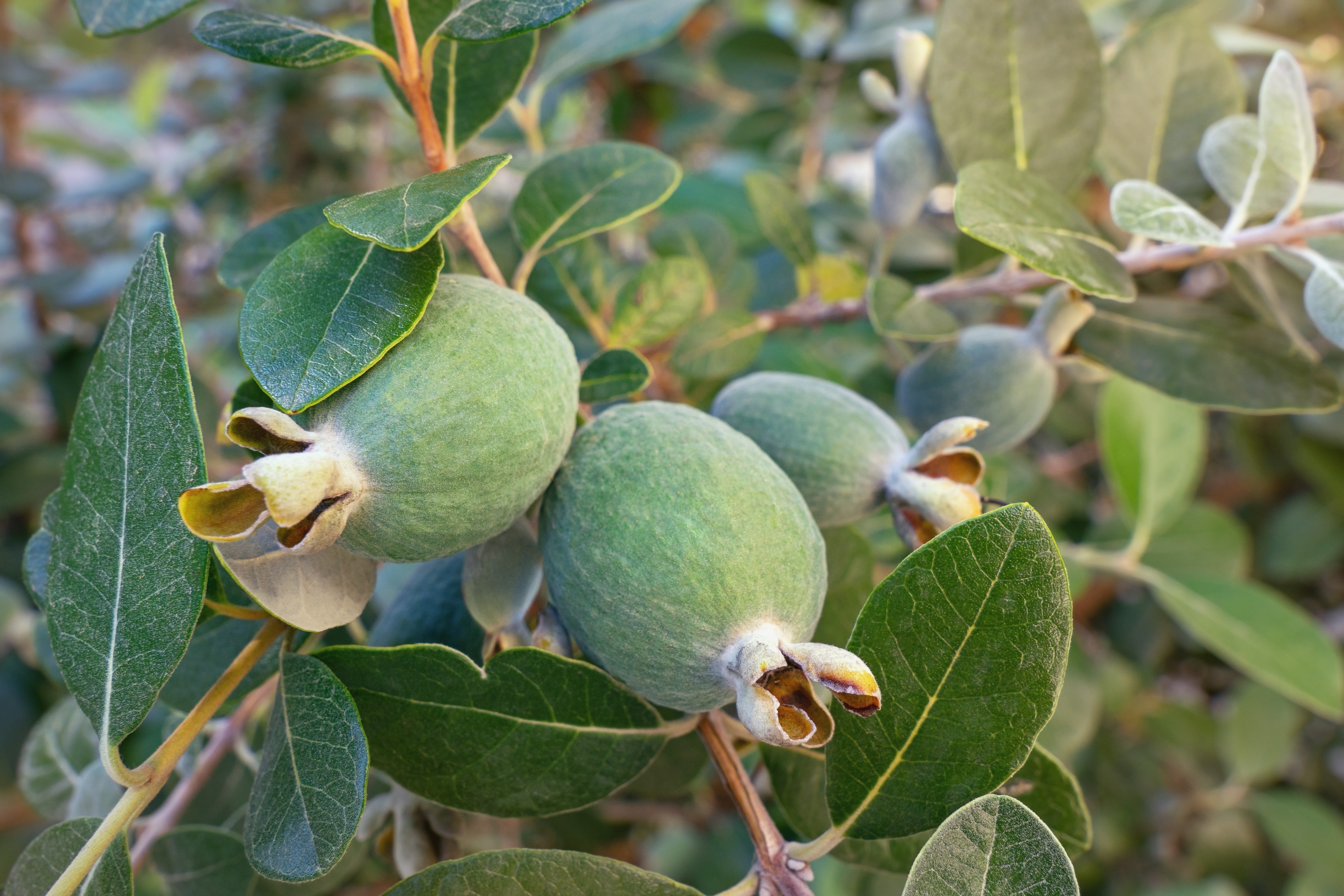
If you’ve never tasted a ripe pineapple guava, imagine cutting open a little green fruit and finding a fragrance that reminds you of pineapple, strawberries, guava, and something fresh and minty all at once. Now imagine growing that fruit beside your patio, where the same plant also gives you silvery-green leaves and some of the prettiest edible flowers in the garden. That is quite a bit of work for one shrub to do, and it explains why so many gardeners are becoming interested in pineapple guava.
But before you find a sunny spot and start digging, there is a question worth answering: Can I grow pineapple guava plants in my USDA zone? We hear variations of this question all the time at Ty Ty Nursery. Some customers want an unusual fruit for their backyard orchard. Others want an evergreen privacy screen that can also produce something delicious. And some live where winters are cold enough that the first decision is not which variety to buy, but whether the plant should spend winter in a container under protection.
We have helped gardeners choose plants since 1978, and we have learned that a good plant recommendation should cover more than a zone number. Pineapple guava needs the right amount of winter cooling for flowering, protection from serious freezes, enough warmth to mature fruit, and a little thought about pollination. In this guide, we will walk through those details, compare familiar pineapple guava varieties, and explain planting, watering, pruning, and harvesting. When you are ready to explore the plant itself, visit Pineapple Guava plants for sale at Ty Ty Nursery.
What Is Pineapple Guava? Meet the Evergreen Feijoa
Pineapple guava is the common name for Acca sellowiana, a South American evergreen shrub or small tree. Many gardeners also call it feijoa; older books may use the scientific name Feijoa sellowiana. It is not the same plant as a grocery-store pineapple or a true tropical guava. The name comes from the fruit’s memorable flavor, not from a close botanical relationship to either one.
Even without fruit, it is a handsome landscape plant. The oval leaves are green above with pale, silvery undersides, and the branches can be trained into a rounded shrub, a privacy hedge, an espalier, or a small tree. In late spring, dramatic blossoms appear with fleshy white-to-pink petals and bright red stamens. The petals are edible from correctly identified, unsprayed plants, although leaving enough flowers untouched gives fruit a chance to develop.
The fruit is usually green when ripe, with a fragrant, creamy to translucent center surrounding tiny seeds. That surprises people who are used to fruit advertising ripeness by turning bright red. A pineapple guava can look almost the same color on the day you harvest it as it did weeks earlier. Learning how to judge softness, aroma, and natural fruit drop is part of the fun.
USDA Hardiness Zones: Where Can Pineapple Guava Grow Outdoors?
USDA growing zones tell us the average extreme minimum winter temperatures of a location. You can find yours on the USDA Plant Hardiness Zone Map. Those winter lows matter because pineapple guava is a subtropical evergreen. It can withstand some cold weather, but that does not mean its fruit, flowers, leaves, and branches have identical cold tolerance.
Ty Ty Nursery’s Pineapple Guava product listing recommends USDA Zones 8–11. University of Florida guidance gives the same broad zone range while noting that injury becomes more likely with temperatures below about 20 degrees Fahrenheit. University of Georgia research describes established plants surviving brief temperatures in the mid-teens in some Southern locations. Those observations are useful, but they do not mean a young plant can withstand every hard freeze, nor do they guarantee a fruit crop after winter damage.
We think it helps to separate three goals: keeping the plant alive, keeping its branches undamaged, and harvesting ripe fruit. A protected plant may survive a cold snap but lose that season’s flower buds. A healthy evergreen may thrive in a very warm coastal landscape but receive too little winter cooling to set fruit consistently. Choose a planting plan for the goal that matters most to you.
Pineapple Guava Growing Zones at a Glance
| USDA Zone | Best Growing Approach | Main Concern |
|---|---|---|
| Zones 3–5 | Movable container, sheltered winter storage | Outdoor winter temperatures are too cold for dependable survival |
| Zones 6–7 | Container or protected experiment; not a routine in-ground recommendation | Severe freezes may damage or kill exposed stems and roots |
| Zone 8 | In-ground planting in suitable sites, with freeze protection for young plants | Cold snaps, late freezes, and fruit maturity |
| Zone 9 | Strong candidate for outdoor gardens with suitable winter cooling | Pollination, drainage, and extreme summer heat |
| Zone 10 | Excellent ornamental potential; fruiting depends on local chill and weather | Not every warm-winter site produces dependable crops |
| Zone 11 | Landscape plant in suitable sites; fruit harvests may be inconsistent | Very limited chilling and extended tropical heat |
Can I Grow Pineapple Guava in USDA Zones 3, 4, and 5?
For northern gardeners, the practical answer is yes as a container plant, but not as a dependable year-round outdoor shrub. Winter temperatures in these zones routinely fall well below the level that pineapple guava can safely handle. A sunny patio may be a wonderful summer home for a feijoa, but the same pot cannot simply sit outside all winter in Minnesota, Wisconsin, or Maine.
Choose a container you can realistically move and place the plant outdoors after spring frost danger has passed. Bring it under protection before damaging freezes return. An unheated, frost-free greenhouse or bright cool enclosed space may work if temperatures remain safe and the roots are not allowed to dry. A heated home can keep the shrub alive, although warmth, dry indoor air, and insufficient light can make flowering and fruiting more difficult.
Be realistic about what you want. If your dream is silvery foliage and unusual flowers, a container pineapple guava can be a very satisfying project. If your goal is baskets of fruit every fall, the short outdoor season and winter storage conditions may make that much harder. Ty Ty Nursery’s published Zones 8–11 recommendation applies to normal outdoor planting, not to leaving containers exposed during northern winters.
USDA Zones 6 and 7: Can Pineapple Guava Survive With Winter Protection?
Zones 6 and 7 are where a few adventurous gardeners try to stretch the rules. A sheltered courtyard, unusually mild winter, or well-established plant may occasionally produce an encouraging result. But Zones 6 and 7 fall outside Ty Ty Nursery’s published outdoor range, and the fact that one plant survives a mild winter does not establish dependable cold hardiness.
We would favor a large container that can be moved into protected storage when the forecast turns sharply colder. If you decide to experiment in the ground, understand that heavy freezes may destroy above-ground growth, prevent fruiting, or kill the entire plant. Wind protection, an insulating mulch ring, and temporary frost coverings can reduce risk during a mild freeze, but they cannot turn a subtropical shrub into a Zone 6 fruit tree.
A particularly common disappointment is watching a plant regrow vigorously after winter and assuming a big crop is on the way. Regrowth is a good sign of life, but damaged flowering wood and a shortened growing season may leave little time for mature fruit. Grow for the plant you can reliably maintain, not the best possible year you might experience.
USDA Zone 8: A Promising Place to Grow Pineapple Guava
Zone 8 is the cooler end of Ty Ty Nursery’s recommended range and includes many gardens in the Southeast. Here in South Georgia, pineapple guava is a plant we enjoy discussing because it can bring evergreen structure, beautiful flowers, and an unusual fall fruit to the same yard. It is particularly attractive when a gardener wants something edible that does not look like a conventional orchard tree.
In Zone 8, the location on your property matters. Choose a sunny place where cold air can drain rather than settle, and protect the plant from punishing winter wind. If temperatures are predicted to drop well below freezing, especially during the plant’s first year, prepare a frost cloth that reaches the ground. A young tree or recently shipped root system is more vulnerable than a mature, established shrub.
University of Georgia notes that established pineapple guavas can tolerate brief cold temperatures near the mid-teens under favorable circumstances, yet a severe freeze can kill growth back to the ground. That is a survival observation, not a fruit-production guarantee. In a cooler Zone 8 garden, think carefully about how an early freeze might affect a crop still ripening in late fall.
USDA Zone 9: One of the Best Starting Points for Backyard Feijoa
Many Zone 9 gardens have the combination pineapple guava appreciates: winters that are relatively mild but still cool, followed by a long season for flowers and fruit. In California’s Mediterranean climates, the shrub has been grown for its ornamental value and late-season crop. In the Southeast, it can also perform well, although humidity and rainfall change the way we manage the soil and canopy.
Give a fruiting plant plenty of direct sunlight, room for air movement, and a location that drains after heavy rain. In a dry inland Zone 9 garden, provide reliable irrigation during fruit development. In a humid Zone 9 garden, avoid crowding plants into a dense hedge if harvesting is your priority. A small tree form or more open fruiting hedge makes it easier for light and pollinators to reach the flowers.
Even here, success is not automatic. Two healthy pineapple guava plants can set very different crops if one receives effective pollination and the other does not. That is why we recommend understanding the pollination section before buying, especially when your goal is fruit rather than foliage.
USDA Zone 10: Great for Evergreen Landscaping, but Will It Fruit?
In Zone 10, pineapple guava is often a handsome ornamental shrub. It tolerates salt spray in many coastal settings, grows in full sun or partial shade, and can be maintained as a hedge. The concern is not necessarily keeping the leaves green; it is getting enough cool weather to encourage reliable fruit production.
University of Florida’s growing guidance points out that some of the warmest parts of southern Florida produce little feijoa fruit despite healthy plant growth. That can seem surprising, but pineapple guava is not a true tropical fruit that wants uninterrupted heat all year. It benefits from a modest period of winter cooling, and extreme summer temperatures can also interfere with fruit quality.
For coastal or south Florida gardeners, we encourage a small trial before planning a large fruiting hedge. If fruit production is your main reason for planting, ask local growers which named selections have actually produced near you. A specimen that looks beautiful year-round still has value, but we would rather you understand the likely harvest before making a purchase.
USDA Zone 11: Can Pineapple Guava Grow in a Tropical Climate?
Ty Ty Nursery lists pineapple guava through Zone 11, and the plant may grow as an ornamental in suitable tropical or near-tropical locations. However, a very warm winter can mean fewer flowers and less fruit. Some sites also receive prolonged heat, intense humidity, or heavy rainfall, all of which can affect growing conditions.
If you are in Zone 11, consider pineapple guava mainly for its evergreen foliage and flowers unless there is a documented history of fruiting in your microclimate. If you choose to experiment, keep good notes on flowering dates and fruit set. Survival and successful edible harvests are different outcomes, and they deserve separate expectations.
How Many Chill Hours Does Pineapple Guava Need?
Why Low-Chill Does Not Mean No-Chill
Unlike peaches or some apple varieties, pineapple guava is not usually marketed with one precise chill-hour figure for every cultivar. Ty Ty Nursery describes its offering as needing minimal winter chill. That is a useful description, but it does not mean winter temperature has no influence on flowers.
University of Florida reports estimates of roughly 50–200 hours of cool winter temperatures associated with feijoa flowering, while emphasizing that the science is not fully established and that the amount may vary by cultivar. The same research notes poor fruiting in some very warm areas even where the plant itself grows successfully. There is no single certified number that guarantees a crop from every pineapple guava.
That distinction is worth remembering in Zone 9 through Zone 11. A low-chill shrub is often better suited to a mild winter than a high-chill apple, but it may still need some real seasonal cooling. If fruit set disappoints, review your local winter temperatures, pollination, summer heat, and plant age before assuming the tree needs fertilizer.
Winter Hardiness and Chill Hours Are Different
Hardiness tells you whether the plant can withstand cold; chilling relates to its seasonal flowering physiology. A Zone 8 plant can be injured by an extreme cold event even after accumulating enough chilling. A Zone 11 plant may be completely healthy but not receive enough cooling for dependable fruit. Think of both measurements as part of the climate picture, along with the amount of time fruit has to mature before fall weather changes.
Best Pineapple Guava Varieties to Know Before You Plant
Ty Ty Nursery currently offers a product labeled Pineapple Guava Plant, rather than an individually identified named cultivar such as Coolidge or Apollo. Our product page describes it as self-pollinating, with a USDA range of Zones 8–11. We do not want to suggest that a named cultivar is included unless it appears on the actual plant’s identification and current listing.
It is still helpful to know the names you may encounter when researching feijoa growing. The following varieties are described in university fruit-growing literature. They are educational comparisons, not a list of varieties currently offered by Ty Ty Nursery.
Coolidge: A Familiar Self-Fruiting Choice
Coolidge is among the best-known named feijoa selections in American gardens. University of Florida and University of California sources describe it as capable of setting fruit with its own pollen, making it useful for yards where planting several genetically different shrubs is difficult. Even a self-fruiting selection can set more fruit when a compatible partner is nearby.
Apollo: Vigorous Growth and Flavorful Fruit
Apollo is another named selection described in university references, with flavorful fruit and vigorous growth. It is an option to research when comparing named feijoa selections for an orchard. As with any named cultivar, check local adaptation, source identity, and the flowering period before relying on it for a particular climate.
Mammoth and Triumph: Two Traditional Orchard Names
Mammoth and Triumph are familiar names in specialty feijoa growing. Mammoth is known for potentially large fruit, while Triumph is associated with flavorful harvests. Both can benefit from compatible pollen. They may be more interesting to dedicated fruit growers than to someone who simply wants one ornamental evergreen beside the porch.
Nazemetz, Trask, and Other Selections
Nazemetz, sometimes spelled Nezametz, and Trask also appear in established horticultural references. Differences in fruit size, ripening time, and self-fruitfulness make it important to know exactly which cultivar you are buying. If you are planting two specimens specifically for cross-pollination, make sure they are genetically distinct selections with overlapping bloom.
For shoppers who want the plant we currently offer, the direct place to begin is Ty Ty Nursery’s Pineapple Guava plant page. That listing is the correct source for the current sizes, seasonal availability, and identification provided with the order.
Do You Need Two Pineapple Guava Plants for Pollination?
This is one of the most important questions for anyone growing pineapple guava for fruit. Our product listing describes the pineapple guava as self-pollinating. Some pineapple guava plants really can develop fruit from their own pollen. But horticultural research shows that many plants are only partially self-fertile and that a different compatible plant often improves fruit set and fruit size.
University of Georgia discusses how limited pollen transfer can affect feijoa yields in Georgia, while University of Florida recommends named selections with known fruiting characteristics. If you have room, planting two genetically distinct, bloom-compatible pineapple guavas is a useful way to improve your chances of a satisfying crop. Buying two cuttings propagated from the same mother plant may not supply the same cross-pollination benefit as buying two different cultivars.
Flowers can receive pollen from insect visitors, and birds may also play a role in some locations. Avoid insecticide applications on open flowers. If flowering is plentiful but fruit is scarce, hand-pollination with a soft brush and pollen from a different compatible plant may be worth trying on a small number of flowers. Keep in mind that insufficient winter chill, extreme heat, or very young plant age can also limit yield.
Where Is the Best Place to Plant a Pineapple Guava?
Full Sun for Fruit, Partial Shade for Ornamental Use
If your main goal is a good fruit crop, choose an open site with six to eight hours of direct sunlight whenever possible. Pineapple guava can tolerate some partial shade, and that flexibility makes it useful for landscaping. But a plant that looks beautiful in filtered light may not produce as heavily as one growing in a sunnier location. Light also helps fruit develop its characteristic aroma.
Morning sun can help dry foliage after a humid night. Strong, drying winds are less welcome, especially while the plant is flowering or carrying mature fruit. A spot with good air movement but some protection from intense wind is a good compromise. Remember that fruit can bruise as it falls during harvest, so think about the surface below the plant, too.
Soil pH and Drainage
Pineapple guava is more forgiving about soil than many specialty fruit trees. University of Florida describes a broad preferred pH range of approximately 5.5–7.0, while University of Georgia suggests aiming near 6.0–6.5. The most important concern in many backyards is not hitting a perfect decimal point on the pH test; it is ensuring that the roots have good drainage and oxygen.
If your yard has sandy soil, the roots may drain beautifully but dry quickly in summer. If you have heavy clay, a planting hole that stays wet after storms can become a serious problem. Improve a wide area when needed, plant slightly above grade if appropriate for the site, and do not assume that dumping a bag of compost into one deep hole will solve a drainage issue.
How Far Apart Should Pineapple Guava Plants Be Spaced?
Our pineapple guava product listing suggests five to six feet between plants for a more compact planting. That can work for a maintained hedge or screen where branches are regularly pruned. For a spacious fruiting planting, University of Georgia suggests about eight to twelve feet between plants. Giving fruiting shrubs more room makes pruning, hand-pollination, and harvesting easier.
Ty Ty Nursery lists a mature height around six to ten feet under typical landscape management, while University of Florida notes that an unrestrained pineapple guava can reach roughly ten to fifteen feet tall and wide. Plan for the space the plant will want in the future, not the size of the young shrub delivered to your porch.
When Is the Best Time to Plant Pineapple Guava in My USDA Zone?
For many gardens in Zones 8–11, fall through spring can be a useful planting season, as long as weather conditions are mild and the ground is neither frozen nor waterlogged. Ty Ty Nursery’s evergreen shipping season generally runs from October through May, with actual shipment dates based on plant availability, weather, and the destination. Check the projected date for the particular plant before placing an order.
In Zone 8, we often favor a planting date that gives the new roots time to establish without immediately facing either a hard freeze or intense summer heat. In Zone 9, a mild fall or spring window may work well. In hotter Zones 10 and 11, avoiding the most punishing weather and having irrigation ready can be more important than the name of the month.
If you are keeping pineapple guava in a movable container in a colder zone, pot it when you can provide stable conditions and begin introducing it to outdoor sunlight only after frost risk has passed. If it has been indoors, gradually acclimate it to brighter outdoor light so leaves are not suddenly exposed to an entire day of intense sun.
How to Plant Pineapple Guava: Step-by-Step Instructions
- Choose the permanent location. Check sun exposure, mature spacing, drainage, nearby utilities, and access to water. If you want fruit, leave space for a compatible pollen partner when practical.
- Check your soil. A soil test can tell you whether pH or nutrients need adjusting. Pineapple guava generally prefers well-drained soil, from mildly acidic toward neutral.
- Unpack the plant promptly. Keep the protected roots moist and shaded. Follow the planting instructions supplied with your order, especially if the plant has been shipped without a heavy nursery pot.
- Dig a wide hole. Make the hole broad enough for the roots to spread comfortably, but do not dig so deeply that the root flare or original crown becomes buried. For a root ball, keep its top near surrounding soil level.
- Spread the roots naturally. If the plant has an exposed root system, avoid folding roots sharply around the planting hole. If a root ball has circling roots, gently loosen them where appropriate.
- Backfill primarily with native soil. Settle the soil gently around roots. Avoid creating a pocket of radically different soil that holds water while the surrounding area stays compacted.
- Water deeply after planting. A slow initial watering helps soil settle into contact with the roots. Check the finished depth after the first watering in case the plant has sunk.
- Apply mulch. Spread about two to three inches of organic mulch over the root zone, leaving several inches of open space beside the trunk or stems.
- Protect and monitor. If cold weather is coming, prepare frost protection. Check soil moisture regularly through establishment and keep lawn equipment away from the bark.
It is easier to give a new pineapple guava a strong start than to correct a plant that has been buried too deeply or left sitting in poorly drained soil. Take your time with the planting hole. A little care at the beginning can make the next several years much more enjoyable.
First-Year Pineapple Guava Care: Watering, Mulching, and Fertilizer
Water Consistently Until Roots Are Established
Pineapple guava becomes relatively drought tolerant once established, but a newly planted shrub is not yet drawing water from a large area. Check the root-zone moisture frequently during the first weeks, especially in sandy soil, bright sun, or windy weather. Water deeply when the soil needs it, then allow excess moisture to drain away. A constantly wet planting hole can be just as damaging as dry soil.
After establishment, normal rainfall may be enough in some regions. During an extended dry period, extra water can protect leaves and developing fruit from dropping prematurely. A slow drip line or soaker hose is often easier to manage than repeatedly splashing the canopy with a sprinkler. Fruit size and quality are generally better when moisture is steady rather than swinging from drought to saturation.
Mulch and Weed Control Are Worth the Effort
A mulch ring conserves moisture, reduces grass competition, and helps keep soil temperature more stable during hot or cool weather. It also protects the trunk from damage caused by string trimmers. Do not create a mound of wet mulch against the stem. Leave the bark open to the air and refresh mulch as it breaks down.
Avoid Heavy Fertilizer on a Newly Planted Shrub
It can be tempting to fertilize every new fruit plant heavily to get an earlier harvest. We recommend a calmer approach. Begin with a soil test and let the roots establish. If fertilizer is needed, use an appropriate product and rate for the plant and soil rather than applying concentrated fertilizer against newly planted roots. Excess nitrogen can encourage leafy growth without improving the fruit crop.
Once the plant has put on healthy new growth, periodic feeding may be useful where the soil is deficient. Watch the plant’s color, vigor, and fruiting rather than assuming every shrub needs the same amount of fertilizer. In many home landscapes, good drainage and regular watering do more for a young pineapple guava than a heavy feeding schedule.
How to Prune Pineapple Guava as a Shrub, Hedge, or Small Tree
One of the nicest things about pineapple guava is its flexibility. You can keep it as a multi-stemmed evergreen shrub, prune a row into a handsome privacy screen, or train one strong central stem into a small tree. The correct shape depends on your space and whether fruit or privacy is the priority.
For a fruiting shrub, remove dead, damaged, crossing, and crowded branches, then open the canopy enough to allow sunlight and air movement. For a hedge, maintain a wider base and slightly narrower top so lower leaves still receive light. For a small tree, gradually develop a strong trunk and several well-positioned main branches. Avoid removing large amounts of productive growth just before flowering.
Light shaping after harvest or during an appropriate mild pruning window is usually easier than letting the plant become overgrown and cutting it back severely. If it is young, avoid constant heavy pruning while roots are establishing. Once a shrub is mature and vigorous, pineapple guava generally tolerates shaping well, but a tightly clipped ornamental hedge may produce fewer accessible fruits than a more open fruiting plant.
Can Pineapple Guava Grow in a Container?
Yes, and container growing can be an excellent option for a patio, courtyard, or colder-zone gardener who needs to move the plant indoors for winter. Start with a sturdy, well-drained container large enough for the current root system, then move to a larger pot as needed. A mature shrub can become heavy, so think about how you will move it before choosing a giant decorative planter.
Use a quality, well-drained potting mix rather than dense garden clay. Check moisture more often than you would for an in-ground plant, because pots dry rapidly in hot weather. Give the plant plenty of sunlight, prune to maintain a manageable size, and protect the roots from intense heat and winter freezing.
In northern zones, a bright protected winter location is useful. Do not leave a potted feijoa where the entire root ball can freeze solid. Indoor conditions may keep the plant alive, but fruiting can remain difficult without adequate light, seasonal temperature patterns, and pollination. If you move it outside in spring, gradually reintroduce it to sunlight and wind.
When Will Pineapple Guava Start Producing Fruit?
Patience is part of growing a specialty fruit. University of Florida reports that pineapple guava may begin fruiting roughly two to four years after planting, depending on plant age, source, cultivar, and growing conditions. A plant may need much longer to reach its full mature production. A tall shrub arriving at your door is not a guarantee that a heavy crop will follow immediately.
Flowers often appear in spring, and fruit may need roughly 20–26 weeks to mature after flowering. Harvest can occur from early fall into late fall or early winter, depending on the region and selection. Florida references often discuss September through November; Ty Ty Nursery’s product description lists approximately October through December. Both reflect regional variation rather than a promised date.
If your first few seasons bring beautiful flowers but little fruit, consider the plant’s maturity, winter chill, pollination, and extreme weather before deciding something is wrong. In a cooler location, fall frost can arrive before fruit is fully ripe. In a very warm location, too little winter cooling may result in fewer flowers. The calendar is only one part of the story.
How Do You Know When Pineapple Guava Is Ripe?
Unlike a peach that turns brightly colored, pineapple guava usually stays green. Look for a lighter green color, a developing fragrance, gentle softness, and fruit that drops naturally when mature. Some growers place a clean tarp or soft surface beneath the shrub and collect fruit regularly as it falls. Handle it gently; the soft flesh can bruise.
A ripe fruit can be sliced in half and eaten with a spoon, much like a small kiwi. The center is fragrant and juicy, with a flavor people describe as a blend of pineapple, guava, and mint. Some fruit has a slightly gritty area closer to the skin, and texture can vary among cultivars. Refrigerate sound ripe fruit promptly and enjoy or process it while the flavor is fresh.
Pineapple guava makes delicious additions to smoothies, fruit salads, sauces, desserts, and homemade preserves. If you are canning it, use a research-tested recipe rather than guessing how much acid or processing time a new fruit needs. The flowers’ fleshy petals are also edible from correctly identified plants that have not been treated with unsuitable chemicals, but removing too many whole blossoms can reduce the number of fruits.
Common Pineapple Guava Problems and How to Avoid Them
Healthy Leaves but No Fruit
Start by asking four questions: Is the plant mature enough? Did winter provide suitable cooling? Was pollen available when the flowers opened? Did heat or freezing weather interfere with fruit set? Pineapple guava can be a wonderful landscape shrub without producing a full basket of fruit every year. More fertilizer does not necessarily solve a flowering or pollination problem.
Leaves Turning Brown After a Freeze
Cold-damaged leaves may discolor or drop, and branches can be injured during more severe weather. Protect the plant from further exposure and wait until temperatures stabilize before removing large amounts of wood. A scratch test on a small stem can help determine whether there is living green tissue beneath the bark. If the crown remains alive, the plant may push out new growth when warmth returns.
Fruit Dropping Before It Is Ready
Pineapple guava naturally drops mature fruit, but very hot weather, drought, or abrupt changes in watering can also cause premature loss. University of Florida notes that temperatures above about 100 degrees Fahrenheit can damage fruit. Keep soil moisture reasonably consistent during fruit development, use mulch, and avoid letting a container become overheated.
Yellow Leaves and Slow Growth
Newly planted shrubs can grow slowly while roots establish. If foliage becomes yellow or weak, check drainage and soil moisture first. Waterlogged roots, lack of nutrients, and unsuitable soil conditions can all contribute. A soil test and an inspection of the root-zone environment are more useful than blindly applying multiple fertilizers.
Scale, Mites, and Occasional Disease
Pineapple guava generally has relatively few serious pest issues when grown in an appropriate climate, but no landscape plant is completely immune. Check for scale insects, mite damage, or leaf problems if growth changes unexpectedly. Remove damaged material where appropriate and seek local identification before treating. Good air movement and well-drained soil are helpful preventive habits.
Frequently Asked Questions About Pineapple Guava Plants
Can I grow pineapple guava in Georgia?
Yes, many South Georgia sites are suitable, especially with good drainage and protection from hard freezes. University of Georgia has long discussed feijoa as a fruiting landscape plant for the region. Northern Georgia growers should compare the local winter extremes with the nursery’s published Zones 8–11 range before planting outdoors.
Can pineapple guava grow in Florida?
Yes. It is grown as an evergreen ornamental throughout much of Florida, and many north and central Florida sites can also support fruit. University of Florida cautions that very warm southern locations may have poor fruit production because they do not receive enough winter cooling.
Does pineapple guava need a pollinator?
Ty Ty Nursery describes its pineapple guava plant as self-pollinating, but many feijoas are partly self-fertile. Fruit production often improves when genetically different, compatible plants flower nearby. Two identical clones are not the same as two distinct varieties.
How many chill hours does pineapple guava require?
University of Florida discusses approximate estimates of 50–200 hours, but the requirement is incompletely studied and may vary by cultivar. Treat it as a broad guide, not a guaranteed number for the unnamed offering on a nursery product page.
What is the best soil for pineapple guava?
Well-drained soil is the priority. A pH around 5.5–7.0 is generally suitable, with many Georgia recommendations favoring about 6.0–6.5. Test your soil before adding lime or sulfur, and avoid areas where water stands after rain.
How big does pineapple guava get?
Ty Ty Nursery describes a managed mature plant around six to ten feet tall. Unpruned plants can reach roughly ten to fifteen feet or more in favorable conditions. Regular pruning can keep a shrub smaller or train it into a hedge or small tree.
Is pineapple guava evergreen?
Yes. In suitable climates, it retains its attractive green and silvery foliage year-round. Serious frost can damage leaves and branches, and a severely injured plant may need time to produce fresh growth.
Can I grow pineapple guava indoors?
It can be grown in a large container and moved to a protected location for winter. Bright light, drainage, and careful watering are essential. Keeping it alive indoors is usually easier than producing a dependable indoor fruit crop.
How long does pineapple guava take to fruit?
Some plants begin producing in approximately two to four years after planting, while full production can take considerably longer. Variety, propagation method, pollination, and climate all affect the result.
Can pineapple guava be grown as a privacy hedge?
Yes. Its dense evergreen leaves make an attractive screen or hedge. Five to six feet between plants may suit a regularly maintained hedge, while eight to twelve feet is often more comfortable for open, fruit-focused plants. Heavy clipping can reduce flowers and accessible fruit.
Where Is the Best Place to Buy Pineapple Guava Plants Online? Ty Ty Nursery
Once you know pineapple guava belongs in your climate, shopping should be the easy part. At Ty Ty Nursery, we want customers to find a plant that suits their yard, understand when it is expected to ship, and feel comfortable asking questions about planting and care. If you are ready to add feijoa to your backyard, start with our Pineapple Guava Plants for Sale.
1. Prices Advertised Up to 68% Lower Than Other Nurseries
Ty Ty Nursery advertises prices up to 68% lower than selected competing nursery offers on qualifying comparisons. The amount varies by plant, size, promotion, and comparable competitor price; it is not a guarantee that every pineapple guava is discounted by exactly that percentage. We encourage gardeners to compare plant sizes and total delivered prices, not just one headline number.
2. Fast In-Season Shipping: Plant in Days the Ty Ty Way
We work to move eligible in-season orders promptly so customers can plant when the season is right. We call it Plant in Days the Ty Ty Way. Many available orders move much sooner than shoppers who face weeks or months of delayed fulfillment elsewhere. Our published in-season policy normally provides for shipment within ten business days, subject to weather, availability, and other stated exceptions. Projected preorder dates and seasonal holds still apply, and actual delivery time is not guaranteed.
3. A Free One-Year Plantsurance Guarantee
Our free one-year Plantsurance program is included with eligible plant purchases rather than offered only as a separate paid warranty. If a qualifying plant fails within 365 days of receipt, an approved claim provides store credit for the eligible purchase amount paid for that plant. Shipping and taxes are excluded, documentation and recommended-zone requirements apply, and plants purchased using prior Plantsurance credit do not qualify for a new Plantsurance claim. It is meaningful protection when you are investing in a new planting.
4. Our Lifetime True-to-Name Guarantee
We stand behind the identification of plants we sell. Under our Lifetime True-to-Name Guarantee, a verified case of receiving a different named variety from the one ordered can qualify for a refund, replacement, or store credit up to the original plant purchase price, subject to proof and published terms. This covers varietal authenticity, not a particular harvest size or the effects of weather. Our present pineapple guava listing does not name a specific cultivar, so customers seeking a particular named selection should confirm its identity before ordering.
5. Plants Delivered Right to Your Door
Skip loading heavy nursery pots into your vehicle, driving from garden center to garden center, and unloading branches that barely fit in the car. Ty Ty Nursery ships eligible plants directly to your door, using seasonal packaging suited to the order. You can spend more time preparing your planting spot and less time arranging transportation.
6. Helping Gardeners Since 1978
Ty Ty Nursery has served plant lovers since 1978. We have watched gardening trends come and go, but the fundamentals remain the same: choose the right plant, match it to the climate, prepare the soil, and care for the roots. Nearly five decades of experience helps us appreciate why a customer in Georgia may need different advice from a customer in New York.
7. Google Top Quality Store With a 4.5 Rating
Ty Ty Nursery is recognized by Google as a Top Quality Store, with a 4.5 store rating at the time of writing. We encourage shoppers to review the most current independent shopping information before choosing an online nursery. Ratings and review totals can change.
8. An A Rating With the Better Business Bureau
Our Better Business Bureau business profile currently displays an A rating. We include the direct link so customers can check the latest information for themselves. Ratings are subject to change and are best verified from the current public profile.
9. Real Plant Experts Based in Ty Ty, Georgia
Wondering whether pineapple guava can handle your winter, how far apart to space a hedge, or why a shrub is flowering without setting fruit? Our customer support comes from real nursery staff based in Ty Ty, Georgia. We do not rely on an overseas call center or an AI-only customer-service conversation to answer plant questions. Call us at 888-758-2252 and tell us what you want to grow.
Ready to Grow Pineapple Guava in Your Backyard?
Pineapple guava is one of those plants that can earn its spot in the yard even before you harvest the first fruit. It brings evergreen color, silvery leaves, unusual edible flowers, and the promise of aromatic green fruit in fall. But the best results begin with a little homework: confirm your USDA zone, consider whether winter supplies some cooling, plan for cross-pollination when practical, and give the roots a sunny, well-drained home.
If your garden is in a suitable part of Zones 8–11, pineapple guava may be a wonderful addition to your edible landscape. If your winter is colder, a movable container can still make the plant an interesting project. When you are ready to get started, shop Pineapple Guava plants online at Ty Ty Nursery and begin planning a beautiful, productive planting that fits the place you call home.

Leave a Reply