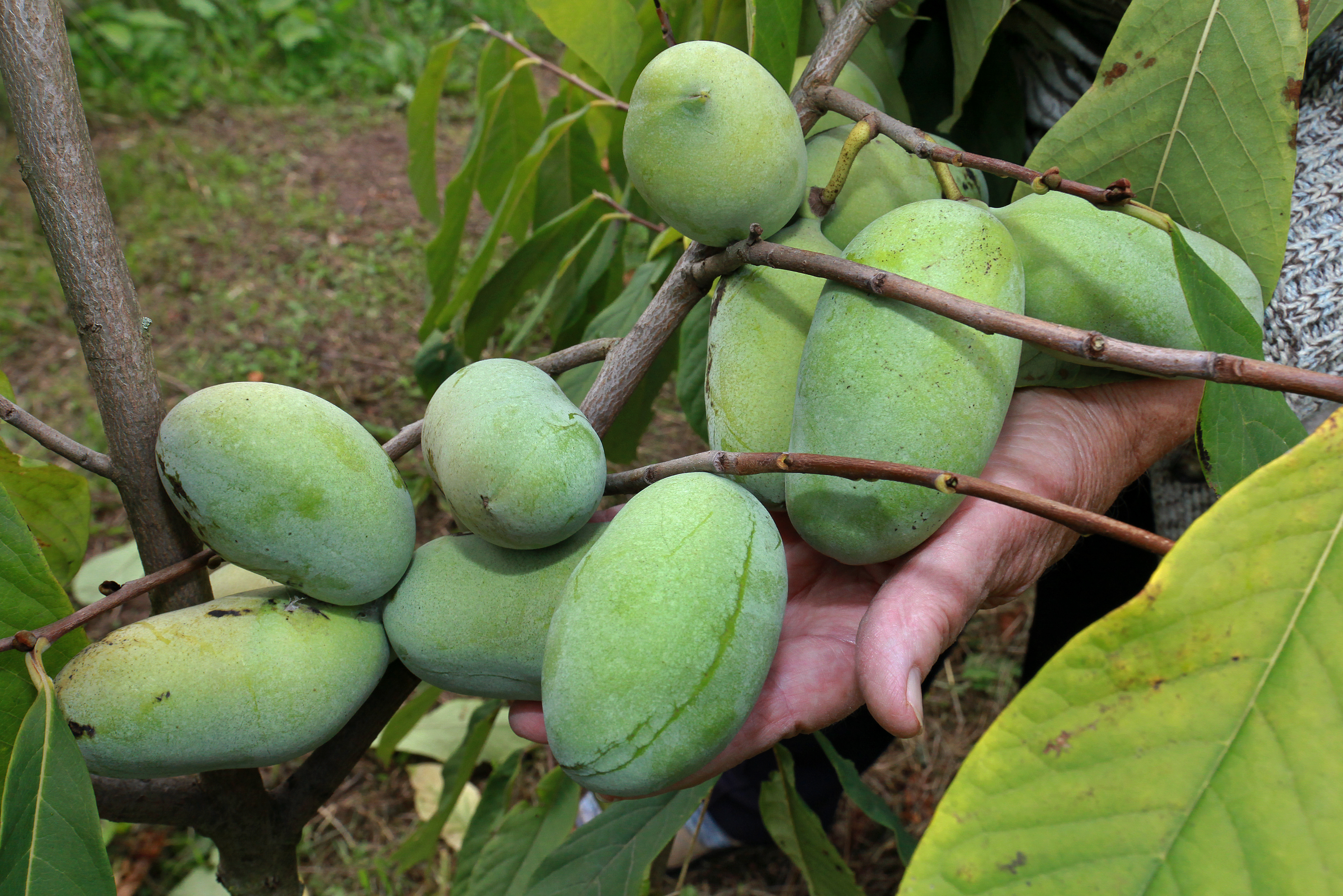
Imagine walking into your backyard, picking a fresh piece of fruit from a tree, cutting it open, and discovering something that tastes like a combination of banana, mango, pineapple, and vanilla custard. Now imagine that fruit growing on a tree native to North America instead of somewhere in the tropics.
That’s the remarkable thing about the paw paw tree.
Paw paw trees (Asimina triloba) are among the most fascinating fruit trees you can grow in an American backyard. Their enormous tropical-looking leaves, unusual purple flowers, and creamy, sweet fruit make them unlike almost anything else in a home orchard.
But before you start planting, there’s an important question: Can I grow paw paw trees in my USDA growing zone?
The answer depends on more than your winter temperatures. Your USDA hardiness zone, winter chill hours, summer climate, soil drainage, sunlight, and pollination all influence whether your trees will simply survive or grow into productive fruit-bearing trees.
At Ty Ty Nursery, we’ve been helping gardeners grow fruit trees since 1978. In this guide, we’ll explain which USDA zones are best for paw paws, how to choose the right varieties, what chill hours mean, and how to give your trees a successful start.
And when you’re ready to begin your own backyard paw paw orchard, you can browse paw paw trees for sale at Ty Ty Nursery.
What Is a Paw Paw Tree, and Why Are Gardeners Growing Them?
The American paw paw is a deciduous fruit tree native to eastern North America. Although its fruit tastes tropical, the tree belongs to a group of plants that can survive genuine winter weather.
Its scientific name is Asimina triloba, and you may also hear paw paws called Indiana bananas, Michigan bananas, or American custard apples.
A mature paw paw tree typically grows approximately 15 to 30 feet tall, although its final size depends on growing conditions, genetics, and maintenance. Its leaves can reach a foot in length, creating a lush appearance that makes a backyard feel almost tropical.
During spring, paw paw trees produce unusual maroon to purple-brown flowers. By late summer or fall, successfully pollinated trees can develop green fruit containing rich yellow or golden flesh.
Gardeners also appreciate paw paws for their wildlife value. They serve as host plants for zebra swallowtail butterfly caterpillars, and their leaves often turn attractive shades of yellow during autumn.
Unlike many fruit trees, established paw paws generally experience relatively few serious pest problems. That combination of beautiful foliage, native-plant benefits, and delicious fruit explains why interest in growing paw paw trees continues to grow.
What USDA Zones Can Grow Paw Paw Trees?
For most gardeners, USDA Zones 5 through 8 provide the most dependable conditions for growing American paw paw trees. Some varieties can also perform in suitable portions of Zone 9, while warmer locations require much more careful consideration of winter chilling.
You’ll sometimes find paw paw varieties advertised across a wider hardiness range, including Zones 5 through 10. However, there’s an important distinction between a tree surviving a location’s winter temperatures and that same tree receiving enough winter chilling to flower and fruit consistently.
Here’s how we recommend looking at the different growing zones.
USDA Zone 4: Can Paw Paw Trees Survive?
Zone 4 presents a challenge for most standard paw paw trees. Extremely cold winters can damage young trees, especially when temperatures fall below the limits of the variety being grown.
Gardeners in protected locations may experiment with particularly cold-adapted selections, but success is not guaranteed. For most Zone 4 gardens, paw paws should be considered an experimental fruit tree rather than a dependable orchard choice.
USDA Zone 5: An Excellent Zone for Paw Paw Trees
Zone 5 is well suited to many American paw paw varieties. Cold winters generally provide plenty of winter chilling, while the growing season can support healthy tree development and fruit production.
Gardeners in states such as Ohio, Pennsylvania, Michigan, and portions of New York can grow paw paws successfully when they select an appropriate planting location.
Choose early- or midseason-ripening varieties where autumn arrives quickly. This gives fruit a better chance to mature before hard freezes.
USDA Zone 6: One of the Best Paw Paw Growing Zones
Zone 6 offers a particularly favorable combination of winter chilling and warm summer weather.
Many paw paw varieties perform well in this zone, including popular grafted selections such as Shenandoah and Allegheny.
If you live in Zone 6, focus on choosing two genetically different trees, providing suitable soil drainage, and protecting newly planted trees from intense sunlight.
USDA Zone 7: Ideal for Backyard Paw Paw Orchards
Zone 7 is another excellent location for growing paw paw fruit trees. Winters are generally cool enough to satisfy chilling requirements, while longer summers allow fruit to develop and ripen.
North Carolina, Tennessee, Virginia, Arkansas, and portions of Georgia offer many suitable locations.
Established trees can produce excellent crops in sunny locations, provided the roots receive consistent moisture and the soil drains properly.
USDA Zone 8: Can Paw Paw Trees Grow in the South?
Absolutely! Many Zone 8 gardeners can grow paw paws successfully, including those in northern and central portions of the southeastern United States.
However, the exact location matters. Inland areas with dependable winter chilling are generally more favorable than exceptionally mild coastal areas.
Young trees benefit from temporary shade and consistent watering during hot summers. When choosing a variety, consider selections with a history of performing in warmer growing regions.
USDA Zones 9 and 10: What Warm-Climate Gardeners Need to Know
This is where growing paw paws becomes more complicated.
Some cooler Zone 9 locations may provide enough winter chilling for suitable selections. However, consistently warm winters can result in delayed leaf emergence, irregular flowering, and disappointing fruit production.
Zone 10 is generally not a dependable location for conventional American paw paw production. Even if a tree survives, it may not receive the winter chilling needed for consistent fruiting.
Before planting in Zones 9 or 10, research the actual winter chill hours in your immediate area rather than relying on the USDA zone number alone.
How Many Chill Hours Do Paw Paw Trees Need?
If you’ve grown apple, peach, or cherry trees, you’ve probably heard the term “chill hours.” Paw paw trees have a winter chilling requirement too.
Chill hours are a way of measuring exposure to cool winter temperatures that helps temperate fruit trees complete their dormancy cycle.
A common simplified method counts hours around 32 to 45 degrees Fahrenheit, although different chilling models calculate accumulated cold differently.
For American paw paws, research suggests a broad estimated requirement of approximately 400 to 1,000 chill hours, depending on genetics and where the selection originated. Exact requirements for individual varieties have not been firmly established.
Selections originating in northern climates may need more chilling than selections adapted to the southern portion of the species’ natural range.
Why Chill Hours Matter More Than Many Gardeners Realize
Suppose two gardeners both live in USDA Zone 9. One has a property where winter temperatures regularly fall into the 30s and 40s. The other lives near the coast, where winter nights are considerably warmer.
Even though both gardens share the same USDA zone, the first property may accumulate significantly more winter chilling.
That’s why two paw paw trees planted in the same hardiness zone can perform very differently.
If your region regularly receives adequate winter chilling, paw paw growing becomes much more promising. If it doesn’t, selecting a tree based only on its advertised USDA zone can lead to frustration.
For gardeners near the warm end of the paw paw growing range, we recommend checking local historical chill-hour records before ordering.
What Are the Best Paw Paw Tree Varieties to Grow?
Not all paw paw trees produce identical fruit. Some varieties are known for larger fruit, others for exceptional sweetness, fewer seeds, productivity, or earlier ripening.
When choosing the best paw paw tree for your backyard, consider your growing zone, available space, expected harvest season, and whether you want a grafted named variety or a seedling.
1. Shenandoah Paw Paw Tree
Shenandoah is one of the most recognizable named paw paw varieties and is especially appealing to gardeners who prefer a smooth, mild, sweet fruit.
It produces medium-to-large fruit with creamy yellow flesh and a relatively low proportion of seeds.
Its balanced flavor makes it an excellent choice for people tasting paw paws for the first time.
Shenandoah is also an excellent candidate for a backyard orchard where fruit quality is a priority.
2. Allegheny Paw Paw Tree
Allegheny is an excellent choice for gardeners interested in productive trees and delicious fruit.
Its fruit tends to be smaller than some of the largest named varieties, but it offers a rich, sweet flavor and smooth texture.
Allegheny can set generous crops, occasionally producing enough fruit that thinning helps improve the remaining fruit’s size.
For gardeners planting two different named varieties, Allegheny and Shenandoah can make an attractive combination when their flowering periods overlap.
3. Susquehanna Paw Paw Tree
Susquehanna has earned an enthusiastic following among paw paw growers who appreciate large fruit and a particularly rich flavor.
Its sweet, creamy flesh and relatively low seed content make it attractive for fresh eating and homemade desserts.
Because fruit size and quality are major priorities for many backyard gardeners, Susquehanna is worth considering where climate and availability are suitable.
4. KSU-Atwood Paw Paw Tree
Developed through Kentucky State University’s paw paw breeding and selection program, KSU-Atwood is valued for productivity and flavorful fruit.
The fruit typically has yellow-orange flesh, relatively few seeds, and a tropical flavor profile.
Its productive growth habit makes it an interesting option for home orchards and small-scale fruit production.
5. Sunflower Paw Paw Tree
Sunflower is an established paw paw selection known for flavorful, relatively large fruit and good winter hardiness.
It is sometimes described as self-fertile, but gardeners should not rely on this claim when planning fruit production.
Planting a genetically different paw paw nearby remains the more dependable approach for pollination and fruit set.
6. American Paw Paw Seedling Trees
Seedling paw paw trees offer gardeners another way to enjoy this unusual native fruit tree.
Unlike grafted named varieties, seedling trees are genetically unique. Their eventual fruit size, flavor, ripening season, and productivity can vary.
That variation can be part of the fun for gardeners who enjoy discovering their own distinctive fruit trees.
For predictable fruit characteristics, however, grafted named varieties are generally the better choice.
Explore the paw paw tree varieties available online at Ty Ty Nursery to compare your planting options.
Grafted Paw Paw Trees vs. Seedlings: Which Should You Choose?
This is an important question, especially if your primary goal is harvesting fruit.
A grafted paw paw tree is produced using a known fruiting variety attached to a compatible rootstock. The grafted portion maintains the characteristics of the named cultivar.
That means a grafted Shenandoah tree is intended to produce Shenandoah fruit, rather than the unpredictable fruit of a seedling.
Grafted trees may begin flowering within two to three years after planting, although dependable harvests can take longer depending on tree size, growing conditions, and pollination.
Seedling trees frequently require four to eight years, sometimes longer, before producing fruit.
Both types can make attractive landscape trees. If you’re planting specifically for fruit quality and a more predictable harvest, grafted paw paw trees are usually worth the investment.
Do You Need Two Paw Paw Trees to Produce Fruit?
Here’s one of the most important lessons in growing paw paws: plant at least two genetically different trees if you want dependable fruit production.
Most American paw paw trees are self-incompatible. Their flowers generally require pollen from another genetically different tree to produce fruit.
Two grafted Shenandoah trees, for example, are genetically identical above the graft and should not be relied upon to pollinate each other.
A Shenandoah and an Allegheny, however, are genetically different varieties and can provide cross-pollination when flowering overlaps.
Two unrelated seedling trees can also provide the genetic diversity needed for pollination.
What Pollinates Paw Paw Flowers?
Paw paw flowers are unusual because they aren’t primarily designed to attract honeybees.
The dark maroon flowers attract certain flies and beetles, which can transfer pollen between trees.
Natural pollination can sometimes be inconsistent, especially when only a few trees are planted.
If your trees flower but don’t produce fruit, try transferring pollen from a pollen-shedding flower on one tree to a receptive flower on another genetically different tree using a small, soft artist’s brush.
For a backyard planting, placing trees approximately 8 to 15 feet apart often provides convenient access for pollination while allowing room for growth. Adjust spacing for your mature tree size and orchard layout.
Where Is the Best Place to Plant a Paw Paw Tree?
One of the most interesting things about paw paws is that their sunlight needs change as they mature.
In the wild, young paw paw trees often grow beneath larger trees. Their developing leaves and roots benefit from the protection of partial shade.
As the trees mature, increased sunlight generally encourages better flowering and fruit production.
For home gardeners, the ideal planting location is somewhere that receives good sunlight but allows temporary protection for young trees during establishment.
Sunlight Requirements
Young paw paw trees, particularly smaller plants, can benefit from temporary afternoon shade or a shade structure during their first growing season.
Once established, mature trees generally produce their heaviest crops with full sun or abundant direct sunlight.
Planting permanently in deep shade may keep a tree alive, but fruit production will usually be much lower.
Best Soil for Paw Paw Trees
Paw paws prefer deep, fertile, moisture-retentive soil that drains well.
A slightly acidic to near-neutral soil pH of approximately 5.5 to 7.0 is suitable for most plantings.
Avoid locations where rainwater stands around the roots for extended periods. Paw paws appreciate consistent moisture, but waterlogged soil can create serious root problems.
Heavy clay soils may require improving drainage or selecting a slightly elevated planting location.
A soil test before planting can help identify pH and nutrient issues before they become problems.
How to Plant Paw Paw Trees: Step-by-Step Instructions
Paw paw trees develop a substantial taproot and have delicate, fleshy roots. Careful handling during planting is especially important.
Step 1: Select the Right Planting Location
Choose a location with deep soil, suitable drainage, and enough room for at least two trees. Avoid compacted ground, saturated low spots, and areas with heavy competition from established tree roots.
Step 2: Prepare the Planting Hole
Dig a hole wide enough to accommodate the roots without bending or crowding them. For container-grown trees, the hole should generally be about twice the width of the root ball but no deeper than the root ball itself.
The tree should sit at approximately the same depth it was previously growing.
Step 3: Protect the Roots
If planting a dormant bare-root paw paw, keep the roots moist and protected from drying winds while preparing the hole.
Spread the roots gently in a natural position. Avoid bending the taproot sharply or forcing roots into a hole that is too small.
If your tree is grafted, keep the graft union above the finished soil line.
Step 4: Backfill With Soil
Use the excavated native soil to refill the hole, gently settling it around the roots to eliminate large air pockets.
Avoid packing the soil so firmly that roots cannot access oxygen or water.
Step 5: Water Thoroughly
Immediately after planting, water deeply enough to settle the soil around the root system.
Continue monitoring moisture during the first growing season. The objective is consistently moist soil, not constantly saturated soil.
Step 6: Apply Mulch
Spread approximately 2 to 3 inches of organic mulch around the tree, extending outward over the root area.
Keep mulch several inches away from the trunk to discourage excess moisture against the bark.
Step 7: Protect Young Growth
Provide temporary shade for smaller newly established trees when necessary, particularly in regions with intense summer sunlight.
Protect young trunks from deer, rabbits, lawn equipment, and other sources of physical damage.
For more options and planting information, visit our online paw paw tree nursery.
When Is the Best Time to Plant Paw Paw Trees?
The best time to plant depends on your regional climate and whether your tree arrives dormant, bare-root, or container-grown.
In colder climates, spring planting after the ground thaws is often a good choice. It gives the tree time to develop roots before the next winter.
In milder southern climates, dormant-season planting during late fall, winter, or early spring can work well when soil conditions are suitable.
Paw paw roots are particularly sensitive to drying and rough handling, so careful planting practices matter regardless of the season.
Avoid planting during extreme summer heat whenever possible. Hot weather increases watering demands and can make establishment more challenging.
At Ty Ty Nursery, shipping schedules take seasonal growing conditions into consideration, helping customers receive their trees during appropriate planting windows.
How to Care for Paw Paw Trees During Their First Two Years
Once your paw paw trees are planted, your main job is to help them establish a healthy root system.
Don’t be surprised if top growth seems slow during the first year. Paw paws devote considerable energy to their roots, and they often need time before producing noticeable new growth.
Watering Paw Paw Trees
Deep, consistent watering is important, especially during dry weather.
Check the soil several inches below the surface. If it’s becoming dry, water thoroughly and allow excess water to drain.
Frequent shallow watering encourages roots to remain near the soil surface. Deep watering encourages moisture to reach a larger portion of the root system.
Always adjust irrigation for rainfall, soil type, and temperatures.
Fertilizing Young Paw Paw Trees
Avoid applying strong granular fertilizers directly against newly planted roots.
Allow the tree to begin establishing before considering supplemental fertilizer. In many reasonably fertile soils, careful watering and mulching are more important initially.
Once the tree is actively growing and established, use a balanced fertilizer according to soil-test recommendations and the product label.
Pruning Paw Paw Trees
Paw paw trees generally require relatively little pruning compared with many other fruit trees.
Focus on removing damaged, dead, or crossing branches and maintaining a strong central structure.
Remember that paw paw flowers develop on the previous season’s growth. Excessive pruning can remove future flowering wood and reduce your next harvest.
How to Protect Paw Paw Trees During Winter
For gardeners in Zones 5 and 6, winter protection is particularly important during the first few years.
Maintain a mulch layer over the root area, keep the trunk protected from rodents and deer, and make sure the soil isn’t excessively dry heading into prolonged freezing weather.
Avoid encouraging late-season tender growth with excessive nitrogen fertilizer.
Once established, appropriately selected paw paw trees are naturally adapted to winter dormancy.
In warm growing regions, winter care is usually less about protecting against severe cold and more about ensuring trees receive adequate seasonal dormancy.
How Long Does It Take Paw Paw Trees to Produce Fruit?
Growing paw paw trees requires patience, but the reward can be worth the wait.
Grafted trees may begin flowering approximately two to three years after planting, although substantial harvests may take longer.
Seedling trees often require four to eight years to begin fruiting.
Actual production depends on tree maturity, sunlight, winter chilling, pollination, soil conditions, and watering.
Remember that a tree producing flowers isn’t necessarily old enough to support a heavy fruit crop.
If a young tree produces only a small harvest, that’s not automatically a problem. The tree may simply need another growing season to develop.
When Do Paw Paw Trees Ripen?
Paw paw harvest season generally occurs from late summer through fall, depending on the cultivar and geographic location.
Southern locations may begin harvesting earlier, while northern growers may harvest later in the season.
Unlike apples, paw paws shouldn’t be picked extremely firm with the expectation that they’ll ripen perfectly on the kitchen counter.
A ripe paw paw typically becomes slightly soft when gently pressed and develops a noticeable fruity fragrance.
The flesh should be smooth, creamy, and fragrant. The exterior may remain green or develop yellowish or darker patches as it ripens.
Fresh paw paws have a relatively short shelf life. Refrigeration can extend storage, but the fruit is best enjoyed fresh or processed promptly.
Try scooping the pulp into smoothies, homemade ice cream, pudding, or baked desserts. Remove the seeds and peel, which should not be eaten.
Common Paw Paw Growing Problems and How to Avoid Them
My Paw Paw Tree Isn’t Producing Fruit
The most common causes include insufficient tree maturity, lack of a genetically different pollinator, inconsistent flower pollination, excessive shade, or inadequate winter chilling.
Start by checking whether you have two compatible, genetically different trees that bloom at the same time.
My Paw Paw Leaves Are Turning Yellow
Yellow foliage can be normal during autumn as the tree prepares for winter dormancy.
During the growing season, however, yellow leaves may indicate excessive watering, poor drainage, nutrient imbalances, or other growing-condition problems.
Check the soil moisture and inspect the tree before making changes.
My Young Paw Paw Tree Isn’t Growing Quickly
Young paw paws are often slow to establish, particularly after planting.
As long as the stems remain alive and the tree is receiving suitable moisture, slow initial growth isn’t necessarily a reason for concern.
Focus on root establishment, protection from excessive sun, and consistent moisture rather than trying to force rapid growth with fertilizer.
Insects Are Eating My Paw Paw Leaves
Paw paws have relatively few major pests, but occasional leaf feeding can occur.
The zebra swallowtail butterfly uses paw paw foliage as a host plant, and its caterpillars may chew on leaves.
On healthy established trees, this feeding is usually limited and doesn’t necessarily require treatment.
Frequently Asked Questions About Growing Paw Paw Trees
Can I grow paw paw trees in containers?
Young paw paw trees can be grown temporarily in deep containers, but their long taproots and eventual mature size make in-ground planting preferable for long-term fruit production. Choose a deep container and avoid root restriction.
Can paw paw trees grow in full sun?
Yes. Established paw paw trees usually produce more fruit in full sun. Smaller young trees may need temporary shade while establishing their root systems.
How many paw paw trees should I plant?
Plant at least two genetically different trees for dependable cross-pollination. Two different named grafted varieties or two unrelated seedlings are common choices.
Are paw paw trees difficult to grow?
Not necessarily. Once established in the right climate and soil, paw paws can be relatively low-maintenance. The most important early priorities are careful root handling, appropriate shade, consistent moisture, and drainage.
Are paw paw trees good for wildlife?
Yes. Their foliage supports zebra swallowtail caterpillars, while ripe fruit can attract various wildlife species. They can make an attractive addition to native plant gardens and edible landscapes.
Where can I buy paw paw trees online?
You can shop paw paw trees online at Ty Ty Nursery, including available grafted selections. Review current listings for sizes, growing zones, and seasonal availability.
Where Is the Best Place to Buy Paw Paw Trees Online?
Once you’ve determined that paw paw trees are suitable for your USDA zone, the next step is choosing a nursery that understands fruit trees, seasonal shipping, and what it takes for a newly planted tree to become established.
We believe Ty Ty Nursery is an excellent place to buy paw paw trees online, and here’s why.
1. Prices Up to 68% Lower Than Other Nurseries
Growing your own fruit shouldn’t have to cost a fortune. At Ty Ty Nursery, we offer competitive pricing on fruit trees and landscape plants, with advertised savings of up to 68% compared with other nursery prices on qualifying items.
That can make it easier to purchase two different paw paw trees for proper cross-pollination instead of settling for just one.
2. Fast In-Season Shipping — Plant in Days the Ty Ty Way
We know how exciting it is to order a new fruit tree, and nobody enjoys waiting unnecessarily for their plants.
Our fast in-season shipping process is designed to get eligible orders moving quickly during appropriate planting periods. Once your trees ship, delivery can take just days rather than the extended waits sometimes associated with nursery preorders.
Shipping dates depend on dormancy, harvest readiness, weather, and the destination’s planting conditions.
3. FREE One-Year Plantsurance Guarantee
Every qualifying plant purchase includes our free one-year Plantsurance protection. There’s no additional warranty purchase required.
While some companies offer plant protection as a paid extra, we include ours to provide customers with additional confidence when planting.
Qualifying claims provide a one-time store credit based on the plant price paid after discounts, excluding shipping and taxes, according to the guarantee terms.
4. FREE Lifetime True-to-Name Guarantee
When you order a named fruit tree, you should receive the variety you purchased.
That’s why we offer our Lifetime True-to-Name Guarantee. If a qualifying tree eventually produces fruit that shows it is not the purchased variety, our team can review photographic evidence and provide a resolution under the guarantee terms.
It’s another important reason to purchase named fruit varieties from an experienced nursery.
5. Convenient Delivery Right to Your Door
Forget wrestling heavy nursery pots into your vehicle, getting soil all over the back seat, or trying to fit a tree into the family car.
Ty Ty Nursery ships plants directly to your door, making it convenient to order fruit trees without visiting a garden center.
Depending on the plant and season, trees may ship dormant or bare-root and are packaged for transportation.
6. Serving Gardeners Since 1978
Ty Ty Nursery has roots dating back to 1978 in South Georgia.
Over the decades, we’ve helped home gardeners, homeowners, landscapers, and orchard enthusiasts discover fruit trees suited to their planting goals.
That experience matters when you’re deciding what to plant and how to care for it.
7. Google Top Quality Store With a 4.5 Rating
Ty Ty Nursery has earned Google’s Top Quality Store designation and currently holds a 4.5 store rating.
Customers can view our Google Store rating and customer reviews here.
8. A Rating With the Better Business Bureau
We believe customers should be able to research a nursery before deciding where to spend their money.
Ty Ty Nursery currently has an A rating with the Better Business Bureau.
You can view Ty Ty Plant Nursery’s BBB business profile here.
9. Real Plant Experts Located in Ty Ty, Georgia
Have a question about paw paw pollination? Not sure whether your winter temperatures will provide enough chill hours? Wondering how to plant a dormant tree when it arrives?
Our customer support team is based in Ty Ty, Georgia. We provide access to real people who can discuss planting, tree care, and growing conditions.
We don’t outsource our customer service overseas or rely on an AI-only system to handle your plant-care questions. We believe knowledgeable, personal assistance makes a real difference.
Ready to Grow Your Own Paw Paw Trees?
There’s something special about growing a fruit that many people have never tasted, especially when that fruit comes from a tree native to North America.
Whether you’re planting your first backyard orchard, adding native fruit trees to your landscape, or searching for an unusual fruit tree with tropical flavor, paw paws deserve a place on your list.
Start by checking your USDA hardiness zone and local winter chill hours. Choose two genetically different trees for pollination, select a well-drained planting location, and give young trees the moisture and protection they need to establish.
A little patience now can lead to years of homegrown fruit in the future.
At Ty Ty Nursery, we’re here to help you get started with excellent prices, fast in-season shipping, free one-year Plantsurance protection, a Lifetime True-to-Name Guarantee, and the convenience of having your trees delivered directly to your door.
SHOP PAW PAW TREES FOR SALE ONLINE AT TY TY NURSERY
Ty Ty Nursery — Plant in Days the Ty Ty Way!

Leave a Reply