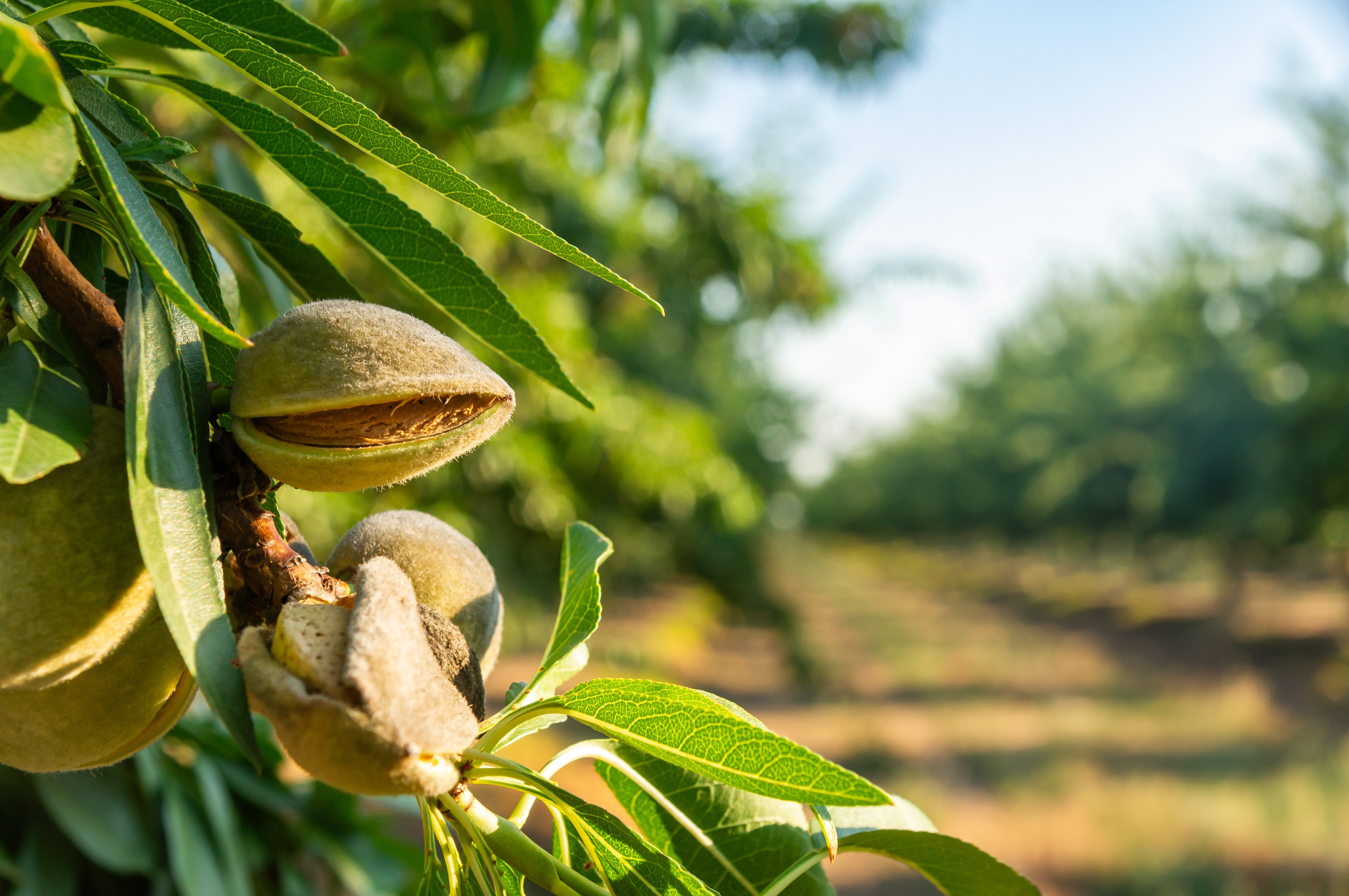
If you have ever seen an almond tree in bloom, you already understand part of the appeal. Almond trees are not just productive nut trees. They are beautiful landscape trees with showy spring flowers, elegant branching, and the kind of backyard payoff that makes people feel like they have officially graduated into serious gardening. But if you are new to growing nut trees, it is normal to wonder where to even start. When is the best time to plant an almond tree? What kind of soil does it need? Do you need two almond trees for pollination? Will it grow in your USDA zone? And how do you keep it alive and productive after planting?
This guide is built for beginners who want clear, practical help without having to dig through a dozen conflicting articles. We are going to cover when to plant almond trees, how to choose the right site, soil requirements, soil preparation, pollination, the best almond varieties by USDA zone using the current selection from Ty Ty Nursery, how to plant, how to water, what to do about first-year blooms, pruning, pest and disease issues, and long-term maintenance.
By the end, you will know exactly how to plant almond trees the right way and how to set them up for long-term success.
Why Almond Trees Are Worth Growing
Almond trees bring together beauty and usefulness in a way few backyard trees can. In early spring, they flower with delicate pink to white blossoms. Later, if pollination and growing conditions line up properly, they reward the grower with nutritious nuts that can be eaten fresh after curing, roasted, or used in baking and cooking. Ty Ty Nursery’s almond page highlights that almond trees combine ornamental value with productive harvests and can be grown for snacking or baking at home.
That combination of spring flowers, homegrown food, and long-term landscape value is exactly why almond trees appeal to so many gardeners. They are not the easiest nut tree for every climate, but where they fit, they can be one of the most satisfying.
When Is the Best Time to Plant Almond Trees?
The best time to plant an almond tree is during the dormant season, usually from late fall through early spring, before vigorous new growth begins. For most beginners, early spring is the easiest and safest time to plant, especially in colder regions where winter conditions can be rough. Dormant planting allows the tree to focus on root establishment before it has to support a flush of leaves, flowers, and nut production. Ty Ty Nursery’s own nut tree blog also notes that late winter and early spring are the best times to plant bare root nut trees.
Extension guidance for home almonds also points growers toward warm, sunny areas with a relatively long frost-free season and emphasizes that almonds are frost sensitive, especially around bloom time. That means early spring planting works best when timed after the soil is workable but before the tree is actively pushing lots of new top growth.
The beginner-friendly rule is simple: plant while the almond tree is still asleep so it can wake up where it belongs.
Current Almond Varieties at Ty Ty Nursery
According to the current Ty Ty Nursery almond page, the varieties presently listed are:
- All-In-One Almond Tree — USDA Zones 7–9
- Hall’s Hardy Almond Tree — USDA Zones 6–9
- Mission (Texas) Almond Tree — USDA Zones 7–9
- Nikita’s Pride TM Almond Tree — USDA Zones 5–8
- Nonpareil Almond Tree — USDA Zones 7–9
- Prima TM Almond Tree — USDA Zones 5–8
- Seaside TM Almond Tree — USDA Zones 5–8
Ty Ty Nursery also states on the same page that these almond varieties include both self-pollinating and cross-pollinating options and that they thrive in full sun and well-drained soil.
Best Almond Tree Varieties by USDA Zone and State
Not every almond tree works everywhere. Almonds are more climate-sensitive than many beginner growers realize. Warm summers, adequate chill, bloom timing, and spring frost exposure all matter. Utah State University notes that almonds need full sun, well-drained soil, and enough winter chill, while also warning that they are not well suited to colder areas due to frost sensitivity.
Because many states include multiple USDA zones, always start with your exact local USDA zone and then use your state as a second filter. California, Texas, Georgia, North Carolina, Virginia, Tennessee, Oregon, and Washington can all include more than one zone.
USDA Zone 3
Typical areas: northern Minnesota, North Dakota, South Dakota, Montana, and colder interior mountain regions.
Recommendation: The current Ty Ty almond lineup is not the right beginner fit for Zone 3. The cold-hardiest varieties currently listed start at Zone 5, so Zone 3 falls outside the recommended range.
USDA Zone 4
Typical areas: northern Wisconsin, northern Michigan, northern New England, and colder interior regions.
Recommendation: Zone 4 is generally outside the listed range for the current Ty Ty almond varieties. For beginners, these are not the most appropriate almond choices from the current page.
USDA Zone 5
Typical areas: parts of Pennsylvania, Ohio, Indiana, Illinois, Iowa, Missouri, Kansas, Colorado, Utah, inland Oregon, inland Washington, and southern New England.
Best current Ty Ty choices: Nikita’s Pride TM, Prima TM, Seaside TM.
Zone 5 is where the current Ty Ty almond lineup begins. These three varieties are the cold-hardiest options on the page and are the most realistic starting point for gardeners in colder almond country. If you live in a Zone 5 area with late spring frosts, site selection becomes even more important because bloom damage can still limit production.
USDA Zone 6
Typical areas: parts of Virginia, Maryland, Kentucky, Tennessee, Missouri, Arkansas, Oklahoma, North Carolina uplands, and interior western valleys.
Best current Ty Ty choices: Hall’s Hardy, Nikita’s Pride TM, Prima TM, Seaside TM.
Zone 6 gives beginners more flexibility. Hall’s Hardy joins the cold-hardy group here, and this zone can be a practical place to grow almonds if you have a sunny, well-drained site and good bloom protection from cold pockets.
USDA Zone 7
Typical areas: Georgia uplands, Alabama uplands, South Carolina upcountry, North Carolina piedmont, Tennessee, Arkansas, Virginia, and Oklahoma.
Best current Ty Ty choices: All-In-One, Hall’s Hardy, Mission (Texas), Nonpareil, Nikita’s Pride TM, Prima TM, Seaside TM.
Zone 7 is one of the strongest almond zones from the current Ty Ty lineup. Nearly every variety on the page can work here, which means your decision can focus more on pollination needs, flavor goals, and your local spring frost pattern than on raw hardiness alone.
USDA Zone 8
Typical areas: much of Georgia, Alabama, Mississippi, Louisiana, Texas, South Carolina, Arizona, and parts of California.
Best current Ty Ty choices: All-In-One, Hall’s Hardy, Mission (Texas), Nonpareil, Nikita’s Pride TM, Prima TM, Seaside TM.
Zone 8 is also a strong almond zone for the current Ty Ty offering. Warm summers support ripening well, but drainage and disease management still matter. In more humid parts of Zone 8, you will want especially good airflow and pruning discipline.
USDA Zone 9
Typical areas: southern Texas, southern Louisiana, parts of central and southern California, and other mild-winter areas.
Best current Ty Ty choices: All-In-One, Hall’s Hardy, Mission (Texas), Nonpareil.
Zone 9 still fits several of the current Ty Ty almond trees, but it narrows the field. If you are in a very warm location, watch chill accumulation and bloom timing closely because almonds still need winter chill and a good flowering window to set well.
USDA Zone 10
Typical areas: south Florida, very warm southern coastal California, and similar mild-winter climates.
Recommendation: The current Ty Ty almond lineup is generally not listed for Zone 10. From the live page, Zone 10 is outside the stated range for the current selections.
USDA Zone 11
Typical areas: tropical and near-tropical climates.
Recommendation: The current Ty Ty almond varieties are not the right beginner fit for Zone 11.
Pollination Requirements for Almond Trees
This is one of the most important things beginners need to understand before buying an almond tree. Many almonds are not reliably self-fruitful and need pollen from a compatible second variety. Utah State University’s home almond guide says almonds need two different cultivars, or a compatible peach, for pollination. Ty Ty Nursery’s almond page also says the current assortment includes both self-pollinating and cross-pollinating varieties.
That means you should not assume every almond tree will fruit well on its own. If you only have room for one tree, a self-pollinating selection is the safer beginner path. From the current Ty Ty list, the most obvious candidate for that role is All-In-One, which Ty Ty’s almond blog specifically identifies as a self-fertile choice for gardeners who only have room for one tree.
If you want to plant a cross-pollinating almond like Nonpareil or Mission (Texas), make sure you have a compatible pollinator blooming at the same time. Ty Ty’s almond blog specifically mentions Nonpareil as needing a pollinator and suggests Mission as a pairing option. Bees are also an important part of almond pollination, so avoid spraying insecticides during bloom.
The simple beginner takeaway is this: if you do not want to think much about pollination, choose a self-pollinating variety. If you want to grow cross-pollinating almonds, plant compatible partners together and let pollinators do their job.
Site Selection: Where Should You Plant an Almond Tree?
Almond trees need full sun. Real sun. At least 6 to 8 hours of direct light a day is the baseline if you want healthy growth, strong bloom, and reliable nut production. Ty Ty Nursery says their almond trees thrive in full sun, and Utah State University’s home almond guide says the same.
They also need well-drained soil. Almonds do not tolerate soggy ground well. If you plant one in a low wet area where water stands after rain, you are creating problems before the tree even gets started. Root diseases become more likely, growth can stall, and long-term survival can suffer. UC IPM lists multiple serious almond diseases, including root and crown problems, which is another reason drainage matters so much.
Good airflow is also important, especially in regions with spring humidity or summer disease pressure. Almond trees benefit from space and openness rather than crowded, trapped-air planting spots. Avoid frost pockets too, because almonds bloom early and flowers can be damaged by late freezes. Utah State specifically notes their frost sensitivity.
Good places to plant almonds include:
- A sunny open lawn or orchard area with good drainage
- A gentle slope where cold air can move away
- A site with strong morning sun and good airflow
- A planting area away from standing water and tight shade
Soil Requirements for Almond Trees
Almond trees prefer soil that drains well and is loose enough for roots to spread easily. Ty Ty’s almond page says full sun and well-drained soil are key, and Ty Ty’s almond blog adds that sandy or loamy soil with a pH around 6.0 to 7.5 is ideal.
That does not mean your soil has to be perfect. It does mean it cannot stay waterlogged. Sandy soil may dry faster and require more careful irrigation early on. Heavy clay can work only if drainage is addressed and the site is chosen wisely. If you have compacted soil, break that up before planting. If you have a wet site, rethink the site or consider planting on a slight berm or rise.
A soil test is always a smart move. It can help you understand pH and fertility before you plant instead of guessing later.
How to Prepare the Soil Before Planting
Good soil preparation is less about making one tiny luxury pocket and more about preparing a healthy root zone. Remove grass, weeds, rocks, and debris from the planting area. Turf competes hard with young trees for water and nutrients, so starting with a clean planting area helps more than most beginners realize.
Loosen compacted soil and break up hard clods. If your drainage is poor, improve the site itself rather than trying to bury the problem underneath the tree. Almonds are long-term plants, and a little preparation now will save years of frustration later.
If your soil is especially heavy, you can also focus on improving the broader planting area over time rather than over-amending a tiny hole. The goal is to help roots move outward naturally, not trap them in one soft pocket.
How to Plant an Almond Tree Step by Step
Now for the hands-on part. If you are planting a bareroot almond tree, here is the beginner-friendly process:
- Soak the roots in a bucket of water for hydration. When your tree arrives, soak the roots in a bucket of water to help rehydrate it before planting.
- Dig a hole twice the size of the roots. Give the root system room to spread naturally instead of cramming it into a tight hole.
- Place one unopened 1st Year Nutra Pro Fertilizer Pak and one unopened Soil Moist Transplant Mix at the bottom of the hole. Leave both unopened and place them at the bottom of the planting hole.
- Set the tree in place. Spread the roots naturally and make sure the tree is positioned upright at the correct depth.
- Backfill the hole. Refill with the removed soil.
- Water the tree in thoroughly. This helps settle the soil around the roots and eliminate air pockets.
- Install a Max Growth Tree Shelter. This gives the new tree extra protection while it gets established.
That is the simple formula: hydrate, dig, place the unopened inputs, backfill, water, and protect.
Why Use Nutra Pro 1st Year Fertilizer Paks Instead of Granular Fertilizer?
The first year is the wrong time to get aggressive with fertilizer. A newly planted almond tree has tender young roots that are easily damaged by fertilizer burn. That is one reason slow, controlled feeding makes so much more sense than throwing granular fertilizer into the planting zone and hoping the rate is right.
The benefit of using Nutra Pro 1st Year Fertilizer Paks is the slow release through micro porous holes. That means the tree is fed gradually rather than blasted with a concentrated fertilizer load all at once. The goal in year one is not to push wild top growth. The goal is to establish roots safely and steadily.
Granular fertilizer in the first year is easy to overapply, easy to misplace, and easy to burn the young roots with. Once that happens, the tree may stall, decline, or fail altogether. Slow feeding is simply the safer beginner strategy.
Watering Almond Trees After Planting
The first year is won or lost with watering.
For the first two months after planting, water every day or at least every other day, depending on rainfall, temperature, wind, and soil type. If the weather is mild and rainy, you may not need daily watering. If it is hot, dry, or your soil drains quickly, you may need more frequent attention.
If the tree begins to wilt, it is telling you it is thirsty and needs a drink. Newly planted trees do not yet have a deep established root system, so they are counting on you during that first stretch.
Once established, watering can taper back and become more dependent on rainfall and climate. Utah State’s almond guide recommends deep, infrequent watering for established almonds, and Ty Ty’s almond blog notes that mature trees are relatively drought tolerant but still benefit from irrigation during dry periods. Increase water attention again once fruiting begins, because nut development is a moisture-sensitive stage.
Should You Remove Blooms the First Year?
Yes. If your almond tree flowers during the first year after planting, remove the blooms.
This feels painful to beginners because flowers are exciting. They make you think production is right around the corner. But the first year is not about almonds. The first year is about root establishment.
Utah State’s home almond guide says young trees should be kept from fruiting during their first several years so they can focus on structure and establishment. Even if you take a more flexible backyard approach, the principle is the same: early fruiting pulls energy away from the strong root and framework development you really want.
Grow your own fruit and nuts is a marathon, not a sprint. Short-term gratification is not worth weakening long-term production.
Ongoing Maintenance for Healthy Almond Trees
Pruning
Almond trees need pruning. Not random hacking. Smart structural pruning. Utah State says almonds should be pruned early to establish structure, and Ty Ty’s almond blog recommends pruning in late winter to shape the tree and remove weak or dead wood.
Your pruning goals are to:
- Build a strong framework
- Remove dead, broken, rubbing, or weak branches
- Improve sunlight penetration
- Improve airflow
- Make future harvests easier
Late winter or very early spring while the tree is dormant is usually the easiest pruning window for beginners.
Mulching
A mulch ring helps conserve moisture, reduce weeds, and moderate soil temperature. Keep mulch pulled back from the trunk so moisture does not stay packed directly against the bark.
Weed and Grass Control
Do not let lawn grass grow right up to the trunk. Young trees do not need competition from turf when they are still trying to establish.
Fruiting and Harvest Patience
Almond trees are not instant-gratification plants. Let them settle in and build properly. You are growing a long-term nut tree, not a one-season annual crop.
Common Almond Tree Problems and How to Treat Them
Like other stone fruits and nut trees, almonds can run into pest and disease trouble. UC IPM’s almond pest management guide lists a wide range of common issues, including anthracnose, bacterial canker and blast, blossom blights, hull rot, leaf diseases, root and crown diseases, and more.
Brown Rot Blossom Blight and Flower Issues
Because almonds bloom early, wet weather during bloom can create disease pressure around flowers and young shoots. Good airflow, sanitation, and keeping the canopy open help reduce risk.
Canker and Dieback
Bacterial canker and related dieback issues can damage limbs and weaken trees. Avoid unnecessary trunk and limb injury, prune cleanly, and remove obviously dead or infected wood.
Leaf Diseases
Leaf spot and blight issues often become worse in humid or poorly ventilated plantings. Open pruning, sanitation, and good site selection help a lot.
Root and Crown Problems
Poor drainage is one of the easiest ways to create serious almond trouble. Root and crown disease pressure rises when trees sit in wet soils, which is why site selection matters so much from the beginning.
Aphids, Mites, Borers, and Other Pests
Ty Ty’s almond blog notes that aphids, mites, and borers can become problems. Scout often and catch issues early before a small problem becomes a stressed-tree problem.
The best beginner habit is simple: walk your tree often. Look at leaves, blooms, shoots, and bark. Early detection is one of the most powerful orchard skills you can develop.
Best Place to Buy Almond Trees Online
If you are looking for the best place to buy almond trees online, Ty Ty Nursery stands out for beginners and experienced growers alike.
Here is why Ty Ty Nursery stands out:
- Prices up to 68% lower than other nurseries
- Fastest in-season shipping so you can plant in days the Ty Ty way instead of waiting weeks or months.
- Free one year Plantsurance guarantee.
- Lifetime true to name guarantee.
- No need to move heavy pots in and out of cars because plants ship right to your door.
- In business since 1978.
- Google Top Quality Store recognition.
- Excellent Trustpilot rating by verified customers.
- BBB A rating.
- Live human plant experts in Ty Ty, Georgia.
Current public references support those trust signals in part: Ty Ty’s homepage currently says it is certified as a Google Trusted Store and recognized as a Newsweek Top Online Garden Center; Trustpilot currently shows Ty Ty Nursery with a 4.5 score and about 181–188 reviews depending on the page snapshot; and BBB currently shows Ty Ty Plant Nursery, LLC with an A rating.
You can browse the current almond tree collection here: Almond Trees at Ty Ty Nursery.
Final Thoughts
Almond trees are one of the most rewarding specialty nut trees a beginner can grow in the right climate. They offer spring beauty, long-term landscape value, and the satisfaction of producing your own nuts at home. But they reward good planning. Choose a variety that fits your USDA zone. Make sure your site has full sun and drainage. Understand whether your variety is self-pollinating or needs a partner. Water carefully during establishment. Remove first-year blooms. Prune for structure. Watch for disease and pest issues early.
Do those things well and your almond tree will not just survive. It will settle in, grow with confidence, and become one of the most satisfying trees in your landscape.
Ready to get started? Explore the current selection of almond trees at Ty Ty Nursery, browse the Ty Ty Nursery Planting Tips page, and visit the Ty Ty Nursery homepage for more nut trees, fruit trees, and growing resources.
Leave a Reply