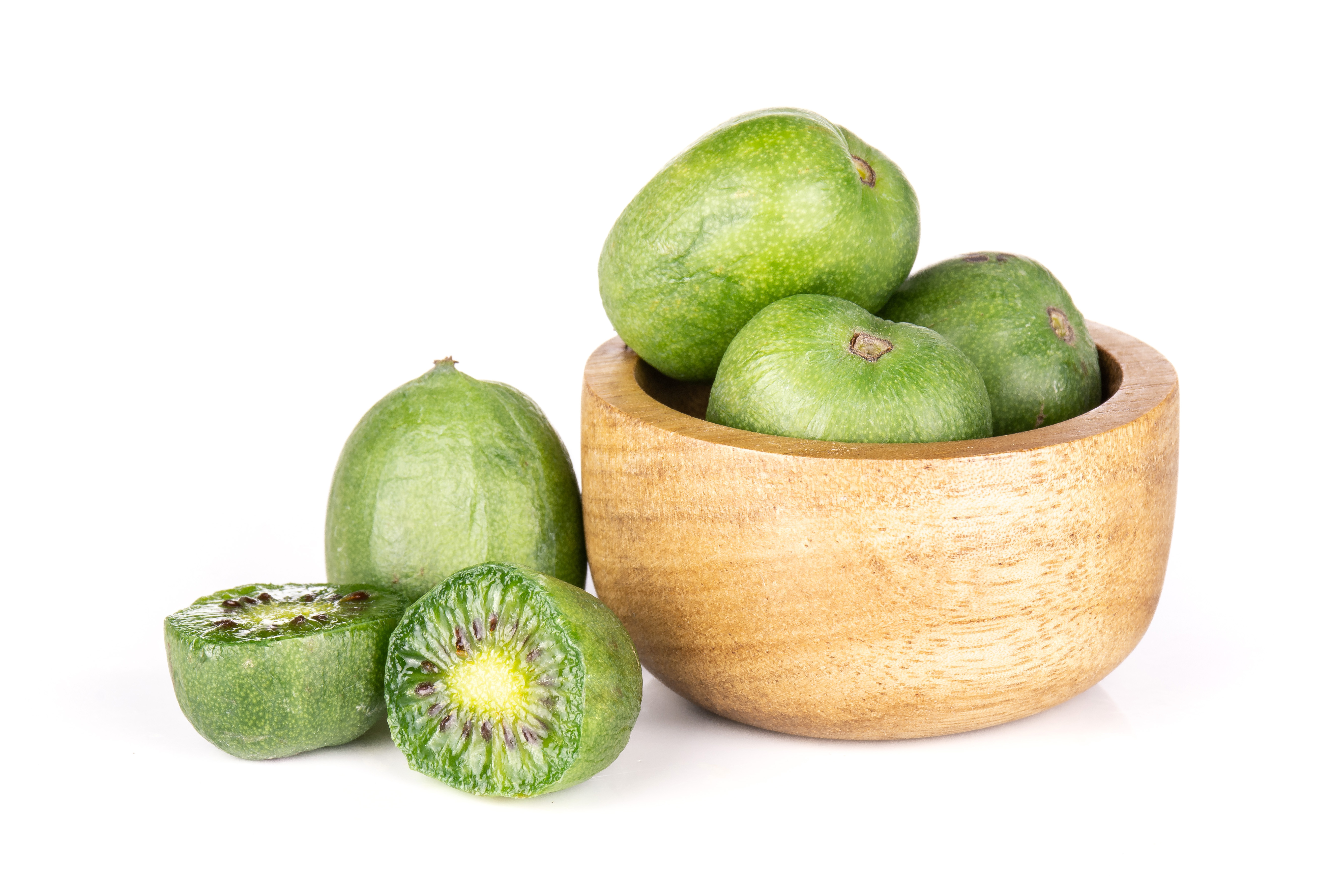
If you have ever wanted to grow kiwi at home but thought it was only possible in warm exotic climates, Issai kiwi vines might be one of the best surprises in gardening. Issai is a hardy kiwi, which means it can tolerate much colder winters than the fuzzy grocery-store kiwi most people know. It also produces smaller, smooth-skinned fruit that you can eat whole, skin and all. That alone makes it a fascinating plant. Add in the fact that it climbs beautifully, looks lush on a trellis, and can produce lots of fruit once established, and you have one of the most exciting edible vines a beginner can grow.
But just because Issai kiwi is beginner-friendly does not mean it should be planted carelessly. Like all fruiting vines, it performs best when you match it to the right site, give it the right support system, understand how pollination works, and manage it properly during the first year. This guide is built to help with exactly that.
We are going to cover when to plant Issai kiwi vines, site selection, soil requirements, soil preparation, trellis recommendations, USDA zone guidance using the current Issai Kiwi Plant listing at Ty Ty Nursery, pollination requirements, planting, watering, bloom removal, pruning, common issues, and long-term care. By the end, you will know exactly how to plant Issai kiwi vines the right way.
What Is an Issai Kiwi Vine?
Issai kiwi is a hardy kiwi selection, generally classified under Actinidia arguta, and is cold-hardy kiwi plant that produces small, sweet kiwis with smooth edible skin, making it a great option for gardeners in colder climates where other kiwi types may not thrive. Issai kiwi vines are self-pollinating, high yielding, and well suited for small spaces or container gardening.
That makes Issai especially appealing to beginners. Hardy kiwi fruit are smaller than fuzzy kiwi, but they are usually easier to eat fresh because you do not have to peel them. They also grow on a vigorous vine, so you get both ornamental and edible value in one plant.
When Is the Best Time to Plant Issai Kiwi Vines?
The best time to plant Issai kiwi vines is in early spring while the vine is still dormant or just beginning to wake up. This timing is supported by general hardy kiwi growing guidance and is the safest route for beginners because it gives the roots time to establish before the vine is pushed hard by summer growth. Hardy kiwi vines are vigorous once they get going, so you want them rooted in before the season takes off.
For most gardeners, the easiest rule is simple: plant while the vine is still quiet so it can focus on roots first.
Current Issai Kiwi Hardiness and USDA Zone Recommendations
Issai Kiwi Plant for USDA Zones 3–8 and says it requires about 100–200 chill hours.
USDA Zone 3
Best current choice: Issai Kiwi Plant.
Issai kiwis are good for Zone 3, which is one of the reasons this variety is so attractive for colder-climate gardeners.
USDA Zone 4
Best current choice: Issai Kiwi Plant.
Zone 4 is comfortably within the current listed range and is one of the better cold-climate fits for hardy kiwi growing.
USDA Zone 5
Best current choice: Issai Kiwi Plant.
Zone 5 is a strong fit for Issai kiwi and often gives a nice balance of winter chill and growing season length.
USDA Zone 6
Best current choice: Issai Kiwi Plant.
Zone 6 is an excellent hardy kiwi zone, and Issai is currently listed comfortably within it.
USDA Zone 7
Best current choice: Issai Kiwi Plant.
Zone 7 remains a strong fit for the current Issai listing, assuming the site has good drainage and summer water is managed well.
USDA Zone 8
Best current choice: Issai Kiwi Plant.
Zone 8 is the warm edge of the current listed range for Issai Kiwi Plant.
USDA Zone 9
Recommendation: The current live Issai Kiwi Plant listing does not include Zone 9, so it is not the currently recommended outdoor fit.
USDA Zone 10
Recommendation: The current live Issai Kiwi Plant listing does not include Zone 10.
USDA Zone 11
Recommendation: The current live Issai Kiwi Plant listing does not include Zone 11.
Because many states span multiple USDA zones, always use your exact local zone first and your state second.
Pollination Requirements for Issai Kiwi Vines
This is one of the most important parts of the whole guide, because Issai kiwi gets talked about in two slightly different ways. Issai is self-pollinating, meaning you do not need another plant nearby to produce fruit. That is one of the biggest reasons it is so popular for home gardeners.
At the same time, extension and university sources add a useful nuance. Pennsylvania State University, Utah State, WSU, and the University of Minnesota all note that Issai is the main self-fruitful hardy kiwi, but fruit set is often improved when another pollinator is present. In other words, a single Issai vine can fruit, but it may fruit more heavily or more reliably with additional pollination support.
The easiest beginner takeaway is this: if you only have room for one kiwi vine, Issai is the obvious choice because it can fruit on its own. But if you want to push production higher, do not be surprised if pollination support improves yield and fruit size.
Site Selection: Where Should You Plant Issai Kiwi Vines?
Issai kiwi vines want full sun and well-drained soil. The plant thrives in full sun and should be grown in fertile, well-drained soil. Oregon State also recommends full sun exposure and fertile, well-drained soil with moderate water-holding capacity for kiwifruit.
A good site for Issai is sunny, open, and never soggy. A poor site is a low wet area where water stands after rain. Kiwi roots are sensitive to prolonged waterlogging. Oregon State says kiwi vines are very sensitive to standing water and root problems become serious quickly when drainage is poor.
Good planting locations include:
- A sunny trellis row
- A pergola or arbor with strong light
- A fence line with good air movement
- An open garden edge where the vine has room to climb
Soil Requirements for Issai Kiwi Vines
Issai kiwi vines prefer fertile, well-drained soil. Oregon State says kiwi vines do best in deep, well-drained soils and notes an ideal pH around 5.6 to 6.0. NC State says hardy kiwi prefers fertile, well-drained soil and full sun to partial shade.
That means the ideal soil for Issai kiwi is:
- Well-drained
- Fertile
- Loose enough for roots to spread
- Moist but never waterlogged
Kiwi vines need moisture, but they are also among the fruit crops most sensitive to overwatering. Georgia Extension notes that kiwifruit are among the most drought-sensitive fruit grown there, but also among the most sensitive to overwatering. That tells you everything you need to know about the balance you are aiming for.
How to Prepare the Soil Before Planting
Clear grass and weeds from the planting area. Loosen compacted soil. Remove rocks and debris. If your soil is poor or low in organic matter, improving the broader bed with compost can help create a better root zone. Oregon State specifically notes that in some regions, native soil may need compost added to improve water-holding capacity.
The goal is not to create one tiny pocket of luxury soil inside bad ground. The goal is to create a broader planting area where the roots can move outward into workable, healthy soil.
Trellis Recommendations for Issai Kiwi Vines
Issai kiwi vines need support. This is not optional. Hardy kiwi vines are vigorous climbers, and without a strong support system they quickly become a tangled mess. Oregon State says vines require a substantial support system. Pennsylvania State says hardy kiwi needs a well-anchored trellis system, and older recommendations from Washington State also emphasize strong supports for kiwi because of their vigor and long-term weight.
For beginners, the easiest trellis options are:
- Strong wire trellis: sturdy posts with heavy wire stretched between them.
- Pergola or arbor: attractive and useful, especially if you want the vine to create shade.
- Fence support: workable if the fence is sturdy and gets enough light.
The key word here is strong. Kiwi vines get heavy fast. A weak support system becomes a major problem later, not a small inconvenience.
How to Plant an Issai Kiwi Vine Step by Step
If you are planting a bareroot Issai kiwi vine, here is the beginner-friendly method:
- Soak the roots in a bucket of water for hydration. When your Issai kiwi arrives, soak the roots in a bucket of water to help rehydrate the vine before it goes into the ground.
- Dig a hole twice the size of the roots. Give the roots room so they can spread naturally instead of being cramped or bent.
- Place one unopened 1st Year Nutra Pro Fertilizer Pak and one unopened Soil Moist Transplant Mix at the bottom of the hole. Leave both unopened and place them at the bottom of the planting hole.
- Set the vine in place. Position the roots naturally and keep the vine upright.
- Backfill the hole. Refill with the removed soil.
- Water the vine in thoroughly. This helps settle the soil and remove air pockets around the roots.
- Install a Max Growth Berry Shelter. This adds protection while the vine is getting established.
That is the basic formula: hydrate, dig, place the unopened inputs, backfill, water, and protect.
Why Use Nutra Pro 1st Year Fertilizer Paks Instead of Granular Fertilizer?
The first year is not the time to get aggressive with fertilizer. Young kiwi roots are tender, and too much fertilizer too quickly can damage or stall the vine. A slow, controlled approach makes much more sense than dumping granular fertilizer into the planting zone and hoping you guessed correctly.
The reason to use Nutra Pro 1st Year Fertilizer Paks instead of granular fertilizer is that the pak feeds slowly through micro porous holes. That slower release supports the vine gradually without burning the roots. Granular fertilizer the first year is easy to overapply, easy to place too close to the roots, and easy to use badly enough to stunt the vine or kill it.
Year one should be about safe root establishment, not forcing giant top growth before the vine is ready.
Watering Issai Kiwi Vines After Planting
The first two months after planting are critical. For the first two months, water every day or at least every other day, depending on rainfall, temperature, wind, and soil type. If the weather is mild and rainy, you may not need daily watering. If it is hot, dry, or your soil drains quickly, you may need more frequent attention.
If the plant begins to wilt, it is telling you it is thirsty and needs a drink. Newly planted kiwi vines do not yet have a broad established root system, so they depend on you during that first stretch.
Once established, watering can taper back and become more rainfall-dependent, but kiwi vines still need careful water management. Georgia Extension notes that irrigation is a must in establishing kiwifruit and that they are highly sensitive to drought stress in the first year. Increase water attention again once fruiting starts because crop development still needs steady moisture.
Should You Remove Flowers the First Year?
Yes. If your Issai kiwi vine flowers in the first year after planting, remove the blooms.
This may feel wrong because flowers make fruit seem close, but the first year is not about harvesting kiwi. It is about root establishment, trunk development, and building a strong framework on the trellis. Grow your own fruit is a marathon, not a sprint. Short-term gratification is not worth weakening long-term production.
Ongoing Maintenance for Healthy Issai Kiwi Vines
Pruning
Kiwi vines need regular pruning. NC State says prune each stem in winter back to 8–10 buds and prune in summer as needed to control overly long branches. Pennsylvania State also notes that hardy kiwi needs annual dormant pruning and summer management because the vines are vigorous.
For beginners, the easy version is this:
- Keep a strong main framework on the trellis.
- Prune in winter for structure and fruiting wood.
- Prune in summer to control excessive growth.
- Do not let the vine turn into a giant tangled curtain of leaves.
Training
Training and pruning go together. Kiwi vines are vigorous and need to be guided along their support system if you want them to stay manageable and productive.
Weed Control
Keep grass and weeds from crowding the base of the vine. Young vines do not need extra competition while they are getting established.
Common Issai Kiwi Problems and How to Treat Them
Poor Drainage
One of the fastest ways to stress a kiwi vine is to plant it in wet soil. Oregon State says kiwifruit are sensitive to standing water, especially after bud break, and root systems can be severely limited if waterlogging lasts even a few days.
Weak Support Systems
Kiwi vines become heavy. A weak trellis or undersized arbor is not a minor issue. It becomes a major management problem as the vine matures.
Overgrowth
Hardy kiwi is vigorous. Without pruning and training, the vine can quickly become harder to manage and less productive. Minnesota notes that kiwiberry has a vigorous growth habit and requires extensive and frequent pruning.
Spring Frost on Young Shoots
Older kiwi-growing references note that warm spells in late winter or early spring can trigger early budbreak, which makes new growth vulnerable to frost. That is one more reason site selection and spring awareness matter.
The best beginner habit is simple: walk your vine often. Look at new growth, leaves, the trellis, the moisture level, and overall vigor. Problems are almost always easier to manage when they are small.
Best Place to Buy Issai Kiwi Vines Online
If you are looking for the best place to buy Issai kiwi vines online, Ty Ty Nursery is a strong place to start for beginners and experienced growers alike.
Here is why Ty Ty Nursery stands out:
- Prices up to 68% lower than other nurseries
- Fastest in-season shipping
- Free one year Plantsurance guarantee
- Lifetime true to name guarantee
- No need to move heavy pots in and out of cars because plants ship right to your door.
- In business since 1978
- Google 4.6 Top Quality Store Rating
- Excellent 4.4 Trustpilot rating
- BBB A rating
- Live human plant experts in Ty Ty, Georgia
You can browse the current Issai listing here: Issai Kiwi Plant at Ty Ty Nursery.
Final Thoughts
Issai kiwi vines are one of the most exciting edible vines a beginner can grow. They offer cold hardiness, edible smooth-skinned fruit, ornamental value, and the unusual bonus of self-fertility in a crop where that is rare. But they still reward planning. Plant in full sun. Prioritize drainage. Build a strong trellis. Water carefully during establishment. Remove first-year blooms. Prune regularly. Think long term.
Do those things well and your Issai kiwi vine will not just survive. It will become one of the most productive and memorable plants in your garden.
Ready to get started? Explore the current Issai Kiwi Plant at Ty Ty Nursery, browse the Ty Ty Nursery Planting Tips page, and visit the Ty Ty Nursery homepage for more fruiting vines, berry plants, and growing resources.

Leave a Reply