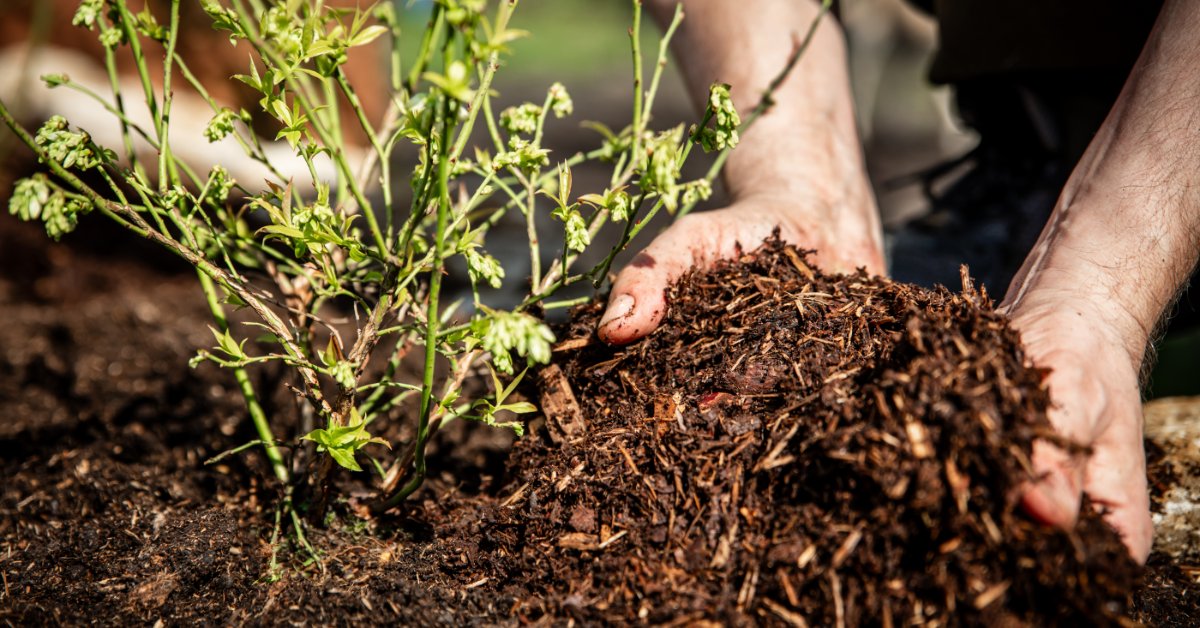
Blueberry plants reward gardeners with flavorful fruit, attractive foliage, and years of harvests. At the same time, these plants have a few preferences that deserve attention. Mulch sits near the top of that list because it helps create the soil conditions blueberries love. If you’re ready to get more from your berry patch, use our guide to learn how to mulch blueberry plants for maximum berry production. This simple step will give your plants the support.
Why Mulch Matters for Blueberry Plants
Unlike many garden plants, blueberries thrive in acidic soil. Their shallow root systems also leave them more vulnerable to dry conditions and temperature swings. A well-chosen mulch addresses both concerns and creates a more stable environment around the roots. That stability allows the plant to direct more energy toward flowers and fruit rather than stress recovery. A layer of mulch acts like a protective blanket that shields roots from sudden changes.
Moisture retention ranks among the biggest advantages. Soil beneath mulch stays damp longer after rainfall or irrigation. During summer heat, that extra moisture can help prevent stress that may reduce fruit production.
Mulch also slows weed growth. Fewer weeds means less competition for water and nutrients. Instead of sharing resources with unwanted plants, blueberry bushes can devote those resources to foliage, blossoms, and berries.
Another benefit comes from organic matter. Natural mulches gradually break down and improve soil texture over time. Blueberries thrive in soil rich in organic material, so this gradual improvement supports long-term plant health.
Choosing the Best Mulch for Blueberries
Not every mulch works equally well around blueberry bushes. Some materials support acidic conditions, while others can raise soil pH and create problems. Pine bark remains one of the most popular choices. It breaks down slowly, looks attractive, and contributes organic matter to the soil. Many blueberry growers rely on pine bark year after year with excellent results.
Pine needles also work very well. They create a light, airy layer that allows water to pass through easily. As they decompose, they help maintain the acidic environment blueberries prefer.
Shredded leaves can work well, too. They improve soil structure and add organic material as they decompose. Avoid limestone gravel, fresh grass clippings in thick layers, and mulches that may raise soil pH. Blueberries perform best when acidity remains within their preferred range.
How Much Mulch Should You Use?
Many gardeners either use too little mulch or pile on far too much. Finding the middle ground produces the best results. A layer between two and four inches deep works well for most blueberry bushes.
This depth provides insulation and moisture retention without creating excess moisture around the crown of the plant. If you use pine bark or wood chips, aim toward the higher end of that range. Pine needles may settle over time, so occasional replenishment helps maintain adequate coverage.
Keep mulch several inches away from the main stem. Direct contact can trap excess moisture against the bark and create conditions favorable to disease. A small gap around the base allows air circulation and reduces potential issues.

The Best Time To Apply Mulch
Timing can influence the effectiveness of your mulch layer. Fortunately, blueberries benefit from mulch during most of the year. Spring serves as one of the best opportunities. Adding fresh mulch before summer heat arrives helps lock moisture into the soil. It also gives bushes a strong start as new growth develops.
Many gardeners refresh mulch again in fall. This extra layer protects roots from winter temperature fluctuations and prepares plants for the following season. If your existing mulch layer has thinned considerably, don’t wait for a specific season. Replenishment at the right depth can help whenever coverage becomes sparse.
Step-By-Step Mulching Process
A simple approach delivers excellent results. Start by removing weeds and debris around the base of the plant. This step prevents unwanted plants from becoming trapped beneath the mulch layer.
Next, water the soil thoroughly. Moist soil beneath mulch stays hydrated much longer than dry soil covered afterward. Spread your chosen mulch evenly around the plant. Extend coverage beyond the drip line when possible. Blueberry roots frequently spread wider than many gardeners realize.
Maintain a depth of two to four inches throughout the area. Avoid creating mounds or volcano-shaped piles around the stem. Finally, inspect the mulch every few months. Natural decomposition and weather gradually reduce depth. Small touch-ups throughout the year will help maintain consistent protection.
Common Mulching Mistakes to Avoid
Learning how to mulch blueberry plants for maximum berry production requires knowing about the common mistakes. Even experienced gardeners occasionally run into problems with mulch. Fortunately, most mistakes are easy to correct.
One common issue involves excessive depth. Thick layers can restrict airflow and create overly wet conditions near the roots. More mulch does not automatically lead to better results.
Another mistake involves placing mulch directly against the trunk. Moisture trapped against bark may contribute to disease or decay over time. Some gardeners select decorative stone mulch around blueberries. Stone retains heat and does not improve soil organic matter. Organic materials typically produce better results for berry production.
Ignoring mulch maintenance can also reduce benefits. Organic mulches break down naturally. Without occasional replenishment, the protective layer becomes thinner and less effective.

Extra Tips for Bigger Blueberry Harvests
Mulch works best as part of a larger care routine. Pairing proper mulching with good cultural practices can support larger harvests. Consistent watering remains a priority.
Even with mulch, blueberry plants need regular moisture during active growth and fruit development. Soil testing helps maintain proper acidity. Blueberries generally perform best in acidic conditions, and periodic testing provides valuable insight into soil health.
Pruning also plays a role. Removing older, less productive wood encourages fresh growth and can improve fruit production over time. Fertilization designed for acid-loving plants may further support healthy growth. Combined with proper mulching, these practices create favorable conditions for productive bushes.
Prepare for Long-Term Success
Blueberry plants appreciate consistency, and mulch provides exactly that. A quality mulch layer helps regulate soil temperature, conserve moisture, suppress weeds, and improve soil structure over time. Pine bark, pine needles, wood chips, and shredded leaves remain among the best choices for most home gardeners.
With proper depth, routine maintenance, and thoughtful placement, mulch becomes one of the easiest ways to support stronger blueberry plants and larger harvests. Add fresh mulch to your berry patch this season and give your plants the conditions they need to thrive. Browsing the blueberry plants for sale and making a small investment of time today can reward you with baskets of delicious blueberries for a very long time.

Leave a Reply