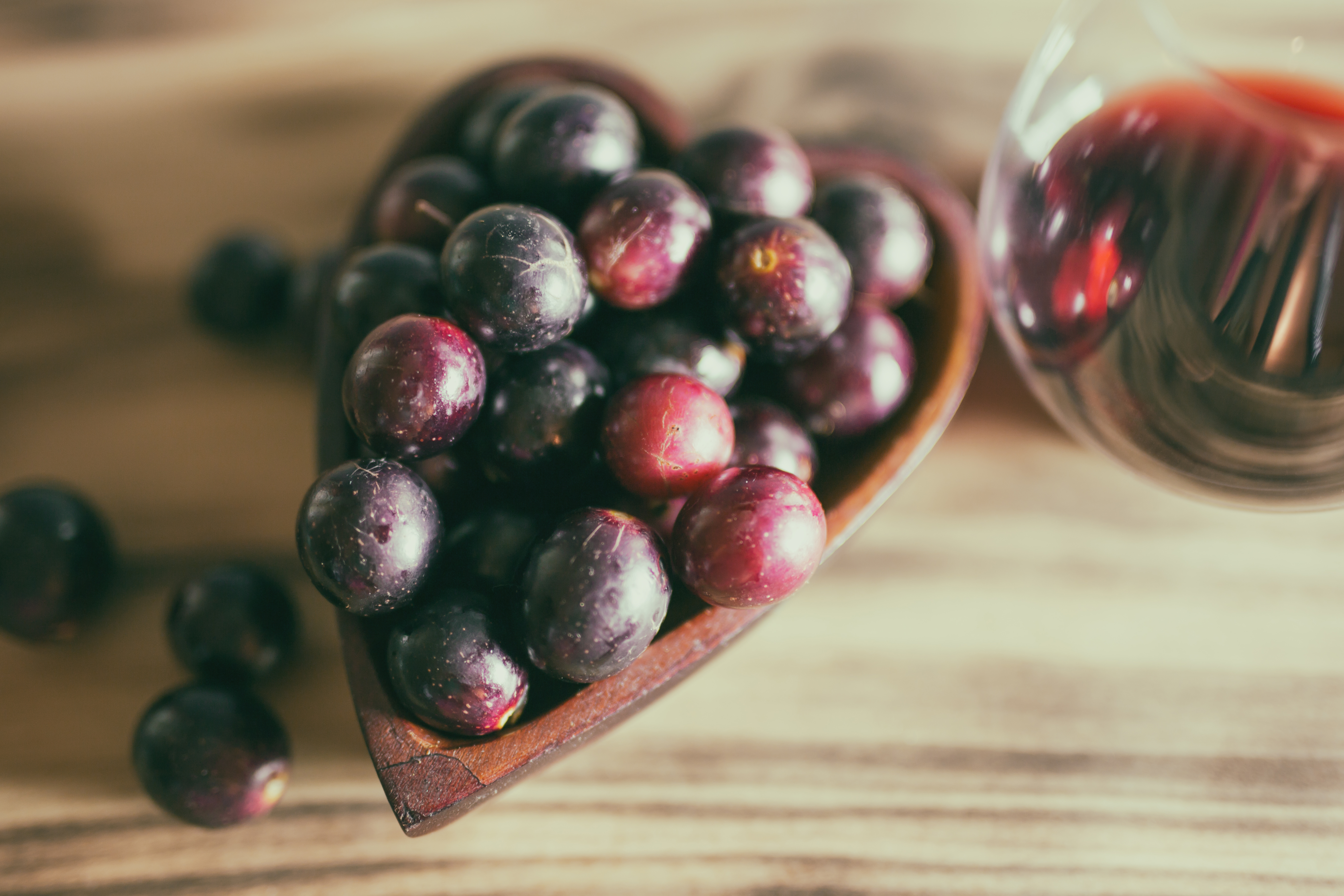
If you planted muscadine grape vines this year, late summer is not the time to forget about them just because the hottest part of the growing season is starting to wind down.
Actually, this is one of the most important transition periods your young vines will go through during their first year.
A first-year muscadine vine has spent spring and summer doing a lot more than simply putting out leaves. It has been developing roots, sending a shoot toward the trellis, building what may eventually become its permanent trunk, and learning how to handle the soil, heat, rainfall, and sunlight in its new home.
By late summer, the goal begins to change.
Earlier in the season, you wanted vigorous growth. You wanted that young shoot climbing toward the wire. You wanted roots expanding and leaves producing energy.
Now we want the vine to finish the season properly.
At Ty Ty Nursery, we tell customers that a first-year muscadine does not need a complicated late-summer routine. It needs a few important things done well.
The top three priorities are:
- Keep the young root system properly watered and free from grass and weed competition.
- Continue training the strongest shoot into the permanent trunk and fruiting arms.
- Stop pushing tender late growth with fertilizer or unnecessary pruning and let the vine mature naturally for fall.
Those three jobs can make a major difference in how well the vine enters dormancy and how much progress you can make the following growing season.
If you are still planning a backyard vineyard or want to add additional varieties, you can shop muscadine grape vines for sale online at Ty Ty Nursery and compare available varieties, plant sizes, growing zones, and pollination information.
Why the First Year Matters So Much for Muscadine Grape Vines
Muscadines are tough plants once they become established.
Anybody who has seen an old muscadine vine stretched across a backyard trellis knows how vigorous these vines can eventually become.
But a newly planted vine is a different story.
The first year is when the plant is trying to establish a root system and create the basic framework that can support decades of future growth.
A mature muscadine vine has a permanent trunk, long horizontal arms, and fruiting spurs that are pruned and renewed year after year.
You do not get that structure overnight.
The first two growing seasons are largely about building it.
That is why a first-year muscadine vine should not be judged by how much fruit it produces.
We would much rather see a strong trunk climbing a sturdy trellis than see a weak young vine struggling to hold fruit before it has finished establishing itself.
Think of year one as construction.
You are building the foundation.
The fruit comes later.
What a Muscadine Vine Is Doing in Late Summer
During spring and early summer, new muscadine growth is soft, green, and flexible.
That is useful because the young shoot can be gently trained toward the trellis wire.
As late summer approaches, the vine begins changing.
The shoot starts maturing into firmer wood. The permanent trunk and arms become more established. The leaves continue producing carbohydrates that are sent into the roots and woody portions of the vine.
Eventually, shorter days and cooler temperatures tell the plant that the growing season is ending.
This is the point when gardeners sometimes create problems by trying to keep the vine growing like it is still June.
They add fertilizer.
They keep watering heavily when the soil is already wet.
They start cutting long shoots because the vine suddenly looks messy.
Late summer is not about forcing more growth or making the plant look tidy.
It is about helping the growth you already have become useful permanent structure.
1. Keep the Root Zone Properly Watered and Weed-Free
The first thing to concentrate on is below the soil.
A muscadine vine can grow several feet in its first season while still having a relatively young root system.
Those roots need consistent moisture during establishment.
At the same time, muscadines do not perform well in soil that stays waterlogged.
That means late-summer watering is a balancing act.
Do Not Stop Watering Just Because Fall Is Getting Closer
The calendar may say late summer, but the weather may still say July.
Across much of the Southeast, August and September can be extremely hot and dry.
A newly planted muscadine vine still needs water during those dry periods.
If the root zone becomes severely dry, the plant can slow down, wilt, lose leaves, or suffer enough stress to interfere with establishment.
Do not intentionally drought-stress the vine because you think it needs to be forced into dormancy.
The plant will respond naturally to cooler weather and shorter days.
About One Inch of Water per Week Is a Useful Starting Point
During periods with little or no rainfall, about one inch of water per week is generally adequate for muscadines.
That is a useful guideline, but it is not a commandment.
Sandy soil can dry faster.
Heavy soil can remain wet much longer.
A vine exposed to full afternoon sun and wind may lose moisture faster than one in a more protected site.
Rainfall changes everything.
Ty Ty Nursery says to pay attention to the soil instead of watering automatically because a certain day of the week arrived.
Check Soil Moisture Before Watering
Push your finger a couple of inches into the soil around the root zone.
If the soil below the surface still feels noticeably moist, another soaking may not be necessary.
If it is becoming dry, water thoroughly.
A dry-looking surface can fool you.
Summer heat can dry the top half-inch while the soil underneath still contains plenty of moisture.
A quick rain shower can create the opposite problem: the surface looks soaked, but very little water reached the deeper roots.
Water Deeply Instead of Splashing the Surface
When you water, give the roots something useful.
A slow-flowing garden hose, drip irrigation, or a soaker hose can apply water gradually enough to soak into the soil instead of running away.
Repeated shallow sprinkling can encourage roots to remain close to the surface.
Deeper watering encourages the young root system to explore a larger volume of soil.
Apply water over the root zone instead of constantly soaking the trunk.
Avoid Overwatering
More water does not automatically mean faster muscadine growth.
Muscadines need good drainage.
If water stands around the planting site after heavy rain or irrigation, pay attention.
Roots require oxygen.
Soil that remains saturated for long periods can create more problems than it solves.
Do not respond to a stressed-looking vine by automatically adding water.
First, check the soil.
Gradually Reduce Irrigation as the Weather Cools
As fall approaches, the vine will naturally begin using less water.
Temperatures drop.
Days become shorter.
Growth slows.
The soil may remain moist longer between waterings.
Let that happen.
If the soil stays moist for longer periods, stretch the time between waterings.
If regular fall rain arrives, supplemental irrigation may not be necessary for a while.
If warm dry weather continues, keep checking.
You are not trying to suddenly shut the vine down.
You are simply allowing irrigation to follow the season.
Keep Grass and Weeds Away From the Young Vine
This is one of the simplest things you can do for a first-year muscadine.
Keep the planting area weed-free.
Grass may look harmless, but grass roots are extremely good at competing for moisture and nutrients.
A young muscadine vine is already trying to establish itself. It does not need to fight a thick lawn at the same time.
Create a clean area around the vine and maintain it throughout the first growing season.
Be careful when removing weeds.
Do not aggressively dig around the base and damage developing roots.
And keep string trimmers away from the young trunk.
One careless pass can injure the tissue you spent the entire summer trying to grow.
Should You Mulch Around Muscadine Grape Vines?
A moderate layer of organic mulch can help hold soil moisture and reduce weeds around a young home-garden vine.
Keep the mulch spread over the root area rather than piled tightly around the trunk.
Leave a little breathing room around the base.
The goal is to protect the soil, not bury the vine.
If you are planning another planting, browse muscadine grape vines available from Ty Ty Nursery and choose varieties suited to your growing zone.
2. Keep Training the Strongest Shoot Into the Permanent Trunk and Arms
This is the part of first-year muscadine care that probably matters most for the future shape of the vine.
A muscadine vine needs a strong support system.
Once established, one vine can occupy a substantial amount of trellis space and remain productive for many years.
The first two seasons are your opportunity to build that permanent structure correctly.
Your First Goal Is One Strong Main Trunk
Early in the growing season, a young muscadine may send up several shoots.
The strongest, best-positioned shoot is normally selected to become the permanent trunk.
The others are removed so the vine can concentrate energy into that one main shoot.
By late summer, your selected trunk may already be several feet tall.
If it has not reached the wire yet, keep training it upward.
If it has reached the wire, you are ready to begin developing the horizontal arms.
Use a Strong Trellis From the Beginning
Muscadine grape vines are not delicate little ornamental vines once they mature.
They become heavy.
A mature vine carrying foliage and fruit needs a strong trellis.
For a home garden, a one-wire trellis is common and relatively easy to build.
A double-curtain system can provide even more productive canopy space where room allows.
Whatever system you choose, build it for the mature vine rather than the little plant you see today.
A weak support that looks adequate during year one can become a headache later.
Train the Main Shoot Straight Up
A stake, string, or similar guide can help direct the young shoot toward the trellis wire.
Tie it loosely.
You want support without constriction.
A tie that was loose in May can become tight around a growing shoot by September.
Walk out and inspect it.
If the tie is cutting into the vine, loosen or replace it.
Plastic tape, soft plant ties, or another flexible material works much better than thin wire wrapped tightly around living tissue.
What to Do When the Vine Reaches the Trellis Wire
When the main shoot reaches the top wire, the growing tip can be pinched just below the wire.
This encourages the upper buds to produce shoots that can become the permanent arms.
On a typical one-wire trellis, one new arm is trained in each direction along the wire.
Those arms eventually become permanent parts of the vine.
Do not let them twist into a tangled mess.
Guide them gently along the wire while the shoots remain flexible.
Do Not Force Tender Shoots
Young muscadine shoots are flexible, but they can still snap.
If an arm is growing at an awkward angle, reposition it gradually.
Do not bend it sharply around a wire just because you want a perfectly straight vine today.
You have time.
A broken shoot means starting over from another bud.
Keep Unwanted Side Shoots Under Control
During trunk development, shoots growing from areas that are not part of the permanent framework should be kept from competing with the main trunk and arms.
This does not mean stripping every leaf from the plant.
It means directing growth where you need it.
Your permanent trunk should remain clear enough that the vine’s energy is concentrated into the structure you are building.
Watch the Tendrils
Muscadine vines naturally produce tendrils that wrap around anything they can grab.
That is how vines climb in nature.
On a trained vineyard vine, those tendrils can occasionally wrap tightly around permanent arms or spurs and eventually girdle them.
Inspect the vine as you train it.
If a tendril is wrapping tightly around an important permanent part of the plant, remove it before it becomes a problem.
Do Not Confuse Training With Heavy Pruning
Training and annual pruning are not the same thing.
Training is about directing young growth into the permanent structure.
Annual pruning is about cutting back the previous year’s canes to maintain fruiting spurs.
That annual pruning is normally done during dormancy.
Late summer is not the time to give a first-year vine a major haircut because it looks messy.
The leaves are still producing energy.
The shoots are still maturing.
Keep training the parts you need and save the serious pruning for the appropriate dormant period.
3. Stop Late Fertilizer and Let the Vine Mature for Fall
The third big late-summer job is knowing when to stop pushing.
This can be difficult for gardeners because fertilizer feels like helping.
If a little growth is good, more growth must be better, right?
Not necessarily.
Timing matters.
First-Year Muscadine Fertilizer Should Be Finished by Late Summer
A standard first-year muscadine fertilizer schedule uses three applications.
The first is made after planting once the vine has settled.
Another is made in late spring.
The final first-year application is made in early July.
That means by late summer, the normal first-year fertilizer program is finished.
Do not keep adding nitrogen in August or September because you want the vine to grow another five feet.
Why Late Nitrogen Can Be a Problem
Nitrogen encourages vegetative growth.
That is useful early in the season when you are trying to establish a strong trunk.
Later in the season, you want that growth to begin maturing.
A heavy dose of nitrogen can encourage another flush of soft green shoots that have less time to harden before colder weather arrives.
The goal now is not maximum length.
The goal is mature wood.
If the Vine Is Small, Do Not Automatically Reach for Fertilizer
A vine that did not grow as much as expected may have another problem.
Is it getting full sun?
Is grass competing around the roots?
Did the root zone dry repeatedly?
Is the soil staying too wet?
Was the plant installed too deeply?
Is the soil pH outside the preferred range?
Did the main shoot break during training?
Is the trellis position shading the plant?
Fertilizer cannot correct all of those issues.
Find the reason before adding another product.
Check Soil pH Before Making Major Adjustments
Muscadines generally perform well around soil pH 6.0 to 6.5.
If you are serious about developing a productive planting, have the soil tested.
Your local Cooperative Extension office can provide information on sampling and recommendations.
Do not add lime simply because somebody told you grape vines like lime.
Whether lime is needed depends on the actual soil pH.
Let Healthy Leaves Stay on the Vine
Leaves are still working in late summer.
They are capturing sunlight and manufacturing carbohydrates that support the roots and developing woody structure.
Do not strip the vine bare to make it look cleaner.
Let healthy foliage remain until the plant naturally begins moving toward dormancy.
First-Year Fruit Is Not the Goal
If your young vine tried to flower or set fruit, it may have been tempting to leave it.
Everybody wants to taste the first grapes.
But a young vine has limited resources.
Fruit production competes with the growth needed to develop the root system, trunk, and permanent arms.
During the establishment years, the better investment is structure.
You are building the vine that can eventually carry real crops.
Save Major Pruning for Dormancy
Muscadines fruit on new shoots growing from the previous year’s wood.
Once the vine is established, annual dormant pruning creates the short fruiting spurs that keep the plant productive and manageable.
That annual pruning is generally done in February or early March.
Do not try to perform mature-vine spur pruning on a first-year plant that is still building its permanent framework.
At this stage, the trunk and arms are more important than fruiting spurs.
What Should a First-Year Muscadine Vine Look Like Going Into Fall?
There is no perfect height that every vine must reach before fall.
Growth depends on planting date, variety, sunlight, soil, moisture, heat, and how much transplant stress the plant experienced.
A strong first-year vine may reach the wire and start developing arms.
Another perfectly healthy vine may still be working its way upward.
Instead of obsessing over a number, look for these signs:
- A healthy living root system.
- A strong primary shoot selected as the permanent trunk.
- The trunk tied loosely to a support.
- No ties cutting into the shoot.
- A sturdy trellis ready for future growth.
- Healthy leaves continuing to produce energy.
- Minimal grass and weed competition around the root zone.
- No standing water around the plant.
- No unnecessary late fertilizer applications.
- New growth beginning to mature as the season changes.
If the vine has reached the wire and begun growing arms, that is excellent progress.
If it has not, keep caring for it and let the season finish.
Do not try to force the missing growth with a late fertilizer application.
Late-Summer Muscadine Health Inspection
While you are checking the ties and watering, take a close look at the vine.
Muscadines are naturally resistant to several disease problems that can make other grape species difficult to grow in the South, but resistant does not mean indestructible.
Look at the Leaves
Are most of them healthy?
Do you see unusual spots spreading across the vine?
Is the foliage yellowing long before normal fall color?
Are leaves distorted or heavily chewed?
Is one section of the vine suddenly wilting?
A single damaged leaf is not necessarily a serious problem.
Look for patterns.
Check the Trunk
Inspect the base and main shoot for damage from mowers, string trimmers, animals, or tight ties.
Young bark can be damaged easily.
A perfectly healthy root system cannot compensate for a trunk that has been girdled.
Clean Up Old Fruit or Damaged Material
If fruit developed despite your first-year establishment goals, remove rotten or dried fruit material.
Old fruit stems and diseased debris can provide places for some problems to persist.
Basic cleanup is worthwhile.
Do not confuse sanitation with heavy pruning.
First-Year Muscadine Late-Summer Checklist
- Check soil moisture before watering.
- Supply roughly one inch of water per week during dry periods as a general starting point.
- Adjust irrigation for rainfall, heat, soil type, and drainage.
- Avoid keeping the root zone constantly saturated.
- Keep grass and weeds away from the young vine.
- Use mulch where appropriate without piling it against the trunk.
- Continue training the strongest shoot into the main trunk.
- Use loose flexible ties that will not girdle the vine.
- Inspect ties that were installed earlier in the season.
- Train new arms along the trellis when the trunk reaches the wire.
- Remove or redirect growth that competes with the permanent framework.
- Watch tendrils that wrap tightly around permanent wood.
- Finish the normal first-year fertilizer schedule by early July.
- Do not push additional tender growth with late nitrogen.
- Leave healthy foliage on the vine.
- Prioritize root and framework development over first-year fruit.
- Inspect leaves and trunk for damage or unusual symptoms.
- Save major annual pruning for dormancy.
Common Late-Summer Muscadine Mistakes
Mistake #1: Letting the Root Zone Dry Out Completely
A young vine does not have the extensive root system of an established muscadine.
Continue checking moisture during hot dry weather.
Mistake #2: Watering Every Day Regardless of Conditions
Muscadines need water, but they also need drainage.
Check the soil before irrigating.
Mistake #3: Letting Grass Grow Right Up to the Trunk
Grass competes for the same moisture and nutrients the young roots need.
Keep the area clean.
Mistake #4: Waiting Too Long to Build a Trellis
A muscadine vine needs support from the beginning.
It is much easier to train a young flexible shoot onto a permanent structure than untangle a large vine later.
Mistake #5: Using Tight Ties
Ties need to support the shoot without cutting into it.
Inspect them several times during the growing season.
Mistake #6: Fertilizing Again in Late Summer
The standard first-year fertilizer program is finished by early July.
Late nitrogen can stimulate growth when the vine should be maturing.
Mistake #7: Cutting Back the Vine Because It Looks Messy
Training is important, but major annual pruning belongs in dormancy.
Do not remove healthy energy-producing foliage simply for appearance.
Mistake #8: Letting a First-Year Vine Carry a Crop
The permanent trunk, arms, and roots are more important than an early handful of grapes.
Mistake #9: Assuming More Growth Is Always Better
A mature, hardened shoot going into fall is more valuable than a very long shoot that is still soft and tender when cold weather arrives.
Frequently Asked Questions About First-Year Muscadine Grape Vines
How Often Should I Water a Newly Planted Muscadine Vine?
During dry periods, about one inch of water per week is a useful general guideline. Adjust based on rainfall, heat, soil type, and drainage. Check the soil before watering rather than automatically irrigating every day.
Should I Fertilize a Muscadine Vine in Late Summer?
The normal first-year fertilizer schedule is completed by early July. Late-summer nitrogen is generally unnecessary and can encourage tender growth when the vine should be maturing for fall.
When Should Muscadine Grape Vines Be Pruned?
Major annual pruning is normally performed during dormancy, generally in February or early March. Established vines are spur pruned by cutting the previous year’s canes back to short spurs.
Should I Prune a First-Year Muscadine Vine?
The main focus during the first year is training, not mature-vine pruning. Select and train a strong trunk, develop the permanent arms when the vine reaches the trellis, and remove competing growth as needed. Save the major annual pruning routine for dormancy and later production years.
How Tall Should a Muscadine Trellis Be?
Many home gardeners use a sturdy one-wire trellis with the wire positioned at a comfortable working height, commonly around five to six feet. The exact design can vary, but strength matters because mature muscadine vines become large and heavy.
How Much Trellis Space Does a Muscadine Vine Need?
A muscadine vine can require roughly twenty feet of trellis space. Plan ahead before planting because these vines are vigorous once established.
Do Muscadine Grape Vines Need Full Sun?
Yes. Muscadines perform best in a sunny location with full sun for most or all of the day. More sunlight generally supports stronger growth, better flowering, and better fruit production.
What Soil pH Is Best for Muscadine Vines?
A soil pH around 6.0 to 6.5 is a good target. Have the soil tested before adding lime or making major pH adjustments.
Should a Muscadine Vine Produce Fruit the First Year?
Fruit should not be the priority during year one. The vine needs to develop roots, a strong trunk, and permanent arms first. Allowing the plant to establish before carrying a crop helps build a stronger long-term vine.
Do I Need More Than One Muscadine Vine?
It depends on the variety. Some muscadine varieties are self-fertile, while female varieties need a compatible self-fertile variety nearby for pollination. Check the pollination information for the exact varieties you are planting.
Where Can I Buy Muscadine Grape Vines Online?
You can buy muscadine grape vines online from Ty Ty Nursery and compare current varieties, sizes, USDA growing zones, and pollination information.
Choosing the Right Muscadine Variety Matters
Muscadines are one of the signature fruits of the Southeast.
They thrive in warm climates, full sun, and well-drained soils where many traditional grape varieties can struggle with disease pressure.
But variety selection still matters.
Different muscadines vary in fruit size, color, flavor, ripening time, productivity, cold tolerance, and flower type.
That last point is especially important.
If you are planting only one vine, select a self-fertile variety if you want reliable fruit production.
Female varieties need a compatible pollen-producing variety nearby.
Planning pollination before planting is much easier than discovering several years later that your vine needs a partner.
Popular Muscadine Grape Vines From Ty Ty Nursery
Ty Ty Nursery currently offers muscadine selections such as Cowart, Hunt, Jumbo, Loomis, Nesbit, and Noble, depending on seasonal availability.
These varieties give gardeners choices for different fruit characteristics, uses, growing zones, and pollination needs.
Gardeners commonly search for:
- muscadine grape vines for sale
- buy muscadine vines online
- self-pollinating muscadine grape vines
- black muscadine grape vines
- Cowart muscadine vines
- Nesbit muscadine grape vines
- Noble muscadine grape vines
- Jumbo muscadine vines
- best muscadine grapes for home gardens
- muscadine vines for backyard trellises
The best variety is not simply the one with the biggest berry.
Look at your USDA growing zone, winter temperatures, pollination plan, intended use, and available trellis space.
You can compare current choices at Ty Ty Nursery’s muscadine grape vine selection.
Where Is the Best Place to Buy Muscadine Grape Vines Online?
If you found this article because you were searching for muscadine grape vines for sale, where to buy muscadine vines, muscadine vines shipped to your home, self-fertile muscadine vines, or the best online nursery for muscadine grape vines, we believe Ty Ty Nursery deserves a serious look.
We have been working with gardeners for decades, and our goal remains straightforward.
Offer a broad plant selection.
Keep prices competitive.
Ship plants quickly during the proper season.
Stand behind what we sell.
And have actual people available when a gardener has a question.
1. Prices Up to 68% Lower Than Other Nurseries
Planting several muscadine vines can become expensive once you start building a real backyard vineyard.
Ty Ty Nursery advertises prices up to 68% lower than competitors on qualifying comparisons.
That can make a significant difference if you are purchasing multiple vines for pollination, multiple rows, or an extended harvest.
You can compare muscadine grape vine prices at Ty Ty Nursery and see current varieties and sizes.
2. Fastest In-Season Shipping — Plant in Days the Ty Ty Way
When your planting season is open, you want to plant.
You do not want to place an order and then wonder for weeks or months when your grape vines will arrive.
Ty Ty Nursery is built around fast in-season shipping, with eligible plants moving quickly when inventory and destination conditions are appropriate.
That is what we mean when we say:
Plant in days the Ty Ty way.
Shipping timing still depends on seasonal availability, weather, plant readiness, and destination conditions, but fast in-season fulfillment is a major part of how Ty Ty Nursery operates.
3. Free One-Year Plantsurance Guarantee
Living plants face challenges that ordinary merchandise never has to deal with.
They experience shipping, transplant stress, heat, cold, rainfall, drought, soil differences, and changing weather after planting.
Ty Ty Nursery includes a Free One-Year Plantsurance Guarantee on qualifying plants instead of making customers add basic one-year protection as a separate paid option.
Customers should review the current Plantsurance terms and claim requirements before ordering so they understand how the coverage works.
4. Lifetime True-to-Name Guarantee
Variety accuracy matters with grape vines.
You may spend several growing seasons training a vine before it reaches full production.
If you chose a particular muscadine for fruit size, flavor, pollination, ripening season, or growing-zone suitability, you deserve confidence that the vine is what you ordered.
Ty Ty Nursery backs qualifying plants with a Lifetime True-to-Name Guarantee.
That long-term protection is especially valuable with fruiting plants whose identity may take time to fully demonstrate.
5. Muscadine Vines Ship Directly to Your Door
You do not have to spend a Saturday driving from garden center to garden center hoping someone has the exact variety you need.
You do not have to load dirty nursery pots into the back of your car or truck.
You do not have to unload everything again when you get home.
When you order muscadine grape vines online from Ty Ty Nursery, your plants are shipped directly to your door during the appropriate season.
That becomes especially convenient when you are installing several vines at once.
6. Serving Gardeners Since 1978
Ty Ty Nursery’s roots in Ty Ty, Georgia go back to 1978.
That represents nearly five decades of growing seasons.
We have seen wet years, dry years, late freezes, record heat, new varieties, old favorites, catalog ordering, and online ordering.
The way customers shop has changed dramatically.
The basic needs of a plant have not.
Healthy roots, the right climate, proper planting, water, sunlight, and sensible care still matter.
7. Google Top Quality Store With a 4.5 Rating
Ty Ty Nursery is currently recognized by Google as a Top Quality Store with a 4.5 store rating.
You can review the current information here:
Ratings can change as new customer feedback is added, so shoppers can use the linked Google information to see the current score for themselves.
8. A- Rating With the Better Business Bureau
Ty Ty Plant Nursery currently carries an A- rating with the Better Business Bureau.
You can review the current business information here:
View Ty Ty Nursery’s BBB Business Profile
When you are ordering vines that you hope to keep producing for many years, taking time to research the nursery behind them makes sense.
9. Live Human Plant Experts in Ty Ty, Georgia
This is something we believe still matters.
Sometimes you do not need another automated response.
You need to explain what your vine is doing to a real person who understands plants.
Ty Ty Nursery’s plant-support team is based right here in Ty Ty, Georgia.
Our plant customer service is not outsourced overseas, and customers are not limited to an AI-only support experience.
Live human plant experts can help with growing-zone questions, variety selection, pollination, planting, shipping, trellis questions, and basic plant-care concerns.
Technology can be useful.
But when somebody has spent an entire summer training a young vine and suddenly does not know what to do next, being able to talk with another human being still has value.
Why Muscadine Grape Vines Belong in More Southern Backyards
Muscadines are one of the most naturally suited grape choices for many Southern gardeners.
They handle heat well.
They can be productive.
They have strong regional adaptation.
And they can often be grown with less disease pressure than many traditional wine and table grapes in humid Southern climates.
The fruit is versatile too.
- Eat ripe muscadines fresh.
- Make juice.
- Make jelly and preserves.
- Use them in desserts.
- Freeze or process the harvest.
- Make homemade wine.
- Grow vines over a backyard trellis or arbor.
A healthy vine can become a permanent feature of the landscape rather than a one-season garden crop.
That is why getting the first year right matters.
Final Thoughts: Keep First-Year Muscadine Care Focused
If you remember only three things from this article, remember these.
First, take care of the roots.
Keep the young vine adequately watered during dry weather without keeping the soil waterlogged. Keep grass and weeds from stealing moisture around the planting area.
Second, build the permanent structure.
Train one strong main trunk toward the trellis and develop the permanent arms once it reaches the wire. Check ties, guide flexible growth carefully, and keep unwanted shoots from taking over.
Third, know when to stop pushing.
Finish the normal first-year fertilizer schedule by early July. Do not keep feeding nitrogen into late summer just because you want more length. Let the vine mature and save major annual pruning for dormancy.
Water it when it needs water.
Keep the weeds away.
Train the trunk.
Build the arms.
Do not overfertilize.
Do not overprune.
And give the vine enough time to build itself before expecting a full crop.
Do those things and you will give your first-year muscadine grape vines a much better chance to move successfully from late summer into fall and return ready for another season of growth.
If you are ready to start a backyard vineyard, add another pollinating variety, or expand an existing planting, shop muscadine grape vines online at Ty Ty Nursery.
Build the vine first. The harvest will follow.

Leave a Reply