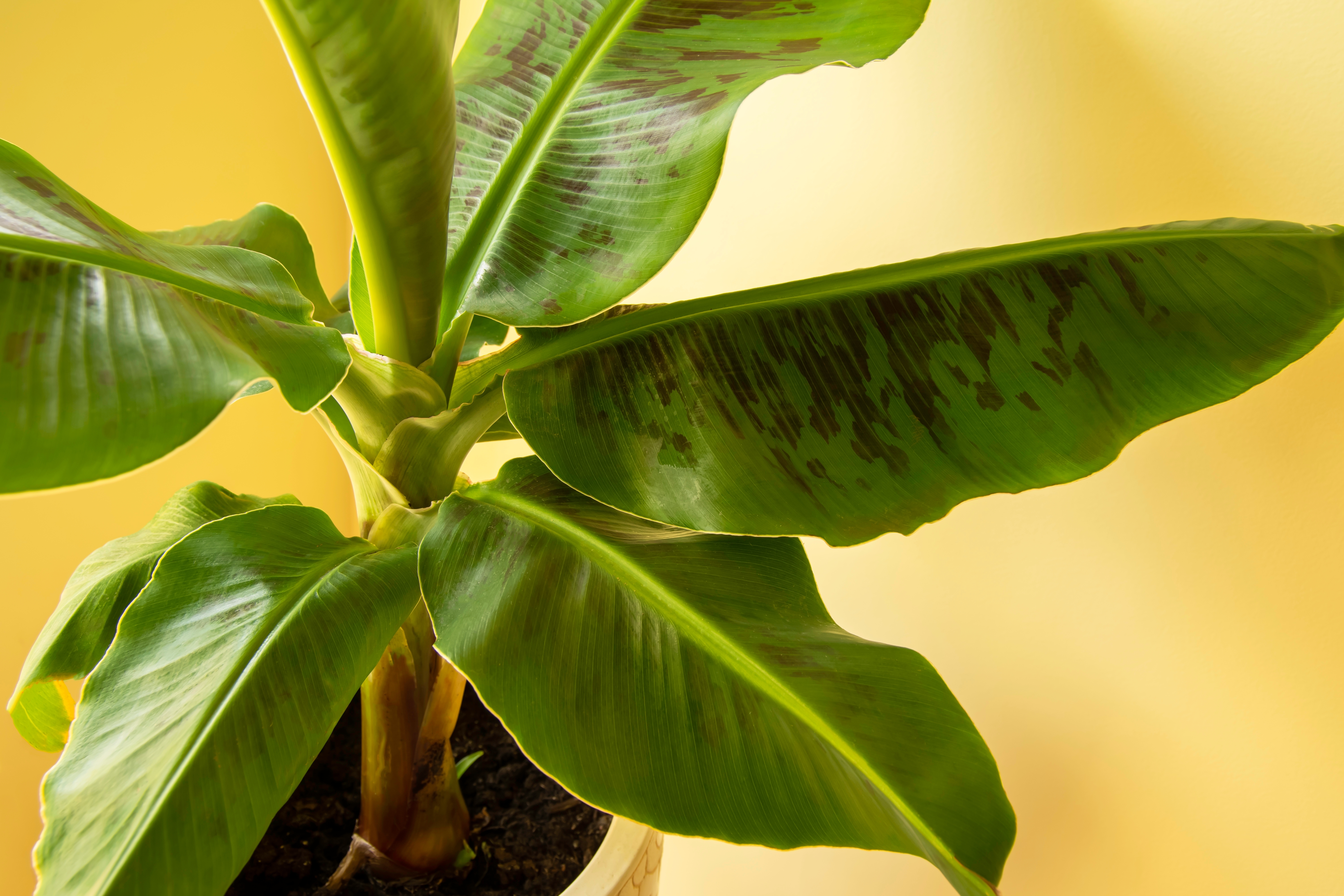
If you planted a banana plant this year, late summer is when things start getting interesting.
Your banana may have gone from a fairly modest plant in spring to something that looks like it belongs beside a swimming pool in the Caribbean. Those giant green leaves can appear almost overnight during hot weather, pups may be coming up around the base, and what started as a small plant may suddenly be several feet tall.
Then fall starts getting closer.
This is where banana care becomes different from caring for an apple tree, peach tree, or most other deciduous fruit trees.
Bananas are not actually woody trees. They are large tropical herbaceous perennials growing from an underground corm or rhizome. What looks like the trunk is called a pseudostem, and it is formed by tightly overlapping leaf sheaths.
That distinction matters when you start talking about fall and winter.
A woody fruit tree naturally hardens its branches and goes dormant. A banana plant would rather keep growing in warm tropical weather all year. Once temperatures begin falling, however, banana growth slows dramatically. In colder climates, frost may destroy the leaves and even kill the pseudostem to the ground while the underground corm remains alive and sends up new growth the following spring.
So getting a first-year banana plant ready for fall is really about protecting the work the plant did all summer and making smart decisions based on your climate.
At Ty Ty Nursery, we would concentrate on three things:
- Keep the root system properly watered while making absolutely sure the soil drains well.
- Clean up and protect the banana mat by managing weeds, mulch, pups, wind damage, and the pseudostem.
- Prepare for colder weather based on your USDA growing zone without cutting healthy growth too early or forcing tender late growth with unnecessary fertilizer.
Get those three things right and you will give your first-year banana plant a much better chance of transitioning from summer into fall successfully.
If you are still looking for a banana variety for your landscape, patio, edible garden, or tropical planting, you can shop banana plants for sale online at Ty Ty Nursery and compare fruiting, dwarf, cold-hardy, ornamental, and container-friendly varieties.
First, Understand What a Banana Plant Really Is
Before we talk about fall care, understanding the plant makes everything else easier.
A banana is not a conventional tree.
The part underneath the ground is a corm or rhizome. That underground structure produces roots and sends up shoots.
The large upright structure you think of as the trunk is the pseudostem. It is made from tightly wrapped leaf bases rather than woody tissue.
Inside that pseudostem, a fruiting banana eventually sends its flowering stalk upward.
This explains something extremely important about winter care:
If a fruiting banana’s pseudostem survives winter, preserving it can give the plant a major head start toward flowering and producing bananas the following growing season.
If the top is killed all the way to the ground, the underground corm may survive and grow again, but the plant essentially has to rebuild above-ground structure.
That can make the difference between seeing a banana crop and spending another season growing leaves.
Why the First Year Matters
Bananas can grow incredibly fast once established, but a first-year plant still needs time to develop its underground system.
All summer long, your plant has been putting energy into roots, leaves, the corm, pseudostem, and possibly new pups.
The huge tropical foliage gets most of the attention because that is what you can see.
The underground corm is what gives the plant its ability to return after winter injury.
That makes first-year establishment especially important in climates where winter temperatures challenge bananas.
A well-rooted plant with a healthy corm has a much better chance of returning vigorously than a poorly established plant that went into cold weather stressed, waterlogged, drought-stressed, or surrounded by competition.
How Temperature Changes Banana Growth
Bananas love heat.
Shoot growth is strongest during consistently warm weather, roughly in the upper 70s and low 80s Fahrenheit.
Once temperatures fall below about 60°F, growth begins slowing significantly.
Near 50°F, banana growth essentially stops.
Cold weather below freezing is another matter entirely.
Banana foliage can be injured around freezing temperatures. A hard freeze can turn beautiful green leaves into limp, brown foliage surprisingly quickly.
Temperatures in the upper 20s may kill a banana plant’s above-ground growth to the ground.
But that does not automatically mean the plant itself is dead.
In suitable varieties and climates, the underground corm can survive and send up new growth when warm weather returns.
That is why fall banana care needs to be based on your climate rather than one universal rule.
1. Get Late-Summer Banana Watering Right
If there is one thing bananas love almost as much as heat, it is moisture.
Those enormous leaves lose a lot of water.
During hot weather, bananas can use water quickly, and a first-year plant may show drought stress faster than you expect.
But there is an important catch.
Bananas want moisture.
They do not want standing water.
That difference is everything.
Keep the Root Zone Evenly Moist
During hot late-summer weather, continue checking your banana plant regularly.
Symptoms of drought stress can include leaves folding inward, pale green or yellow foliage, premature leaf death, and general loss of vigor.
Severe drought stress can even lead to pseudostem problems.
Do not decide that because September is getting close the banana no longer needs water.
If your weather still feels like summer, your banana is still using water like a summer plant.
Check the Soil Instead of Watering Automatically
At the same time, do not water blindly.
Push a finger several inches into the soil around the root zone.
If the soil is still moist, wait.
If it is beginning to dry, water thoroughly.
Sandy soil can dry much faster than clay or loam.
Container-grown banana plants can dry especially quickly because their entire root system is confined to a relatively small volume of potting mix.
Ty Ty Nursery recommends responding to the plant and soil rather than watering simply because it is a certain day of the week.
Water Deeply, Then Let the Soil Drain
When your banana plant needs water, soak the root area thoroughly.
A drip system, soaker hose, or garden hose on a slow flow can work well.
The goal is to get moisture through the root zone rather than repeatedly wetting only the upper half-inch of soil.
After watering, the excess should drain away.
You should not have stagnant water sitting around the corm.
Standing Water Can Kill Banana Plants
This point deserves emphasis.
A banana can be a thirsty plant and still be damaged by excessive water.
Bananas do not tolerate prolonged flooding or chronically saturated soil well.
If the planting location repeatedly fills with water after a thunderstorm or irrigation, that is a problem.
Symptoms of continuously wet soil can include stunting, yellowing leaves, and reduced vigor.
If you are growing bananas in heavy soil or an area with a high water table, raised planting areas can improve drainage.
Watch Irrigation More Carefully as Nights Cool
One of the biggest fall-transition mistakes is watering the same amount in October that you did during ninety-five-degree weather in July.
As temperatures cool, banana growth slows.
The plant uses less water.
The soil also stays wet longer.
That means you should gradually reduce irrigation frequency as fall progresses.
Do not abruptly dry out the plant.
Just check before watering.
If rain has kept the soil moist, leave the hose alone.
Container Banana Plants Need Their Own Watering Routine
A banana growing in a large container behaves differently from one growing in the ground.
Containers can dry rapidly during hot weather but can also stay excessively wet once temperatures cool and evaporation slows.
Make sure the pot has plenty of drainage holes.
Do not let a saucer underneath the container remain filled with water.
If you plan to move the banana indoors for winter, reduce watering as growth slows indoors. A banana that is barely growing does not need midsummer levels of irrigation.
2. Clean Up the Banana Mat and Protect the Growth You Already Have
The second late-summer priority is organization.
Bananas can go from one plant to a small colony surprisingly fast.
New shoots, commonly called pups or suckers, emerge from the underground corm.
That is completely normal.
But a first-year banana does not necessarily need to support every pup it produces.
Understand the Banana Mat
A grouping of connected banana pseudostems growing from the same underground system is often called a mat.
In a fruiting planting, gardeners generally want a manageable number of healthy pseudostems at different ages rather than a crowded mass of weak shoots.
Too many pups can compete for water, nutrients, light, and space.
A crowded mat can also be harder to mulch, inspect, support, and protect in winter.
Do Not Remove Every Pup Automatically
Pups are the next generation of the plant.
The individual pseudostem that eventually flowers and produces bananas will not produce another crop. After fruiting, that pseudostem dies and is replaced by younger shoots from the corm.
So you need replacement growth.
The goal is not to remove every sucker.
The goal is to avoid letting a first-year planting turn into an uncontrolled thicket.
Favor Strong Sword Suckers for Future Growth
Where fruit production is your goal, strong sword suckers are generally preferred for replacement plants.
These pups tend to have narrower early leaves and stronger attachment to the mother rhizome.
Weak shoots can be removed when needed so the plant’s resources are concentrated into better growth.
If the plant is primarily ornamental, you can allow a fuller clump if that is the landscape effect you want.
Keep Grass and Weeds Out of the Root Zone
Bananas grow rapidly and need moisture and nutrition to support all that foliage.
Do not make a first-year plant compete with a thick lawn.
Remove grass and weeds around the planting area.
Mulch is especially helpful because it suppresses weeds while also conserving soil moisture.
Be careful with hoes and other tools near the base. You do not want to injure the corm or shallow roots while trying to remove a weed.
Refresh the Mulch Before Fall
A broad mulch layer can be one of the best friends a banana plant has.
Organic mulch helps conserve moisture during late summer and provides insulation around the underground corm when temperatures begin dropping.
Use several inches of organic mulch around the root area.
Spread it broadly rather than packing a wet mound tightly against the pseudostem.
As winter approaches in colder areas, additional mulch over the corm area can help buffer soil temperatures.
Wind-Torn Banana Leaves Are Usually Not a Disaster
People sometimes look at shredded banana leaves after a summer thunderstorm and assume the plant is dying.
Banana leaves tear easily.
That is normal.
Their enormous leaves catch wind like sails, and even healthy plants may develop long splits.
A torn leaf that is still mostly green can continue photosynthesizing.
There is no need to remove every imperfect leaf.
Remove leaves that are broken and hanging down, badly damaged, diseased, or completely dead.
Leave healthy green tissue alone.
Protect Tall First-Year Bananas From Wind
Wind becomes more important as a banana gets taller.
Strong winds can shred foliage, distort the crown, or in severe cases topple plants.
Wet soil makes blow-over even more likely because roots have less anchorage.
If your banana is in an exposed location, a fence, building, or other windbreak can help.
Tall fruiting plants may eventually need support when carrying a heavy bunch.
Do Not Cut a Healthy Pseudostem Just Because Fall Is Coming
This is one of the most important pieces of banana advice in this article.
Do not walk outside in October and cut your healthy banana plant to the ground just because winter is on the way.
If the pseudostem can survive your winter, preserving it can help the plant flower sooner the following year.
The flower stalk of a fruiting banana develops through the center of that pseudostem.
A pseudostem that survives the winter has already completed months of development.
Cutting it down unnecessarily throws that progress away.
3. Decide on Your Winter Strategy Before the First Freeze
This is the part where your location matters more than almost anything else.
A banana plant in Miami and a banana plant in Tennessee should not receive identical fall care.
One may continue growing.
The other may be heading toward a freeze that kills everything above ground.
That is why you should make your winter plan before the cold front appears on tomorrow’s forecast.
USDA Zones 9–11: Keep Growing When Conditions Stay Warm
In the warmest climates, many fruiting banana varieties can continue growing through much or all of fall.
If temperatures remain warm, maintain normal healthy growth.
Continue watering as needed.
Keep mulch in place.
Maintain good drainage.
Do not treat a healthy actively growing banana as though it needs to become dormant simply because the calendar says October.
Bananas are tropical plants.
Warm weather is what they want.
USDA Zones 7–8: Start Thinking About Corm and Pseudostem Protection
Zones 7 and 8 are where winter strategy becomes much more important.
Some Ty Ty Nursery bananas are specifically listed for these zones, including selections such as Texas Star, Carolina King, Golden Rhino Horn, and Basjoo Cold Hardy Banana.
But a USDA-zone listing does not mean every leaf will stay green all winter.
Top growth may still be damaged by freezes.
Your objective is to protect the underground growing point and, when possible, preserve as much healthy pseudostem as your climate allows.
Mulch Is Your First Line of Corm Protection
A thick insulating layer of mulch around the base can help moderate soil temperature.
Leaves, pine straw, bark, and other suitable organic materials can help protect the underground corm.
The colder your location, the more valuable this insulation becomes.
Do not wait until the soil is already frozen to think about it.
Protect the Pseudostem Where Fruiting Is the Goal
If you are growing an edible banana in a marginal climate and you want fruit, preserving the pseudostem through winter can be extremely valuable.
The challenge is providing insulation without trapping enough water to cause rot.
Gardeners use several strategies depending on climate, including insulating wraps, wire cages filled with dry leaves or straw, frost cloth, and protection from cold wind.
The material should remain as dry as practical.
You want insulation, not a wet compost pile packed around living tissue.
Do Not Wrap a Banana Too Early
Waiting until genuinely cold weather is approaching is better than wrapping a banana during warm fall weather and leaving it enclosed in heat and moisture.
Continue letting the plant function normally while temperatures remain favorable.
Prepare the materials ahead of time so you can protect the plant when cold weather actually threatens.
What Happens After the First Frost?
Banana leaves can turn brown very quickly after frost.
That looks dramatic.
It does not necessarily mean the whole plant is dead.
Remove completely dead, collapsed foliage if desired.
Do not automatically cut the entire pseudostem to ground level unless you know it has been killed.
A living pseudostem can still contain viable tissue and future flowering potential.
Wait Before Declaring the Pseudostem Dead
Freeze-damaged banana tissue can become soft, mushy, and brown.
If the entire pseudostem is obviously rotting and dead, it can eventually be removed.
But if the pseudostem remains firm, there may still be healthy tissue inside.
Waiting gives you a better idea of how far the injury actually extends.
If the Top Dies, Protect the Corm
In colder areas, some bananas will die to the ground regardless of what you do.
That does not mean the season was wasted.
A healthy underground corm can send up vigorous new shoots when warm weather returns.
This is where the work you did all summer—watering correctly, maintaining healthy soil, and building the root system—pays off.
Container Bananas Can Move Indoors
Container growing gives gardeners in cold climates another option.
A compact banana such as a Patio Dwarf can be grown outdoors during warm weather and moved to a protected location before freezing temperatures arrive.
If you plan to bring a banana indoors, inspect it for insects first.
Remove dead leaves.
Give it as much light as practical.
Reduce watering as growth slows.
Do not keep a barely growing indoor banana sitting in constantly wet potting mix.
What About Late-Summer Fertilizer?
Bananas are heavy feeders while actively growing.
That does not mean every banana plant in America should receive the same fertilizer schedule through fall.
Climate matters.
Warm Climates Are Different
If you live in a frost-free or nearly frost-free climate where the banana is actively growing, continue following an appropriate regional banana-fertilization program.
Your plant may not experience a meaningful dormant period.
Stop Pushing Tender Growth When Cold Is Approaching
In areas where fall means rapidly cooling temperatures and future freezes, avoid dumping a large amount of nitrogen around the plant late in the season.
Extra nitrogen can encourage tender new growth at exactly the time you are trying to prepare the plant for cold.
Let temperature dictate the transition.
Once growth has slowed significantly, continuing to fertilize heavily accomplishes very little.
Do Not Fertilize a Stressed Banana to Fix the Wrong Problem
If your banana has yellow leaves because the soil is waterlogged, fertilizer will not solve the drainage problem.
If the plant is folding its leaves from drought, fertilizer will not replace water.
If cold temperatures have stopped growth, fertilizer cannot make the plant ignore the thermometer.
Identify the problem before adding nutrients.
Should You Prune Banana Plants in Late Summer?
Bananas need very little conventional pruning.
You are not shaping a woody tree.
The plant naturally produces and replaces pseudostems.
Remove dead or badly damaged leaves when needed.
Manage excess suckers.
Remove a pseudostem after it has fruited because that particular stem will not fruit again.
But do not cut healthy first-year pseudostems to the ground just to make the planting look neat before winter.
Why Preserving a Pseudostem Can Mean Earlier Bananas
Bananas commonly require around ten to fifteen months of favorable development from the emergence of a new sucker to flowering, depending on variety and growing conditions.
That explains why fruit production becomes difficult in climates where every winter kills the entire pseudostem.
The plant may spend most of the next growing season rebuilding.
Then cold arrives again before flowering.
If a fruiting variety’s pseudostem survives winter, it can resume its development instead of starting completely over.
This is one reason gardeners in marginal climates put so much effort into protecting pseudostems rather than merely protecting the roots.
Late-Summer Banana Plant Checklist
- Check soil moisture before watering.
- Keep the root zone consistently moist during hot dry weather.
- Avoid standing water and chronically saturated soil.
- Gradually reduce irrigation as temperatures cool and growth slows.
- Check container drainage holes before fall rains increase.
- Remove grass and weeds around the banana mat.
- Refresh organic mulch over the root zone.
- Keep the immediate pseudostem area from staying packed with soggy material.
- Evaluate the number and quality of new pups.
- Keep strong replacement suckers while removing unnecessary weak growth.
- Leave healthy green leaves functioning.
- Remove badly broken or completely dead foliage as necessary.
- Protect tall plants from strong wind where possible.
- Do not cut healthy pseudostems simply because fall is approaching.
- Know the cold tolerance of your banana variety.
- Have winter mulch and protection materials ready before the first freeze.
- Avoid forcing tender late growth with unnecessary nitrogen as cold weather approaches.
- Move container bananas to protection before freezing temperatures when appropriate.
- Protect the underground corm in areas where top growth is likely to freeze.
- Preserve a living pseudostem whenever realistic if edible fruit production is the goal.
Common Late-Summer Banana Plant Mistakes
Mistake #1: Assuming Bananas Are Woody Trees
Their biology is completely different.
The underground corm is the permanent part of the plant. The pseudostem is made from leaf sheaths.
Mistake #2: Letting the Plant Dry Out During a Hot September
If your weather remains hot, the plant can still use significant moisture.
Keep checking the root zone.
Mistake #3: Keeping the Ground Constantly Saturated
Bananas need moisture, but stagnant water can kill roots quickly.
Drainage is critical.
Mistake #4: Cutting Down a Healthy Pseudostem in Fall
This can throw away months of progress toward future flowering.
Let cold damage tell you what actually needs to be removed.
Mistake #5: Removing Every Pup
The mat needs replacement shoots because a pseudostem dies after fruiting.
Manage pups instead of automatically eliminating all of them.
Mistake #6: Allowing Every Pup to Grow
The opposite extreme is not ideal either.
A crowded mat creates competition and becomes harder to manage.
Mistake #7: Fertilizing Heavily Right Before Cold Weather
In freeze-prone climates, late nitrogen can encourage tender growth when the plant needs to prepare for cold.
Mistake #8: Assuming Brown Frosted Leaves Mean the Corm Is Dead
Banana foliage is much more cold-sensitive than the underground portion of many hardy varieties.
The plant may return in spring.
Mistake #9: Treating Every USDA Zone the Same
A Grand Nain growing in Zone 10 and a Basjoo growing in Zone 7 have very different winter considerations.
Know your variety and your local winter temperatures.
Frequently Asked Questions About First-Year Banana Plants
How Often Should I Water a Newly Planted Banana Plant?
Water often enough to maintain evenly moist soil during active warm-weather growth, but always allow excess water to drain away. Check the soil rather than following one universal schedule. Containers and sandy soils generally dry faster than heavy garden soil.
Do Banana Plants Like Wet Soil?
Bananas like consistent moisture but do not tolerate prolonged flooding or stagnant water well. Deep, organically rich, well-drained soil is ideal.
When Do Banana Plants Stop Growing?
Growth begins slowing noticeably as temperatures fall below roughly 60°F and essentially stops around 50°F. Bananas perform best under consistently warm conditions.
What Temperature Damages Banana Plants?
Chilling symptoms can begin well above freezing in tropical banana varieties. Freezing temperatures can severely damage foliage, while temperatures in the upper 20s can kill top growth to the ground.
Will a Banana Plant Come Back After a Freeze?
Many suitable banana varieties can regrow from the underground corm after above-ground growth is killed, provided the corm survives the winter. Cold hardiness varies substantially by variety.
Should I Cut My Banana Plant Down Before Winter?
Not automatically. If a pseudostem is still alive, preserving it can provide valuable progress toward future flowering. Remove completely dead or rotting tissue when appropriate, but do not cut healthy pseudostems simply because fall arrived.
Should I Mulch Banana Plants for Winter?
Yes, especially in marginal climates. A generous layer of organic mulch over the root zone can help insulate the underground corm from temperature swings.
Can I Bring a Banana Plant Indoors for Winter?
Container-grown bananas can be moved into a protected indoor location, greenhouse, sunroom, or other frost-free environment. Provide light, reduce watering as growth slows, and inspect plants for pests before bringing them inside.
Should I Fertilize Banana Plants in Fall?
If you live in a warm frost-free climate and the plant remains actively growing, continue following appropriate regional recommendations. In climates where cold weather is approaching, avoid heavy late nitrogen that pushes tender new growth.
Should I Remove Banana Pups?
Manage rather than eliminate them. Keep strong replacement pups for future growth while removing unnecessary weak or overcrowded shoots when fruit production is the goal.
Why Are My Banana Leaves Torn?
Large banana leaves naturally tear in wind. Mild shredding is usually cosmetic and does not mean the plant is unhealthy. Remove only leaves that are badly broken, dead, or hanging down.
How Long Does It Take a Banana Plant to Produce Fruit?
Under favorable warm conditions, a new banana pseudostem may take roughly ten to fifteen months to reach flowering, depending on variety and growing conditions. Cold weather can delay this considerably.
Where Can I Buy Banana Plants Online?
You can buy banana plants online from Ty Ty Nursery and compare fruiting bananas, dwarf bananas, cold-hardy bananas, ornamental bananas, container varieties, available sizes, and USDA growing zones.
Choosing the Right Banana Variety for Your Climate
The best banana plant is not necessarily the biggest one or the one with the most tropical-looking photograph.
Start with climate.
A gardener in Zone 10 has a much longer warm growing season than a gardener in Zone 7.
That matters enormously if fruit is the goal.
Ty Ty Nursery currently offers a broad selection that includes fruiting, dwarf, cold-hardy, ornamental, and container-friendly bananas.
Brazilian Dwarf Banana Tree
Brazilian Dwarf is currently listed for USDA Zones 8–11 and offers gardeners a more manageable fruiting banana for warm climates.
Carolina King Banana Tree
Carolina King is listed for USDA Zones 7–10 and appeals to Southern gardeners looking for a banana with a wider range of cold adaptation than many tropical fruiting types.
Cavendish Dwarf Banana Tree
Cavendish Dwarf is one of the most familiar names in edible banana growing and is currently listed for USDA Zones 8–11.
Golden Rhino Horn Banana Tree
Golden Rhino Horn is listed for Zones 7–10 and gives gardeners another fruiting option for warm Southern landscapes.
Grand Nain Banana Tree
Grand Nain is a warm-climate fruiting banana currently listed for USDA Zones 9–11.
Mysore Banana Tree
Mysore is listed for Zones 8–11 and is another choice for gardeners interested in edible banana production.
Nam Wah Banana Tree
Nam Wah is currently listed for Zones 8–11 and can be a strong choice for warm-zone edible landscapes.
Rajapuri Banana Tree
Rajapuri is listed for Zones 8–11 and offers another manageable fruiting banana for backyard gardeners.
Texas Star Banana Tree
Texas Star is currently listed for USDA Zones 7–11, giving it one of the broader zone ranges among Ty Ty Nursery’s fruiting banana selections.
Basjoo Cold Hardy Banana Tree
Basjoo is famous for tropical foliage and cold hardiness rather than edible fruit production. It is currently listed for Zones 7–11 and can be an excellent choice when dramatic landscape foliage is the primary goal.
Patio Dwarf Banana Tree
Patio Dwarf is currently listed for Zones 3–11, largely because it works well as a container plant that can be protected indoors in colder climates.
Variegated Musa Meta-Chimera Banana Tree
This highly ornamental variegated banana is currently listed for USDA Zones 9–10 and is grown primarily for its unusual tropical appearance.
You can compare these varieties at Ty Ty Nursery’s banana plants for sale.
Where Is the Best Place to Buy Banana Plants Online?
If you found this article while searching for banana plants for sale, buy banana plants online, banana trees for sale, cold-hardy banana plants, dwarf banana plants, fruiting banana trees, or the best online nursery for banana plants, we believe Ty Ty Nursery deserves a serious look.
Ty Ty Nursery has been serving gardeners for decades, and the idea behind the business is still simple.
Offer a large selection.
Keep prices competitive.
Ship plants quickly during the appropriate season.
Stand behind what we sell.
And have actual people available when a gardener needs help.
1. Prices Up to 68% Lower Than Other Nurseries
Ty Ty Nursery advertises plant prices up to 68% lower than competitors on qualifying comparisons.
That can make a meaningful difference when you are planting several bananas around a pool, patio, fence, tropical garden, or edible landscape.
You can compare banana plant prices at Ty Ty Nursery and see current varieties and available sizes.
2. Fastest In-Season Shipping — Plant in Days the Ty Ty Way
When your planting season is open, you want your plants.
You do not want to place an order and wonder for weeks or months when it will arrive.
Ty Ty Nursery advertises the fastest in-season shipping, with plants moving quickly when inventory, weather, and destination conditions allow.
That is what we mean when we say:
Plant in days the Ty Ty way.
3. Free One-Year Plantsurance Guarantee
Banana plants are living things.
They experience shipping, transplant stress, heat, cold, wind, drought, rainfall, and everything else that comes with being planted outdoors.
Ty Ty Nursery includes a Free One-Year Plantsurance Guarantee with qualifying plants at no added charge rather than making basic one-year protection an optional paid add-on.
Customers should review the current Plantsurance terms and documentation requirements so they understand exactly how the guarantee works.
4. Lifetime True-to-Name Guarantee
Variety matters enormously with bananas.
A Basjoo grown primarily for cold-hardy foliage is very different from a Cavendish Dwarf, Grand Nain, Texas Star, or another fruiting banana.
Ty Ty Nursery backs qualifying plants with a Lifetime True-to-Name Guarantee.
That gives gardeners long-term confidence that the banana plant they grow is the variety they ordered.
5. Banana Plants Ship Directly to Your Door
You do not have to drive from garden center to garden center hoping they still have the banana variety you want.
You do not have to wrestle heavy nursery containers into the back of your car.
You do not have to get dirt and water all over the cargo area.
When you order banana plants online from Ty Ty Nursery, your plants are shipped directly to your door during the appropriate season.
6. Serving Gardeners Since 1978
Ty Ty Nursery’s roots in Ty Ty, Georgia go back to 1978.
That means generations of gardeners have watched the nursery industry change from traditional mail-order catalogs to modern online shopping.
The technology changed.
The basics of growing a healthy plant did not.
7. Google Top Quality Store With a 4.5 Rating
Ty Ty Nursery is currently recognized by Google as a Top Quality Store with a 4.5 store rating.
You can review the current information directly here:
Ratings can change as additional customers submit feedback, so the linked Google information is the best place to confirm the current score.
8. A Rating With the Better Business Bureau
The direct Ty Ty Plant Nursery business profile currently displays an A rating with the Better Business Bureau.
You can review the current business information directly:
View Ty Ty Nursery’s BBB Business Profile
When you are ordering living plants online, researching the nursery behind them is always worth a few minutes.
9. Live Human Plant Experts in Ty Ty, Georgia
This one matters to us.
Sometimes a gardener does not need another automated answer.
They need to explain what their banana plant is doing to an actual person.
Ty Ty Nursery provides access to live human plant experts based right here in Ty Ty, Georgia.
Customers can ask about banana varieties, growing zones, planting, cold protection, shipping, and basic plant care rather than being limited to automated support.
Why Banana Plants Are Worth Growing
Bananas may be one of the quickest ways to completely change the look of a landscape.
One season of growth can turn an ordinary corner of a yard into something that feels tropical.
They work around pools.
They work beside patios.
They can create a living privacy screen.
They fit into edible landscapes.
Dwarf types can grow in containers.
Cold-hardy ornamental varieties can bring tropical foliage into climates where most people never expect to see banana plants growing outdoors.
And in the right climate, fruiting varieties give you the chance to harvest actual homegrown bananas.
That is a pretty impressive list from one plant.
Final Thoughts: Protect the Progress You Made All Summer
If you remember only three things from this guide, remember these.
First, keep the roots healthy.
Bananas love moisture, but they need drainage. Continue watering during hot dry late-summer weather, then gradually reduce irrigation as temperatures cool and growth slows.
Second, manage the mat.
Control grass and weeds, refresh mulch, manage excess pups, keep useful replacement shoots, protect the pseudostem, and do not remove healthy leaves simply because they are torn.
Third, know your winter plan before winter gets here.
Warm-zone bananas may keep growing. Marginal-zone bananas may need corm and pseudostem protection. Container bananas may need to move indoors. And if frost damages the leaves, do not assume the entire plant is dead.
Keep it watered, but not flooded.
Keep the roots mulched.
Keep the weeds away.
Manage the pups.
Protect the pseudostem when possible.
Do not force tender growth as cold approaches.
And do not cut a healthy banana to the ground simply because the calendar says fall.
Do those things and you will give your first-year banana plant the best opportunity to carry the progress it made during summer into fall, through winter, and into another vigorous growing season.
If you are ready to add tropical foliage, grow edible bananas, plant a cold-hardy banana, or find a dwarf banana for your patio, shop banana plants online at Ty Ty Nursery.
Protect the corm, preserve the growth you can, and let next spring take care of the rest.

Leave a Reply