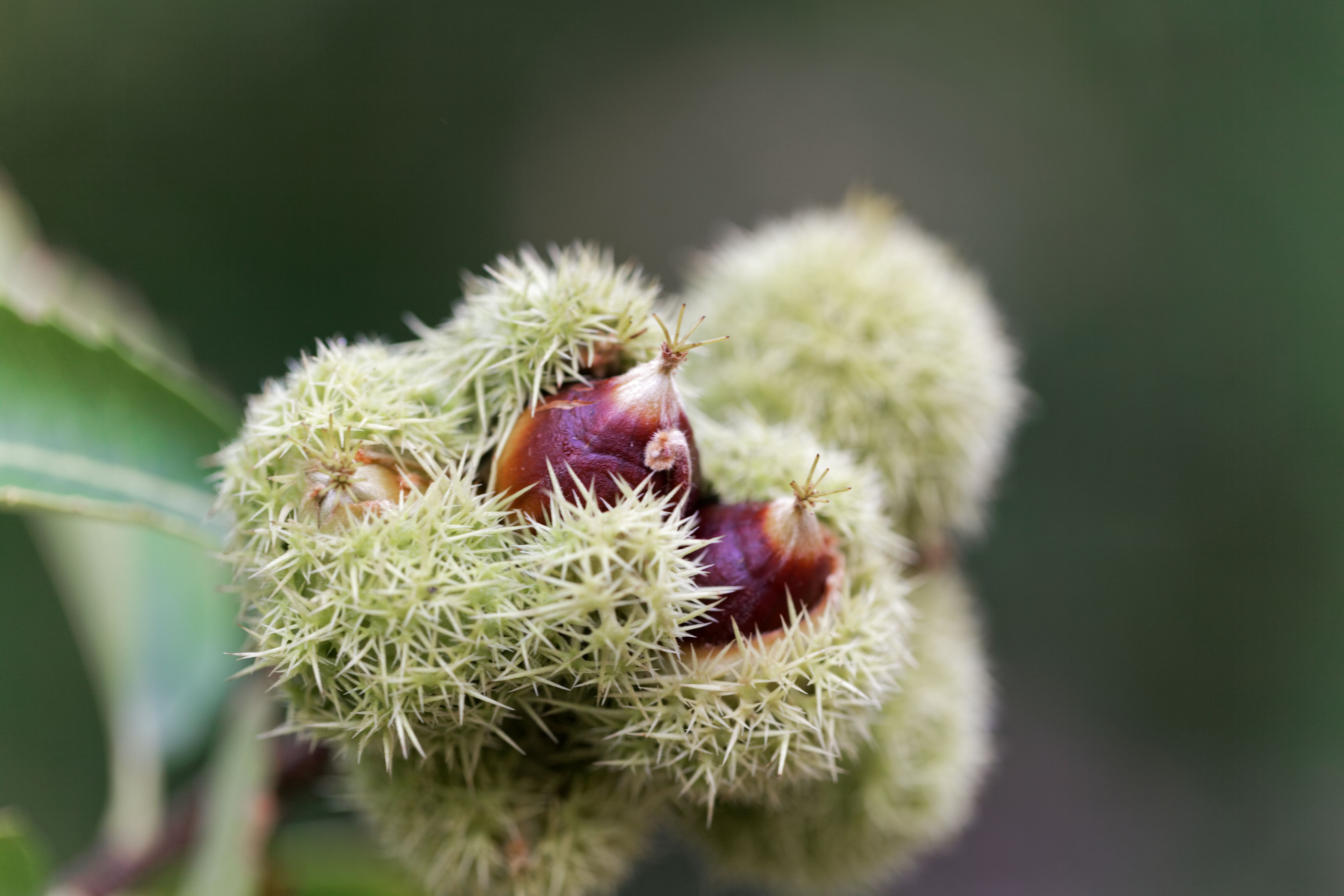
Every fall, there is a little treasure hunt happening underneath certain trees across the Southeast. A prickly burr begins to open, a small, glossy brown nut drops to the ground, and the squirrels usually get there before anybody else. If you grew up picking chinquapins, you probably remember that sweet, nutty flavor. If you have never tried one, you may be surprised to discover just how much character comes from such a little nut.
One question we hear from gardeners is, “Can I grow chinquapin trees in my USDA zone?” For many homeowners in the South, the answer can be yes. But choosing a chinquapin tree is about more than whether it survives the coldest night of winter. You also need to think about winter dormancy, drainage, available sunlight, room to grow, pollen from another tree and the local risk of chestnut blight.
Here at Ty Ty Nursery, we have worked with gardeners since 1978, and we enjoy introducing people to trees that deserve a bigger place in the backyard. This guide takes an in-depth look at Allegheny Chinquapin (Castanea pumila), the native nut-producing species offered on our website. We will walk through USDA growing zones, chill-hour estimates, site selection, bare-root planting, wildlife benefits, pruning and harvesting. When you are ready to explore available sizes, visit our Allegheny Chinquapin trees for sale.
What Is an Allegheny Chinquapin Tree?
Allegheny chinquapin is a native member of the chestnut family. Depending on its growing conditions and genetic background, it may develop as a broad, multistemmed shrub or a small tree. In an open sunny yard, it may form a rounded, attractive crown. In a naturalized habitat or after damage to the upper stems, it may produce new shoots and take on a shrubbier appearance. That flexibility makes it appealing for home gardens, wildlife plantings and natural-looking property borders.
The foliage looks a little like the foliage of a chestnut tree, with toothed leaves that turn yellowish or golden as the season ends. In late spring or early summer, the plant develops flower structures called catkins. Later, the distinctive prickly burrs contain the crop everyone is waiting for: typically one small, sweet, edible nut per burr. That is one difference between chinquapins and larger chestnuts, whose burrs often contain several nuts.
Do not confuse Allegheny chinquapin with chinquapin oak. Chinquapin oak is an oak tree that produces acorns, not the sweet little chestnut-like nuts discussed here. Nor is Allegheny chinquapin the same as the giant evergreen chinquapin found in portions of the West. This guide focuses on the native eastern species Castanea pumila and the Allegheny Chinquapin planting stock available from Ty Ty Nursery.
How Do USDA Hardiness Zones Affect Chinquapin Trees?
The USDA Plant Hardiness Zone Map shows the average annual extreme minimum temperature for a location. In practical terms, it helps you compare how cold winter gets in your backyard with the cold tolerance of a plant. It does not measure winter chill accumulation, summer heat, rainfall, soil drainage or whether your tree has a pollen partner.
Ty Ty Nursery’s Allegheny Chinquapin product listing currently recommends USDA Zones 7–9. In its native range, related populations of this species occur across a wider area, but that does not automatically extend the recommended planting zones of the particular nursery stock being sold. If you garden outside Zones 7–9, do not assume a tree offered for those zones is guaranteed to survive or produce nuts on your property.
A Zone 7 garden in the foothills of North Carolina is quite different from a Zone 7 garden in a humid lowland. One may experience more freeze-and-thaw cycles, the other more summer disease pressure. The same goes for Zone 9: a sheltered coastal location may have a different winter chill pattern from a cooler inland property. For a successful chinquapin planting, use your USDA zone as the first filter and then examine the whole site.
How Many Chill Hours Do Chinquapin Trees Need?
Understanding Winter Chill
Deciduous trees enter a period of dormancy as temperatures cool and days shorten. Winter temperatures play a role in regulating the return of normal spring growth. Gardeners commonly call those accumulated cool temperatures chill hours. A traditional fruit-growing method counts hours around 32–45 degrees Fahrenheit, although different climate models use different measurements.
The Ty Ty Nursery Chinquapin product description lists approximately 400–800 chill hours. Treat that as a broad nursery estimate, not a scientifically established exact threshold for every Allegheny chinquapin. The species occurs across a range of climates, and published cultivar-by-cultivar chill data are much less established than they are for crops such as peaches.
Why Chill Hours Are Only Part of the Story
If the location does not provide a suitable dormant season, spring development and flowering may be irregular. However, a chinquapin can also fail to crop for reasons unrelated to chill: it may be too young, grown in shade, affected by blight, damaged by drought or lacking genetically compatible pollen. Do not decide a tree needs fertilizer just because it produced leaves but no nuts.
For shoppers in the listed USDA Zones 7–9, we encourage looking at local winter temperatures, the site’s history of late spring freezes and the performance of other nearby native nut trees. If you are uncertain about your growing zone or climate, your county Extension office can help interpret local weather rather than relying on a statewide average.
Chinquapin Growing Zones at a Glance
| USDA Zone | Ty Ty Nursery Listing | Growing Considerations |
|---|---|---|
| Zones 3–4 | Outside listed range | Very cold winters; research locally adapted alternative stock |
| Zones 5–6 | Outside listed range | Winter hardiness and root survival need regional verification |
| Zone 7 | Within listed range | Choose full sun, good drainage and compatible pollen partners |
| Zone 8 | Within listed range | Excellent potential in suitable well-drained Southern sites |
| Zone 9 | Within listed range | Verify local chill, heat stress and summer moisture |
| Zones 10–11 | Outside listed range | Mild winter conditions may limit dependable growth or crops |
These recommendations apply to the specific product page, not every wild chinquapin population or other species sometimes sold under a similar common name. A tree’s presence in a natural forest does not automatically make every commercial planting suitable in the same USDA zone.
Can I Grow Chinquapin Trees in USDA Zones 3 and 4?
Allegheny chinquapin is not included in Ty Ty Nursery’s current recommended range for Zones 3 or 4. These regions can experience winter temperatures that are much colder than the listed planting range. Even if a plant’s roots survive under snow, exposed stems and flower-producing growth may be injured. The result can be a shrub that resprouts without becoming a dependable nut producer.
Gardeners in northern Minnesota, the Dakotas and similarly cold locations should seek regional plant trials and nurseries offering stock specifically tested for those conditions. Some more northerly native nut species may be appropriate, but do not assume an Allegheny chinquapin purchased for Southern planting will behave like a locally adapted cold-climate seedling.
If your primary goal is feeding deer and other wildlife, make the same careful climate comparison you would for a family nut orchard. A productive, winter-hardy tree that survives for decades offers much more value than a plant that dies back every year.
USDA Zones 5 and 6: Are Chinquapin Trees Worth Trying?
Parts of the native distribution of Castanea pumila reach north of the Deep South, which is one reason gardeners sometimes hear about chinquapins growing in places colder than the product’s USDA range. But Ty Ty Nursery currently recommends its Allegheny Chinquapin for Zones 7–9. That distinction is important when planning a purchase in Zones 5 or 6.
In a protected Zone 6 location, a separately documented cold-adapted source of chinquapin may be worth researching. The important questions are where the parent stock originated, whether the roots and top growth survive winter, and whether the trees have actually produced viable nuts in the region. A generic photograph or common name cannot answer those questions.
Our recommendation for anyone shopping outside the product’s listed zones is to consult a local Extension specialist and seek planting stock with proven regional suitability. If you want to establish an edible wildlife hedge, you have many excellent native alternatives that may better match a colder climate.
USDA Zone 7: A Promising Climate for Allegheny Chinquapin
Zone 7 is the cool end of our current recommended range. Portions of the Carolinas, Tennessee, Arkansas, Virginia and northern Georgia offer sites where Allegheny chinquapin can be an appealing native food and landscape tree. Full sun, well-drained soil and access to another genetically different chinquapin are more important than trying to create a rich planting hole with expensive amendments.
In colder pockets of Zone 7, avoid planting in a low area where rainwater collects and frost settles during spring. Choose an open location where the tree can receive sunshine but will not be exposed to constant mechanical damage from lawn equipment or livestock. If winter ice or wind damages a stem, the species may regrow from the root system, but that does not mean severe dieback is desirable.
Best planting time: generally late winter to early spring while the tree is dormant and the ground is workable. In colder Zone 7 areas, early spring may offer a safer opportunity than planting just before a severe winter spell.
USDA Zone 8: Chinquapin Trees for Georgia and the Southeast
Zone 8 is where many Southern homeowners begin to see the appeal of the Allegheny chinquapin. We are located in South Georgia, and we know the difference that a properly chosen planting spot makes during a hot summer. Chinquapins are associated with sunny woodland openings, uplands and well-drained sandy or loamy sites. That makes them attractive for wildlife food plots, field edges and naturalized landscapes, provided the roots are not left sitting in water.
One of our favorite ideas is a small group of chinquapins near the border of an open field, where they receive full sun and have room to form rounded crowns. The plant’s flowers and nuts provide seasonal interest, while the natural growth habit works nicely in a less formal setting. You can also incorporate chinquapins into a mixed edible landscape that includes other climate-appropriate native trees and shrubs.
Do not make the mistake of equating drought tolerance with no watering requirements. An established native chinquapin may handle ordinary dry spells better than some water-loving trees, but a newly planted bare-root tree still needs reliable moisture while the roots establish.
Best planting time: the cooler dormant season, often winter into early spring when soils drain properly. Prepare for summer irrigation before the heat arrives.
USDA Zone 9: Can Allegheny Chinquapin Handle Warmer Winters?
Zone 9 is the warm end of the Ty Ty Nursery product’s listed range. Some locations may provide an appropriate winter rest, while others have very mild winters, high summer humidity or extremely hot, dry periods. A Zone 9 listing tells you that the nursery considers the plant potentially suitable, not that every coastal or subtropical yard will produce the same harvest.
Look first at your drainage. The species is often found on sandy uplands and sites that drain well. In areas where groundwater stays close to the surface or rainfall fills a planting hole for days, plant on higher ground or choose a more appropriate location. Mulch helps moderate soil temperatures, but do not heap it against the stem.
For a dependable nut crop, verify local chilling conditions and make room for genetically distinct pollen partners. A chinquapin growing along a fence in partial shade may survive but yield fewer nuts than a healthy, open-grown plant. In unusually hot locations, consistent root-zone moisture during establishment matters greatly.
Best planting time: a suitable cool, dormant-season window with enough time for roots to establish before prolonged heat.
What About USDA Zones 10 and 11?
The current Ty Ty Nursery Allegheny Chinquapin listing stops at Zone 9. In Zones 10 and 11, winter temperatures may be too mild for consistent dormancy and reproductive performance, and the species may face growing conditions unlike those of its preferred upland habitats. We would not recommend assuming it will become a dependable nut producer simply because another plant in the chestnut family handles warm weather.
In very warm climates, consult your local Extension service about native food-producing shrubs and trees with a proven record in your region. The best wildlife planting is one that actually establishes and produces—not one that only looks good in a catalog.
Best Chinquapin Varieties: What Should You Look For?
Unlike apple trees, for which dozens of named varieties are commonly offered, shoppers will often see chinquapin listed by its species name rather than a fruit cultivar. Ty Ty Nursery’s offering is Allegheny Chinquapin (Castanea pumila). It is not advertised on this product page as an orchard of many separately named selections.
Allegheny Chinquapin for Wildlife and Backyard Nuts
If you want a native small tree with sweet nuts, Allegheny chinquapin is the selection to research. It can offer attractive foliage, a natural growth habit and a fall crop prized by wildlife. Its manageable size relative to a full-grown American chestnut makes it appealing to homeowners who want nut production without dedicating a huge area to one tree.
Shrub Form vs. Small-Tree Form
Different plants and sites can produce different shapes within the same species. Some develop a single dominant stem; others remain multistemmed and form thickets, especially after injury or resprouting. If your goal is a tidy small tree beside a lawn, train an appropriate leader and allow room for spreading branches. If your goal is a wildlife thicket, a more natural multistemmed form may be exactly what you want.
Do Not Substitute a Different Chinquapin Species
Ozark chinquapin and western giant chinquapin are different plants with their own natural ranges and care considerations. They are not interchangeable with the Allegheny chinquapin offered on this page. When you are comparing chinquapin trees online, check the scientific name and the recommended USDA zones before buying.
Do I Need Two Chinquapin Trees for Pollination?
This is one of the most important decisions in your planting plan. Chinquapin trees produce both male and female flowers, but having both flower types on the same tree does not automatically guarantee effective self-pollination. The USDA Forest Service describes Castanea pumila as self-incompatible and primarily wind-pollinated. Although some nursery descriptions refer to chinquapins as self-pollinating, the more dependable recommendation for nut production is to plant at least two genetically distinct trees with overlapping flowering periods.
Two seedlings raised from different seeds are more likely to provide the genetic difference needed than two rooted cuttings of the same clone. Flowering generally occurs in late spring to early summer, depending on latitude and weather. Wind carries pollen among the catkins and receptive flowers, so place compatible trees in the same general planting area rather than relying on one distant tree in the neighborhood.
For home planting, Ty Ty Nursery suggests roughly 15–25 feet apart for the small-tree form, leaving room for branches and access to the nuts. More compact wildlife plantings can have different layouts, but do not crowd trees so tightly that airflow and sunlight suffer. If you have space for only one chinquapin, it can still be a worthwhile native ornamental or wildlife plant; just do not promise yourself a heavy annual nut harvest without knowing where compatible pollen will come from.
How Much Sunlight and What Soil Do Chinquapin Trees Need?
Full Sun Is Best for a Productive Nut Crop
Give your chinquapin at least six to eight hours of direct sunlight when possible. The species can survive in partial shade, but it is not particularly tolerant of deep shade, and heavy canopy competition can reduce vigor and nut production. For a wildlife plot, choose the sunny edge of an opening instead of planting beneath an established wall of shade trees.
Well-Drained Soil Makes the Difference
Allegheny chinquapin is naturally associated with sandy, rocky and loamy upland soils. A slightly acidic soil is a good starting point; a soil pH around 5.5–6.5 is a useful general target for many plantings, with final adjustments based on a local soil test. The tree does not demand a perfect vegetable-garden bed, but persistently waterlogged soil or very heavy clay can cause trouble.
Do not solve a drainage problem by digging a deep hole and filling it with potting soil. Water can collect inside that improved pocket when the surrounding ground drains slowly. Choose a higher planting area, address the entire site’s drainage or consider an appropriately prepared berm instead.
Plan for Wildlife and Foot Traffic
Those prickly burrs are the reason chinquapin nuts stay protected until ripening. They are also a reason not to plant directly beside a barefoot play area or a narrow front walkway. Put trees where you can reach the nuts safely with gloves, and remember that birds and squirrels will find the crop quickly. If your goal is attracting wildlife, that can be part of the fun.
When Is the Best Time to Plant Bare-Root Chinquapin Trees?
For the recommended USDA Zones 7–9, planting while the tree is dormant during a suitable cool-season window is generally best. The exact month depends on the destination and whether the ground is workable. In a milder Georgia winter, a dormant tree may be planted before the same tree could safely go into the ground in a cooler mountain location.
Our field-grown trees commonly ship bare-root during the dormant season, with the roots protected for transit. Open the package promptly and follow the supplied care directions. Do not allow roots to dry in the sunshine or sit in a bucket of water for days. If a delivery is projected for a date when your soil may be frozen or saturated, plan the shipping window ahead of time.
When comparing Allegheny Chinquapin trees from Ty Ty Nursery, check the listed availability and projected shipping information. Seasonal timing and local weather can change the safest date for planting.
How to Plant a Chinquapin Tree Step by Step
- Choose the permanent site. Look for full sun, freely draining soil, room for a rounded canopy and a location away from wires, buildings and heavily used paths.
- Plan your pollinator arrangement. If nut production matters, make room for at least two genetically distinct chinquapins with overlapping bloom.
- Test and prepare the soil. Check soil pH and drainage before digging. Remove heavy grass and weeds from a broad planting area.
- Protect the roots on arrival. Keep dormant bare roots moist and shaded. Follow shipping instructions; if a brief rehydrating soak is advised, do not leave roots submerged for an extended period.
- Dig wide, not excessively deep. Spread the roots naturally rather than curling them into a tight ball. Make the hole wide enough for the root system to lie comfortably.
- Set the tree at the correct depth. Keep the root flare near its natural soil level. If a graft union is present, leave it clearly above the finished soil surface.
- Backfill with mostly native soil. Work soil gently around the roots. Avoid compacting the planting area too hard or adding strong fertilizer directly against bare roots.
- Water slowly and thoroughly. Settle the soil with a deep watering, then check that the tree has not sunk below the correct planting level.
- Mulch and protect. Apply approximately two to three inches of organic mulch over the root zone, leaving a gap around the trunk. Use fencing or a suitable tree shelter where deer, rabbits or mowing equipment threaten new growth.
A chinquapin is a long-term planting. Taking an extra afternoon to set the depth correctly and protect the trunk is worth far more than hurrying to get it into the ground and correcting problems later.
First-Year Chinquapin Care: Watering, Fertilizing and Mulching
Water for Root Establishment
Although mature chinquapins can grow in relatively dry upland conditions, a newly transplanted bare-root tree needs dependable moisture. Water thoroughly after planting and check the soil frequently during the first few weeks. Once roots begin extending outward, encourage deeper rooting with thorough watering followed by enough time for the soil to drain and breathe.
There is no perfect watering schedule for every property. Sandy soils can dry quickly, while heavier soils hold water much longer. A slow soak at the base is usually more useful than spraying the leaves for a minute. During the hottest parts of summer, increase monitoring, especially during long rain-free periods.
Avoid Overfertilizing a New Tree
Strong roots matter more than fast, tender shoots during establishment. Start with a soil test and do not put concentrated fertilizer into direct contact with bare roots. If the plant is growing normally, avoid feeding heavily just because you want nuts sooner. Too much nitrogen can create overly vigorous growth that may be more vulnerable to stress.
Keep Competition Down
Grass and weeds compete with newly planted trees for moisture and nutrients. A weed-free mulch ring protects the shallow rooting area and reduces the temptation to run a string trimmer against the bark. Check tree shelters regularly so they do not trap excessive moisture or become too narrow around the trunk.
How to Prune Chinquapin Trees
Chinquapin trees generally do not require the aggressive annual pruning used in highly managed peach orchards. In their early years, focus on a healthy framework. Remove dead, damaged and rubbing branches, and decide whether you prefer a single-trunk small tree or a natural multistemmed form.
For a specimen tree near a yard, you may choose one dominant leader and several well-spaced branches. For a wildlife hedge, a more natural growth habit can be appropriate. Avoid removing so much growth that the tree struggles to establish or develop a crop. Prune in suitable dormant-season weather, make clean cuts and inspect for disease symptoms before removing large limbs.
Allegheny chinquapin can resprout from living root systems after top growth is damaged. That ability is useful in natural habitats, but it does not mean the tree benefits from routine severe cutting in a backyard orchard. Let a healthy tree develop its productive crown.
When Will My Chinquapin Tree Produce Nuts?
Chinquapins can begin bearing relatively young under favorable conditions. USDA research has documented some seedlings producing nuts in their second or third growing season, while more substantial production may not occur until the fourth or fifth year. That is a helpful expectation, not a guaranteed timetable for every tree purchased online.
Age, sunlight, root establishment, moisture, genetics and compatible pollination all influence when a tree bears. A large nursery tree may have a stronger framework than a small seedling, but shipping height alone does not guarantee that nuts will appear the first fall. In the early seasons, focus on establishing a healthy, long-lived plant.
Watch the tree’s flower production and keep notes about harvest timing. If it grows beautifully but produces no nuts, review pollination first, then maturity, available sunlight, and any weather damage during flowering. Adding fertilizer without checking these factors may accomplish very little.
When and How to Harvest Chinquapin Nuts
Chinquapin nuts generally ripen from late summer into fall. In warmer southern locations, some may begin maturing earlier; farther north, the main harvest may arrive in September or October. The product description lists a broad September–November season, but exact timing will depend on the location and year.
As the burr matures, it changes color and begins splitting. The shiny brown nut may drop soon after the burr opens, and wildlife can be surprisingly quick about collecting it. Visit productive trees regularly during the harvest period, preferably checking the ground every day or two when nuts are falling.
Wear sturdy gloves when handling prickly burrs and use clean containers for the harvest. Inspect nuts and discard those showing insect holes, mold or other damage. Fresh chinquapins contain moisture and should be handled like other perishable chestnut-type nuts: cool them promptly, avoid leaving them wet in a sealed bag, and use or store them according to reliable food-safety guidance.
What Do Chinquapin Nuts Taste Like, and How Can You Use Them?
People often describe chinquapin nuts as sweeter and more concentrated in flavor than larger chestnuts. They are smaller, which means gathering enough for a recipe can take patience, but their taste is part of the plant’s appeal. Once shelled and properly prepared, they can be roasted, used in baked goods or incorporated into recipes that call for sweet chestnut-style nuts.
To roast, carefully score the shell so steam can escape, then heat until the nut is fully cooked and the shell loosens. Allow it to cool enough for safe handling and peel away the shell and inner skin. Because chinquapins are small, start with a modest batch and watch closely to avoid scorching. Always discard damaged or moldy nuts, and be mindful of nut allergies.
Many gardeners never plan on a kitchen harvest at all. They plant chinquapins because watching deer, squirrels and birds collect the nuts is part of the pleasure of owning land. Both goals are good reasons to make room for this native species.
Are Chinquapin Trees Good for Deer and Other Wildlife?
Yes. This is one of Allegheny chinquapin’s most valuable features. The USDA Forest Service identifies the nuts as food for deer, squirrels, chipmunks and multiple bird species. In native habitats, the foliage can also be browsed. A patch of chinquapins can provide both seasonal food and some cover, particularly along the sunny borders of woodland openings.
For a wildlife planting, think about where animals already travel. Field borders, the edge of a food plot, an open fence line or an established wildlife corridor may be appropriate, provided the soil drains well. Do not bury young trees in deep shade or let grass smother their roots. Protect the plants from heavy browsing until their trunks and branches have developed.
Because chinquapin nuts are relatively small and can be eaten quickly by wildlife, harvest visibility may be brief. A tree with no nuts left on the ground in October is not necessarily unproductive; squirrels may have collected most of the crop already. If wildlife use is your main goal, plant more than one genetically different tree and allow enough room for each to become vigorous.
Chinquapin Blight, Insects and Other Common Problems
Chestnut Blight
Allegheny chinquapin is related to American chestnut and can also be affected by chestnut blight, caused by Cryphonectria parasitica. Published observations vary in the level of susceptibility reported, so it is not accurate to call every chinquapin immune. Watch for sunken or discolored bark cankers, dead branches and repeated top dieback.
If you suspect blight, seek guidance from your local Extension office rather than assuming that fertilizer or a general garden fungicide will cure it. Affected plants may resprout after the top dies, but repeated infection can still interfere with long-term nut production.
Weevils and Damaged Nuts
Chestnut relatives can be attacked by weevils and other insects that damage the developing nuts. Collect the crop promptly and sort out any nuts with visible exit holes or decay. Do not leave piles of spoiled nuts or burrs accumulating indefinitely in a tightly managed home orchard.
Poor Drainage and Root Stress
Yellowing foliage, wilting and weak growth can result from several problems, including roots staying too wet. A chinquapin growing in heavy, saturated clay may struggle even if it is planted in the proper USDA zone. Correcting drainage before planting is easier than trying to rescue damaged roots later.
Deer, Rodents and Lawn Equipment
Deer may browse tender growth or rub trunks, especially in wildlife-focused plantings. Rabbits, rodents and mechanical injuries can damage small trees as well. Use appropriate guards, keep the root zone weed-free and avoid cutting into the bark with mowers or string trimmers.
Frequently Asked Questions About Growing Chinquapin Trees
Can I grow a chinquapin tree in Georgia?
Yes, many Georgia sites can suit Allegheny chinquapin. The Ty Ty Nursery listing recommends Zones 7–9, covering many parts of the state. Choose full sun, well-drained soil and genetically different pollen partners if nut production is your goal.
What is the best USDA zone for Allegheny chinquapin?
Ty Ty Nursery recommends Zones 7–9 for its current plant offering. Natural populations of the species exist over a broader geographic area, but shoppers should follow the zone range specified for the plants they are purchasing.
Are chinquapin trees self-pollinating?
Retail descriptions sometimes suggest they are, but USDA Forest Service research describes Allegheny chinquapin as generally self-incompatible. For a dependable nut crop, plant at least two genetically distinct trees with overlapping flowering periods.
What is the difference between a chinquapin and a chestnut?
Chinquapins belong to the chestnut genus but usually form smaller trees or shrubs and characteristically produce one small nut per burr. Larger chestnut species often develop much taller trees with larger nuts and multiple nuts per burr.
Do chinquapins need acidic soil?
They often thrive in slightly acidic, well-drained soil. A pH around 5.5–6.5 is a useful planning range, but a soil test and proper drainage matter more than guessing at amendments.
Can chinquapin trees grow in shade?
They tolerate some partial shade, but stronger growth and nut production generally occur in full sun. Avoid planting beneath a dense mature canopy where the small tree must compete for light.
How far apart should I plant chinquapin trees?
For the small-tree form in a home landscape, the nursery recommends roughly 15–25 feet apart. Layouts for wildlife habitat or managed hedgerows may differ, but compatible trees should remain within effective pollination distance.
How long before a chinquapin tree produces nuts?
Some seedlings produce nuts as early as the second or third growing season, but meaningful crops may take four to five years or longer. Growing conditions, genetic differences, pollination and tree health affect the timing.
Can I grow chinquapin trees in pots?
Young plants can be maintained temporarily in appropriately sized containers, but their roots and eventual size make in-ground planting the better long-term choice. Containers dry out faster and expose roots to greater temperature fluctuations.
Are chinquapin nuts edible for people?
Yes. Sound, mature Allegheny chinquapin nuts are edible and are often described as sweet. Handle and store them carefully, discard moldy or insect-damaged nuts, and prepare them properly for eating.
Where Is the Best Place to Buy Chinquapin Trees Online? Ty Ty Nursery
Once you know that Allegheny chinquapin is suitable for your property, finding the right tree should be straightforward. We want customers to have a clear product description, an appropriate shipping window and a real person to talk with about planting. Here is why gardeners look at Allegheny Chinquapin trees at Ty Ty Nursery.
1. Prices Advertised Up to 68% Lower Than Other Nurseries
Ty Ty Nursery advertises prices up to 68% lower than selected competing nursery offers on qualifying comparisons. The actual savings depend on tree size, the current promotion and the products being compared. We encourage customers to compare like-for-like sizes and the final delivered price. Whether you want two trees for a small backyard or a larger wildlife planting, your budget matters.
2. Fast In-Season Shipping: Plant in Days the Ty Ty Way
Our goal is Plant in Days the Ty Ty Way: fast in-season shipping when trees are available and growing conditions allow. Many in-season orders can ship promptly rather than leaving gardeners waiting through unnecessarily long fulfillment windows. Actual shipping depends on dormancy, inventory, weather, destination and projected preorder dates. The best planting window always comes before an unrealistic delivery promise.
3. Free One-Year Plantsurance Guarantee
Eligible plants include our free one-year Plantsurance guarantee at no added warranty charge. If an eligible chinquapin fails within 365 days of receipt, an approved claim provides store credit for the qualifying amount actually paid for the plant, excluding shipping, taxes and discounts. Claims require verification, and the policy excludes planting outside the recommended USDA zones and purchases paid with previous Plantsurance credit. Issued credit does not expire. It is protection included with qualifying trees, rather than a separate fee added at checkout.
4. Lifetime True-to-Name Guarantee
Correct plant identification matters when you are planning a long-term nut planting. Our Lifetime True-to-Name Guarantee addresses verified misidentification of a named plant or variety. Under the published terms, a qualifying claim may result in the customer’s choice of a refund, replacement or store credit up to the original plant price. This guarantee concerns plant identity, not a promise of a particular nut yield, survival or disease resistance.
5. Your Chinquapin Tree Delivered Right to Your Door
Skip wrestling tall nursery pots into the back of a car, bending branches around the seats and cleaning potting soil off the upholstery. We ship eligible trees directly to your door, and many dormant field-grown trees travel bare-root with protected roots. That leaves you more time to prepare the planting spot and install wildlife protection.
6. Helping Gardeners Since 1978
Ty Ty Nursery has served plant enthusiasts since 1978. Over the years, we have worked with customers planting small home orchards, larger landscapes and wildlife food plots. We understand that the correct tree depends on the customer’s conditions, and we believe good information before planting is every bit as important as what arrives in the box.
7. Google Top Quality Store With a 4.5 Rating
Ty Ty Nursery currently has Google’s Top Quality Store designation with a 4.5 store rating at the time of writing. Independent shopping information helps customers compare online nurseries. Ratings change over time, so we encourage you to check the linked profile for the latest figure.
8. An A Rating With the Better Business Bureau
Our Better Business Bureau profile currently displays an A rating. We provide the direct link so shoppers can review the current information for themselves rather than rely on an older advertisement.
9. Real Plant Experts Here in Ty Ty, Georgia
Need to talk through chinquapin growing zones, whether two trees will improve pollination, or how to handle a dormant bare-root shipment? Our customer service is provided by real staff based here in Ty Ty, Georgia. We do not outsource those questions to an overseas call center or require customers to rely on an AI-only chatbot. Call 888-758-2252 and tell us what you are planning to grow.
Ready to Plant an Allegheny Chinquapin Tree?
A chinquapin can be a beautiful and useful addition to the right property. Its sweet little nuts, native character, manageable growth habit and wildlife value give it a personality all its own. But the strongest planting starts with a suitable USDA zone, enough sunlight, freely draining soil, a sensible watering routine and a plan for compatible pollen.
Whether you are starting a backyard nut planting, adding food sources to a deer property or making room for another native tree, we would love to help you get growing. Shop Allegheny Chinquapin Trees at Ty Ty Nursery, review available sizes and projected shipping dates, and give your planting the best possible start.

Leave a Reply