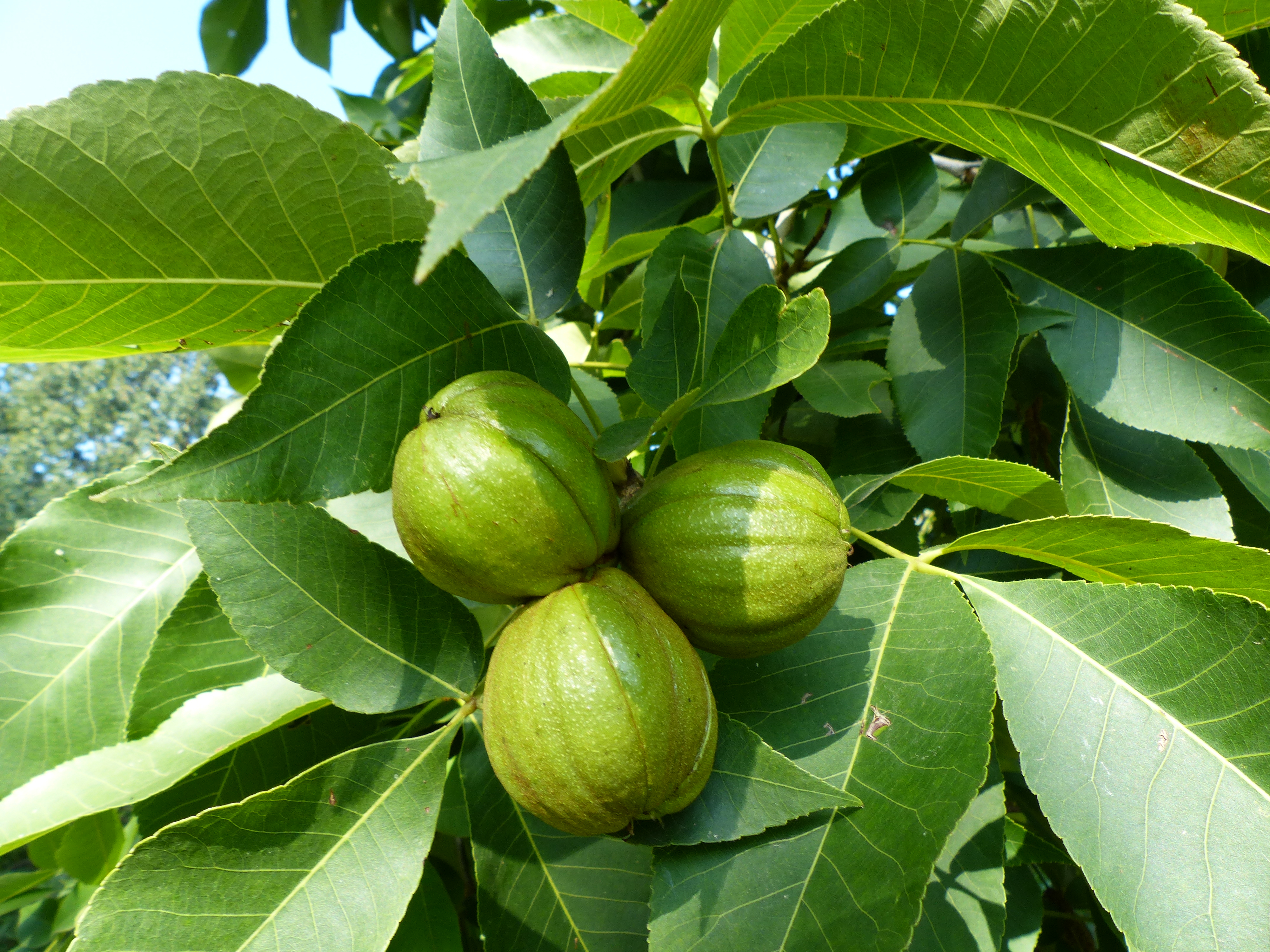
Some trees are planted for a quick reward. A hickory tree is planted for a much bigger reason. It can become the kind of landmark that makes a property feel established: a tall canopy for shade, golden leaves in fall, strong branches that shelter wildlife, and eventually a crop of hard-shelled nuts worth gathering. It is the sort of tree someone plants now and another generation may still be enjoying long afterward.
We get an understandable question from gardeners all over the country: “Can I grow hickory trees in my USDA zone?” It’s a good question, but the answer depends on which hickory you are considering. A Shagbark Hickory in an Ohio backyard has different needs from a Water Hickory on a Georgia creek bottom. A Shellbark Hickory is a wonderful prospect where there is room for a truly large tree, while a White Hickory makes sense on many upland sites but presents a challenge when it comes time to crack the nuts.
Here at Ty Ty Nursery, we’ve helped people choose trees since 1978, and we believe the best planting starts with knowing what you are getting. This guide compares the four species offered in our Hickory Trees for Sale collection. We’ll cover USDA growing zones, winter chill estimates, pollination, nut flavor, taproots, planting bare-root hickory trees, irrigation, pruning, wildlife value, and the patience required for a good nut harvest. Let’s find the right kind of hickory for your land.
What Is a Hickory Tree, and Why Grow One?
Hickories belong to the genus Carya in the walnut family. They are native hardwood trees valued for their exceptionally strong wood, edible or wildlife-useful nuts, and important role in eastern North American forests. Their compound leaves often turn yellow or gold in autumn, and many species develop heavy crowns that eventually provide excellent shade. Hickory wood is famous for tool handles, flooring, and smoking foods, but a living hickory adds far more than timber value to a home landscape.
What many beginning gardeners don’t expect is that hickory trees are slow investments. Compared with a berry bush or a peach tree, a seed-grown hickory can take years to establish a strong root system and many more years to become a significant nut producer. If a nursery listing simply says the tree bears nuts, that does not mean it will be filling buckets next fall. For most wild-type hickories, think in decades rather than a year or two.
The reward is longevity. Hickories can live for generations when matched to suitable soil and climate. They also serve as mast trees, meaning their nuts provide food for squirrels, turkeys, and other animals. Some species are better for the kitchen; others shine in wildlife habitat or wetland settings. Choosing the right one at the beginning saves time and disappointment later.
Which Hickory Tree Varieties Does Ty Ty Nursery Sell?
Our current online hickory tree collection includes four named species: Shagbark, Shellbark, Water, and White Hickory. In this context, “varieties” refers to these four different species, not four grafted, named nut cultivars with uniform harvest dates. That distinction matters for both pollination and the age at which trees begin bearing.
| Hickory Species | USDA Zones Listed by Ty Ty Nursery | Listed Chill-Hour Estimate | Best Known For |
|---|---|---|---|
| Shagbark Hickory (Carya ovata) | 5–10 | 1,000–1,500 hours | Excellent edible nut flavor; distinctive peeling bark |
| Shellbark Hickory (Carya laciniosa) | 5–9 | 1,200–1,500 hours | Exceptionally large nuts; deep, moist soils |
| Water Hickory (Carya aquatica) | 5–9 | 1,000–1,500 hours | Wet bottomlands; wildlife habitat; bitter nuts |
| White or Mockernut Hickory (Carya tomentosa) | 3–11 | 1,200–1,500 hours | Durable upland tree; sweet kernels inside very hard shells |
Important: These USDA ranges and numerical chill estimates reproduce the nursery’s current product information; they are not independently validated requirements for every seedling. In particular, the White Hickory listing extends into Zones 10–11, where naturally occurring winter chilling may be very different from the hours listed. Do not interpret a zone boundary as proof of dependable nut crops. Confirm local species performance and the identity of the planting stock before ordering.
USDA Hardiness Zones vs. Hickory Chill Hours: What’s the Difference?
A USDA Zone Describes Winter Minimum Temperatures
The USDA Plant Hardiness Zone Map divides the country according to the average annual extreme minimum temperature. It helps answer whether a perennial plant may survive winter. You can look up your location using the USDA Plant Hardiness Zone Map. But a zone cannot tell you whether a particular hickory will like your soil, develop good nuts, or escape late spring frost.
Two Zone 8 properties illustrate the problem. One may be a breezy, well-drained hillside. The other may be a low floodplain with heavy clay and standing water after storms. The first could favor Shagbark or White Hickory; the second may be far better suited to Water Hickory. Your zone number is the first filter, not the last one.
Hickory Chill Hours Are Not a Guaranteed Countdown
Nurseries sometimes list hickory chill-hour ranges such as 1,000–1,500 hours. Those numbers can be useful as rough signals that many hickories are temperate, deciduous trees accustomed to cool winters. However, research-based, cultivar-specific chill requirements are not as standardized for these native hickories as they are for many peaches or apples. Different models of calculating winter chilling can also produce different totals.
It would be misleading to tell someone that 1,199 hours means no nuts but 1,200 guarantees a harvest. Nut production also depends on tree maturity, pollen availability, spring weather, soil moisture, and whether the species is actually adapted to that region. In the warmest areas, the biggest question may be whether the chosen hickory species has a documented local track record at all.
Do Not Confuse Seed Stratification With Winter Chill for Fruiting
Here is another common mix-up: hickory nuts planted as seed often need a period of moist, cold stratification before they germinate. For Shagbark and Shellbark, research commonly describes about 90–120 days of such seed treatment. That is a requirement for the seed embryo to break dormancy, not proof that a mature tree needs the same number of hours of winter cold to form nuts. Keep these two very different processes separate when reading growing guides.
Can I Grow Hickory Trees in USDA Zones 3 and 4?
Cold-zone gardeners should not assume that every hickory on the market belongs in their landscape. Ty Ty Nursery’s White Hickory listing includes Zones 3 and 4, but the broad published range needs to be checked against the actual plant’s geographic origin and local experience. The native range and strongest documented performance of Mockernut Hickory are concentrated in the eastern United States, so an exceptionally cold exposed site can present real difficulties.
Shagbark Hickory is naturally one of the hardier hickories, with populations extending far north through parts of the Upper Midwest and southern Canada. Nevertheless, our particular Shagbark offering is listed beginning at Zone 5. For Zone 3 or 4, seek regionally adapted, documented cold-hardy stock instead of automatically purchasing outside a seller’s recommended range.
Spring planting after the soil thaws usually makes the most sense for cold gardens. Give a young hickory the entire growing season to establish roots. A sheltered site, a wide mulch ring, and protection from deer and rodents are more useful than repeated doses of fertilizer. Never expect a small new tree to perform like a decades-old forest hickory.
USDA Zone 5: Shagbark and Shellbark Hickory Possibilities
Zone 5 is the cold end of the published range for Shagbark Hickory, Shellbark Hickory, and Water Hickory. That does not make them interchangeable. In a sunny landscape with deep, well-drained soil, Shagbark is often a sensible species to investigate. Shellbark prefers richer, more consistently moist bottomland soils, and Water Hickory is naturally associated with warmer, wetter Southern river systems rather than the average northern backyard.
In Illinois, Indiana, Ohio, or Pennsylvania, Shagbark can become a handsome long-lived shade tree. Shellbark can also be worth considering on a large property with a suitable moisture regime. If your primary aim is edible nuts, both produce flavorful kernels, although Shellbark often offers larger nuts and Shagbark is widely prized for taste.
Plant after the soil is workable in spring, and do not crowd the future canopy. A hickory may look small when delivered, but you are placing a tree that can eventually reach many dozens of feet tall. Think about utility lines, foundations, buildings, and where falling nuts will land.
USDA Zone 6: A Strong Region for Many Hickories
Zone 6 includes many places where native hickories are an established part of the landscape. Depending on soil and local climate, Shagbark, Shellbark, and White Hickory can all be reasonable candidates. If you want a tree for edible nuts and characteristic peeling bark, start by researching Shagbark. If you have a deep, fertile, moist site and want large nuts, consider Shellbark. For a naturalized upland woodland, White Hickory may fit the setting beautifully.
Water Hickory remains a site-specific choice. Its ability to tolerate periodic flooding does not mean it is the right tree for a conventional dry front lawn. Match that species to lowland habitat where the soil’s moisture pattern resembles its natural conditions.
In Zone 6, dormant bare-root planting generally works well in late winter or spring once the soil can be dug. Keep grass away from young roots and protect trunks from lawn equipment. If you want future nut crops, reserve space for genetically different hickories with overlapping pollen and female flower timing.
USDA Zone 7: Hickory Trees for Shade, Nuts, and Wildlife
Across parts of Virginia, Tennessee, North Carolina, Arkansas, and surrounding states, Zone 7 can offer excellent potential for hickory planting. The right choice depends less on a pretty product photograph and more on what you want the tree to do twenty or thirty years from now. Are you planting for edible nutmeats, a woodland edge, wildlife food, or shade over a large pasture?
For nuts and distinctive bark, Shagbark is an appealing candidate. Shellbark suits a generous site with deep moisture-retentive soil. White Hickory is useful for upland landscape diversity, though its kernels are labor-intensive to remove. Water Hickory belongs on appropriate floodplain and wetland edges, especially where ducks and other wildlife benefit from the fallen nuts.
For best nut production, choose full sun. Mature hickories can tolerate different degrees of shade, but a crowded forest planting may build height slowly without developing the broad crown needed for heavy seed production. Leave room for branches to spread and for people to collect fallen nuts safely.
USDA Zone 8: Can Hickory Trees Grow in Georgia?
Absolutely. Hickories are part of the natural landscape across much of Georgia, although different species favor different habitats. Here in South Georgia, that difference deserves attention. A higher, dry sandy or loamy site is not the same as a river floodplain that becomes temporarily covered with water after a storm.
White Hickory, also called Mockernut, is often associated with upland forests and can tolerate periods of dryness once established. Water Hickory is better known from wet bottomlands, clay flats, and backwater areas. Shellbark appreciates deep, fertile, moist ground, while Shagbark is a popular nut tree in suitable upland and river-valley locations. The Shagbark’s natural distribution is less extensive across portions of the lower Coastal Plain, so check local experience rather than assuming equal performance everywhere.
Warm, humid weather can also bring insects and fungal disease. Give young trees space and adequate early-season moisture, but don’t keep their roots in saturated holes simply because hickories occur in forests. For most Georgia homeowners, a late-fall-to-early-spring dormant-season planting is preferable to installing a new bare-root tree in peak summer heat.
USDA Zone 9: Match the Species to Your Actual Site
Zone 9 is included in all four Ty Ty Nursery hickory listings, but not every Zone 9 property is an equally good habitat. The warm, humid Gulf Coast has a very different growing environment from a dry southwestern yard. Water Hickory is native to portions of the southeastern Coastal Plain and may suit certain warm wetland settings; it is not a universal answer for an irrigated residential lawn. A dry desert location may require a completely different native shade-tree selection.
White Hickory can be found in parts of the warmer Southeast, but its broad nursery range should still be weighed against regional records. Shagbark and Shellbark need careful evaluation where winters are unusually mild. Remember those nursery chill-hour estimates: fruiting is not guaranteed simply because the tree survives.
Where winters are warm, check local Extension guidance and existing mature trees before making a large purchase. A hickory might be a sensible habitat tree on one side of the county and a poor fit on the other.
USDA Zones 10 and 11: What About Extremely Warm Climates?
This is where the difference between a catalog zone range and demonstrated regional performance is most important. Ty Ty Nursery lists Shagbark through Zone 10 and White Hickory through Zone 11. Those are the published ranges, but they should not be treated as evidence that either species will reliably grow and produce nuts in tropical or nearly frost-free locations.
Most naturally occurring hickories are associated with temperate or warm-temperate North American forests. A Zone 11 climate may have almost no meaningful winter chilling by some models. The exceptionally broad White Hickory range conflicts with the idea that all sites in that range will provide the nursery’s listed 1,200–1,500 chill hours.
For Zones 10–11, investigate local arboretums, county Extension publications, and mature specimens of the exact species before planting. If there is no convincing evidence of local success, a better-adapted shade or nut tree is a wiser investment.
Shagbark Hickory: Best Known for Sweet Nuts and Peeling Bark
The Shagbark Hickory Tree (Carya ovata) is the classic hickory that many people remember from childhood walks in the woods. As it matures, long strips of gray bark loosen and curl away from the trunk, giving it a rugged appearance unlike most ordinary shade trees. Its compound leaves form a green canopy in summer and often turn an attractive shade of gold in fall.
Shagbark’s kernels are widely appreciated for their rich, sweet flavor. A handful of properly shelled hickory nuts can make cookies, cakes, or a holiday pie feel special. The shells require effort to crack, but many growers feel the flavor is worth it. Nut quality varies naturally from seed-grown tree to seed-grown tree, so don’t expect every specimen to be identical.
Our nursery lists Shagbark for Zones 5–10 with approximately 1,000–1,500 chill hours, and advises 30–50 feet of spacing. The species can mature to about 60–80 feet or more in favorable conditions. For someone with a generous yard and decades of patience, it can be a wonderful living legacy.
Shellbark Hickory: Big Nuts from a Big Tree
If you’ve heard the name Kingnut Hickory, you’ve probably heard of Shellbark Hickory (Carya laciniosa). This species produces some of the largest nuts among hickories. The kernels can be sweet and flavorful, although the shells are substantial and cracking still takes work. It is the kind of tree you should plant with a large amount of room, not squeeze into a narrow strip between the garage and the sidewalk.
Shellbark favors deep, rich, moist soils often associated with river terraces and bottomlands. Moist does not mean planting the young tree into a permanently stagnant puddle. It grows best where roots can access consistent moisture and still have a suitable soil environment. Its broad mature crown can eventually cast generous shade across a large property.
Ty Ty Nursery lists Shellbark for Zones 5–9, an approximate 1,200–1,500 chill hours, and spacing around 40–60 feet. The U.S. Forest Service describes seed-bearing maturity in wild Shellbark at about forty years, with particularly productive decades much later. This is not the choice for someone who needs a nut harvest within two or three years.
Water Hickory: The Wildlife Specialist for Wet Ground
The Water Hickory Tree (Carya aquatica) is a different proposition from the popular kitchen hickories. Sometimes called Bitter Pecan, it produces relatively small nuts with a bitter character. Those nuts are not generally the first choice for eating or baking, but they can support ducks, squirrels, and other wildlife in suitable habitat.
Water Hickory belongs to the lowlands of the Southeast. It occurs in wet clay flats, floodplains, and areas exposed to seasonal flooding. The U.S. Forest Service notes that it is uncommon in soils that remain continuously saturated, so choose a site with periodic wetness rather than permanent standing water around a newly planted tree.
Our Water Hickory listing shows Zones 5–9 and roughly 1,000–1,500 estimated chill hours, with spacing of 30–50 feet. If you are planting a wildlife tract, restoring appropriate bottomland habitat, or adding diversity along a natural watercourse, Water Hickory deserves a serious look. If your primary goal is a bowl of tasty nuts for holiday baking, choose Shagbark or Shellbark instead.
White Hickory: Meet the Tough-Shelled Mockernut
Our White Hickory Tree is commonly called Mockernut Hickory. The current accepted scientific name is Carya tomentosa; the name Carya alba also appears in older literature and on some nursery descriptions. It is a native woodland species recognized for durable timber, attractive shade, and nuts with sweet kernels hidden inside exceptionally hard shells.
The name Mockernut hints at the frustration of opening the shell only to find a comparatively small amount of edible nutmeat. That doesn’t make the tree a poor choice; it simply means the kitchen yield is different from the appeal of Shagbark or large-nutted Shellbark. Wildlife, on the other hand, can benefit from fallen nuts and the forest cover.
White Hickory is frequently associated with upland slopes and ridges and may tolerate periods of drought after establishing deep roots. Ty Ty Nursery lists it for Zones 3–11 and estimates 1,200–1,500 chill hours; as explained earlier, the tropical end of that range deserves careful local verification. Plan on a large mature tree, often reaching roughly 60–80 feet or more, with plenty of room beneath its crown.
Which Hickory Is Best for Edible Nuts, Shade, or Wildlife?
If you are planting mainly for flavor, Shagbark Hickory is a leading candidate. If your soil stays moist and you want the largest hickory nuts, Shellbark Hickory may be the better long-term project. If the property includes a suitable floodplain or wet woodland where wildlife habitat is the priority, Water Hickory may be the right species. If you want a sturdy native tree for a large upland landscape, White Hickory is worth considering.
There is no honest way to declare one species the best for every state, soil, and purpose. Many wonderful Shagbark trees grow where Water Hickory would be out of place. Many Water Hickories occupy wet habitats where an upland tree would struggle. Choose the right species for the land rather than trying to change the land to fit the wrong species.
Do Hickory Trees Need Two Trees for Pollination?
Hickories Have Male and Female Flowers on the Same Tree
Hickories are generally monoecious: a single tree carries male flowers called catkins and separate female flowers. The pollen moves primarily by wind, not by honeybees. That means a lone mature tree may sometimes set nuts, but relying on one tree is not the best strategy for a dependable crop.
Cross-Pollination Is the Better Orchard Plan
For better fruit set, plant genetically distinct hickory trees with overlapping flowering times. In some hickories, pollen is shed before a tree’s female flowers are receptive; in others, the timing is reversed. This is one reason another compatible tree can help. Two seedlings of the same species may be genetically different, whereas two grafts of the same clone are not automatically a genetically diverse pair.
Do not assume any two hickory species form a dependable pollination pair. Cross-species hybridization occurs in the genus, but compatibility and overlap are not guaranteed. If an orchard is planned primarily for nuts, choose at least two distinct trees of the same suitable species or seek expert guidance about proven partners. Nearby naturally growing mature hickories may supply pollen, but you need suitable species and overlapping bloom.
How Far Apart Should Pollinator Hickories Be?
Wind can carry hickory pollen considerable distances, so the trees do not need to touch canopies. For a home planting, keep compatible trees within the same general area of the property, allowing their eventual crowns ample room. Space for mature growth first and let the wind do the carrying. Avoid setting trees too close simply because they look small in their first year.
How Long Does a Hickory Tree Take to Produce Nuts?
This deserves a straight answer: most seed-grown hickory trees are long-term nut projects. The U.S. Forest Service describes Shagbark Hickory beginning substantial seed production at around forty years, Shellbark at roughly forty years, and Mockernut commonly starting around twenty-five years, with peak production at older ages. Trees sometimes produce limited nuts earlier, and grafted selections may bear sooner, but those possibilities should not be sold as a guarantee for ordinary seedling stock.
There is also the matter of mast years. Hickory crops can vary sharply from one season to another. One fall may bring a generous collection while the next offers only a scattered handful. Flowering weather, insects, tree health, and natural reproductive cycles all play a part. A mature tree is not necessarily a tree that fills a bucket every year.
We recommend thinking of hickory as an investment in the property, wildlife, shade, and future generations. If you want a quicker nut-producing orchard, research selected grafted nut-tree cultivars with documented early-bearing performance. A seed-grown hickory is a fine tree to plant, but patience is part of the bargain.
Where Is the Best Place to Plant a Hickory Tree?
Choose Plenty of Sun and Plenty of Room
For meaningful nut production, aim for a site with at least six to eight hours of direct sunlight and enough room for a broad mature canopy. A small hickory is easy to underestimate. Imagine the tree at sixty or eighty feet tall, then check where its branches, roots, and falling nuts will eventually be. Avoid overhead power lines, narrow side yards, septic drain fields, and locations where large nuts may routinely fall onto cars or walkways.
Match Drainage to the Hickory Species
Shagbark and White Hickory generally benefit from deep soils that drain appropriately. Shellbark appreciates fertile, moist sites, while Water Hickory tolerates more periodic inundation than the others. An area that stays wet for days after rain may be appropriate for one species and disastrous for another. Look at the landscape after a storm, not only on a sunny day.
Check Soil Before Reaching for Fertilizer
Hickories grow across a range of soil types and pH levels. Rather than forcing every site to a single number, have the soil tested and consider the species’ native habitat. Deep, uncompacted soil is often more important for early establishment than buying a large amount of fertilizer. If drainage is poor, improve the site or choose a different tree before planting.
How Far Apart Should Hickory Trees Be Planted?
Ty Ty Nursery recommends approximately 30–50 feet for Shagbark and Water Hickory and 40–60 feet for Shellbark and White Hickory. Those are useful home-landscape planning distances for large specimens. In a managed woodland, trees may be set closer as part of a longer-term thinning strategy, but that approach is different from creating an open-grown nut orchard.
For home use, picture each tree at maturity and leave enough space for wide branches, equipment access, and nut collection. A twenty-foot gap may look enormous between two new saplings. Thirty years later, the trees may have filled most of it. Plant for the future view, not merely for the first photograph.
Why Hickory Taproots Make Early Planting So Important
Hickories develop a strong taproot when young. This helps established trees reach deeper soil moisture, but it also means their root systems require careful handling. A young tree should not be left sitting in a tiny container for years with its taproot circling or bent. The same principle applies to bare-root nursery stock: protect the roots, plant promptly, and avoid bending the taproot sharply into a small hole.
When planting a hickory, dig wide enough and deep enough for the existing roots to spread naturally, but never place the root flare far below the finished ground surface. Digging an unnecessarily deep hole and then filling it with loose material can allow the tree to settle too far down. Set the tree at its correct original soil depth and firm the surrounding soil gently.
Because large hickories are difficult to move once established, get the permanent location right the first time. A good site decision now is easier than trying to transplant a deep-rooted tree after several years.
When Is the Best Time to Plant Bare-Root Hickory Trees?
For most regions, the dormant season offers the best opportunity. In the North, plant in spring when the ground thaws and drains. In milder Southern areas, late fall through early spring can be appropriate once the tree is dormant and the soil is workable. The exact date depends on destination weather and nursery shipping availability.
Ty Ty Nursery’s current hickory listings project a December 14, 2026 seasonal shipping date, subject to change. A projected date is not a promise of delivery on that day. Preparing the site early is always useful; dig when conditions are right, not when the soil is frozen, muddy, or flooded. If a northern location is under a freeze hold, waiting for workable spring soil is better than forcing the planting.
Dormant hickories may arrive without leaves. That is expected during their normal winter cycle. Protect the roots from drying, follow the supplied instructions, and allow sufficient time for spring budbreak. Nut trees can sometimes leaf out later than neighboring landscape trees, so resist the urge to judge them solely by the calendar.
How to Plant a Bare-Root Hickory Tree: Step-by-Step
- Select a permanent site. Confirm your USDA zone, the hickory species, soil drainage, full sun, and the tree’s eventual canopy size.
- Prepare the surrounding ground. Remove competing grass and weeds from a broad circle. Check that the soil is neither frozen nor saturated.
- Unpack promptly. Keep bare roots covered, moist, and shaded while preparing to plant. Do not leave them exposed to sun or drying wind.
- Inspect root shape. Arrange the roots naturally, paying attention to the taproot. Do not bend a long root into a tight J-shape to fit a shallow hole.
- Dig a suitable hole. Make it broad enough for the roots and only as deep as needed to set the root flare near the finished grade. Do not bury the trunk.
- Backfill mainly with native soil. Settle soil around the roots to remove large air pockets. Avoid putting strong fertilizer directly against exposed roots.
- Water deeply. Give the newly planted tree a slow thorough soaking so water reaches the entire planting zone.
- Mulch the root area. Add about two to three inches of organic mulch in a broad ring, leaving a clear gap next to the trunk.
- Protect and monitor. Use a suitable tree guard if deer, rodents, or mowers are a concern. Check soil moisture during the first growing season.
Planting instructions must always match the stock you actually receive. If there is a graft union, keep it at the appropriate height specified for that tree. If the roots require special handling because of size or shipping treatment, follow the nursery’s product-specific instructions.
First-Year Hickory Tree Care: Watering, Mulch, and Fertilizer
Water Deeply During Establishment
A mature hickory may be impressively tough, but a new tree has not yet developed the deep root system that gives the species that reputation. Monitor the root zone carefully during its first season. Water slowly and deeply when the soil begins to dry, and adjust for soil type, rainfall, and weather. Sandy soil can lose moisture quickly; heavy soil may hold water for much longer.
Do not rely on a rigid daily schedule. Check moisture several inches into the soil and water as needed. Water Hickory’s tolerance of occasional flooding does not mean its young roots should be trapped permanently in stagnant water. For most species, good root-zone oxygen remains important.
Mulch Without Piling It Against the Bark
A broad layer of organic mulch conserves moisture, reduces weed competition, and helps protect roots from temperature extremes. Keep mulch pulled back from the trunk rather than building a volcano around the bark. A young hickory benefits when its roots do not have to compete with a dense lawn for every bit of rainfall.
Do Not Push a New Tree With Excess Nitrogen
It is tempting to fertilize hard in hopes of making a slow-growing hickory shoot upward. Resist that temptation. Establish a balanced root system first, test the soil when necessary, and fertilize according to actual need. Fast, tender growth forced late in the year may be more vulnerable to winter injury. The goal is long-term health, not a dramatic burst of growth for a summer picture.
How to Prune Hickory Trees Without Ruining Their Structure
Young hickories generally need much less pruning than fruit trees. Focus on encouraging a sound central leader and removing damaged, rubbing, or structurally weak limbs as needed. Prune at the branch collar without leaving long stubs or cutting flush into the trunk. Avoid removing large portions of the canopy from a young tree, especially when it is still establishing roots.
Winter dormancy is often a convenient time to assess branch structure, although the proper timing can depend on local weather and the particular problem. As a hickory matures, its substantial size makes professional pruning safer than attempting large cuts from a ladder. Place the tree where it will not need constant heavy topping just to stay away from a building or utility wire.
When Are Hickory Nuts Ready to Harvest?
Many hickories ripen in fall, commonly from September into November depending on species and location. The green outer husks begin browning and splitting as the nuts mature, and ripe nuts often fall naturally. Shagbark husks typically split into four sections. Shellbark produces especially large nuts with substantial husks, while Water Hickory yields smaller, less desirable table nuts.
Collect sound fallen nuts promptly before squirrels remove them or wet weather damages them. Remove husks, discard nuts with insect holes, mold, or other damage, and dry or cure them in a clean, well-ventilated place before storage. Cracked kernels should be refrigerated or frozen for longer keeping because their natural oils can become rancid.
Hickory nuts can be used in cookies, pies, or roasted dishes when properly identified and shelled. Some people enjoy a simple hickory-nut pie. Others prefer saving Shagbark kernels for a special family recipe. Water Hickory, by contrast, is much better valued as a wildlife resource than as a kitchen crop.
Why Hickory Trees Are Valuable for Deer, Squirrels, and Wildlife
Hickory nuts are an important source of fall mast. Squirrels and chipmunks carry and cache nuts, and other wildlife uses hickory-dominated woodlands for food and cover. Water Hickory is particularly useful in suitable bottomland habitat where waterfowl and other animals can use the nuts. The canopy also contributes shade, leaf litter, nesting habitat, and landscape diversity.
But a young hickory is not an instant food plot. If you are planting for wildlife, plan for many years of growth before heavy mast production. Protect trunks from deer rubbing, keep competing vegetation down, and avoid mechanical damage from mowing or equipment. The most dependable wildlife planting is usually a mix of well-adapted native trees rather than a single species planted everywhere.
Common Hickory Tree Problems and How to Prevent Them
Slow Growth After Planting
Hickories may put considerable energy into roots before growing rapidly above ground. A slow first season does not automatically mean the tree is unhealthy. Check soil moisture, planting depth, competition from grass, and whether the roots were protected during handling. Avoid digging up the tree repeatedly to inspect it.
Leaves Yellowing or Browning in Summer
New plantings may show stress from drought, overly wet roots, compacted soil, or nutrient imbalance. Begin by checking the actual soil conditions. A dry planting hole and a flooded clay basin can both cause disappointing leaf growth, but need very different corrections.
Hickory Bark Beetles, Borers, and Weevils
Hickories can be affected by bark beetles, wood borers, nut weevils, and other insects. Trees weakened by drought or injury can be especially vulnerable to some attacks. Inspect damaged branches, remove severely infested wood when recommended, and ask your local Extension office for identification before treating. Not every insect on a hickory is harmful.
Leaf Spots, Cankers, and Storm Damage
Like other native hardwoods, hickories can develop fungal leaf problems, trunk cankers, and damage from wind or ice. Proper siting and healthy establishment reduce unnecessary stress. Avoid wounding the trunk with mowers or string trimmers. For major limb breakage, use a qualified arborist instead of attempting risky cuts yourself.
A Healthy Mature Tree With Few Nuts
Check age, pollination, and the tree’s natural mast cycle. Many hickories have years of light seed production between better harvests, and a tree may take decades to reach substantial maturity. Missing a crop does not necessarily mean the tree needs fertilizer or a different watering schedule.
Frequently Asked Questions About Growing Hickory Trees
Can I grow a Shagbark Hickory in my backyard?
Yes, if you have a suitable climate, soil, and generous space. Shagbark is a large, long-lived tree best suited to properties where its mature canopy, deep roots, and falling nuts will not cause conflicts. Ty Ty Nursery lists it for Zones 5–10, but regional performance should be confirmed near the edges.
What is the best hickory tree for eating nuts?
Shagbark is widely prized for sweet, flavorful kernels. Shellbark is also valued for large nuts with good flavor. White Hickory has edible kernels but notoriously hard shells, while Water Hickory is used mainly for wildlife rather than human snacks.
Do I need two hickory trees to get nuts?
Planting two genetically distinct, compatible trees with overlapping flowering periods is the safer strategy for dependable pollination. Hickory pollen is carried by wind. A lone tree may occasionally set nuts, but you should not build a nut-production plan around guaranteed self-pollination.
How long until a hickory makes nuts?
For many seed-grown wild-type hickories, significant nut production can take decades. Forest Service information describes approximately 25 years for Mockernut and around 40 years for Shagbark and Shellbark to begin meaningful seed production, with peak crops at older ages. Actual performance varies, and grafted selections may be different.
Can hickory trees grow in wet soil?
Water Hickory is best known for periodic floodplain wetness, and Shellbark also favors moist bottomlands. Shagbark and White Hickory usually fit better-drained sites. Constant standing water is not automatically healthy even for species associated with wetland forests.
Why does my new hickory have no leaves?
During winter dormancy, leafless stems are normal. Hickories can also leaf out relatively late in spring. Keep roots appropriately moist, watch for bud growth, and follow nursery guidance. If viability is in doubt after seasonal budbreak should have occurred, use a careful scratch test and contact the nursery with photographs.
Can I grow hickory trees in Georgia?
Yes. Several native hickory species occur in Georgia. The key is matching the species to the site: White Hickory for appropriate uplands, Water Hickory for certain wet bottomlands, and Shagbark or Shellbark where climate and soil favor them.
Are hickory trees good for deer food plots?
They can be excellent long-term habitat trees that support wildlife through nuts and cover. But hickories take many years to become heavy mast producers. Protect young trees from browsing and combine them with other adapted wildlife plantings rather than expecting immediate forage.
How far from a house should I plant a hickory?
Allow enough room for the species’ eventual canopy, roots, large limbs, and falling nuts. The nursery recommends about 30–60 feet of spacing among mature trees depending on species. The safest distance from structures depends on the site, mature dimensions, and professional arboricultural guidance.
Do hickory trees require full sun?
Young plants can tolerate some shade, and mature forest hickories naturally grow among other trees. For a broad crown and future nut crops, however, a sunny site with six to eight hours of direct light is generally preferable.
Where Is the Best Place to Buy Hickory Trees Online? Ty Ty Nursery
Once you have the right species and the right place to plant, buying a hickory tree should feel straightforward. We want customers to understand the planting window, choose a suitable size, and know whom to call if questions come up. Our Hickory Trees for Sale category lets you compare Shagbark, Shellbark, Water, and White Hickory before planning your planting.
1. Prices Advertised Up to 68% Lower Than Other Nurseries
Ty Ty Nursery advertises prices up to 68% lower on qualifying comparisons with selected competitors. The maximum savings do not apply to every item or order, so compare equivalent sizes and the total delivered cost. We aim to make growing beautiful, long-lived trees more affordable without asking you to give up quality.
2. Fast In-Season Shipping: Plant in Days the Ty Ty Way
When the trees are ready and the planting season is suitable, we work to ship orders promptly. We call it Plant in Days the Ty Ty Way—a welcome alternative to unnecessary weeks or months of waiting. Actual timing depends on dormancy, stock availability, destination conditions, projected shipping dates, and the carrier. We will not promise a tree can safely ship during an unsuitable weather window.
3. Free One-Year Plantsurance Guarantee
Eligible hickory trees include our free one-year Plantsurance protection. If a qualifying plant fails within 365 days of receipt, an approved claim provides store credit for the qualifying plant price actually paid, excluding shipping, taxes, and discounts. Verification photographs, proper recommended-zone planting, and other published terms apply. Plants purchased using earlier Plantsurance store credit do not receive a second Plantsurance claim.
4. Lifetime True-to-Name Guarantee
A Shagbark Hickory and a Water Hickory are not interchangeable, and we understand how much species identity matters when planting a tree for decades. Our Lifetime True-to-Name Guarantee addresses verified misidentification under the published terms, with eligible remedies including refund, replacement, or store credit. The guarantee concerns plant identity; it does not promise a particular year of nut production or crop yield.
5. Delivery to Your Door Without Hauling Heavy Pots
Skip loading bulky nursery pots into your car, cleaning soil from the trunk, or trying to protect a tall tree on the drive home. We ship eligible trees directly to your doorstep using seasonal packaging. Hickory trees commonly travel bare-root while dormant, making it easier to receive the plant and move it to its prepared planting site.
6. Helping Gardeners Since 1978
Ty Ty Nursery has been part of South Georgia horticulture since 1978. From fruit trees and grapevines to nut trees and landscape plants, we enjoy helping people think through the long-term potential of their property. A hickory may grow for generations, and we believe that’s a good reason to choose carefully from the beginning.
7. Google Top Quality Store With a 4.5 Rating
Google currently displays Ty Ty Nursery as a Top Quality Store with a 4.5 store rating. Ratings can change, and the linked profile allows shoppers to check the latest Google store information before ordering.
8. An A Rating With the Better Business Bureau
Ty Ty Nursery’s Better Business Bureau business profile currently displays an A rating. Shoppers are welcome to check that direct link for the latest information, since outside ratings can change.
9. Real Plant Experts Based Here in Ty Ty, Georgia
Have a question about hickory pollination, planting a taproot, freeze holds, or whether Shagbark or Water Hickory belongs in your soil? Our customer-service team includes real people based in Ty Ty, Georgia. We don’t outsource those customer conversations overseas or require you to rely on an AI-only chatbot. Call 888-758-2252 for help choosing and caring for your trees.
Ready to Plant a Hickory Tree That Can Outlast Generations?
A hickory tree is more than a seasonal garden project. It can become shade for your family, autumn color along a field edge, food for wildlife, and eventually a source of flavorful nuts. But the best hickory is the one matched to your soil, growing zone, available space, and long-term goals.
Choose Shagbark for its celebrated nut flavor and shaggy bark, Shellbark for big nuts and a moist roomy site, Water Hickory for the right bottomland wildlife habitat, or White Hickory for an enduring upland hardwood. Plan for wind pollination and be patient about nut production. Your future shade tree starts with a well-chosen planting spot today.
Shop Hickory Trees Online at Ty Ty Nursery, compare the four species and available sizes, and find the right time to start growing a tree with a future.
Leave a Reply