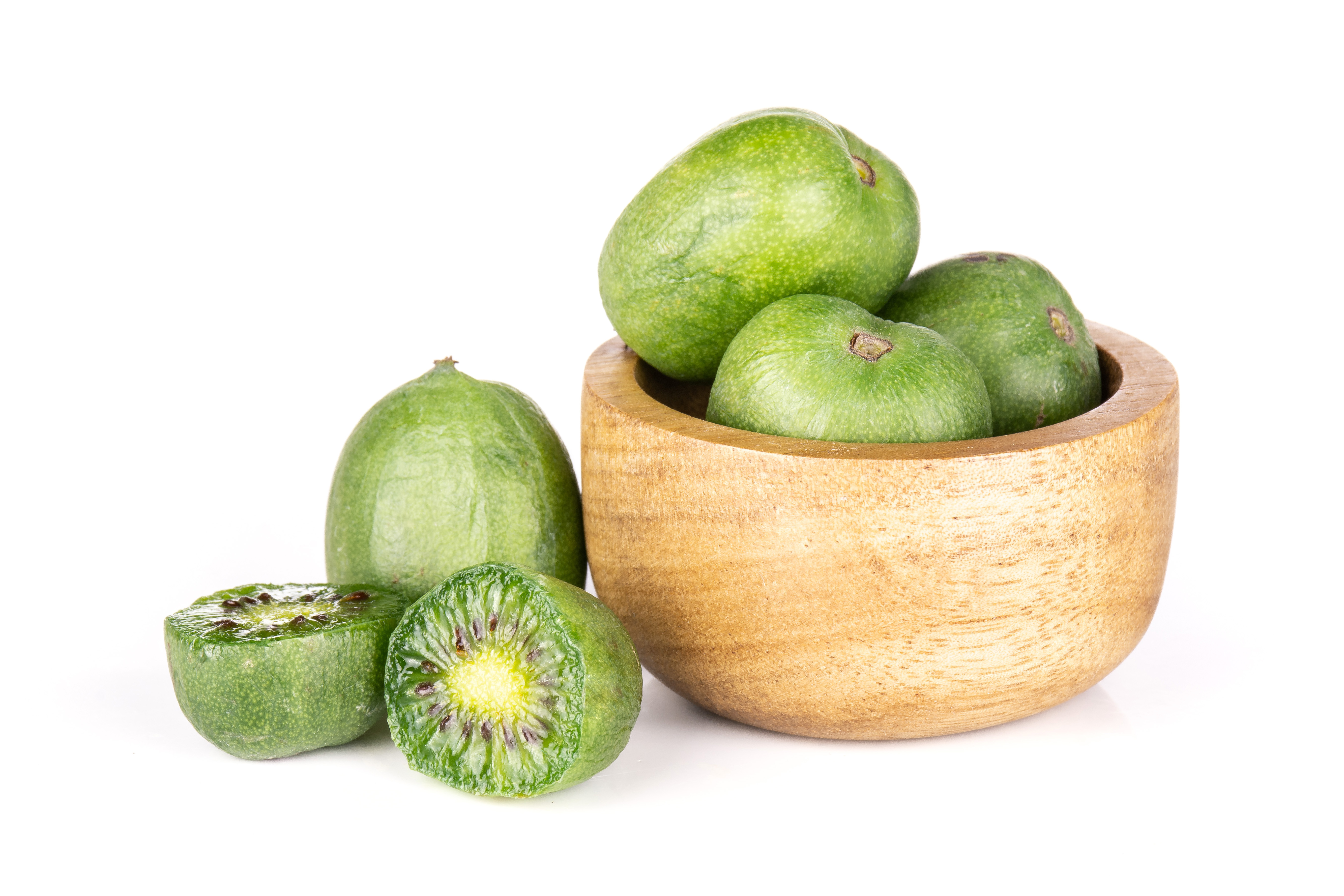
Most people know kiwi as that fuzzy brown fruit sitting beside the bananas in the grocery store. What surprises them is that there’s another kind you can eat whole, skin and all, and one particular variety can produce fruit without needing a separate male vine. Its name is Issai Kiwi, and it’s one of the most interesting fruiting vines you can add to a backyard garden.
We’ve heard the question from gardeners in just about every climate: “Can I grow Issai kiwi vines in my USDA zone?” It’s a question worth asking before you put up a trellis. The same Issai plant that grows vigorously through a moderate summer may have a hard time with a late spring freeze, an exposed northern winter, or the long stretches of wet soil that sometimes follow Southern thunderstorms.
At Ty Ty Nursery here in South Georgia, we’ve helped people choose fruit trees, berry bushes, and vines since 1978. We believe a successful planting begins with more than a picture of beautiful fruit. You need to know whether your yard has enough sun, how cold it gets, what happens after the vine breaks dormancy, and whether the structure you’re building today will still hold it ten years from now.
This is our complete guide to Issai kiwi USDA growing zones, winter chill hours, self-pollination, bare-root planting, first-year care, trellis building, pruning, and harvesting. We will also explain how Issai compares with other hardy kiwi selections, why a plant can survive winter but fail to set fruit, and what to consider before ordering an Issai Kiwi Plant online from Ty Ty Nursery.
What Is an Issai Kiwi Vine?
Issai is a named selection of hardy kiwi, usually listed botanically as Actinidia arguta ‘Issai’. It is a deciduous, woody, twining vine. That means it loses its leaves in winter and climbs by wrapping its stems around a support rather than gripping a wall with adhesive roots. During the growing season it carries attractive green leaves, small pale flowers, and, in favorable conditions, clusters of small green fruit.
The fruit is commonly called a kiwiberry, hardy kiwi berry, or baby kiwi. It’s considerably smaller than a fuzzy supermarket kiwi, generally about the size of a large grape. Its green skin is smooth and edible, so you don’t need to peel it. Cut one open and you’ll see tiny dark seeds set in green flesh, with that recognizable sweet kiwi flavor. Some people find a ripe Issai sweeter and less sharp than a standard fuzzy kiwi.
Another reason home gardeners like Issai is its flower structure. Most traditional hardy kiwis have separate male and female plants, and a fruiting female needs pollen from a compatible male. Issai is self-fertile. In a suitable location, one properly cared-for Issai vine can produce fruit without a separate male kiwi. That makes it especially appealing to gardeners who only have room for one planting.
Don’t confuse self-fertile with maintenance-free. Issai still needs sun, moisture, a substantial support, annual training, and some protection from the kinds of conditions that damage tender kiwi growth. It is a comparatively restrained cultivar, not a tiny houseplant or a vine that stays six feet long forever.
Issai Hardy Kiwi vs. the Fuzzy Kiwi at the Grocery Store
The familiar fuzzy kiwi usually comes from a different species, Actinidia deliciosa. That type is grown commercially in areas with the right combination of mild winters and a long ripening season. Issai belongs to the hardy kiwiberry group. Its fruit is smaller, the skin is edible, and the vine has greater tolerance of cold winter conditions than many fuzzy-fruited kiwis.
But there is an important catch. The name hardy kiwi describes a broad group; it doesn’t mean every selection tolerates exactly the same minimum temperature. Oregon State University Extension reports that Issai can be less cold-hardy than some other hardy kiwiberry cultivars. Even when the dormant wood survives a winter, the new spring growth can be injured by temperatures around freezing.
For a backyard grower, this means choosing a kiwi based on more than whether the name sounds tropical or cold-hardy. Start with your actual climate, then plan for the vine’s long-term care.
Issai Kiwi Growing Facts at a Glance
| Growing Feature | Issai Kiwi Details |
|---|---|
| Botanical name | Actinidia arguta ‘Issai’ (hardy kiwi selection) |
| Ty Ty Nursery listed USDA zones | Zones 3–8; colder-edge performance requires local verification |
| Nursery estimated chill hours | 100–200 hours; not a universally validated cultivar threshold |
| Pollination | Self-fertile; a male pollinizer is not required for a crop |
| Fruit | Small, smooth-skinned, sweet-tangy green kiwiberries |
| Sun exposure | Full sun for best fruiting; some partial shade tolerated |
| Soil preference | Well-drained, fertile, slightly acidic to near-neutral soil |
| Soil pH guide | Approximately 6.0–7.0 on the nursery product page |
| Harvest | Often late summer to early fall; varies greatly by region |
| Growth habit | Deciduous twining vine requiring a permanent sturdy trellis |
| Important climate risk | Spring frost after budbreak, even where the vine overwinters |
These are planning figures for the Issai Kiwi Plant listed by Ty Ty Nursery. A plant’s real performance is influenced by growing location, age, drainage, pruning, and weather. There are also different published hardiness ranges for Issai in horticultural references, so we’ll explain the differences rather than pretending every source agrees.
How to Read Your USDA Zone Before Buying an Issai Kiwi
A USDA hardiness zone describes your area’s average extreme minimum winter temperature. You can check your location on the USDA Plant Hardiness Zone Map. It’s a useful first screening tool, but it can’t tell you how many times the temperature will bounce between warm afternoons and freezing nights in March.
That’s important with kiwi. A vine might handle deep cold while fully dormant and still lose tender new shoots to an ordinary late frost. It can then grow fresh leaves and look perfectly healthy in June, yet have little or no fruit that season because the flowering shoots were damaged. The difference between a healthy vine and a productive vine is the heart of growing Issai successfully.
Ty Ty Nursery advertises Issai for Zones 3–8. Missouri Botanical Garden has also listed Issai for Zones 3–8, while other institutional references give narrower ranges. Oregon State University specifically reports lower cold tolerance for Issai than for some other hardy kiwi cultivars. When you’re close to the cold or warm edge, a nearby grower’s results and an Extension recommendation deserve as much weight as a catalog number.
Can I Grow Issai Kiwi in USDA Zone 3?
Zone 3 gardeners contend with genuinely severe winter lows. Issai appears on some nursery and botanical listings with Zone 3 as the lower boundary, but that should be considered an ambitious rating for an exposed residential landscape. Research and field experience suggest Issai may be less cold-tolerant than hardier members of the larger kiwi group.
If you live in northern Minnesota, North Dakota, or another Zone 3 location, don’t assume an Issai vine will perform dependably simply because a product page includes your zone. Ask whether the stock has been tested nearby, pay attention to snow cover and wind exposure, and consider a locally proven, cold-hardy alternative if dependable fruit is the goal.
A sheltered trial planting is possible, especially where the crown can receive deep winter insulation, but it remains an experiment. Protect young trunks from freezing injury and do not expect a full crop every year. If you need a vine that produces reliably through severe winters, let regional experience make the decision.
USDA Zone 4: Possible, but Plan for Cold and Frost
Zone 4 gives an adventurous gardener more room to experiment, although winter cold remains significant. Some botanical descriptions place Issai within this zone, but that doesn’t erase the concern about cold injury and the vine’s early spring growth. Choose a sheltered location with good air drainage instead of the lowest corner of the yard where cold air settles.
A deep, well-mulched root zone, wind protection, and a strong trellis can help an established plant. In colder areas, spring planting generally makes more sense than planting just before a hard winter. The vine needs a chance to establish new roots before the weather turns severe.
Be realistic about spring. Buds can open during an early warm spell, only to encounter another freeze. A plant that loses those shoots may regrow, but fruit production can be delayed or lost. For a Zone 4 grower, the site and the year-to-year frost pattern matter enormously.
USDA Zone 5: A Practical Hardy Kiwi Experiment
Zone 5 is where many gardeners begin considering Issai more seriously. You may have enough winter cold for dormancy, but there can still be substantial temperature swings and late spring freezes. Some sites produce respectable kiwi crops, while other plantings struggle when a cold snap arrives after budbreak.
Give the vine an open, sunny site away from low frost pockets. Build its trellis before planting. Strongly consider spring planting after the soil thaws so the roots can establish throughout the growing season. The younger the vine, the more important it is to protect the trunk and maintain even moisture.
If your primary interest is a dependable fruit crop rather than a gardening experiment, check whether Issai has performed well for gardeners nearby. Pennsylvania Extension has reported that Issai has not performed especially well in its regional experience, a reminder that even a technically hardy vine is not equally productive everywhere.
USDA Zone 6: Often a Promising Place to Try Issai
Zone 6 often provides a favorable balance of winter dormancy and summer growing time, although conditions vary from New Jersey to Missouri or Kentucky. A well-managed Issai vine may be an appealing addition to an edible garden, especially for someone who wants fresh kiwiberries without planting a male vine.
Focus on a site with morning sun, good overall light, and excellent drainage. A strong T-bar trellis or another permanent structure will make pruning and harvesting easier. Remember that Issai can grow far beyond the small size of a plant shipped in a nursery box.
Spring frosts are still a risk. Locate the vine where cold air can flow away instead of collecting around it. If you’re buying a young plant, make your first year’s goal a healthy root system and a sturdy trained trunk, not a big harvest.
USDA Zone 7: A Good Chance for a Productive Backyard Vine
Zone 7 can offer a long enough growing season for Issai to flower, develop fruit, and ripen before fall frost. That makes it an attractive option for gardeners in parts of the Mid-Atlantic and upper South. But warmer winters don’t remove the threat of late spring freezes; they can sometimes encourage early growth that gets caught by a sudden cold night.
The other concern is humidity. Kiwi roots appreciate consistent moisture, but they do not want to sit in poorly drained soil after heavy rains. Open airflow, a well-managed canopy, and a carefully selected planting area help reduce trouble.
For a homeowner with one sunny trellis and limited growing space, Issai’s self-fertility is especially attractive. One vine can be enough to start a meaningful backyard kiwi project when the climate cooperates.
USDA Zone 8: Can I Grow Issai Kiwi in Georgia?
Yes, some Zone 8 gardens can grow Issai kiwi, and this is the warm end of Ty Ty Nursery’s published range. But as Georgia gardeners know, Zone 8 isn’t one single climate. A sheltered site near the mountains has different winter chill, summer heat, and humidity than a backyard here in South Georgia.
In warm Southern locations, begin with local experience. Does winter provide sufficient dormancy? Does the vine flower reliably? Is the soil well-drained enough to avoid root problems during thunderstorms? Does the planting receive sun without extreme stress from reflected heat or drying wind?
If you live in the Deep South, choose an open location and keep the root area mulched and evenly moist during establishment. Be cautious about claims that simply surviving a Zone 8 winter guarantees a heavy kiwi harvest. The vine may grow foliage vigorously while fruit performance remains inconsistent, depending on the site.
What About USDA Zones 9, 10, and 11?
Zones 9–11 fall outside the published USDA range of the Issai Kiwi offered by Ty Ty Nursery. Some gardeners may attempt container growing or a protected microclimate, but the warmest regions present a different challenge: winter chilling, flower development, intense summer heat, and disease pressure may not line up with the plant’s needs.
If you’re in a mild coastal or subtropical location, check with your local Extension office before ordering Issai for outdoor production. A plant surviving the winter is not proof that it will bloom, set fruit, and finish a crop. For Zone 9 or warmer, a different fruiting vine with established local performance may be a better long-term choice.
How Many Chill Hours Does Issai Kiwi Need?
What Ty Ty Nursery Lists
Our current Issai Kiwi product listing gives an estimated 100–200 chill hours. That is a nursery estimate for this particular variety, not a universally established scientific threshold. Independent chilling data specific to Issai are limited, and some general kiwi references publish substantially different estimates that may refer to different species or cultivars.
For that reason, don’t treat 100 hours as a promise that an Issai vine will fruit in every almost-frost-free location. The vine’s winter response involves temperature patterns, plant age, and the timing of warmer weather, not a simple digital counter that guarantees a crop at a particular total.
Chill Hours Are Not the Same as Winter Hardiness
A chilling estimate relates to the temperatures that help a dormant plant resume growth. Winter hardiness describes its ability to withstand low temperatures without damaging the vine. Those are different questions. A vine can get enough chill and still suffer a winter freeze. Or it can survive winter beautifully and then lose flowers to a late frost.
Spring frost is often the more immediate production risk with hardy kiwi. After buds begin opening, new shoots are tender. If a freeze damages those flowering shoots, the plant may push out new leafy growth without replacing the lost fruit that year.
Why Local Winter Records Matter
Look at your usual last spring frost date, frequency of unusually warm late-winter weather, and history of cold snaps after buds open. These patterns are particularly valuable when choosing a kiwi planting site. Ask nearby gardeners when their vines leaf out and whether they’ve harvested fruit over several seasons, not just whether the vines are still alive.
The Spring Frost Mistake That Can Cost You Your Kiwi Harvest
Imagine a beautiful March week. The weather feels like spring, your kiwi buds begin to swell, and suddenly the vine is covered in fresh green growth. Then another cold front arrives. The thermometer dips below freezing overnight, and the next morning the newest leaves have darkened. A few weeks later, the vine sends out replacement shoots and looks healthy again.
Here’s the frustrating part: the original shoots may have carried the buds responsible for this season’s flowers. A hardy kiwi can be vigorous, green, and apparently healthy by summer but produce few or no kiwiberries because frost damaged the first flush of growth.
To reduce this risk, avoid planting in a low area where cold air settles. Make sure your site has good air movement and consider a nearby location with a history of slightly later spring warm-up. During an isolated forecast freeze, frost fabric may help protect a small young vine if it is securely installed and the whole canopy can be covered; a mature kiwi arbor is much harder to protect.
Don’t respond to damaged spring growth by immediately removing every branch. Wait to see which buds and canes are alive, then prune selectively. The vine may remain healthy even when the crop is reduced for the season.
Best Hardy Kiwi Varieties: Why Issai Is Different
When people search for the best hardy kiwi varieties, they often find Issai listed alongside Ananasnaya, Geneva, Ken’s Red, and other selections. These aren’t all interchangeable. Some require a male pollinizer, some ripen earlier, and some tolerate colder conditions better than Issai. We want to be clear that the Ty Ty Nursery product linked throughout this guide is Issai; the other cultivar names here are educational comparisons, not a claim that all are currently available for sale from our store.
Issai: The Self-Fertile Choice for a Small Backyard
Issai stands out because one vine can set fruit without a separate male. It is also generally less vigorous than many other hardy kiwis, which can make it easier to manage in a home garden. That doesn’t mean it needs no pruning or support. Even a relatively restrained vine can become heavy with stems, leaves, and fruit over time.
Ananasnaya: A Traditional Hardy Kiwiberry
Ananasnaya, often called Anna, is a popular hardy kiwiberry cultivar with an excellent reputation for flavor. Unlike self-fertile Issai, fruiting female plants generally need compatible male pollen. Anna can also be more vigorous and require additional space and training.
Geneva Selections: Known for Early Ripening
Geneva hardy kiwi selections have been studied for early ripening and good flavor. They are an option to research if you live in a region with a shorter season and want to compare established local trials. They are not direct substitutes for Issai’s self-fertile habit, so verify their flower type and pollination requirements.
Ken’s Red and Other Specialty Kiwi Selections
Ken’s Red is known for its red or reddish-purple fruit characteristics. It is typically treated as a female fruiting vine that requires compatible pollen. Attractive fruit color is fun, but climate suitability and pollination should come before appearance when choosing a vine.
The lesson is simple: if you have room for just one kiwi vine, self-fertile Issai Kiwi is a logical variety to evaluate first. If you’re planning a larger hardy-kiwi planting, compare regional performance, male bloom timing, and the mature vigor of the other selections.
Do I Need a Male Kiwi Vine to Pollinate Issai?
No. Issai is self-fertile. It produces flowers capable of setting fruit without needing a separate male kiwi plant. That is a real advantage when garden space is limited. You don’t have to devote part of your trellis to a male vine that produces pollen but no fruit.
However, self-fertility and maximum fruit size are not exactly the same thing. Oregon State University notes that cross-pollination can increase fruit size in Issai. In other words, one vine can make fruit; a compatible male nearby may influence the crop’s characteristics. It is optional, not necessary for home production.
Planting two Issai vines may increase your total harvest because you have two fruiting vines, not because the first Issai absolutely requires the second. And do not assume that planting two identical clones creates the same genetic benefits as a compatible pollen donor from a different selection.
If your Issai makes flowers but no fruit, investigate late frost, poor flowering conditions, vigorous vegetative growth, and young plant age before blaming the lack of a male. Many fruit-set disappointments come from the weather rather than missing pollen.
Where Is the Best Place to Plant Issai Kiwi?
Give the Vine Plenty of Sun
For good flowering and fruiting, start with six to eight hours of direct sunlight whenever your climate allows. Issai can tolerate some partial shade, but too much shade can encourage long leafy shoots with disappointing crops. In especially hot areas, protecting the root zone with mulch and providing reliable water is often more useful than planting in deep shade.
Choose Well-Drained Soil
Kiwi vines like consistent moisture, but their roots need air. Avoid locations where water stands for days after a storm. Issai may be particularly vulnerable to Phytophthora root rot in poorly drained soils, according to Oregon State University. That makes drainage a critical part of choosing a site.
Our product page suggests soil pH around 6.0–7.0. A soil test can show whether your yard needs adjustment. If you have heavy clay, don’t simply dig a deep bowl and fill it with loose potting soil. Choose a naturally draining site or prepare a broad raised planting area.
Avoid Frost Pockets and Strong Wind
A low, enclosed corner of the yard may look sheltered, but cold air can pool there on clear spring nights. Look for ground where air can flow away from the vine. At the same time, avoid wind corridors that can break the tender new shoots or rub developing berries against support wires.
Keep Roots Away From Unwanted Competition
Grass can compete with young kiwi roots for water and nutrients. Prepare a mulched planting strip rather than a tiny hole surrounded by turf. Leave mulch several inches away from the trunk. You’ll notice the difference when the vine is establishing during a dry summer.
Does Issai Kiwi Need a Trellis?
Absolutely. Issai is a climbing vine, not a self-supporting fruit tree. Its shoots twist around whatever they can reach, and a mature plant can become surprisingly heavy. If you put it beside a light decorative trellis meant for a few flowers, it may eventually overwhelm that support.
For a long-term planting, choose a sturdy T-bar trellis, solid arbor, or properly supported overhead system with posts anchored securely in the ground. Think beyond the current plant size. The structure needs to support mature wood, leafy summer growth, wet foliage after rain, and a developing fruit crop.
Train one strong shoot upward to form the trunk. Near the top support wire, guide two lateral arms in opposite directions. These arms become the permanent framework from which new fruiting canes can develop. That design keeps the crop within reach and makes annual pruning much easier.
Don’t let the vine climb directly into a tree, a roof gutter, or a neighbor’s fence. You may enjoy the quick green coverage at first, but you’ll make pruning and harvesting far harder later. Build a structure designed for the job before planting the kiwi.
How Far Apart Should Issai Kiwi Plants Be Spaced?
Ty Ty Nursery’s Issai product page suggests approximately 3–5 feet between plants. That is tight spacing for a kiwi planting and assumes the vines are managed carefully. Most hardy-kiwi production guides use considerably wider spacing for vigorous vines; Penn State Extension describes about ten feet between rooted vines, and commercial T-bar systems may use even more.
For a backyard Issai, consider the length of your trellis, the vigor of the plant in your climate, and how aggressively you want to prune. If you have room, a more generous interval makes it easier to access the foliage, maintain fruiting canes, and prevent plants from crowding one another. If you are growing only one self-fertile Issai, you can devote an entire section of sturdy trellis to that one vine.
Allow room behind the planting as well. Harvesting ripe kiwiberries is much more enjoyable when you can walk around the trellis without climbing through tangled branches.
When Is the Best Time to Plant Issai Kiwi Vines?
In colder climates, spring planting after the soil has thawed and severe freezes are easing is generally a sensible choice for young hardy-kiwi vines. The roots then have an entire growing season to establish before winter. If your plant arrives while dormant, follow the specific nursery planting directions and avoid leaving exposed roots in the wind.
In milder zones, an appropriate dormant-season or early-spring window may work, but avoid placing a tender new vine into a period of extreme summer heat or waterlogged ground. The best planting date is the one that offers workable soil, a reliable water supply, and conditions that give the new roots time to establish.
Ty Ty Nursery’s Issai Kiwi product page displays the current projected shipping information and available sizes. These dates can change with dormancy, harvest, inventory, and destination weather. Prepare your planting site and trellis before the vine arrives.
How to Plant an Issai Kiwi Vine Step by Step
- Choose a suitable site. Confirm your USDA zone, sunlight, drainage, and spring frost exposure. Make sure there’s room for a permanent trellis.
- Install the support first. Set strong posts and wires before roots are in the ground so you don’t damage them later by digging close to the trunk.
- Prepare a weed-free bed. Remove grass from a wide area and correct significant drainage issues. A soil test will help if pH or fertility is uncertain.
- Unpack promptly. Protect the roots or root mass from drying sun and wind. The plant may be shipped with much of its container soil removed; follow the instructions for the actual planting material received.
- Dig a broad planting hole. Make it wide enough to position roots naturally rather than bending them sharply upward or circling them within the hole.
- Set the correct depth. Keep the original growing level and root crown near the surrounding grade. Do not bury the trunk deeply.
- Backfill with suitable native soil. Gently settle the soil around the roots, eliminating major air pockets without packing the hole excessively hard.
- Water thoroughly. Give the whole root zone a slow, deep soaking immediately after planting.
- Apply mulch. Add roughly two to three inches of organic mulch over the surrounding soil, leaving space around the trunk to discourage excess moisture at the crown.
- Train gently. Select a vigorous new shoot and tie it loosely to a stake or wire as it grows. Avoid constricting the stem with tight ties.
- Keep the first crop secondary. Allow the young vine to build roots and a good framework before encouraging a heavy fruit load.
A young kiwi can look small beside its new trellis, and that’s perfectly normal. You are building a structure for the mature plant, not merely for the one-gallon size arriving in the box.
First-Year Issai Kiwi Care: Watering, Mulch, and Fertilizer
Consistent Moisture Is More Important Than Daily Sprinkling
Kiwi roots need regular moisture during establishment, but continually saturated soil can cause serious damage. Check the root zone a few inches below the surface. Water deeply when the soil is beginning to dry, then let excess water drain away. The schedule will vary between sandy Georgia soil, a Midwestern loam, and a heavy clay planting bed.
During hot, windy weather a young vine may need close monitoring. Mature vines also require substantial water during active growth and fruit development. A drip line or soaker hose can provide steady root-zone moisture without splashing the foliage.
Mulch Helps, but Keep It Off the Trunk
A layer of clean organic mulch reduces weeds, protects shallow feeder roots, and helps moderate soil moisture. Spread it around the rooting area rather than piling it against the base of the vine. A mound of wet mulch touching the trunk can encourage decay and make it harder to inspect the plant.
Don’t Push Too Much Fertilizer Early
Kiwi can grow quickly once roots establish, so don’t assume a new vine needs a large dose of fertilizer on planting day. Follow a soil test and the nursery’s care directions. Heavy nitrogen can encourage long, tender shoots that are vulnerable to late-season cold damage. Young plants should establish a strong structure before being pushed for maximum growth.
In established plantings, feed according to vine vigor and local recommendations. Excessive leafy growth can make pruning harder without improving the harvest. The goal is balanced growth, not the longest vine in the neighborhood.
How to Train Issai Kiwi During Its First Three Years
Year One: Establish a Strong Trunk
Select one healthy shoot to train upward on a stake toward the main trellis wire. Remove competing shoots only as needed to maintain a good framework. Keep ties loose and check them through the growing season so the expanding stem isn’t girdled.
If the vine flowers when very young, removing most or all of the fruit load may help direct resources toward roots and structure. The first season is a foundation year. A well-trained trunk will be much more valuable over time than a handful of early berries.
Year Two: Develop the Permanent Arms
Once the trunk reaches the main support, guide two lateral shoots in opposite directions along the wire. These are your cordons, the long-term arms of the vine. Remove vigorous shoots that compete with the trunk and maintain an open, manageable structure.
Continue regular watering and evaluate the condition of the vine after winter before making major pruning decisions. If the previous year’s top growth was damaged by cold, allow healthy replacement shoots to grow and retrain as needed.
Year Three and Beyond: Build Fruiting Wood
As the vine matures, manage the short fruiting canes that arise from the permanent framework. A productive kiwi carries fruit on new shoots growing from last season’s wood. If every branch is allowed to remain year after year, the canopy quickly becomes tangled and shaded.
A consistent routine of dormant pruning and light summer canopy management helps keep new fruiting wood coming. Issai is less vigorous than some hardy kiwi cultivars, but still benefits from a deliberate plan.
When and How Should You Prune Issai Kiwi?
For a productive vine, pruning is not optional. Kiwi fruit develops on current-season shoots arising from one-year-old wood. That means you need to preserve suitable last-season canes while removing unproductive, damaged, or excessive growth.
Dormant Pruning
Prune during winter dormancy, preferably before the weather begins to warm and sap flow increases. Very late pruning can cause extensive sap bleeding, so avoid waiting until the buds are swelling heavily. Thin out damaged and crowded wood, keep the permanent trunk and arms, and shorten selected fruiting canes according to the trellis system.
Some garden recommendations describe cutting lateral shoots back to roughly eight to ten buds, but the right number depends on vine vigor and how the canopy is trained. Don’t remove every one-year-old cane: those canes carry the buds that will produce the next crop.
Summer Pruning
During summer, keep long wandering shoots from tangling with the trellis or covering the fruit zone completely. Remove unwanted suckers and lightly shorten vigorous excess growth when necessary. Be careful not to strip away too many leaves: the foliage supplies the energy required to size and ripen kiwiberries, and sudden exposure can lead to fruit sunburn.
If pruning feels confusing, remember the basic priorities: keep one strong trunk, maintain two permanent arms if using a T-bar design, renew fruiting wood regularly, and allow light and air into the canopy.
Can You Grow Issai Kiwi in a Container?
Yes, especially while the plant is young. Issai’s comparatively moderate growth makes it an appealing candidate for container gardeners, but it is still a woody climbing vine. A small decorative pot won’t support a mature root system, and the vine will still need a separate sturdy trellis or arbor.
Start with a generous, well-drained container and move to a larger one as the roots fill the available space. Use a quality potting mix rather than heavy garden soil. Keep the pot in full sun or a similarly bright location, and check moisture often during summer because containers dry more quickly than the ground.
Winter is the trickiest part. Container roots are exposed to colder air on every side and can freeze more readily than roots insulated by the surrounding ground. In cold zones, plan an appropriate protected dormant storage location and keep the soil barely moist enough to avoid drying out completely. A warm living room is not necessarily ideal for a dormant outdoor vine.
Container culture is a workable way to experiment, but don’t mistake it for a guarantee of year-round indoor fruit. Issai needs a suitable seasonal cycle, light, and enough space to grow and flower.
When Will an Issai Kiwi Vine Start Producing Fruit?
Issai may begin flowering and producing a modest crop earlier than many standard hardy kiwi varieties, sometimes within two to three growing seasons under favorable conditions. But the time to a meaningful harvest varies with plant age, climate, pollination conditions, and how well the roots and trellis framework have developed.
In contrast, more vigorous traditional hardy kiwi selections may take several additional years to develop fruit production. That difference can be attractive for a home gardener, but it is not a promise that the vine you plant this spring will produce a full basket next summer.
If the plant produces a few flowers early, that’s encouraging. If it spends the first season building roots and shoots, that is useful progress as well. Good care and reasonable expectations make this crop more enjoyable.
When Do Issai Kiwiberries Ripen?
Ty Ty Nursery lists Issai fruit as usually ripening during late summer to early fall, often August through September. The actual date depends on latitude, the length of the growing season, and weather. In some cooler locations, harvest may be later, and late-ripening fruit may be caught by fall frost.
Issai fruit stays green as it ripens, so color alone isn’t enough. Look for full-sized berries that are beginning to soften and taste sweet. Try a few fruit on different parts of the vine rather than assuming every cluster ripens at once. Research from Oregon State University and Penn State notes that Issai can ripen unevenly within a cluster.
Handle ripe berries gently because the smooth skin can bruise. Refrigerate fruit you don’t plan to eat promptly, and allow firmer mature fruit to soften carefully after harvest when appropriate. Wash before eating. The smooth skin is edible, making kiwiberries convenient for fresh snacking, fruit salads, and desserts.
What Do Homegrown Issai Kiwis Taste Like?
Imagine the familiar kiwi flavor in a small, smooth, easy-to-eat berry. Issai has a sweet-tangy taste and an aromatic quality that many gardeners find delightful. Fully ripe fruit tends to taste sweeter and less sharp than fruit picked too early.
They are wonderful eaten fresh, and their size makes them easy to add to a fruit bowl or a salad. You can also experiment with jam, sauces, and frozen fruit preparations. Because they bruise relatively easily, they’re best handled gently and eaten or processed soon after ripening.
The experience is part of the attraction: instead of peeling a large fruit from the supermarket, you can walk outside and eat a handful of kiwiberries from a vine you trained yourself.
Common Problems With Issai Kiwi Vines and How to Address Them
My Vine Has Leaves but No Fruit
Start with the vine’s age, sunlight, and frost history. A young vine may simply need time to establish. A mature vine may have lost its first flowering shoots during a spring freeze. Deep shade and excessive leafy growth can also reduce flowering. Since Issai is self-fertile, a missing male plant is not automatically the explanation.
New Leaves Turned Black After a Cold Night
That can be frost injury to tender growth. The dormant vine may be cold-hardy, but freshly emerged shoots are not. Allow the plant time to show which buds remain alive, protect surviving growth from additional freezes when practical, and avoid harsh pruning before the extent of injury is clear.
Yellow Leaves and Slow Growth
Check the soil before adding fertilizer. Waterlogged roots, drought, nutrient issues, or ordinary seasonal changes can affect leaf color. If the root zone is soggy, improving drainage is more important than adding more water. If the soil is dry, give it a deep, measured soaking.
Wilting With Constantly Wet Soil
Kiwi roots can suffer from root rots, including Phytophthora, when drainage is poor. Issai has shown sensitivity to this problem in some trials. Avoid leaving plants standing in water, inspect the planting depth, and seek an accurate diagnosis if decline continues.
Long Shoots Tangling All Over the Trellis
That’s a training problem rather than a sign the vine is failing. Select a permanent structure, remove misplaced shoots, and maintain a consistent winter and summer pruning routine. Don’t let the vine take over nearby trees or structures where future pruning will be difficult.
Fruit Is Small or Ripens Unevenly
Issai naturally produces smaller fruit than many other kiwiberry cultivars, and uneven ripening within a cluster is a known characteristic. Poor pollination, water stress, shading, and heavy crops can affect fruit size. A compatible pollen source may increase size, but it is not essential for self-fertile Issai to fruit.
Animals Damage the Base of the Vine
Young kiwi trunks can be vulnerable to browsing and physical damage. Cats are sometimes attracted to hardy kiwi vines and may rub or dig around the plant. A suitable protective enclosure and mulch kept away from the crown can help protect the new planting.
Frequently Asked Questions About Growing Issai Kiwi
Is Issai Kiwi Really Self-Pollinating?
Yes. Issai is a self-fertile hardy kiwi cultivar, so one vine can produce fruit without a male plant. Compatible cross-pollination can improve fruit size in some situations, but it is not required.
Can I Grow Issai Kiwi in Georgia?
Some Georgia sites, particularly where local winter and spring conditions are favorable, can support Issai. The nursery lists Zones 3–8, but hot, humid summers, drainage, and seasonal chilling make local site choice especially important. Ask about proven production in your part of Georgia before expecting a heavy crop.
How Cold Can Issai Kiwi Tolerate?
Published figures vary. The nursery and some botanical references list Issai for cold growing zones, while Oregon State University describes it as less winter-hardy than several other hardy kiwis. The temperature that causes damage also depends on vine age, dormancy, wind exposure, and how recently the weather was warm.
Does Issai Need a Male Kiwi Vine?
No. Male pollinizer vines are necessary for many other hardy kiwi cultivars, but not for self-fertile Issai. One named Issai plant is sufficient for a home experiment with fruiting.
How Tall Does Issai Kiwi Grow?
Ty Ty Nursery describes an approximately 6–8-foot managed height, but botanically it is a climbing vine, and many references describe much longer mature stems. The trellis design and annual pruning will determine its practical height and spread.
Can Issai Kiwi Grow in Partial Shade?
It tolerates partial shade, but full sun generally supports better flowering and fruiting. Give it at least six hours of direct light when possible and avoid a location shaded by large trees most of the day.
Can I Eat the Skin of Issai Kiwi?
Yes. Issai produces smooth, edible-skinned kiwiberries. Wash ripe fruit before eating; peeling is normally unnecessary.
Does Issai Kiwi Need a Heavy Trellis?
Yes. Even though Issai is less vigorous than some other hardy kiwis, it still becomes a heavy perennial vine. A strong, permanently installed support is preferable to a lightweight decorative trellis.
Why Does My Issai Kiwi Have No Berries After a Good Winter?
Winter survival does not guarantee fruit. Late spring frost, vine age, shade, pruning, drought, or local climate mismatch can prevent a harvest. Check whether tender shoots were damaged after the vine broke dormancy.
Can I Grow Issai Kiwi Indoors?
A container plant can be moved into a protected location for winter, but reliable indoor fruiting is difficult. The vine needs space, a suitable seasonal cycle, strong light, and support. Outdoors in a suitable location is generally preferable.
Where Is the Best Place to Buy Issai Kiwi Vines Online? Ty Ty Nursery
Once you’ve decided that Issai fits your garden, the next question is where to buy a correctly named plant at a fair price. Here at Ty Ty Nursery, we want gardeners to start with the right variety and know what to expect from the shipping and planting process. Whether this will be your first fruiting vine or the newest addition to an edible landscape, you can buy Issai Kiwi Plants online and review the available size, projected shipping date, and planting information.
1. Prices Advertised Up to 68% Lower Than Other Nurseries
We advertise prices up to 68% lower on qualifying comparisons with selected competing nursery offers. That figure reflects a maximum observed comparison, not a promise that every kiwi plant is 68% cheaper than every competitor. Compare plant sizes, promotions, and the total delivered price. Our goal is to make growing fruit at home more affordable.
2. Fast In-Season Shipping: Plant in Days the Ty Ty Way
When it’s the right season to ship, we work to move available plants promptly. We call it Plant in Days the Ty Ty Way. You shouldn’t automatically have to wait weeks or months for plants that are ready to ship. Our published in-season policy generally provides for shipping within ten business days, with exceptions for weather, inventory, and other conditions. Dormant-season holds and the current product shipping projection still apply.
3. Free One-Year Plantsurance Guarantee
Eligible plants include our free one-year Plantsurance program. If a qualifying plant fails within 365 days of receipt, an approved claim provides store credit based on the eligible purchase price actually paid for the plant, excluding shipping and taxes. USDA-zone eligibility, photographic documentation, and other published claim conditions apply. Plants purchased with prior Plantsurance credit are not eligible for a second Plantsurance claim. We include qualifying coverage without a separate fee.
4. Lifetime True-to-Name Guarantee
If you order Issai, the variety you receive matters. Our Lifetime True-to-Name Guarantee provides a remedy for verified varietal misidentification, subject to the published terms. An approved claim can receive a refund, replacement, or store credit up to the original plant purchase price. It is a guarantee of varietal identity, not a promise of a particular yield in every climate.
5. Convenient Shipping Right to Your Door
Skip rearranging the car to fit a large nursery pot or worrying about branches snapping on the trip home. We ship eligible plants directly to the doorstep in the states we serve. Plants listed by gallon size may be removed from the container with much of the soil removed for efficient shipment, so read the unpacking instructions when the box arrives. That leaves you more time to prepare the trellis and planting bed.
6. Helping Gardeners Since 1978
Ty Ty Nursery’s roots go back to 1978 here in South Georgia. We’ve seen how much growing conditions vary across the country. A gardener facing late snow in the North needs different planting advice from someone managing heavy summer rain in the South. We want to help you choose plants with realistic expectations for your yard.
7. Google Top Quality Store With a 4.5 Rating
Ty Ty Nursery currently displays Google Top Quality Store recognition and a 4.5 store rating. You can check the latest information on our Google store profile. Ratings may change as more customers leave feedback, so the linked profile is the best place to see the current information.
8. An A Rating With the Better Business Bureau
Our Better Business Bureau profile currently displays an A rating. The direct link lets customers review the most recent information before shopping.
9. Real Plant Experts Based in Ty Ty, Georgia
Want to ask whether Issai is right for your growing zone, when it will ship, or how to train your vine? Our customer-service team includes real plant experts based in Ty Ty, Georgia. We don’t outsource these customer conversations to an overseas call center or require you to rely on an AI-only chatbot for answers. Call 888-758-2252 and tell us about your planting project.
Ready to Grow Issai Kiwi Vines in Your Backyard?
Issai is a fun fruiting vine because it combines smooth, sweet-tangy kiwiberries with a self-fertile flower habit. One well-placed plant can give a backyard gardener a chance to grow something unusual without needing to build a full kiwi orchard.
But the best harvest starts with a realistic plan. Check your USDA zone, understand the limitations of the nursery’s chill-hour estimate, pick a site with good drainage and plenty of sun, and protect new growth from spring frost when possible. Give the vine a sturdy trellis and manage its fruiting wood every year. Above all, remember that a plant can survive winter without producing a crop, so local climate experience matters.
When you’re ready to get started, shop Issai Kiwi Plants online at Ty Ty Nursery. We’d be glad to help you plan a productive, attractive fruiting vine for the right backyard.

Leave a Reply