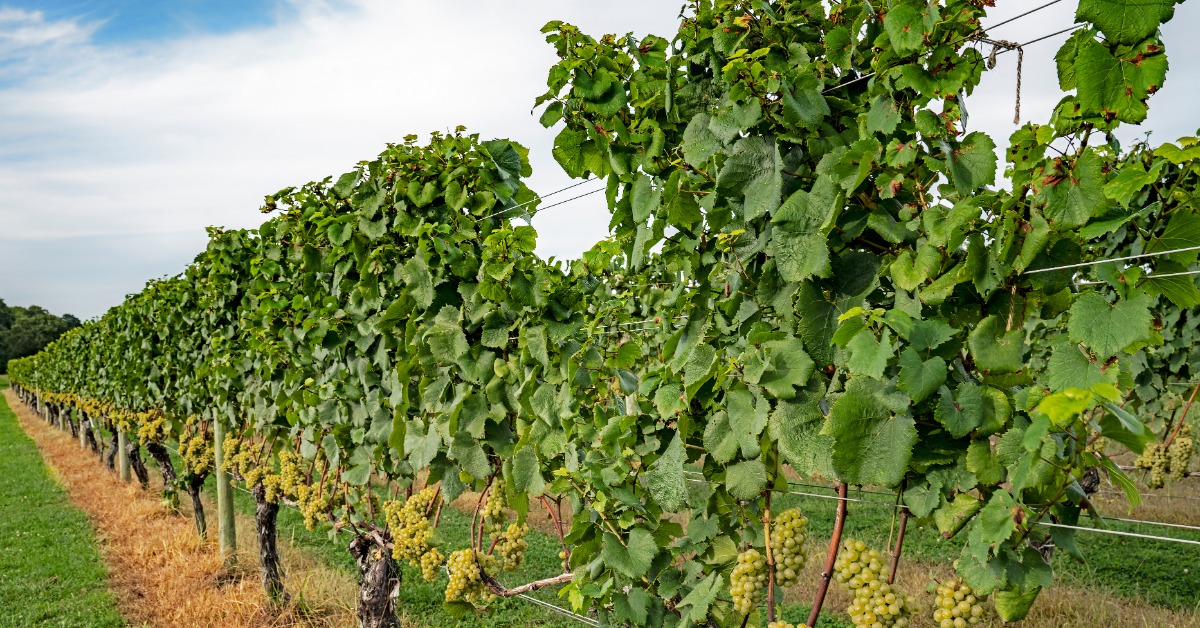
Grapevines bring a wonderful combination of beauty and productivity to a backyard garden. Their broad leaves create lush green displays, and their clusters of fruit offer a delicious reward after months of care. With a sturdy trellis and a little patience, you can guide these vigorous vines into an attractive, manageable feature. Learning how to train grapevines on a garden trellis helps you establish a healthy structure that supports future harvests. Explore the available plants and start planning a trellis that gives your vines plenty of room to thrive.
Choose the Right Trellis for Your Grapevines
Before you plant your grapevines, consider the support structure they’ll need as they mature. Grapevines develop substantial woody growth over time, and a lightweight decorative trellis may struggle beneath their weight. A sturdy structure provides reliable support for mature vines, leafy shoots, and heavy fruit clusters.
Wooden posts with galvanized wires offer a practical option for backyard vineyards. A single-wire trellis can support a straightforward cordon system, and multiple wires provide additional space for vine shoots. For homeowners who prefer a decorative approach, a reinforced garden arbor can create an attractive entrance or shaded walkway.
Select a Suitable Location for Your Trellis
Grapevines love sunshine, so choose a location that receives direct sunlight daily for at least three to six hours. Adequate sunlight supports fruit development and healthy foliage. Avoid sites beneath large shade trees or beside structures that block afternoon sun.
Soil conditions deserve attention before you establish your trellis. Grapevines prefer well-drained soil, and their roots can suffer in areas where water collects after rainfall. If your garden has dense clay soil, consider soil improvements or a different location with better drainage.
Leave enough room around the trellis for pruning, harvesting, and routine maintenance. Good air circulation also helps foliage dry after rainfall and reduces conditions favorable to fungal diseases. A little extra space now can save considerable frustration as the vines mature.
Plant Your Grapevines Near the Support Structure
Once your trellis is ready, position each grapevine close enough to reach its support without crowding the base. Space plants according to the mature size and growth habits of your chosen variety. Different grape types have distinct vigor, so spacing recommendations can vary.
Dig a hole wide enough to accommodate the roots without excessive crowding. Set the vine at the appropriate nursery depth, keep any graft union above the soil, and backfill with loose soil. Settle the soil around the roots by watering after planting.
Add a layer of organic mulch to conserve moisture and moderate soil temperatures. Leave a small gap between the mulch and the trunk to discourage excess moisture against the bark. During the first season, provide consistent water as the roots establish themselves.

Train a Strong Main Trunk During the First Year
The first year establishes the foundation for your grapevine’s future shape. Rather than allow several stems to compete for space, select one healthy, vigorous shoot to become the main trunk. Remove competing shoots as needed so the chosen stem can develop strength.
Place a bamboo stake or similar support beside the young vine and secure the shoot with soft garden ties. Attach the stem loosely enough to accommodate growth without damage to its delicate bark. As the shoot extends upward, add ties at suitable intervals to maintain a straight trunk.
Don’t rush to develop a large canopy during this initial stage. A young vine benefits from healthy roots and a sturdy trunk before it supports substantial fruit production. If growth remains weak, allow another season for establishment rather than force the vine into its final shape.
Guide the Vine Along the Trellis Wires
Once the main trunk reaches the desired wire height, you can begin to establish the vine’s permanent framework. A common backyard approach uses two horizontal arms, called cordons, that extend in opposite directions along the support wire. These arms eventually support the annual shoots that produce fruit.
Select suitable shoots near the top of the trunk and guide them gently along the wire. Secure each shoot with flexible ties, but avoid sharp bends that could crack tender stems. Gradual adjustments are preferable to forceful repositioning.
For example, a grapevine on a six-foot-wide trellis section might develop one cordon toward each side. As the arms mature, new shoots can extend from designated positions along their length. This arrangement creates an orderly canopy with accessible fruit clusters.
Prune Your Grapevines To Maintain Their Shape
Pruning plays a major role in successful grapevine training. Without regular attention, grapevines can produce dense masses of shoots that crowd the trellis and shade developing fruit. Annual pruning maintains the established framework and encourages productive new growth.
Most established grapevines benefit from dormant-season pruning after leaf drop and before spring growth resumes. Remove dead, damaged, and unwanted wood, then select the shoots or spurs appropriate for your training system. The exact approach depends on the grape variety and its fruit-bearing habits.
For spur-pruned cordons, gardeners retain short sections of one-year-old wood with a limited number of buds. Cane-pruned systems instead retain selected longer canes for the next crop. Match your pruning method to the variety rather than assume every grapevine responds identically.

Manage New Shoots Throughout the Summer
Once spring arrives, fresh shoots emerge from the buds retained during dormant pruning. These shoots grow rapidly under favorable conditions and may extend beyond their allotted space. Regular attention helps maintain an open, organized canopy.
Guide shoots into suitable positions and secure them to additional support wires if your trellis design requires it. Remove unwanted shoots from the trunk and other areas outside the established framework. Avoid excessive leaf removal, since healthy foliage supplies energy for fruit development.
Check the ties throughout the season, particularly after periods of rapid growth. A tie that fit comfortably in spring may become restrictive as the stem thickens. Replace tight ties before they damage the vine.
Create a Productive Garden With Well-Trained Grapevines
A beautiful grapevine trellis develops through thoughtful preparation, patient guidance, and regular seasonal care. From the first trunk to the mature fruit-bearing arms, each stage contributes to a manageable structure. With time, your trellis can become a productive centerpiece that adds character to your outdoor space.
Now that you understand how to train grapevines on a garden trellis, you can approach your next garden project with greater confidence. Browse the vineyard plants for sale at The Nursery at Ty Ty and choose varieties suited to your climate and garden goals. With the right plants and a dependable support structure, you’ll have the foundation for years of homegrown grapes.

Leave a Reply