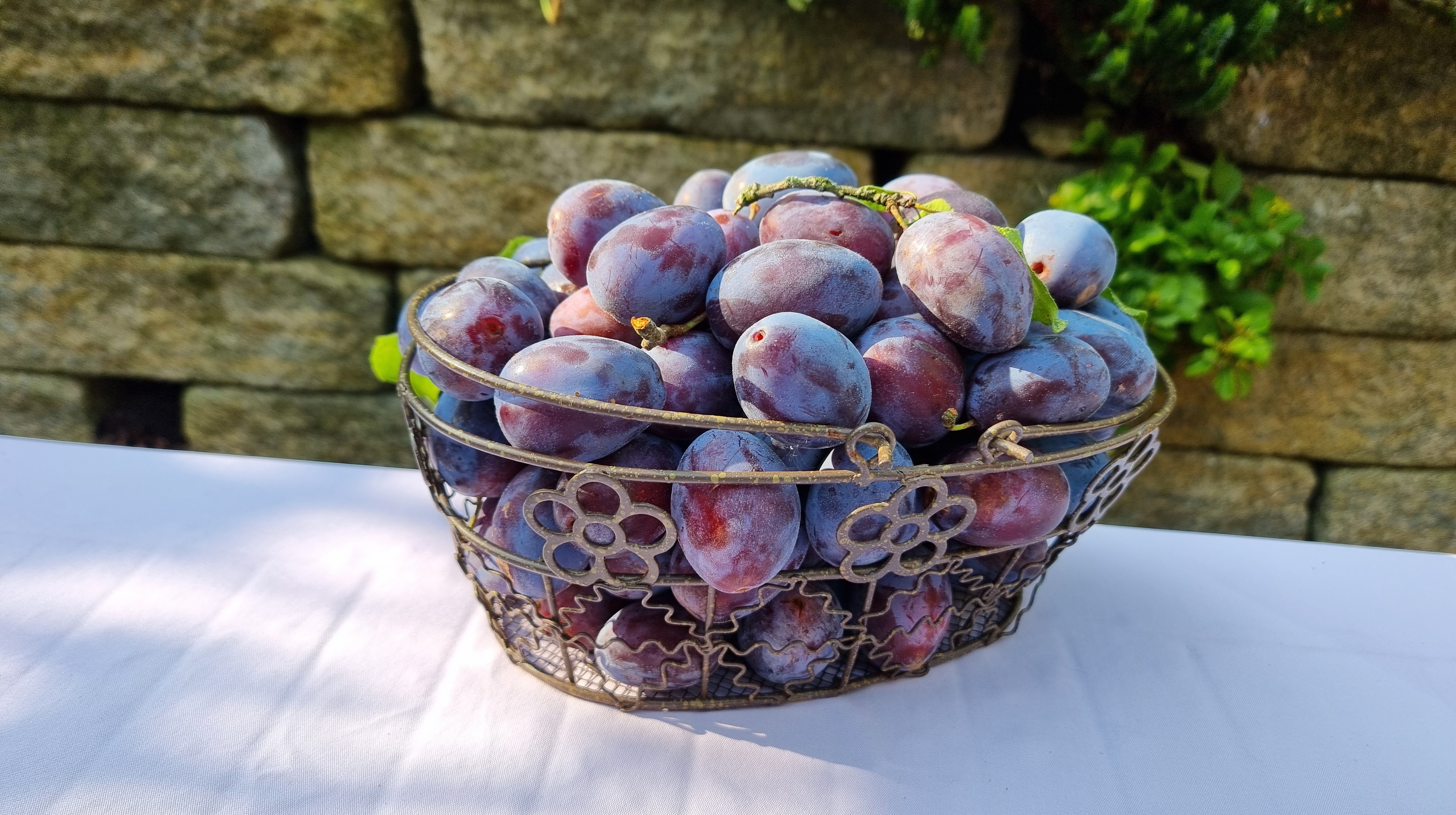
There’s nothing quite like picking a ripe plum straight from the tree, taking that first bite, and tasting the perfect combination of sweetness and just a little tartness. The juice runs down your fingers, the flavor is incredible, and suddenly those grocery store plums don’t seem nearly as exciting.
Growing your own plum trees can be one of the most rewarding experiences in backyard gardening. They’re beautiful when covered in spring blossoms, provide attractive green foliage throughout summer, and can reward you with delicious fruit for fresh eating, homemade jams, preserves, and desserts.
But before you start digging a hole in your backyard, there’s an important question to answer: Can I grow plum trees in my USDA growing zone?
The answer depends on more than how cold your winters get. Your USDA hardiness zone, winter chill hours, spring frost dates, pollination requirements, soil drainage, and variety selection all influence whether a plum tree will simply survive or grow into a productive fruit-bearing tree.
For example, a European plum tree that grows beautifully in Pennsylvania may not receive enough winter chilling to produce dependable crops in southern Georgia. Meanwhile, a Japanese plum variety adapted to the Southeast might bloom too early in a northern garden, leaving its flowers vulnerable to late spring freezes.
Here at Ty Ty Nursery in South Georgia, we’ve been helping gardeners grow fruit trees since 1978. One thing we’ve learned over the years is that choosing the right variety for your location makes a tremendous difference.
In this complete plum tree growing guide, we’ll explain which USDA zones are best for plums, the differences between Japanese and European varieties, how chill hours work, which plum trees need pollinators, and how to plant and care for your trees.
When you’re ready to start your backyard orchard, you can shop plum trees for sale online at Ty Ty Nursery and compare varieties for different growing conditions.
What Is a Plum Tree, and Why Should You Grow One?
Plum trees belong to the genus Prunus, the same plant group that includes peaches, cherries, apricots, and almonds.
They are deciduous fruit trees, meaning they lose their leaves in fall and enter winter dormancy before beginning another growing season.
Most fruiting plum trees produce beautiful white blossoms in early spring, followed by fruit that may ripen anywhere from late spring through early fall, depending on the variety and growing region.
Plums come in an incredible range of colors. Some varieties produce deep purple fruit, while others develop bright red, golden yellow, or nearly black skin.
The flesh can be yellow, amber, orange, red, or deep crimson, and the flavor ranges from sweet and mild to rich and pleasantly tart.
Another advantage is that plum trees can fit into many backyard orchards. Depending on the rootstock, variety, and pruning practices, they can often be maintained at a manageable size for harvesting.
Whether your goal is fresh fruit, homemade jelly, baking, wildlife habitat, or simply having a beautiful flowering fruit tree, there’s a plum variety worth considering.
Japanese vs. European vs. American Plum Trees
Before choosing a plum tree, it’s important to understand the major types. Not all plums have the same growing requirements, and they aren’t always compatible for pollination.
Japanese Plum Trees: Sweet, Juicy Fruit for Fresh Eating
Japanese plums, primarily derived from Prunus salicina and related hybrids, are among the most popular types for backyard growing.
They’re known for juicy fruit, colorful skin, and excellent fresh-eating quality.
Varieties such as Santa Rosa, AU Rosa, AU Producer, Morris, and AU Homeside are associated with the Japanese or Japanese-hybrid plum group.
Many Japanese plums grow well in suitable portions of USDA Zones 5 through 9, although every cultivar has its own climate requirements.
They’re especially popular in the Southeast, where university breeding programs have developed varieties better adapted to regional growing conditions.
European Plum Trees: Excellent for Fresh Eating and Preserves
European plums, primarily Prunus domestica, are often particularly valuable for baking, preserving, and drying.
Many European plums have firmer flesh and higher sugar content than certain Japanese selections.
Stanley and Blue Damson are two familiar European-style plum varieties.
European plums generally require more winter chilling than many Japanese types, making them particularly attractive for cooler growing regions.
Another advantage is that some European plum varieties are self-fertile, meaning a second tree isn’t always necessary for fruit production.
American and Native Plum Trees: Great for Wildlife
Native American plum species offer something different from traditional orchard plums.
Chickasaw plum, Prunus angustifolia, is especially popular for wildlife food plots, naturalized landscapes, and property borders.
These trees produce smaller fruit and often grow into thickets that provide valuable cover for birds and other wildlife.
They can also be useful for homemade jelly and preserves.
Native plums are not interchangeable with European or Japanese plum trees when planning pollination, so choose varieties specifically suited to your goals.
What USDA Zones Can Grow Plum Trees?
Most plum varieties commonly sold for backyard orchards grow within USDA Hardiness Zones 5 through 9, although some cold-hardy selections are adapted to Zone 4 and occasionally colder locations.
Ty Ty Nursery’s plum collection includes varieties listed for Zones 5 through 8 and Zones 5 through 9.
However, growing-zone labels describe winter survival limits, not guaranteed fruit production. Winter chilling and spring frost risks are equally important.
USDA Zone 3: Can Plum Trees Grow in Extremely Cold Climates?
Growing conventional Japanese or European plum varieties in Zone 3 is difficult, but specially selected cold-hardy American plums and hybrid cultivars may offer possibilities.
Gardeners in extremely cold climates should look for selections specifically tested for northern winter conditions.
Winter temperatures, rootstock hardiness, spring frost exposure, and growing-season length all matter.
Don’t assume that a plum tree advertised for Zone 5 will survive reliably in Zone 3.
USDA Zone 4: Look for Cold-Hardy Plum Varieties
Zone 4 offers better opportunities for growing plums, especially European, American, and cold-hardy hybrid selections.
Some European plums can perform well in colder regions where winters provide ample chilling.
Late spring frost remains a concern because plum blossoms are sensitive to freezing temperatures.
Choose varieties specifically recommended for your location and avoid low areas where cold air regularly collects.
USDA Zone 5: A Great Zone for Many Plum Trees
Zone 5 is suitable for a wide range of plum varieties, including certain Japanese and European selections.
Gardeners in portions of Ohio, Pennsylvania, Indiana, Illinois, New York, and neighboring states can grow productive plum trees with appropriate care.
Stanley, Blue Damson, Santa Rosa, and some Auburn-developed varieties are worth investigating, depending on local winter temperatures.
Pay attention to bloom timing. A plum tree may survive winter beautifully but lose its flowers during an unexpected spring freeze.
USDA Zone 6: Excellent Growing Conditions for Plums
Zone 6 offers a favorable combination of winter chilling and warm summer weather for many plum varieties.
Gardeners can consider Japanese, European, and hybrid plums depending on the specific location.
Santa Rosa, Morris, AU Rosa, AU Producer, Stanley, and Blue Damson are among the varieties worth comparing.
The biggest consideration is selecting trees with suitable chilling requirements and compatible bloom periods.
With good soil drainage, full sunlight, and proper pruning, a backyard plum tree can become a beautiful and productive addition to the landscape.
USDA Zone 7: One of the Best Plum Growing Zones
Zone 7 provides excellent opportunities for many plum tree varieties.
Portions of Virginia, North Carolina, Tennessee, Arkansas, Oklahoma, and Georgia offer suitable growing conditions for Japanese and some European plums.
AU Rosa, AU Producer, AU Homeside, Morris, Santa Rosa, and other appropriately adapted varieties may be considered.
In humid climates, disease resistance becomes especially important. Plum trees can experience bacterial spot, brown rot, black knot, and other problems if conditions favor disease.
Choose a healthy planting site, keep the canopy open, and follow local recommendations for disease management.
USDA Zone 8: Growing Plum Trees in the Deep South
Here in South Georgia, we know that Zone 8 can be a good place to grow plums when you choose the right variety.
Japanese and southeastern hybrid plum varieties are often better adapted to our growing conditions than traditional high-chill European types.
AU Producer, AU Rosa, Morris, and other regionally adapted selections are worth investigating.
However, summer heat and humidity can increase disease pressure, and winter chilling varies considerably between northern and southern portions of Zone 8.
Don’t purchase a plum variety based solely on its advertised USDA zone. Check its chilling requirement and disease performance as well.
USDA Zone 9: Can Plum Trees Grow in Warm Climates?
Yes, certain plum varieties can grow in portions of Zone 9, but winter chilling becomes a major consideration.
Traditional European plums often require more cold weather than mild-winter locations provide.
Some Japanese hybrids and Florida-adapted plum selections have lower chilling requirements and are better suited to warm regions.
For example, University of Florida research describes certain adapted plums with chilling requirements near 400 to 500 units.
However, that doesn’t mean every variety advertised for Zone 9 will fruit successfully throughout the zone.
Always compare local chill-hour records with the specific variety’s requirements.
USDA Zone 10: Can You Grow Plums in Very Warm Locations?
Growing conventional plum varieties in Zone 10 is challenging because many locations don’t accumulate enough winter chilling for dependable flowering and fruiting.
Some specialized low-chill selections may be grown in particularly suitable microclimates, but traditional Japanese and European plums should not be assumed suitable.
For most Zone 10 gardeners, local Cooperative Extension guidance and actual winter chilling records are essential before planting.
How Many Chill Hours Do Plum Trees Need?
Chill hours are one of the most important factors in selecting the right plum tree.
Plum trees enter dormancy during winter and require a certain amount of cool weather before resuming normal growth and flowering in spring.
A common chilling model counts hours when temperatures are approximately 32 to 45 degrees Fahrenheit. Other models use different calculations, so published numbers may vary.
According to University of Georgia Extension, European plums commonly require approximately 700 to 1,100 chill hours, while Japanese plums generally require approximately 500 to 900 chill hours.
Some plum selections bred for mild-winter regions may have lower requirements.
Low-Chill Plum Trees for Southern Climates
Low-chill plum varieties can be valuable in warmer southern locations where winter temperatures don’t remain cool for extended periods.
Some Florida-adapted selections are reported to need approximately 400 to 500 chilling units.
These trees can offer opportunities for fruit production in regions where high-chill varieties might fail to bloom normally.
However, low chill doesn’t automatically mean a tree is suitable for every warm climate. Spring bloom timing, disease resistance, and summer growing conditions remain important.
Moderate-Chill Japanese Plum Trees
Many popular Japanese plum varieties fall within the broader 500 to 900 chill-hour range.
Santa Rosa, for example, is commonly reported to require around 650 chill hours.
For gardeners in the South or transitional growing regions, selecting the right chilling requirement can make the difference between an attractive flowering tree and a dependable fruit harvest.
High-Chill European Plum Trees
European plums generally perform best where winter temperatures provide sufficient chilling.
Stanley is commonly listed at approximately 800 chill hours and is a good example of a European plum suited to climates with dependable winter cold.
High-chill varieties can struggle in very mild winters, even if they survive the lowest temperatures of the season.
Approximate Plum Tree Chill-Hour Comparison
| Plum Type or Variety | Typical Chill Requirement | Important Consideration |
|---|---|---|
| Selected Florida-adapted plums | Approximately 400–500 units | Variety-specific lower-chill options |
| Santa Rosa | Approximately 650 hours | Japanese plum; regional disease performance matters |
| Japanese plum varieties generally | Approximately 500–900 hours | Check each named cultivar individually |
| Stanley | Approximately 800 hours | Self-fertile European plum |
| European plum varieties generally | Approximately 700–1,100 hours | Often adapted to cooler winters |
Chill-hour estimates are general growing guidelines, not guarantees. Chilling units and chill hours are not necessarily interchangeable between calculation models. Check cultivar-specific and regional recommendations before purchasing.
What Happens If Plum Trees Don’t Get Enough Chill Hours?
Insufficient winter chilling can cause delayed leaf emergence, irregular flowering, weak fruit set, and disappointing harvests.
On the other hand, a very low-chill variety planted in a colder region may bloom too early, exposing flowers to damaging late-season freezes.
The goal is to select a plum tree that matches your area’s normal winter temperatures and spring conditions.
Check historical winter chill records from a nearby agricultural weather station or Cooperative Extension office before buying.
Then compare plum tree varieties available at Ty Ty Nursery to find suitable options.
What Are the Best Plum Tree Varieties to Grow?
There’s no single best plum tree for every backyard. Some varieties are known for exceptionally sweet fruit, others for reliable production, and still others for their usefulness in homemade preserves or wildlife habitat.
Here are several varieties available through Ty Ty Nursery that gardeners should consider.
1. Santa Rosa Plum Tree
Santa Rosa is one of the best-known Japanese plum varieties in America.
Its attractive reddish-purple fruit has juicy flesh with a rich, sweet-tart flavor.
Santa Rosa plums are wonderful for fresh eating, baking, and homemade preserves.
The variety is sometimes described as partially self-fruitful, but planting a compatible Japanese plum with overlapping bloom can improve production reliability.
Santa Rosa has a relatively high chilling requirement for a warm-climate plum and can be susceptible to diseases in humid southern regions.
Ty Ty Nursery lists Santa Rosa for USDA Zones 5 through 9. Always consider local conditions before planting.
2. AU Rosa Plum Tree
AU Rosa is an Auburn University-developed Japanese-type plum selection that produces attractive red fruit with light-colored flesh.
Its appealing fruit can be enjoyed fresh or used in home cooking.
University of Georgia cultivar information identifies AU Rosa as requiring cross-pollination, so gardeners should plan on including a compatible second Japanese-type variety.
Ty Ty Nursery lists AU Rosa for USDA Zones 5 through 8.
3. AU Producer Plum Tree
If your goal is growing plenty of fruit, AU Producer deserves consideration.
This Auburn University selection is known for producing firm, attractive, dark red plums.
It can set heavy crops, and proper fruit thinning may be necessary to improve fruit size and prevent branches from becoming overloaded.
AU Producer requires a compatible pollinator with overlapping bloom.
Ty Ty Nursery lists AU Producer for USDA Zones 5 through 9.
4. AU Homeside Plum Tree
AU Homeside is another Auburn-developed plum known for large fruit.
Its light red skin and amber-colored flesh make it attractive for fresh eating and backyard harvesting.
Like many Japanese plum selections, AU Homeside needs a compatible pollinator.
However, University of Georgia data also identifies some tree-health concerns with Homeside in humid southeastern environments. Gardeners should take regional disease performance seriously when choosing this variety.
Ty Ty Nursery lists AU Homeside for USDA Zones 5 through 9.
5. Morris Plum Tree
Morris is a Japanese-type plum developed through Texas breeding work and is known for attractive dark red fruit.
It can be productive in suitable growing conditions and is particularly interesting for gardeners seeking plum varieties adapted to portions of the southern United States.
University of Georgia recommendations indicate that Morris requires cross-pollination.
For dependable production, choose a compatible Japanese-type plum that blooms at approximately the same time.
Ty Ty Nursery lists Morris for USDA Zones 5 through 9.
6. Stanley Plum Tree
Stanley is a traditional European plum that’s especially appealing to gardeners who enjoy baking, drying, and preserving fruit.
Its deep purple plums have sweet flesh and are excellent for homemade jam, baked desserts, and prune-style uses.
One advantage of Stanley is that it’s generally self-fertile, meaning a single tree can produce fruit without requiring another plum variety.
Stanley has an estimated chilling requirement around 800 hours, making it particularly suitable for climates with sufficiently cold winters.
Ty Ty Nursery lists Stanley for USDA Zones 5 through 9, but fruiting in the warmest portions of that range may be limited by inadequate chilling.
7. Blue Damson Plum Tree
Blue Damson is another European-style plum particularly well suited to cooking and preserving.
Its smaller, dark blue-purple fruit has a pleasantly tart flavor that makes excellent jams, jellies, sauces, and baked goods.
Damson plums are generally self-fertile, making them attractive to gardeners who have room for only one tree.
They are particularly useful in climates that provide adequate winter chilling.
8. Crimson Red Plum Tree
Crimson Red is a plum worth investigating if you enjoy richly colored fruit.
Red-fleshed plums can be especially attractive when sliced and used in fresh desserts or homemade preserves.
Because similarly named selections may have different regional growing characteristics, verify the cultivar’s chilling requirement, pollination needs, and mature size before choosing a planting location.
Ty Ty Nursery lists Crimson Red for USDA Zones 5 through 9.
9. Golden Nectar and Yellow Gold Plum Trees
Not every plum has dark red or purple skin.
Golden Nectar and Yellow Gold are appealing options for gardeners interested in growing yellow or golden-colored plums.
Yellow plums can offer a wonderfully sweet flavor and make colorful additions to fresh fruit bowls, preserves, and baked desserts.
When choosing either variety, confirm its pollination compatibility and winter chilling needs rather than assuming that all yellow plums have the same requirements.
10. June Yellow Plum Tree
June Yellow is another interesting choice for gardeners who appreciate golden-colored fruit.
Yellow plums can provide a beautiful contrast to red and purple varieties in a home orchard.
If you’re planning multiple plum trees, consider choosing varieties with different harvest periods so you can enjoy fresh fruit over a longer season.
Always confirm the variety’s bloom time and compatible pollinator before purchasing.
11. Wildlife Chickasaw Plum Tree
Chickasaw plum is one of our favorite choices for gardeners interested in wildlife habitat and native landscape plantings.
Unlike many traditional orchard plums, Chickasaw plum naturally develops suckers and can form dense thickets.
These thickets provide valuable nesting cover for birds and shelter for other wildlife, while the small summer fruit can attract deer and numerous other animals.
Chickasaw plums can also be harvested for jelly and preserves.
Ty Ty Nursery lists Wildlife Chickasaw Plum for USDA Zones 5 through 9.
Explore our complete selection of Japanese, European, and wildlife plum trees online.
Do You Need Two Plum Trees to Produce Fruit?
Here’s something every first-time plum grower should know: many plum trees need another compatible variety to produce reliable crops.
This is one of the biggest differences between growing peaches and growing plums.
While most peach varieties are self-fertile, many Japanese and hybrid plum trees require cross-pollination.
That means pollen must move from the flowers of one compatible variety to another.
Japanese Plum Pollination
Most Japanese plums need a second compatible Japanese or Japanese-hybrid plum variety with overlapping flowering periods.
AU Producer, AU Rosa, AU Homeside, and Morris should be planned as cross-pollinated trees.
For example, AU Producer and AU Rosa have similar flowering periods in southeastern cultivar trials, making them worth investigating as a pairing when local conditions support bloom overlap and pollen compatibility.
Santa Rosa is sometimes described as partially self-fruitful, but it generally benefits from a compatible pollination partner.
European Plum Pollination
Some European plums are self-fertile, including Stanley and many Damson selections.
That means a single tree may produce fruit without a second variety.
However, other European plums benefit from or require cross-pollination.
European and Japanese plum varieties generally should not be relied upon to pollinate each other.
How Close Should Plum Trees Be for Pollination?
Plant compatible plum varieties relatively close together to encourage pollinating insects to move pollen between flowers.
For a backyard orchard, keeping compatible trees within approximately 50 feet of each other is a practical starting point.
Bees and other insects are important pollinators, so avoid insecticide applications during flowering that could harm beneficial pollinators.
The most important point is choosing genetically different, compatible varieties that bloom at the same time.
Where Is the Best Place to Plant a Plum Tree?
Full Sun Is Essential
Plum trees grow best with abundant direct sunlight, preferably at least six to eight hours daily.
More sunlight generally means better fruit color, stronger growth, and improved flowering.
Too much shade can reduce fruit production and contribute to humid conditions within the canopy.
Best Soil for Plum Trees
Plum trees prefer fertile, well-drained soil with a pH near 6.0 to 6.5.
Avoid low areas that remain waterlogged after heavy rainfall.
Heavy, poorly drained soil can damage roots and increase the risk of root-related problems.
Before planting, a soil test can help determine whether lime or nutrient adjustments are needed.
Avoid Spring Frost Pockets
Plum trees often bloom early in spring, which makes their flowers vulnerable to late freezes.
Cold air tends to collect in low areas, so planting on a suitable gentle slope can be beneficial.
A tree may survive winter without injury yet lose an entire fruit crop if a freeze damages its blossoms.
How Far Apart Should Plum Trees Be Planted?
Traditional plum trees commonly need approximately 18 to 22 feet of spacing, depending on rootstock, cultivar, and management.
Smaller trees on suitable rootstocks may require less space.
Allow room for sunlight, airflow, pruning, harvesting, and equipment access.
When Is the Best Time to Plant Plum Trees?
The best planting time depends on your region and the type of tree you’re planting.
In colder northern states, early spring planting is often recommended after the soil thaws and becomes workable.
In milder southern locations, dormant-season planting during winter or early spring can work well.
University of Georgia Extension recommends planting dormant plums around February or early March under typical Georgia conditions.
At Ty Ty Nursery, we schedule seasonal shipments with regional growing conditions in mind, helping gardeners receive their trees during appropriate planting windows.
How to Plant Plum Trees: Step-by-Step Instructions
Step 1: Choose the Right Variety
Start by confirming your USDA growing zone, typical winter chill hours, and pollination requirements.
Don’t choose a plum tree based solely on fruit color or appearance.
Step 2: Prepare the Planting Area
Remove grass and weeds from the area where your new tree will grow.
Dig a hole approximately twice as wide as the root system or root ball but only as deep as needed for proper planting depth.
Keep the graft union above the finished soil line.
Step 3: Handle Bare-Root Plum Trees Carefully
If your tree arrives dormant and bare-root, keep the roots cool and moist until planting.
Never leave exposed roots drying out in direct sunlight or strong winds.
Spread the roots naturally in the planting hole without sharply bending or circling them.
Step 4: Backfill With Native Soil
Refill the hole using the soil removed during digging.
Gently settle the soil around the roots to eliminate large air pockets while avoiding excessive compaction.
Don’t place concentrated fertilizer directly against newly planted roots.
Step 5: Water Thoroughly
After planting, water deeply to settle the soil and provide moisture around the root system.
Continue monitoring moisture during the establishment period, especially during hot or dry weather.
Step 6: Apply Organic Mulch
Spread approximately 2 to 3 inches of organic mulch around the root area.
Mulch helps conserve soil moisture and reduces competition from grass and weeds.
Keep it several inches away from the trunk.
Step 7: Begin Training the Tree
Many Japanese plum trees are trained to an open-center or vase-shaped structure.
Initial pruning depends on the tree’s size, branching, and rootstock. Follow appropriate variety-specific pruning recommendations when establishing the framework.
Protect young trees from deer, rabbits, and lawn equipment.
For more options, visit our online plum tree nursery.
How Much Water Do Plum Trees Need?
Newly planted plum trees need consistent moisture while their roots become established.
During dry periods, water deeply enough to reach the root zone, then allow excess moisture to drain.
Sandy soils may require more frequent watering than clay soils.
Established plum trees still benefit from adequate moisture during flowering, fruit development, and hot summer weather.
Never assume a fixed watering schedule will work for every location. Soil texture, rainfall, temperature, and tree size all affect irrigation needs.
When Should You Fertilize Plum Trees?
Plum trees benefit from balanced nutrition, but more fertilizer doesn’t automatically mean more fruit.
Newly planted trees should first begin establishing their roots before receiving granular fertilizer.
University of Georgia Extension advises against fertilizing immediately at planting or placing fertilizer directly in the planting hole.
Once the tree begins growing, use soil-test recommendations and regional guidance to determine appropriate fertilizer applications.
Avoid excessive nitrogen, which can encourage vigorous leafy growth and increase disease concerns.
How to Prune Plum Trees for Healthy Growth and Bigger Harvests
Pruning is one of the most important parts of maintaining a productive plum tree.
Japanese plum trees are commonly trained into an open-center structure that allows sunlight to penetrate the canopy.
The goal is to develop several strong scaffold branches with good spacing and an open center.
Why Open-Center Pruning Works
An open-center structure improves airflow, sunlight penetration, spray coverage, and harvesting access.
It also helps reduce the dense, shaded areas where disease problems can develop.
When Should You Prune Plum Trees?
Pruning time depends on climate and disease pressure.
Many gardeners perform structural pruning during late winter or early spring, while summer pruning may be used for training young trees.
In regions where bacterial canker is a concern, follow local Cooperative Extension recommendations about the safest pruning time.
Remove dead, damaged, crossing, and poorly positioned branches while maintaining enough healthy fruiting wood for future crops.
Why You Should Thin Plum Fruit
Sometimes a healthy plum tree sets more fruit than it can support.
Although a tree covered in tiny plums looks exciting, leaving every fruit in place may result in small fruit and overloaded branches.
When developing plums are still small, remove excess fruit so the remaining plums have room to mature.
A practical starting point for many larger-fruited varieties is spacing fruit several inches apart along branches, adjusted for cultivar and crop load.
Proper thinning can improve fruit size and reduce branch breakage.
Common Plum Tree Diseases and Pests
Brown Rot
Brown rot is an important fungal disease affecting plum blossoms and ripening fruit.
Infected fruit may develop soft brown areas and fungal growth.
Good sanitation, removing infected fruit, maintaining an open canopy, and following regional treatment recommendations can help reduce losses.
Black Knot
Black knot is a fungal disease that produces dark, swollen growths on branches and twigs.
It can weaken trees and eventually kill affected branches.
Prune infected wood well below visible symptoms according to local recommendations and remove affected material from the orchard.
Bacterial Spot and Bacterial Canker
These diseases can be particularly troublesome in humid climates.
Leaf spotting, defoliation, twig damage, and cankers may develop under favorable disease conditions.
Variety selection, proper pruning, suitable rootstocks, and avoiding unnecessary tree stress are important management tools.
Plum Curculio
Plum curculio is a serious insect pest that can scar developing fruit and cause internal damage.
Monitor developing plums for characteristic crescent-shaped egg-laying scars.
Follow your local Cooperative Extension recommendations for approved control methods and proper treatment timing.
Aphids and Other Leaf-Feeding Insects
Aphids can cause curled leaves and weakened new growth. Other insects may damage foliage or fruit.
Healthy trees, natural predators, routine inspection, and targeted treatments when necessary can help keep problems manageable.
Always follow product labels when using pest-control products.
How Long Does It Take Plum Trees to Produce Fruit?
Plum trees can begin producing fruit relatively young compared with some other fruit trees.
Grafted plum trees may begin bearing within approximately three to five years after planting, although the exact timing depends on variety, tree age, rootstock, pollination, and growing conditions.
Some trees may flower earlier without supporting a substantial harvest.
Don’t be discouraged if your newly planted plum tree doesn’t produce immediately. Establishing a healthy root system and strong branch structure comes first.
When Are Plums Ready to Harvest?
Plum harvest season varies according to cultivar and growing location.
Some early varieties ripen in late spring or early summer, while later selections may continue producing into late summer or early fall.
As plums ripen, they develop their characteristic skin color, become slightly softer, and often develop a stronger fruity fragrance.
Don’t rely on color alone because some varieties develop attractive coloring before the fruit reaches its best flavor.
Sample a few plums as harvest approaches to determine the ideal picking stage.
Fresh plums are delicious right off the tree, but they’re equally wonderful for homemade jam, jelly, cobblers, pies, sauces, and preserves.
Frequently Asked Questions About Growing Plum Trees
Can I grow a plum tree in my backyard?
Yes, provided your climate is suitable and you have adequate sunlight, well-drained soil, and an appropriately adapted variety.
Do plum trees need full sun?
Yes. Plum trees generally produce their best crops with at least six to eight hours of direct sunlight per day.
Can one plum tree produce fruit?
Some varieties, including Stanley and many Damson plums, are self-fertile. However, many Japanese and hybrid plum trees need another compatible variety for dependable fruit production.
Which plum trees are best for southern states?
Regionally adapted Japanese and hybrid plums such as AU Producer, AU Rosa, Morris, and other southeastern selections are worth considering. Local disease pressure and chilling requirements should guide your final choice.
Can plum trees grow in containers?
Smaller plum trees on suitable dwarfing rootstocks can be grown in large containers, but they require careful watering, fertilization, drainage, pruning, and winter root protection.
What is the best time to plant plum trees?
Dormant-season planting is generally preferred. Winter or early spring may be suitable in mild climates, while early spring is commonly preferred in colder regions.
Where can I buy plum trees online?
You can buy plum trees online at Ty Ty Nursery, including available Japanese, European, and wildlife varieties for different growing goals.
Where Is the Best Place to Buy Plum Trees Online?
Now that you understand USDA growing zones, chill hours, pollination requirements, and planting techniques, the next step is choosing a nursery that makes it easy to get started.
At Ty Ty Nursery, we understand how exciting it is to plan a backyard orchard. Whether you’re planting your first Santa Rosa plum or adding a Stanley or AU Producer to your collection, we want the ordering process to be convenient and affordable.
Here’s why we believe Ty Ty Nursery is an excellent place to buy plum trees online.
1. Prices Up to 68% Lower Than Other Nurseries
Growing your own fruit shouldn’t require an enormous investment.
At Ty Ty Nursery, we advertise savings of up to 68% compared with other nursery prices on qualifying plants. Actual savings vary by plant variety, size, and available promotions.
Our competitive pricing can make it easier for gardeners to purchase two compatible plum trees for cross-pollination rather than buying only one.
2. Fast In-Season Shipping: Plant in Days the Ty Ty Way
When planting season arrives, nobody wants to spend unnecessary weeks waiting for a tree that’s ready to ship.
Our fast in-season shipping process is designed to move eligible orders promptly during appropriate regional planting windows.
Once an order ships, delivery can take just days rather than the long fulfillment periods sometimes associated with seasonal plant preorders.
Because we work with living plants, shipping dates still depend on weather, dormancy, harvest readiness, and growing conditions at the destination.
That’s the idea behind our favorite saying: Plant in Days the Ty Ty Way!
3. FREE One-Year Plantsurance Guarantee
We understand that buying fruit trees is an investment in your property and your future harvests.
That’s why qualifying plant purchases from Ty Ty Nursery include our free one-year Plantsurance protection.
Some companies charge additional fees for plant protection, but our qualifying guarantee is included without an additional warranty charge.
Under the Plantsurance terms, an approved claim provides a one-time store credit for the amount paid for the qualifying plant after discounts. Shipping charges and taxes are excluded. Purchases made using previous Plantsurance credit are not eligible for additional Plantsurance coverage.
4. FREE Lifetime True-to-Name Guarantee
Imagine caring for what you believed was a Stanley plum tree, only to discover years later that the fruit doesn’t match the variety you purchased.
That’s why we offer our Lifetime True-to-Name Guarantee.
When you purchase a named fruit tree, accurate variety identification is important.
If a qualifying tree eventually produces fruit inconsistent with the variety ordered, our team can review the necessary photographic evidence and provide a resolution under the guarantee terms.
It’s another reason we want customers to feel confident about their fruit tree purchases.
5. Convenient Delivery Directly to Your Door
Forget trying to squeeze a tall fruit tree into the back of your vehicle or hauling heavy nursery pots through a parking lot.
Ty Ty Nursery ships plants directly to your door, making it easy to order fruit trees from home.
Depending on the season and plant type, plum trees may arrive dormant or bare-root, packaged for transportation.
That means less lifting, less mess, and more time preparing your planting location.
6. Serving Gardeners Since 1978
Ty Ty Nursery has roots dating back to 1978 here in South Georgia.
Over the decades, we’ve helped homeowners, gardeners, orchard enthusiasts, and property owners discover fruit trees, berry plants, grape vines, nut trees, and landscape plants for their growing needs.
Experience matters when customers need help selecting the right varieties, understanding seasonal dormancy, and caring for trees during establishment.
7. Google Top Quality Store With a 4.5 Rating
Ty Ty Nursery has earned Google’s Top Quality Store designation and currently holds a 4.5 store rating.
Customers can review independent shopping feedback to learn more about our business before placing an order.
View Ty Ty Nursery’s Google Store rating and customer reviews.
8. A Rating With the Better Business Bureau
Ty Ty Plant Nursery currently holds an A rating with the Better Business Bureau.
We encourage customers to research the companies they purchase from and review publicly available business information.
View Ty Ty Plant Nursery’s Better Business Bureau profile.
9. Real Plant Experts Located in Ty Ty, Georgia
Maybe you’re wondering whether AU Producer and AU Rosa will pollinate each other. Perhaps you live in Zone 8 and need help choosing a plum variety, or maybe you’ve received a dormant tree and have questions about planting.
Those are exactly the kinds of questions our team can help answer.
Our customer support staff is based in Ty Ty, Georgia, with real people available to discuss plant selection, planting conditions, seasonal care, and establishment concerns.
We don’t outsource our customer service overseas or rely on an AI-only customer support system in place of knowledgeable personal assistance.
When you’re growing a living fruit tree, we believe personal service and practical growing knowledge make a difference.
Ready to Grow Your Own Plum Trees?
From the first beautiful blossoms of spring to the sweet fruit of summer, plum trees can bring something special to a backyard orchard.
Whether you love the rich flavor of Santa Rosa, the productive nature of AU Producer, the traditional preserving qualities of Stanley, or the wildlife benefits of Chickasaw plum, there’s a variety worth exploring.
The key to success is matching the right plum tree to your USDA growing zone, winter chill hours, pollination needs, and local growing conditions.
Choose a sunny planting location, provide well-drained soil, water consistently during establishment, and maintain a healthy tree through appropriate pruning and fruit thinning.
With the right care, your plum trees can become a rewarding part of your home landscape for years.
At Ty Ty Nursery, we’re proud to offer competitive prices, fast in-season shipping, free one-year Plantsurance protection, a Lifetime True-to-Name Guarantee, and convenient delivery directly to your door.
Whether you’re planting one plum tree or planning a backyard orchard with several varieties, we’re here to help you get started.
SHOP PLUM TREES FOR SALE ONLINE AT TY TY NURSERY
Ty Ty Nursery — Plant in Days the Ty Ty Way!

Leave a Reply