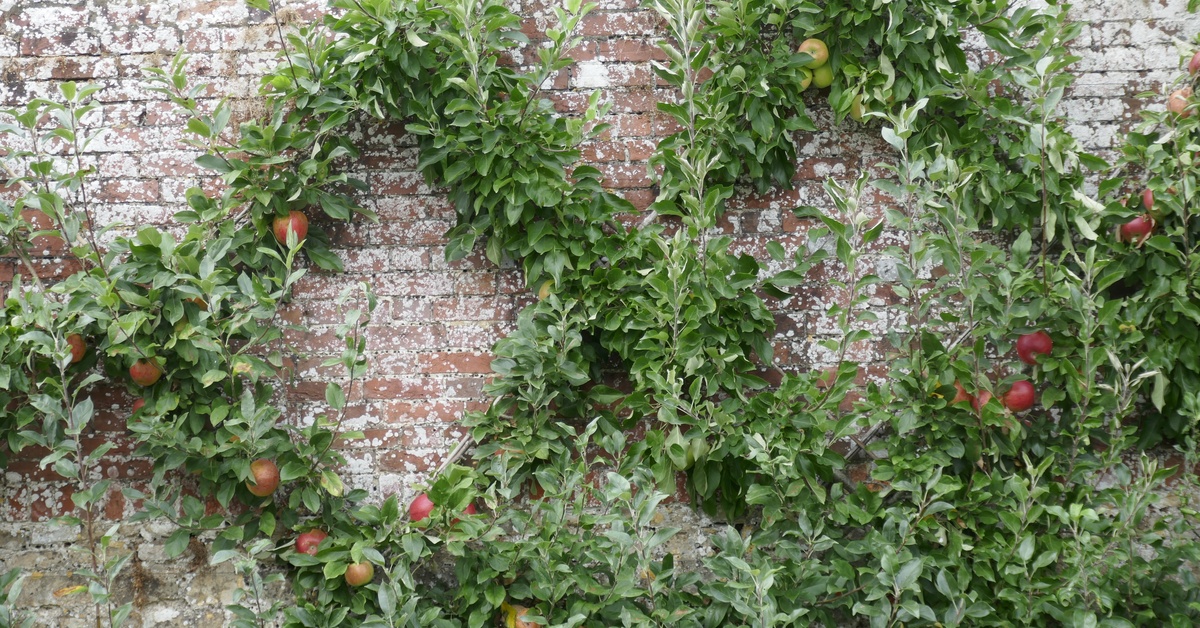
Have you ever gazed at those gorgeous, flat apple trees growing against walls in fancy gardens and wondered how they got that way? Those aren’t some magical variety of apple tree—they’re regular trees that have been carefully trained using an ancient technique called espalier.
Espalier is the art of training fruit trees to grow flat against a wall, fence, or trellis in decorative patterns.
Tips for training apple trees to grow in espalier style can transform even the smallest backyard into a productive fruit garden. Instead of taking up valuable lawn space, your apple trees can grow vertically, creating living artwork that produces delicious fruit.
Find out how you can use this apple-growing method in your home garden right now.
Set the Stage for Success
Location matters more than you might think.
Your espalier apple tree needs at least six hours of direct sunlight daily to produce good fruit. South-facing walls are ideal because they provide consistent light and protection from harsh winds.
East or west-facing spots work too, but avoid north-facing locations unless you live in a really hot climate.
Soil Drainage and Support Structures
Soil drainage is also one of the most important factors when finding a good planting location. Apple trees hate wet roots, so if your soil holds water after rain, you’ll need to improve drainage or plant in raised beds.
Your support structure needs to be rock-solid.
We’re talking about a tree that’ll be with you for decades, so don’t skimp here. Galvanized wire stretched between sturdy posts works great, or you can use a wooden trellis system.
Space your horizontal wires about 15-18 inches apart. This gives you room to work and creates the classic tiered look that makes espalier so striking.
Master the Art of Apple Architecture
Here’s where the magic happens. Training your apple tree starts from day one, and consistency is your secret weapon.
Pruning for espalier is different from regular tree pruning. You’re not just removing dead wood—you’re sculpting a living sculpture.
Start by selecting your main horizontal branches.
Choose branches that are already growing in roughly the right direction. Fighting against a tree’s natural growth pattern is like swimming upstream—possible, but exhausting.

Tie your chosen branches to the support wires using soft materials like cloth strips or specialized tree ties.
Avoid wire or rope that can cut into the bark as the branches grow.
Remove any branches growing directly toward or away from your support structure. These vertical shoots, called water sprouts, will just create a bushy mess that blocks light and air circulation.
Summer pruning is your friend.
Cut back new growth to about six leaves during the growing season. This encourages the tree to put energy into fruit production instead of making more leaves.
Keep Your Living Artwork Thriving
Maintenance doesn’t stop once your tree takes shape.
Regular care keeps your espalier healthy and productive for years to come. Winter pruning sessions let you fine-tune the shape while the tree is dormant.
Remove any branches that have grown out of bounds and thin crowded areas to improve air circulation.
Better Pest Management
Pest management becomes easier with espalier trees because everything’s right at eye level. You can spot problems early and deal with them before they get out of hand.
Common apple pests like aphids, codling moths, and scale insects are much easier to control when you can reach every part of the tree without a ladder.
Disease prevention starts with good air circulation. Prune to keep the center open so air can move freely through the branches.
This prevents fungal problems that love damp, stagnant conditions.
Fertilize lightly in early spring with a balanced fertilizer. Espalier trees don’t need as much food as full-sized trees, so don’t overdo it.
Watering Tips for Espalier Apple Trees
Proper watering is essential for the health of espalier apple trees.
Because these trees grow against walls or along wires, the soil around them can dry out more quickly, especially during hot weather. Maintain consistent soil moisture by watering deeply once or twice a week rather than giving them frequent light waterings.
Mulching around the base of the tree can help retain moisture and regulate soil temperature. Be sure to avoid overwatering, as standing water can lead to root rot and other problems.
Fertilization
Providing your tree with the right nutrients is essential for healthy growth and fruit production.
Use a balanced fertilizer specifically formulated for fruit trees, following the recommended application rates on the packaging. Apply fertilizer in early spring, just before new growth begins, and again in mid-summer if necessary.
Be cautious not to over-fertilize, as this can lead to excessive foliage production at the expense of fruit development. Testing your soil periodically will also help you determine if any additional nutrients or amendments are needed.

Your Espalier Adventure Awaits
Our tips for training apple trees to grow in espalier style will transform your garden into something special.
You’re not just growing fruit—you’re creating living architecture that changes with the seasons. The patience required might seem daunting at first, but remember that every expert started as a beginner.
Your first attempts might not look like the pictures in gardening magazines, and that’s perfectly fine.
Start small with a single tree and learn as you go. Each season teaches you something new about how your particular tree likes to grow.
A Satisfying Result
The rewards go beyond just the apples. There’s something deeply satisfying about guiding a tree’s growth, working with nature to create something both beautiful and functional.
Your neighbors will definitely notice when your wall starts blooming with apple blossoms each spring. And when harvest time comes around, you’ll have the freshest apples possible growing right outside your door.
Don’t let limited space stop you from growing your own fruit.
With these techniques, even apartment dwellers with balconies can train a small espalier apple tree in a large container. Luckily, thanks to the mature apple trees for sale right now, you can start growing your ideal tree.
Ready to start your espalier journey?
Pick out your tree, gather your supplies, and prepare to create something amazing. You’ll thank yourself when you’re harvesting homegrown apples from your very own living fence.

Leave a Reply