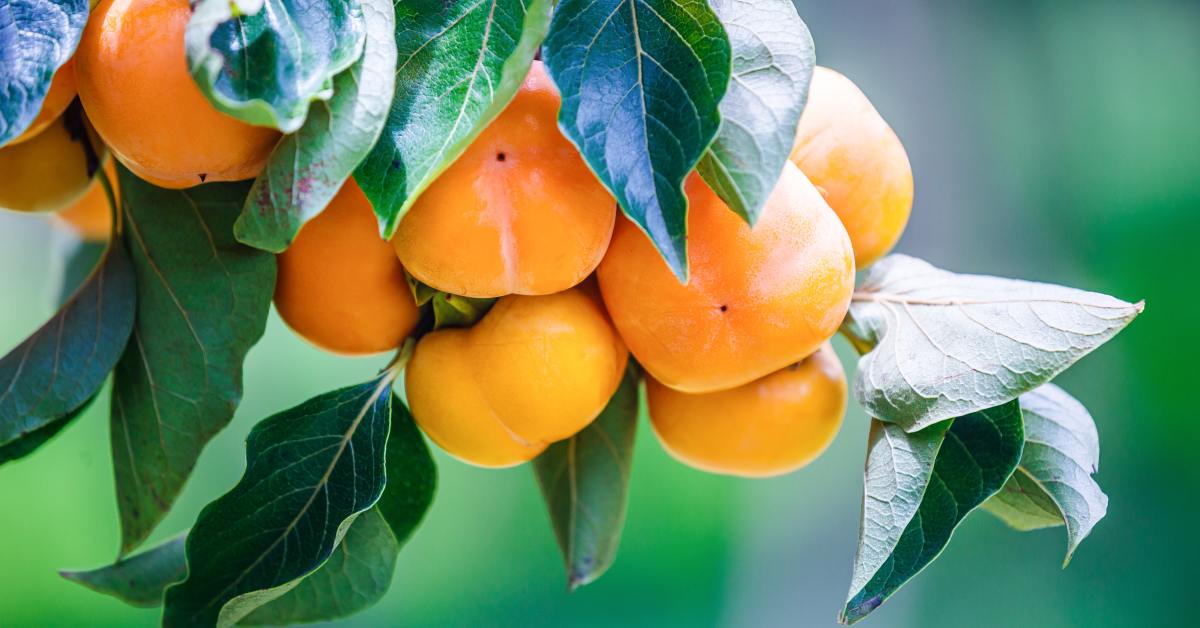
Persimmon trees can be a delightful addition to any garden, offering beautiful foliage and sweet, honey-like fruit in the autumn. You might have planted your tree with visions of bountiful harvests for pies, puddings, or just for fresh eating. But what happens when your tree doesn’t produce fruit, or the fruit it does produce is small and falls off before it ripens? It could be one of several signs your persimmon tree needs pollination help. Let’s explore this topic to get your tree back on track.
#1 Lack of Fruit Growth
One of the most obvious signs of a pollination problem is a complete lack of fruit. Your tree might look healthy and produce plenty of beautiful blossoms in the spring. You watch with anticipation, but those flowers just drop off without ever turning into tiny green persimmons. This is a classic indication that the flowers were never pollinated. The tree has no biological reason to develop fruit if the ovules within the flower were not fertilized.
This situation is especially common with dioecious types like the American persimmon. If you have a lone female tree, it will flower every year in hope. But without a male tree within bee-flying distance, those flowers will fade without purpose. You have a beautiful ornamental tree, but it is not a fruit producer. The solution here is to plant a male persimmon tree.
#2 Premature Fruit Drop
Another clear sign is premature fruit drop, which occurs when your tree successfully sets fruit, and you see small persimmons begin to develop. Your excitement builds, but then, weeks or even a month later, the tiny fruits turn yellow and fall to the ground. The tree seems to abandon its own crop before it has a chance to mature.
This drop often happens because the fruit is not viable. Without proper pollination, the seeds inside the fruit do not develop correctly. The tree’s internal system recognizes that these seedless or poorly seeded fruits are a genetic dead end. To conserve energy for its own survival and future reproductive efforts, the tree cuts its losses and drops the fruit. It’s a natural, but frustrating, process for a gardener.
#3 Small Fruit Development
A tree that produces only small, misshapen fruits can also point to pollination issues. A well-pollinated persimmon flower leads to robust seed development. These developing seeds produce plant hormones that stimulate the growth of the surrounding fruit tissue. More seeds generally mean a larger, more evenly shaped fruit.
If pollination is weak or incomplete, only a few seeds might develop. This results in lower levels of those growth-promoting hormones. The consequence is fruit that never reaches its full potential size. You might get a harvest, but the persimmons are disappointingly small compared to what the variety is widely known for. You might also notice the fruit is lopsided, with one side more developed than the other, which corresponds to where the few seeds reside.

#4 Absence of Seeds
The presence of seeds, or lack thereof, is another clue. For varieties that are not parthenocarpic, a complete absence of seeds in the few fruits that do mature is a definite red flag. It indicates that pollination did not happen. The tree managed to produce some fruit tissue on its own, but it lacked the genetic trigger from fertilization.
For parthenocarpic varieties like ‘Fuyu’, which can produce seedless fruit, this is normal. But even with these types, you can see a difference. When a ‘Fuyu’ is cross-pollinated, it will produce fruit with seeds. These seeded fruits are typically larger and have a richer, more complex flavor than their seedless counterparts. So, if your ‘Fuyu’ persimmons are consistently small and you want to improve your harvest, introducing a pollinator could be the answer.
#5 No Buzz in the Branches
Browse the persimmon trees for saleand you’ll see that many options are self-pollinating. That said, many do require pollinators, and sometimes self-pollinating varieties need a little help, too. Whichever persimmon variety you have growing at home, there is one thing you want to hear: pollinators.
A quiet persimmon tree during bloom time is not a good sign. When the flowers open, the branches should be humming with the activity of bees and other pollinators. If you stand by the tree on a warm, sunny day and notice a distinct lack of insect visitors, you may have a pollinator problem. Factors like bad weather (cold, rain, wind) during bloom or a general decline in local bee populations can lead to a pollination deficit.
#6 Fruit Ripens Unevenly
You might notice that the few fruits your tree produces ripen at a strange, inconsistent pace. Some persimmons on a single branch might color up and soften while others remain green and hard for weeks longer. This can be another subtle indicator of poor pollination. The hormonal signals from well-developed seeds help regulate not just size, but also the entire ripening process, which leads to a more uniform harvest.
#7 You Only Have One American Persimmon Tree
This sign is less about the tree’s behavior and more about your garden’s setup. American persimmons (Diospyros virginiana) are almost always dioecious, which means you need separate male and female trees for fruit production. If you planted only one, and it’s a female, it will flower but never fruit without a male tree nearby to provide pollen. This is a frequent cause of confusion for gardeners new to the species.

#8 Your Neighbor’s Tree Is Loaded, but Yours Is Bare
A bit of friendly neighborhood comparison can be very revealing. If your neighbor down the street has a persimmon tree of the same type that is full of fruit, and yours is barren, it suggests the issue is localized to your tree or its immediate environment. It could mean your tree is a solitary female, while your neighbor has both a male and a female. It could also point to a microclimate issue or a lack of pollinator traffic in your specific yard.
In the end, a little investigation can solve most persimmon pollination puzzles. Pay attention to your tree’s performance year after year. A lack of fruit, premature drop, and small or misshapen fruit are all potential signs your persimmon tree needs pollination help. By understanding your tree’s specific type and observing its flowers, you can take the right steps to ensure you get to enjoy those sweet, delicious persimmons you’ve been waiting for.
Leave a Reply