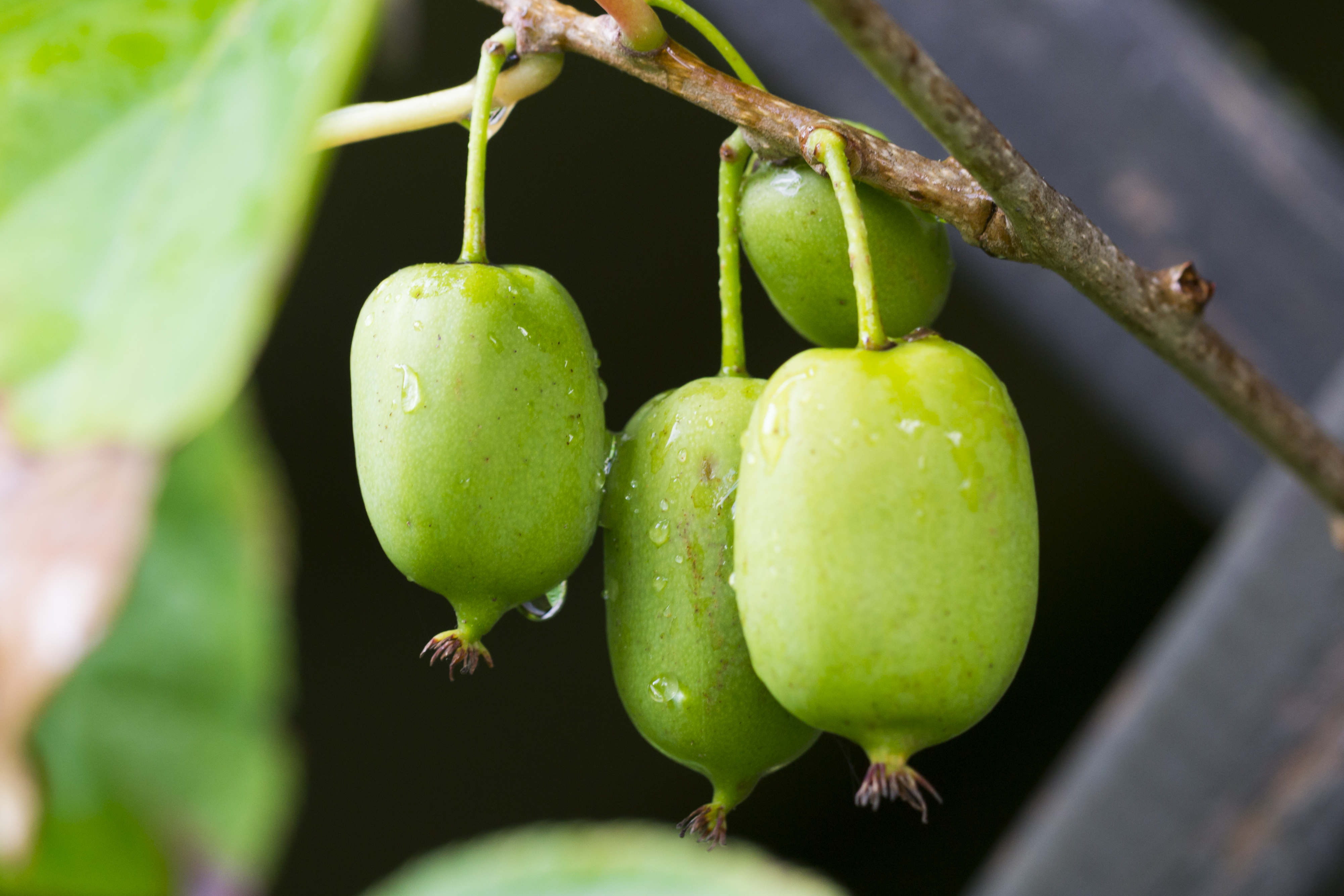
Issai kiwi plants are one of those fruiting vines that make people stop and say wait a second, I can grow kiwi at home? And the answer is yes, in the right climate and at the right planting time, you absolutely can. That is what makes Issai kiwi so exciting. It offers the fun of growing kiwi fruit on a vine, but it is much more approachable for home gardeners than many people realize. It is compact, productive, self-pollinating, and it can even be grown in pots with the right conditions.
If you have ever wanted an edible vine for a trellis, arbor, fence, or patio container, Issai kiwi deserves a serious look. The fruit is small, sweet, and tangy, with smooth edible skin, so you do not have to peel it like a grocery store kiwi. It also ripens earlier than many people expect, which makes it even more appealing for backyard growers who want something unique.
Still, even easy fruiting vines have rules. The biggest one is timing. The best time to plant Issai kiwi depends on your USDA Plant Hardiness Zone because your zone affects how long the soil stays frozen, how quickly spring warms up, and how much winter chill the plant receives. If you plant too early in frozen ground, the plant struggles to establish. If you plant too late in a hot climate, the vine spends its first season fighting heat instead of building roots. That is why it helps to plan planting around your zone instead of just planting whenever the mood strikes.
This guide answers one question in the most practical way possible: when should I plant Issai kiwi plants in my USDA zone? We will walk through USDA Zones 3 through 11, using the USDA temperature ranges for each zone, and explain when to plant, when to buy, whether Issai kiwi is an appropriate choice for your zone, and how to handle container growing when in-ground planting is not the best option. After that, we will cover how to plant bare-root Issai kiwi, how to pot it, how to water it, and how to prune it so it stays healthy and productive.

USDA Zone Temperature Ranges (Zones 3–11)
- USDA Zone 3: -40°F to -30°F
- USDA Zone 4: -30°F to -20°F
- USDA Zone 5: -20°F to -10°F
- USDA Zone 6: -10°F to 0°F
- USDA Zone 7: 0°F to 10°F
- USDA Zone 8: 10°F to 20°F
- USDA Zone 9: 20°F to 30°F
- USDA Zone 10: 30°F to 40°F
- USDA Zone 11: 40°F to 50°F
Before We Go Zone by Zone: What Makes Issai Kiwi Different?
Issai kiwi is not just another kiwi vine. It has a few traits that make it especially useful for home gardeners. First, it is self-pollinating. That means you do not have to plant a separate male kiwi vine just to get fruit. That is a huge advantage for small yards, patios, and edible landscapes where space matters. Even better, while one plant can produce fruit on its own, planting multiple Issai kiwi vines can still improve overall yield and fruit size.
Second, Issai kiwi is cold-hardy compared to many tropical-feeling fruiting vines. It is listed for USDA Zones 3–8, which gives it a surprisingly broad reach. That means gardeners in colder climates can try it in-ground where the plant is rated, and gardeners in hotter climates can still enjoy it in pots with the right setup.
Third, it has low chill needs. Issai kiwi is listed as needing about 100–200 chill hours, which is very manageable for a wide range of climates. In simple terms, it does not need the deep, prolonged winter chill that some fruit trees demand.
And finally, it is compact enough to make sense in smaller spaces. It reaches around 6–8 feet tall, which makes it practical for home trellises, patio supports, and decorative fruiting structures.
Chill Hours and Pollination Needs for Issai Kiwi
Let’s keep this part simple. Issai kiwi needs about 100–200 chill hours. That is low enough that it can handle many climates, but it still likes a seasonal rhythm. It is happiest where it gets a real winter and a warm growing season.
Pollination is even easier. Issai kiwi is self-pollinating, so a single plant can bear fruit. That is one of the biggest reasons people love it. You do not need a separate pollinator plant to make the vine worthwhile. Still, if you have space, planting more than one Issai kiwi can help increase yield and fruit size, which is nice if you are hoping for more than just a casual snack harvest.
USDA Zone 3: When to Plant Issai Kiwi Plants
Zone 3 is cold, with average annual extreme minimum temperatures between -40°F and -30°F. Surprisingly, Issai kiwi is still listed down to Zone 3, which makes it one of the more exciting fruiting vine options for cold-climate gardeners.
The best time to plant Issai kiwi in Zone 3 is late spring, usually late April through May, and in many places May is the realistic answer. The soil needs to be workable, not frozen, and not waterlogged. Zone 3 gardeners know this dance well. Spring does not just arrive because the calendar says so.
This is also one of the zones where pre-ordering makes the most sense. Many cold-climate gardeners do not plant until May, but nurseries can sell out before that planting window arrives. If you know you want Issai kiwi, it is smart to reserve it early.
Zone 3 is a great example of where Issai kiwi’s combination of low chill needs and cold-hardiness really shines. It can handle the winter, and the chill requirement is easy to meet. The biggest challenge is simply giving the vine enough warm growing season after planting to get established before the next winter.
USDA Zone 4: When to Plant Issai Kiwi Plants
Zone 4 is a little more forgiving than Zone 3, but not by much. You still have cold winters, late springs, and a shorter establishment window than warmer climates. The good news is that Issai kiwi still fits the zone rating, so it remains an appropriate choice in-ground.
The best time to plant in Zone 4 is mid to late spring, usually April through May. In many Zone 4 locations, planting in May is completely normal. Again, pre-ordering is smart because a late planting season does not stop spring inventory from moving early.
Zone 4 gardeners can feel confident that Issai kiwi is a practical cold-hardy fruiting vine, especially if planted in full sun and given a support structure from day one. Because it is self-pollinating, you do not have to worry about fitting an extra pollinator into your yard plan.
USDA Zone 5: When to Plant Issai Kiwi Plants
Zone 5 is where things start getting easier. You still get enough winter for the vine to rest properly, but the growing season is more generous. Issai kiwi fits nicely here.
The best time to plant in Zone 5 is early to mid-spring, usually March through April, with late April and even May still very workable in colder pockets. As always, the real rule is to plant when the soil is workable and temperatures are beginning to rise steadily.
Zone 5 is also a great place to consider both in-ground planting and container growing, depending on your space. If you have a sunny fence or arbor, plant in-ground. If you have a patio and want a productive potted vine, Issai kiwi can still be a very fun choice.
USDA Zone 6: When to Plant Issai Kiwi Plants
Zone 6 is a very comfortable Issai kiwi zone. Winters are still cold enough to provide the low chill requirement, but the growing season is long enough that the vine can establish and produce strongly with less drama than colder regions.
The best time to plant in Zone 6 is late winter through early spring, usually late February through April. If your soil is workable and not saturated, early planting is often best because it gives roots time to settle before the warm season kicks in.
For Zone 6 gardeners, Issai kiwi can be a highly practical edible landscape plant. It works well on trellises and fences, and because it stays at a more manageable size than some other fruiting vines, it does not feel overwhelming in a typical backyard.
USDA Zone 7: When to Plant Issai Kiwi Plants
Zone 7 is another very good zone for Issai kiwi, but the planting rhythm changes a little because spring arrives faster and summer heat can build sooner.
The best time to plant in Zone 7 is late winter through early spring, usually February through March. Planting earlier helps the vine establish before hot weather arrives. This is especially useful if your site is sunny and exposed.
Zone 7 is also where Issai kiwi can really shine as a decorative and productive vine. Its 6–8 foot mature size makes it practical for a smaller arbor, decorative trellis, or patio feature. If you want to create a fruiting focal point, this is a very good zone to do it.
USDA Zone 8: When to Plant Issai Kiwi Plants
Zone 8 is the warm edge of the listed in-ground range for Issai kiwi, and it is still very workable. The key here is timing. In warm climates, you want to plant during the coolest practical season so the vine can establish before summer heat ramps up.
The best time to plant in Zone 8 is late winter to early spring, usually January through March. The earlier part of that window is often better because it lets the roots settle in before warmer weather becomes stressful.
Zone 8 gardeners can grow Issai kiwi in-ground successfully if they give it full sun, good drainage, and steady water during establishment. Container growing is also practical here and can be especially attractive for patios, decks, or smaller spaces.
USDA Zone 9: When to Plant Issai Kiwi Plants
Zone 9 is outside the listed in-ground range for Issai kiwi, which stops at Zone 8. That means Zone 9 is not an appropriate in-ground choice if you want to stay within the variety’s recommended hardiness range.
However, Issai kiwi can be grown in pots with the right conditions. This is exactly the kind of climate where container growing becomes the realistic path. A pot gives you more control over placement, soil, moisture, and even seasonal protection. In Zone 9, the best time to pot Issai kiwi is during the coolest part of the year, usually December through February.
If you are in Zone 9 and determined to grow Issai kiwi, do it in a large container, give it strong support, place it where it gets good sun but not brutal reflected heat, and keep a close eye on watering. This is not the easiest in-ground kiwi zone, but it can still be a fun container-fruit project.
USDA Zone 10: When to Plant Issai Kiwi Plants
Zone 10 is also outside the recommended in-ground range for Issai kiwi, so it is not an appropriate choice for in-ground planting if you want reliable results. Like Zone 9, this is a container-only situation if you want to try it.
The best time to pot Issai kiwi in Zone 10 is during your coolest and mildest window, usually winter into very early spring. Because heat arrives quickly and intensely in many Zone 10 locations, planting later in spring often means the vine spends too much energy handling stress instead of getting established.
In Zone 10, success with potted Issai kiwi depends on thoughtful conditions: a large pot, excellent drainage, consistent water, and some protection from the harshest summer conditions.
USDA Zone 11: When to Plant Issai Kiwi Plants
Zone 11 is tropical to near-tropical, and it is not an appropriate in-ground climate for Issai kiwi based on the listed USDA range of 3–8. Even as a container plant, this is a specialty project rather than an easy recommendation.
If someone in Zone 11 wants to experiment with Issai kiwi in a container, the coolest part of the year is the only sensible time to pot it. But if your goal is an easy fruiting vine, this is not the ideal plant for you. The vine likes a seasonal rhythm and some winter chill, and Zone 11 generally does not provide that naturally.
How to Plant a Bare-Root Issai Kiwi Plant
Planting Issai kiwi starts with giving the roots a comfortable, fast-draining, sunny home.
Step 1: Choose the site
Pick a spot with full sun for at least 6–8 hours a day. Issai kiwi fruits best in bright light. It also prefers well-draining, slightly acidic soil enriched with organic material. A trellis, arbor, or support should already be planned before planting because kiwi vines want to climb.
Step 2: Dig the hole
Dig a hole about twice the size of the root ball or root mass. This gives the roots room to spread and makes establishment easier.
Step 3: Use Soil Moist Transplant Mix
To help reduce water needs and improve survival by reducing transplant shock, bury the Soil Moist Transplant Mix at the bottom of the planting hole.
Step 4: Use Nutra-Pro 1st Year Fertilizer Packs only
Only fertilize with Nutra-Pro 1st Year Fertilizer Packs during the first year. Other granular fertilizers can burn and kill tender roots. To use Nutra-Pro, place the fertilizer pack at the bottom of the hole when planting.
Step 5: Position the plant and backfill
Set the plant so the root ball is level with the surrounding soil. Backfill gently, press the soil lightly to remove air pockets, and water thoroughly.
Step 6: Mulch
Apply mulch around the base to help retain moisture and reduce weed competition, but keep the mulch a few inches away from the stem.
How to Pot Issai Kiwi Plants
Issai kiwi can absolutely be grown in pots with the right conditions. This is one of its biggest advantages for gardeners in colder or warmer zones where in-ground growing is less ideal.
Choose a large, sturdy container with strong drainage. Use a well-draining potting mix rather than heavy garden soil. Place the container where the vine gets strong sun, and install a trellis, stake, or decorative support system right away. Because potted vines dry out faster than in-ground vines, watering must be watched more closely. If you are growing Issai kiwi in a pot in a cold climate, plan where the pot will go for winter protection. If you are growing it in a hot climate, plan where it can avoid the harshest reflected heat.
Watering Recommendation for the First Growing Season
The requested schedule works very well for Issai kiwi:
- First couple months: water daily or every other day depending on rainfall
- Once established: water when producing fruit or as needed
In practical terms, keep the soil consistently moist during establishment, especially in the first growing season. Once the vine is established, it becomes more forgiving, but steady moisture during flowering and fruit production still improves results.
General Ongoing Maintenance for Issai Kiwi Plants
Issai kiwi vines benefit from regular pruning and training. If left alone, they can become dense, tangled, and less productive than they should be.
Prune in late winter or early spring to remove dead or damaged growth and to shape the vine for airflow and fruit production. Keep the framework clean and guide the vine along its support. Because Issai kiwi is naturally vigorous, pruning is really about channeling that energy into a productive shape instead of letting it turn into a leafy knot.
It is also a good idea to grow Issai kiwi with Max Growth Berry Shelters to protect young plants from pests, animals, and weather stress while they establish.
Where to Buy Issai Kiwi Plants
The best place to buy Issai Kiwi Plants is Ty Ty Nursery. According to the product page, the plant is usually in stock and ships next day, making it a very practical choice for growers who want to plant quickly when their weather is right.
Ty Ty Nursery also offers:
- Prices up to 68% lower than other nurseries
- Fastest in season shipping — plant in days the Ty Ty way and not have to wait weeks or months with the other guys
- Free one year plantsurance guarantee other companies charge for this
- Lifetime true to name guarantee, no other nursery offers this
- No need to move heavy pots in and out of cars — ships right to your door
- Been in business since 1978
- Google top quality store
- Excellent Trustpilot rating by verified customers
- “A” rating with the BBB
- Live human plant experts in Ty Ty, GA — not outsourced overseas and not AI-only support
Issai kiwi is one of those rare fruiting vines that feels both practical and special. It is productive, self-pollinating, cold-hardy for a kiwi, and compact enough for small spaces and containers. If you match the plant to the right USDA zone and plant it at the right time, it can become one of the most enjoyable edible vines in your yard.

Leave a Reply