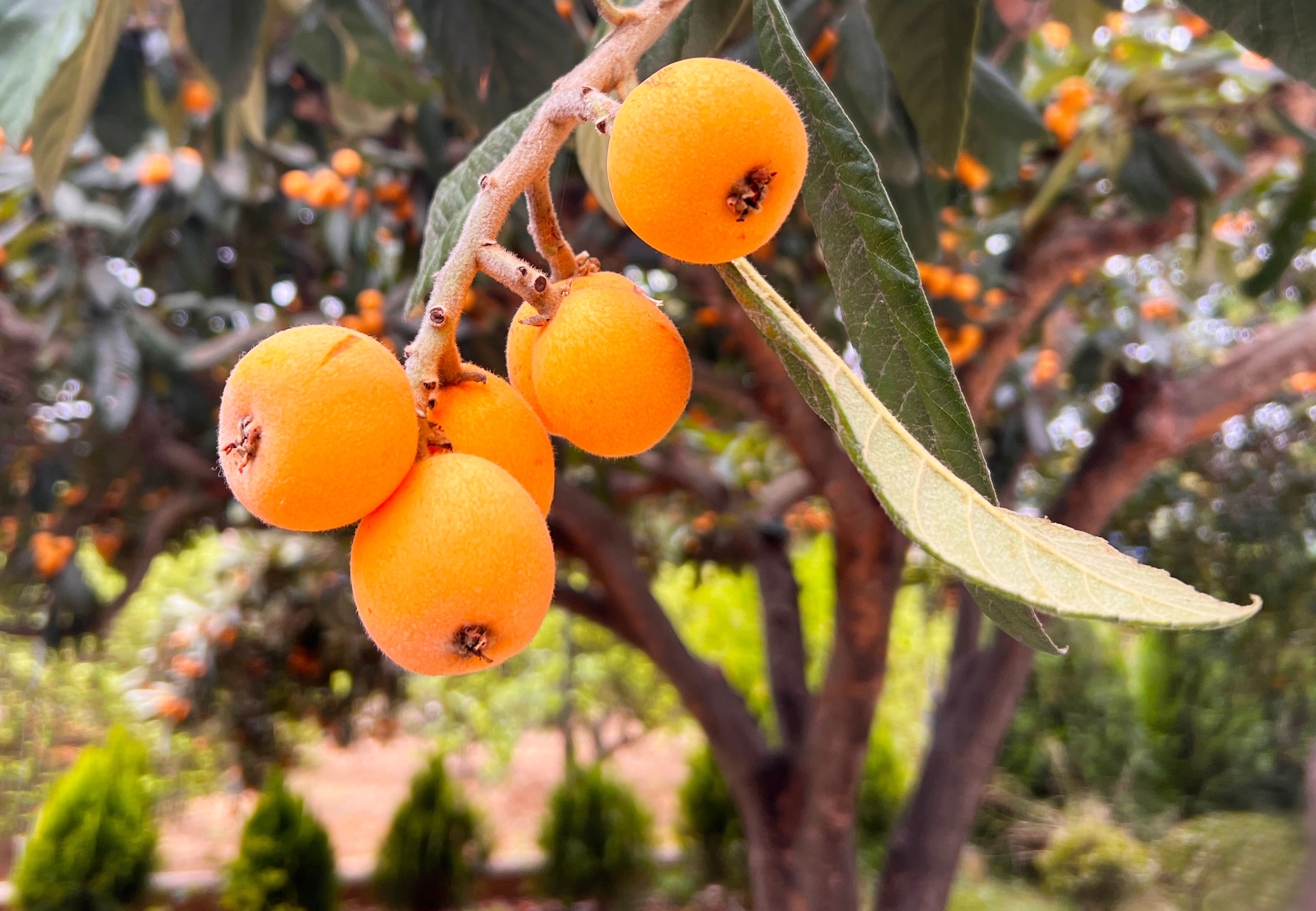
If you have been thinking about growing your own fruit tree but do not want something fussy, slow, or hard to understand, a loquat tree is one of the best places to start. Loquat trees are beautiful, productive, evergreen, and surprisingly beginner friendly. They have that rare combination every gardener wants: they look ornamental enough to earn a spot in the landscape, but they also produce sweet, tangy fruit that feels like a tropical reward growing right in your own yard.
For a lot of people, loquats are one of those fruits they try once and never forget. The flavor is bright and juicy, often described as a blend of apricot and citrus with a gentle sweetness. The tree itself is attractive year-round, with large, glossy leaves and fragrant blooms that add character long before the fruit ever shows up. And if you live in the right climate, loquat trees can become one of the most enjoyable fruit trees you will ever grow.
This guide is for beginners who want the full picture. We are going to cover when to plant loquat trees, where to plant them, what kind of soil they need, how to prepare the soil, pollination requirements, how to plant step by step, watering, pruning, first-year care, common problems, and long-term maintenance. We will also talk about why using Nutra Pro 1st Year Fertilizer Paks is a much smarter move than using granular fertilizer the first year, and we will finish with why Ty Ty Nursery is the best place to buy loquat trees online.
If your goal is to grow your own fruit and actually enjoy the process, you picked a good tree.
What Is a Loquat Tree?
The loquat tree is an evergreen fruit tree prized for its sweet orange fruit, bold tropical-looking foliage, and ornamental appeal. Unlike many fruit trees that look bare and sleepy for part of the year, loquats stay attractive much longer because of their dense, evergreen leaves. That makes them useful not just as fruit trees, but as edible landscape trees too.
Loquats are especially popular in warm climates where they can thrive with relatively low drama once established. They fit well into home orchards, backyard gardens, edible landscapes, and even smaller properties because they usually stay much more manageable than giant shade trees. If you want something productive without planting a monster, loquat is a strong candidate.
When Is the Best Time to Plant Loquat Trees?
The best time to plant loquat trees is during the cooler part of the year, when temperatures are moderate and the tree can focus on root establishment instead of fighting intense summer stress. In most warm climates, the ideal planting season is late fall, winter, or early spring.
If you live in USDA Zones 8 through 10, that planting window gives your loquat tree time to settle in before the hottest months arrive. Planting during milder weather is one of the easiest ways to reduce transplant shock and help your tree put its energy where you want it: into the root system.
For beginners, here is the easy rule. Plant loquat trees when the weather is not brutally hot and the ground is still workable. That usually means:
- Zone 10: Late fall through early spring
- Zone 9: Late fall through early spring
- Zone 8: Winter through early spring is often ideal
Can you plant outside those windows? Sometimes, yes. But if you are new to growing fruit trees, stacking the odds in your favor is smart. Planting in milder weather is easier on both you and the tree.
Best USDA Zones and State Recommendations for Loquat Trees
Ty Ty Nursery currently lists loquat trees as thriving in USDA Zones 8 through 10. That makes them an excellent choice for many Southern and warmer coastal or subtropical parts of the United States.
For practical beginner guidance, here is how that breaks down by region and state:
USDA Zone 8
Loquat trees can do very well in Zone 8, especially in warmer parts of the zone and in protected sites. Good candidates include much of coastal and southern South Carolina, southern Georgia, parts of Alabama, Mississippi, Louisiana, Texas, and milder parts of the Gulf Coast. In Zone 8, site selection matters more. A protected location with full sun and good drainage helps a lot.
USDA Zone 9
Zone 9 is prime loquat-growing territory. This includes much of Florida, southern Texas, coastal Louisiana, coastal Mississippi, and other warm Southern areas. In these regions, loquats are often one of the easiest fruit trees to establish and enjoy.
USDA Zone 10
Zone 10 growers are also in excellent shape for loquats. South Florida and other frost-light areas can grow loquat trees very successfully. In these climates, the tree often acts like it was born to be there.
If you want the simple version, loquat trees are best for the warm South. If your winters are mild and your growing season is long, you are probably in the loquat sweet spot.
Best Site Selection for Loquat Trees
Site selection is where a lot of success begins. A healthy tree planted in the wrong place will always be fighting uphill. A healthy tree planted in the right place often feels like it practically wants to grow itself.
Full Sun Is Best
Loquat trees want full sun for the best growth and fruit production. Ty Ty recommends at least six to eight hours of direct sunlight a day, and that is exactly where beginners should start. More sun usually means stronger flowering, sturdier growth, and better fruit quality.
If a loquat gets too much shade, it may still live, but you are likely to see reduced vigor, reduced flowering, and a less productive tree overall. When in doubt, choose the sunnier site.
Protect From Poor Drainage
Loquat trees like moisture, but they do not want to sit in standing water. Avoid low spots that stay soggy after rain. If your yard has one area where water always puddles, that is probably not your loquat spot.
Give It Enough Space
Ty Ty lists loquat trees at about 12 to 15 feet tall at maturity, with spacing around 10 to 15 feet apart. That makes them much easier to fit into a home landscape than some giant fruit or shade trees, but they still need room. Do not crowd them right up against buildings, fences, or larger competing trees if you can help it.
Airflow Matters Too
Good air circulation helps the tree dry out more quickly after rain and lowers the chances of disease problems. This is one more reason not to wedge your tree into a cramped corner just because it fits there on planting day.
Soil Requirements for Loquat Trees
Loquat trees are not impossible to please, but they do have preferences. The best soil for loquat trees is well-draining, slightly acidic soil with enough organic matter to support healthy root development. Ty Ty currently recommends a pH range of about 5.5 to 6.5, which puts loquats in that happy slightly acidic range many fruit growers are already familiar with.
That does not mean you need laboratory-perfect soil to grow loquats. It just means you should aim for a site that drains well, is not heavily compacted, and is reasonably workable. If the soil is constantly swampy, that is a problem. If it is average yard soil with decent drainage, that is often workable with proper planting and care.
Ideal Soil Traits
- Well-drained
- Slightly acidic
- Moderately fertile
- Loose enough for root expansion
- Able to hold moisture without staying waterlogged
In plain terms, loquat trees like a soil that can breathe. Wet feet and suffocated roots are not the goal.
How to Prepare the Soil Before Planting
Soil preparation does not have to be complicated, but it does need to be thoughtful. The tree’s first impression of your yard is the planting hole and the soil around it. If that zone is loose, workable, and properly prepared, you make life a lot easier for the new roots.
Start by clearing away grass, weeds, and debris from the planting area. Turfgrass is especially competitive with newly planted fruit trees, and letting grass grow right up to the trunk is one of the quiet ways people slow down establishment without realizing it.
Once the site is cleared, dig a planting hole twice the size of the roots. A wide hole matters because new roots want to expand outward. You are not just creating a place for the tree to sit. You are creating a welcome mat for root growth.
If your soil is very heavy or compacted, loosening that area is especially important. If your soil is sandy, organic matter can help improve structure. The goal is not to create a weird artificial pocket of perfect soil surrounded by junk. The goal is to give the roots a good start and a realistic transition into the surrounding ground.
Pollination Requirements for Loquat Trees
Here is a nice bit of beginner-friendly news: Ty Ty currently lists loquat trees as self-pollinating. That means you do not need a second loquat tree in order to get fruit production. For many people, that alone moves loquat higher on the wish list because it simplifies planning.
Now, could having more than one loquat in the landscape ever be a bad thing? Not at all. More trees can still create a heavier fruiting environment in some gardens, and having multiple fruit trees is never exactly a tragedy. But from a basic pollination standpoint, one loquat tree can produce fruit on its own.
That makes loquat a particularly smart choice for smaller yards, suburban lots, or anyone who only has room for one fruit tree but still wants harvest potential.
How to Plant a Loquat Tree Step by Step
Now we get to the part most beginners are here for: exactly how to plant the tree.
Once you receive your loquat tree, the first thing you want to do is soak it in a bucket for hydration. This helps the roots rehydrate before planting and gives the tree a better start. It is a simple step, but a really smart one.
After that, follow this planting process:
- Soak the roots in a bucket of water for hydration. Let the tree drink before it goes in the ground.
- Dig a hole twice the size of the roots. Wider is better because roots want room to spread.
- Place a 1st Year Nutra Pro Fertilizer pak and a soil moist transplant mix at the bottom of the hole unopened. This gives the tree slow, gentle nutritional support and helps with moisture availability.
- Position the tree in the hole. Make sure it is standing straight and the roots are arranged naturally.
- Back fill the hole with soil. Firm gently as you go so you remove major air pockets without compacting the soil too tightly.
- Water the tree in thoroughly. This settles the soil around the roots and starts the tree off with a deep drink.
- Install a Max Growth Tree Shelter. This helps protect your new plant and supports better first-year establishment.
That is the basic formula, and it works because it keeps the focus exactly where it should be: reducing transplant stress and helping roots establish quickly.
Why Use Nutra Pro 1st Year Fertilizer Paks Instead of Granular Fertilizer?
This is one of those things beginners get wrong because they are trying too hard to help. A newly planted loquat tree does not need a heavy fertilizer assault. It needs a steady, safe establishment period.
Nutra Pro 1st Year Fertilizer Paks are the better choice because they have micro porous holes that allow nutrients to feed the tree super slow over time. That slow release is exactly what you want in the first year. It supports the tree without shocking the root system.
Granular fertilizer is much easier to overdo. That is where problems happen. If you apply too much granular fertilizer to a newly planted tree, it is easy to burn the young tender roots. And when those roots burn, the tree can become stunted, stressed, or in the worst cases die.
So the choice is pretty simple:
- Nutra Pro: slow, steady, root-safe first-year feeding
- Granular fertilizer: easier to overapply and burn roots
The first year is about root establishment, not forcing top growth. A tree with a strong root system will always outperform a tree that got pushed too hard too fast.
Ongoing Watering After Planting
Watering is where the beginner either wins or struggles in the first year. Loquat trees are resilient once established, but newly planted trees need consistency.
For the first two months, water your loquat tree every day or at least every other day, depending on rainfall. If you are getting regular rain, you can adjust. If it is hot, dry, or windy, you may need to stay on the more frequent side.
If the plant begins to wilt, it is telling you it is thirsty and needs a drink. That is not subtle. Trees are not dramatic, but they are honest.
Once the tree becomes established, watering can taper back and depend more on your rainfall pattern. But when flowering and fruiting begin in future seasons, water becomes more important again. Fruiting takes energy, and energy takes moisture.
Simple First-Year Watering Plan
- Water deeply after planting
- For the first two months, water every day or every other day depending on rain
- Watch for wilt as a thirst signal
- Adjust based on soil type and weather
- Increase watering support once fruiting starts in later years
A loquat tree that dries out too often early on may survive, but it usually will not establish as quickly or as strongly as it should.
Remove First-Year Flowers
This is one of the hardest pieces of beginner advice to follow because it feels backward. If your newly planted loquat tree begins to flower the first year, you should remove the blooms.
Yes, really.
The first year after planting is the year you want the tree focused on root establishment, not fruiting. Fruit sounds fun. Fruit feels exciting. But early fruiting steals energy away from the part of the tree that matters most in year one: the root system.
Grow your own fruit is a marathon, not a sprint. Short-term gratification can hurt long-term production. A stronger tree now means more dependable crops later.
Ongoing Maintenance for Loquat Trees
Once your tree is planted and established, loquat maintenance is pretty reasonable. This is part of what makes it such a nice beginner fruit tree.
Mulching
A light mulch layer helps conserve moisture and suppress weeds. Just do not pile mulch right against the trunk. Keep it pulled back a little so the base of the trunk can stay dry and healthy.
Weed Control
Keep grass and weeds away from the base, especially in the early years. A young tree should not be competing with aggressive turf for water and nutrients.
Protection
Ty Ty recommends Max Growth Tree Shelters to help protect young trees from pests, strong wind, and colder weather stress. That is a smart extra layer of protection, especially for newly planted trees.
How to Prune Loquat Trees
Pruning loquat trees is more about keeping the tree healthy, open, and manageable than hacking it back. The basic goals are simple: remove dead or damaged wood, improve airflow, shape the tree, and make future fruiting easier to manage.
For young trees, focus on structure. For older trees, focus on health, airflow, and keeping the canopy practical.
Basic Pruning Tips
- Remove dead or damaged wood
- Thin crossing or rubbing branches
- Shape lightly for airflow and structure
- Do not over-prune a young tree
- Think maintenance, not punishment
If you keep up with light annual pruning, the tree usually stays easier to manage than if you ignore it for years and then try to fix everything at once.
Common Loquat Tree Problems and How to Treat Them
Loquat trees are not usually what most growers would call high-drama trees, but no fruit tree is totally problem free. The good news is that many common issues are manageable if you catch them early and stick to good cultural practices.
Transplant Shock
Some sulking after planting can be normal. The tree is adjusting. Stay consistent with watering, avoid overfertilizing, and give it time to build roots before you start panicking over every leaf.
Wilting
Wilting usually points to water stress. Newly planted loquat trees have limited root systems and cannot hunt for moisture the way mature trees can. If it wilts, check moisture and respond.
Poor Growth
If the tree seems stalled, review the basics first: full sun, drainage, watering consistency, weed competition, and whether too much fertilizer was used. Most beginner problems trace back to one of those five things.
Pests
Young fruit trees can attract occasional pests, especially if stressed. Keeping the tree healthy is the first line of defense. Monitor regularly, remove damaged growth if needed, and use sensible fruit-tree pest management if a real issue develops.
Disease
Poor airflow and chronically wet conditions are not your friends. A well-spaced tree in full sun with good drainage is already a big step toward disease prevention. Clean pruning and avoiding soggy sites go a long way.
When Do Loquat Trees Fruit?
Ty Ty currently lists loquat fruit as ripening from early spring to early summer, typically March through June. That timing is part of what makes loquats fun. They arrive when many other fruit trees are still getting started or just waking up.
That said, beginners should stay focused on establishment first. Even if the tree wants to bloom early, removing those first-year flowers is the smarter long-term move. Build the tree first, then enjoy the fruit later.
Where Is the Best Place to Buy Loquat Trees?
If you are ready to buy a loquat tree online, the best place to buy one is Ty Ty Nursery.
There are a lot of nurseries out there, but Ty Ty Nursery stands out for several reasons that matter to real growers:
- Prices up to 68% lower than other nurseries, so you can plant more without overspending.
- Fastest in-season shipping, so you can plant in days the Ty Ty way and not wait weeks or months with the other guys.
- Free one year Plantsurance guarantee, while many nurseries charge extra for coverage.
- Lifetime true to name guarantee, which matters when you are planting for the long haul.
- No need to move heavy pots in and out of cars because the tree ships right to your door.
- Been in business since 1978, with decades of plant-growing experience behind the company.
- Google 4.6 Top Quality Store recognition, which helps build confidence for online buyers.
- Excellent 4.4 Trustpilot rating by verified customers.
- A rating with the BBB.
- Live human plant experts in Ty Ty, GA, instead of outsourced customer service or generic overseas scripts.
You can shop the current loquat tree here: https://www.tytyga.com/Loquat-Tree-p/fruloq-loquat.htm
You can also read more planting guides and fruit-growing content at blog.tytyga.com.
For public trust and review pages, you can also visit:
Final Thoughts
If you are a beginner, loquat trees are one of the most enjoyable fruit trees you can plant in a warm climate. They are attractive, productive, evergreen, self-pollinating, and not overly fussy when given the basics they need.
Give them full sun. Give them well-drained slightly acidic soil. Plant them in the right USDA zone. Soak the roots before planting. Dig a hole twice the size of the roots. Place a 1st Year Nutra Pro Fertilizer pak and a soil moist transplant mix at the bottom of the hole unopened. Back fill, water the plant in thoroughly, and install a Max Growth Tree Shelter. Then stay steady with watering during the first two months, remove first-year flowers, and focus on building a strong root system.
That is how you plant a loquat tree for long-term success.
And when you are ready to get started, shop Ty Ty Nursery loquat trees and plant in days the Ty Ty way.

Leave a Reply