If you planted a Medlar Tree this year, late summer is one of those times when doing a few simple things correctly matters a whole lot more than doing twenty unnecessary things just because fall is coming.
Medlars are old-fashioned fruit trees with a reputation for being tough, unusual, and relatively easy to grow. Once established, they really are pretty undemanding.
A first-year tree is different.
That young medlar has spent spring and summer recovering from transplanting, producing new roots, adapting to your soil, growing shoots and leaves, and beginning to create the permanent structure it will depend on for years.
As late summer begins transitioning into fall, the goal changes.
Earlier in the season, new growth was exciting. Now we want the growth that already exists to mature properly. We want the root system healthy. We want the planting area clean. We want the graft and trunk protected. And we want the tree moving naturally toward dormancy instead of being pushed into another unnecessary flush of tender growth.
At Ty Ty Nursery, we tell customers to concentrate on three things with first-year Medlar Trees:
- Keep the young root system properly watered through late-summer dry spells without leaving it waterlogged.
- Protect the root zone, graft, and trunk with mulch, weed control, and basic tree maintenance.
- Stop pushing unnecessary late growth and avoid random pruning so the tree can mature naturally before winter.
Those three jobs are simple.
But simple does not mean unimportant.
Get them right and you give that first-year medlar a strong foundation for next spring.
If you are planning an edible landscape, backyard orchard, heirloom fruit collection, cottage garden, or simply want to grow one of the most unusual fruits available to American gardeners, you can shop Medlar Trees for sale online at Ty Ty Nursery and compare Breda Giant, Marron, and Royal Medlar Trees.
What Is a Medlar Tree?
Medlar, botanically known as Mespilus germanica, is an old European and Asian fruit tree that has been grown for centuries but is still relatively uncommon in modern American gardens.
That is part of what makes it so interesting.
Medlar Trees are deciduous.
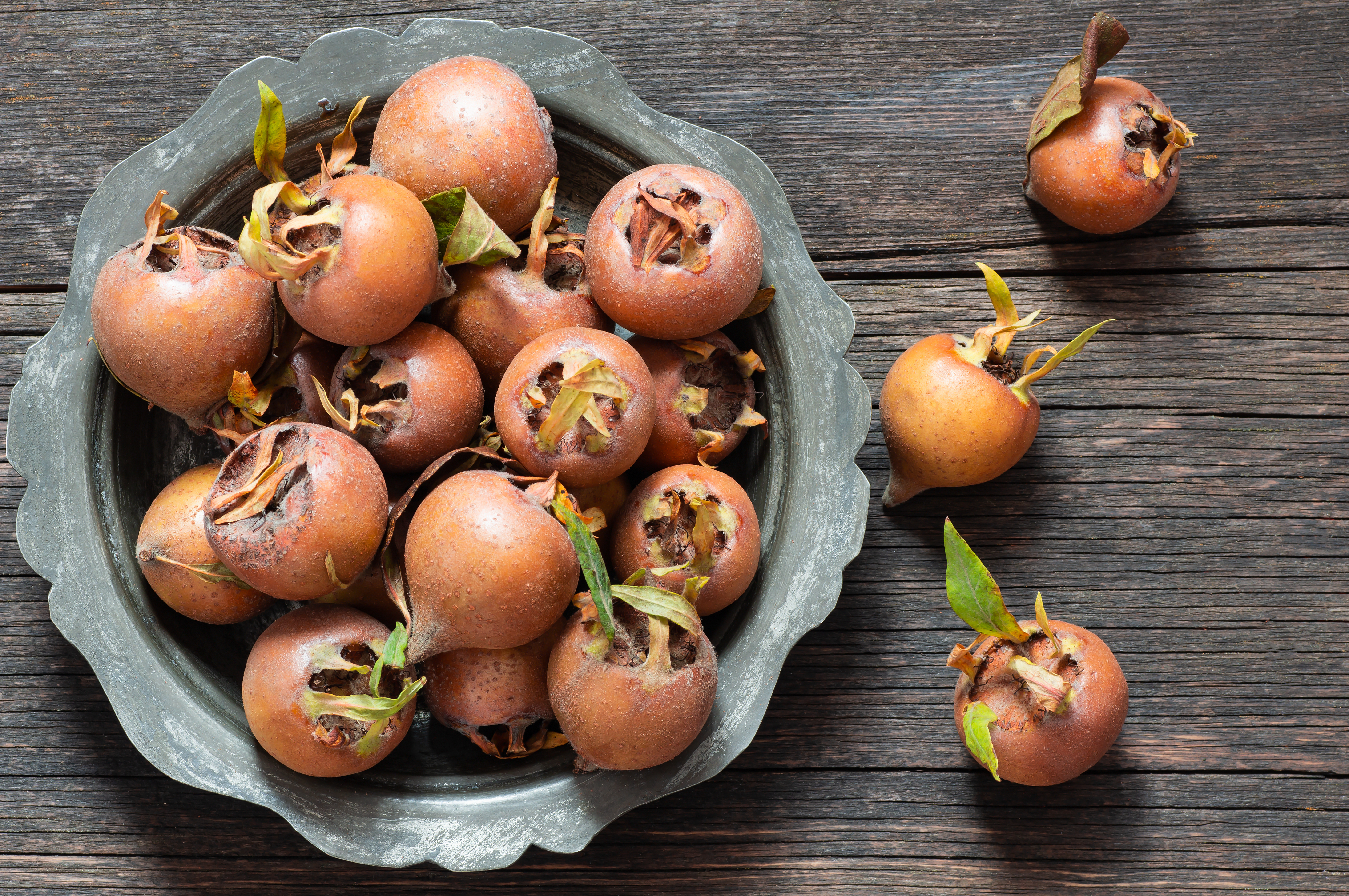
They produce attractive white flowers in late spring, followed by unusual brown fruit that develops through summer and matures in autumn.
The trees also put on attractive fall foliage, making them useful as ornamental trees even before you consider the fruit.
And then there is the fruit itself.
Medlar fruit is not treated like an apple or peach.
You usually do not walk outside, pick one rock-hard fruit from the tree, and immediately bite into it.
Traditional medlar fruit needs to soften through a process called bletting.
Once bletted, the firm, tannic fruit becomes soft, sweet, aromatic, and rich in flavor.
People describe the taste in different ways—apple, pear, date, caramel, cinnamon, or spiced applesauce can all enter the conversation.
That makes medlar one of those fruits that people either have never heard of or immediately become curious about.
Why the First Year Matters
A mature Medlar Tree is relatively low maintenance.
A newly planted tree has not reached that stage yet.
The first year is about establishment.
Roots need to spread into surrounding soil.
The graft needs to remain healthy.
The trunk needs to strengthen.
The branches need to mature.
And the leaves need to stay healthy long enough to feed the root system before natural fall leaf drop.
This is why I would rather see a first-year Medlar Tree make moderate healthy growth than see somebody force it into a giant flush of soft September growth with a handful of fertilizer.
The bigger tree is not always the better-prepared tree.
Medlars Are Grafted Fruit Trees
Most named Medlar Trees are grafted onto another root system, commonly quince or hawthorn.
That lets growers maintain desirable fruit characteristics while controlling tree size and growth habit.
The graft union matters.
Everything growing from above that graft belongs to your named variety.
Anything sprouting from the rootstock beneath the graft does not.
That becomes important during late-summer cleanup because rootstock suckers should be removed rather than allowed to compete with the medlar variety you actually purchased.
What Your Medlar Tree Is Doing in Late Summer
During spring and early summer, shoots are actively extending.
Leaves are expanding.
The root system is growing.
By late summer, those shoots begin becoming more mature and woody.
The tree continues producing carbohydrates through photosynthesis.
Some of those carbohydrates are stored in the roots and woody structure.
Buds mature.
Days shorten.
Night temperatures begin falling.
Eventually the tree naturally transitions toward dormancy.
You do not need to force that process.
You just need to avoid interfering with it.
1. Get Late-Summer Medlar Tree Watering Right
The first priority is water.
RHS guidance recommends watering newly planted Medlar Trees regularly during dry spells throughout their first growing season.
Young trees should also receive supplemental water during prolonged drought for the next couple of years.
Once established in suitable soil, Medlar Trees usually become much less demanding.
Do Not Assume an Established Tree and a First-Year Tree Need the Same Care
An established Medlar Tree has had years to spread roots through the soil.
A tree planted this year is still working with a relatively limited root system.
If August or September becomes hot and dry, keep watching that young tree.
Do not assume it can already handle drought simply because mature medlars are easy-care trees.
Check the Soil Before Watering
Push your finger several inches into the soil around the root zone.
If the soil underneath still feels cool and moist, give the tree more time.
If it is beginning to dry, water deeply.
The surface can fool you.
A hot afternoon can make the top inch look dry even when plenty of moisture remains below.
A short summer shower can create the opposite problem—the surface looks wet while the deeper soil barely received anything.
Ty Ty Nursery recommends checking the actual root zone rather than blindly watering according to the date on a calendar.
Water Deeply Instead of Giving the Tree a Quick Splash
A slow-flowing garden hose works well.
Drip irrigation works.
A soaker hose can work too.
The goal is to wet the soil where roots are actually growing.
A quick spray across the surface may make the planting area look watered without giving the tree much useful moisture.
Expand the Watered Area as Roots Grow
Your Medlar Tree’s roots are not supposed to remain inside the original planting hole.
They should gradually extend into the surrounding soil.
As establishment progresses, expand the area receiving water.
That helps encourage a broader root system.
Do Not Keep Medlar Roots Permanently Soggy
Medlars appreciate moisture, but they also want drainage.
Moist soil and waterlogged soil are not the same thing.
If water remains standing around your tree after irrigation, let the area drain before watering again.
Roots need oxygen.
Heavy Clay Needs Different Care Than Sandy Soil
Sandy soil drains quickly.
A first-year tree growing in sandy soil may need to be checked more frequently during dry weather.
Clay holds water much longer.
If you use exactly the same watering schedule in both soils, one tree may become too dry while the other stays too wet.
Watch the soil, not just the clock.
Keep Water Away From the Trunk Itself
Water the root zone.
There is no benefit to keeping the bark continually wet.
Drip irrigation placed around the soil is usually much better than repeatedly spraying the trunk.
Do Not Stop Watering Because September Arrived
Late summer and early fall can remain dry.
If the soil is dry, continue watering.
You are not preventing dormancy by keeping the roots appropriately hydrated.
You are simply preventing drought stress.
Gradually Reduce Water as Fall Cools
As temperatures fall, leaves use less water and the soil generally dries more slowly.
Natural rainfall may also increase.
Let irrigation frequency decrease accordingly.
Do not keep watering in October exactly the way you did during a ninety-five-degree July.
Do Not Let the Tree Enter Winter Severely Dry
If autumn itself becomes unusually dry, keep monitoring the soil.
Roots can remain active after shoot growth begins slowing.
A tree entering winter with adequate soil moisture is in a much better position than one already dealing with drought stress.
2. Protect the Root Zone, Graft, and Trunk
The second priority is protecting everything your Medlar Tree spent its first season establishing.
This is where mulch and weed control become especially useful.
Give a Young Medlar a Grass-Free Root Zone
RHS recommends removing a circle of grass at least about one meter—or roughly three feet—across around a newly planted Medlar Tree.
That matters because turfgrass is a strong competitor.
Grass roots take water.
Grass roots take nutrients.
And grass forces you to bring lawn equipment right up beside the young trunk.
I would rather see a neat mulch ring around a first-year fruit tree than perfectly manicured turf growing against the bark.
Maintain About 2–3 Inches of Organic Mulch
A two- to three-inch layer of organic mulch can help your Medlar Tree in several ways.
It slows moisture loss.
It suppresses weeds.
It buffers soil temperatures.
It adds organic matter as it breaks down.
And it reduces the need to dig or mow close to the tree.
Wood chips, shredded bark, compost, or another suitable organic mulch can work well.
Keep Mulch Away From the Trunk
This is important.
Do not create a mulch volcano.
Spread mulch across the soil surface while leaving some open space around the trunk.
Piling wet material against the bark can encourage rot and hide rodent damage.
Do Not Bury the Graft Union
The graft should remain above the soil and visible.
Do not pile soil or mulch over it.
Keeping the graft visible also makes it much easier to identify rootstock suckers.
Remove Shoots Growing Below the Graft
Named Medlar Trees are commonly grafted onto quince or hawthorn rootstocks.
Those rootstocks may occasionally produce shoots of their own.
If a shoot emerges from the roots or trunk below the graft, remove it.
That growth is not Breda Giant, Marron, or Royal Medlar.
Allowing it to grow wastes the tree’s energy and can eventually compete with the named variety.
Remove Rootstock Suckers While They Are Small
A tiny sucker is easy to remove.
A sucker allowed to grow for two seasons can become a substantial branch or secondary trunk.
Late summer is a good time to inspect the base and clean up anything clearly coming from the rootstock.
Avoid Deep Cultivation Around the Tree
You do not need to dig up the entire root zone to control weeds.
Hand pull weeds close to the trunk.
Use mulch.
Keep soil disturbance shallow.
A young fruit tree is trying to expand delicate feeder roots through that soil.
Constant chopping and digging is not helping.
Protect the Trunk From String Trimmers
A string trimmer can injure a young Medlar Tree in seconds.
Bark damage around enough of the trunk can interfere with water and carbohydrate movement through the tree.
The easiest prevention is a broad mulch ring.
If grass is not growing beside the trunk, nobody needs to put a weed eater there.
Inspect Stakes and Ties
Medlar Trees are often staked when planted.
That support is temporary.
Check every tie before fall.
A tie that was loose in spring can become surprisingly tight after a season of trunk growth.
Nothing should be cutting into the bark.
Let the Tree Move a Little
A stake should prevent the root ball from rocking excessively.
It should not hold the entire tree completely rigid.
Some movement helps the trunk develop strength.
Once the tree is firmly rooted, unnecessary staking can be removed.
Protect Young Medlars From Deer and Rabbits
Deer browsing can remove young branch tips.
Bucks can rub against the trunk.
Rabbits and rodents may chew bark during winter.
If wildlife pressure is heavy in your area, install protection before damage occurs.
Remember Those Branch Tips Matter
Medlar is a tip-bearing fruit tree.
Future fruit can develop on the ends of small side shoots.
That gives you another reason to protect the canopy from unnecessary browsing and random pruning.
3. Stop Pushing Late Growth and Save Structural Pruning for Dormancy
The third late-summer priority may be the easiest job because it mostly involves knowing when to leave a healthy tree alone.
Medlars do not need to be constantly fed and constantly pruned.
In fact, one of their advantages is how little maintenance established trees require.
Do Not Automatically Fertilize in Late Summer
RHS guidance notes that Medlar Trees growing in regularly mulched, reasonably fertile soil often need no additional feeding at all.
If a nutrient deficiency genuinely exists, a general-purpose fertilizer is normally applied in early spring.
That tells us something important.
Late August and September are not the time to throw fertilizer around simply because you want another burst of growth.
The Goal Is Mature Wood, Not Maximum Height
A first-year Medlar Tree does not need to win a height competition.
What matters is that this year’s shoots mature properly before winter.
Soft late growth created by unnecessary nitrogen has less time to become cold hardy.
Moderate healthy growth that matures naturally is much more useful.
If Growth Was Poor, Find Out Why
Before reaching for fertilizer, ask a few questions.
Did the tree repeatedly dry out?
Is the soil staying waterlogged?
Is grass competing around the roots?
Is the tree planted too deeply?
Is the graft buried?
Is the tree receiving enough sunlight?
Did wildlife eat the new growth?
Did a tight stake tie damage the trunk?
Fertilizer cannot correct all of those problems.
Do Not Give a First-Year Medlar a Late-Summer Haircut
This is particularly important because Medlar Trees are tip-bearers.
Fruit develops on the ends of short side shoots.
If you randomly shorten every branch because the tree looks untidy, you may remove future fruiting wood.
Pruning should be intentional.
Winter Dormancy Is the Better Structural-Pruning Window
RHS recommends pruning Medlar Trees during winter while they are dormant.
Young trees can be trained into an open, goblet-shaped canopy.
That gives sunlight and air access to the center of the tree while creating a useful fruiting framework.
Late summer is not the time to force that final shape.
Remove Dead or Broken Wood When Necessary
There is a difference between basic sanitation and structural pruning.
If a branch is broken, remove it.
If wood is clearly dead, remove it.
If a rootstock sucker appears, remove it.
If everything is healthy but the tree simply looks a little uneven, leave it alone until dormancy.
Keep Healthy Leaves on the Tree
The leaves are still working.
They are producing carbohydrates that support the root system and woody structure.
Do not strip foliage in an attempt to force dormancy.
Medlar is deciduous.
The leaves will naturally change color and fall when autumn conditions tell the tree it is time.
Fall Color Is Normal
Medlar foliage can develop attractive autumn shades before dropping.
Yellow, gold, or brownish autumn color is part of the normal seasonal cycle.
A Medlar Tree standing bare in winter can be completely healthy.
Medlar Harvest Is One of the Strangest Parts of Growing This Tree
If you planted your Medlar Tree this year, you probably are not looking at a major harvest yet.
Still, understanding how medlar fruit matures helps you understand why people grow this forgotten fruit in the first place.
Medlar fruit is traditionally harvested in autumn, often around October and November depending on climate.
At that point, the fruit may still feel hard and taste harsh or tannic.
That does not mean you picked it wrong.
That is where bletting comes in.
What Is Bletting?
Bletting is the post-harvest ripening process that transforms firm medlar fruit into something soft, sweet, and aromatic.
During the process, starches convert to sugars while acidity and tannins decrease.
The fruit darkens.
The flesh softens.
And visually it begins looking like something most people would assume had gone bad.
That appearance has probably scared more than a few first-time medlar growers.
A properly bletted medlar is not rotten.
It is ripe.
How to Blet Medlar Fruit
Traditionally, harvested fruit is laid out individually in a cool, dark, frost-free, well-ventilated location.
The fruits should not be piled on top of each other.
After roughly two or three weeks, they become darker, softer, and slightly wrinkled.
At that point, the flesh should be sweet and aromatic.
What Does Bletted Medlar Taste Like?
Flavor descriptions vary because medlar is unusual.
It can have notes reminiscent of apple, pear, date, caramel, cinnamon, or spiced fruit.
The soft pulp is often eaten with a spoon or used in cooking.
Traditional Uses for Medlar Fruit
Medlar has historically been used for:
- Medlar jelly
- Preserves
- Desserts
- Sauces
- Chutney
- Baking
- Eating bletted fruit fresh
- Serving with cheese
It is not the fruit everybody at the grocery store already knows.
That is exactly why some of us enjoy growing it.
Medlar Trees Are Self-Pollinating
This is good news for gardeners with limited space.
A single Medlar Tree can produce fruit.
You do not strictly need a second variety just for pollination.
Ty Ty Nursery currently lists Breda Giant, Marron, and Royal Medlar as self-pollinating.
There is still a benefit to having another medlar nearby.
Ty Ty Nursery’s variety information notes that additional compatible Medlar Trees can improve pollination, fruit set, and in some cases fruit size.
So if you have room for only one tree, that is fine.
If you have room for two, planting different varieties can make an already interesting little orchard even better.
Popular Medlar Trees Available From Ty Ty Nursery
Ty Ty Nursery currently carries three Medlar Tree varieties, and all three are listed for USDA Zones 4–9.
Breda Giant Medlar Tree
Breda Giant is the obvious choice for gardeners attracted to larger Medlar fruit.
Ty Ty Nursery currently lists Breda Giant for USDA Zones 4–9 with approximately 400–500 chill hours.
It is self-pollinating, although Marron or Royal planted nearby can provide additional pollination support.
Breda Giant works especially well for gardeners who want the unusual heritage appeal of medlar but prefer a larger-fruited selection.
Marron Medlar Tree
Marron is another cold-hardy Medlar Tree currently listed for USDA Zones 4–9.
Its estimated chill requirement of roughly 300–400 hours is the lowest of the current Ty Ty Nursery medlar lineup.
That can make Marron particularly interesting toward the warmer end of the medlar-growing range.
Marron is self-pollinating, with Breda Giant or Royal useful as additional companion varieties.
Royal Medlar Tree
Royal Medlar is currently listed for USDA Zones 4–9 with approximately 400 chill hours.
It is known for sweet, richly flavored fruit and is another excellent choice for edible landscaping and smaller backyard orchards.
Royal is self-pollinating but can benefit from Breda Giant or Marron growing nearby.
You can compare the full lineup at Ty Ty Nursery’s Medlar Trees for sale.
Medlar Trees Fit Smaller Home Orchards Surprisingly Well
One reason Medlar Trees are worth rediscovering is that they are generally more manageable than enormous nut and shade trees.
Grafted medlars can stay considerably smaller than full-size seedling trees.
That gives them a place in:
- Backyard orchards
- Edible landscapes
- Cottage gardens
- Wildlife gardens
- Small homesteads
- Unusual fruit collections
- Pollinator gardens
The white spring flowers attract pollinating insects.
The foliage provides summer interest.
The leaves can produce autumn color.
And the strange brown fruit gives you something very few neighbors are likely to be growing.
Late-Summer Medlar Health Inspection
Before fall, walk around your first-year tree and actually look at it closely.
Inspect the Leaves
Are most of them healthy?
Is the whole canopy yellowing unusually early?
Are leaves covered with a powdery coating?
Are caterpillars causing major defoliation?
One damaged leaf does not mean the tree is failing.
Look for patterns.
Inspect the Trunk
Look for string-trimmer damage.
Look for tight ties.
Look for wildlife injury.
Look at the graft union.
Make sure nothing is buried under mulch.
Inspect the Base for Suckers
Any shoot emerging below the graft should be removed.
Do not let rootstock growth develop alongside your named Medlar variety.
Inspect the Mulch
Has it washed away?
Has it become packed tightly against the trunk?
Has turfgrass grown through it?
Correct those problems before winter.
Know the Main Medlar Problems
Medlars are generally healthy and relatively problem-free, which is one reason they appeal to low-maintenance gardeners.
Possible issues include aphids, caterpillars, powdery mildew, brown rot, quince leaf blight, and honey fungus where that disease already exists in the soil.
Do not spray automatically.
Identify an actual problem first.
First-Year Medlar Tree Late-Summer Checklist
- Check soil moisture several inches below the surface.
- Water regularly during dry spells throughout the first growing season.
- Continue monitoring young trees during prolonged drought for the next couple of years.
- Water deeply rather than merely wetting the soil surface.
- Expand the watered area as roots spread.
- Avoid keeping the root zone permanently saturated.
- Reduce watering naturally as cooler weather and rainfall reduce demand.
- Do not allow the tree to enter winter severely drought stressed.
- Maintain a wide grass-free area around the young tree.
- Use approximately two to three inches of organic mulch.
- Keep mulch away from the trunk.
- Keep the graft union visible.
- Remove any shoots or suckers emerging below the graft.
- Avoid unnecessary digging around the root system.
- Keep mowers and string trimmers away from young bark.
- Inspect tree stakes and ties.
- Protect young trees from deer, rabbits, or rodents where necessary.
- Avoid unnecessary late-summer fertilizer.
- Use a soil test or visible nutrient symptoms before deciding a tree needs feeding.
- Leave healthy foliage on the tree until natural fall leaf drop.
- Avoid heavy late-summer structural pruning.
- Remember that Medlar Trees bear fruit on the tips of small side shoots.
- Save structural training for winter dormancy.
- Remove only clearly dead, broken, diseased, or unwanted rootstock growth when necessary.
- Plan for future autumn harvest and bletting rather than expecting a major first-year crop.
Common Late-Summer Medlar Tree Mistakes
Mistake #1: Forgetting to Water Because Medlar Is Easy to Grow
An established medlar may need very little supplemental irrigation.
A newly planted tree should still be watered during dry spells.
Mistake #2: Watering Every Day Without Checking
Roots need oxygen too.
Check soil moisture before adding more water.
Mistake #3: Letting Grass Grow Against the Trunk
Turf competes directly with young roots and forces lawn equipment into the establishment zone.
Mistake #4: Piling Mulch Against the Bark
Spread mulch over the soil.
Keep it away from the trunk.
Mistake #5: Burying the Graft Union
The graft should remain visible above the soil and mulch.
Mistake #6: Allowing Rootstock Suckers to Grow
Growth below the graft is not your named Medlar variety.
Remove it before it becomes established.
Mistake #7: Fertilizing Heavily in Late Summer
Medlars growing in reasonably fertile, mulched soil often need little feeding.
If fertilizer is genuinely needed, spring is the normal time.
Mistake #8: Pruning Every Branch Back in September
Medlars are tip-bearers.
Randomly shortening branches can remove future fruiting shoots.
Mistake #9: Expecting Hard Fruit to Taste Good Immediately
Traditional medlar fruit needs to blet before eating.
The strange softening process is part of what makes the fruit unique.
Mistake #10: Assuming Brown Soft Medlar Fruit Is Automatically Rotten
Properly bletted fruit becomes brown, soft, and wrinkled.
That is normal ripening.
Frequently Asked Questions About First-Year Medlar Trees
How Often Should I Water a Newly Planted Medlar Tree?
Water regularly during dry spells throughout the first growing season. Exact frequency depends on soil type, temperature, rainfall, mulch, and tree size. Check the soil and water deeply when the active root zone begins drying.
Do Medlar Trees Need Much Water Once Established?
Established Medlar Trees growing in suitable soil usually need little supplemental watering except during prolonged drought.
Do Medlar Trees Like Wet Soil?
Medlars prefer moist but well-drained soil. Avoid sites that remain permanently waterlogged.
Should I Mulch a Medlar Tree?
Yes. Approximately two to three inches of organic mulch can conserve moisture, suppress weeds, and improve the soil. Keep mulch away from direct contact with the trunk.
Should I Fertilize a First-Year Medlar Tree in Late Summer?
Not routinely. Medlar Trees in healthy, regularly mulched soil often need little additional feeding. If a nutrient deficiency is confirmed, general-purpose fertilizer is normally applied in early spring rather than late summer.
When Should Medlar Trees Be Pruned?
Medlar Trees are normally pruned during winter dormancy. Young trees can be trained into an open-centered or goblet-shaped framework.
Why Should I Be Careful Pruning a Medlar Tree?
Medlars are tip-bearing fruit trees. Fruit is produced at the ends of small side shoots, so unnecessarily shortening those shoots can remove future fruiting wood.
Should I Remove Shoots Growing Below the Medlar Graft?
Yes. Named Medlar varieties are commonly grafted onto quince or hawthorn rootstocks. Shoots emerging below the graft belong to the rootstock and should be removed.
Are Medlar Trees Self-Pollinating?
Yes. Medlar Trees are self-pollinating and one tree can produce a crop. Planting another compatible Medlar variety nearby can still improve pollination and potentially increase fruit set and size.
What USDA Zones Can Grow Medlar Trees?
Ty Ty Nursery currently lists Breda Giant, Marron, and Royal Medlar Trees for USDA Zones 4–9.
How Many Chill Hours Do Medlar Trees Need?
Ty Ty Nursery currently lists Breda Giant at approximately 400–500 chill hours, Marron at approximately 300–400 chill hours, and Royal at approximately 400 chill hours.
When Do Medlar Trees Flower?
Medlar Trees generally produce large white flowers in late spring after much of the danger from damaging early frost has passed.
When Are Medlars Harvested?
Traditional Medlar fruit is generally harvested in autumn, often during October and November, depending on climate and growing conditions.
What Does Bletting Mean?
Bletting is the ripening process that softens harvested Medlar fruit and changes its starches, acids, and tannins so the flesh becomes sweet, aromatic, and ready to eat.
How Long Does It Take to Blet Medlar Fruit?
It commonly takes roughly two or three weeks in a cool, dark, frost-free, well-ventilated location. Check the fruit regularly and use it once it becomes dark, soft, sweet, and aromatic.
Can You Eat Medlars Fresh?
Yes, once properly bletted. The soft flesh can be scooped from the skin and eaten directly or used in desserts and preserves.
Are Medlar Trees Good for Small Gardens?
Yes. Grafted Medlar Trees are much more manageable than many large orchard and nut trees and can fit well into smaller edible landscapes when given adequate mature space.
Where Can I Buy Medlar Trees Online?
You can buy Medlar Trees online from Ty Ty Nursery and compare Breda Giant, Marron, and Royal Medlar Trees, current sizes, USDA growing zones, chill hours, prices, and availability.
Why Grow Medlar Trees at Home?
There are easier ways to buy ordinary fruit.
That is not really the point of growing medlar.
You grow a Medlar Tree because you want something with history.
You want a fruit most grocery stores never carry.
You want large white spring flowers.
You want autumn color.
You want a compact heirloom fruit tree.
And you want the experience of harvesting strange brown fruit and watching it transform through bletting into something sweet and aromatic.
Medlar fruit can be used for:
- Fresh eating after bletting
- Medlar jelly
- Medlar jam
- Chutney
- Desserts
- Sauces
- Baking
- Cheese boards
- Traditional recipes
- Edible landscaping
For gardeners who already grow apples, peaches, figs, pears, or berries and want something genuinely different, medlar is hard to beat.
Where Is the Best Place to Buy Medlar Trees Online?
If you found this guide while searching for Medlar Trees for sale, buy Medlar Trees online, Breda Giant Medlar Trees, Marron Medlar Trees, Royal Medlar Trees, cold-hardy fruit trees, self-pollinating fruit trees, rare fruit trees for sale, or the best online nursery for Medlar Trees, we believe Ty Ty Nursery deserves a serious look.
Ty Ty Nursery has been helping gardeners build orchards, berry patches, wildlife plantings, edible landscapes, and home gardens for decades.
The idea behind the business remains straightforward.
Offer a broad plant selection.
Keep prices competitive.
Ship plants quickly during the proper season.
Back them with strong guarantees.
And provide customers with access to real plant experts when questions come up.
1. Prices Up to 68% Lower Than Other Nurseries
Ty Ty Nursery advertises plant prices up to 68% lower than competitors on qualifying comparisons.
That can make a meaningful difference when you want more than one Medlar variety or are building an entire edible landscape.
Lower plant costs can leave more room in the budget for mulch, irrigation, tree guards, another Medlar cultivar, or additional fruit plants.
You can compare current Medlar Tree prices at Ty Ty Nursery.
2. Fastest In-Season Shipping — Plant in Days the Ty Ty Way
When your planting window is open, you want to plant.
You do not want to order a fruit tree and then wonder for weeks or months when it might arrive.
Ty Ty Nursery advertises fast in-season shipping, with qualifying plants moving quickly when inventory, plant readiness, weather, dormancy, and destination conditions allow.
That is what we mean when we say:
Plant in days the Ty Ty way.
Exact shipping timing still depends on current availability and seasonal conditions, but fast seasonal fulfillment is an important part of the Ty Ty Nursery model.
3. Free One-Year Plantsurance Guarantee
Living trees face conditions ordinary merchandise never encounters.
They experience shipping.
They experience transplanting.
They face heat, cold, drought, rainfall, soil differences, and everything else that comes with growing outdoors.
Ty Ty Nursery includes a Free One-Year Plantsurance Guarantee on qualifying plants instead of treating basic one-year protection as another paid add-on.
Some nurseries charge separately for comparable plant-protection programs.
Plantsurance provides store credit on qualifying claims according to the current program terms.
Customers should review the current Plantsurance requirements, exclusions, and documentation rules before purchase so they understand exactly how coverage applies.
4. Lifetime True-to-Name Guarantee
Variety identity matters with an uncommon fruit tree.
You may care for a tree for years before mature fruit fully confirms what you planted.
If you ordered Breda Giant, Marron, or Royal Medlar, you deserve confidence that the tree you spent years growing is actually the named variety you purchased.
Ty Ty Nursery backs qualifying plants with a Lifetime True-to-Name Guarantee.
Current terms provide a refund, replacement, or store credit equal to the original plant purchase price when a qualifying plant is demonstrated to be the wrong named variety.
That gives gardeners unusually strong long-term variety protection.
5. Medlar Trees Ship Directly to Your Door
You do not have to drive around from garden center to garden center hoping someone happens to carry an uncommon fruit tree like medlar.
You do not have to wrestle heavy nursery pots in and out of your vehicle.
You do not have to get soil and water all over the cargo area.
When you order Medlar Trees online from Ty Ty Nursery, your trees ship directly to your door during the appropriate planting season.
That is particularly convenient for specialty fruits that may be difficult to find locally.
6. Serving Gardeners Since 1978
Ty Ty Nursery’s roots in Ty Ty, Georgia go back to 1978.
That represents nearly five decades of growing seasons.
Hot Southern summers.
Hard freezes.
Drought years.
Wet springs.
New fruit varieties.
Old heirloom plants.
Mail-order catalogs.
Online shopping.
The way people buy fruit trees has changed tremendously.
The fundamentals of establishing healthy roots have not.
7. Google Top Quality Store With a 4.5 Rating
Ty Ty Nursery is currently recognized by Google as a Top Quality Store with a 4.5 store rating.
You can review the current information here:
Ratings can change as new customer feedback is added, so the linked Google page is the best place to confirm the current score.
8. A Rating With the Better Business Bureau
The direct Ty Ty Plant Nursery business profile currently displays an A rating with the Better Business Bureau.
You can review the current business information here:
View Ty Ty Nursery’s BBB Business Profile
If you are buying a perennial fruit tree that you hope will remain part of your landscape for years, researching the nursery behind it makes sense.
9. Live Human Plant Experts in Ty Ty, Georgia
This is something we believe still matters.
Sometimes a gardener does not need another generic response.
They need to describe exactly what their tree is doing to a real person.
Ty Ty Nursery provides access to live human horticulture specialists based right here in Ty Ty, Georgia.
Customers can ask about Medlar Trees, USDA growing zones, planting, watering, grafts, rootstock suckers, winter pruning, bletting, shipping, pollination, and first-year tree care.
Customers are not limited to an outsourced or automated-only support experience.
When somebody has spent an entire summer caring for a first-year Medlar Tree and suddenly wonders whether to prune a long branch, remove a sucker, or keep watering during a dry September, being able to speak with a real plant expert still has value.
Final Thoughts: Get the Roots Right and Leave the Fruit-Bearing Tips Alone
If you remember only three things from this guide, remember these.
First, take care of the roots.
Newly planted Medlar Trees should be watered during dry spells throughout their first growing season. Water deeply enough to reach the root zone, adjust for rainfall and soil type, and avoid permanently saturated ground.
Second, protect the establishment zone.
Keep grass away from the tree, maintain two to three inches of mulch, leave the trunk and graft visible, remove rootstock suckers, inspect stakes and ties, and keep lawn equipment away from young bark.
Third, let the tree finish the season naturally.
Do not push unnecessary late growth with fertilizer. Do not randomly shorten every branch. Medlars are tip-bearers, so protecting the ends of healthy side shoots matters for future fruiting. Save structural pruning for winter dormancy.
Water it when it needs water.
Do not drown it.
Keep the grass away.
Mulch the roots.
Keep mulch off the trunk.
Watch the graft.
Remove rootstock suckers.
Do not overfertilize.
Do not overprune.
And when those strange brown fruits finally arrive in future seasons, remember that the strange-looking bletting process is not a flaw.
It is part of what makes medlar a medlar.
Do those things and you will give your first-year Medlar Trees a much better opportunity to transition successfully from late summer into fall, make it through winter in good condition, and return ready for another season of root, branch, and future fruit development.
If you are ready to add a cold-hardy heirloom fruit tree, unusual edible landscape plant, or one of the most overlooked fruits in the modern orchard, shop Medlar Trees online at Ty Ty Nursery.
Build the roots, protect the graft, leave the fruiting tips alone, and give this forgotten fruit tree time to show you why people have grown it for centuries.

Leave a Reply