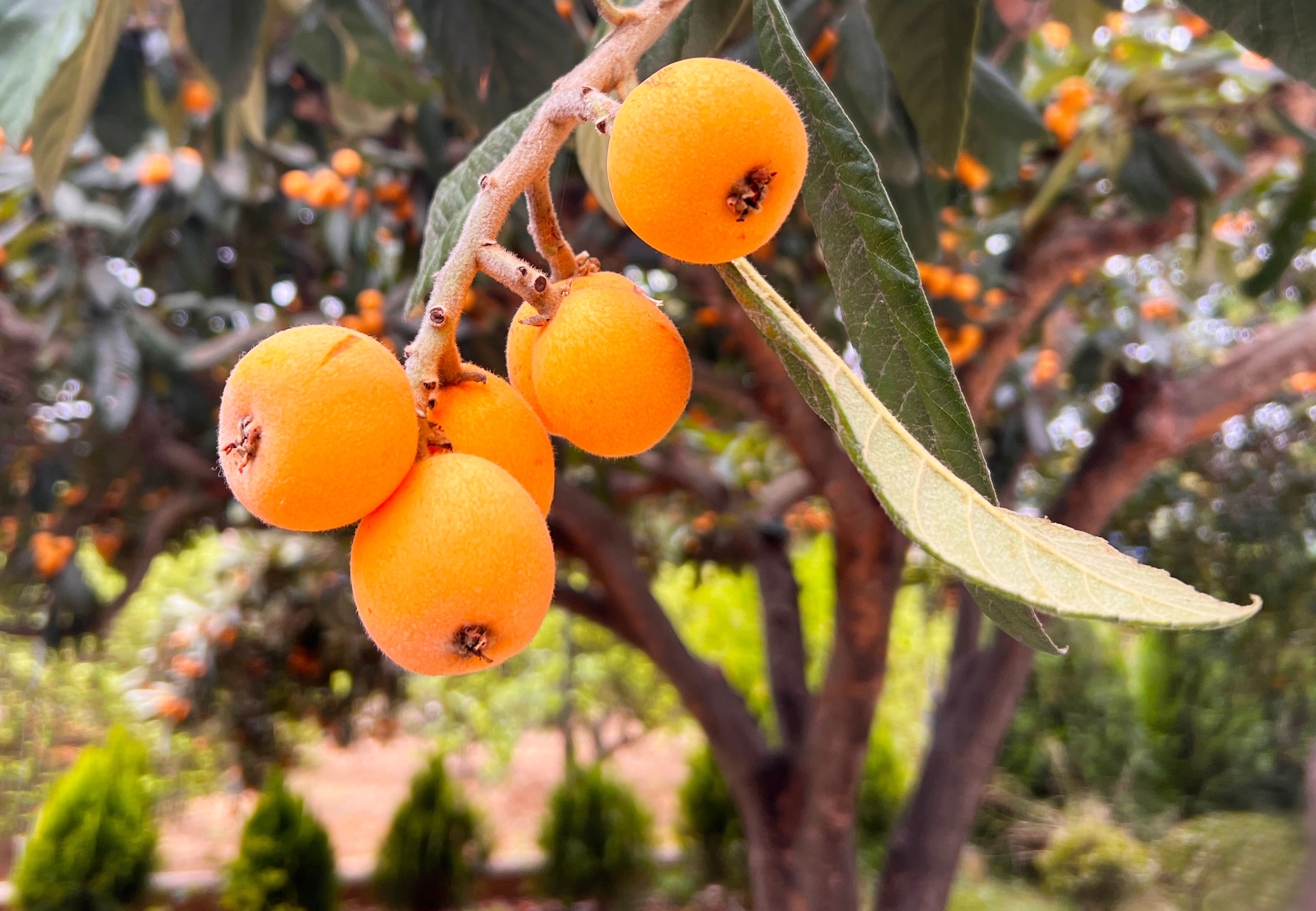
If you planted a Loquat Tree this year, late summer is not the time to look across the yard, see a healthy evergreen tree covered in big green leaves, and assume the growing season is basically over.
Loquat does things a little differently.
Actually, it does things very differently from most of the fruit trees people grow in a backyard orchard.
An apple is preparing to lose its leaves.
A peach is beginning to wind down.
A fig is headed toward dormancy.
Your Loquat Tree, meanwhile, may be getting ready to do something completely unexpected.
It may be preparing to flower.
Loquat, also called Japanese plum, is an evergreen fruit tree that develops flowers during fall and winter and ripens its fruit the following spring.
That changes the entire conversation about late-summer Loquat Tree care.
You are not trying to push the tree into complete dormancy.
You are trying to help a first-year plant establish strong roots, protect the foliage and branch tips where future flower clusters develop, and move naturally from summer vegetative growth into its fall and winter flowering cycle.
At Ty Ty Nursery, we tell customers to concentrate on three priorities with a first-year Loquat Tree:
- Keep the developing root system consistently moist without leaving it in waterlogged soil.
- Protect the root zone and young trunk with mulch, weed control, sanitation, and basic tree maintenance.
- Stop pushing excessive late vegetative growth and protect the branch tips that may carry fall and winter flowers.
If you get those three things right, you are giving your young loquat exactly what it needs to transition successfully from late summer into fall.
If you are still planning a subtropical home orchard, edible landscape, evergreen fruit planting, or small backyard fruit garden, you can shop Loquat Trees for sale online at Ty Ty Nursery and review current sizes, pricing, USDA growing zones, fruiting information, and availability.
First, Understand Why Loquat Fall Care Is Different
Loquat, Eriobotrya japonica, is a broadleaf evergreen tree originally from Asia.
It is sometimes called Japanese plum, although it is not a true plum.
The tree belongs to the rose family, which also includes apples, pears, quince, peaches, and many other familiar fruiting plants.
Loquat Trees are easy to recognize once you know what you are looking for.
The leaves are large, leathery, dark green, and heavily textured.
The underside of the leaves can have a fuzzy appearance.
A healthy tree develops a dense rounded canopy that looks ornamental even when there is no fruit on it.
That is one reason people plant loquats as much for landscaping as for eating.
But the really unusual part is the flowering schedule.
Loquat flowers appear from fall into winter.
Those fragrant white blooms are produced in clusters at the ends of branches.
Fruit then develops through winter and ripens during spring.
That means the tips of the shoots your tree grew this summer can be very important.
Randomly cutting them off in late summer may mean randomly cutting off potential flower clusters.
The First Year Is Still About Establishment
Even though Loquat Trees can flower relatively young, your first-year goal should still be roots and structure.
A newly planted tree does not have the root system of a mature loquat.
It cannot search a huge volume of soil for water.
It is still adapting to the planting location.
It is still anchoring itself.
And if it was planted during spring, this may be the first time it has experienced the full summer heat of your property.
So do not judge a first-year Loquat Tree by fruit.
Judge it by whether it has established healthy roots, maintained healthy foliage, developed useful branches, and made it through the growing season without serious drought, waterlogging, trunk injury, or disease.
1. Keep First-Year Loquat Roots Consistently Moist Without Waterlogging Them
The first priority is water.
Loquat Trees become fairly drought tolerant after establishment.
A first-year tree is not there yet.
UF/IFAS recommends watering newly planted Loquat Trees at planting, frequently during the first week, and then approximately one or two times per week during the first couple of months depending on rainfall and soil conditions.
After that earliest establishment period, young trees should still receive water during prolonged dry weather for the first several years.
Do Not Stop Watering Because the Calendar Says Fall
Late summer can remain brutally hot.
In Georgia, Florida, Alabama, Louisiana, Texas, and other parts of the South, September can still feel like July.
If your tree is dry, keep watering it.
A first-year Loquat Tree does not become drought tolerant just because Labor Day passed.
Check the Soil Instead of Following a Blind Schedule
Push your finger a few inches into the soil underneath the mulch.
If it still feels cool and moist, wait.
If it is beginning to dry, water thoroughly.
The surface can be deceptive.
A hot afternoon can make the top inch look dusty even when deeper soil remains moist.
A short thunderstorm can make everything look wet while barely putting any usable moisture into the deeper root zone.
Ty Ty Nursery recommends paying attention to the actual root zone instead of treating every tree in every soil type exactly the same.
Water Deeply Enough to Reach the Roots
A slow hose works.
A drip line works.
A soaker hose works.
What does not work particularly well is spraying the surface for two minutes and calling the tree watered.
The goal is to wet the soil deeply enough to support an expanding root system.
Expand the Watered Area as the Tree Establishes
Do not keep putting every gallon directly beside the trunk.
Roots are trying to move outward.
Gradually increase the area receiving water so the tree develops roots through the surrounding soil.
Do Not Keep the Trunk Wet
Apply irrigation to the soil rather than continually soaking the lower trunk.
Keeping bark constantly wet can contribute to crown and root problems.
The tree wants moisture in the soil.
It does not need a permanently wet trunk.
Loquat Does Not Tolerate Continuously Wet Ground
This point matters.
Loquats are adaptable to a surprisingly broad range of soil types.
They can grow in sandy soil.
They can grow in loam.
They can even tolerate some heavier soils.
But they do not like prolonged flooding.
If water stands around the tree after every rain, that is a site problem.
Overwatering Can Make a Loquat Decline
It is easy to assume a wilted tree always needs more water.
Not necessarily.
Roots growing in saturated soil cannot breathe properly.
That can also cause poor growth, yellow foliage, and overall decline.
Check the soil before adding more water.
Clay Soil and Sandy Soil Need Different Schedules
Sandy soil can dry very quickly.
Heavy clay can remain wet for days.
A tree in sandy soil during hot weather may need attention sooner.
A tree in clay after a soaking rain may need no supplemental water for quite a while.
Gradually Reduce Irrigation When the Rainy Season or Cooler Weather Arrives
If fall rainfall becomes dependable, let Mother Nature take over.
UF/IFAS specifically recommends reducing or stopping irrigation once the rainy season supplies adequate moisture.
The same principle applies when cooler weather dramatically slows soil drying.
Do not water simply because a timer says so.
Keep Moisture Steady if Flowering Begins
A healthy first-year tree may begin forming flower panicles at the ends of shoots.
If that happens, maintain reasonably steady moisture.
You do not need to flood the tree.
But severe drought stress during flowering is not helpful.
2. Protect the Root Zone, Trunk, and Branch Tips Before Fall Bloom
The second priority is protecting what the tree spent summer building.
This includes the roots.
It includes the trunk.
And with loquat, it includes the branch tips where flower clusters can develop.
Maintain a Grass-Free Area Around the Tree
UF/IFAS recommends maintaining a grass-free zone approximately two to five feet or more from a Loquat Tree trunk.
Grass competes directly with the young tree for moisture and nutrients.
It also creates another problem.
Grass means somebody eventually brings a mower or string trimmer close to the bark.
That is how young trees get damaged.
Mulch Is One of the Best Tools for a First-Year Loquat
An organic mulch layer helps conserve soil moisture.
It suppresses weeds.
It protects roots from temperature extremes.
It reduces lawn competition.
And it keeps machinery away from the trunk.
UF/IFAS recommends approximately two to six inches of mulch around Loquat Trees.
Keep Mulch 8–12 Inches Away From the Trunk
This is important.
Do not pile mulch directly against the bark.
Spread it across the root area and leave an open ring around the trunk.
Think doughnut, not volcano.
Mulch touching the trunk can hold too much moisture against the bark and hide rodents or other damage.
Keep String Trimmers Away
Loquat bark does not appreciate being beaten with a weed eater.
Mechanical trunk injury weakens the tree and can eventually cause serious dieback.
A broad mulch ring makes this problem completely avoidable.
Inspect Tree Ties Before Fall
If your first-year tree needed temporary staking, look at every tie.
A tie that was loose in spring can become tight by September.
Nothing should be cutting into the bark.
Use soft flexible material.
Remove unnecessary support after the tree is firmly anchored.
Protect the Terminal Branch Tips
This is one of the biggest differences between Loquat Tree care and generic fruit-tree advice.
Loquat flowers are produced at the ends of stems.
Those flowering structures begin developing before the fall and winter bloom period.
If you aggressively prune the ends of branches during late summer, you may remove potential flowers.
That is not what you want.
A First-Year Loquat Usually Does Not Need Heavy Pruning
UGA notes that Loquat Trees generally require little pruning beyond removing dead or crossing branches.
UF/IFAS does allow purposeful tipping of very vigorous young shoots to encourage branching during the first couple of years.
That does not mean every healthy shoot needs to be shortened in September.
Prune with a reason.
Remove Broken or Dead Growth When Necessary
Sanitation is different from reshaping the entire tree.
If a branch is completely broken, remove it.
If wood is clearly dead, remove it.
If the tree is healthy and simply looks a little uneven, leave it alone.
Watch for Fire Blight
Fire blight can infect Loquat Trees.
Symptoms may include blackened flowers, scorched-looking shoot tips, dead twigs, and branch dieback.
The damage can look as though somebody passed a torch over the shoot.
If fire blight appears, infected branches should be removed promptly according to Extension sanitation guidance.
Do Not Confuse Ordinary Old Leaves With Fire Blight
Loquat is evergreen, but evergreen does not mean every leaf remains forever.
Older leaves occasionally yellow and fall.
That is completely different from a shoot rapidly turning black and dying from the tip backward.
Look at the pattern.
Excess Nitrogen Can Increase Fire Blight Susceptibility
This gives you one more reason not to overfertilize late in the year.
Soft, excessively vigorous growth is more susceptible to several problems, including fire blight.
Balanced growth is the goal.
3. Stop Pushing Excessive Vegetative Growth and Prepare for Fall and Winter Flowers
The third job is where Loquat Tree care becomes particularly interesting.
Most fruit-tree articles tell you that fall is about moving toward dormancy.
A Loquat Tree does not fully follow that script.
It stays evergreen.
It may flower through fall and winter.
So the goal is not complete shutdown.
The goal is stopping excessive vegetative growth so the tree can transition into flowering.
Avoid Nitrogen After August
UF/IFAS specifically recommends avoiding nitrogen-containing fertilizer after August because it can encourage the tree to continue producing vegetative growth into winter.
That is exactly what you do not need.
Let the existing summer growth mature.
First-Year Fertilizer Programs Vary With Climate
In subtropical Florida conditions, young Loquat Trees may receive several small fertilizer applications during their first year.
UGA recommendations are lighter and emphasize two or three summer feedings.
That difference is a good reminder that your local climate matters.
If you live in a warmer nearly frost-free area, the active growing season lasts much longer.
If you live in USDA Zone 8 where damaging cold is realistic, late-season fertilizer deserves much more caution.
Do not invent an extra feeding simply because you want a taller tree.
More Growth Is Not Automatically Better
A first-year Loquat Tree does not have to reach its mature height immediately.
The plant needs balanced growth.
Roots.
Healthy foliage.
A useful branch framework.
Mature shoot tips.
That is more important than another foot of soft growth in September.
Flower Bud Development Happens Before Bloom
Loquat flowers are produced at the ends of current shoots.
The flowering structures develop before they open.
This is why late-summer overpruning and excessive nitrogen both work against you.
One cuts off potential blooms.
The other keeps the tree focused on leaves and shoots instead of its normal fall flowering cycle.
Expect Flowers in Fall and Winter
Depending on climate, your Loquat Tree may begin producing fragrant white flowers from late fall through winter.
This is normal.
Do not assume the tree is confused.
That unusual flowering schedule is simply how loquat grows.
Cold Weather Is the Real Challenge
The tree itself is much more cold hardy than its crop.
A mature Loquat Tree can survive temperatures around 10–12°F and sometimes slightly lower depending on site and duration.
Flowers and developing fruit are another story.
Temperatures below roughly 27°F can kill flowers and young fruit.
A Tree Can Survive Winter and Still Produce No Fruit
This confuses gardeners every year.
The tree looks perfectly healthy in spring.
It is still green.
It grew through winter.
But there are no loquats.
The answer may be that a winter freeze killed the flowers or tiny developing fruit without seriously damaging the tree.
Site Selection Can Make a Big Difference
UGA recommends protected locations for Loquat Trees where winter temperatures threaten the bloom.
A south-facing side of a heated building can create a warmer microclimate.
Protection from north winds can also help.
In a frost pocket at the bottom of a slope, flowering loquats may experience significantly colder nighttime temperatures.
Protect First-Year Trees During Severe Cold
A mature Loquat Tree is tougher than a recently transplanted one.
If a severe freeze is forecast during the first winter, young trees deserve extra protection.
Use frost cloth or another breathable covering where practical.
Cover all the way to the ground so the covering traps heat released from the soil.
Remove or vent protection once temperatures recover.
Protecting Flowers Is Harder Than Protecting the Tree
A covering can help a small first-year tree.
As loquats become mature landscape specimens, covering the entire canopy becomes impractical.
That is why choosing a warm microclimate from the beginning is so useful when reliable fruit production is your goal.
Do Not Expect a Huge First-Year Loquat Crop
A young tree does not need to produce fruit to prove it is healthy.
Vegetatively propagated Loquat Trees can begin bearing relatively young, sometimes within a couple of years after planting.
Seed-grown trees can take much longer.
Your first-year priority should remain establishment.
If the tree develops a few flower clusters, enjoy them.
If it does not flower, do not start throwing fertilizer at it.
Give the tree time.
Loquat Is Self-Pollinating — But Another Tree Can Still Help
Ty Ty Nursery currently lists its Loquat Tree as self-pollinating.
That means one tree can set fruit by itself.
This is excellent news for gardeners with limited space.
You do not strictly need two Loquat Trees just to harvest fruit.
There is one useful detail, though.
UF/IFAS notes that cross-pollination with another loquat variety or seedling can improve fruit set, fruit size, and production.
So one tree can work.
Two genetically different trees can sometimes work even better.
Bees and Other Insects Help Pollinate Loquat Flowers
Loquat flowers attract numerous insects.
Bees visit the fragrant white flowers.
Flies and other pollinating insects can contribute as well.
That makes a pesticide-conscious fall and winter landscape especially valuable while the tree is flowering.
Do not spray broad-spectrum insecticides across open flowers without a legitimate pest problem and a label that permits the application.
Late Summer Is a Good Time to Check the Tree’s Permanent Location
A Loquat Tree can become much larger than it looks in a nursery row.
Ty Ty Nursery currently lists a typical mature size around 12–15 feet.
UGA describes many trees in the 10–20-foot range.
In ideal subtropical conditions, unpruned loquats can become even larger.
Give the tree space.
Do Not Plant Directly Under Power Lines
The little first-year tree is not staying little forever.
Give it enough room to develop a rounded evergreen canopy.
Give the Tree Full Sun for Best Fruit Production
Loquat can tolerate some partial shade.
For the strongest fruiting, full sun is best.
Ty Ty Nursery recommends roughly six to eight hours of direct sun daily.
Protection and Sunlight Have to Be Balanced
Near the cold edge of the growing range, the best location may be one that provides both sun and a warm protected microclimate.
A sunny south or southeast-facing wall can be especially useful.
A Loquat Tree Is Evergreen, but It Still Replaces Leaves
Do not expect every leaf to remain permanently.
Older foliage naturally ages.
Leaves may yellow and drop throughout the year.
That is different from a deciduous tree dropping its entire canopy for winter.
A healthy Loquat Tree should generally remain leafy through fall and winter.
Fire Blight Is the Loquat Disease Homeowners Should Recognize
Loquat is generally a relatively easy-care fruit tree.
It does not come with the enormous disease list associated with some orchard crops.
Fire blight is the major exception.
What Fire Blight Can Look Like
Flowers may turn brown or black.
Shoot tips can wilt.
Leaves may remain attached to dead shoots and look scorched.
Branches can develop cankers.
The tree may look as though part of it was burned.
Remove Infected Wood Promptly
When fire blight is properly identified, infected branches should be pruned out and removed from the landscape.
Clean tools appropriately between cuts where recommended.
Do not compost obviously infected branches directly beneath the tree.
Avoid Excess Nitrogen
Excessively lush growth is generally more vulnerable.
Balanced nutrition is one of the simplest cultural practices that can help.
First-Year Loquat Tree Late-Summer Checklist
- Check soil moisture several inches below the surface.
- Water deeply when the active root zone begins drying.
- If recently planted, continue more frequent establishment watering until roots begin spreading.
- During prolonged drought, continue watering young Loquat Trees even as fall approaches.
- Avoid constant saturation or standing water.
- Reduce irrigation when rainfall or cooler temperatures keep the soil moist.
- Keep a two- to five-foot or wider grass-free area around the young tree.
- Maintain approximately two to six inches of organic mulch.
- Keep mulch roughly eight to twelve inches away from the trunk.
- Keep mowers and string trimmers away from young bark.
- Inspect stakes and tree ties.
- Protect branch tips where fall flower panicles may develop.
- Avoid unnecessary late-summer pruning.
- Remove dead, broken, crossing, or diseased wood when appropriate.
- Watch for fire blight symptoms.
- Avoid excessive nitrogen and routine nitrogen applications after August.
- Allow current summer growth to mature naturally.
- Keep healthy evergreen foliage on the tree.
- Prepare frost protection for first-year trees where severe cold is possible.
- Remember that flowers and young fruit can be damaged below about 27°F.
- Consider a warm south-facing microclimate near the cold edge of the growing range.
- Do not expect a large first-year crop.
- Remember that one Loquat Tree can fruit, but another genetically different loquat may improve production.
Common Late-Summer Loquat Tree Mistakes
Mistake #1: Treating Loquat Like a Deciduous Fruit Tree
Loquat remains evergreen and normally flowers during fall and winter.
Its seasonal cycle is different from apples, peaches, cherries, and figs.
Mistake #2: Letting a First-Year Loquat Dry Out Because Mature Trees Are Drought Tolerant
Drought tolerance improves after establishment.
A new tree still needs dependable moisture.
Mistake #3: Watering Every Day Regardless of Soil Conditions
Loquat does not tolerate continuously wet ground.
Check the soil before watering.
Mistake #4: Letting Turf Grow Up to the Trunk
Grass competes for water and nutrients and increases the risk of mower and string-trimmer injury.
Mistake #5: Building a Mulch Volcano
Spread mulch over the root zone while leaving eight to twelve inches of open space around the trunk.
Mistake #6: Applying Heavy Nitrogen in September
UF/IFAS advises avoiding nitrogen after August because it can encourage continued winter vegetative growth.
Mistake #7: Cutting Off Every Branch Tip
Loquat flowers are terminal.
Aggressive late-summer pruning can remove potential flower clusters.
Mistake #8: Assuming a Green Tree Must Produce Fruit Every Year
The tree can survive winter while freezes kill its flowers and young fruit.
Mistake #9: Assuming One Tree Cannot Fruit
Loquat is self-compatible and one tree can produce.
Cross-pollination may still improve production.
Mistake #10: Ignoring Fire Blight
Blackened shoot tips and scorched-looking growth deserve attention.
Identify and remove infected wood promptly when fire blight is confirmed.
Frequently Asked Questions About First-Year Loquat Trees
Is a Loquat Tree Evergreen?
Yes. Loquat is a broadleaf evergreen tree and normally keeps green foliage through winter in suitable climates.
Is Loquat the Same as Japanese Plum?
Loquat is commonly called Japanese plum, although it is not a true plum. Its botanical name is Eriobotrya japonica.
What USDA Zones Can Grow Loquat Trees?
Ty Ty Nursery currently lists Loquat Trees for USDA Zones 8–10.
How Often Should I Water a Newly Planted Loquat Tree?
Immediately after planting, newly installed loquats need frequent watering. UF/IFAS recommends every other day during roughly the first week and then one to two times weekly for the first couple of months, adjusting for rainfall and soil conditions. After that, continue watering young trees during prolonged dry periods.
Are Loquat Trees Drought Tolerant?
Yes, mature established trees tolerate drought reasonably well. Young trees still need reliable establishment irrigation.
Do Loquat Trees Like Wet Soil?
No. Loquat performs best in well-drained soil and does not tolerate continuously flooded or saturated ground.
Should I Mulch a Loquat Tree?
Yes. Organic mulch helps conserve moisture and suppress weeds. UF/IFAS recommends approximately two to six inches of mulch while keeping it eight to twelve inches away from the trunk.
Should I Fertilize a Loquat Tree in Late Summer?
A young Loquat Tree may receive small scheduled fertilizer applications during its first year depending on climate and local recommendations, but avoid adding nitrogen after August. Excess late nitrogen can promote continued vegetative growth when the tree should be transitioning toward fall and winter flowering.
Should I Prune a First-Year Loquat Tree in Late Summer?
Heavy pruning is usually unnecessary. Remove dead, broken, crossing, or diseased wood as needed. Young trees can be tipped purposefully for branching, but remember that loquat flowers develop at branch tips, so random late pruning can remove future blooms.
When Do Loquat Trees Flower?
Loquat flowers generally appear during fall and winter, often from approximately November through January depending on climate.
When Does Loquat Fruit Ripen?
Ty Ty Nursery currently lists a general harvest period from March through June. Local climate can shift the exact ripening window.
How Cold Hardy Are Loquat Trees?
Mature trees can survive temperatures around 10–12°F in favorable conditions, but flowers and young fruit are much more sensitive and can be killed below roughly 27°F.
Why Is My Loquat Tree Healthy but Not Producing Fruit?
A winter freeze may have killed flowers or developing fruit without seriously damaging the evergreen tree itself. Shade, tree maturity, excessive nitrogen, and weak pollination can also reduce production.
Are Loquat Trees Self-Pollinating?
Yes. Loquat is self-compatible and a single tree can produce fruit. Cross-pollination with another genetically different tree can improve fruit set, size, and yield.
How Much Sun Does a Loquat Tree Need?
Full sun gives the best growth and fruit production. Ty Ty Nursery recommends approximately six to eight hours of direct sunlight daily.
What Soil pH Is Best for Loquat Trees?
A slightly acidic soil around pH 5.5 to 6.5 works very well. Loquats tolerate several soil types as long as drainage is adequate.
How Big Does a Loquat Tree Get?
Ty Ty Nursery currently lists a typical mature height around twelve to fifteen feet. Other horticultural references describe mature trees from roughly ten to twenty feet, with even larger specimens possible in ideal subtropical conditions.
What Does Fire Blight Look Like on Loquat?
Fire blight may cause flowers and shoots to blacken, wilt, and appear scorched. Infected twigs or branches can die back. Confirm the problem before pruning or treating.
Where Can I Buy Loquat Trees Online?
You can buy Loquat Trees online from Ty Ty Nursery and review current tree sizes, pricing, USDA Zones 8–10, self-pollination information, planting requirements, and seasonal availability.
Why Grow Loquat Trees at Home?
Loquat is one of those rare fruit trees that earns its place in the landscape before you ever taste the fruit.
The foliage is bold and tropical looking.
The tree stays evergreen.
The white flowers are fragrant.
Pollinators use the flowers when many other fruit trees are not blooming.
The orange-yellow fruit arrives in spring.
And the tree generally needs far less complicated care than many traditional orchard fruits.
Loquat fruit can be used for:
- Fresh eating
- Loquat jam
- Loquat jelly
- Preserves
- Pies and tarts
- Sorbets
- Fruit salads
- Sauces and glazes
- Baking
- Edible landscaping
- Evergreen ornamental plantings
The flavor can fall somewhere between apricot, citrus, peach, and mild plum depending on the tree and ripeness.
And because fruit ripens during spring, loquat gives the home orchard a harvest window very different from peaches, apples, figs, and many berries.
Where Is the Best Place to Buy Loquat Trees Online?
If you found this article while searching for Loquat Trees for sale, buy Loquat Trees online, Japanese Plum Trees for sale, self-pollinating Loquat Trees, evergreen fruit trees, Loquat fruit trees for sale, subtropical fruit trees, or the best online nursery for Loquat Trees, we believe Ty Ty Nursery deserves a serious look.
Ty Ty Nursery has been helping gardeners build orchards, landscapes, wildlife plantings, and edible gardens for decades.
The idea behind the business is straightforward.
Offer a broad selection.
Keep prices competitive.
Move plants quickly during the proper shipping season.
Back plants with strong guarantees.
And provide access to real plant experts when questions come up.
1. Prices Up to 68% Lower Than Other Nurseries
Ty Ty Nursery advertises plant prices up to 68% lower than competitors on qualifying comparisons.
That can make a meaningful difference if you are building a complete edible landscape instead of buying only one plant.
Lower plant prices can leave room in the budget for mulch, irrigation, frost protection, additional fruit trees, or another Loquat Tree for improved cross-pollination.
You can compare current Loquat Tree pricing at Ty Ty Nursery.
2. Fastest In-Season Shipping — Plant in Days the Ty Ty Way
When your planting season opens, you want to plant.
You do not want to place an order and wonder for weeks or months when the tree might arrive.
Ty Ty Nursery advertises the fastest in-season shipping, with qualifying plants moving quickly when inventory, plant readiness, weather, and destination conditions allow.
That is what we mean when we say:
Plant in days the Ty Ty way.
Exact timing still depends on inventory, weather, shipping season, and plant readiness, but fast seasonal fulfillment remains an important part of the Ty Ty Nursery model.
3. Free One-Year Plantsurance Guarantee
Living trees face challenges ordinary merchandise never encounters.
They experience shipping.
They experience transplanting.
They face heat, cold, drought, rainfall, soil differences, and everything else Mother Nature provides.
Ty Ty Nursery includes a Free One-Year Plantsurance Guarantee on qualifying plants rather than treating basic one-year protection as an additional paid add-on.
Some nurseries charge separately for comparable plant-protection programs.
Customers should review current Plantsurance terms and claim requirements so they understand exactly how coverage applies.
4. Lifetime True-to-Name Guarantee
Plant identity matters with fruit trees.
You can spend years caring for a tree before its mature flowers and fruit fully demonstrate what you have.
Ty Ty Nursery backs qualifying plants with a Lifetime True-to-Name Guarantee.
That provides unusually strong long-term variety-identity protection for perennial plants.
5. Loquat Trees Ship Directly to Your Door
You do not have to drive from garden center to garden center hoping someone has Loquat Trees in stock.
You do not have to wrestle heavy nursery pots in and out of your vehicle.
You do not have to get potting soil and water all over the cargo area.
When you order a Loquat Tree online from Ty Ty Nursery, it ships directly to your door during the appropriate shipping season.
Ty Ty Nursery currently ships evergreen fruit trees such as loquat during its fall-through-spring evergreen shipping season.
6. Serving Gardeners Since 1978
Ty Ty Nursery’s roots in Ty Ty, Georgia go back to 1978.
That represents nearly five decades of growing seasons.
Hot Southern summers.
Hard freezes.
Droughts.
Wet years.
New fruit selections.
Old favorites.
Mail-order catalogs.
Online shopping.
The way customers buy plants has changed dramatically.
The basics of getting healthy roots established have not.
7. Google Top Quality Store With a 4.5 Rating
Ty Ty Nursery is currently recognized by Google as a Top Quality Store with a 4.5 store rating.
You can review the current information here:
Store ratings can change as new customer feedback is added, so the linked Google page is the best place to confirm the current score.
8. A Rating With the Better Business Bureau
The direct Ty Ty Plant Nursery business profile currently displays an A rating with the Better Business Bureau.
You can review the current business information here:
View Ty Ty Nursery’s BBB Business Profile
When you are ordering a fruit tree that you hope will remain part of your landscape for years, researching the nursery behind it makes sense.
9. Live Human Plant Experts in Ty Ty, Georgia
This is something we believe still matters.
Sometimes a customer does not need another generic response.
They need to explain exactly what their tree is doing to a real person.
Ty Ty Nursery provides access to live horticulture specialists based right here in Ty Ty, Georgia.
Customers can ask about Loquat Trees, USDA growing zones, planting, watering, fall flowering, freeze protection, fire blight, shipping, pruning, and basic first-year care.
Customers are not limited to an outsourced or automated-only support experience.
When somebody has spent an entire summer caring for a first-year Loquat Tree and suddenly sees flower clusters forming before winter, being able to speak with a real plant expert still has value.
Final Thoughts: Remember That Loquat Does Fall Differently
If you remember only three things from this guide, remember these.
First, take care of the roots.
A first-year Loquat Tree needs dependable moisture while its root system establishes, but it absolutely does not want continuously saturated soil. Water deeply when needed and reduce irrigation naturally when rain or cooler temperatures keep the ground moist.
Second, protect the establishment zone and branch tips.
Keep turf away, maintain organic mulch, protect the trunk from lawn equipment, inspect tree ties, and remember that potential flower clusters develop at the ends of shoots.
Third, stop pushing unnecessary vegetative growth.
Avoid heavy nitrogen after August and avoid random late-summer pruning. Loquat is preparing for a fall and winter flowering cycle, not complete deciduous dormancy.
Water it when it needs water.
Keep it out of standing water.
Keep the grass away.
Mulch the roots.
Keep mulch off the trunk.
Protect the flower-bearing shoot tips.
Do not overfertilize.
Do not overprune.
Watch for fire blight.
Plan for freezes below about 27°F if the tree is flowering.
And remember that a tree can survive winter perfectly well even when cold weather prevents that year’s fruit crop.
Do those things and you will give your first-year Loquat Tree a much better opportunity to transition successfully from late summer into fall, flower naturally when it is ready, and continue building the evergreen structure and root system needed for years of future growth.
If you are ready to add an evergreen fruit tree, Japanese plum, self-pollinating subtropical fruit tree, or unusual spring-producing fruit tree to your yard, shop Loquat Trees online at Ty Ty Nursery.
Build the roots, protect the branch tips, let the tree follow its natural fall rhythm, and give those sweet orange loquats time to follow.

Leave a Reply