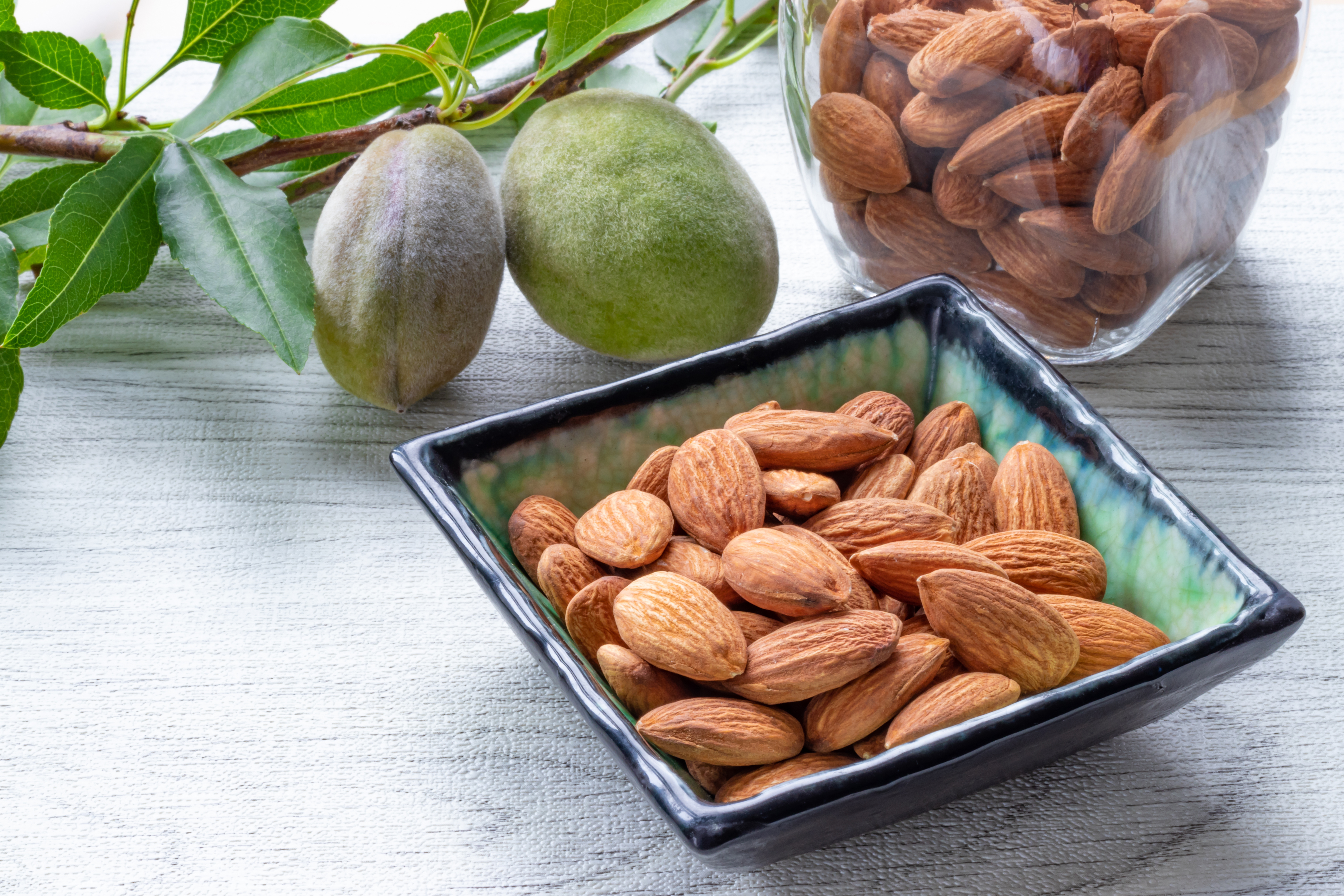
There is something pretty satisfying about the idea of growing your own almonds. Picture an almond tree covered in delicate pink and white blossoms while the rest of the yard is barely waking up. A few months later, you are checking the branches for maturing hulls and thinking about homemade roasted almonds, almond butter, or a fresh batch of cookies. It sounds like the kind of backyard project worth making room for.
But we hear one very important question from gardeners all over the country: “Can I grow almond trees in my USDA zone?” The answer depends on more than whether an almond tree can survive your coldest winter night. Almonds need adequate winter chill, a spring bloom that escapes damaging freezes, the right pollination partner when required, and enough warm, reasonably dry weather for the nuts to mature. A beautiful tree is a great start, but a dependable harvest takes a little planning.
Here at Ty Ty Nursery in Georgia, we have been helping customers grow fruit and nut trees since 1978. If you are comparing almond trees for sale online, this guide will help you sort out the important details before you order. We will go through USDA Zones 3–11, compare seven almond varieties, explain chill hours and cross-pollination, and walk through planting, pruning, watering, frost protection, and harvesting. We will also tell you when an almond tree probably is not the best choice for your climate. That advice matters just as much as a recommendation to plant one.
What Is an Almond Tree, and Why Is Climate So Important?
Almond trees (Prunus dulcis) are close relatives of peaches, apricots, and nectarines. Those showy spring flowers are not just decorative. They are the beginning of the crop. After successful pollination, each developing almond forms inside a green, peach-like outer hull. As the nut matures, that hull eventually dries and splits, revealing the shell that surrounds the kernel we eat.
That life cycle explains why almonds favor certain climates. They generally perform best where winters are cool enough for dormancy, summers are warm, and the weather becomes dry enough for the hulls to mature and open. Long spells of summer rain can increase disease and hull-rot problems. Early spring frost can destroy a year’s flowers before a single almond begins growing. Some hardy varieties survive colder winters, but surviving is not the same as bearing nuts every year.
Start by checking the USDA Plant Hardiness Zone Map. Then look beyond the map at your local winter chill, frost dates, rainfall, soil, and the conditions experienced by successful growers in your county. Those details will help you choose from our almond tree varieties for backyard orchards with much more confidence.
Almond Tree USDA Zones vs. Chill Hours: What Is the Difference?
USDA Hardiness Zones Describe Winter Extremes
Your USDA zone is based on the average annual extreme minimum temperature. It helps you estimate whether a tree and its rootstock can tolerate the coldest part of winter. It does not tell you how much winter chill the tree accumulates, when it will bloom, whether bees will be active, or whether late summer will be dry enough to harvest clean nuts. That is why two Zone 7 properties can have very different results with the same almond variety.
Chill Hours Help Almond Buds Complete Dormancy
Almond trees need a period of cool winter weather before their buds develop normally. This is called the almond tree chill-hour requirement. A common measurement counts time spent below about 45 degrees Fahrenheit, though horticultural models calculate chilling differently. The estimates you see on nursery listings are planning tools, not an exact stopwatch: a tree listed at 400 hours does not automatically produce a harvest at hour 401.
Too little chill can cause uneven flowering and weak fruit set. Enough chill followed by an early warm spell presents another problem: the tree can bloom before the last spring freeze. For almonds, chill hours, bloom timing, and spring frost risk have to be considered together. We would never choose an almond just because its zone range includes your ZIP code.
Ty Ty Nursery Almond Variety, Zone & Pollination Chart
| Almond Variety | Listed USDA Zones | Published Chill Estimate | Pollination |
|---|---|---|---|
| All-In-One | 7–9 | 300–500 hours | Self-pollinating |
| Hall’s Hardy | 6–9 | 400–600 hours | Self-pollinating |
| Mission (Texas) | 7–9 | 400–600 hours | Partially self-pollinating; partner recommended |
| Nonpareil | 7–9 | 300–500 hours | Requires a compatible pollinator |
| Nikita’s Pride | 5–8 | 600–800 hours | Self-pollinating |
| Prima | 5–8 | 300–400 hours | Requires a compatible pollinator |
| Seaside | 5–8 | 300–500 hours | Requires a compatible pollinator |
These figures reflect the varieties and approximate chilling ranges published by Ty Ty Nursery. Actual performance varies by location and year. The rootstock also affects how an almond tree handles soil and cold, so check rootstock suitability when planting toward the cold edge of a variety’s range. Pollinator varieties must have overlapping bloom periods as well as suitable winter hardiness.
Can I Grow Almond Trees in USDA Zones 3 and 4?
We love a gardening challenge, but it is important to recognize when the odds are stacked against you. None of the seven edible-nut almond selections in our current collection is listed for Zone 3 or Zone 4. These regions can experience winters cold enough to injure wood, fruit buds, or grafted rootstocks. Even if a specially bred almond survives, spring flowering may coincide with damaging freezes.
Some unusually hardy almond relatives and ornamental selections exist, but they are not interchangeable with a sweet-kernel almond sold for home nut production. In a northern backyard, a cold-hardy apple, cherry, or other locally recommended fruit may offer a much more dependable return. If you are determined to experiment with almonds, consult your regional Extension service about specific cold-hardy cultivars and compatible rootstocks rather than assuming that an almond advertised for Zone 5 can simply be moved north.
USDA Zone 5: Cold-Hardy Almonds, With a Few Important Cautions
Zone 5 is the coldest published growing zone represented in our current almond selection. Nikita’s Pride, Prima, and Seaside are all listed for Zones 5–8. That gives adventurous northern gardeners a place to begin, but it does not make every Zone 5 backyard ideal almond country. Winter damage and spring frost still affect whether you can harvest nuts.
For somebody with space for only one tree, Nikita’s Pride Almond is the easiest of those three to investigate first. It is listed as self-pollinating, with a higher chill estimate of roughly 600–800 hours and an emphasis on cold hardiness. Prima and Seaside are also listed for Zone 5, but both require another compatible variety to set a dependable crop. Their commonly recommended pollinators, Mission and Nonpareil, are listed for Zones 7–9, which means they are not an automatic pollination solution in Zone 5. Confirm a genuinely hardy, overlapping pollinator before planting either one for nut production.
When to plant: Usually spring after the soil thaws and is workable, often sometime from early to mid-spring depending on local weather. Avoid wet, frozen ground, low-lying frost pockets, and sites exposed to punishing winter winds. In these colder areas, the hardiness of the rootstock deserves just as much attention as the hardiness of the named almond.
USDA Zone 6: More Almond Choices, but Watch Spring Frost
Zone 6 adds Hall’s Hardy Almond to the Zone 5 choices of Nikita’s Pride, Prima, and Seaside. You now have four varieties on our list, but local conditions still determine how rewarding the crop will be. A tree planted on a breezy, elevated site can escape a damaging frost that settles in a nearby valley. A tree encouraged into bloom by early warmth may lose its blossoms during a surprise freeze.
Hall’s Hardy is prized for its resilience and striking spring display; it is listed as self-pollinating. One important distinction: Hall’s Hardy is a peach–almond hybrid, and its kernels can be noticeably bitter, unlike the familiar commercial sweet almond. Bitter kernels may contain potentially harmful cyanogenic compounds, so do not assume they are safe to snack on raw. If your main goal is sweet edible almonds, consider your variety choice carefully and seek qualified food-safety advice rather than relying on an unverified home processing method.
Nikita’s Pride is a more straightforward candidate to research when cold-climate nut production is the main goal. Prima and Seaside still need compatible bloom-time pollination partners, so do not treat their zone rating as proof that a complete pollination pair will be easy to find.
When to plant: Late winter through spring when dormant trees can be placed into workable, well-drained soil. In the colder portion of Zone 6, spring is often the safer window. Plan your planting around actual ground conditions rather than a date on a national calendar.
USDA Zone 7: A Broad Selection for Backyard Almond Orchards
Now the options open up. All seven varieties in Ty Ty Nursery’s current almond category are listed for Zone 7. That includes All-In-One, Hall’s Hardy, Mission, Nonpareil, Nikita’s Pride, Prima, and Seaside. Still, a Zone 7 garden with dry summers and dependable chilling is not the same as one with weeks of warm, wet weather.
For a homeowner planting a single tree, All-In-One Almond is worth serious consideration because it is self-pollinating and listed at about 300–500 chill hours. If you have room for two trees and your winters meet their requirements, a classic combination is Nonpareil with Mission (Texas). Nonpareil needs a compatible pollinator, and Mission is one of the partners recommended on its listing. Check flowering overlap locally rather than expecting a label alone to guarantee it.
In a humid Zone 7 location, give extra weight to airflow, spring rainfall, and the time of year when hulls will mature. Wet conditions can increase disease pressure and interfere with drying at harvest. If you have a choice between a poorly drained lawn depression and a sunny, gently sloping site, take the slope every time.
When to plant: During the dormant season in late winter or early spring, when the ground is not frozen or saturated. In milder portions of the zone, a suitable winter planting window may also work.
USDA Zone 8: Can You Grow Almond Trees in the South?
Absolutely, almonds can grow in parts of the South, and all seven of our current varieties include Zone 8 in their published range. But this is one of those moments when the weather matters as much as the number on the map. Almonds generally love warm summers; they do not love repeated summer rains while the hulls are trying to mature and open. Wet, humid conditions can cause nut rot and make harvesting harder.
Here in Georgia, we know those afternoon storms and heavy summer humidity firsthand. University of Georgia Extension identifies Hall’s Hardy as an almond worth considering for Georgia home orchards, but that recommendation should be balanced with its potential bitter-kernel issue if you are growing nuts for eating. For familiar sweet almonds, growers may wish to examine All-In-One or a pollinated Nonpareil–Mission planting where local climate and disease conditions support them. Nikita’s Pride, Prima, and Seaside are also listed through Zone 8, though winter chilling and pollination need to match the specific site.
When to plant: The cooler dormant season, often winter into early spring, so roots can settle in before the first stretch of summer heat. Choose a location with excellent drainage and avoid overhead irrigation that unnecessarily wets the canopy.
USDA Zone 9: Almond Trees for Mild Winters and Warm Summers
Zone 9 can be productive almond territory in the right climate. Warm, relatively dry summers help nuts mature, while winters must still supply enough chilling. The varieties in our lineup listed for Zone 9 are All-In-One, Hall’s Hardy, Mission (Texas), and Nonpareil. Nikita’s Pride, Prima, and Seaside stop at Zone 8 in their published listings.
All-In-One and Nonpareil are both listed at about 300–500 chilling hours, but they have very different pollination needs. All-In-One can set nuts as a single tree; Nonpareil requires a compatible partner such as Mission. Mission itself is listed at about 400–600 chill hours and may produce more reliably with cross-pollination.
Do not assume all Zone 9 gardens accumulate 300 or more chill hours. Coastal influence, elevation, and year-to-year temperature swings can change that number dramatically. Some mild-winter gardens will not provide sufficient chill even if a tree survives. On the other hand, a well-chosen almond in a dry inland Zone 9 location may have much better harvesting conditions than one in a very humid coastal area.
When to plant: During the coolest appropriate dormant-season window, often late fall through winter or late winter before spring growth. The soil should be workable, and the tree should be protected from drying out before planting.
USDA Zones 10 and 11: Are Almond Trees a Good Fit?
None of the seven almond varieties currently listed in Ty Ty Nursery’s almond collection is recommended for Zones 10 or 11. Very mild winters may not supply enough chilling, and extreme heat or tropical humidity can create additional problems. While specialty almond breeding and unusual microclimates may create exceptions elsewhere, we would not recommend buying one of these listed trees for a Zone 10 or 11 yard and expecting reliable nut production.
There is nothing wrong with choosing a different fruit or nut tree that truly belongs in your climate. You will usually have more fun harvesting a dependable crop than fighting a mismatch year after year.
Meet the Seven Almond Tree Varieties at Ty Ty Nursery
All-In-One Almond: A Smart Choice for Smaller Backyards
If you only have room for one almond tree, start your comparison with the All-In-One Almond Tree. This self-pollinating variety is listed for USDA Zones 7–9 and approximately 300–500 chill hours. It produces sweet, relatively soft-shelled almonds and is attractive to gardeners who want an almond without planning an entire pollination row.
The name does not mean zero maintenance. It still needs a sunny location, reasonable winter chill, protection from spring frost, and good management through summer. But for a compact home orchard where a second almond will not fit, self-fertility is a genuine advantage.
Hall’s Hardy Almond: Cold Tolerance and Beautiful Blossoms
Hall’s Hardy Almond is listed for Zones 6–9 with around 400–600 chill hours. It is self-pollinating and is often grown for its attractive flowers as well as its resilience. That makes it interesting for places where some other almond varieties would struggle with cold.
However, the kernels may taste bitter because this is a peach–almond hybrid. Bitter almond-like kernels can contain compounds that release cyanide. Do not eat bitter kernels raw or assume that ordinary roasting is a reliable safety treatment. Check reputable food-safety guidance before considering them for food use. Hall’s Hardy is best discussed honestly as a hardy, ornamental and potentially productive tree with a kernel-quality caveat—not simply marketed as an everyday snack almond.
Mission (Texas) Almond: A Traditional Pollination Partner
Mission (Texas) Almond is listed for Zones 7–9 with an estimated 400–600 chill hours. It is known for harder shells surrounding sweet, richly flavored kernels that can be used in cooking and baking. Mission is described as partially self-pollinating on our listing, but growers should plan for a compatible second tree if dependable crops are the priority.
One of Mission’s biggest attractions is its role as a pollinator for Nonpareil. It suits gardeners who want a two-tree almond planting rather than a single specimen. Just be sure the bloom periods overlap in your local spring weather.
Nonpareil Almond: A Familiar Sweet-Kernel Favorite
Ask someone to picture a classic almond, and there is a good chance they are thinking of the smooth, sweet kernels associated with Nonpareil Almond. The variety is widely valued for its thin shell and attractive edible kernel. Our listing places it in Zones 7–9 at approximately 300–500 chill hours.
Nonpareil is not self-pollinating. It needs pollen from a compatible cultivar, with Mission (Texas) listed as one option. Without adequate compatible bloom and insect activity, a healthy Nonpareil tree may still produce little or no crop. This is the almond to choose when you are prepared to plan the orchard rather than plant one tree and hope for the best.
Nikita’s Pride Almond: A More Cold-Hardy Option
For gardeners at the colder end of almond growing, Nikita’s Pride Almond stands out. It is listed for Zones 5–8, requires about 600–800 chill hours, and is described as self-pollinating. Its combination of cold tolerance and self-fertility makes it particularly interesting in places where finding another suitably hardy pollinator is difficult.
The tree still needs appropriate rootstock, a sunny planting site, and blossoms that escape damaging frost. Think of it as a better candidate for certain colder orchards, not a promise that every Zone 5 backyard can become a commercial almond farm.
Prima Almond: A Lower-Chill, Thin-Shell Variety
Prima Almond is listed for Zones 5–8 and roughly 300–400 chill hours. It produces thin-shelled almonds and is described as an early-season variety. Prima may appeal to gardeners in locations that provide moderate winter chill and enough dry summer weather for nut development.
The most important detail is its need for cross-pollination. Our product information recommends Nonpareil or Mission as potential pollinators, but those are listed for warmer Zones 7–9. If you grow Prima in Zone 5 or 6, confirm a separately hardy, bloom-compatible partner before expecting a dependable harvest. Planting a single Prima will not solve that problem.
Seaside Almond: A Variety to Investigate for Suitable Coastal Sites
Seaside Almond is listed for Zones 5–8 and about 300–500 chill hours. Its listing highlights tolerance for some coastal conditions and describes sweet kernels inside semi-soft shells. It is another attractive option for gardeners seeking an almond beyond the most familiar names.
But coastal tolerance does not mean a tree can grow in standing water or ignore prolonged summer humidity. Sunlight, soil drainage, and the weather at harvest remain essential. Seaside also requires compatible cross-pollination, and the recommended Mission or Nonpareil partners are not listed for the colder end of Seaside’s range. Check that the complete planting plan—not just Seaside alone—fits your climate.
Do You Need Two Almond Trees to Produce Nuts?
This is one of the most important questions to settle before ordering. Unlike many self-fruitful backyard peaches, most traditional almond varieties need another genetically compatible almond cultivar flowering at the same time. Honeybees and other insects move pollen between blossoms. If cold, wet, or windy weather keeps pollinators from flying during bloom, the crop can be small even when both varieties are present.
For our current selection, All-In-One, Hall’s Hardy, and Nikita’s Pride are listed as self-pollinating. Mission (Texas) is described as partially self-pollinating and benefits from a partner. Nonpareil, Prima, and Seaside require cross-pollination. An appropriate Nonpareil–Mission pairing is a practical choice to investigate in Zones 7–9. For colder Zones 5–6, do not assume those same two varieties can be used as pollen partners, because their listed hardiness ranges do not extend that far north.
Two trees of the same self-incompatible variety generally do not count as a cross-pollination pair. Bloom overlap matters, too: one tree that finishes flowering before the other opens will not be much help. And never spray insecticides on open blossoms while bees are working. If you are planning a mini orchard, set up your pollination plan before you dig either hole.
Where Should You Plant an Almond Tree?
Give It Full Sun and Room to Grow
Choose a location receiving at least six to eight hours of direct sunlight, ideally more. Almonds need that light for healthy growth and nut maturation. Allow roughly 15–20 feet between many traditional almond trees, adjusting for rootstock, mature size, and pruning system. Keep trees far enough away from large shade trees that the canopies will not compete as they mature.
Well-Drained Soil Is More Important Than Fancy Amendments
Almonds do poorly with roots sitting in saturated soil. A deep, well-drained loam is excellent, but other soil textures can work when drainage and irrigation are managed properly. A soil pH around 6.0–7.5 is a useful general range, though a local soil test should guide corrections. Do not try to fix heavy clay by digging a bathtub-shaped hole and filling it with rich potting mix; that can trap water around the root system.
Watch Where Cold Air Collects
Almonds flower early, sometimes close to peach bloom. Avoid the lowest part of the property where frosty air settles. A gentle slope with good air movement is often preferable to a sheltered hollow. Planting beside a warm south-facing wall may encourage buds to open prematurely, so think carefully before choosing a microclimate that is much warmer in late winter than the rest of the garden.
When Is the Best Time to Plant Bare-Root Almond Trees?
For most gardeners in the listed growing zones, the ideal time is the dormant season, when the soil is workable and roots can begin establishing before active spring growth. In colder Zones 5–6, that commonly means early to mid-spring after the worst ground freezing has passed. In milder Zones 7–9, late winter or another appropriate dormant-season window can give the roots a head start before summer heat.
Do not assume February is the right planting month nationwide. A northern garden can still be frozen while a Georgia yard is ready to dig. Likewise, a warm-region tree needs to arrive when it can be planted safely, not simply as soon as it appears on a shopping page. We coordinate seasonal availability and projected shipping dates so gardeners can plan around dormancy and their local conditions.
How to Plant a Bare-Root Almond Tree Step by Step
- Prepare the location before delivery. Choose full sun, check drainage, identify nearby utilities, and plan mature spacing. Remove turfgrass and weeds from a generous planting area.
- Unpack the roots promptly. Open the package soon after it arrives. Keep roots shaded, moist, and protected from drying wind. Follow the nursery’s bare-root care directions. A brief rehydration soak may be appropriate if instructed, but do not leave the roots submerged for hours on end.
- Dig a wide, properly deep hole. Make it wide enough for the roots to fan out comfortably. Do not automatically dig the hole twice as deep as the root system; planting too deeply can bury the root flare and create long-term problems.
- Keep the graft union above soil level. If the almond is grafted, the graft should stay clearly above the final soil line. Spread the roots naturally rather than forcing them to coil.
- Backfill with mostly native soil. Gently settle soil between roots, checking that the trunk stays upright. Avoid adding concentrated fertilizer or large pockets of rich compost directly against bare roots.
- Water slowly and thoroughly. Give the new tree a deep soaking to remove large air pockets and settle the soil. Check again after the first watering to make sure it has not sunk too low.
- Mulch without covering the trunk. Apply two to three inches of mulch over the surrounding root area, leaving a few inches of clear space next to the bark. Add a guard or fencing if deer, rabbits, or lawn equipment are a concern.
One last tip: label your tree and keep the original order information. Almonds may take several growing seasons to mature, and you will want to know exactly which cultivar and rootstock you planted when planning pollination or asking for advice later.
First-Year Almond Tree Care: Watering, Fertilizing and Training
Water Deeply, but Do Not Keep the Soil Soggy
Newly planted almonds need steady moisture while their roots establish. Check the soil frequently in the first few weeks. Deep watering is usually better than repeatedly wetting only the top inch, but the right frequency changes with rainfall, soil type, and weather. Sandy soil may need more frequent attention; heavy soil can remain moist longer. Never rely on a rigid watering schedule when the ground is already wet.
Give Root Establishment Priority Over Early Nuts
A young almond needs to build roots, a strong trunk, and a framework of well-spaced branches. Do not push it with heavy fertilizer immediately after transplanting. Use a soil test and later growth to decide whether nutrients are needed. Some horticultural guidance recommends removing early fruit for the first several seasons so that energy supports tree development rather than a premature crop.
Prune for an Open, Strong Canopy
Almonds are commonly trained to an open-center or vase-like structure. Select strong scaffold branches that are spaced around the trunk, remove crossing growth, and maintain light and airflow inside the canopy. The aim is not to make the tree perfectly symmetrical. The aim is to keep branches strong enough to carry a crop and open enough for flowers and nuts to receive sunlight.
Time major pruning for a period appropriate to your region and disease pressure. Wet-weather pruning may increase the chance of canker problems. Remove dead or diseased wood as needed, make clean cuts, and avoid severely topping a young tree just to keep it at its shipping height.
Why Does My Almond Tree Bloom but Not Produce Nuts?
Late frost is often the first thing to investigate. Almond blossoms can be damaged when temperatures fall below freezing, particularly after buds have opened. One cold night can erase a promising spring display. A small tree can sometimes be covered with frost fabric reaching the ground during a mild freeze, but protection is limited and larger mature trees are difficult to cover.
Missing pollen is another common cause. A lone Nonpareil, Prima, or Seaside may grow beautifully yet produce few nuts because it lacks a compatible flowering partner. Even when that second tree is nearby, cold rain or wind can keep bees from moving pollen.
Other causes include insufficient chill hours, youth, heavy shade, excessive nitrogen, drought stress, and disease. If your tree has vigorous leaves but no almonds, work through those possibilities one at a time. Throwing more fertilizer at the tree is rarely the right first response.
Common Almond Tree Diseases and Pests
Almonds share several pests and diseases with peaches and other stone fruits. Brown rot blossom blight, leaf spot, cankers, root and crown rot, and hull rot can become problems depending on the region and weather. In some growing areas, insects that attack developing nuts are another concern. Start prevention with sensible spacing, canopy airflow, drainage, cleanup of fallen debris, and regular inspection.
Humidity deserves particular attention. University of Georgia Extension notes that rainy, humid weather during late summer can cause almond nut rot and interfere with hull opening. A tree that looks lush and healthy can still produce a disappointing harvest if the shells and hulls never dry properly. That is why we recommend studying summer climate as carefully as winter hardiness.
If you notice blackening blossoms, gummy bark, wilting branches, or damaged hulls, identify the cause before spraying. Follow your local Extension service’s current guidance and all pesticide label directions. Treatments for insects and fungal diseases are different, and some problems, such as chronic poor drainage, cannot be solved by spraying at all.
When and How Do You Harvest Homegrown Almonds?
Depending on cultivar and climate, almond harvest often falls from late summer into fall. Rather than counting backward from a fixed date, watch the hulls. A maturing almond’s green outer covering begins to dry and split, showing the hard or soft shell inside. Not all nuts on the tree become ready at exactly the same time.
For a small home planting, pick mature nuts or gently shake them onto a clean tarp when hulls have opened sufficiently. Remove the outer hull, inspect for insect or disease damage, and dry the in-shell nuts thoroughly in a protected, well-ventilated location. Poorly dried almonds can mold in storage. Keep finished nuts in a clean, cool, dry environment or freeze appropriately prepared sweet kernels for longer storage.
Do not confuse the fleshy hull with an edible peach. The almond kernel is the seed inside the shell. And do not eat any homegrown kernels that have a distinctly bitter flavor unless a qualified food-safety authority has confirmed they are safe. This caution matters particularly for Hall’s Hardy and other bitter-kernel types. When grown properly, sweet-kernel cultivars such as All-In-One and Nonpareil are the more natural choice for the family snack bowl.
Frequently Asked Questions About Growing Almond Trees
Can almond trees grow in Georgia?
Yes, some almond varieties can grow in Georgia, but reliable nut production is difficult in many humid locations. Choose well-drained soil, evaluate winter chill and spring frost, and understand that summer rainfall can interfere with hull drying. Hall’s Hardy is discussed in University of Georgia Extension guidance, though its bitter-kernel caution is important for food use.
What is the best almond tree for USDA Zone 7?
All seven listed Ty Ty Nursery varieties include Zone 7. All-In-One is a convenient self-pollinating choice for a smaller yard. Nonpareil and Mission are a traditional pollination combination to investigate where both varieties bloom together. Actual local conditions should decide the winner.
Can I grow one almond tree by itself?
Yes, if you choose a cultivar listed as self-pollinating, such as All-In-One or Nikita’s Pride. Hall’s Hardy is also listed as self-pollinating but has a kernel-quality and food-safety caution. Nonpareil, Prima, and Seaside need compatible pollen from another cultivar.
Are almond trees difficult to grow?
The everyday tasks—watering, mulching, pruning, and checking for pests—are manageable for home gardeners. The difficult part is choosing a climate where blossoms survive spring weather and mature nuts can dry properly. Site and variety selection make the biggest difference.
How long does an almond tree take to produce nuts?
Some trees may begin bearing a few years after planting, but meaningful harvests require maturity, good pollination, and favorable spring weather. Focus on building a healthy framework in the first few seasons rather than expecting a full crop immediately.
Can almond trees grow in containers?
Smaller-rootstock trees can sometimes be maintained in very large containers, but long-term care is demanding. Roots are more vulnerable to drought, heat, and freezing, while a full-sized almond can quickly outgrow the space. In-ground planting is normally the simpler choice for a productive backyard nut tree.
What is the difference between soft-shell and hard-shell almonds?
Soft-shell almonds are generally easier to crack by hand or with light tools. Hard-shell varieties need more effort to open but may offer additional physical protection for the kernel. The shell type does not by itself guarantee flavor, nut safety, or climate suitability.
Can I grow almonds in Florida?
Some northern Florida sites may provide enough winter chill for certain lower-chill almonds, but warm winters, humidity, disease pressure, and wet summer harvest conditions make reliable production challenging. Much of southern Florida is outside the listed USDA range for the seven cultivars in this collection.
Where Is the Best Place to Buy Almond Trees Online? Ty Ty Nursery
Once you know which almond tree belongs in your climate, it should not take a complicated shopping trip to bring it home. At Ty Ty Nursery, we want customers to find the right variety, receive it during a suitable planting window, and get dependable answers from people who understand how trees grow. Here are nine reasons gardeners compare our almond trees for sale before planting an orchard.
1. Prices Advertised Up to 68% Lower Than Other Nurseries
We advertise prices up to 68% lower than selected competitor nursery prices on qualifying comparisons. Actual savings depend on the almond variety, tree size, promotion, and comparable offer. We encourage customers to compare like-for-like plants and total costs. A backyard orchard is an investment, and every dollar you save can go toward better soil preparation, irrigation, or another tree.
2. Fast In-Season Shipping: Plant in Days the Ty Ty Way
When dormant trees are ready and conditions are suitable, we prioritize fast in-season shipping. Our phrase is “Plant in Days the Ty Ty Way.” Many orders can move to planting much faster than shoppers who wait weeks or months through a delayed fulfillment window elsewhere. Actual timing depends on tree availability, seasonal harvest, destination weather, and the scheduled shipment date. A healthy planting window always matters more than rushing a tree into frozen soil.
3. Free One-Year Plantsurance Guarantee
Our one-year Plantsurance program is included at no extra cost on eligible plants. If an eligible almond tree fails within 365 days of receipt, an approved claim provides store credit for the qualifying plant purchase amount; shipping and taxes are excluded. The published policy includes proof and eligibility requirements, USDA-zone restrictions, and limits on orders purchased with prior Plantsurance credit. Some nurseries charge separately for comparable protection, but we include ours with qualifying plants.
4. Lifetime True-to-Name Guarantee
It can take years before a nut tree bears enough for you to confirm exactly which variety you received. Under our Lifetime True-to-Name Guarantee, a verified varietal misidentification can qualify for a refund, replacement, or store credit up to the original plant purchase price, subject to the published policy and proof. It addresses the variety you were sold, not a guarantee of yield or weather conditions. That distinction matters for trees grown over many seasons.
5. Almond Trees Delivered Right to Your Door
There is no need to load heavy nursery pots into your car, worry about breaking branches against the roof, or unload spilled potting mix when you get home. We ship directly to eligible addresses, and many field-grown trees travel bare-root during the proper season. That makes it easier to spend your time preparing the planting site instead of transporting large containers.
6. Serving Gardeners Since 1978
Ty Ty Nursery has been in the nursery business since 1978. We have helped customers through changing seasons, challenging freezes, hot summers, and just about every kind of planting question you can imagine. We know that the right tree for one backyard may be the wrong tree for another, even when both customers live in the same state.
7. Google Top Quality Store With a 4.5 Rating
Ty Ty Nursery has earned Google’s Top Quality Store designation, with a 4.5 store rating at the time of writing. We encourage customers to check the latest reviews and shopping information before deciding where to buy their trees.
8. An A Rating With the Better Business Bureau
Our Better Business Bureau business profile currently displays an A rating. The direct link makes it easy to check the most recent grade, rather than relying on an old advertisement.
9. Real Plant Experts Based in Ty Ty, Georgia
Need help comparing All-In-One and Nonpareil, working out a pollination pair, or deciding when to plant in your state? You can speak with real staff based here in Ty Ty, Georgia. We do not outsource customer-service conversations to an overseas call center or require you to rely on an AI-only chatbot for plant questions. Call 888-758-2252 and tell us what you are hoping to grow.
Ready to Plant Your Own Almond Tree?
An almond tree can be a beautiful, productive addition to the right backyard. Start by matching the cultivar to your USDA zone and winter chill, choose a place where spring frost and summer moisture are less likely to spoil the crop, and decide whether you need a second tree for pollination. Then give your new almond a sunny home, good drainage, sensible watering, and time to establish.
From a self-pollinating All-In-One to a carefully paired Nonpareil and Mission planting, there is plenty to explore. Visit Ty Ty Nursery’s almond tree collection, compare varieties, and start planning a home orchard built for the climate where you actually live. We would love to help you get it growing.

Leave a Reply