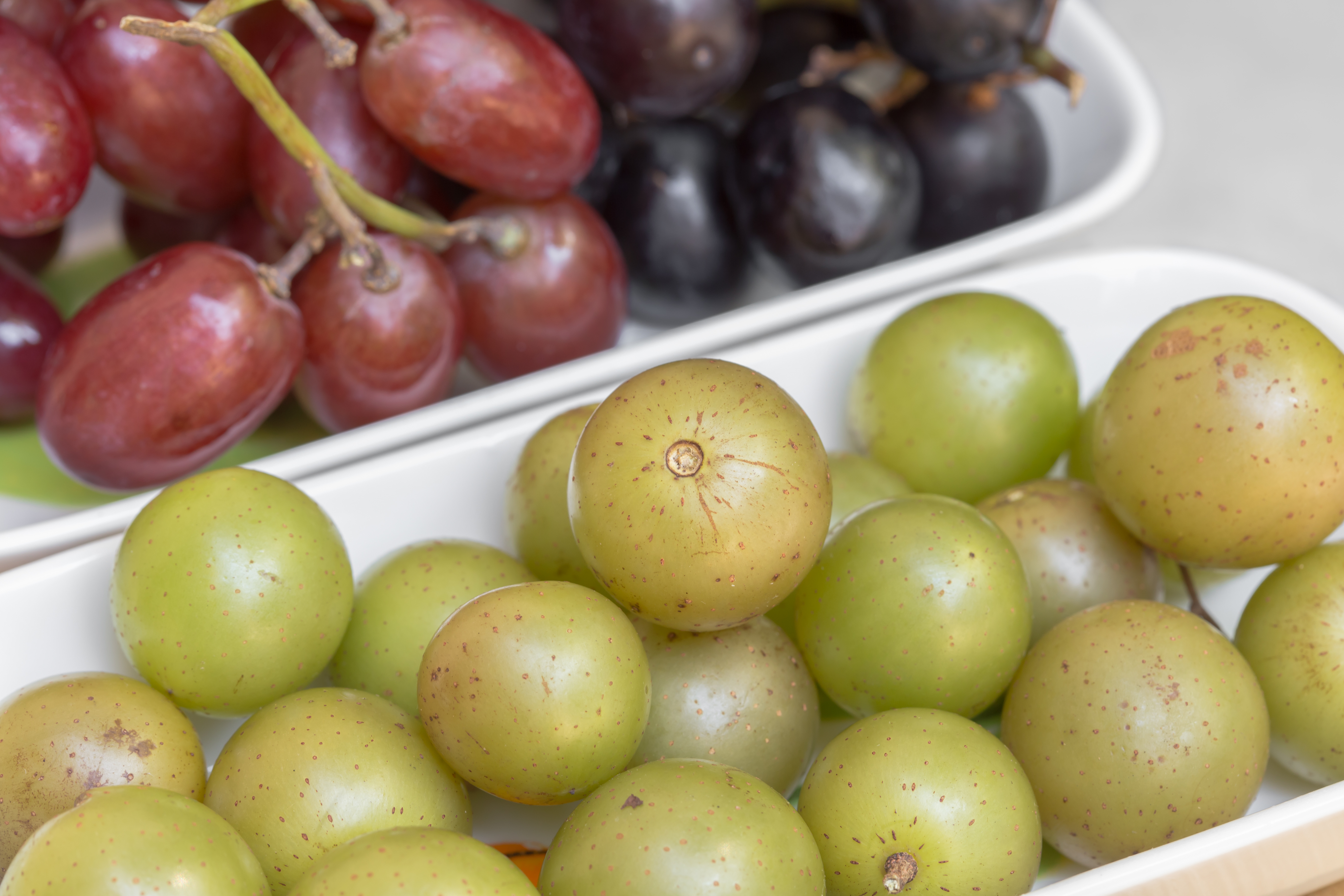
Some of the best memories of a Southern summer start with a grapevine. You walk out toward the garden, lift a big green leaf, and find a handful of golden grapes that are finally ready to pick. Maybe you eat a few right there. Maybe you take a bowl inside for jelly, juice, or an old family recipe. Either way, there is something satisfying about harvesting scuppernong grapes from a vine you planted yourself.
At Ty Ty Nursery in South Georgia, we hear a question from customers all across the country: “Can I grow scuppernong grape vines in my USDA zone?” In the right climate, absolutely. These vines love warmth, sunshine, and a long growing season. But that does not mean every variety belongs in every backyard. Winter temperatures, chill hours, soil drainage, spring weather, and pollination all influence how well a vine grows and how many grapes make it into your harvest basket.
There is one particular mistake we want to help you avoid before you order: planting a beautiful female scuppernong vine without a pollen-producing companion. You may end up with an impressive stretch of leaves and very little fruit. Fortunately, choosing the right pairing is simple once you understand the flower types.
In this guide we will cover growing conditions by USDA zone, seven varieties available from Ty Ty Nursery, estimated winter chill requirements, fresh-eating versus juice varieties, planting and trellis construction, the first two years of training, annual pruning, and harvest tips. We will also show you where to find scuppernong grape vines for sale online when you are ready to get your own backyard vineyard started.
What Makes a Scuppernong Grape Vine Special?
Scuppernong grapes are famous for their bronze, golden, or sometimes lightly pink-blushed fruit. They have a flavor all their own: sweet, fragrant, and distinctly Southern. Unlike the small, closely packed grocery-store grapes many people are familiar with, scuppernong grapes typically develop as individual berries in relatively loose clusters. Their skins are thicker, and the pulp has a distinctive texture. Many people enjoy the fruit fresh by pressing the pulp from the skin; others prefer to turn the harvest into juice, jelly, preserves, or wine.
The scuppernong name also has deep roots in the Carolinas and the Southeast. It is tied to one of the region’s oldest grape-growing traditions. Today’s named selections give home gardeners several options in fruit size, flavor, harvest season, and flower type. That means you can plant for a fresh fruit snack, a preserving project, or a combination of the two.
Just remember that a young scuppernong is a vigorous, long-lived vine, not a compact berry shrub. It needs permanent support and thoughtful yearly pruning. Give it the right structure from the beginning and it can become one of the most enjoyable plants in your edible landscape.
USDA Hardiness Zones and Scuppernong Chill Hours: Why Both Matter
What Does My USDA Growing Zone Tell Me?
The USDA Plant Hardiness Zone Map groups locations according to their average annual extreme minimum winter temperature. That is important because scuppernong vines can lose buds, canes, or portions of their permanent trunk when winter cold falls below their tolerance. A vine that does well in South Georgia cannot automatically handle a Minnesota winter.
However, a USDA zone is not a complete fruit-growing forecast. It does not measure how many cool hours accumulated during winter, how late the last spring frost arrives, or whether summer rains leave your soil standing in water. Two Zone 8 gardens can have surprisingly different results with the same variety. Use the zone as your first filter, then think about your actual growing site.
Do Scuppernong Grape Vines Need Winter Chill Hours?
Yes. Scuppernong vines are deciduous and pass through a winter dormancy period. Cool weather helps regulate bud development before spring growth returns. Ty Ty Nursery’s current product descriptions give an approximate chilling range of 200–400 hours for the seven varieties in this guide. Those are nursery planning estimates, not a precise scientific guarantee or a promise that a vine will produce a harvest once the clock reaches a particular number.
Chill can be calculated in several ways, including models that count hours in particular cool temperature ranges. Different weather stations can therefore report different totals for the same winter. In practice, site suitability, cold hardiness, bloom behavior, sunlight, disease pressure, and summer heat deserve as much attention as a published hour estimate. Very mild-winter gardens may not deliver a dependable dormant cycle, while colder gardens can injure the vine even when chilling is plentiful.
Scuppernong Varieties, USDA Zones, and Pollination Chart
| Variety | Listed USDA Zones | Published Chill Estimate | Flower Type | A Good Reason to Grow It |
|---|---|---|---|---|
| Carlos | 7–9 | 200–400 hours | Self-fertile | Dependable juice and jelly grape |
| Dixie | 7–9 | 200–400 hours | Self-fertile | Traditional flavor; useful for processing |
| Fry | 7–9 | 200–400 hours | Female; needs pollen | Very large fresh-eating grapes |
| Higgins | 7–9 | 200–400 hours | Female; needs pollen | Large, often pink-blushed fresh fruit |
| Magnolia | 7–9 | 200–400 hours | Self-fertile | Juice, jelly, and wine uses |
| Summitt (Summit) | 7–9 | 200–400 hours | Female; needs pollen | Large, sweet fresh-eating fruit |
| Tara | 6–9 | 200–400 hours | Self-fertile | Large early fruit; one-vine option |
The ranges above reflect the nursery’s current listings, and exact harvest times vary by location and season. The key distinction is the flower type. Carlos, Dixie, Magnolia, and Tara can set fruit on their own and can also supply pollen. Fry, Higgins, and Summitt need compatible pollen from a self-fertile variety. The letter “M” in Ty Ty Nursery’s product grid identifies a pollen-producing, self-fertile selection; it does not mean you are buying a vine that produces no grapes.
Can I Grow Scuppernong Grape Vines in USDA Zones 3, 4, or 5?
These zones are much colder than the listed range of the scuppernong varieties currently offered in our collection. That includes places such as the northern Great Plains, upper Midwest, and colder inland parts of the Northeast. Even if you managed to keep roots alive through a sheltered winter, severe cold can destroy the aboveground wood and fruiting buds needed for a normal crop.
For that reason, none of the seven varieties in this article should be presented as a dependable, unprotected outdoor selection for Zones 3–5. A large container moved into a protected space is sometimes used for experimenting with grapes outside their normal range, but vigorous scuppernong vines become difficult to move and require a long-lived trellis system. An indoor or greenhouse experiment is not the same thing as a practical backyard fruiting recommendation.
If you live in one of these cold zones, work with your local Extension office to choose a genuinely cold-hardy grape cultivar with a documented regional record. Your goal should be a harvest, not simply seeing whether a vine can make it through January.
USDA Zone 6: Tara Scuppernong Is the Variety to Investigate
Zone 6 is a transition area for this collection. Tara Scuppernong is the only current Ty Ty variety listed down to USDA Zone 6. The remaining six start at Zone 7. Tara is self-fertile, which makes it a particularly convenient choice when you have space for just one productive vine, and it is valued for attractive bronze fruit suited to fresh eating.
That does not mean every Zone 6 backyard is equally safe. A property in a sheltered part of Tennessee may experience different winter lows from a windy site farther north. A late freeze can kill emerging shoots, and a severe winter can damage canes and trunks. Plant in the sunniest well-drained location you can find, avoid a low frost pocket, and make sure the mature vine has a sturdy trellis.
Best planting time: Spring after the soil is thawed and workable is often the most practical choice near the cold edge of the listed range. Check your local weather and protect newly planted roots from drying. If your site frequently drops below Tara’s published hardiness range, consider a more regionally adapted grape instead.
USDA Zone 7: A Good Starting Point for Scuppernong Grape Growing
Zone 7 opens the full Ty Ty Nursery scuppernong selection. Carlos, Dixie, Fry, Higgins, Magnolia, Summitt, and Tara are all listed for this zone. Gardeners in parts of Virginia, the Carolinas, Tennessee, northern Georgia, and neighboring regions can consider them where summer conditions are favorable and winter lows are within the varieties’ tolerance.
If you want a simple one-vine planting, begin by comparing Tara, Carlos, Dixie, and Magnolia. All four are self-fertile. If large fresh grapes are the attraction, pair a female variety such as Fry or Summitt with a compatible self-fertile vine. Do not plant Fry by itself and expect a dependable crop of sweet grapes. Choosing a pollinator now is much easier than rebuilding the trellis after the vines become mature.
In the cooler parts of Zone 7, winter injury can still be an issue. Fry in particular has been noted for winter injury and fruit-rot concerns in some regional evaluations. Summitt is another large-fruited female variety worth investigating where good winter hardiness and sound vineyard management are priorities. Your local growing history matters more than simply seeing the number 7 on the label.
Best planting time: Dormant-season planting during late winter or early spring, when the soil is not frozen or saturated. Choose a site with at least six to eight hours of direct sun, and prepare the trellis before vigorous spring growth begins.
USDA Zone 8: Excellent Opportunities for Southern Scuppernong Grapes
This is familiar territory here in South Georgia. Warm summers, long growing seasons, and an established tradition of growing backyard grapes make many Zone 8 locations promising. Every variety in our current scuppernong category is listed for this zone. The question becomes less about whether scuppernong grapes belong in Zone 8 and more about which variety fits your harvest goals and planting site.
For a family that loves sweet grapes fresh from the vine, Fry, Summitt, Higgins, and Tara deserve attention. If the goal is juice, jelly, or a wine-making project, Carlos, Dixie, and Magnolia may be more suitable choices. You can also combine a self-fertile processing variety with a large-fruited female selection, giving the female vine a pollen source while broadening the uses of your harvest.
Humidity makes site selection important. Choose full sun and good air movement, train vines so the canopy does not become overly dense, and avoid planting where water stands after summer storms. Disease tolerance is an advantage, not an invitation to ignore vine sanitation. Harvest ripe fruit frequently, remove rotting berries, and keep foliage open enough to dry after rain.
Best planting time: The dormant season, commonly winter into early spring in suitable conditions. A well-established root system will be better prepared when South Georgia summer heat arrives.
USDA Zone 9: Scuppernong Vines Can Grow, but Check Your Winter and Soil
All seven featured selections are listed through Zone 9. That is encouraging for gardeners in parts of northern and central Florida, the Gulf Coast, and other mild-winter regions. But Zone 9 includes enormous differences in soil texture, actual winter chill, rainfall, and summer stress. A humid coastal location with poor drainage can be a harder place to grow a healthy vine than a sunny, slightly elevated site inland.
Because the nursery lists approximately 200–400 chill hours for these varieties, check local winter conditions rather than relying only on the zone label. Some particularly mild sites may receive inconsistent cooling. During summer, water young vines thoroughly, maintain a clean mulched root area, and keep canopies open enough for light to reach developing grapes.
Tara or Carlos makes sense when the goal is one self-fertile vine. Fry, Higgins, and Summitt are choices for gardeners willing to establish an additional compatible pollen-producing variety nearby. Plan the complete planting before you order; a warm climate does not remove the need for pollination.
Best planting time: During a cool, suitable dormant-season period, often winter through early spring, with enough time for the roots to establish before prolonged summer heat.
What About USDA Zones 10 and 11?
None of the seven scuppernong varieties on the current Ty Ty Nursery category page is listed beyond Zone 9. Some specialty grapes can be grown in certain warm-climate systems, but that does not mean Carlos, Dixie, Fry, Higgins, Magnolia, Summitt, or Tara should be recommended as dependable outdoor producers in Zones 10 or 11.
Hot weather alone does not guarantee success. Very warm winters, persistently wet ground, and other tropical growing conditions may disrupt the normal seasonal cycle. Before making an experimental planting, consult local trials and confirm whether the variety actually has a record of fruiting in your area. For most gardeners, a plant specifically adapted to their climate is a better investment than trying to force one of these vines outside its published range.
Meet the Seven Scuppernong Grape Varieties at Ty Ty Nursery
Carlos Scuppernong: A Classic Choice for Juice, Jelly, and Wine
For gardeners interested in processing grapes, Carlos Scuppernong grape vines deserve a close look. Carlos produces bronze fruit with a traditional fragrant flavor and has long been valued for juice-making and wine production. The berries tend to be smaller than the enormous fruit of Fry, but Carlos has a useful reputation for productivity and relatively even ripening in adapted regions.
Our listing places Carlos in USDA Zones 7–9, with an approximate chilling estimate of 200–400 hours. Carlos is self-fertile, so a single healthy vine can produce a crop. It can also supply pollen to a compatible female scuppernong planted nearby. For a family that wants jelly jars on the pantry shelf as well as fruit from the garden, Carlos is an appealing starting point.
Like any productive grape, Carlos still benefits from an open canopy and timely harvesting. Fruit rot may become an issue during wet seasons, so do not assume that a hardy-looking vine can be left unpruned indefinitely.
Dixie Scuppernong: Traditional Southern Flavor
Dixie Scuppernong brings another self-fertile option to the backyard. It is generally associated with bronze fruit and uses such as juice, preserves, and wine, where its distinctive flavor can become the star of a homemade recipe. Some growers appreciate Dixie for its reported cold tolerance compared with more tender selections, although its published Ty Ty range is still Zones 7–9.
Dixie is listed at an approximate 200–400 winter chill hours. Because it supplies its own compatible pollen, it can be planted as a single productive vine where conditions are right. It is also useful in a multi-vine planting that includes a female variety. Imagine a small backyard row with Dixie providing pollen and processing fruit, while Fry or Higgins supplies larger grapes for eating fresh.
Fry Scuppernong: Big, Sweet Grapes for Fresh Eating
If someone calls us and says, “I want those big golden grapes you can eat right off the vine,” Fry Scuppernong is one of the varieties worth discussing. Fry is known for very large fruit and a rich, sweet flavor. It is an attractive choice for fresh eating, serving to guests, or sharing with neighbors during harvest season.
Here is the detail you cannot overlook: Fry has female flowers and needs pollen from a compatible self-fertile vine. It does not produce enough viable pollen to serve as its own pollinator. Carlos, Dixie, Magnolia, or Tara may be practical partners when they bloom together locally and all are suited to the site.
Fry is listed for Zones 7–9 and approximately 200–400 chilling hours. Regional research has identified some risk of winter injury and fruit rot, so good site placement, airflow, and harvest management are important. Big fruit is wonderful, but the vine still needs the right conditions to produce it.
Higgins Scuppernong: Large Grapes With a Pretty Blush
Higgins Scuppernong produces attractive large grapes that can show a bronze-to-pinkish blush as they ripen. It is best known as a fresh-eating selection, with juicy fruit and a mild, pleasing flavor. For gardeners who like the idea of a handsome harvest basket filled with unusual golden-pink grapes, Higgins offers something a little different.
Higgins has female flowers, so it requires a compatible pollen-producing vine. Choose a self-fertile scuppernong partner and verify that their flowering periods overlap where you live. Higgins is listed for Zones 7–9 with approximately 200–400 chilling hours. A sunny location, strong trellis, and regular pruning will help it develop the productive framework needed for future seasons.
Magnolia Scuppernong: A Versatile Self-Fertile Vine
If you want a scuppernong for a mix of juice, jelly, and wine projects, Magnolia Scuppernong is a good variety to investigate. Its bronze berries are generally considered more suitable for processing than for growers whose only priority is enormous fresh-eating grapes. Regional evaluations have also noted good winter hardiness relative to some other scuppernong selections.
Magnolia is self-fertile and can set fruit without a second vine. It may also be incorporated into a pollination plan for female selections where bloom overlaps. Ty Ty Nursery lists Magnolia for Zones 7–9 at about 200–400 chill hours. For gardeners who love the smell of fresh grape juice simmering on the stove, Magnolia can be a useful addition to the row.
Summitt Scuppernong: Large Fruit With Strong Backyard Appeal
Our store lists this variety as Summitt Scuppernong; the cultivar is also commonly written “Summit.” It is valued for large, sweet bronze fruit that may develop a soft pinkish tint. If you are planting mainly for fresh grapes and want something attractive on the harvest table, it deserves a place on your shortlist.
Summitt is a female variety and must receive pollen from a compatible self-fertile partner. Research has noted useful winter hardiness and favorable disease performance relative to Fry in some settings, although those traits do not eliminate all growing risks. Ty Ty Nursery lists Summitt for Zones 7–9, with approximately 200–400 chill hours. A thoughtful pairing with Tara or another suitable self-fertile vine can make a rewarding backyard planting.
Tara Scuppernong: Early Fruit and a Great One-Vine Option
Tara Scuppernong stands out in this collection because its published range begins at Zone 6 rather than Zone 7. It is also self-fertile, making it a convenient choice for someone who can fit only one permanent grapevine into the backyard. Tara is known for large bronze berries and relatively early ripening in regional growing trials.
Our listing estimates approximately 200–400 chill hours and USDA Zones 6–9. Its early harvest can be a nice way to begin grape-picking season, although exact ripening dates depend on location and weather. Tara may also provide pollen for female scuppernong vines where flowering overlaps. If you want an attractive, useful vine that can stand on its own as a fruit producer, Tara is a sensible place to start.
Do Scuppernong Grape Vines Need Two Vines for Pollination?
Some do, and some do not. This is the most important variety-selection lesson in the whole article. Scuppernong vines come with different flower types. A self-fertile, or perfect-flowered, variety produces usable pollen and can set grapes on its own. A female variety can develop fruit but does not supply the pollen it needs, so it must have a compatible pollen-producing vine nearby.
In Ty Ty Nursery’s current lineup, Carlos, Dixie, Magnolia, and Tara are self-fertile. Fry, Higgins, and Summitt are female. You do not need to hunt for a separate nonfruiting male-only plant. A suitable self-fertile fruiting variety can serve as the pollinator and produce its own grapes at the same time.
Simple Scuppernong Pollination Combinations
- Fry + Carlos: Large fresh-eating fruit combined with a self-fertile processing variety.
- Higgins + Magnolia: A fresh-eating selection paired with a useful self-fertile juice variety.
- Summitt + Tara: Two fresh-eating choices with Tara supplying the needed pollen, assuming local bloom overlap.
- Fry + Dixie: Another combination to evaluate for fresh grapes and home preserves.
- Tara alone: A self-fertile option for gardeners with room for only one productive vine.
These are starting points, not guarantees of identical bloom dates in every climate. Keep pollination partners close enough for effective insect movement, confirm that their flowers overlap, and maintain habitat for pollinating insects. If you plant several female vines, distribute self-fertile vines through the planting rather than placing the only pollen source at the far end of a very long row.
Where Should You Plant Scuppernong Grape Vines?
Full Sun Makes a Big Difference
Choose a spot that receives at least six to eight hours of direct sunlight, with full-day sun preferred for the best fruiting and canopy health. Shaded vines can produce lots of green growth without the berry quality you were hoping for. An open site also allows leaves and fruit to dry more quickly after rain, which helps reduce some disease problems.
Test the Soil and Avoid Wet Feet
Scuppernong vines do best in soil that drains well rather than staying soggy around the roots. A slightly acidic pH near 6.0–6.5 is a practical target for many Southern planting sites. Test before adding lime or fertilizer. A sandy soil may need careful irrigation, while a heavier soil may need a better-drained planting location. If water stands for hours after every storm, find another spot before planting your grapevine.
Leave Room for a Permanent Vineyard
It is easy to underestimate the size of a young vine. Ty Ty Nursery’s individual product descriptions commonly mention about 12–15 feet between vines; University of Georgia home-garden guidance recommends roughly 20 feet of trellis space per vigorous vine for long-term training. A shorter spacing can require more careful canopy management. If you are building more than one row, allow generous room for walking, pruning, spraying if necessary, and picking. Around 12 feet between rows is a useful traditional garden-layout reference.
When Is the Best Time to Plant Bare-Root Scuppernong Vines?
For most growers in the recommended USDA zones, late winter through early spring while vines are dormant is a good planting window, provided the ground is workable. In cooler parts of Zone 6 or 7, wait until the soil has thawed and is no longer saturated. In mild Southern locations, planting during a suitable cooler dormant-season period can give the roots time to establish before hot weather arrives.
Do not choose your planting day only by the calendar. February in South Georgia is very different from February in a colder inland state. If conditions are frozen, excessively wet, or otherwise unsuitable, adjust the shipment or planting plan rather than forcing the vine into poor soil. A few weeks of good rooting weather can matter more than rushing to plant on a particular date.
How to Plant Scuppernong Grape Vines: Step by Step
- Choose the right variety and pollen partner. Decide whether you want fruit mainly for fresh eating or processing. If selecting Fry, Higgins, or Summitt, include a compatible self-fertile vine in your plan.
- Choose a sunny, well-drained site. Confirm the planting area is not a low spot where water collects. Test soil pH before making substantial amendments.
- Install or lay out the trellis first. Plan for a strong permanent support with enough room for mature arms and annual pruning.
- Protect roots on arrival. Open the shipping bundle promptly. Keep roots shaded and moist, and follow the care instructions supplied with your vine. Do not allow bare roots to dry in sun or wind.
- Dig a hole wide enough for the roots. Spread the roots naturally and avoid twisting or sharply bending them. Do not dig needlessly deep or bury the growing crown.
- Plant at the correct depth. Use the original soil mark as a guide, and backfill mostly with native soil. Gently settle the soil around the roots without packing it down hard.
- Water thoroughly. Give a slow, deep watering after planting. Recheck soil level after it settles and continue monitoring moisture during establishment.
- Mulch and control weeds. Apply roughly two to three inches of organic mulch over the root area, keeping it off the main stem. Grass competition is particularly troublesome around young vines.
- Begin training new growth. Use a stake or string to guide a vigorous shoot toward the trellis wire. Keep ties loose enough that they will not constrict the growing stem.
One common mistake is adding a large dose of fertilizer directly to the planting hole. Avoid that. Fresh roots need contact with suitable soil, oxygen, and steady moisture first. Follow local soil-test recommendations once the plant begins establishing active growth.
How to Build a Scuppernong Trellis That Will Last
A productive scuppernong vine can become heavy with mature wood, leaves, and fruit. A flimsy garden stake will not support that weight for long. For most home gardeners, a single-wire trellis is a dependable starting point. Set substantial end posts deeply into the ground, use appropriate galvanized wire, and position the main wire at roughly five feet above ground level. Brace and tension the structure securely so it holds up through years of wind and fruit loads.
A double-curtain system is another option for growers who want greater canopy capacity and are willing to build a more elaborate support. Whatever system you choose, plan enough space for the permanent trunk and arms. The vine will be trained up to the wire and then outward, rather than allowed to pile into a tangled mound on the ground.
An arbor can be beautiful in an edible landscape, but it also needs to be strong and accessible. Think about how you will prune, inspect fruit, and harvest from a ladder-free or safely reachable position. The prettiest grape arbor is not much fun if the ripe fruit is all out of reach.
First-Year Scuppernong Care: Build the Roots and Trunk
The first growing season is about establishment. Water as needed to keep the root zone moist but not saturated, control weeds, and guide a healthy shoot upward. Do not measure success by the number of grapes harvested immediately. Young vines benefit from putting their energy into roots, trunk development, and strong permanent arms.
Once several shoots appear, select a vigorous one to become the main trunk. Tie it loosely to a temporary stake or vertical string. When it reaches the top wire, train growth along the wire to form the permanent arms. Remove or pinch back unwanted competing shoots gradually as the structure develops, taking care not to strip away so much foliage that the vine cannot photosynthesize effectively.
A second growing season is often devoted to completing the arms and establishing the fruiting positions. The exact pace depends on planting date, soil, climate, watering, and plant vigor. Some vines grow vigorously in a single Southern summer; others need longer. Strong structure now usually means easier pruning and more consistent harvests later.
How and When to Prune Scuppernong Grape Vines
Annual pruning is the maintenance job that matters most once your vine is established. Scuppernong grapes form on new shoots that arise from buds on the previous season’s growth. To keep a productive canopy, growers retain the permanent trunk and arms while shortening last season’s canes into short fruiting spurs.
In much of the Southeast, late winter, often February or early March, is a common pruning time. Local weather may shift that window, particularly near the colder end of the variety’s range. Leave short spurs with a few viable buds rather than removing every piece of young wood. Thin crowded spur clusters after the vine matures, and remove dead or damaged canes and old fruit stems that can harbor disease.
Sometimes a pruned vine releases a little sap from a fresh cut. Growers call this “bleeding,” and it is often a normal response near the return of spring growth. It does not automatically mean the vine is dying. The real problem is never pruning at all: a thick tangle of old growth eventually limits light, airflow, access to fruit, and berry quality.
Watering and Fertilizing Scuppernong Grapes Without Overdoing It
Newly planted vines need consistent attention because their roots have not yet spread into a large soil area. Water deeply after planting and check the root zone regularly through the first few weeks. In sandy soil, water may move through quickly. In heavier soil, the top may look dry while the lower roots are still wet. Feel the soil instead of following an inflexible daily schedule.
Once vines are established, maintain adequate moisture during flowering and fruit development, particularly in prolonged dry spells. Mulch helps preserve soil moisture and reduce grass competition. Avoid routinely saturating the planting site, which can damage roots and encourage decline.
For fertilizer, start with a soil test. Vines do not automatically need a heavy feeding because their leaves are not as large as you expected. Excess nitrogen may cause lush growth that shades fruit and creates more pruning. Magnesium deficiency can occur in some Southeastern vineyards and may cause yellowing between the veins of older leaves, but do not add supplements without considering soil-test results and regional advice. Proper nutrition is about balance, not the most fertilizer you can spread.
Common Scuppernong Growing Problems and How to Avoid Them
A Healthy Vine That Produces No Grapes
Start by checking the label. If it says Fry, Higgins, or Summitt, the vine needs compatible pollen. Next review sunlight, vine age, winter injury, pruning, and flower-season weather. A female vine without a pollen-producing neighbor can grow beautifully and still give you a disappointing harvest.
Brown Spots, Fruit Rot, or Shriveling Berries
Scuppernong vines are generally well adapted to Southern growing conditions, but they are not immune to every disease. Dense foliage, extended rain, poor airflow, and old infected material can encourage fruit problems. Remove diseased fruit, avoid unnecessary wetting of foliage, and prune annually to open the canopy. If symptoms persist, ask your county Extension service to identify the cause before selecting a treatment.
Yellow Leaves or Weak Growth
Yellow leaves may indicate overly wet roots, drought, nutrient imbalance, or other stress. Older leaves with green veins and yellow tissue between them can suggest a magnesium issue, but similar symptoms can have other causes. Test the soil and inspect drainage before applying fertilizer or Epsom salts. Treating a waterlogged root system as a fertilizer shortage will not solve the underlying problem.
Birds, Wasps, and Other Harvest Visitors
Ripe grapes are popular with wildlife and insects as well as people. Harvest promptly, remove fallen fruit, and use well-secured bird protection where appropriate. Keep the planting area clean during harvest to reduce wasp attraction. If pest pressure becomes serious, follow current regional guidance rather than spraying flowering vines indiscriminately.
When Will Scuppernong Grapes Produce Fruit?
A newly planted vine may need a couple of growing seasons to establish its permanent trunk and arms, with useful harvests generally increasing as the framework matures. Some larger nursery vines may produce sooner in good conditions, but a bearing-size description is not a guarantee of immediate fruit. Pollination, pruning, weather, and the health of the root system all affect how quickly the harvest develops.
In many Southern locations, scuppernong harvest happens from late summer into early fall. Tara is often among the earlier selections; Carlos and others may ripen later depending on the site and season. Pick grapes when they have developed their mature bronze or golden color, their characteristic aroma, and a full sweet flavor. Some berries change color before they taste their best, so sample ripe-looking fruit before gathering the whole crop.
Fresh fruit is wonderful, but scuppernong grapes also make memorable juice, jelly, preserves, baked desserts, and traditional homemade wine. If you have multiple varieties, you may discover one you love for eating and another you prefer in a recipe. That is half the fun of growing your own grapes.
Frequently Asked Questions About Scuppernong Grape Vines
Can I Grow Scuppernong Grapes in Georgia?
Yes. Many parts of Georgia have a favorable climate for scuppernong grapes, particularly where winter temperatures fit the cultivar and the site has full sun and well-drained soil. The colder mountain areas require more caution than the Piedmont or Coastal Plain. Check the published zone range and local frost history before choosing a variety.
What Is the Best Scuppernong Grape for Florida?
The answer depends on location. Northern and parts of central Florida may suit certain varieties in USDA Zones 8–9, provided winter cooling and drainage are adequate. Carlos, Tara, and Magnolia are self-fertile possibilities to investigate; Fry, Higgins, and Summitt need pollination partners. Warmer Zone 10 locations are outside the current listed range.
Can I Plant Just One Scuppernong Vine?
Yes, if you choose a self-fertile variety such as Carlos, Dixie, Magnolia, or Tara. A single Fry, Higgins, or Summitt vine generally will not give you a dependable crop without a compatible pollen-producing vine nearby.
Which Scuppernong Has the Biggest Grapes?
Fry is well known for very large fresh-eating fruit. Higgins and Summitt are also valued for large berries. Size changes with weather, crop load, watering, and vine health. Remember that all three are female varieties, so a pollination plan is essential.
Do Scuppernong Grapes Need Full Sun?
Full sun is strongly preferred. Aim for at least six to eight hours of direct light and good airflow. Heavy shade encourages foliage at the expense of dependable flowering and fruit quality.
How Far Apart Should Scuppernong Grape Vines Be Planted?
Spacing depends on trellis design and management. Some nursery planting instructions suggest 12–15 feet, while University of Georgia home-garden guidance recommends approximately 20 feet of trellis per vigorous vine. Allow enough room for permanent arms, sunlight, pruning, and a convenient harvest path.
Why Is My Scuppernong Vine Not Leafing Out Yet?
Dormant vines may take time to resume growth after planting, especially when spring soil temperatures remain low. Keep the root zone appropriately moist, avoid repeated digging around the plant, and check for living green tissue before assuming the vine is lost. Contact the nursery with photos if you are concerned about its condition.
Can Scuppernong Grapes Be Grown in Containers?
A young vine can be grown temporarily in a sufficiently large, well-drained container, but these are vigorous long-term plants that are usually easier to manage in the ground with a permanent trellis. Container roots dry out more quickly and are exposed to more temperature stress. A pot also does not eliminate a female vine’s need for compatible pollen.
What Is the Best Time of Year to Prune?
Late winter, before strong spring growth, is usually the preferred time. Maintain permanent arms and short fruiting spurs, remove dead growth, and thin crowding as the vine matures. Annual pruning is one of the most effective ways to keep a long-lived scuppernong productive.
Where Is the Best Place to Buy Scuppernong Grape Vines Online? Ty Ty Nursery
Once you have matched the variety to your USDA zone and worked out the pollination plan, ordering should be the easy part. At Ty Ty Nursery, we want customers to be able to choose vines with confidence, get them delivered in the proper season, and speak to real people when questions arise. Here are nine reasons gardeners explore our scuppernong grape vines for sale.
1. Prices Advertised Up to 68% Lower Than Other Nurseries
We advertise prices up to 68% lower than selected competing nursery prices on qualifying comparisons. The actual savings depend on variety, size, current promotions, and the comparable offer. Whether you are planting one self-fertile vine or several varieties on a backyard trellis, we believe good value should be part of the experience. Compare the plant sizes and final delivered totals to see what works best for your budget.
2. Fast In-Season Shipping: Plant in Days the Ty Ty Way
We know it is frustrating to have your trellis built and planting area ready, only to wait weeks or months for an order. Our goal is “Plant in Days the Ty Ty Way” with prompt in-season shipping when vines are ready and conditions are suitable. Actual delivery depends on inventory, dormancy, weather, destination, and any scheduled preorder date. We would rather ship during a responsible planting window than rush a vine into frozen or waterlogged ground.
3. Free One-Year Plantsurance Guarantee
Our free one-year Plantsurance guarantee is included with eligible plants instead of being sold as an additional paid service. If a qualifying vine fails within 365 days of receipt, an approved claim provides store credit for the eligible amount paid for the plant. Shipping and tax are excluded, and photo verification, recommended USDA-zone eligibility, and the published policy apply. Store credit does not expire; purchases made with previous Plantsurance credit are not eligible for repeated coverage on the credited portion.
4. Lifetime True-to-Name Guarantee
Some fruiting vines take several seasons to reveal whether the grapes match the variety you expected. Our Lifetime True-to-Name Guarantee addresses verified varietal misidentification regardless of how much time has passed. Subject to proof and policy terms, the customer can choose a refund, replacement, or store credit up to the original purchase price of the plant. It protects the identity of the variety you bought, rather than promising a particular yield or eliminating normal growing risks.
5. Scuppernong Vines Delivered Right to Your Door
There is no need to squeeze large nursery containers into a car, spill soil in the back seat, or spend a weekend visiting several stores hoping to find the right female and self-fertile varieties. We ship eligible orders directly to customers’ doors, and many field-grown plants travel bare-root during the appropriate season. You can spend your energy preparing the vineyard instead of hauling heavy pots.
6. Helping Gardeners Since 1978
Ty Ty Nursery has been in the nursery business since 1978. We have helped customers with everything from their first backyard fruit vine to much larger orchard and vineyard projects. That experience matters when a customer asks not just what a grape tastes like, but whether it belongs in their growing zone and which partner it needs for pollination.
7. Google Top Quality Store With a 4.5 Rating
Ty Ty Nursery currently has Google’s Top Quality Store recognition and a 4.5 store rating at the time of writing. We welcome customers comparing current store information and reviews when choosing where to order living plants online.
8. An A Rating With the Better Business Bureau
Our Better Business Bureau business profile currently displays an A rating. Because public ratings can change, we link directly to the profile so customers can check the latest grade themselves.
9. Real Plant Experts Based in Ty Ty, Georgia
Need help deciding between Fry and Summitt, pairing Higgins with a pollen-producing variety, or choosing the proper planting season? You can talk to real nursery staff here in Ty Ty, Georgia. Our plant-support conversations are not outsourced to an overseas call center or limited to an AI-only chatbot. Call 888-758-2252 and tell us what you are planning to grow. We would love to help you choose a scuppernong vine that fits your yard.
Start Your Backyard Scuppernong Vineyard the Right Way
A successful scuppernong harvest starts well before the first bronze grape turns sweet. Check your USDA zone, give the vines enough sunshine and well-drained soil, plan a strong trellis, and pay attention to flower type. If you want Fry, Higgins, or Summitt, plant a compatible self-fertile partner. If you have room for only one vine, Carlos, Dixie, Magnolia, and Tara are useful options to explore where their hardiness matches your climate.
With a little patience, sensible watering, and yearly pruning, a healthy vine can become an enjoyable part of your garden for years. Whether your goal is fresh grapes at the breakfast table, homemade jelly, or a traditional family harvest, shop scuppernong grape vines online at Ty Ty Nursery and choose the varieties that make sense for your backyard.

Leave a Reply