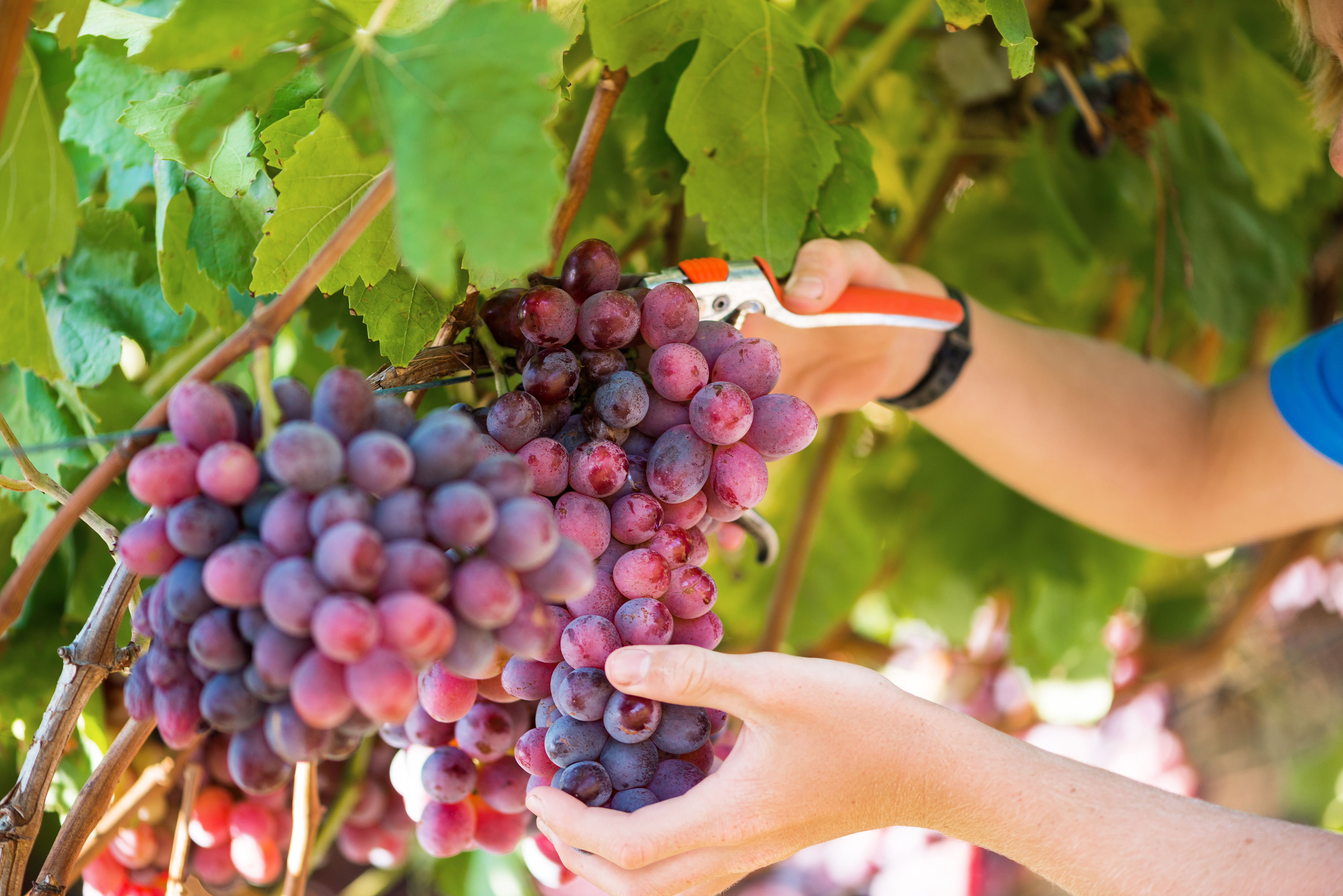
There is something about a bunch of grapes hanging from your own backyard trellis that makes you stop and smile. You walk outside to check the garden, find a cluster that has finally turned its ripe color, and pick a few grapes before you even think about bringing a bowl. When the grapes are sweet, juicy, and easy to snack on without worrying about hard seeds, they have a way of disappearing before they ever reach the kitchen.
But growing seedless grapes successfully begins long before harvest. One of the questions we hear from gardeners across the country is, “Can I grow seedless grape vines in my USDA zone?” In many locations, yes. The trick is knowing that winter hardiness, chill hours, spring frost, summer heat, and disease pressure are different pieces of the puzzle. A vine that does beautifully in a sunny, dry California backyard may struggle in a humid garden in South Georgia. A grape that ripens early in New York might be a better match for a shorter growing season than a late-ripening table grape that needs a long, warm fall.
At Ty Ty Nursery, we have been helping customers plan home orchards and vineyards since 1978. We believe you should understand what you are planting, not just fall in love with the fruit photograph. This guide compares the seedless grape varieties on our website, walks through USDA growing zones, explains winter chill and pollination, and gives you a practical plan for planting, trellising, pruning, watering, and harvesting. If you are ready to explore the choices, start with our seedless grape vines for sale online.
What Does “Seedless” Really Mean for Grape Vines?
It is worth getting this question out of the way first. A seedless grape is not necessarily a grape that has never started developing a seed. Many seedless table grapes form little, undeveloped seed remnants called seed traces. Depending on the variety and growing conditions, these traces may be so soft you barely notice them. Others can be more noticeable. This is one reason a perfectly ripe seedless grape can feel different from a supermarket grape, even when both are correctly labeled.
Seed traces are different from fully formed, hard, mature seeds. If a vine sold as seedless consistently produces grapes with hard developed seeds, document what you are seeing and contact the nursery to review the variety identification. Keep the original plant label and order details as the vine grows. Some varieties also develop slip skins, where the skin separates easily from the pulp; that characteristic is about texture, not whether a grape is seedless.
Most of the table grape varieties discussed here have self-fertile flowers. You generally do not need to plant a second variety just to obtain pollen. Planting multiple varieties is still a wonderful idea if you want different colors, flavors, and harvest windows. The key is to pick vines that suit your climate, rather than assuming that buying three of the same vine will overcome poor winter hardiness or disease pressure.
USDA Hardiness Zones vs. Grape Chill Hours: Know the Difference
Your USDA Zone Measures Extreme Winter Cold
The USDA Plant Hardiness Zone Map is based on average annual extreme minimum temperatures. A lower zone number means colder winter extremes. It helps you estimate whether grapevine wood, buds, graft unions, and roots are likely to survive winter. However, it does not tell you how often late spring frost occurs, whether the summer will be humid, or whether fruit will ripen before autumn cold returns.
It also does not capture every backyard microclimate. A grape trellis against a sunny wall might warm earlier than vines in an open field, while a low area where cold air settles may suffer more spring frost. Good drainage, prevailing winds, and your local disease history can make two gardens in the same zone behave very differently.
Do Seedless Grape Vines Need Chill Hours?
Yes, grapevines respond to winter cooling during dormancy, but grape chill-hour figures are not as precise or consistently standardized as the numbers gardeners sometimes use for peaches or apples. Ty Ty Nursery’s individual grape listings publish broad estimates, frequently ranging from roughly 100 to 500 chill hours depending on the cultivar. These are nursery planning estimates, not universally validated thresholds for guaranteed flowering or fruiting.
For seedless grape selection, winter survival, bud hardiness, growing-season length, and disease tolerance may be more helpful than comparing two grape varieties separated by a hundred estimated chill hours. A vine can meet its winter cooling estimate and still lose its buds to a hard freeze, experience poor fruit development in persistent rain, or decline from a regional grape disease.
Current Seedless Grape Varieties and Listed Growing Zones
The chart below reflects the 17 varieties currently presented on our Ty Ty Nursery seedless grape vines collection. Zones and chill estimates are taken from the nursery listings. They should be checked against regional growing experience, especially at extreme zone boundaries. Category-level zones and individual product descriptions may sometimes differ; verify the current listing before placing an order.
| Seedless Grape Variety | Listed USDA Zones | Published Chill Estimate | Grape Color |
|---|---|---|---|
| Champagne | 6–9 | 300–500 hours | Red-purple |
| Concord Seedless | 6–10 | 100–200 hours | Dark purple |
| Crimson Seedless | 6–10 | 200–300 hours | Red |
| Delight | 7–9 | 200–400 hours | Green-gold |
| Einset | 4–9 | 200–400 hours | Red |
| Glenora | 5–8 | 200–300 hours | Blue-black |
| Himrod | 5–8 | 200–400 hours | Green-gold |
| Lakemont | 5–8 | 200–400 hours | Green-gold |
| Midgely’s Purple | 6–9 | 200–400 hours | Purple |
| Red Flame | 6–10 | 100–300 hours | Red |
| Reliance | 6–8 | 100–300 hours | Pink-red |
| Suffolk Red | 2–7* | 200–400 hours | Red |
| Summer Muscat | 7–10 | 200–400 hours | Green-gold |
| Summer Royal | 6–10 | 200–400 hours | Dark purple |
| Thomcord | 5–9 | 200–400 hours | Blue-purple |
| Thompson’s Seedless | 6–10 | 100–300 hours | Green-gold |
| White Romulus | 2–5* | 200–400 hours | White-gold |
*Important cold-zone caution: the online listing gives Suffolk Red and White Romulus unusually broad northern ratings. University Extension sources describe many seedless grapes, including Suffolk Red, as less cold-hardy than plants routinely recommended for Zone 2 or 3. Gardeners in those zones should verify actual winter tolerance with a local university trial or Extension adviser before relying on the published range. No nursery zone label should override documented local winter injury.
Can I Grow Seedless Grapes in USDA Zones 2 and 3?
These are challenging zones for most seedless table grapes. The issue is not simply whether the roots survive under snow. Grapes produce clusters on shoots that grow from buds on the previous season’s wood. If the buds or canes die during a severe winter, a vine may leaf out from lower growth yet produce very little fruit that year. University of Minnesota Extension specifically notes that seedless table grapes are often difficult in northern climates.
Our catalog lists Suffolk Red and White Romulus down to Zone 2, but we encourage gardeners in severe-winter regions to treat that rating as a reason to investigate, not as proof of reliable outdoor production. Local trials of truly cold-adapted seedless grapes are much more persuasive than one broad hardiness claim. In exposed northern sites, wind protection, excellent snow management, and a suitable training system can help, but they cannot turn an insufficiently hardy cultivar into a dependable one.
Planting tip: In very cold regions, wait until spring when the soil has thawed and is workable. Protect dormant roots from drying while planting, and focus on building a strong trunk before expecting fruit.
USDA Zone 4: Early Seedless Grapes and Cold-Climate Caution
Zone 4 has more seedless grape possibilities than Zone 2 or 3, but cold winters remain the primary concern. Einset Seedless is listed for Zone 4 in Ty Ty Nursery’s collection. Its early ripening and fruity, strawberry-like flavor make it a candidate to examine where regional conditions suit it. White Romulus and Suffolk Red also appear within their published zone ranges, but the unusually northern ratings should be checked independently.
Don’t pick a variety simply because it is described as early ripening. A grape must survive winter and retain productive buds before fruit maturity even becomes relevant. Plant vines where sun reaches the trellis for most of the day, avoid low spots that collect frost, and ask whether the cultivar has been successfully grown in nearby gardens. A warm summer cannot fix dead buds from the preceding January.
Planting window: Spring after the ground is workable. Train one vigorous shoot upward during the first season and delay heavy cropping until the vine has built a strong framework.
USDA Zone 5: Seedless Grape Vines for Cooler Backyard Vineyards
Zone 5 offers a larger selection. Based on current catalog ranges, gardeners can investigate Einset, Glenora, Himrod, Lakemont, Thomcord, Suffolk Red, and White Romulus, depending on the exact site and cold hardiness of the chosen vine. Himrod is known for its golden-green fruit and early harvest, while Einset offers red fruit with its distinctive berry-like aroma. Glenora brings dark grapes to the mix, and Lakemont provides another light-colored table grape.
For a family garden, we like the idea of mixing colors and ripening times instead of installing three vines with identical harvest dates. A sunny location, good trellis, and proper dormant pruning are essential. Just keep in mind that varieties within the same zone range do not have identical resistance to late frost, winter injury, black rot, or mildew.
Planting window: Usually early spring in the North, before vigorous growth begins but after frozen soil can be worked. Give each vine room along the trellis rather than forcing several into the same small planting hole.
USDA Zone 6: Many Options for a Homegrown Seedless Grape Harvest
Zone 6 is an appealing place to plan a backyard seedless grape planting because many cultivars fall within their published ranges. Several choices from Zone 5 carry into Zone 6, but not all of them do; White Romulus, for example, is listed only through Zone 5. You can also research Champagne, Concord Seedless, Crimson Seedless, Midgely’s Purple, Red Flame, Reliance, Summer Royal, and Thompson’s Seedless. The list gives you plenty of variety in color, berry size, texture, and use.
Suppose you want a vine mainly for eating grapes straight from the trellis. You could compare the sweet red fruit of Reliance with the pale clusters of Himrod and the deeper flavor of Thomcord. If you prefer an American grape character for homemade juice, Concord Seedless might catch your eye. A selection intended for raisins has a different texture and harvest goal than a slip-skin grape destined for jelly.
Regional weather still matters. A humid Zone 6 garden in the East may face serious black rot, downy mildew, and berry cracking, while a relatively dry Zone 6 garden farther west may be more concerned with winter cold and irrigation. Choose cultivars for the whole environment.
USDA Zone 7: Great Variety, but Pay Attention to Humidity
Most of Ty Ty Nursery’s seedless grape choices include Zone 7. Among the options are Delight and Summer Muscat, along with red, white, and purple varieties listed across Zones 5–9 or 6–10. This makes Zone 7 a good place to plan several different harvests rather than relying on a single vine.
We encourage Zone 7 gardeners to study local summer humidity before planting a large row. American and hybrid grapes may tolerate some conditions better than European-type table grapes, but no grape is automatically immune to disease. Full sun, an open canopy, and a well-managed trellis can make a major difference in fruit quality and reduce the amount of time leaves remain wet after rain.
Planting window: A suitable dormant period in late winter or early spring, when soil is workable. Install your permanent trellis early. A two-year-old vine becomes a tangled handful very quickly when new canes start growing.
USDA Zone 8: Can You Grow Seedless Grapes in the South?
Yes, you can grow selected seedless grape cultivars in parts of Zone 8, but there is an important difference between growing a vigorous vine and harvesting quality grapes year after year. Here in South Georgia, summer humidity and disease pressure are real factors. The same grape that thrives in a warm, dry inland climate may struggle in a coastal or low-elevation Southeastern planting.
Some Ty Ty varieties listed for Zone 8 include Thomcord, Einset, Red Flame, Summer Royal, Thompson’s Seedless, and Crimson. Before buying, though, we recommend reading regional grape-growing guidance and checking whether the cultivar has a track record in your county. University of Georgia Extension warns that Pierce’s disease can kill susceptible bunch and seedless table grape vines in much of Middle and South Georgia. Good watering and fertilizer cannot cure a severely infected susceptible vine.
That does not mean every Zone 8 garden is unsuitable. It means the right grape depends on winter chill, summer weather, site elevation, and documented resistance. Gardening is more rewarding when we explain those limitations rather than promising that a zone number guarantees a harvest.
USDA Zone 9: Seedless Grapes for Warm, Sunny Locations
Warm Zone 9 gardens may have long growing seasons that favor late-ripening seedless table grapes, particularly where summer weather is relatively dry. Ty Ty Nursery lists a number of choices through Zone 9, including Red Flame, Crimson, Summer Royal, Thompson’s Seedless, Thomcord, Einset, Concord Seedless, Champagne, Delight, Midgely’s Purple, and Summer Muscat.
But a Zone 9 location in inland California is not the same as a Zone 9 location near the Gulf Coast. The dry region may offer excellent fruit-ripening conditions, while the humid one may present high pressure from fungal disease and Pierce’s disease. Water quality and soil pH matter as well. In very mild winter areas, compare the nursery’s winter chilling estimates with actual local temperatures, without treating them as guaranteed performance thresholds.
Planting window: The cooler dormant season, when the soil drains and a new vine can establish before intense summer heat. Don’t let bare roots dry out while waiting for a warm afternoon to plant.
USDA Zone 10: A Long Season Does Not Guarantee Grape Success
Ty Ty Nursery currently lists Concord Seedless, Crimson, Red Flame, Summer Muscat, Summer Royal, and Thompson’s Seedless through Zone 10. However, much of Zone 10 has mild winters, strong summer heat, or tropical humidity that can make conventional grape production difficult. A listed hardiness range is not proof that any given variety will set and ripen fruit reliably in a particular Zone 10 neighborhood.
If you have a relatively dry site with some winter cooling, research local grape trials and the experience of nearby growers. If you live in a very humid, subtropical location, disease tolerance may be the factor that rules out a cultivar even when the nursery lists it for the zone. None of the current selections is a general recommendation for Zone 11 outdoor fruit production.
The Best Seedless Grape Varieties by Color, Flavor, and Garden Goals
Green and Golden Seedless Grapes: Himrod, Lakemont, Thompson’s, and More
If you picture a light-green grape on your breakfast plate, begin with Himrod Seedless Grape. It is an early-ripening cultivar with tender golden-green grapes and a sweet, delicate flavor. Because it ripens relatively early, it is worth researching in locations where fall arrives before later cultivars can finish.
Lakemont Seedless Grape offers light-colored fruit and productive clusters for suitable climates. Thompson’s Seedless Grape is associated with classic mild table-grape flavor and raisins, especially in warm, relatively dry growing regions. These vines are not identical in winter hardiness, texture, or disease tolerance, so compare more than color before ordering.
For additional choices, explore Delight Seedless Grape, with its green-gold table-grape character; Summer Muscat Seedless Grape, known for a more floral, aromatic taste; and White Romulus Seedless Grape, whose very cold published zone range should be independently confirmed in severe-winter climates.
Red and Pink Seedless Grapes: Einset, Reliance, Suffolk Red, Crimson, and Flame
For red grapes, Einset Seedless Grape is an especially interesting option. Its distinctive strawberry-like flavor has helped it earn attention among home grape growers. University growing guides recognize that small, soft seed traces can sometimes be noticeable in this variety, so keep expectations realistic.
Reliance Seedless Grape produces sweet pink-red grapes and is often considered for cooler gardens where its fruit can ripen before fall weather becomes unfavorable. In rainy climates, be aware of its potential for fruit cracking. Suffolk Red Seedless Grape is another red table-grape option, although its advertised Zone 2 minimum warrants closer scrutiny because independent grape-hardiness guides do not broadly endorse it for the coldest northern zones.
For warmer, sunnier gardens, compare Red Flame Seedless Grape with Crimson Seedless Grape. Both are associated with attractive red table grapes, but regional disease pressure and harvest timing should guide the choice. A late-ripening grape is only a good purchase if your site gives it time to finish properly.
Dark Purple and Black Seedless Grapes: Glenora, Thomcord, Summer Royal, and More
Dark grapes bring another set of flavors and uses to the backyard. Glenora Seedless Grape is known for blue-black fruit and a sweet table-grape taste. Thomcord Seedless Grape combines a rich Concord-like flavor with seedless-table-grape appeal, making it interesting for eating fresh or homemade juice.
Gardeners seeking larger dark clusters in suitable warm climates can examine Summer Royal Seedless Grape. Concord Seedless Grape appeals to those who love familiar purple grape flavor. Midgely’s Purple Seedless Grape offers another dark-fruited selection to consider. For something small and distinctive, see Champagne Seedless Grape, known for petite reddish-purple berries.
Which one is the best? It depends on whether you want to eat grapes fresh, prepare jelly, dry raisins, or enjoy a mix of colors on the table. A vine that excels in a low-humidity growing region may require more management in a wet climate. When possible, ask what nearby growers have successfully harvested for several years, not just one unusually favorable summer.
Do Seedless Grape Vines Need Two Plants for Pollination?
Usually not. The varieties in our current seedless grape collection are listed as self-pollinating, which means a single vine can normally produce fruit without a second named grape variety. Flowering and fruit set still depend on weather, healthy growth, and the plant’s own pollen development. A rainy or cold bloom period can affect fruit set even when a vine is self-fertile.
Seedlessness does not mean the vine is incapable of flowering or pollination. The small soft traces sometimes found inside grapes develop differently from fully mature seeds. This is another reason not to confuse pollination with the quality of the fruit’s seedlessness. If you want a longer harvest, planting two distinct varieties that ripen at different times is more useful than buying an unnecessary pollen donor.
Where Is the Best Place to Plant Seedless Grape Vines?
Choose Full Sun and Reliable Airflow
Grapevines need sunshine to turn energy into sweet fruit. Aim for at least six to eight hours of direct sunlight a day, with more generally helpful for fruit quality. Keep vines away from dense tree shade. Airflow is particularly important in humid climates, where leaves that stay wet overnight can encourage fungal disease.
Use Well-Drained Soil and Test the pH
Most backyard table grapes appreciate soil around pH 5.5–6.5 or slightly higher, depending on type and region. Rather than guessing, send a soil sample to your county Extension laboratory. Vines dislike roots sitting in standing water. If your yard has heavy clay or puddles after storms, address the drainage problem before the plants arrive. Avoid digging a deep, narrow hole filled with a very different potting mixture that can trap water.
Give Each Vine Room
For many vigorous table grape cultivars, a practical starting point is 6–10 feet between vines along a permanent trellis, adjusted for cultivar vigor, soil, and the pruning system. Separate rows far enough for airflow and easy work, often around 8–10 feet or more in a home garden. Plan the mature vineyard, not just the small dormant sticks in the shipping box.
When Should You Plant Bare-Root Seedless Grape Vines?
The best planting season for many bare-root grapevines is late winter through spring while vines are dormant and the soil can be worked. In northern zones, spring planting after the ground thaws is usually sensible. In milder locations, a cooler dormant-season planting period may come earlier and can help roots begin establishing before hot weather.
Match delivery to your local conditions. A February shipment may be practical in part of the South but too early for a frozen northern garden. A dormant vine with no leaves is not necessarily unhealthy; the important questions are whether the roots are moist and protected and whether its canes and buds are viable. Check Ty Ty Nursery’s projected ship date rather than assuming every vine is available for immediate delivery during every season.
How to Plant Bare-Root Seedless Grapes Step by Step
- Prepare the location first. Choose a sunny, draining site and decide where the permanent trellis will stand. Remove competing grass and weeds from the planting area.
- Unpack promptly. Keep bare roots moist, shaded, and protected from drying wind. Follow the nursery’s directions for any brief rehydrating soak; do not leave roots sitting in water for extended periods.
- Dig wide enough for the roots. Make a planting hole that allows the roots to spread naturally without circling or bending sharply. Avoid making the hole unnecessarily deep.
- Check the planting depth. Set the vine at its proper previous growing depth. If grafted, keep the graft union above the finished soil surface. Different rootstock systems may require particular care.
- Backfill gently. Use mostly the native soil, working it around the root system while leaving no large air pockets. Do not put concentrated fertilizer against newly planted roots.
- Water thoroughly. A slow soaking helps settle the soil and hydrate the root zone. Recheck planting depth after the soil settles.
- Mulch carefully. Add about two to three inches of mulch around the planting area, leaving a gap beside the trunk. Remove nearby weeds as they emerge.
- Begin training. Select a healthy shoot to become the main trunk and tie it gently to a stake or the trellis support as it grows. Protect tender growth from deer and mechanical injury.
There is no need to force a newly planted grapevine to produce a full harvest immediately. The first year is about root establishment and training a strong vine that can support crops later.
Building a Seedless Grape Trellis That Will Last
A productive grapevine needs more support than a short garden stake. A single-wire high cordon, a two-wire system, or a suitable arbor can work depending on the cultivar and desired training method. Use strong posts, durable wire, and enough space to prune without being buried in foliage. Remember that a vine carrying mature clusters becomes much heavier than it looks in winter.
Start with one strong trunk, then establish permanent arms or the framework required by your chosen training system. Keep new growth tied loosely so wind does not break it. A garden trellis should make sunlight exposure and harvesting easier, not turn into a knot of tangled canes that nobody can reach.
How to Prune Seedless Grape Vines for Better Harvests
One of the most important things to understand about grapes is that fruit clusters form on new shoots growing from buds on one-year-old wood. That means a healthy vine needs a mixture of permanent framework and properly retained fruiting wood. Leaving every cane untouched usually produces too much shade, smaller clusters, and an unruly vine.
Prune during the dormant season, typically late winter before vigorous budbreak. In colder regions, waiting until the worst freeze risk has passed may allow you to assess winter damage. Remove dead, damaged, crowded, and poorly positioned growth. Then retain a suitable number of healthy buds through spur or cane pruning according to the cultivar’s fruitfulness and your trellis system.
Do not assume every seedless grape responds to identical spur lengths. Some cultivars produce better when longer fruiting canes are retained because buds near the cane base are less fruitful. If you are uncertain whether your vine should be cane-pruned or spur-pruned, follow cultivar-specific guidance or ask a knowledgeable vineyard adviser before cutting everything back to short stubs.
Summer maintenance also matters. Position shoots to expose clusters without stripping away all the leaves. Remove vigorous suckers or unneeded shoots, and keep the fruiting zone open enough to dry after rain. The goal is balanced growth and good fruit—not a bare vine with no leaves to feed the crop.
First-Year Care: Watering, Fertilizer, and Grape Establishment
Water the Root Zone, Not Just the Surface
During establishment, grapes need reliable moisture around the roots. Check the soil frequently through the first couple of weeks and adjust watering for rainfall, heat, soil texture, and plant size. Deep soaking is generally more useful than light splashes. As the roots develop, shift toward less frequent but more thorough watering rather than constantly saturated soil.
Go Easy on Fertilizer
Too much nitrogen can produce a huge wall of leaves that shades the clusters and encourages disease. Use a soil test as your starting point. Avoid strong fertilizer in direct contact with bare roots, and do not mistake a slow-to-leaf-out dormant vine for a plant that needs an emergency feeding. A well-rooted vine with a balanced canopy will usually outperform one forced into excessive soft growth.
Train First, Harvest Later
If flower clusters appear on a very young vine, removing them may help direct energy toward the roots, trunk, and future fruiting arms. A good first-year vine is one that establishes well, not necessarily one that gives you a bowl of grapes before it has a permanent structure. With suitable growing conditions, useful crops often follow after the vine has spent a few seasons developing.
Common Seedless Grape Problems: Black Rot, Mildew, and Pierce’s Disease
Grapes can be very productive, but they are not maintenance-free. In wet regions, black rot can turn developing berries dark and shriveled. Powdery mildew and downy mildew can damage foliage and fruit, while Botrytis bunch rot may affect clusters in humid weather. Good trellis spacing, open pruning, removal of diseased material, and appropriate local disease management are important.
Pierce’s disease is a separate bacterial threat spread by sap-feeding insects. It is especially important in warm, humid Southeastern regions and can kill susceptible vines. It is not simply a leaf spot that can be fixed by spraying a general fungicide. University of Georgia Extension provides detailed regional guidance for choosing grape cultivars and understanding the disease risk in Georgia’s lower elevations.
Birds may also discover your grapes before you do. Properly installed netting can protect clusters, but inspect it regularly so animals do not become trapped. Japanese beetles, fungal leaf spots, berry splitting, and uneven irrigation may add challenges depending on location. Diagnose problems before treating them, and follow all pesticide labels and harvest restrictions.
When Are Seedless Grapes Ready to Harvest?
Seedless grape ripening varies by cultivar and local growing season. Early varieties such as Himrod and Einset may begin before later types such as Crimson. Grapes do not continue becoming sweeter after picking in the same way some other fruits do, so taste fruit from several clusters before declaring the whole vine ready.
Color is helpful but not sufficient. A red grape can color before its flavor has fully developed, and a green grape can be ripe without changing to deep yellow. Look for sweetness, varietal aroma, and a pleasant texture. Harvest whole clusters with clean pruners rather than pulling berries off the stem. Cool the fruit promptly if you plan to store it, make raisins, or prepare juice and jelly.
Frequently Asked Questions About Growing Seedless Grapes
Can I grow seedless grapes in Georgia?
Some seedless table grapes can grow in parts of Georgia, especially where local disease risk and winter conditions are suitable. But high humidity and Pierce’s disease make many susceptible cultivars difficult in Middle and South Georgia. Consult University of Georgia Extension guidance and look for local multi-year success before planting a large row.
Are seedless grapes completely free of seed material?
Not always. Some seedless cultivars may contain small, soft seed traces, and their prominence can vary. Fully developed hard seeds are a different issue worth documenting and having the plant’s identification checked.
Which seedless grapes are good for cooler climates?
Einset, Himrod, Glenora, and Lakemont are worth investigating within their recommended zones and local winter limits. Seedless grapes are generally less reliably hardy in extreme northern climates than some seeded varieties. Do not assume a broad nursery hardiness label is a substitute for regional trials.
Are seedless grape vines self-pollinating?
The varieties in this collection are generally listed as self-fertile. One vine can usually produce grapes without a separate pollination partner. Growing several different cultivars is useful for variety and harvest timing, rather than a requirement for pollen.
How much sun do grape vines need?
At least six to eight hours of direct sun is a good goal, with more beneficial for ripening and airflow where feasible. Deep shade commonly reduces fruit quality and promotes excess leaf growth.
Can seedless grape vines grow in containers?
Young or size-controlled vines can be grown in sufficiently large containers with strong supports, excellent drainage, and careful watering. But vigorous grapevines usually perform more easily in the ground, and container roots are more exposed to heat and freezing.
Why does my vine grow leaves but no grapes?
The plant may be too young, may have lost fruiting buds to winter damage, or may have been pruned incorrectly. Shade, overly vigorous growth, frost, and disease can also reduce crops. Look first at the vine’s age, winter history, and fruiting wood.
How many years until a seedless grape vine fruits?
Some vines begin producing modest crops after establishment, often around the second or third growing season, but full production depends on cultivar, training, climate, and plant vigor. The earliest harvest is less important than establishing a strong permanent framework.
When should I plant bare-root grapes?
Generally while dormant in late winter or spring, when soil is workable and not waterlogged or frozen. Local conditions decide the safest date; northern and southern gardens should not use the same rigid planting calendar.
Where Is the Best Place to Buy Seedless Grape Vines Online? Ty Ty Nursery
Once you know which grape belongs in your climate, you should be able to order it without turning the process into a complicated shopping trip. Here at Ty Ty Nursery, we want customers to compare varieties, understand planting dates, and know where to turn with questions. Whether you are training one vine over a backyard arbor or laying out a row for your family, explore our seedless grape plants for sale and see which options fit your plans.
1. Seedless Grape Vine Prices Advertised Up to 68% Lower
Ty Ty Nursery advertises prices up to 68% lower than selected competing nursery offers on qualifying comparisons. The actual savings depend on variety, size, promotions, and the comparable competitor product, so not every grapevine is discounted by the same percentage. We encourage gardeners to compare like-for-like sizes and total delivered prices before ordering.
2. Fast In-Season Shipping: Plant in Days the Ty Ty Way
We work to ship in-season plants quickly when they are ready and the destination has a suitable planting window. We call it Plant in Days the Ty Ty Way. Many available orders can move promptly rather than spending weeks in an open-ended shipping queue. Actual ship dates depend on inventory, dormancy, destination weather, and scheduled preorders; the projected date on your order should always be checked before planting plans are finalized.
3. Free One-Year Plantsurance Guarantee
Eligible grapevines include our free one-year Plantsurance protection without a separate warranty fee. If a qualifying plant fails within 365 days of receipt, an approved claim provides store credit for the qualifying amount paid for the plant, excluding shipping and taxes. Proof, recommended USDA zone requirements, and other terms apply. Orders purchased entirely using earlier Plantsurance credit are not eligible for another Plantsurance claim. Issued Plantsurance store credit does not expire.
4. Lifetime True-to-Name Guarantee
Grapevines can take time to reveal their fruit characteristics, including color, flavor, and whether hard seeds develop. Our Lifetime True-to-Name Guarantee addresses verified varietal misidentification. Subject to proof and the published terms, the remedy can be a refund, replacement, or store credit equal to the original plant purchase price, regardless of how long identification takes. This protects variety authenticity, not a specific annual yield or immunity from environmental problems.
5. Grape Vines Delivered Right to Your Door
No need to wrestle heavy nursery pots into a car or drive from store to store hoping to find the cultivar you want. We ship eligible grape vines directly to your door, and many dormant plants travel bare-root for easier handling. You can put that energy into preparing soil, building a strong trellis, and choosing the best spot for the vine.
6. Helping Gardeners Since 1978
Ty Ty Nursery has been in the nursery business since 1978. We have helped customers plant backyard fruit and nut trees, berry patches, and vineyards through many seasons. Our experience has shown us that a successful planting begins with climate suitability, not just a tempting product picture.
7. Google Top Quality Store With a 4.5 Rating
Ty Ty Nursery currently displays a Google Top Quality Store designation and a 4.5 store rating. We encourage shoppers to check the latest ratings and store information when comparing online plant nurseries, since scores can change.
8. An A Rating With the Better Business Bureau
Our Better Business Bureau business profile currently displays an A rating. The linked profile allows customers to review the current grade directly instead of relying on an old advertisement.
9. Real Plant Experts Based in Ty Ty, Georgia
Wondering whether Thomcord is right for your backyard, how much chill your region receives, or when you should plant dormant grape vines? You can talk with real nursery staff based in Ty Ty, Georgia. Our customer service is not outsourced to an overseas call center or limited to an AI-only chatbot. Call 888-758-2252 and tell us what you are trying to grow.
Ready to Grow Seedless Grapes in Your Backyard?
Seedless grape vines can bring years of enjoyment when you match them to the right climate and give them good care. Start with your USDA zone, study local winter temperatures, consider summer humidity and disease pressure, and make room for sunlight and a lasting trellis. Then train a healthy vine, prune the right fruiting wood every year, and pick your grapes when they truly taste ripe.
Whether you love the golden fruit of Himrod, the strawberry-like flavor of Einset, the deep color of Glenora, or the familiar grape character of Thomcord, a little thoughtful planning can make all the difference. Visit Ty Ty Nursery’s seedless grape vines collection, compare the varieties suited to your location, and start building a backyard harvest your family can look forward to.

Leave a Reply