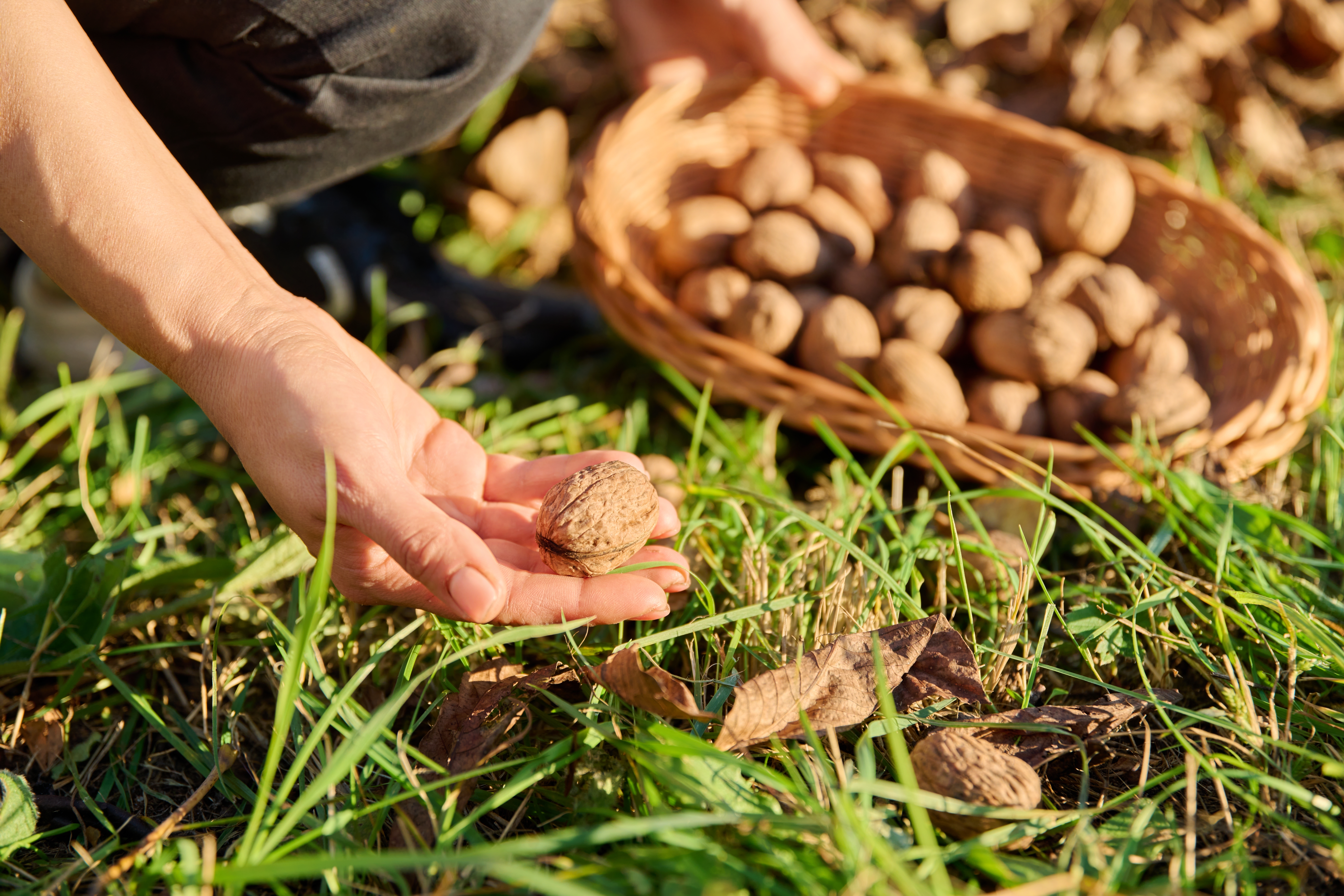
Some trees make you think about next summer. Walnut trees make you think about the next generation. Plant one in the right place, care for it while its roots get established, and that little tree can eventually become a handsome shade tree with a fall harvest worth gathering. Its branches may shelter birds, its leaves can turn a lovely yellow in autumn, and its nuts can find their way into everything from homemade brownies to holiday baking.
Of course, before you start picturing baskets of walnuts, there’s an important question: Can I grow walnut trees in my USDA zone? The answer depends on which kind of walnut you choose. American Black Walnut is not the same tree as the English Walnut found in most grocery stores. Butternut has its own rich flavor and cold-weather preferences. Heartnut produces distinctive heart-shaped shells. And a grafted Tulare English Walnut has different expectations from an unnamed seedling walnut.
Here at Ty Ty Nursery in South Georgia, we’ve helped gardeners choose fruit and nut trees since 1978. One thing we’ve learned is that a number on the USDA hardiness map tells only part of the story. The walnut that grows beautifully in Ohio may not be the best choice for a hot, humid yard in coastal Georgia. A tree can survive winter but lose its nut crop to spring frost. And an otherwise healthy walnut may produce only a handful of nuts if its pollen and female flowers don’t overlap.
This guide compares the eight selections in our walnut trees for sale online, including USDA zones, winter chill estimates, pollination, planting bare-root trees, pruning, soil preferences, disease concerns, harvesting, and the special question gardeners always ask about black walnut and nearby plants. We’ll help you plan a planting that makes sense for your yard, not just for a picture in a catalog.
What Is a Walnut Tree, and Which Kind Should You Grow?
Walnuts belong to the genus Juglans. They are deciduous trees, meaning they naturally drop their leaves in fall and remain dormant through winter. Most develop deep root systems and substantial crowns, making them long-term landscape trees rather than plants to tuck into a narrow flower bed.
The best-known edible types fall into several groups. Black walnuts (Juglans nigra) are native to eastern North America and produce strongly flavored nuts inside very hard shells. English or Persian walnuts (Juglans regia) are famous for the milder, easy-to-use kernels commonly sold in grocery stores. Butternut (Juglans cinerea), also called white walnut, produces elongated nuts with a rich, buttery flavor. Heartnut is a form of Japanese walnut, known for its heart-shaped shell.
There isn’t one universally best walnut tree. If your priority is native habitat and a long-lived hardwood, American Black Walnut deserves consideration. If you’re thinking about baking and cracking nuts with less effort, an appropriate English Walnut selection may fit better. A northern garden with cold winters can have entirely different options from a mild-winter backyard.
Walnut Tree Growing Zones: Why the USDA Map Is Only the Beginning
The USDA Plant Hardiness Zone Map shows the average annual extreme minimum winter temperature at a particular location. It tells you something important about whether a perennial tree may survive the coldest part of the year. It does not, however, calculate winter chill accumulation, summer heat, local soil drainage, or the probability that flower buds will survive a late freeze.
Ty Ty Nursery’s current walnut tree collection contains eight selections with published growing ranges collectively covering USDA Zones 3–10. Butternut is the only listing that begins at Zone 3, while English Walnut and grafted Tulare are the only selections listed through Zone 10. Those are product-specific advertised ranges, not evidence that every walnut will fruit reliably at the extremes.
Think about a Zone 8 hillside in California and a Zone 8 property in South Georgia. Both may have similar winter lows, yet their rainfall, summer humidity and walnut disease pressure can differ enormously. For dependable harvests, you must consider the whole growing season and the particular walnut species or cultivar.
Walnut Trees at Ty Ty Nursery: USDA Zones, Chill Hours and Best Uses
| Walnut Selection | USDA Zones | Estimated Chill Hours | What Makes It Different |
|---|---|---|---|
| American Black Walnut | 4–9 | 1,000–1,400 | Native hardwood; strong-flavored, hard-shelled nuts |
| Butternut (White Walnut) | 3–9 | 1,000–1,500 | Cold-hardy native; elongated, buttery nuts |
| English Walnut | 5–10 | 600–1,000 | Mild-flavored kernels familiar from grocery stores |
| Heartnut Walnut | 5–8 | 1,000–1,200 | Heart-shaped shells; related to Japanese walnut |
| North Carolina Cannonball Walnut | 5–9 | 1,000–1,200 | Large, round, hard-shelled black-walnut-type nuts |
| Thomas Black Walnut | 6–9 | 800–1,200 | Named black walnut selection with rich-flavored nuts |
| Tulare English Walnut (Grafted) | 5–10 | 700–1,000 | Grafted English walnut; relatively thin shells |
| Ukrainian Walnut | 4–9 | 1,200–1,500 | Advertised cold-hardy selection with mild kernels |
Important: These chill-hour figures come from the individual nursery listings and should be treated as broad estimates, not laboratory-verified thresholds for every tree. For comparison, University of California IPM describes approximately 500–1,000 hours below 45°F as a general walnut-growing guideline. Species, cultivar, chilling model and local conditions all matter. The Ukrainian Walnut listing does not provide enough detail to assume that every tree is the same grafted clone, so verify propagation and identity if a particular characteristic is essential.
How Many Chill Hours Do Walnut Trees Need?
What Winter Chill Actually Measures
Winter chilling is the accumulation of cool temperatures that helps deciduous plants progress through dormancy. People sometimes calculate chill hours by counting time below 45°F, while more advanced models account for the effects of different temperature ranges. The result is useful when comparing climates, but it isn’t a magic number that guarantees a harvest.
Our walnut listings give estimates from about 600 hours for English types to as high as 1,500 hours for certain cold-adapted native types. A useful place to start is the tree’s particular listing; a more useful place to finish is with your local Extension office or other growers raising that same type of walnut nearby. A mountain orchard can accumulate a different amount of winter chill than a coastal yard in the same USDA zone.
Cold Hardiness, Chill and Spring Frost Are Three Different Things
A walnut tree may endure a cold winter yet produce no nuts after a late spring freeze damages emerging shoots or female flowers. The opposite problem can happen in very warm regions: a tree may survive without frost injury but experience insufficient seasonal cooling for consistent bud development. Summer heat is yet another consideration. Extremely hot weather can stress walnut trees and lower kernel quality, particularly when soil moisture is inadequate.
When someone asks us for the best walnut variety, we don’t want to look only at the coldest night of the year. We also want to know how much room the tree has, whether the soil stays wet, and whether local climate conditions are suitable for making nuts.
Can I Grow Walnut Trees in USDA Zone 3?
Zone 3 is cold enough that many walnuts struggle through winter. Of our current offerings, Butternut (White Walnut) is the one advertised for Zone 3. Butternut is naturally more cold-adapted than many English walnut selections and occurs in the northern United States and southern Canada. Still, a Zone 3 listing is not permission to ignore local exposure, growing-season length or disease.
For northern Minnesota or other severe-winter regions, look for butternut stock with a proven local track record. Spring planting after the soil thaws gives roots a useful first growing season. Choose deep soil that drains, protect tender young trunks from deer and rodents, and apply mulch without burying the trunk. Remember that butternut canker is a serious disease of this species; ask local forestry or Extension specialists about its status in your region.
If the property is exceptionally exposed or the growing season is very short, prioritize winter survival and long-term establishment before thinking about nuts. This is a tree that should be planted with patience.
USDA Zone 4: Black Walnut, Butternut and Ukrainian Walnut
Zone 4 offers a little more flexibility. Ty Ty Nursery lists American Black Walnut for Zones 4–9 and Ukrainian Walnut for Zones 4–9, along with Butternut. These are worth investigating for colder inland properties, but don’t forget that seed provenance and local adaptation can be as important as a broad label.
American Black Walnut is a native species associated with fertile soils and substantial crowns. It can make a magnificent shade and nut tree where the soil is deep enough and the growing season is suitable. Ukrainian Walnut is advertised as a colder-climate selection; if you’re comparing it with a named grafted English walnut, ask whether the particular nursery stock is grafted and which tree characteristics are consistent.
Choose the planting spot now with the mature tree in mind. Walnut roots and branches will eventually occupy much more room than the young tree suggests. Avoid shallow ledge, compacted fill and spots that remain saturated after snowmelt.
USDA Zone 5: A Good Starting Point for a Backyard Walnut Orchard
Every walnut selection in Ty Ty Nursery’s current collection includes Zone 5 except Thomas Black Walnut, which begins at Zone 6. That gives Zone 5 gardeners several interesting options: American Black Walnut for native character, English Walnut for familiar mild kernels, Heartnut for its unusual shells, and Butternut for its distinctive flavor.
In Ohio, Pennsylvania, Indiana and other regions with cold winters, give special attention to spring frost timing. Some walnut varieties begin growth earlier than others. A tree can survive January temperatures and still lose a spring crop because new flower-bearing shoots freeze. Choose a location with air drainage rather than a low frost pocket.
If you’re growing nuts rather than simply shade, plan for compatible pollination from the beginning. Another walnut tree of the same general group, with an overlapping pollen-shed period, is a better strategy than assuming any two kinds of walnuts will cross-pollinate successfully.
USDA Zone 6: Walnuts for Temperate Gardens and Larger Properties
Zone 6 brings Thomas Black Walnut into the published lineup and often offers favorable conditions for several other walnut types. The combination of cold winters and warm summers can suit black walnuts and selected English walnuts, provided soil moisture and drainage are appropriate.
For homeowners, the main challenge may be space. A large black walnut does not belong a few feet from the house, over a driveway, or above a vegetable garden planned for tomatoes. It can become a handsome permanent feature along a field edge or in a broad lawn, but you’ll want to think about falling nuts and the tree’s mature root zone.
Where you have room for a pair, investigate Thomas Black Walnut and a compatible black walnut selection, or plan two genetically distinct English walnuts with bloom periods that overlap. Planting two trees is useful only if they are suitable pollen partners.
USDA Zone 7: Strong Potential With the Right Site
Many Zone 7 properties have promising walnut-growing conditions, especially where summers are warm but not relentlessly hot and humid. American Black Walnut can be an excellent native shade tree on a deep, fertile site. English Walnut and Tulare may be appropriate in some regions, but spring frost, disease and summer moisture remain important.
In Tennessee, North Carolina or Virginia, two gardens may experience very different results even with the same USDA zone. A mountain slope, an upland clay lot and a sheltered valley do not provide the same conditions. Walnut trees generally prefer deep soil with good drainage and enough available moisture to support nut filling during summer.
If you are choosing an English walnut for food production, confirm that the selection’s chilling and bloom behavior suit your local climate. If you’re choosing black walnut for its native character and rich nuts, make sure the tree has plenty of room to grow and plenty of distance from sensitive vegetable beds.
USDA Zone 8: Can Walnut Trees Grow in Georgia?
Yes, several walnut types can grow in parts of Georgia, but the kind of walnut matters. Here in South Georgia, we know what a long, humid growing season feels like. Black walnut is native to parts of the state, especially suitable northern and inland sites with deep, fertile soil. That does not mean every Georgia yard is equally favorable.
The University of Georgia describes Carpathian or English Walnut as only marginally adapted to Georgia. Late frost can damage growing shoots, intense summer heat can affect kernels, and local disease problems may limit results. That deserves more weight than the fact that a product’s advertised zone range includes Zone 8.
If you’re planting a walnut for shade or wildlife, a locally adapted native black walnut may be an appealing option. For commercial-style nut harvests, research the exact species, variety, spring frost history and pollination before ordering. Avoid low ground with standing water, and provide reliable irrigation while the tree establishes and during drought.
USDA Zone 9: Know the Difference Between a Warm Zone and a Good Walnut Climate
Most of Ty Ty Nursery’s walnut selections include Zone 9, except Heartnut, which is listed through Zone 8. But Zone 9 can mean a relatively dry inland environment, a humid coastal garden, or another location altogether. Those climates are not interchangeable.
A suitable English walnut may perform in parts of the warm West where winters deliver enough chilling and summer growing conditions are favorable. That does not make the same tree an automatic success in hot, humid coastal areas. Even with adequate irrigation, walnut blight, heat and unsuitable winter chill can influence harvest quality.
Before establishing a row, talk with local growers or your Extension office. If you’re planting simply because you want a beautiful large shade tree, be equally careful about its mature size and root conditions. A tree’s survival is not proof of dependable edible nuts.
USDA Zone 10: Are English and Tulare Walnuts Realistic?
Ty Ty Nursery lists English Walnut and grafted Tulare English Walnut through Zone 10. That is the warmest published range in the collection, but it needs special interpretation. English walnuts generally require meaningful winter chilling, and a Zone 10 label alone cannot guarantee the cool winter pattern needed for a dependable crop.
If your particular Zone 10 location has enough cool weather and a local history of successful walnut production, you may have options. If it is nearly frost-free, extremely hot or consistently humid, the likelihood of productive harvests may be much lower than the label suggests. Verify local cultivar performance before making a substantial investment.
Zone 11 lies outside the published range of every walnut in this collection. For that climate, a different locally proven nut or shade tree may be the more sensible choice.
American Black Walnut: Native Shade, Hardwood and Rich Nuts
The American Black Walnut Tree (Juglans nigra) is one of our most distinctive native hardwoods. Its deeply flavored kernels taste quite different from grocery-store English walnuts. Many people love black walnuts in brownies, ice cream and old-fashioned baked goods, even though the very hard shell takes extra work to crack.
Our current listing advertises USDA Zones 4–9 and an estimated 1,000–1,400 chill hours. A mature black walnut can become a large tree, often 60–80 feet tall or more where conditions are favorable. This is not a tree to plant beneath power lines or close to a roof. Give it a generous, permanent site.
Black Walnut is also associated with juglone, a naturally occurring chemical that can affect some nearby plants. We’ll talk more about that later. For a large property with deep, fertile soil and room to develop, it is a serious candidate for a long-lived shade and nut planting.
Butternut or White Walnut: Rich Flavor and Northern Character
The Butternut Walnut Tree (Juglans cinerea) is native to eastern North America and produces elongated nuts with rich, buttery kernels. Its smooth flavor has earned loyal fans among people who enjoy gathering native nuts for homemade recipes.
Ty Ty Nursery lists Butternut for Zones 3–9, with approximately 1,000–1,500 estimated chill hours. That broad range begins farther north than any other walnut currently in our collection. Butternut favors suitable, well-drained soils and cooler native woodland conditions, so planting it at the hot end of the advertised range requires careful local verification.
One concern cannot be overlooked: butternut canker has seriously affected wild butternut populations across much of its range. It can kill branches and eventually the tree. We encourage gardeners to ask their county Extension or forestry specialists about local disease pressure and carefully inspect any affected trees. A butternut is a beautiful native planting, but it is not immune to disease.
English Walnut: The Familiar Baking Walnut
The English Walnut Tree (Juglans regia), also called Persian Walnut, produces the mild, buttery kernels most people recognize from grocery stores. For someone who pictures homemade walnut cookies, bread or holiday pies, this is often the walnut type they have in mind.
Our English Walnut listing covers Zones 5–10 with about 600–1,000 estimated chill hours. It generally prefers full sun, fertile well-drained soil, and a suitable temperate growing season. English walnuts can be sensitive to late spring frost, walnut blight and extreme summer temperatures in certain regions.
An important buying question is whether you are purchasing a specific grafted cultivar or a more general English walnut selection. Seedlings can differ in nut quality and age at bearing. If uniform nut size and harvest timing are especially important, confirm the plant’s propagation method before you order.
Heartnut Walnut: A Different Kind of Walnut Shell
The Heartnut Walnut Tree is derived from Japanese Walnut and is commonly identified botanically as Juglans ailantifolia var. cordiformis. Its most striking feature is the heart-shaped shell, which gives this unusual tree its name.
Heartnut is listed by Ty Ty Nursery for Zones 5–8, with approximately 1,000–1,200 chill hours. The kernels have a pleasant flavor, and some good selections crack more easily than ordinary black walnuts. Not every seedling will produce identical shell shape or cracking quality, however, so named, vegetatively propagated selections are important when uniformity matters.
For nut production, research a second genetically distinct Heartnut with overlapping flowering. Don’t rely on an unrelated black walnut merely because both plants have walnut in the name; pollination compatibility across different walnut species is not guaranteed.
North Carolina Cannonball Walnut: A Thick-Shelled Conversation Starter
The North Carolina Cannonball Walnut Tree is marketed for its large, rounded, heavy-shelled black-walnut-type nuts. The dramatic name suits the fruit: this is not the kind of nut you casually break open with an ordinary kitchen cracker.
Our listing gives USDA Zones 5–9 and approximately 1,000–1,200 chill hours. The tree is described as a substantial hardwood suitable for broad landscapes with full sun and deep, well-drained soil.
Before planting, decide whether you want a collection of interesting native nuts, an attractive shade tree, or an easy-cracking culinary crop. North Carolina Cannonball appeals to the first two goals, but its very hard shells demand more effort at harvest. Pair it with an appropriate black walnut pollen donor when dependable nut production is the priority.
Thomas Black Walnut: A Named Selection for Rich-Flavored Nuts
The Thomas Black Walnut Tree is a named black walnut selection valued for its bold-flavored kernels. If you enjoy traditional black walnut desserts and want something beyond an unnamed seedling, Thomas is worth researching.
Ty Ty Nursery lists Thomas for Zones 6–9 and approximately 800–1,200 chill hours. It benefits from another suitably timed black walnut for pollination, and it needs a large, sunny location with deep soil. A mature Thomas is still a black walnut tree, not a compact patio fruit tree.
Because named black walnut cultivars are typically propagated vegetatively to retain their exact characteristics, ask about whether the particular tree offered is grafted if preserving cultivar identity is essential for your orchard plan.
Tulare English Walnut: A Grafted Choice for the Right Climate
The Tulare English Walnut Tree (Grafted) is a named English walnut cultivar developed for productive nut growing. Tulare nuts are valued for their milder flavor and comparatively thin shells, making them appealing for home cooking.
Our listing advertises USDA Zones 5–10 and approximately 700–1,000 chill hours. Grafting is useful because it preserves the identity of the Tulare cultivar, but the rootstock and planting conditions still matter. When planting a grafted tree, keep the graft union above the soil rather than burying it.
Tulare should be evaluated in a region with adequate winter chilling, manageable spring frost exposure and a good record of English walnut production. Use a documented, bloom-compatible English walnut pollinizer if dependable yield is the goal; do not assume that nearby black walnut pollen is an adequate substitute.
Ukrainian Walnut: Research Its Cold-Climate Potential
The Ukrainian Walnut Tree is offered as a cold-hardy walnut with large nuts and a relatively mild flavor. It is advertised for Zones 4–9 and approximately 1,200–1,500 chill hours, making it interesting to gardeners in cooler regions who want to compare alternatives to ordinary English walnut seedlings.
Because the product name does not give the same detail as a clearly identified grafted cultivar, ask about its botanical identity, propagation and pollination requirements when those details are important to your orchard. Plant names sometimes reflect geographic origin or a broader selection group rather than one genetically uniform tree.
As with any walnut, the site matters: full sun, deep fertile ground, seasonal moisture and sufficient room for a large crown. Cold tolerance alone does not guarantee a productive autumn harvest.
Do Walnut Trees Need Two Trees for Pollination?
Walnuts Have Male and Female Flowers on the Same Tree
Walnut trees are generally monoecious, meaning the same tree has male flowers and female flowers. The male flowers hang in catkins and release pollen into the wind. The small female flowers develop into nuts after successful fertilization. Bees are not usually the primary pollinators for walnuts; wind is doing most of the work.
It sounds as if one tree should be enough, and sometimes it is. Some walnuts can set nuts from their own pollen. The complication is timing: male flowers may release pollen before the female flowers become receptive, or the reverse. Gardeners call those differences protandry and protogyny.
A Second Compatible Tree Is the Better Orchard Plan
For dependable production, plant genetically different walnuts of the appropriate species or compatible cultivar group, and confirm their pollen-release periods overlap. University guidance from Oregon State and Penn State emphasizes that trees may be biologically self-fertile yet still bear poorly when their male and female flowering times miss each other.
For black walnuts, another suitably timed black walnut is generally a sensible place to begin. For Heartnut, a second compatible Heartnut is a more dependable plan than assuming any other walnut species will work. For English walnuts, seek a documented English walnut pollinizer suited to your climate. Two random trees do not automatically become a successful pollen pair.
What Is Juglone, and Can Black Walnut Harm Other Plants?
Black walnut trees are well known for producing juglone, a naturally occurring compound found in their roots, leaves, hulls and other tissues. Penn State Extension notes that sensitive plants may grow poorly near juglone-producing trees, particularly black walnut and butternut. Tomatoes and some other vegetable or ornamental crops are frequently discussed as vulnerable.
That does not mean nothing can grow beneath a walnut. Soil conditions, root competition, light and water can be major contributors to poor growth, and real-world responses vary among plants and sites. But if your dream is a large vegetable garden with tomatoes, it makes good sense to locate it away from a black walnut’s expanding root zone rather than planting the tree directly beside it.
As the tree matures, its roots may extend beyond the canopy. Keep nut hulls and fallen debris out of sensitive beds when practical, and follow local guidance about composting walnut materials. Juglone concerns are one reason we advise choosing a walnut’s permanent location carefully before you dig.
Where Is the Best Place to Plant a Walnut Tree?
Give Walnut Trees Full Sun
For the best growth and nut production, aim for at least six to eight hours of direct sunlight daily. A mature walnut can provide shade, but a young nut tree is not best planted in deep shade beneath existing hardwoods. Choose open ground with good air movement and avoid obvious spring frost pockets.
Deep Soil and Drainage Are More Important Than Fancy Fertilizer
Walnuts generally favor deep, fertile, well-drained soil. A moderately moist loam or silt loam is often suitable. Avoid shallow rock, hardpan and locations that remain waterlogged after heavy rain. The University of California recommends exploring soil depth before planting; a walnut develops a substantial root system and cannot thrive if the roots encounter a permanent saturated layer.
Many walnut-growing recommendations target soil pH near 6.0–7.0, though species and regional soils can differ. A soil test is the best way to decide whether amendments are needed. Never dump a large quantity of fertilizer or lime into a planting hole just because the tree is a nut producer.
Plan Spacing for the Mature Tree
Many walnut orchards use approximately 25–40 feet between trees depending on species, rootstock, management and whether trees will be thinned later. On a home property, a large black walnut may deserve 40–60 feet or even more from other large trees and permanent structures. Our American Black Walnut listing suggests 50–75 feet for mature development.
Do not plant under electrical wires or just beyond the edge of a patio. Mature walnut branches, roots, shade and falling nuts can affect a much larger area than the original planting hole. If you have limited space, a smaller fruiting plant may be more practical than a full-size walnut.
Why a Walnut Tree’s Taproot Matters
Young walnuts develop pronounced taproots, and those roots can make moving an established tree difficult. A small bare-root tree planted in the right permanent location is often easier to manage than an older tree whose roots have already grown deep into the ground.
When you unpack dormant walnut stock, protect the roots from sun and drying wind. The planting hole needs to accommodate the actual roots naturally. Do not force the taproot into a tight hook or fold it upward to fit a shallow hole. Instead, prepare an appropriate hole or follow professional nursery directions for any necessary root correction.
For grafted Tulare or another grafted walnut, locate the graft union and keep it above the surrounding soil. Also avoid placing the root flare below grade. Deep planting and consistently wet soil can create long-term problems that are much harder to solve once the tree grows.
When Is the Best Time to Plant Bare-Root Walnut Trees?
For most regions, planting during the dormant season is best. In cold northern areas, late winter or early spring after the soil thaws gives a walnut time to begin establishing roots before summer. In milder Southern areas, an appropriate winter or early-spring window can be useful as long as the soil is workable and not saturated.
Ty Ty Nursery ships many nut trees bare-root during the proper dormant season, with actual shipment depending on inventory, harvest timing, weather and destination conditions. Check the current projected shipping information on our walnut trees online listings before ordering. A projected stock date is not necessarily the actual shipping date for every region.
Prepare the planting site before the tree arrives. That includes making a plan for watering, mulch, tree guards, and any compatible second walnut needed for pollination.
How to Plant a Bare-Root Walnut Tree Step by Step
- Choose the right species. Confirm the tree’s advertised USDA range and whether it is suited to your local winter and summer conditions.
- Pick its permanent home. Find a sunny site with deep, well-drained soil and enough room for mature roots and branches.
- Clear competing plants. Remove turfgrass and weeds from a generous planting area so young roots aren’t fighting for moisture.
- Unpack promptly. Keep the bare roots moist and protected from drying wind and sunlight; follow the nursery’s unpacking directions.
- Check the taproot. Prepare a hole that lets roots spread naturally rather than sharply bending the main root.
- Check planting depth. Keep the root flare near the surrounding soil surface, and keep a graft union above the ground if one is present.
- Backfill thoughtfully. Use primarily the native soil, settling it gently around the roots without making a hard, compacted planting pit.
- Water deeply. Apply a thorough soaking after planting to settle soil and hydrate the entire root zone.
- Mulch and protect. Spread two to three inches of organic mulch over the rooting area, leaving a clear space at the trunk, and guard against deer or rodents if necessary.
- Watch the establishment period. Monitor soil moisture, new growth and trunk protection through the first growing season instead of expecting immediate nut production.
First-Year Walnut Tree Care: Water, Mulch and Fertilizer
Consistent Watering Helps Roots Establish
Even a mature black walnut with a large root system can suffer during long droughts. A newly planted walnut needs still more attention. Water deeply whenever the root zone starts to dry, adapting the schedule to rainfall and soil type. A sandy Georgia soil dries faster than a moisture-retentive northern loam. Avoid both complete drying and standing water around the roots.
In hot weather, a drip hose or slow watering basin makes it easier to reach the rooting area. Over time, encourage roots to grow outward by wetting a broadening area rather than repeatedly splashing water against the trunk.
Mulch Is Your Friend; Piled-Up Mulch Is Not
Two to three inches of clean wood chips or other organic mulch can reduce competition, moderate soil temperature and slow moisture loss. Keep it several inches away from the trunk. Mulch piled into a cone against the bark traps moisture and can create unnecessary problems.
Test Soil Before Feeding
Don’t try to make a walnut grow faster by adding heavy fertilizer at planting. A soil test can reveal genuine nutrient issues, and healthy young trees often need less feeding than people expect. Excess nitrogen encourages soft vegetative growth and may not improve nut yield. As the tree matures, professional soil and leaf analysis can help guide any orchard-specific fertilization program.
How and When to Prune Walnut Trees
A young walnut benefits from good structure. Choose a strong central leader, develop well-spaced scaffold branches and remove broken or competing shoots. Avoid removing large amounts of healthy foliage during establishment. A walnut that has a good framework early in life is easier to manage later.
Pruning timing depends on climate, disease pressure and species. Many growers do structural work during dormancy, while some regions avoid certain wet-weather pruning periods because of bacterial or fungal infection risk. For larger trees, consult a qualified arborist. Walnut limbs can become heavy, and poor cuts can cause lasting damage.
Also remember that a large bare-root walnut may be trimmed before shipment to fit carrier packaging. A shipment with shortened branches is not necessarily a smaller root system or an unhealthy tree. Follow the nursery’s care instructions and give the tree time to develop its intended shape.
When Will Walnut Trees Begin Producing Nuts?
Walnut growing rewards patience. A grafted named English walnut may bear sooner than a seedling, sometimes producing modest nuts within several years under favorable conditions. A seed-grown black walnut, butternut or heartnut may take considerably longer, and full crops can take many additional years. Actual timing depends on propagation, variety, rootstock, growing conditions and age at planting.
Don’t mistake the first few nuts for the tree’s full capacity. Young trees put a lot of energy into roots, trunk and canopy. Once they are older, walnut trees may bear unevenly from year to year because of spring frost, pollination timing, weather or the tree’s own crop cycle. Give the tree time to become established before expecting a dependable harvest.
If earlier bearing is a priority, ask specifically whether the tree is grafted. Our Tulare English Walnut is identified as grafted; don’t automatically make that assumption about every other walnut listing.
Common Walnut Tree Problems: What to Watch For
Butternut Canker
Butternut canker is a serious disease affecting native Butternut. It can cause branch dieback and trunk cankers and has contributed to widespread population losses. Avoid describing every butternut as disease resistant. Ask local forestry experts about the risk and diagnose suspicious cankers rather than cutting randomly into the trunk.
Walnut Blight and Anthracnose
Walnut blight, a bacterial disease, can affect flowers, leaves and developing nuts in susceptible walnuts, particularly under wet spring conditions. Anthracnose can cause leaf spotting and premature leaf drop. Select a variety suited to your region, maintain healthy spacing and avoid unnecessary overhead irrigation. Local Extension guidance is essential before choosing any spray program for edible walnuts.
Walnut Husk Fly and Other Nut Pests
Walnut husk fly larvae can feed in the green outer hull, causing staining and reduced quality. In some regions, codling moth and other pests damage kernels. Pick up fallen nuts promptly, practice sanitation and use local monitoring advice. Mature walnut trees can be too tall for ordinary homeowner spraying, another reason variety and site selection matter.
Thousand Cankers Disease
Thousand cankers disease involves a fungus associated with the walnut twig beetle and threatens certain walnut species. Its distribution and local rules can change. If a walnut develops widespread dieback, obtain professional identification and avoid transporting potentially infested wood or nursery stock contrary to local regulations.
Summer Heat, Spring Frost and Water Stress
Not every brown leaf is a disease. High temperatures, drought, waterlogged soil and spring freeze injury can produce symptoms that resemble infection. Check soil moisture and weather history, then seek a reliable diagnosis when needed. Healthy growing conditions make a tree more resilient but cannot eliminate every hazard.
When Are Walnuts Ready to Harvest?
Walnuts commonly ripen in fall, often from September into November depending on species, cultivar and location. As the nut matures, the surrounding green hull changes color, softens and may split. Many nuts fall naturally from the tree. Collect sound fallen nuts frequently, especially after rain, to reduce staining, insect damage and spoilage.
Black walnut hulls stain intensely. Wear gloves and work clothes when removing them. The edible kernel is protected by the hard shell inside the hull. Remove hulls promptly, discard damaged or moldy nuts, clean them appropriately and dry them in a ventilated, food-safe location before long-term storage. Butternuts and English walnuts have different shell shapes and hull characteristics, so use the appropriate handling method for the species you’re growing.
After shelling, store kernels in airtight containers in the refrigerator or freezer to help preserve quality. Their natural oils can become rancid when exposed to warmth and air. For many families, cracking the first homegrown walnuts becomes as memorable as planting the trees themselves.
Should You Grow Walnuts for Wildlife, Shade or Eating?
If your main goal is baking, an English walnut type may be attractive because the kernels are mild and the shell can be easier to manage. If you love the bold taste of traditional American nuts, black walnut is hard to beat. Heartnut offers a novelty shell and a pleasant eating experience, while Butternut is prized for rich native-nut flavor.
On a larger property, black walnut can also provide substantial shade and wildlife habitat. Squirrels gather nuts, and the tree contributes to woodland diversity. But planting a walnut solely for wildlife does not mean it needs no care: young trees still need protection from browsing and consistent watering during establishment.
Choose a tree whose mature size, roots and nut drop fit your plans. It’s better to give one properly placed walnut plenty of room than to plant three where they will eventually compete with the house, driveway and utility lines.
Frequently Asked Questions About Growing Walnut Trees
Can walnut trees grow in Georgia?
Yes, certain walnuts can grow on suitable Georgia sites. American Black Walnut is native to parts of the state. English or Carpathian Walnut is described by University of Georgia as marginally adapted, so local frost, summer heat and disease conditions matter greatly for reliable fruiting.
Which walnut tree is best for cold climates?
Butternut is advertised by Ty Ty Nursery down to Zone 3, while American Black Walnut and Ukrainian Walnut are listed from Zone 4. The actual tree must still be adapted to local winters, and Butternut also faces serious canker disease concerns.
What is the difference between black walnuts and English walnuts?
Black walnuts have distinctive strong-flavored kernels inside very hard shells. English walnuts generally have a milder flavor and are the familiar type used in everyday baking and grocery-store packages.
Do I need two walnut trees to get nuts?
A single walnut sometimes sets nuts, but having an appropriate genetically different tree with overlapping pollen shed usually makes fruit production more dependable. Choose compatible partners within the appropriate walnut group rather than assuming any two walnuts will work.
Do walnut trees need bees?
Walnuts are primarily wind-pollinated. Male catkins release pollen, and female flowers receive it when receptive. Flowering overlap matters more than having a beehive beside the trees.
Will black walnut roots kill my vegetable garden?
Black walnut produces juglone, which can affect sensitive plants, but results vary by species and site. Water, light and root competition also influence growth. It is wise to place sensitive vegetables away from the walnut’s expanding root zone.
How long does a walnut tree take to bear nuts?
Grafted named cultivars may begin producing sooner than seedlings, but the time varies widely. Several years for early crops and many more for full production is a more realistic outlook than expecting a harvest the first season.
Can walnut trees be grown in containers?
Small walnuts can be held temporarily in large containers with adequate root depth, moisture and drainage, but most will eventually require an in-ground permanent site. Their taproots and mature crowns make them poor long-term patio trees.
When should I plant bare-root walnuts?
Plant while dormant, usually late winter to early spring in colder areas or during another suitable dormant-season window in milder regions. The soil must be workable and not waterlogged or frozen.
How far apart should walnut trees be planted?
Spacing depends on species and orchard management, but roughly 25–40 feet is common in managed plantings. Large landscape black walnuts may deserve 50 feet or more. Always plan for mature canopy and roots.
Where Is the Best Place to Buy Walnut Trees Online? Ty Ty Nursery
Choosing the right walnut is a long-term decision. Once you’ve considered your USDA zone, summer conditions, soil, pollination and available space, we want the buying part to be simple. Our online walnut tree nursery offers eight selections, from native American Black Walnut to grafted Tulare English Walnut. You can compare current sizes and shipping projections without driving from nursery to nursery.
1. Prices Advertised Up to 68% Lower Than Other Nurseries
We advertise prices up to 68% lower on qualifying comparisons with selected competing nurseries. Not every tree or order will have that maximum saving; the actual difference depends on tree size, variety, discounts and the offer being compared. We encourage you to compare equivalent plant sizes and the total delivered cost.
2. Fast In-Season Shipping: Plant in Days the Ty Ty Way
Our goal is prompt fulfillment during the appropriate shipping season, when stock is ready and the planting conditions at your destination are suitable. We call it Plant in Days the Ty Ty Way. Many customers would rather plant promptly than wait weeks or months for an order to be prepared elsewhere. Actual timing depends on dormancy, inventory, weather, regional holds and carrier transit; we’ll prioritize a suitable planting window over a risky shipment.
3. Free One-Year Plantsurance Guarantee
Eligible trees include our free one-year Plantsurance coverage, rather than requiring a separate warranty purchase. If an eligible tree fails within 365 days of receipt, an approved claim provides store credit based on the qualifying amount actually paid for the plant, excluding shipping and taxes. Photographs, a scratch test, recommended-zone eligibility and other published conditions apply. Purchases made using earlier Plantsurance credit do not qualify for a second Plantsurance claim; coverage is a one-time benefit for each eligible paid item.
4. Lifetime True-to-Name Guarantee
When you order a named walnut, you should receive the identification you purchased. Our Lifetime True-to-Name Guarantee provides a refund, replacement or store credit up to the original plant price for a verified varietal identification error, subject to the policy and proof requirements. This addresses plant identity, not an assured number of nuts, years to bearing or weather performance.
5. Walnut Trees Delivered Directly to Your Door
There’s no need to wrestle heavy nursery pots into your car, rearrange the trunk or drive home worrying about branches getting damaged. We ship eligible walnut trees directly to your door using seasonally appropriate packaging. Many dormant trees ship bare-root, making them easier to handle when planting.
6. Helping Gardeners Since 1978
Ty Ty Nursery has helped gardeners grow fruit, shade and nut trees since 1978. We understand that tree selection is about matching a plant to the place it will spend the next several decades. From the cold Midwest to the warm Southeast, growing conditions change, and we want you to make a thoughtful choice.
7. Google Top Quality Store With a 4.5 Rating
Google currently recognizes Ty Ty Nursery as a Top Quality Store with a 4.5 store rating. Ratings can change, so feel free to visit the linked Google profile to see the most recent customer information.
8. An A Rating With the Better Business Bureau
Our Better Business Bureau profile currently displays an A rating. We link directly to that profile so you can review the latest rating yourself when comparing online nurseries.
9. Real Plant Experts Here in Ty Ty, Georgia
Have a question about black walnut juglone, English walnut pollination, which trees are grafted, or when bare-root stock should be planted? Our customer-service team includes real plant experts based in Ty Ty, Georgia. We don’t outsource those customer conversations to an overseas call center or make you depend exclusively on an AI chatbot. Call us at 888-758-2252 to talk through your planting plans.
Ready to Grow Walnut Trees for Generations to Come?
A walnut tree is one of the more satisfying long-term additions you can make to a large yard, family property or nut orchard. The key is matching the right type to your growing zone and giving it enough sunlight, deep soil, seasonal moisture, space and appropriate pollen partners. Then comes the patience that makes raising a walnut different from tending a quick-growing vegetable patch.
Choose American Black Walnut for bold flavor and a native hardwood, English or Tulare for familiar mild kernels, Butternut for its buttery native nuts, Heartnut for its unusual shells, or one of our other selections to suit your landscape goals. There’s a reason people get attached to the walnut trees planted by earlier generations. With a thoughtful start, your tree can become part of that story too.
Shop Walnut Trees Online at Ty Ty Nursery and start planning a beautiful, productive tree for the years ahead.

Leave a Reply