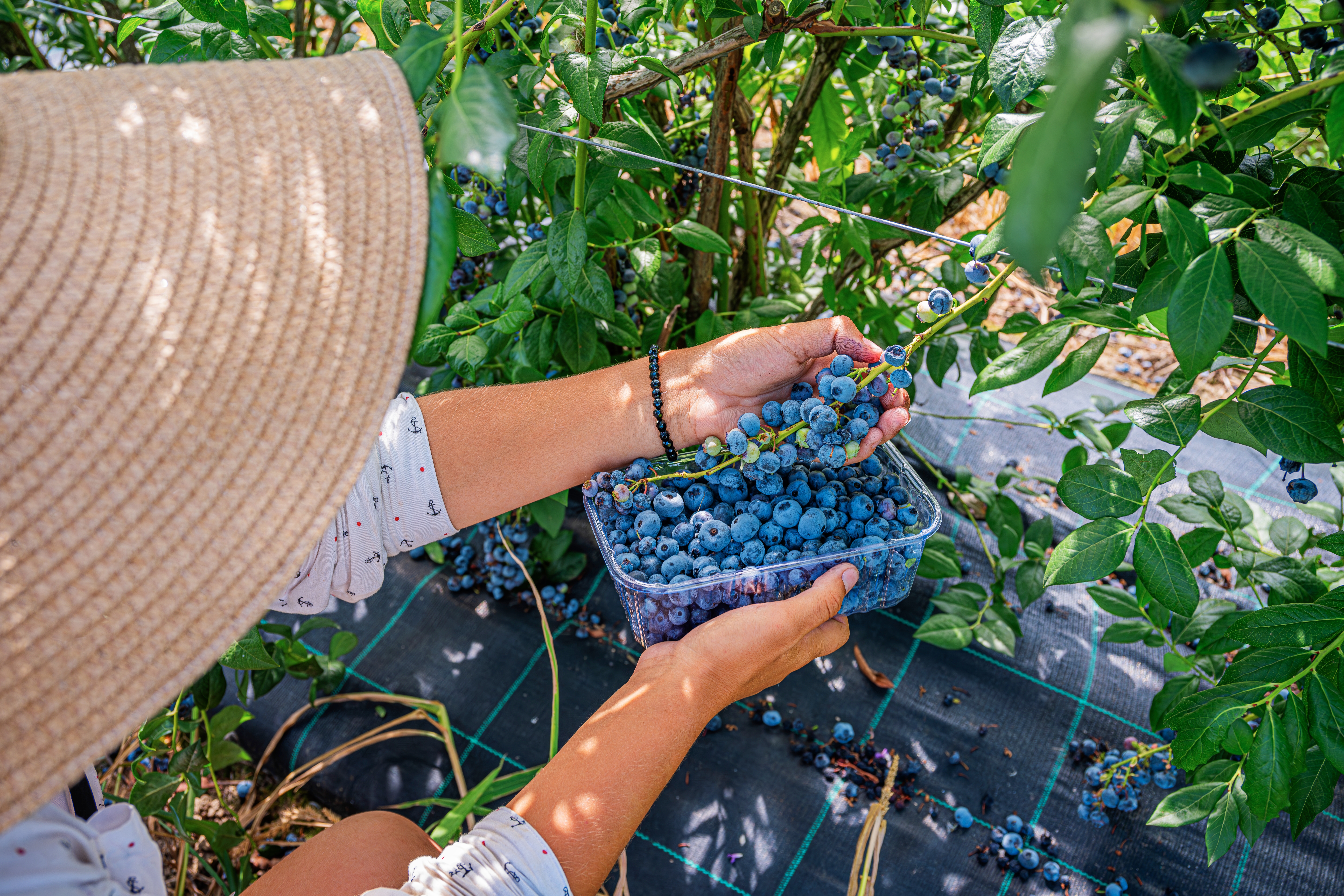
Blueberries are one of those rare plants that feel like a “cheat code” in the yard. They’re beautiful in spring, productive in summer, and downright showy in fall when the leaves light up in reds and oranges. And unlike some fruit plants that demand a PhD in patience, blueberries can start rewarding you surprisingly quickly when you plant them correctly.
But there’s a reason so many people type “why won’t my blueberry bush grow” into a search bar. It’s usually not because blueberries are hard. It’s because blueberries are specific. They want acidic soil, consistent moisture during establishment, and a variety selection that matches your winter chill. The biggest mistake is planting the wrong blueberry for your climate at the wrong time, then trying to fix it with extra water or extra fertilizer (which can actually make things worse).
This guide answers the question that matters most: when is the right time to plant blueberry plants in your USDA zone? We’ll use the USDA Plant Hardiness Zone Map (based on average annual extreme minimum temperatures) to walk through USDA Zones 3 through 11. For each zone, you’ll learn:
- The best time to plant blueberries in your region
- When to buy or pre-order (especially in colder zones that don’t plant until May)
- Which blueberry varieties make sense for your zone based on chill hours and pollination
- When blueberries are not an appropriate in-ground choice, and how indoor growing with special arrangements can help
Important: all blueberry varieties recommended in this article come only from Ty Ty Nursery’s Blueberry Plants page, so you can shop what you read without chasing random varieties across the internet:
Blueberry Plants for Sale Online at Ty Ty Nursery

USDA Zone Temperature Ranges (Zones 3–11)
- USDA Zone 3: -40°F to -30°F
- USDA Zone 4: -30°F to -20°F
- USDA Zone 5: -20°F to -10°F
- USDA Zone 6: -10°F to 0°F
- USDA Zone 7: 0°F to 10°F
- USDA Zone 8: 10°F to 20°F
- USDA Zone 9: 20°F to 30°F
- USDA Zone 10: 30°F to 40°F
- USDA Zone 11: 40°F to 50°F
Before We Go Zone-by-Zone: Blueberries Have Two Rules
If you want blueberries that actually produce (not just survive), you need to respect two blueberry rules: chill hours and pollination. After that, the “secret sauce” is simply planting at the right time and keeping the soil acidic.
Chill Hours (Explained Like a Human)
Chill hours are the number of hours a blueberry plant experiences in cool winter temperatures. Blueberries use winter chill to reset for spring growth and flower properly. If a variety needs more chill than your winter provides, the plant may leaf out unevenly, bloom poorly, or set less fruit. If a variety needs low chill but you live in a very cold region, it can wake up too early during warm spells and get hit by late frosts. Either way, variety selection matters.
The great news is that Ty Ty Nursery’s blueberry variety pages list chill-hour ranges so you can match the plant to your region. Many of these are rabbiteye-type blueberries suited to warm and mild climates, with chill hour requirements commonly in the 300–600 range depending on the variety.
Pollination: Most Blueberries Prefer a Buddy
Some blueberry plants can fruit on their own, but yield and berry size usually improve with cross-pollination. Many of Ty Ty Nursery’s blueberry variety pages describe plants as partially self-fertile and recommend planting another rabbiteye variety nearby for bigger harvests.
In real backyard terms, the easiest pollination plan looks like this: pick two different blueberry varieties that share a similar zone range and similar chill-hour needs, then plant them within reasonable distance of each other (most yards naturally satisfy this). Your harvest will usually be heavier and more consistent.
Blueberry Varieties Used in This Guide (Ty Ty Nursery Only)
These are the blueberry plants listed on the Ty Ty Nursery blueberry category page (with their USDA zone ranges shown on that page):
- Alapaha (USDA Zones 6–10)
- Austin (USDA Zones 6–10)
- Big Ass Blueberry™ (USDA Zones 6–9)
- Brightwell (USDA Zones 6–10)
- Briteblue (USDA Zones 7–9)
- Climax (USDA Zones 7–9)
- Delite (USDA Zones 7–9)
- Ochlockonee (USDA Zones 7–10)
- Pink Lemonade (USDA Zones 4–9)
- Powderblue (USDA Zones 7–9)
- Premier (USDA Zones 7–9)
- Tifblue (USDA Zones 7–9)
- Titan (USDA Zones 6–9)
- Vernon (USDA Zones 6–9)
Zone ranges above are shown on the Ty Ty Nursery blueberry category page.
Now let’s talk timing, zone by zone, starting with Zone 3.
USDA Zone 3: When to Plant Blueberry Plants
Zone 3 is serious winter: -40°F to -30°F minimums. Here’s the honest truth: the blueberry varieties listed on Ty Ty Nursery’s blueberry page are not rated for Zone 3. The coldest blueberry on the list (Pink Lemonade) starts at Zone 4, and most begin at Zone 6 or Zone 7.
That means Zone 3 is not an appropriate choice for planting these specific blueberry varieties in-ground if your goal is reliable survival and production. Blueberries absolutely can be grown in cold climates in general, but with the specific varieties available on this list, Zone 3 growers should treat blueberries as a “special arrangement” project.
Special arrangement option for Zone 3: You can grow blueberries indoors or in containers with the right setup. The core idea is to provide:
- A large container with acidic blueberry soil (pH 4.5–5.5 range is commonly recommended for these varieties)
- Strong light (bright window plus grow lights if needed)
- A way to give the plant a “winter rest” period that matches its chill-hour needs
When to plant in Zone 3 (container or protected growing): late May through early June is the most realistic outdoor planting window if you are moving containers outside for summer. Your goal is to avoid hard freezes and get the plant growing during stable warmth.
When to buy in Zone 3: pre-order early. Colder zones often plant in May, and nurseries can sell out before your late spring window arrives.
USDA Zone 4: When to Plant Blueberry Plants
Zone 4 (-30°F to -20°F) is still cold, but it’s the first zone where the Ty Ty blueberry list gives you one in-ground option: Pink Lemonade Blueberry (Zones 4–9).
Most of the other blueberry varieties on the Ty Ty list start at Zone 6 or 7, which means they’re not appropriate for Zone 4 in-ground planting. So Zone 4 is a “one-variety zone” from this list unless you use special arrangements.
Best time to plant in Zone 4: late April through May, whenever the ground is workable and no longer frozen. If your local spring runs late, planting in May is normal.
Pre-order reminder for cold zones: Zone 4 growers often plant in May, but nurseries can sell out before May arrives. Pre-ordering helps you avoid the “everything is sold out except the thing I didn’t want” problem.
Recommended Zone 4 variety:
- Pink Lemonade (Zones 4–9, approx. 300–500 chill hours, partially self-fertile; cross-pollination can increase yield and berry size)
Pollination tip for Zone 4: Pink Lemonade is described as partially self-fertile and benefits from cross-pollination with other rabbiteye types. In Zone 4, because most rabbiteye options on this list start at Zone 6/7, your easiest realistic plan is to plant more than one Pink Lemonade plant to encourage better fruit set and heavier production.
USDA Zone 5: When to Plant Blueberry Plants
Zone 5 (-20°F to -10°F) is another cold zone where the Ty Ty blueberry list is limited. Based on the USDA zone ranges shown for these varieties, most begin at Zone 6 or 7. That means Zone 5 is not an appropriate in-ground zone for most varieties listed here.
So what should Zone 5 growers do? You have two realistic paths:
- If you want to stick strictly to in-ground planting within the listed zone ranges on this page, you may not have a great in-ground match in Zone 5 from this specific list.
- If you want blueberries anyway, you can use special arrangements: container growing, protected placement, and extra winter planning.
When to plant in Zone 5: April through May, when soil is workable. If you are container growing, you can pot up as soon as you can keep the plant from freezing solid and then move outdoors when temperatures stabilize.
Buying tip for Zone 5: Pre-ordering is still smart because many colder-zone gardeners plant in May, and popular items can sell out before then.
Recommended varieties for Zone 5 (special arrangement focus): Pink Lemonade is the coldest-rated option on this page. If you container grow and protect the plant through winter, it’s the most natural fit from the Ty Ty list.
USDA Zone 6: When to Plant Blueberry Plants
Zone 6 (-10°F to 0°F) is where things get exciting. This is the first zone where most of the Ty Ty blueberry lineup becomes appropriate for in-ground planting because many start at Zone 6.
Best time to plant in Zone 6: March through April, as soon as the soil is workable and not saturated. Blueberries love moisture, but they do not love being waterlogged during establishment.
Best time to buy in Zone 6: late winter through early spring. If you wait until late spring, you can still plant, but early planting usually gives the strongest first year.
Recommended Zone 6 blueberry varieties: choose any of the varieties listed for Zones 6–9 or 6–10, and prioritize pollination pairings.
- Alapaha (Zones 6–10, 450–500 chill hours; cross-pollination recommended; pairs well with Climax or Tifblue)
- Austin (Zones 6–10, 450–550 chill hours; cross-pollination recommended; pairs well with Climax or Tifblue)
- Brightwell (Zones 6–10, 350–400 chill hours; cross-pollination recommended)
- Titan (Zones 6–9, 500–600 chill hours; cross-pollination recommended; pairs well with Brightwell or Premier)
- Vernon (Zones 6–9, 450–500 chill hours; cross-pollination recommended)
- Big Ass Blueberry™ (Zones 6–9, 500–600 chill hours; cross-pollination recommended; pairs well with Vernon)
Zone 6 pollination plans that work:
- Early-season focus: Alapaha + Vernon (both 450–500 chill range neighborhood)
- Big berries lineup: Titan + Big Ass Blueberry™ (both 500–600 chill range neighborhood)
- Flexible “easy win”: Brightwell + Titan (Titan page specifically suggests Brightwell; both are in the Ty Ty list)
USDA Zone 7: When to Plant Blueberry Plants
Zone 7 (0°F to 10°F) is prime territory for the largest selection on this Ty Ty blueberry list. Many varieties are explicitly rated for Zones 7–9.
Best time to plant in Zone 7: February through March is ideal. The goal is to plant while the weather is mild so roots establish before summer heat.
Best time to buy in Zone 7: winter through early spring so you can plant in that perfect late-winter window.
Recommended Zone 7 varieties (with chill hours and pollination notes):
- Climax (Zones 7–9, 400–450 chill hours; cross-pollination recommended; pairs with Brightwell or Tifblue)
- Delite (Zones 7–9, 400–500 chill hours; cross-pollination recommended; pairs with Brightwell or Climax)
- Briteblue (Zones 7–9, 400–500 chill hours; cross-pollination recommended; pairs with Brightwell or Climax
- Tifblue (Zones 7–9, 550–600 chill hours; cross-pollination recommended)
- Premier (Zones 7–9, 500–550 chill hours; cross-pollination recommended)
- Powderblue (Zones 7–9, 500–600 chill hours; cross-pollination recommended)
- Ochlockonee (Zones 7–10, 500–600 chill hours; cross-pollination recommended)
- Pink Lemonade (Zones 4–9, 300–500 chill hours; partially self-fertile; cross-pollination improves yield)
Zone 7 “pick-two” pairings that make sense:
- Early harvest combo: Climax + Premier (both early-season on their pages; great for early berries)
- Mid-to-late season combo: Titan + Powderblue (strong mid/late production; both cross-pollination friendly)
- Colorful backyard showpiece: Pink Lemonade + Vernon (Pink Lemonade page lists Vernon as a cross-pollination example)
USDA Zone 8: When to Plant Blueberry Plants
Zone 8 (10°F to 20°F) is one of the easiest zones for blueberry establishment because the ground rarely stays frozen long and planting windows open early. The big zone 8 trick is planting early enough that the root system is established before heat ramps up.
Best time to plant in Zone 8: January through March. Earlier planting usually equals better establishment.
Best time to buy in Zone 8: winter into early spring. You can plant early, so ordering early helps you take advantage of the best timing.
Recommended Zone 8 varieties: Choose any listed for Zones 7–9, 6–9, 6–10, 7–10, and 4–9 (Pink Lemonade).
Chill-hour reality check for Zone 8: If your winter is mild, lean toward varieties with lower to moderate chill requirements like Brightwell (350–400), Climax (400–450), Delite/Briteblue (400–500), or Pink Lemonade (300–500). If your Zone 8 area still racks up good chill, you can also use higher chill options like Tifblue (550–600).
USDA Zone 9: When to Plant Blueberry Plants
Zone 9 (20°F to 30°F) can grow excellent blueberries, but chill hours and heat management become more important than in cooler zones. The good news: many Ty Ty varieties are designed for warm and mild climates and are rated into Zone 9 or even Zone 10.
Best time to plant in Zone 9: December through February—plant during the coolest time of year so roots establish before summer heat.
Best time to buy in Zone 9: winter. Planting early is how you avoid a stressed first season.
Recommended Zone 9 varieties:
- Titan (Zones 6–9, 500–600 chill; cross-pollination recommended)
- Vernon (Zones 6–9, 450–500 chill; cross-pollination recommended)
- Big Ass Blueberry™ (Zones 6–9, 500–600 chill; cross-pollination recommended)
- Pink Lemonade (Zones 4–9, 300–500 chill; partially self-fertile)
- Climax / Delite / Briteblue / Tifblue / Premier / Powderblue (Zones 7–9 range group; see individual chill ranges)
Zone 9 pollination strategy: Don’t plant a single bush and hope for a miracle. Pick two varieties with similar climate fit and let cross-pollination do its job. For example, Titan + Premier is a clean pairing because Titan’s page suggests Premier as a yield booster partner.
USDA Zone 10: When to Plant Blueberry Plants
Zone 10 (30°F to 40°F) is very warm, but the Ty Ty blueberry list includes several varieties rated up to Zone 10. This means Zone 10 is not automatically “too hot” for blueberries, as long as you choose varieties actually rated for Zone 10 and you plant during the coolest season.
Best time to plant in Zone 10: December through January, and you can stretch into February in many areas. Planting during the coolest window gives roots time to establish before heat.
Best time to buy in Zone 10: winter, so you can plant early.
Recommended Zone 10 varieties (from Ty Ty list):
- Alapaha (Zones 6–10, 450–500 chill)
- Austin (Zones 6–10, 450–550 chill)
- Brightwell (Zones 6–10, 350–400 chill)
- Ochlockonee (Zones 7–10, 500–600 chill)
Zone 10 chill-hour reality check: If you don’t reliably get enough winter chill, fruiting may be inconsistent. The varieties above have listed chill requirements (many in the 350–600 range), so you’ll want to choose based on what your specific winter can deliver.
USDA Zone 11: When to Plant Blueberry Plants
Zone 11 (40°F to 50°F) is tropical or near-tropical, and here’s the honest answer: none of the blueberry varieties on the Ty Ty Nursery blueberry page are rated for Zone 11.
That means Zone 11 is not an appropriate choice for growing these specific blueberry varieties in-ground if you want reliable results. In climates that warm year-round, chill hours can be too low for many blueberries to bloom and fruit normally.
Special arrangement option for Zone 11: You can grow blueberry plants indoors with special arrangements, including controlled temperatures and a planned dormancy/chill period. This is a project, not a “plant it and forget it” situation, but it’s how growers in ultra-warm regions sometimes make blueberries happen.
If you want a simple, dependable planting plan: Zone 11 is not the zone for these listed blueberries in-ground, so it’s better to choose plants naturally suited to tropical conditions unless you’re committed to controlled-environment growing.
How to Plant a Bare Root Blueberry Plant
Now for the part that makes blueberries thrive instead of just “exist.” Blueberries are famously picky about soil pH and moisture consistency during establishment. If you get those two things right, the rest is straightforward.
Step 1: Pick the right location
Most Ty Ty blueberry variety pages recommend full sun and acidic, well-draining soil with a pH around 4.5–5.5. That means:
- Choose a sunny spot (6–8+ hours of direct sun is ideal)
- Avoid low spots where water sits after rain
- Plan for an acidic soil strategy (blueberries do not love neutral garden soil)
Step 2: Dig the hole and set depth
Dig a hole wide enough to spread the roots naturally. Blueberries do not want roots crammed into a tight little hole. Set the plant so the crown sits around soil level and roots can fan outward.
Step 3: Add Soil Moist Transplant Mix
To help reduce water needs and boost survival due to less shock, use Soil Moist Transplant Mix. Per your instructions, bury it at the bottom of the hole when planting. This supports more consistent moisture around the root zone, especially in the first season when roots are still expanding.
Step 4: Fertilize safely with Nutra-Pro 1st year fertilizer packs only
Only fertilize with Nutra-Pro 1st year fertilizer packs in year one. Other granular fertilizers can burn and kill the roots, especially on newly planted bare root stock. To use Nutra-Pro, simply put the fertilizer pack at the bottom of the hole when planting.
Step 5: Backfill, water in, and mulch
Backfill with soil, gently firm to remove air pockets, then water thoroughly to settle the soil. Add a mulch layer to conserve moisture and reduce weeds. Keep mulch a couple inches away from the stem base to reduce rot risk.
Watering Recommendation for the First Growing Season
Blueberries love consistent moisture, and the first season is where most people either overdo it or underdo it. Here’s the simple schedule you requested:
- First couple months: water daily or every other day depending on rainfall
- Once established: water when producing fruit or as needed
- During fruiting: consistent moisture improves berry size and reduces shrivel
Translation: don’t let new plants dry out completely in the first season, but also don’t keep them sitting in soggy soil. Blueberries like moist, not swampy.
Ongoing Blueberry Maintenance and Pruning
Blueberry maintenance is simple once you understand the rhythm. You’re building a long-term bush that produces year after year, so the goal is healthy canes, good airflow, and enough sunlight reaching the interior.
- Year 1: Focus on root establishment and consistent watering.
- Annual pruning (best during dormancy): Remove weak, broken, or crossing stems. Thin crowded interior growth to improve airflow.
- As plants mature: Remove a portion of the oldest canes to encourage new productive growth and keep berry size strong.
Think of pruning like keeping the bush “open” so light and air can move through. A crowded blueberry bush can still survive, but it usually produces less and becomes harder to manage.
Protecting Blueberries with Max Growth Berry Shelters
It is good to grow blueberries with Max Growth Berry Shelters to protect the plants. Young berry plants can be damaged by wind, wildlife browsing, weather swings, and accidental bumps. A shelter helps protect early growth and can reduce setbacks during establishment.
Where to Buy Blueberry Plants Online
If you’re searching for “blueberry plants for sale,” “buy blueberry bushes online,” “best blueberry varieties for my USDA zone,” or “rabbiteye blueberry plants,” the best place to buy them is Ty Ty Nursery.
Start here to browse the same blueberry varieties used in this guide:
Buy Blueberry Plants Online at Ty Ty Nursery
- Prices up to 68% lower than other nurseries
- Fastest in season shipping (plant in days the ty ty way and not have to wait weeks or months with the other guys)
- Free one year plantsurance guarantee other companies charge for this
- Lifetime true to name guarantee, no other nursery offers this
- No need to move heavy pots in out of cars ships right to your door
- Been in business since 1978
- Google top quality store View Google Store Profile
- Excellent trustpilot rating by verified customers Read Trustpilot Reviews
- “A” rating with the BBB View BBB Profile
- Live human plant experts in ty ty, ga we do not outsource customer service overseas or use ai like the other companies
Quick zone summary: From this specific Ty Ty variety list, blueberries are most straightforward in USDA Zones 6–10 (largest selection), possible in Zone 4 with Pink Lemonade, and not a good in-ground match in Zones 3 and 11 using these varieties. If you’re in an extreme zone and still want blueberries, indoor growing with special arrangements can make it possible—but for most growers, the best path is picking a variety that matches your outdoor zone and planting early enough for strong root establishment.

Leave a Reply