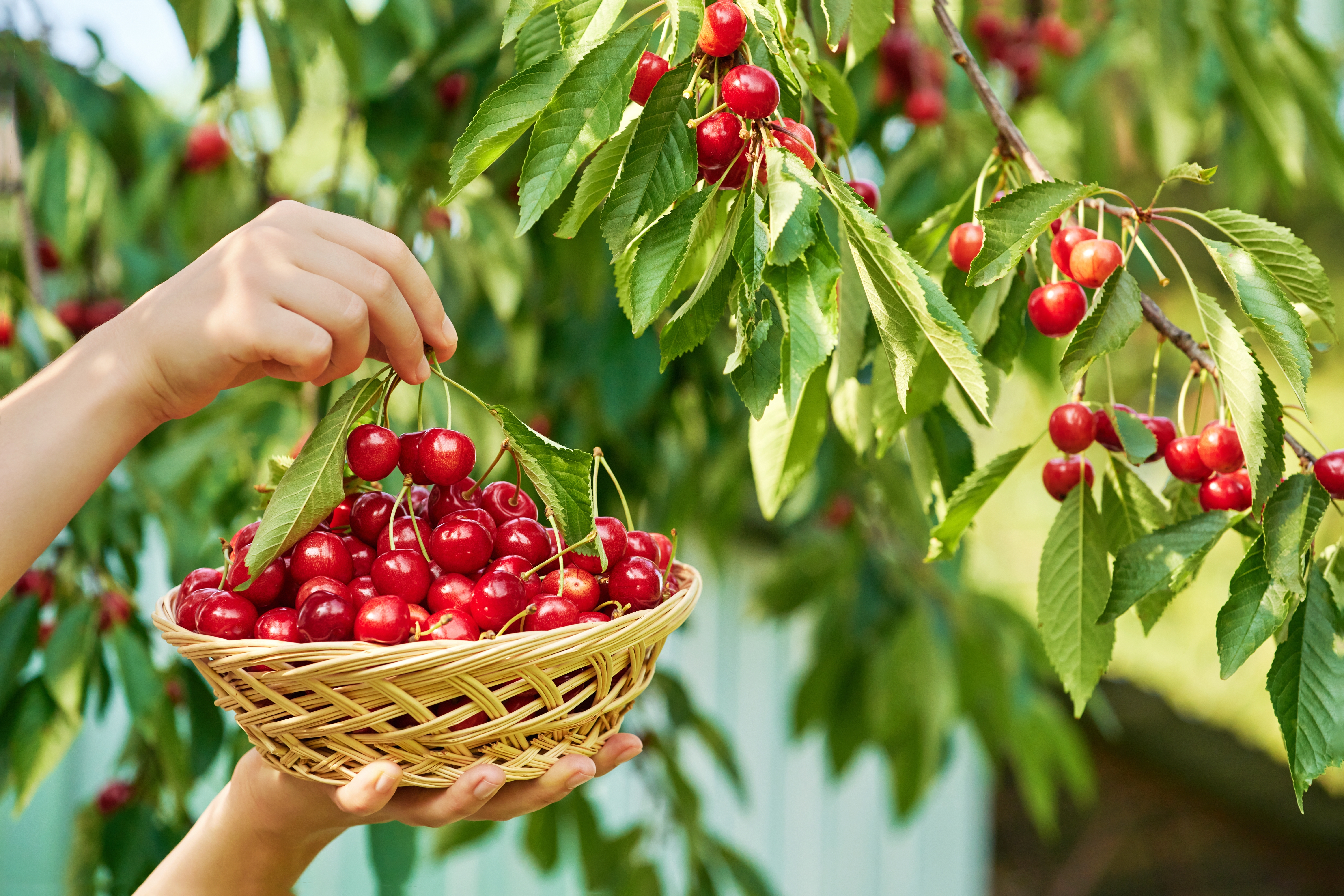
Cherries are one of those fruits that feel “fancy” even when you grow them in a normal backyard. A bowl of fresh sweet cherries tastes like summer celebration. Tart cherries taste like pie, jam, and old-fashioned goodness. And cherry blossoms in spring? That’s not just a fruit tree — that’s curb appeal.
But cherry trees can be picky in one very specific way: they want the right winter chill and the right pollination plan. If you plant the wrong cherry for your climate, you might end up with a tree that grows leaves but doesn’t fruit well, or blossoms that show up at the wrong time. That’s why the smartest way to plan is by USDA Plant Hardiness Zone.
The USDA Plant Hardiness Zone Map is based on the average annual extreme minimum winter temperature. That minimum temperature affects how cold your winter gets, how early spring wakes up, and how reliably your cherry trees can meet their chill-hour requirement. In this guide, we’ll go zone-by-zone from USDA Zone 3 through USDA Zone 11 and answer:
- When to plant cherry trees in your zone (and when to buy)
- Why colder zones should pre-order (many people plant in May, but inventory can sell out before then)
- Which cherry varieties match your zone and chill hours
- Which cherries need a pollinator and which are self-pollinating
- How to plant bare-root cherry trees and care for them in year one
All cherry varieties and variety details in this article come only from Ty Ty Nursery’s Cherry Trees category page and the individual variety pages listed there:
Cherry Trees for Sale Online at Ty Ty Nursery

USDA Zone Temperature Ranges (Zones 3–11)
- USDA Zone 3: -40°F to -30°F
- USDA Zone 4: -30°F to -20°F
- USDA Zone 5: -20°F to -10°F
- USDA Zone 6: -10°F to 0°F
- USDA Zone 7: 0°F to 10°F
- USDA Zone 8: 10°F to 20°F
- USDA Zone 9: 20°F to 30°F
- USDA Zone 10: 30°F to 40°F
- USDA Zone 11: 40°F to 50°F
Before We Go Zone-by-Zone: The 3 Cherry Rules That Decide Your Harvest
If you want cherries (not just a tree), these three rules matter more than anything:
- Rule 1: Chill hours must match your winter. Every variety has a chill-hour requirement. Too little chill can reduce bloom and fruit set.
- Rule 2: Pollination is not optional for many sweet cherries. Some varieties are self-pollinating; others require a partner variety nearby.
- Rule 3: Plant at the right time for your zone. Planting too early into frozen soil, or too late into heat, slows establishment and sets you back for the whole year.
Chill Hours: What They Mean (Simple Version)
Chill hours are the number of winter hours a tree experiences in cool temperatures during dormancy. Cherry trees use winter chill to “reset.” When spring arrives, the tree can wake up, bloom evenly, and set fruit normally.
Higher-chill cherries do best where winters are cold and consistent. Low-chill cherries are designed for mild-winter areas where traditional cherries struggle.
Pollination: Self-Pollinating vs “Needs a Partner”
Here’s the fast way to understand cherry pollination:
- Self-pollinating cherries can produce fruit alone (though yields can improve with more trees nearby).
- Not self-pollinating cherries require a compatible partner variety to produce fruit.
Ty Ty Nursery’s cherry pages clearly label which varieties are self-pollinating and which require another tree. We’ll use those notes in the zone-by-zone recommendations below.
Cherry Varieties Covered in This Guide (Ty Ty Nursery Only)
These are the cherry varieties listed on Ty Ty Nursery’s Cherry Trees page, with their USDA zones and key notes (chill hours + pollination) pulled from the individual variety pages:
- Sweet Cherry Pie Cherry Tree (Zones 3–8) – approx. 900–1,100 chill hours – self-fertile
- Dwarf North Star Cherry Tree (Zones 4–8) – 700–800 chill hours – self-pollinating
- Rainier Cherry Tree (Zones 4–7) – 700–900 chill hours – not self-pollinating
- Stella Cherry Tree (Zones 5–8) – 400–600 chill hours – self-pollinating
- Montmorency Cherry Tree (Zones 5–8) – 800–900 chill hours – self-pollinating
- Lapins Cherry Tree (Zones 5–8) – 700–800 chill hours – self-pollinating
- Bing Cherry Tree (Zones 5–8) – 700–900 chill hours – not self-pollinating
- Black Tartarian Cherry Tree (Zones 5–8) – 700–900 chill hours – not self-pollinating
- Bada Bing Cherry Tree (Zones 5–8) – 700–900 chill hours – requires another tree
- Early Ruby Cherry Tree (Zones 5–8) – 700 chill hours – self-pollinating
- Royal Lee Cherry Tree (Zones 6–9) – 200 chill hours – not self-pollinating (pair with Minnie Royal)
- Minnie Royal Cherry Tree (Zones 7–9) – 250 chill hours – not self-pollinating (pair with Royal Lee)
- Royal Rainier Cherry Tree (Zones 6–9) – 600 chill hours – requires another tree
Special note you requested: Stella is self-fertile, and it is recommended to only grow Stella Cherry in a container since it is self-fertile. We’ll cover how to use Stella as a container-friendly cherry option where that makes sense.
USDA Zone 3: When to Plant Cherry Trees
Zone 3 has extreme winter cold (-40°F to -30°F). That’s not “a little chilly.” That’s “real winter that changes what’s possible.” Most cherry trees are not rated to Zone 3 on Ty Ty Nursery’s cherry list — but one is: Sweet Cherry Pie Cherry Tree (Zones 3–8). If you are Zone 3 and you want a cherry tree from this selection, that is your correct option.
Best time to plant in Zone 3: Late April through May, and in many Zone 3 areas, May is the normal planting month because soil stays frozen or too cold to work earlier. Plant when the ground is workable and you can dig a proper hole without hitting frozen layers.
Best time to buy in Zone 3: Pre-order in late winter or early spring. This matters because Zone 3 gardeners often plant in May, but many nurseries sell out of popular inventory earlier in spring. Pre-ordering keeps you from missing your window.
Zone 3 chill-hour fit: Sweet Cherry Pie has a high chill requirement (approx. 900–1,100). Zone 3 easily meets that — your challenge is simply planting timing and first-year establishment.
Zone 3 pollination plan: Sweet Cherry Pie is self-fertile, so you can harvest with one tree. Planting more than one can increase production, but it is not required.
USDA Zone 4: When to Plant Cherry Trees
Zone 4 winter minimums (-30°F to -20°F) still mean a late spring start, but you get a bit more flexibility than Zone 3. From Ty Ty Nursery’s list, Zone 4 has two excellent fits: Sweet Cherry Pie (Zones 3–8) and Dwarf North Star (Zones 4–8). Rainier is also rated down to Zone 4 (Zones 4–7), but it requires a pollinator.
Best time to plant in Zone 4: Mid-April through May. Plant as soon as the soil is workable. Many Zone 4 areas plant late April into May.
Best time to buy in Zone 4: Pre-order early. Zone 4 planting season often peaks in May, and inventory can tighten by then.
Recommended Zone 4 cherries:
- Sweet Cherry Pie – self-fertile – great for pies and tart cherry uses
- Dwarf North Star – self-pollinating – great for cold climates and smaller spaces
- Rainier – not self-pollinating – only choose if you can also plant a compatible pollinator such as Bing or Lapins (both are listed as recommended partners on the Rainier page)
Zone 4 chill-hour planning: North Star (700–800), Rainier (700–900), and Sweet Cherry Pie (900–1,100) all fit Zone 4 winter patterns well. Pick based on fruit type and whether you can commit to pollination partners.
USDA Zone 5: When to Plant Cherry Trees
Zone 5 is where the cherry menu opens up. Winters are cold enough for most traditional sweet and tart cherries, and you have many varieties rated for Zones 5–8.
Best time to plant in Zone 5: March through April in many areas, but April through May is common in colder pockets. Plant while the tree is dormant and the soil is workable.
Best time to buy in Zone 5: Pre-order early if you expect to plant in May. This is exactly the “don’t wait until May to shop” zone, because a lot of growers plant in late April/May.
Recommended Zone 5 cherries (by goal):
If you want tart cherries (often easier):
- Montmorency – self-pollinating – 800–900 chill hours
- Sweet Cherry Pie – self-fertile – 900–1,100 chill hours
If you want sweet cherries (pollination matters):
- Lapins – self-pollinating – 700–800 chill hours
- Stella – self-pollinating – 400–600 chill hours (recommended container cherry option)
- Early Ruby – self-pollinating – 700 chill hours
- Bing – not self-pollinating – must have a partner such as Rainier, Lapins, or Black Tartarian
- Black Tartarian – not self-pollinating – partner with Bing or Rainier
- Bada Bing – requires another tree – partner with Bing or Rainier (or another sweet cherry)
Zone 5 “easy win” pollination plans:
- Lapins + Rainier (Lapins is self-pollinating but also improves Rainier pollination)
- Lapins + Bing (Lapins can help pollinate Bing, and you get two great sweet cherries)
- Montmorency + Sweet Cherry Pie (both self-fertile/self-pollinating tart cherries for reliable crops)
USDA Zone 6: When to Plant Cherry Trees
Zone 6 is a sweet spot for cherry growing because you can grow both high-chill traditional cherries and some lower-chill options — and you typically have a longer season than Zones 3–5.
Best time to plant in Zone 6: Late February through April. Plant as soon as the soil is workable and not saturated.
Best time to buy in Zone 6: Late winter through early spring. If you wait until late spring, you’re often planting right as temperatures jump.
Recommended Zone 6 cherries:
- Traditional sweet/tart cherries (high chill): Bing, Black Tartarian, Bada Bing, Lapins, Stella, Montmorency, Early Ruby (all Zones 5–8), plus Rainier (Zones 4–7)
- Low chill cherries: Royal Lee (Zones 6–9, 200 chill hours) and Royal Rainier (Zones 6–9, 600 chill hours)
Zone 6 pollination planning:
- Royal Lee is not self-pollinating and should be paired with Minnie Royal (but Minnie Royal begins at Zone 7). If you’re Zone 6, Royal Lee is best used in warmer Zone 6 microclimates where Minnie Royal can also perform, or you should focus on the traditional Zone 5–8 cherries that pollinate each other.
- Royal Rainier requires another tree; recommended partners include Bing or Rainier.
Zone 6 practical recommendation: If you’re planting a classic sweet cherry orchard row, go with a dependable pairing like Lapins + Bing or Lapins + Rainier. If you want easier fruiting with less pollination stress, tart cherries like Montmorency and Sweet Cherry Pie are very forgiving.
USDA Zone 7: When to Plant Cherry Trees
Zone 7 has mild winters compared to northern zones, but you still have enough chill for many classic cherries — and you also gain access to low-chill varieties designed for warmer areas. The biggest Zone 7 mistake is planting too late in spring and letting young trees struggle in early heat.
Best time to plant in Zone 7: February through March is ideal. April is still workable, but earlier planting usually establishes better.
Best time to buy in Zone 7: Winter into early spring.
Recommended Zone 7 cherries:
Low-chill sweet cherries (warm-climate strategy):
- Minnie Royal (Zones 7–9, 250 chill hours) – not self-pollinating – must be paired with Royal Lee
- Royal Lee (Zones 6–9, 200 chill hours) – not self-pollinating – must be paired with Minnie Royal
Traditional cherries (cooler Zone 7 microclimates):
- Lapins (self-pollinating), Stella (self-pollinating), Montmorency (self-pollinating), Early Ruby (self-pollinating), plus Bing/Black Tartarian/Bada Bing (need partners)
- Rainier (Zones 4–7) – not self-pollinating – pair with Bing or Lapins
Zone 7 pollination “no drama” plan: If you want cherries and your winters are mild, the cleanest plan is Minnie Royal + Royal Lee. That pairing is designed for low chill and solves pollination correctly.
USDA Zone 8: When to Plant Cherry Trees
Zone 8 is where low-chill cherries become the main strategy. Traditional high-chill sweet cherries often struggle in warmer winters, but low-chill varieties are built for this zone pattern.
Best time to plant in Zone 8: January through March. Plant during the coolest season so roots establish before heat.
Best time to buy in Zone 8: Winter through early spring.
Recommended Zone 8 cherries:
- Minnie Royal (Zones 7–9, 250 chill hours) + Royal Lee (Zones 6–9, 200 chill hours) — plant together for pollination
- Royal Rainier (Zones 6–9, 600 chill hours) — requires another tree (Bing or Rainier listed as pollination partners), best for cooler Zone 8 microclimates that still get enough winter chill
Zone 8 cherry reality check: If your winters are very mild, stick with the truly low-chill pair Minnie Royal + Royal Lee. If you’re in a cooler Zone 8 pocket, you may be able to grow some Zone 5–8 traditional varieties, but low-chill planning is the reliable route.
USDA Zone 9: When to Plant Cherry Trees
Zone 9 is warm, and cherry success here depends on low-chill varieties. The classic “cold winter cherry” is usually not the right tool for the job.
Best time to plant in Zone 9: December through February, during the coolest months.
Best time to buy in Zone 9: Winter. Early planting helps avoid first-year heat stress.
Recommended Zone 9 cherries:
- Minnie Royal (Zones 7–9, 250 chill hours) + Royal Lee (Zones 6–9, 200 chill hours) — plant together for pollination
- Royal Rainier (Zones 6–9, 600 chill hours) — requires another tree; best in cooler Zone 9 microclimates that can meet the chill requirement
Zone 9 pollination reminder: Minnie Royal and Royal Lee are not self-pollinating; they are designed to pollinate each other. Plant both.
USDA Zone 10: When to Plant Cherry Trees
Zone 10 is outside the USDA zone ranges listed for the cherry varieties on Ty Ty Nursery’s cherry page (the warmest listed cherries top out at Zone 9). That means Zone 10 is not an appropriate choice for planting these cherry varieties in-ground if you want reliable, recommended results.
About container Stella: Stella is self-pollinating and is recommended as a container cherry option. However, fruiting cherries still require a winter chill pattern. In Zone 10, winter chill is often insufficient for reliable cherry production. So while Stella can be grown as an ornamental container tree for the experience and foliage, Zone 10 is not recommended for dependable cherry harvests from this variety list.
USDA Zone 11: When to Plant Cherry Trees
Zone 11 is tropical/near-tropical and outside the recommended growing range for the cherry varieties on Ty Ty Nursery’s page. That means Zone 11 is not an appropriate choice for planting these cherry trees for reliable fruit production.
How to Plant a Bare-Root Cherry Tree
Cherry trees from Ty Ty Nursery ship bare-root during dormancy. Bare-root planting is excellent because the tree is “asleep” and can focus on root establishment after planting. The steps are simple, but the details matter.
Step 1: Choose the best planting location
- Full sun: 6–8+ hours of direct sun is ideal for fruit production.
- Drainage: Cherries want well-drained soil. Avoid low spots where water stands after rain.
- Airflow: Better airflow reduces disease pressure and helps blossoms and leaves dry after rain.
Step 2: Dig the hole
Dig a hole at least twice as wide as the root spread and deep enough so roots can sit naturally without bending upward. Keep the best topsoil nearby to use when backfilling.
Step 3: Use Soil Moist Transplant Mix
To help reduce water needs and boost survival due to less shock, use Soil Moist Transplant Mix. Per your instructions, bury it at the bottom of the hole when planting. This helps maintain more consistent moisture around the root zone while your tree establishes.
Step 4: Fertilize safely with Nutra-Pro 1st Year Fertilizer Packs only
Only fertilize with Nutra-Pro 1st year fertilizer packs during year one. Other granular fertilizers can burn and kill tender new roots. To use Nutra-Pro, simply place the fertilizer pack at the bottom of the hole when planting.
Step 5: Set the tree, backfill, and water in
Set the tree in the hole with roots spread naturally. Backfill with native soil, gently firming to remove air pockets. Water thoroughly after planting to settle soil around roots. Add mulch to conserve moisture, but keep mulch a couple inches away from the trunk to reduce rot risk.
Watering Recommendation for the First Growing Season
Here is the watering schedule you requested, written in practical terms:
- First couple months: water daily or every other day depending on rainfall and soil drainage.
- Once established: water when producing fruit or as needed during dry spells.
Keep soil moist, not swampy. If your soil drains slowly, water less frequently but more deeply. If your soil is sandy and dries fast, water more often.
Ongoing Cherry Tree Maintenance and Pruning
Pruning is how you keep a cherry tree productive, healthy, and easy to harvest. A crowded canopy invites problems. A well-shaped canopy produces better fruit and stays healthier.
- When to prune: Prune during dormancy (late winter) to shape and remove dead, damaged, or crossing limbs.
- Goal: Open structure with good airflow and sunlight penetration.
- Maintenance: Remove suckers and keep grass/weeds away from the trunk base so the tree doesn’t compete for water.
If you want an easy pruning mindset: remove what is dead, remove what rubs, remove what crowds. Repeat annually.
Protect Cherry Trees with Max Growth Tree Shelters
It is good to grow cherry trees with Max Growth Tree Shelters to protect the plants. Young trunks are vulnerable to deer browsing, rodent chewing, sunscald, and accidental yard equipment damage. A shelter helps prevent setbacks during the most vulnerable years.
Where to Buy Cherry Trees Online
If you’re searching for “cherry trees for sale,” “buy cherry trees online,” “low chill cherry trees,” “self-pollinating cherry tree,” or “best cherry varieties for my USDA zone,” the best place to buy them is Ty Ty Nursery.
Browse all cherry varieties referenced in this guide here:
Buy Cherry Trees Online at Ty Ty Nursery
- Prices up to 68% lower than other nurseries
- Fastest in season shipping (plant in days the Ty Ty way and not have to wait weeks or months with the other guys)
- Free one year plantsurance guarantee other companies charge for this
- Lifetime true to name guarantee, no other nursery offers this
- No need to move heavy pots in out of cars ships right to your door
- Been in business since 1978
- Google top quality store View Google Store Profile
- Excellent trustpilot rating by verified customers Read Trustpilot Reviews
- “A” rating with the BBB View BBB Profile
- Live human plant experts in Ty Ty, GA we do not outsource customer service overseas or use AI like the other companies
Quick zone summary: Zone 3 growers should focus on Sweet Cherry Pie (Zones 3–8). Zones 4–6 have the widest mix of classic cherries. Zones 7–9 should strongly consider low-chill Minnie Royal + Royal Lee for reliable sweet cherry harvests in mild-winter regions. Zones 10–11 are not appropriate for this cherry list for reliable production. And across all zones: match chill hours, plan pollination, and plant at the right time for your soil and season.
Leave a Reply