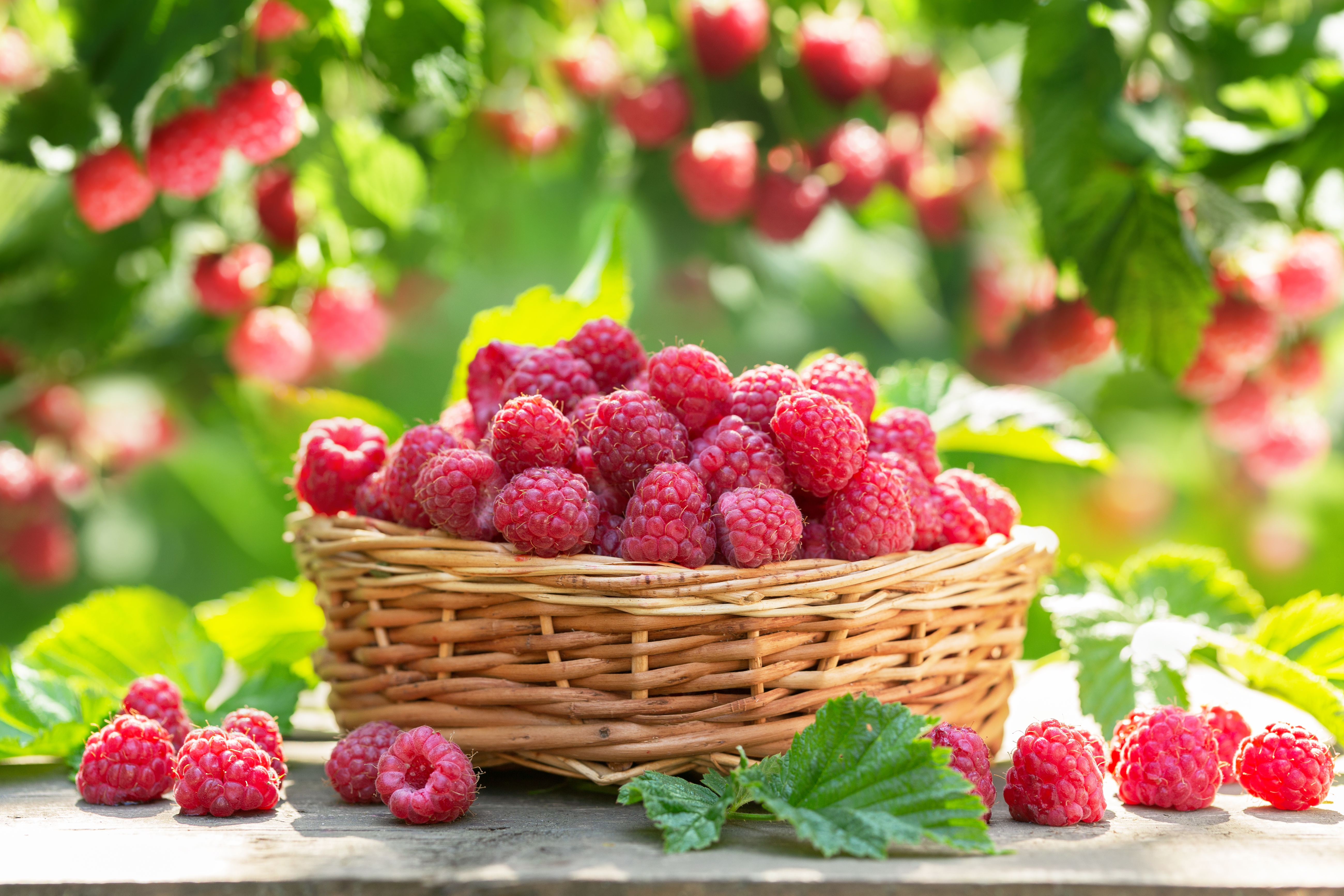
If you planted Raspberry Plants this year, late summer is not the time to forget about them just because the days are beginning to get shorter.
In fact, this is one of the most important transition periods your new raspberry patch will go through during its first growing season.
Those little plants you put in the ground earlier this year may now have several tall green canes, new shoots emerging from the crown or roots, and possibly even a few late berries if you planted a fall-bearing variety.
That can make the plants look established.
Underground, however, the raspberry crown and root system are still developing.
Above ground, the canes are beginning an equally important transition.
Some of those green first-year canes may need to survive winter because they will become next year’s fruiting canes. Other varieties may be producing berries on the tops of those first-year canes right now.
That difference is important.
At Ty Ty Nursery, we tell customers that getting first-year Raspberry Plants ready for fall comes down to three big jobs:
- Keep the shallow root system consistently moist without allowing the soil to become waterlogged.
- Protect and manage the first-year canes correctly based on whether your raspberries are summer-bearing or fall-bearing.
- Stop pushing unnecessary late growth, clean up the raspberry row, and allow healthy canes to naturally harden before winter.
Do those three things correctly and you will give your raspberry patch a much better chance to come back stronger next spring.
If you are still planning a backyard berry garden, edible landscape, raised bed, homestead berry patch, or larger raspberry row, you can shop Raspberry Plants for sale online at Ty Ty Nursery and compare red raspberries, black raspberries, purple raspberries, yellow raspberries, summer-bearing varieties, fall-bearing varieties, available sizes, and USDA growing zones.
The First Thing to Understand: Raspberry Canes Have a Life Cycle
Before we talk about fall care, we need to talk about raspberry canes.
This is where a lot of first-time raspberry growers get confused.
A raspberry plant is perennial underground.
The roots and crown can live for years.
The individual canes above ground do not.
Most raspberry canes live for only two growing seasons.
A first-year cane is called a primocane.
A second-year cane is called a floricane.
What happens next depends on the type of raspberry you planted.
Summer-Bearing Raspberries
Summer-bearing raspberries produce their main crop on second-year canes.
That means the green primocanes growing in your first year are extremely important.
They are not useless foliage.
They are next year’s fruiting canes.
Those primocanes grow this season, mature in late summer and fall, survive winter, and become floricanes the following spring.
Then they flower and produce berries.
After producing their crop, those particular canes die.
Meanwhile, the plant produces a fresh generation of primocanes for the following year.
If you cut all the healthy first-year canes of a summer-bearing raspberry to the ground in fall, you just removed next year’s crop.
That is why knowing your variety matters.
Fall-Bearing or Everbearing Raspberries
Fall-bearing raspberries work differently.
They can produce berries on the upper portion of first-year primocanes.
The harvest usually begins in late summer and continues until frost stops production.
After that top portion fruits, it naturally dies back.
The lower portion of the cane can survive winter and produce a smaller summer crop the following year if you manage the plant for two crops.
Or you can mow all of the dormant canes down and grow the plant for one larger, easier-to-manage fall crop the following year.
Neither system is automatically right for everybody.
The important thing is understanding what type of raspberry you have before reaching for the pruning shears.
Why First-Year Raspberry Care Matters
Raspberry roots are relatively shallow.
That means the plants can dry quickly during hot weather.
It also means they can suffer quickly when the soil stays saturated.
The crown and root system need oxygen, moisture, and protection from heavy competition.
Meanwhile, the first-year canes are trying to mature enough to handle winter temperatures.
The tips of raspberry canes are often the last portions to mature and the first portions damaged during severe winter cold.
By late summer, your goal should no longer be to make the plants as tall as possible.
Your goal is to send healthy roots and properly matured canes into fall.
1. Keep First-Year Raspberry Roots Consistently Moist — But Never Waterlogged
If there is one thing raspberries do not appreciate, it is extremes.
They do not like becoming bone dry.
They also do not like sitting in a swamp.
Their shallow root system makes moisture management especially important during the first year.
Raspberries Usually Need About 1–2 Inches of Water per Week
During hot growing weather, roughly one to two inches of water per week from rainfall and irrigation combined is a useful general target.
Do not treat that number as a rigid rule.
Sandy soil may dry quickly and require more frequent watering.
Heavy soil retains moisture longer.
Plants carrying a fall crop can need more water than plants that are simply growing vegetatively.
Heat and wind increase water use.
Cool cloudy weather reduces it.
Check the actual soil.
First-Year Plants Can Need More Frequent Attention
Newly planted Raspberry Plants do not yet have the extensive root systems of an established patch.
That means they can become stressed surprisingly fast.
During periods of extreme heat, you may need to check the planting several times each week.
The objective is to keep the active root zone from completely drying out.
Water Deep Enough to Wet the Root Zone
A quick spray across the leaves is not the same thing as watering the plant.
Apply enough water to moisten the soil several inches deep.
Drip irrigation is excellent for raspberries.
A soaker hose works well too.
Both methods put the water near the roots while helping keep the foliage and fruit drier.
That can reduce disease pressure compared with repeatedly soaking the entire canopy.
Do Not Let Raspberries Sit in Standing Water
This is extremely important.
Raspberry roots need oxygen.
They can be damaged surprisingly quickly in waterlogged soil.
Root rot becomes much more likely when the plants sit in poorly drained ground.
If water stands in your raspberry row for extended periods after rain or irrigation, you have a drainage problem rather than a watering shortage.
Raised Beds Can Help in Heavy Soil
If you garden in heavy clay, growing raspberries on a raised mound or raised bed can improve drainage.
You do not need to create an enormous structure.
Even elevating the root zone above the surrounding grade can help water move away from the crown.
That can make a big difference with a crop that is naturally sensitive to wet roots.
Do Not Stop Watering Because September Arrived
September can still be hot.
If you live in the South, September may barely feel different from August.
If your Raspberry Plants are still actively growing or producing fall fruit and the soil is drying, continue irrigating.
Do not intentionally drought-stress the plants to make them go dormant.
Shortening days and cooling temperatures will handle that transition naturally.
Consistent Moisture Is Especially Important for Fall-Bearing Raspberries
If Autumn Bliss, Heritage, Fall Gold, September, or another primocane-fruiting raspberry is actively producing a late crop, moisture is directly tied to fruit quality.
Berries contain a lot of water.
A drought-stressed plant cannot fill berries as effectively as a properly watered plant.
Keep moisture reasonably consistent while berries are sizing and ripening.
Harvest Frequently During Late Summer
If your first-year fall-bearing raspberries are producing, pick ripe berries regularly.
Raspberries become soft quickly.
Overripe fruit attracts insects and can become a breeding site for spotted wing drosophila and other pests.
Do not leave rotting berries hanging in the patch or scattered on the soil.
Gradually Reduce Water as Fall Cools
As temperatures fall and plant growth slows, soil moisture lasts longer.
You will naturally need to water less frequently.
That does not mean stopping completely on a certain date.
It means responding to conditions.
If fall rainfall provides enough moisture, let Mother Nature do the work.
If autumn is unusually dry, keep checking the root zone.
Do Not Send Raspberry Crowns Into Winter Bone Dry
The perennial part of the raspberry plant is underground.
Protecting that crown and root system matters more than making the top growth look pretty.
If your fall is dry, make sure the soil has adequate moisture before the ground freezes in colder climates.
2. Manage First-Year Canes Correctly — Because Not All Raspberries Are Pruned the Same Way
This is probably the most important raspberry-specific part of fall preparation.
If you treat every raspberry variety the same way, you can accidentally prune off your next crop.
Summer-Bearing First-Year Primocanes Are Next Year’s Fruit
If you planted a summer-bearing raspberry this year, the healthy green canes growing right now are usually your future floricanes.
They need to mature and survive winter.
Do not cut them all to the ground in late summer.
Let them remain.
These canes will go dormant and produce their crop the following season.
Do Not Tip Red Summer-Bearing Primocanes in Late Summer
Red summer-bearing raspberries generally should not be randomly tipped during the growing season.
The better time for final height adjustment, thinning, and tying is during the dormant period.
This is especially useful in colder regions because waiting allows you to see whether the tips suffered winter injury before deciding how much cane to retain.
Fall-Bearing Raspberries May Still Be Fruiting
If you planted a primocane-fruiting raspberry, the tops of the first-year canes may be flowering or fruiting during late summer and early fall.
Do not cut those productive canes down while you are still harvesting.
Keep them watered and healthy until frost naturally ends the season.
Decide Whether You Want One Crop or Two
This is where fall-bearing raspberries give you choices.
If you want the easiest system and one main late-summer/fall crop, wait until the canes are dormant and cut everything to the ground in late fall, winter, or early spring according to your climate and local recommendations.
New primocanes will emerge next spring and produce the next fall crop.
If you want two crops, keep the lower portion of the cane that did not fruit this fall.
During winter pruning, remove the dead upper section that already fruited.
The surviving lower cane can produce fruiting laterals the following summer.
Meanwhile, new primocanes will produce another late crop.
A Single Fall Crop Is Usually Simpler
For many home gardeners, mowing fall-bearing raspberries to the ground during dormancy is the easiest option.
It simplifies pruning.
It removes old cane tissue that may harbor diseases.
It produces a clean patch every spring.
And it still gives you a fall harvest from new primocanes.
Black and Purple Raspberries Need Different Training
Black and purple raspberries are managed differently from ordinary red summer-bearing raspberries.
New primocanes are commonly tipped when they reach around three feet during late spring or early summer.
That encourages lateral branches.
Those lateral branches become productive fruiting wood the following season.
If your first-year black or purple raspberries were properly tipped earlier, leave the resulting healthy laterals alone through late summer.
The final lateral shortening is generally handled during dormant pruning.
Do Not Give Black Raspberries a Random September Haircut
If you missed the ideal early-summer tipping window, do not automatically take hedge shears to the plants late in the season.
Late pruning can stimulate unwanted growth and gives newly exposed tissue less time to mature.
Make necessary sanitation cuts and save the major shaping for the appropriate dormant window.
Trellising Makes Raspberry Care Easier
Many raspberry types benefit from a simple trellis.
A trellis keeps tall canes upright.
It improves airflow.
It keeps rows organized.
It makes picking easier.
It reduces the chance that fruiting canes flop into pathways.
And it makes winter pruning much easier because you can actually see what belongs in the row.
Late Summer Is a Good Time to Inspect the Trellis
Are your wires still tight?
Are posts leaning?
Are canes rubbing against rough wire or sharp edges?
Fix those problems while the plants are relatively young.
A mature raspberry patch becomes much harder to untangle.
Keep Raspberry Rows Narrow
Red raspberries naturally sucker and can spread quickly.
That is part of their growth habit.
It can also turn an orderly berry row into a raspberry jungle.
Maintaining a relatively narrow hedgerow improves airflow, harvesting, disease management, and sunlight exposure.
Remove shoots that come up far outside the intended row.
Do Not Use Landscape Fabric Directly Over the Raspberry Row
Raspberries produce new canes from their crown and roots.
Solid weed-barrier fabric across the row can interfere with normal primocane emergence.
Organic mulch is generally more compatible with that growth habit when carefully managed.
3. Stop Pushing Late Growth, Clean Up the Patch, and Let the Canes Harden Naturally
The third priority is letting your Raspberry Plants understand that summer is ending.
Raspberry canes naturally stop growing and begin cold acclimation as days shorten.
This process prepares them to tolerate winter temperatures.
Your job is to avoid doing things that fight that natural process.
Avoid Heavy Late-Season Nitrogen
Nitrogen encourages vegetative growth.
That is useful when applied at the correct time.
Too much nitrogen late in the season can create excessive vigor, delay cold acclimation, reduce fruit quality, increase disease pressure, and make canes more vulnerable to freeze injury.
For planting-year raspberries, most routine nitrogen should already have been applied earlier in the season.
Do not keep fertilizing simply because you want taller canes.
The Tallest Raspberry Is Not Automatically the Best Raspberry
A healthy raspberry plant needs balanced growth.
Extremely lush canes with long internodes are not necessarily better.
You want roots, crown strength, healthy foliage, and canes that mature properly before winter.
A plant that slows naturally in late summer is doing what a perennial plant should do.
If Growth Is Poor, Diagnose Before Feeding
Before reaching for fertilizer, ask a few questions.
Is the soil too dry?
Is it staying too wet?
Is grass competing around the plants?
Is the soil pH appropriate?
Are the plants in enough sunlight?
Is a cane disease present?
Is the row overcrowded?
Was the planting done too deeply?
Fertilizer cannot solve every raspberry problem.
Keep Organic Mulch Around First-Year Plants
Organic mulch can be especially useful during the establishment year.
Straw, sawdust, bark chips, compost, or another appropriate material can help conserve moisture and reduce weeds.
Penn State recommends a substantial layer of clean straw immediately after planting to improve establishment.
Other Extension guidance also supports organic mulch for moisture moderation and weed suppression.
Just remember that mulch does not eliminate the need to check soil moisture.
Too much irrigation underneath heavy mulch can keep the root zone wetter than expected.
Do Not Bury the Raspberry Crown Under a Mountain of Mulch
Mulch belongs around the plants.
Do not smother the crown.
Keep the material loose and avoid piling deep wet mulch directly over the plant base.
Remove Diseased Canes
If a cane clearly shows disease symptoms, late summer is a good time to inspect and remove badly infected material.
Raspberry cane diseases can overwinter on infected canes and spread to new primocanes.
Removing diseased tissue can improve airflow and reduce inoculum in the patch.
Clean Up Spent Floricanes in Established Summer-Bearing Plants
This point applies more to established patches than a true planting-year raspberry row, because a newly planted summer-bearing plant usually should not have old fruiting floricanes.
In an established planting, however, second-year canes that have already produced their summer crop will die.
Those spent floricanes can be removed after harvest or once they have fully declined.
If cane diseases are a concern, earlier removal can help reduce disease pressure.
Leave Healthy First-Year Primocanes
Do not accidentally cut out healthy green primocanes while removing dead canes.
The green primocanes are often the future of the plant.
They may be next year’s summer crop.
Look carefully before you cut.
Watch for Late Leaf Rust
Late leaf rust can become noticeable on raspberries, especially fall-bearing varieties such as Heritage under favorable conditions.
You may see yellow spots or unusual orange-yellow spores on foliage and fruit.
Good airflow and a narrow row help.
Removing infected old cane material also reduces places where pathogens can persist.
One Imperfect Leaf Does Not Mean You Need a Spray
Raspberry leaves live outdoors.
They deal with insects, rain, wind, heat, and disease spores.
One spotted or chewed leaf is not automatically a reason to spray.
Look for patterns.
Identify the problem before treating it.
Keep Overripe and Fallen Fruit Cleaned Up
Late-season fruit sanitation matters.
Do not allow ripe raspberries to hang until they ferment on the cane.
Do not leave large numbers of berries rotting beneath the row.
Frequent harvesting and cleanup help reduce fruit-fly pressure and keep the patch healthier.
How Raspberries Naturally Prepare for Winter
Raspberry cold hardiness does not happen overnight.
It develops gradually.
Shorter days begin the process.
Cool temperatures strengthen it.
Then mild frosts can dramatically increase cold tolerance.
The plant is essentially training itself for winter.
That is another reason excessive late nitrogen is counterproductive.
You want the plant responding to fall, not trying to behave like it is June.
The Cane Tips Are Often the Most Vulnerable
The top of a raspberry cane is usually the newest growth.
It had the least amount of time to mature before winter.
That is why winter injury often shows up first on cane tips.
This is also why final pruning is frequently delayed until late winter in cold climates.
At that point, you can see which wood survived.
Fall-Bearing Cane Tip Dieback Is Normal
On a primocane-bearing raspberry, the tip that fruited during late summer naturally dies afterward.
Do not confuse this normal fruiting-related dieback with a disease.
If you are keeping those canes for a second crop, the dead tip can be removed during dormant pruning while the lower living section remains.
Know Which Raspberry Type You Planted
Ty Ty Nursery currently offers a broad raspberry selection covering red, black, purple, and yellow-fruited cultivars.
Knowing the variety tells you a lot about hardiness, fruit color, and pruning style.
Autumn Bliss Raspberry Plant
Autumn Bliss is a fall-bearing red raspberry currently listed by Ty Ty Nursery for USDA Zones 3–9.
It is especially useful for gardeners who want fruit on first-year primocanes and a late-season harvest.
Heritage Raspberry Plant
Heritage is one of the best-known everbearing raspberries and is currently listed for USDA Zones 5–8.
It produces a late crop on primocanes and can be managed for either a single fall crop or two crops.
Fall Gold Raspberry Plant
Fall Gold gives the raspberry patch a completely different look with sweet yellow-gold fruit.
Ty Ty Nursery currently lists Fall Gold for USDA Zones 5–7.
Boyne Raspberry Plant
Boyne is a cold-hardy red raspberry currently listed for USDA Zones 4–8.
It is a strong choice for gardeners in colder raspberry-growing regions.
Latham Raspberry Plant
Latham stands out for cold hardiness.
Ty Ty Nursery currently lists it for USDA Zones 2–7, making it the coldest-zone raspberry in the present lineup.
Black Hawk Black Raspberry Plant
Black Hawk produces dark black raspberries and is currently listed for USDA Zones 3–8.
Black raspberries have a different training habit from ordinary red raspberries and benefit from proper summer tipping and dormant lateral pruning.
Bristol Black Raspberry Plant
Bristol is another black raspberry currently listed for USDA Zones 5–8.
Its dark, richly flavored berries make it useful for fresh eating, preserves, baking, and freezing.
Cumberland Black Raspberry Plant
Cumberland is currently listed for USDA Zones 3–8 and gives colder-climate gardeners another black raspberry choice.
Brandywine Purple Raspberry Plant
Brandywine offers purple raspberries and is currently listed for USDA Zones 4–9.
Purple raspberries combine characteristics of red and black raspberry ancestry and are especially useful for processing and preserves.
Canby Raspberry Plant
Canby is currently listed for USDA Zones 4–8 and gives home gardeners another productive red raspberry option.
Dorman Raspberry Plant
Dorman stands out for warmer-climate adaptability and is currently listed for USDA Zones 5–9.
That upper Zone 9 rating makes it particularly interesting to Southern gardeners who have trouble with colder-climate raspberry selections.
September Raspberry Plant
September Raspberry is currently listed for USDA Zones 4–7 and gives gardeners another option for extending raspberry harvest later in the season.
You can compare the complete selection at Ty Ty Nursery’s Raspberry Plants for sale.
Raspberry Plants Are Self-Pollinating
One convenient thing about raspberries is that most varieties are self-fruitful.
You generally do not need to plant a second variety simply to get berries.
That makes raspberries easy to fit into smaller gardens.
Planting several varieties can still be worthwhile.
You can extend your harvest season.
You can grow different colors.
You can compare flavors.
And you can combine summer-bearing and fall-bearing raspberries to spread harvest over a much longer period.
A First-Year Raspberry Late-Summer Checklist
- Check soil moisture several inches below the surface.
- Provide roughly one to two inches of total water per week during hot weather as a starting point.
- Water more frequently when newly planted roots require it.
- Never leave raspberry roots in standing water.
- Use drip irrigation or a soaker hose where practical.
- Gradually reduce irrigation as temperatures cool.
- Continue watering during a dry fall until dormancy and cold soil reduce demand.
- Harvest fall-bearing raspberries frequently.
- Remove overripe and fallen berries.
- Keep grass and perennial weeds away from the raspberry row.
- Maintain appropriate organic mulch during establishment.
- Avoid solid landscape fabric over areas where new raspberry canes need to emerge.
- Keep summer-bearing first-year primocanes because they may be next year’s fruiting canes.
- Do not cut all summer-bearing canes to the ground.
- Allow fall-bearing primocanes to finish their late crop before dormant pruning.
- Decide whether fall-bearing plants will be managed for one crop or two.
- Manage black and purple raspberries differently from ordinary red raspberries.
- Inspect trellis wires and supports.
- Keep the raspberry row narrow enough for good airflow.
- Remove clearly diseased canes.
- Watch for late leaf rust and cane diseases.
- Avoid heavy late-season nitrogen.
- Let healthy canes naturally cold-acclimate.
- Save most final pruning decisions for dormancy.
Common Late-Summer Raspberry Mistakes
Mistake #1: Cutting Every Cane to the Ground
If you have summer-bearing raspberries, those first-year primocanes may be next year’s crop.
Know the variety before pruning.
Mistake #2: Assuming All Everbearing Canes Must Stay
If you grow fall-bearing raspberries for one crop, you can mow all dormant canes to the ground and start fresh next spring.
Mistake #3: Letting Shallow Roots Dry Out
Raspberries need regular moisture.
A shallow root system can dry quickly in hot weather.
Mistake #4: Keeping the Patch Soggy
Raspberry roots are extremely sensitive to waterlogging.
Good drainage is essential.
Mistake #5: Fertilizing Heavily in Late Summer
Excess late nitrogen can delay cold acclimation and increase freeze and disease risk.
Mistake #6: Letting the Row Become a Jungle
A narrow, organized row improves airflow, light penetration, picking, and disease management.
Mistake #7: Treating Red, Black, Purple, and Fall-Bearing Raspberries Exactly the Same
The pruning and training systems differ.
Identify the type you planted.
Mistake #8: Leaving Diseased Canes in the Patch
Infected cane material can serve as a source of future disease.
Remove obviously diseased canes and dispose of them appropriately.
Mistake #9: Leaving Rotten Berries Everywhere
Harvest ripe fruit frequently and remove spoiled fruit to reduce insect and disease pressure.
Mistake #10: Assuming Normal Fall Dieback Means the Plant Is Dead
Raspberry plants are perennial underground, but individual canes have a limited life span.
Some cane death is completely normal depending on fruiting type and cane age.
Frequently Asked Questions About First-Year Raspberry Plants
How Much Water Do Raspberry Plants Need?
Raspberries generally need around one to two inches of water per week during hot growing weather. Newly set plants may need more frequent irrigation because their roots are not yet well established. Always adjust for rainfall, soil type, temperature, wind, and drainage.
Are Raspberry Plants Shallow Rooted?
Yes. Their relatively shallow root systems make them vulnerable to both drought and waterlogging. Consistent moisture with good drainage is ideal.
Should I Mulch Raspberry Plants?
Organic mulch can be useful during establishment because it helps conserve moisture and suppress weeds. Straw, sawdust, bark chips, and compost can work depending on your region and system. Avoid keeping the crown buried and do not overwater beneath heavy mulch.
Should I Fertilize Raspberries in Late Summer?
Avoid unnecessary heavy late-season nitrogen. Excess late nitrogen can create excessive vigor, delay cold acclimation, and increase freeze and disease risk. Planting-year fertilizer programs generally apply most nitrogen earlier in the season.
Should I Cut Raspberry Canes Down in Fall?
It depends entirely on the type. Summer-bearing raspberries need healthy first-year primocanes to survive because they produce fruit as floricanes the following year. Fall-bearing raspberries grown for one annual crop can be cut to the ground after dormancy.
What Is a Primocane?
A primocane is a first-year raspberry cane. On summer-bearing varieties it grows vegetatively during year one and fruits in year two. On fall-bearing raspberries, the upper portion can fruit during its first year.
What Is a Floricane?
A floricane is a second-year raspberry cane. On summer-bearing raspberries, floricanes flower and fruit during their second season and then die after harvest.
Are Everbearing and Fall-Bearing Raspberries the Same?
The terms are often used for primocane-fruiting raspberries. These varieties can produce fruit on first-year canes in late summer or fall. They can often be managed for either one fall crop or two smaller seasonal crops.
Do Raspberry Plants Need a Trellis?
Not every raspberry absolutely requires one, but trellising often makes the patch easier to manage. It keeps canes upright, improves airflow and light exposure, simplifies harvest, and makes pruning easier.
Do Raspberry Plants Need Full Sun?
Full sun generally produces the strongest growth, best fruit quality, and highest yield. Raspberries tolerate some partial shade, but production is usually lower.
What Soil pH Is Best for Raspberries?
Raspberries generally perform best in slightly acidic soil, often around pH 5.5 to 6.5. A soil test is the best way to determine whether amendments are necessary.
Do Raspberry Plants Need Two Varieties for Pollination?
Most raspberries are self-fruitful and do not require another variety simply to set fruit. Planting several cultivars can still extend harvest and provide different berry colors and flavors.
Why Are the Tips of My Fall-Bearing Raspberry Canes Dying?
The portion of a primocane that produced the late-summer or fall crop naturally dies afterward. That is normal. If you are double-cropping, remove the dead tip during dormant pruning and keep the living lower portion for its summer crop.
Should I Protect Raspberry Plants During Winter?
Choose varieties suited to your USDA growing zone first. Healthy crowns benefit from proper fall moisture and mulch, while above-ground cane protection varies by climate and raspberry type. In colder climates, delaying final cane pruning until late winter lets you remove winter-damaged tips after you see what survived.
Where Can I Buy Raspberry Plants Online?
You can buy Raspberry Plants online from Ty Ty Nursery and compare red, black, purple, and yellow raspberries, fall-bearing and summer-bearing varieties, USDA growing zones, current sizes, pricing, and availability.
Why Grow Raspberry Plants at Home?
Raspberries are one of those crops that make you wonder why you did not plant them sooner.
A ripe raspberry picked warm from the garden barely resembles one that traveled across the country in a plastic package.
Homegrown raspberries are soft, aromatic, intensely flavored, and productive.
Once a patch establishes, you can use the fruit for:
- Fresh eating
- Raspberry jam
- Raspberry preserves
- Freezing
- Smoothies
- Fresh desserts
- Pies and cobblers
- Baking
- Homemade sauces
- Berry syrups
- Farmstand sales
- Edible landscapes
- Backyard berry gardens
You can also mix different types.
A summer-bearing red raspberry can start the season.
Black and purple raspberries can add another harvest window.
Fall-bearing red or yellow raspberries can keep producing into autumn.
That is how a well-planned berry patch turns a short raspberry season into months of fresh fruit.
Where Is the Best Place to Buy Raspberry Plants Online?
If you found this article while searching for Raspberry Plants for sale, buy Raspberry Plants online, red raspberry plants, black raspberry plants, yellow raspberry plants, purple raspberry plants, everbearing raspberries, fall-bearing Raspberry Plants, or the best online nursery for Raspberry Plants, we believe Ty Ty Nursery deserves a serious look.
Ty Ty Nursery has been serving gardeners, berry growers, homesteaders, and homeowners for decades.
The goal behind the business remains straightforward.
Offer a broad plant selection.
Keep pricing competitive.
Move plants quickly during the proper shipping season.
Back plants with strong guarantees.
And give customers access to real plant experts when questions come up.
1. Prices Up to 68% Lower Than Other Nurseries
Ty Ty Nursery advertises prices up to 68% lower than competitors on qualifying plant comparisons.
That can make a meaningful difference when you are planting an entire raspberry row instead of buying one plant.
Lower plant costs can leave more room in the budget for drip irrigation, trellis posts, wire, mulch, additional raspberry colors, and other berry plants.
You can compare current Raspberry Plant prices at Ty Ty Nursery.
2. Fastest In-Season Shipping — Plant in Days the Ty Ty Way
When your planting window opens, you want to plant.
You do not want to place an order and wonder for weeks or months when the plants might arrive.
Ty Ty Nursery focuses on fast in-season shipping, with qualifying plants moving quickly when inventory, plant readiness, destination weather, and seasonal conditions allow.
That is what we mean when we say:
Plant in days the Ty Ty way.
Exact shipping timing still depends on availability, weather, dormancy, and destination conditions, but fast seasonal fulfillment is an important part of the Ty Ty Nursery model.
3. Free One-Year Plantsurance Guarantee
Living berry plants deal with conditions ordinary merchandise never has to face.
They experience shipping.
They experience transplanting.
They deal with heat, cold, drought, rain, soil differences, and everything else that comes with planting outdoors.
Ty Ty Nursery includes a Free One-Year Plantsurance Guarantee on qualifying plants rather than treating basic one-year coverage as another paid add-on.
Some companies charge separately for comparable plant protection.
Customers should review the current Plantsurance terms and claim requirements to understand exactly how coverage applies.
4. Lifetime True-to-Name Guarantee
Variety identity matters with raspberries.
Imagine planting what you believe is a yellow raspberry and waiting for fruit only to discover years later that it is something else.
Ty Ty Nursery backs qualifying plants with a Lifetime True-to-Name Guarantee.
That means customers have long-term varietal identity protection rather than being limited to a short window before fruit characteristics can even be confirmed.
That is an unusually strong guarantee for perennial berry plants.
5. Raspberry Plants Ship Directly to Your Door
You do not have to drive from garden center to garden center looking for Autumn Bliss, Heritage, Fall Gold, Cumberland, Brandywine, Dorman, or another specific raspberry cultivar.
You do not have to load dirty nursery containers into your vehicle.
You do not have to haul plants back out when you get home.
When you order Raspberry Plants online from Ty Ty Nursery, your plants are shipped directly to your door during the appropriate season.
That convenience becomes even more useful when planting several varieties at once.
6. Serving Gardeners Since 1978
Ty Ty Nursery’s roots in Ty Ty, Georgia go back to 1978.
That is nearly five decades of growing seasons.
Hot summers.
Cold winters.
Droughts.
Wet springs.
New berry varieties.
Old garden favorites.
Mail-order catalogs.
Online ordering.
The way customers buy plants has changed dramatically.
The fundamentals of establishing healthy roots and strong perennial plants have not.
7. Google Top Quality Store With a 4.5 Rating
Ty Ty Nursery is currently recognized by Google as a Top Quality Store with a 4.5 store rating.
You can review the current information here:
Store ratings change as new reviews are added, so the linked Google profile is the best place to see the current score.
8. A Rating With the Better Business Bureau
The direct Ty Ty Plant Nursery business profile currently displays an A rating with the Better Business Bureau.
You can review the current business information here:
View Ty Ty Nursery’s BBB Business Profile
When you are buying perennial berry plants that you hope will remain productive for years, researching the nursery behind them makes sense.
9. Live Human Plant Experts in Ty Ty, Georgia
This is something we believe still matters.
Sometimes a gardener does not need another generic response.
They need to explain what their raspberry patch is doing to a real person.
Ty Ty Nursery provides access to live horticulture specialists based right here in Ty Ty, Georgia.
Customers can ask about raspberry varieties, USDA growing zones, planting, watering, summer-bearing versus fall-bearing raspberries, pruning, shipping, and basic berry-plant care.
Customers are not limited to an automated-only support experience.
When somebody has spent an entire summer growing raspberry primocanes and suddenly wonders whether they should cut them down before winter, talking with a real plant expert still has value.
Final Thoughts: Protect the Roots, Know Your Canes, and Let Fall Do Its Job
If you remember only three things from this guide, remember these.
First, get the water right.
Raspberries are shallow rooted. Keep the root zone consistently moist during hot and dry conditions, generally supplying around one to two inches of water per week as a starting point, but never allow the plants to remain waterlogged.
Second, know what kind of canes you are growing.
Summer-bearing first-year primocanes may be next year’s fruiting floricanes, so do not cut them all down. Fall-bearing raspberries can fruit on first-year canes and can later be managed for either one fall crop or two seasonal crops.
Third, let the patch harden naturally.
Avoid unnecessary late nitrogen. Remove diseased material and rotten fruit. Keep the row clean and organized. Let healthy canes respond naturally to shorter days and cooler temperatures before making the final dormant-season pruning decisions.
Keep the roots moist.
Keep them out of standing water.
Keep the weeds away.
Know your primocanes.
Know your floricanes.
Do not overfertilize.
Do not prune every raspberry the same way.
And let the plants naturally prepare themselves for winter.
Do those things and you will give your first-year Raspberry Plants a much better opportunity to transition successfully from late summer into fall, make it through winter in good condition, and return ready for another growing season.
If you are ready to build a raspberry patch with red, black, purple, yellow, summer-bearing, or fall-bearing varieties, shop Raspberry Plants online at Ty Ty Nursery.
Build the roots, protect the right canes, let the plants harden naturally, and give the berries time to follow.

Leave a Reply