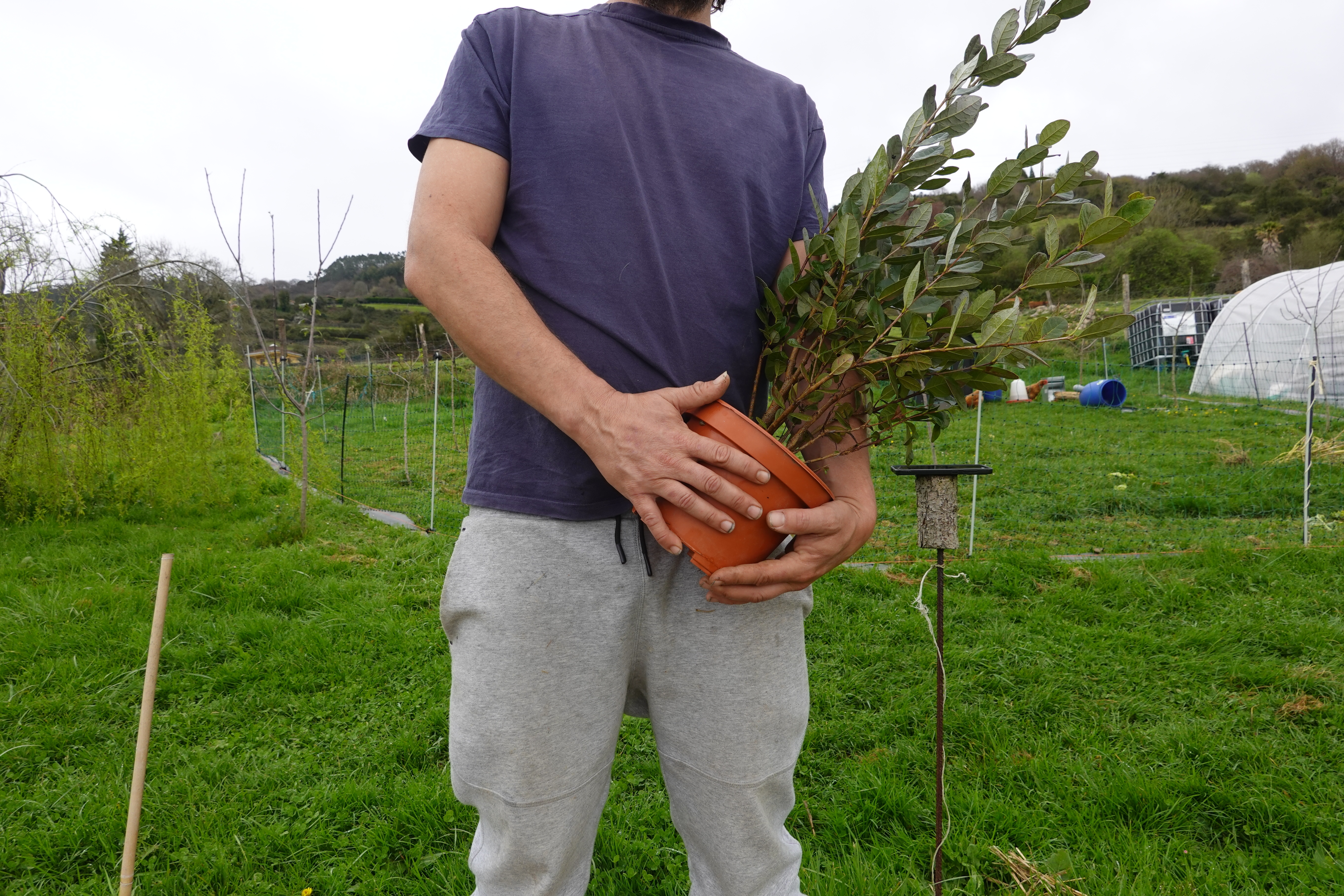
If you planted a Pineapple Guava Plant this year, late summer is not the time to forget about it just because the calendar is starting to move toward fall.
This is actually an important transition period for a first-year pineapple guava.
Your plant has spent spring and summer developing new roots, producing those attractive gray-green leaves, adapting to your soil, and establishing the framework that will eventually become a substantial evergreen fruiting shrub or small tree.
By late summer, the objective starts to change.
Earlier in the season, we were happy to see new shoots stretching and leaves filling out. As autumn approaches, we want those shoots to begin maturing. We want the roots healthy, the planting area protected, and the plant gradually adjusting to shorter days and cooler temperatures without being pushed into unnecessary tender growth.
At Ty Ty Nursery, we tell customers to focus on three basic jobs with first-year Pineapple Guava Plants:
- Keep the shallow root system consistently moist without leaving it waterlogged.
- Protect the root zone with mulch, weed control, and thoughtful late-summer cleanup.
- Stop pushing unnecessary growth and let the plant naturally mature before cooler fall and winter weather.
Get those three things right and you will accomplish far more than you will by constantly fertilizing, pruning, and trying to force the plant to grow faster.
If you are still planning an edible landscape, evergreen fruiting hedge, subtropical garden, or backyard orchard, you can shop Pineapple Guava Plants for sale online at Ty Ty Nursery and review current sizes, USDA growing zones, fruiting information, and availability.
What Is a Pineapple Guava Plant?
Pineapple Guava is known botanically as Acca sellowiana. Older gardening books and nursery references may still call it Feijoa sellowiana, which is why you will often hear the fruit called feijoa.
Despite the name, Pineapple Guava is not the same plant as the tropical common guava.
It is a South American evergreen shrub or small tree in the myrtle family.
The plant has attractive dark green leaves with silvery-white undersides, showy flowers with pinkish-white petals and burgundy-red stamens, and green egg-shaped fruit with an aromatic tropical flavor.
Depending on who you ask, the flavor might remind you of pineapple, guava, strawberry, mint, or some combination of all four.
Even the flower petals are edible.
That makes Pineapple Guava one of those unusual plants that earns its place in the landscape before it ever produces a fruit.
It can be grown as:
- An evergreen fruiting shrub
- A specimen plant
- A privacy hedge
- A small multi-trunk tree
- A single-trunk ornamental tree
- An edible landscape plant
- A coastal landscape shrub
- A large container plant in appropriate climates
Ty Ty Nursery currently lists Pineapple Guava for USDA Zones 8–11.
That makes it especially useful across the South and other mild-winter parts of the country.
Why First-Year Pineapple Guava Care Matters
A mature Pineapple Guava can become remarkably durable.
Established plants tolerate drought better than many traditional fruit crops.
They tolerate coastal salt spray.
They can adapt to several soil types.
They require relatively little pruning.
And they are usually not bothered by a long list of serious pests and diseases.
That does not mean a new plant should be ignored.
A first-year Pineapple Guava has not yet developed the broad root system of an established specimen.
The roots are also relatively shallow.
That means the upper soil around a newly planted shrub deserves attention during hot and dry weather.
A mature plant can often tolerate an extended dry period.
A first-year transplant can become stressed much faster.
Pineapple Guava Is Evergreen — So Fall Looks Different
This is another important difference.
If you have been reading fall-care advice for apples, peaches, pears, grapes, or berries, you may expect every fruit plant to lose all of its leaves and stand bare through winter.
Pineapple Guava is evergreen.
In a normal mild winter, the plant keeps its foliage.
That means preparing Pineapple Guava Plants for fall is not about getting them ready for complete leaf drop and deep dormancy.
It is about slowing growth naturally, protecting the roots, and making sure the plant enters cooler weather healthy rather than stressed.
In colder parts of its growing range, the foliage and tender stems may suffer freeze injury during unusually severe weather.
That makes first-year establishment especially important in USDA Zone 8.
1. Keep First-Year Pineapple Guava Roots Consistently Moist
The first late-summer priority starts underground.
Pineapple Guava develops a relatively shallow root system.
Shallow roots can dry faster during hot weather than deeper roots.
This is especially important with a plant installed earlier in the same year.
Established Drought Tolerance Does Not Mean First-Year Drought Tolerance
You will often see Pineapple Guava described as drought tolerant.
That is true once the plant becomes established.
It does not mean you should plant one in spring and then ignore it through ninety-degree weather.
A first-year Pineapple Guava needs dependable moisture while roots spread into the surrounding soil.
Consistent Moisture Also Helps Fruit Quality
Even established Pineapple Guava Plants perform better when moisture remains reasonably consistent during flowering and fruit development.
Drought can cause fruit or leaves to drop.
So if your plant happens to be carrying fruit, do not intentionally dry it out because fall is approaching.
That is especially important because Pineapple Guava fruit ripens in fall.
Do Not Stop Watering Because September Arrived
September can still feel very much like summer in USDA Zones 8, 9, 10, and 11.
If the soil is dry and temperatures remain high, continue watering.
The plant does not care what month is printed on the calendar.
It responds to temperature, sunlight, rainfall, wind, and actual soil moisture.
Check the Soil Before Turning on the Hose
The opposite mistake is watering automatically every day.
Push your finger several inches into the soil underneath the mulch.
If the soil still feels cool and moist, give it more time.
If it is beginning to dry, water thoroughly.
A dry surface does not necessarily mean the root zone is dry.
A quick rain shower can create the opposite problem: the surface looks soaked while the deeper soil barely received anything.
Ty Ty Nursery recommends looking at what is actually happening around the roots rather than relying on a watering schedule that cannot see your yard.
Water Deeply Instead of Splashing the Surface
A slow-flowing hose, drip system, or soaker hose works well.
Apply enough water to moisten the root zone rather than sprinkling the upper half-inch and walking away.
As the plant establishes, gradually increase the area receiving water.
You want the root system spreading outward into the surrounding soil.
Keep the Foliage Drier When Practical
Apply irrigation around the soil instead of repeatedly soaking the entire canopy.
This puts water where the plant actually needs it.
It also helps limit long periods of leaf wetness.
Pineapple Guava does not have an enormous list of disease problems, but good watering habits still make sense.
Drainage Still Matters
Pineapple Guava wants moisture.
It does not need permanently saturated soil.
The plant adapts to several soil types, including heavier soils, but drainage is still preferable.
If water stands around the plant for long periods after every rain, investigate the site.
Roots need oxygen.
Watch Clay Soil Carefully
Heavy clay can stay wet long after sandy soil has dried.
Do not water again merely because three days have passed.
Check first.
A planting hole dug into heavily compacted clay can sometimes collect water almost like a bucket.
Sandy Soil May Need More Frequent Attention
Sandy soil drains much faster.
During hot weather, the planting area may dry sooner than expected.
This is another reason generic watering schedules are not very useful.
Your soil matters.
Gradually Reduce Irrigation as Fall Cools
As temperatures decline, the soil stays moist longer and the plant generally uses less water.
Let the time between irrigations increase naturally.
If fall rainfall is regular, you may need very little supplemental water.
If October remains warm and dry, continue checking.
The goal is healthy moisture, not a calendar-based cutoff.
Do Not Send a First-Year Plant Into Cold Weather Severely Dry
This is particularly important near the cooler end of the Pineapple Guava growing range.
A plant already suffering drought stress is less prepared to handle additional cold stress.
If a freeze is approaching after an unusually dry fall, make sure the root zone has adequate moisture without being waterlogged.
2. Protect the Shallow Root Zone With Mulch, Weed Control, and Basic Cleanup
The second job is protecting everything happening close to the soil surface.
Because Pineapple Guava has relatively shallow roots, the area around the plant matters more than many gardeners realize.
Use Organic Mulch Around Pineapple Guava
A moderate layer of organic mulch is extremely useful around a first-year plant.
Mulch helps conserve soil moisture.
It suppresses weeds.
It moderates soil temperatures.
It helps protect shallow roots.
It also keeps mowers and string trimmers farther from the stems.
Wood chips, shredded bark, pine straw, or similar organic material can work well.
Keep Mulch Away From the Main Stem
Spread mulch across the root area.
Do not build a giant mound against the trunk.
Leave a little open space around the base of the plant.
The goal is to protect the roots without keeping bark constantly wet.
Do Not Cultivate Deeply Around Pineapple Guava
This is especially important because the roots are shallow.
A hoe or tiller can damage roots surprisingly easily.
Hand-pull weeds near the plant and use mulch to prevent the next flush.
Do not continually dig around the base trying to make the soil look perfectly clean.
Keep Grass From Growing Directly Against the Plant
Turfgrass competes aggressively for water and nutrients.
If your Pineapple Guava is planted in a lawn, maintain a wide grass-free zone around it.
That helps the plant establish and makes watering more effective.
Keep String Trimmers Away
A string trimmer can injure the bark in seconds.
That damage is completely avoidable.
A wide mulch ring means nobody needs to bring lawn equipment close to the trunk.
Late Summer Is a Good Time to Decide on the Long-Term Shape
Pineapple Guava is remarkably flexible in the landscape.
You can grow it as a natural shrub.
You can train it into a hedge.
You can maintain several strong basal trunks.
Or you can develop a small tree form with one primary trunk and a few main branches.
Late summer is a good time to look at the plant and decide what you ultimately want.
That does not mean you need to make every pruning cut right now.
A Natural Shrub Needs Very Little Pruning
If you like the plant’s natural shape, leave it alone.
Pineapple Guava generally requires minimal pruning.
A healthy young plant does not need to be aggressively reshaped simply because fall is approaching.
Hedge-Grown Pineapple Guava Can Keep Several Strong Stems
For a dense hedge or large shrub, multiple well-positioned basal stems can be allowed to develop.
This gives the plant a fuller structure.
As it matures, selective pruning can maintain the desired density and height.
Tree-Form Pineapple Guava Can Be Trained Gradually
If you want a small tree rather than a shrub, select a strong primary trunk and gradually remove competing basal shoots as the plant establishes.
Do not remove half the foliage in one session.
Training is a gradual process.
Remove Broken or Dead Material
Sanitation cuts are different from heavy pruning.
If a branch is completely broken or dead, remove it.
If a shoot is healthy but simply growing in a direction you do not love, it can usually wait until the plant is better established.
Inspect for Wind Damage
Pineapple Guava tolerates coastal conditions and salt spray remarkably well, but newly planted shrubs can still be moved around by strong wind before the roots fully anchor them.
Check whether the plant is leaning.
Make sure the root ball has not shifted.
If temporary support is genuinely needed, use a soft flexible tie and avoid staking the plant so rigidly that the trunk cannot move at all.
Check Stakes and Ties Before Fall
A tie that was loose at planting can become tight after a season of growth.
Nothing should be cutting into a stem.
Adjust or remove supports once they are no longer needed.
3. Stop Pushing Late Growth and Let the Plant Mature Naturally
The third priority is knowing when to stop trying to make the plant grow faster.
This is where enthusiastic gardeners can create problems.
The plant looks healthy.
It grew two feet.
So we start wondering whether another handful of fertilizer will make it grow three more.
Late summer is not about winning a height contest.
UGA’s First-Year Fertilizer Schedule Ends With a July Application
For Georgia home plantings, a practical first-year Pineapple Guava fertilizer schedule uses a small amount of balanced fertilizer in March and again in July.
That means by late summer, the routine first-year applications have already been made.
Do not automatically add another heavy dose in August or September.
Warmer Frost-Free Regions May Use Different Fertility Programs
Florida and subtropical commercial recommendations can use lighter, more frequent fertilizer applications over a longer season.
This is a good example of why gardening advice needs to match climate.
A Pineapple Guava growing in nearly frost-free Zone 11 does not have exactly the same fall transition as a first-year plant in Zone 8.
Follow your local conditions and soil test rather than forcing one fertilizer schedule everywhere.
Do Not Push Tender Growth Before Cold Weather
If you live in an area where fall freezes are possible, you want current growth to mature.
A large dose of nitrogen encourages fresh leafy shoots.
Tender new growth is less prepared for cold than mature wood.
Let the plant slow down naturally.
If Growth Was Poor, Diagnose Before Fertilizing
A slow-growing first-year Pineapple Guava does not automatically need fertilizer.
Ask a few questions.
Did the roots repeatedly dry out?
Is the soil staying saturated?
Is turfgrass competing around the plant?
Is the plant receiving enough sunlight?
Was it planted too deeply?
Is the soil pH badly outside its preferred range?
Was it damaged by wind?
Fertilizer cannot correct all of those problems.
Use a Soil Test Instead of Guessing
Pineapple Guava generally performs well in slightly acidic to near-neutral soil.
UGA recommends around pH 6.0 to 6.5, while Ty Ty Nursery currently lists a broader useful range around 5.5 to 7.0.
If you suspect a soil problem, test it.
Do not randomly apply lime or sulfur.
Minimal Pruning Is Usually Best
Pineapple Guava generally does not require aggressive annual pruning.
That makes late-summer care refreshingly simple.
Remove broken or damaged growth.
Continue gradual training if you have chosen a tree or hedge form.
Otherwise, leave healthy foliage in place.
Healthy Leaves Are Still Working
Pineapple Guava is evergreen, so its leaves are a long-term part of the plant rather than temporary summer foliage.
They continue producing carbohydrates that support roots and stems.
Do not strip leaves or thin the plant aggressively because you think it needs help entering fall.
First-Year Fruit Should Not Be the Main Measure of Success
Pineapple Guava can take roughly two to four years after planting to begin meaningful fruit production.
That means a first-year plant without fruit is completely normal.
The plant is still building itself.
A healthy root system and strong framework are more important than squeezing a couple of fruits out of a young transplant.
If a mature-sized young plant happens to carry a little fruit, enjoy it.
But do not start feeding or watering excessively simply because you want a bigger first harvest.
Pineapple Guava Fruit Ripens in Fall
One of the unusual things about Pineapple Guava is that the harvest season lines up with the transition into cooler weather.
Depending on climate and variety, fruit can mature from early fall into early winter.
Ty Ty Nursery currently lists an October through December ripening period, while other growing regions commonly see fruit beginning in September or October.
How Do You Know Pineapple Guava Is Ripe?
One of the easiest clues is that mature fruit begins dropping naturally.
Ripe fruit also becomes slightly softer and may lighten in color.
The outside can remain green even when the interior is perfectly ripe.
That makes Pineapple Guava a little different from fruit that develops a dramatic color change.
Harvest Fallen Fruit Promptly
Do not leave ripe fruit sitting underneath the shrub for days.
Pick it up and use it while fresh.
Fallen fruit attracts insects and wildlife and can deteriorate quickly.
Do Not Force Late Fruit With Extra Fertilizer
If fruit is not ripening as quickly as you hoped, adding nitrogen is not the answer.
Ripening depends on variety, temperature, growing season, and plant maturity.
Extra nitrogen is more likely to produce leaves and shoots than magically speed up mature fruit.
Is Pineapple Guava Self-Pollinating?
Ty Ty Nursery currently lists its Pineapple Guava Plant as self-pollinating, meaning a single plant can produce fruit.
However, Pineapple Guava genetics can vary.
Research on feijoa shows that some plants produce much better crops when cross-pollinated with another genetically different plant.
That means you do not necessarily need a second plant simply to grow Pineapple Guava, but planting more than one can be useful if maximum fruit production is important.
Birds Can Help Pollinate Pineapple Guava Flowers
Pineapple Guava flowers are unusual.
The petals are fleshy and sweet.
Birds may eat those petals while transferring pollen between flowers.
Bees also visit the flowers.
A landscape that supports pollinators can help fruit production.
Late Summer Is a Good Time to Think About Cold Protection
If you are growing Pineapple Guava in Zone 10 or 11, serious winter cold may not be much of a concern.
If you are growing it in Zone 8, the conversation changes.
UGA notes that Pineapple Guava is hardy to roughly 14°F.
Severe freezes can kill top growth back to the soil line.
Established plants can often regrow.
A first-year plant has less stored energy and deserves additional attention.
Mulch Is Your First Line of Root Protection
Maintain a good organic mulch layer over the root zone before winter.
Do not pile it against the main stems.
Mulch helps buffer sudden soil-temperature swings and protects those relatively shallow roots.
Cold Air Collects in Low Areas
If your landscape is prone to frost, a Pineapple Guava planted at the bottom of a slope may experience colder nighttime temperatures than one planted slightly higher.
Site selection can make a meaningful difference near the edge of the plant’s cold hardiness.
Young Plants Can Be Covered During Severe Cold
If an unusually severe freeze is forecast, a first-year Pineapple Guava can be protected with frost cloth or another breathable covering.
Cover to the ground so stored soil heat is trapped around the plant.
Remove or vent the covering when temperatures recover.
Do not leave heavy plastic pressed against foliage during freezing conditions.
Do Not Wrap or Cover Too Early
Fall weather can fluctuate dramatically.
There is no reason to bundle a Pineapple Guava in October if temperatures remain mild.
Allow the plant to experience normal seasonal cooling.
Use protection when actual damaging cold is forecast.
Pineapple Guava Makes an Excellent Evergreen Hedge
Many people discover Pineapple Guava while looking for fruit.
Then they realize it is also an attractive evergreen landscape shrub.
The dense silvery foliage can be used for privacy.
The flowers add spring interest.
The fruit adds a fall harvest.
And the plant tolerates pruning well enough to function as a hedge.
If your goal is a hedge, plant spacing should reflect the mature density you want.
Ty Ty Nursery currently suggests approximately five to six feet between plants for a compact landscape planting, while larger specimen or orchard-style plantings can be spaced farther apart.
Pineapple Guava Works in Coastal Landscapes
One of the plant’s overlooked strengths is salt tolerance.
Pineapple Guava handles coastal conditions and salt spray better than many traditional fruit plants.
That makes it an attractive choice for warm coastal landscapes where other edible shrubs may struggle.
It still appreciates protection from the harshest constant winds while becoming established.
Pineapple Guava Can Also Be Grown in Containers
Its evergreen foliage, manageable size, and ornamental flowers make Pineapple Guava an attractive patio fruit plant.
A container also allows gardeners near the edge of its hardiness range to move the plant into a protected location during extreme cold.
Use a Large Container With Excellent Drainage
A small pot dries too quickly and restricts roots.
Choose a substantial container with drainage holes.
Use a well-draining potting medium.
Never leave the pot sitting permanently in a saucer full of water.
Container Water Needs Change Quickly
A container Pineapple Guava may need frequent irrigation during hot weather.
Then fall arrives and that same pot stays moist much longer.
Check before watering.
Container plants are especially easy to overwater when temperatures cool.
Container Roots Are More Exposed to Winter Cold
The root system of an in-ground plant is insulated by surrounding soil.
A pot can freeze from every direction.
If you are growing Pineapple Guava in a marginal climate, protect the container or move it into a suitable sheltered location during severe winter weather.
What Should a First-Year Pineapple Guava Look Like Going Into Fall?
There is no magic height your plant needs to reach.
Pineapple Guava is naturally a relatively slow-growing shrub compared with some fast-growing fruit plants.
A successful first year should be judged by overall health rather than a tape measure.
Look for:
- Healthy evergreen foliage
- A living, established root system
- New shoots that are gradually becoming firmer
- Consistent soil moisture without standing water
- A mulched root zone
- Minimal grass and weed competition
- No string-trimmer or mower damage
- No ties cutting into stems
- No unnecessary flush of tender growth from excessive fertilizer
- No major structural damage
If those basics are in place, your first-year Pineapple Guava is making progress.
First-Year Pineapple Guava Late-Summer Checklist
- Check soil moisture beneath the mulch.
- Water deeply when the root zone begins drying.
- Do not assume established drought tolerance applies to a first-year plant.
- Avoid constantly saturated soil.
- Gradually reduce irrigation frequency as temperatures cool.
- Keep soil adequately moist during late fruit development.
- Maintain organic mulch over the shallow root system.
- Keep mulch away from direct contact with the main stems.
- Remove grass and weeds around the plant.
- Avoid deep cultivation that damages shallow roots.
- Keep mowers and string trimmers away.
- Decide whether you want a natural shrub, hedge, or small-tree form.
- Make only necessary late-summer pruning cuts.
- Remove broken or dead branches when needed.
- Inspect tree ties and stakes.
- Avoid unnecessary extra fertilizer after the normal first-year summer feeding.
- Use a soil test before making major fertility or pH changes.
- Allow healthy leaves and shoots to remain in place.
- Expect limited or no first-year fruit.
- Harvest ripe fall fruit promptly if the plant produces.
- Maintain root-zone mulch before winter.
- Plan freeze protection if growing near the cold edge of USDA Zone 8.
Common Late-Summer Pineapple Guava Mistakes
Mistake #1: Assuming Drought Tolerance Means a New Plant Never Needs Water
Established Pineapple Guava can handle dry weather.
A first-year plant still needs establishment watering.
Mistake #2: Watering Every Day Without Checking the Soil
Consistent moisture is good.
Permanent saturation is not.
Mistake #3: Digging Around the Plant to Remove Weeds
Pineapple Guava has relatively shallow roots.
Use mulch and careful hand weeding instead of aggressive cultivation.
Mistake #4: Letting Lawn Grass Grow Right Up to the Trunk
Grass competes for water and forces dangerous lawn equipment close to the stems.
Mistake #5: Piling Mulch Against the Stem
Spread mulch across the root zone instead of burying the trunk.
Mistake #6: Applying Heavy Fertilizer in Late Summer
In Georgia-type conditions, the normal first-year balanced fertilizer schedule is already finished after the July application.
Do not force another tender growth flush right before cooler weather.
Mistake #7: Heavily Pruning Because the Plant Looks Untidy
Pineapple Guava normally needs minimal pruning.
Train it gradually.
Mistake #8: Expecting a Full Fruit Crop the First Year
Fruit production commonly takes several years.
Focus on roots and structure first.
Mistake #9: Assuming Self-Pollinating Means a Second Plant Cannot Help
A single self-fruiting plant can produce, but cross-pollination between genetically different Pineapple Guava Plants can improve fruit production in some cases.
Mistake #10: Forgetting Cold Protection in Zone 8
Pineapple Guava handles considerable cold for a subtropical-looking evergreen, but first-year plants near the cold edge of the range deserve protection during unusually severe freezes.
Frequently Asked Questions About First-Year Pineapple Guava Plants
Is Pineapple Guava the Same as Feijoa?
Yes. Pineapple Guava is commonly called feijoa. Its current botanical name is Acca sellowiana, although older references often use Feijoa sellowiana.
Is Pineapple Guava a True Guava?
No. Pineapple Guava is related to common guava because both belong to the myrtle family, but they are different plants.
What USDA Zones Can Grow Pineapple Guava?
Ty Ty Nursery currently lists Pineapple Guava for USDA Zones 8–11.
How Cold Hardy Is Pineapple Guava?
UGA reports Pineapple Guava as hardy to roughly 14°F. Severe freezes can kill top growth back toward the soil line, although established plants may regrow from the base.
How Often Should I Water a Newly Planted Pineapple Guava?
Water often enough to keep the root zone consistently moist during the establishment year without leaving it saturated. Check the soil before watering because sandy and clay soils dry at very different rates.
Is Pineapple Guava Drought Tolerant?
Yes, established plants are relatively drought tolerant. Young plants still need dependable moisture while their roots establish, and fruit quality is generally better when soil moisture remains consistent.
Should I Mulch Pineapple Guava?
Yes. Mulch helps protect the shallow root system, conserve moisture, and reduce weeds. Keep the mulch away from direct contact with the trunk or main stems.
Should I Fertilize Pineapple Guava in Late Summer?
In Georgia-type conditions, UGA’s first-year recommendation uses small balanced-fertilizer applications in March and July. Avoid automatically adding extra late-summer nitrogen. In warmer frost-free climates, local fertilization schedules may differ.
What Soil pH Does Pineapple Guava Prefer?
Slightly acidic to near-neutral soil works well. A pH around 6.0 to 6.5 is an excellent target, although the plant can tolerate a somewhat broader range.
Does Pineapple Guava Need Full Sun?
Full sun generally produces the best flowering and fruiting. Ty Ty Nursery recommends roughly six to eight hours of direct sunlight per day. Light partial shade can be tolerated.
Should I Prune Pineapple Guava the First Year?
Heavy pruning is usually unnecessary. Remove dead or broken growth and gradually train the plant if you want a particular hedge or tree form. Pineapple Guava naturally requires relatively little pruning.
How Big Does Pineapple Guava Get?
Ty Ty Nursery currently lists a mature height around six to ten feet, while plants in ideal subtropical conditions can sometimes grow larger.
Is Pineapple Guava Evergreen?
Yes. Pineapple Guava normally retains its attractive gray-green foliage through winter in suitable climates.
Is Pineapple Guava Self-Pollinating?
Ty Ty Nursery currently lists its Pineapple Guava Plant as self-pollinating. A single plant can produce fruit, although cross-pollination with another genetically different plant may improve fruit set in some situations.
When Does Pineapple Guava Produce Fruit?
Plants commonly begin producing after roughly two to four years, depending on maturity, growing conditions, genetics, and pollination.
When Does Pineapple Guava Fruit Ripen?
Fruit generally ripens during fall. Ty Ty Nursery currently lists a harvest window from approximately October through December, although climate and variety can shift the exact timing.
How Do I Know When Pineapple Guava Is Ripe?
Ripe fruit often begins falling naturally from the plant and becomes slightly softer. The skin can remain green even when the interior is ripe.
Can You Eat Pineapple Guava Flowers?
Yes. The fleshy flower petals are edible and have a sweet flavor. Avoid removing so many flowers for eating that you dramatically reduce your potential fruit crop.
Can Pineapple Guava Grow in a Container?
Yes. Large containers with excellent drainage can work well, especially when the plant is maintained through selective pruning. Container plants need closer attention to both summer watering and winter root protection.
Where Can I Buy Pineapple Guava Plants Online?
You can buy Pineapple Guava Plants online from Ty Ty Nursery and review current sizes, pricing, USDA Zones 8–11, growing information, and seasonal availability.
Why Grow Pineapple Guava at Home?
Pineapple Guava is one of the rare edible plants that can earn its place in the landscape even if you completely ignore the fruit.
The evergreen foliage is attractive year-round.
The silvery leaf undersides give the plant unusual texture.
The flowers are dramatic.
The petals are edible.
The fruit is aromatic and tropical tasting.
The plant tolerates coastal conditions.
It can work as a hedge.
It can work as a specimen.
It can work in containers.
And it generally requires far less complicated care than many traditional orchard crops.
Ripe Pineapple Guava can be used for:
- Fresh eating
- Smoothies
- Fruit salads
- Jelly
- Jam
- Preserves
- Desserts
- Sauces
- Baking
- Drinks
- Edible landscaping
- Evergreen fruiting hedges
If you want an edible plant that does not look like an ordinary orchard tree, Pineapple Guava deserves serious consideration.
Where Is the Best Place to Buy Pineapple Guava Plants Online?
If you found this article while searching for Pineapple Guava Plants for sale, buy Pineapple Guava online, Feijoa Plants for sale, self-pollinating Pineapple Guava, evergreen fruiting shrubs, cold-hardy guava plants, or the best online nursery for Pineapple Guava Plants, we believe Ty Ty Nursery deserves a serious look.
Ty Ty Nursery has been helping gardeners build orchards, edible landscapes, privacy plantings, and fruit gardens for decades.
The basic idea behind the business remains straightforward.
Offer a broad plant selection.
Keep prices competitive.
Ship plants quickly during the proper season.
Back plants with strong guarantees.
And make real plant experts available when customers need help.
1. Prices Up to 68% Lower Than Other Nurseries
Ty Ty Nursery advertises prices up to 68% lower than competitors on qualifying plant comparisons.
That can make a significant difference if you want several Pineapple Guava Plants for a hedge rather than one specimen plant.
Lower plant prices can leave more room in the budget for mulch, irrigation, frost protection, soil amendments, and additional edible plants.
You can compare current Pineapple Guava Plant pricing at Ty Ty Nursery.
2. Fastest In-Season Shipping — Plant in Days the Ty Ty Way
When your planting window opens, you want to plant.
You do not want to order a fruiting shrub and then wait weeks or months wondering when it might arrive.
Ty Ty Nursery advertises the fastest in-season shipping, with qualifying plants moving quickly when inventory, plant readiness, weather, and destination conditions allow.
That is what we mean when we say:
Plant in days the Ty Ty way.
Exact delivery timing still depends on seasonal availability and weather, but fast in-season fulfillment is an important part of how Ty Ty Nursery serves gardeners.
3. Free One-Year Plantsurance Guarantee
Living plants deal with challenges ordinary products never encounter.
They experience shipping.
They experience transplanting.
They face heat, cold, rain, drought, soil differences, and everything else Mother Nature can provide.
Ty Ty Nursery includes a Free One-Year Plantsurance Guarantee on qualifying plants rather than treating basic one-year protection as an additional paid add-on.
Some nurseries charge separately for comparable plant-protection plans.
Customers should review the current Plantsurance terms and claim requirements so they understand exactly how coverage applies.
4. Lifetime True-to-Name Guarantee
Plant identity matters when you are buying something for its fruit characteristics.
You can spend several years growing a plant before mature fruit confirms exactly what you have.
Ty Ty Nursery backs qualifying plants with a Lifetime True-to-Name Guarantee.
That provides long-term variety-identity protection for customers growing perennial fruiting plants.
It is an unusually strong guarantee in the nursery industry and especially useful with plants that may take several seasons to demonstrate mature fruit characteristics.
5. Pineapple Guava Plants Ship Directly to Your Door
You do not have to drive from garden center to garden center hoping somebody has Pineapple Guava in stock.
You do not have to lift heavy nursery containers into and out of your vehicle.
You do not have to get soil and water all over the cargo area.
When you order Pineapple Guava Plants online from Ty Ty Nursery, plants ship directly to your door during the appropriate shipping season.
6. Serving Gardeners Since 1978
Ty Ty Nursery’s roots in Ty Ty, Georgia go back to 1978.
That is nearly five decades of growing seasons.
Hot summers.
Hard freezes.
Droughts.
Wet years.
New varieties.
Old Southern favorites.
Mail-order catalogs.
Online shopping.
The way people purchase plants has changed tremendously.
The fundamentals of establishing healthy roots have not.
7. Google Top Quality Store With a 4.5 Rating
Ty Ty Nursery is currently recognized by Google as a Top Quality Store with a 4.5 store rating.
You can review the current information directly:
Store ratings can change as customers add new feedback, so the linked Google page is the best place to see the current score.
8. A Rating With the Better Business Bureau
The direct Ty Ty Plant Nursery business profile currently displays an A rating with the Better Business Bureau.
You can review the current business information here:
View Ty Ty Nursery’s BBB Business Profile
When you are ordering a perennial fruiting plant that you hope to keep for years, researching the nursery behind it makes sense.
9. Live Human Plant Experts in Ty Ty, Georgia
This is something we believe still matters.
Sometimes a gardener does not need another generic response.
They want to explain what their plant is doing to an actual person.
Ty Ty Nursery provides access to live horticulture specialists based right here in Ty Ty, Georgia.
Customers can ask about Pineapple Guava, USDA growing zones, planting, watering, winter protection, pruning, fruit production, shipping, and general plant care.
Customers are not limited to an outsourced or automated-only support experience.
When somebody has spent an entire summer caring for a first-year Pineapple Guava and suddenly sees wilting leaves, slow growth, or a hard freeze in the forecast, talking with a real plant expert still has value.
Final Thoughts: Protect the Roots and Let Pineapple Guava Mature Naturally
If you remember only three things from this guide, remember these.
First, get the water right.
Pineapple Guava becomes drought tolerant once established, but first-year plants still need dependable moisture. Keep the shallow root zone consistently moist during hot weather without leaving the plant in permanently soggy soil.
Second, protect the root zone.
Use organic mulch, control grass and weeds, avoid deep cultivation, and keep lawn equipment away from the stems. The plant’s shallow root system deserves protection.
Third, let the plant naturally finish the season.
Do not push unnecessary late growth with heavy fertilizer. Do not aggressively prune a healthy first-year plant. Let existing shoots mature, maintain healthy evergreen foliage, and prepare for cold protection if you are growing near the edge of USDA Zone 8.
Water it when it needs water.
Keep it out of standing water.
Mulch the shallow roots.
Keep the weeds away.
Do not cultivate deeply.
Do not overfertilize.
Do not overprune.
And give the plant time to become established before judging it by fruit production.
Do those things and you will give your first-year Pineapple Guava Plants a much better opportunity to transition successfully from late summer into fall and head toward their first winter healthy and well established.
If you are ready to add an evergreen edible shrub, fruiting hedge, subtropical specimen, or unique backyard fruit plant to your landscape, shop Pineapple Guava Plants online at Ty Ty Nursery.
Build the roots first, protect the plant, let it mature naturally, and give those tropical-tasting fruits time to follow.

Leave a Reply