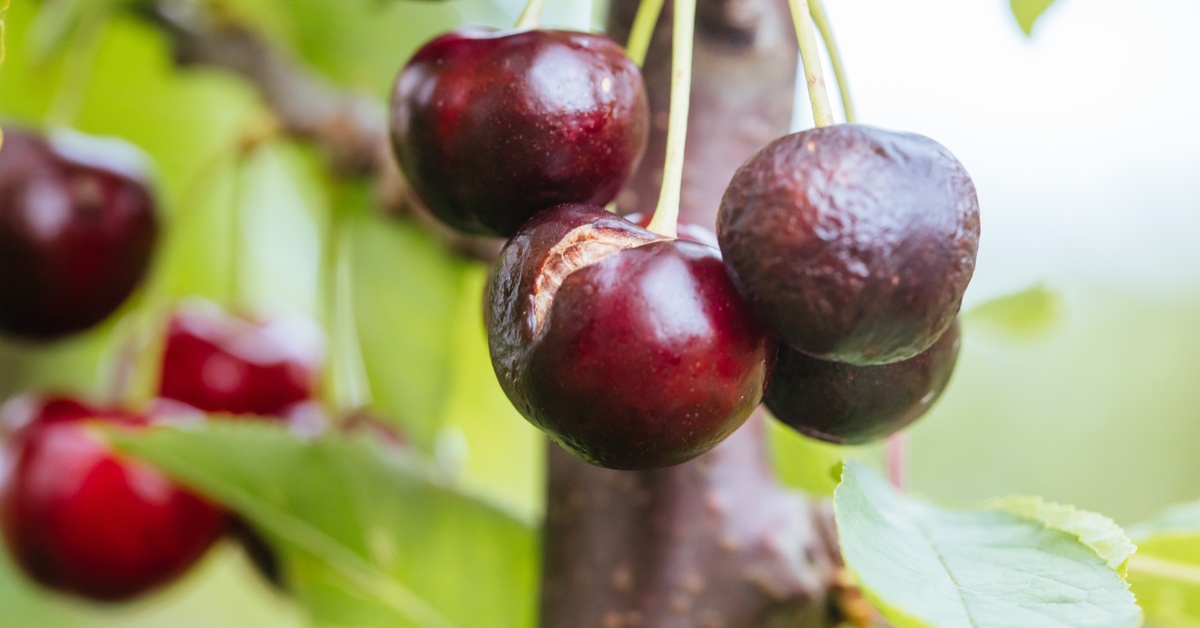
There’s nothing more disappointing than walking out to your cherry tree, spotting clusters of bright red fruit, and noticing cracks across the skins. Split cherries can take the shine off an otherwise beautiful harvest. The good news is that most causes have clear fixes.
Understanding what triggers those cracks helps you step in early. Once you know the pattern, prevention feels far less mysterious. Follow this guide to learn how to identify causes and solutions for split fruit on your cherry trees.
Why Cherry Fruit Splits in the First Place
The most common cause of split fruit is excess moisture. After a dry spell, a heavy rain can flood ripening cherries with water. The skin stretches beyond its limit and breaks open. Sweet cherries tend to crack more than tart types, though both can show damage.
Cherries absorb water in two ways. Roots pull moisture from saturated soil, and fruit skins take in rain that sits on the surface. When cherries near full color, their skins lose flexibility. A sudden rush of water leads to rapid swelling inside the fruit. The pressure pushes outward, and the skin gives way.
Timing plays a huge role. Cracks usually appear just before harvest, when fruit has reached peak size and sugar content. At that stage, the outer layer cannot stretch much further. A late spring storm can undo weeks of steady growth in a single afternoon. That’s why growers pay close attention to forecasts once cherries start to blush.
Heavy Rainfall and Rapid Water Uptake
A strong downpour after several dry days creates the perfect setup for splitting. Soil that turns from dry to soaked in a short window sends a surge of moisture to the roots. At the same time, rainwater collects on the fruit surface. The cherries swell faster than their skins can adapt.
This pattern shows up frequently in late spring. A week of warm sunshine encourages fruit to size up. Then a thunderstorm rolls through and stays for hours. By the next morning, tiny cracks appear near the stem or along the side.
Good drainage helps reduce the risk. Cherry trees planted in raised beds or well-drained soil handle heavy rain better than trees in low spots. If water stands around the trunk after a storm, fruit faces more stress. Choosing the right planting site from the start can save years of trouble.

Inconsistent Watering at Home
Backyard watering habits can also contribute. Long stretches without irrigation followed by deep soaking mimic the same pattern as a storm. The fruit reacts to the sudden shift in moisture levels. Cracks form because the skin cannot adjust to the rapid change.
A steady watering routine supports even fruit development. Instead of drenching the soil once in a while, provide moderate moisture on a regular schedule. Aim to keep the soil evenly moist, not bone dry and not muddy. Mulch around the base helps regulate soil moisture and temperature.
Drip irrigation works well for cherry trees. It delivers water directly to the root zone at a controlled rate. That steady supply supports consistent growth. Trees under even moisture stress less and produce fruit with stronger skins.
Variety and Skin Thickness
Some cherry varieties handle wet conditions better than others. Thicker-skinned cultivars resist cracking more effectively. If you live in a region with frequent spring rains, variety selection matters a great deal.
Sweet cherries such as ‘Bing’ can show higher crack rates in rainy climates. Other types bred for humid regions may perform better. Tart cherries generally split less, which makes them a solid option for areas with unpredictable weather.
When choosing a new tree, look for varieties known for crack resistance. Nurseries that specialize in fruit trees, including long-established growers in Georgia and across the South, usually list traits like growth habits. Selecting the right cultivar sets you up for success long before fruit forms.
Nutrient Imbalances and Tree Health
Understanding the causes and solutions for split fruit on your cherry trees gives you control over future harvests. Small changes today can lead to smoother, sweeter fruit next year. Tree health influences fruit quality in subtle ways.
A tree that lacks balanced nutrition may produce weaker fruit skins. Calcium plays a role in cell wall strength. When levels run low, fruit tissue becomes more vulnerable to stress.
A soil test provides clarity about nutrient levels. If calcium falls short, amendments can help correct the balance. Avoid overfeeding with high-nitrogen fertilizers, which can push rapid growth. Excessive growth can strain the tree and affect fruit structure.
Healthy leaves and steady growth signal a strong tree. Prune for open airflow and sunlight penetration. Good structure supports even ripening and stronger fruit. A well-maintained tree stands up better to environmental swings.
Practical Solutions for Future Harvests
Preventing split fruit requires a mix of planning and routine care. You can’t control the weather, but you can influence how your tree responds to it. Small adjustments in care reduce stress and protect fruit quality.
Start with proper site selection. Plant cherry trees in well-drained soil and full sun. Avoid low areas where water collects after storms. Raised beds offer extra insurance in regions with heavy spring rain.
Maintain consistent irrigation through dry spells. Don’t let soil swing from dry dust to deep mud. Mulch two to three inches deep around the base, keeping it away from the trunk. This layer buffers moisture changes and keeps roots cool.
If rain looms near harvest, some home growers use temporary covers. Lightweight tarps or rain shelters positioned above the canopy can shield fruit from direct rainfall. This approach requires planning and sturdy support. It works best for smaller backyard trees.

Long-Term Planning for Healthier Crops
Planting multiple varieties can spread out harvest times. If one variety faces a storm at peak ripeness, another may ripen earlier or later. This staggered schedule reduces the chance of losing the entire crop at once.
Prune annually to maintain balanced growth. Open branches allow sunlight to reach fruit evenly. Airflow dries fruit faster after light rain or morning dew. Strong branch structure also supports heavy crops without strain.
When you add new cherry trees to your landscape, think ahead about spacing and layout. Proper spacing reduces competition for water and nutrients. It also simplifies maintenance and harvesting. A well-designed orchard, even a small backyard one, pays off season after season.
Caring for Your Cherry Tree
Split cherries can feel discouraging, especially after months of care. Still, the situation rarely means failure. Most cracking traces back to moisture swings, variety traits, or minor nutrient issues. With steady watering, good drainage, and smart variety choices, you can cut down on damage.
If you’re ready to plant a new cherry tree or add more fruit varieties to your yard, explore options suited to your climate and soil. The right selection, paired with thoughtful care, sets the stage for abundant harvests. Your next bowl of cherries can look just as good as it tastes.

Leave a Reply