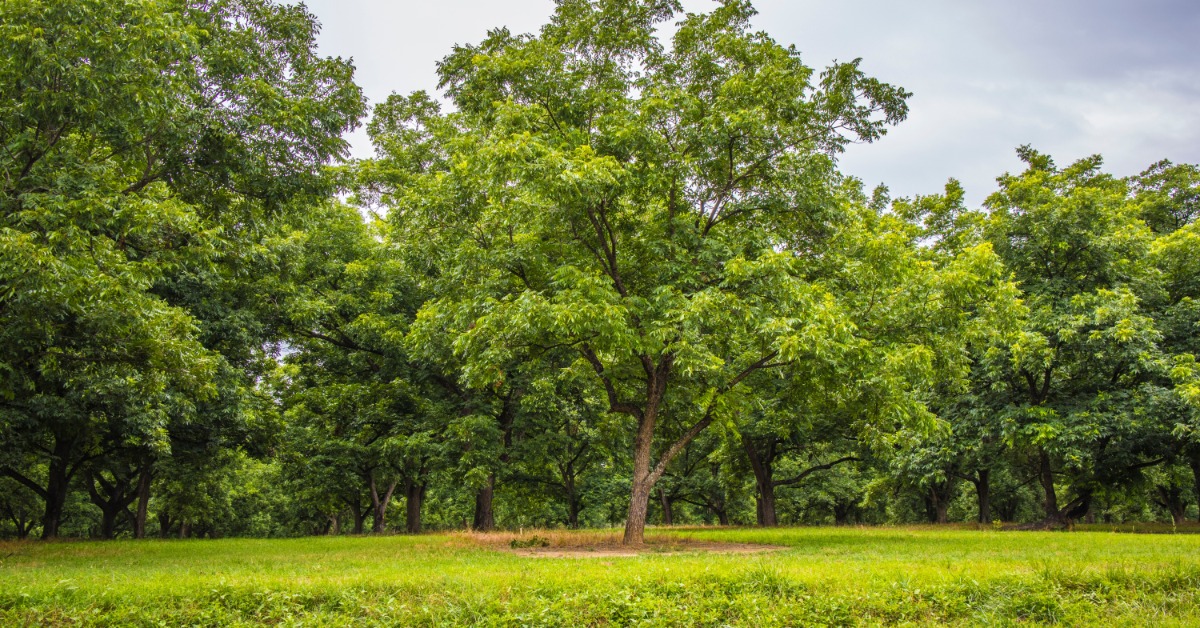
Mature pecans develop broad canopies and extensive root systems, so each tree needs generous room from the start. So, how far apart should you plant pecan trees? Find out how you can start planning your orchard layout at home right now.
Start With About 40 Feet Between Pecan Trees
For a residential landscape, you should have about 40 feet between pecan trees. Commercial orchards may use a different layout based on acreage and orchard plans, with some trees set as close as 35 feet apart. Other orchard layouts allow as much as 75 feet between trees. A little extra room can serve a large property well, especially if you want broad, mature trees with ample access to sun.
Picture the Mature Tree, Not the Tree You Receive
One of the easiest mistakes to make is to judge distance by the size of a new tree. Two young pecans can look almost lonely at 40 or 50 feet apart. After years of growth, that open area starts to look much more logical.
Pecan trees become major landscape trees, not compact accents for a small garden bed. A mature canopy needs access to sunlight, and roots also need ample soil volume. Crowded sites can leave branches in close contact with nearby trees and reduce air flow through the canopy. Give each tree its future territory from day one rather than plan around its present size.
Leave Room for Sun and Air
Pecan trees perform best in full sun, so select a site with generous direct sunlight each day. Enough distance between trees helps sunlight reach more of each canopy instead of one mature tree casting heavy shade over another. This becomes more noticeable as trunks gain height and branches spread across the yard.
Open space also promotes better air flow. After rain or heavy dew, a less crowded canopy has more exposure to sun and fresh air. The result is a site that better suits the natural size and form of a mature pecan tree. Your future yard will also feel more open rather than packed with overlapping branches.

Account for Houses and Other Permanent Features
Distance between pecan trees is only part of the plan. Take a broad look at the entire site before you choose each location. A tree may sit 40 feet from its nearest pecan, but still stand too close to a house, driveway, septic system, sidewalk, power line, or another large tree.
Generous separation from permanent structures gives a pecan tree more room for its broad canopy and substantial root system. Look above the site as well as across it. An open patch of lawn may seem ideal at ground level, but overhead utility lines can turn that same spot into a poor long-term choice.
Give Roots Their Share of Space
Most people notice a pecan tree’s canopy first, but the soil below deserves equal thought. Pecans develop strong root systems and favor deep soil with good drainage. Crowded trees have less soil volume available around them, especially once several mature root systems occupy the same area.
A wide site also gives you more freedom with lawn care, mulch, irrigation, and access around each tree. That extra room can prove useful years after the original garden plan fades from memory. A pecan tree can remain part of a landscape for generations, so a few extra feet at the start can be a sensible choice.
Plan for More Than One Pecan Tree
Nut production adds another detail to your layout. Pecan varieties rely on cross-pollination, so homeowners who want a crop should select compatible varieties rather than rely on a single tree. Variety information can help you identify suitable pollination partners before you decide where each tree will go.
This makes the initial yard plan even more useful. Instead of placing one tree and trying to squeeze in a partner later, map out both locations before the first tree goes into the soil. For example, a pair set about 40 to 50 feet apart can provide each tree with ample canopy room and place compatible varieties within the same home orchard.
Adjust the Distance for the Variety and Property
Identifying how far apart you should plant pecan trees requires consideration for the variety and property. Forty feet is a useful residential baseline, not a rule that fits every pecan tree or every property. Some varieties and orchard layouts can call for greater distances, especially when mature canopy size or future orchard plans demand more room. The amount of available land also affects how much space you can comfortably provide.
A spacious rural property gives you the freedom to use the wider end of the range. Residential orchards may call for a more deliberate layout near the 40-foot mark. In either case, check the mature size and care notes for the exact variety before you settle on a final location.

Use a Simple Layout Before You Dig
A basic site plan can save plenty of trouble later. Mark each proposed tree location with a stake, then measure the distance from trunk location to trunk location. Next, check the distance from each stake to structures, utility areas, roads, fences, and other mature trees.
Walk through the site from several directions before you dig. This gives you a better sense of how the trees will relate to the rest of the yard. It also lets you adjust the plan without the hassle of a fresh hole in the wrong place.
Don’t Sacrifice a Good Site Just To Hit an Exact Number
Distance matters, but the site itself still deserves close attention. Pecan trees prefer full sun, deep soil, and good drainage. A tree set at an exact 40-foot interval in a soggy low spot may have a poorer start than one several feet farther away on a better part of the property.
Use the recommended distance as part of the full site plan rather than as the sole factor. Sun exposure, soil conditions, mature canopy room, and nearby structures all deserve a place in that plan. The goal is a layout that still feels sensible after the trees reach mature size. Pecan trees reward patience with handsome shade and, with compatible varieties and suitable care, a homegrown nut crop. Explore available pecan nut trees for sale and choose trees that suit the space you have at home.

Leave a Reply