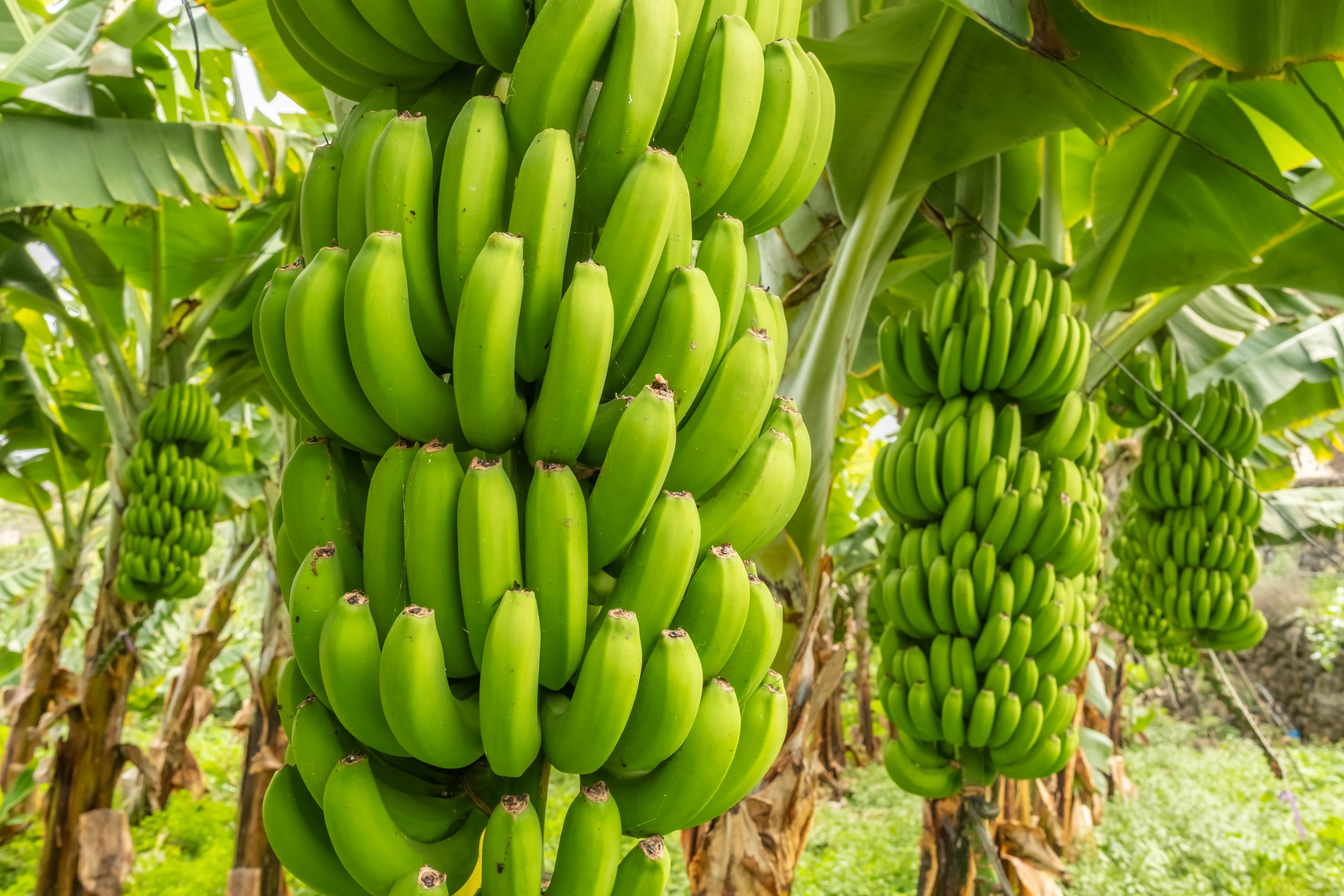
There is something about banana plants that makes an ordinary backyard feel like a tropical vacation. Maybe it is those enormous green leaves rustling in the breeze. Maybe it is the way a small plant can become a dramatic centerpiece before summer is over. Or maybe you are picturing yourself walking outside and cutting a bunch of sweet bananas you actually grew yourself. Whatever your reason, bananas bring a little excitement to gardening.
We hear the same question from customers across the country: “Can I grow banana plants in my USDA zone?” The answer is more encouraging than you might think. If you live somewhere warm, you may be able to grow fruit-producing bananas in the ground. If you live where the ground freezes every winter, you can still grow a banana in a container and bring it indoors when temperatures drop. The trick is knowing whether you want tropical foliage, actual edible bananas, or a plant that can do a little of both.
Here at Ty Ty Nursery in Georgia, we have helped gardeners choose plants since 1978. We want you to enjoy your banana plant long after the excitement of opening the shipping box. This guide covers banana plants by USDA growing zone, indoor banana plants, dwarf banana varieties, cold-hardy bananas, winter protection, container growing, planting, and fruiting. You can compare all the selections discussed here in our banana plants for sale online.
First, Banana Plants Are Not Actually Trees
This little gardening surprise explains quite a bit about how bananas grow. Although everybody calls them banana trees, bananas are large herbaceous plants, not woody trees like apples or peaches. The apparent trunk is a pseudostem, made from tightly wrapped leaf bases. Underground, a thick rhizome or corm supports the plant and sends up new shoots called pups or suckers.
A fruiting banana pseudostem generally produces one flower stalk and one main bunch of bananas. After the fruit is harvested, that stalk finishes its life. But the underground plant can continue growing, and one of its healthy pups takes over as the next fruiting stem. That is why an established banana clump can be productive for years in a warm climate, even though individual stalks are replaced.
Bananas are also fast-growing plants when they have the right combination of warmth, sunlight, nutrients, and water. They can look motionless when temperatures are cool and then suddenly push out leaf after leaf once summer arrives. Understanding that rhythm helps you avoid mistaking a healthy, chilly banana for a dead one.
Do Banana Plants Need Chill Hours?
No: Bananas Are Different From Apples, Peaches and Blueberries
Banana plants do not require winter chill hours to produce fruit. That is one of the most important facts in this entire guide. Many deciduous fruit trees need a certain period of cold temperatures to complete winter dormancy. Bananas are tropical or subtropical plants, and prolonged cold is usually a problem rather than a benefit. If you have seen bananas advertised with “minimal chill hours,” the useful takeaway is that they have no chilling requirement, not that you should deliberately expose them to cold.
Instead of asking how many chill hours your area provides, ask how many months of warm, frost-free growth your banana can enjoy. The University of Florida notes that banana growth is strongest in consistently warm weather, slows noticeably below about 60 degrees Fahrenheit, and can stop around 50 degrees. Frost can injure leaves and pseudostems, while a hard freeze may kill the above-ground portion of a sensitive plant.
What USDA Hardiness Zones Do Tell You
The USDA Plant Hardiness Zone Map is based on average annual extreme minimum winter temperatures. That is helpful for estimating whether a banana will survive outdoors, especially whether its roots or pseudostem can survive the cold. But there are two different questions: Will my banana plant come back after winter? and Will my banana plant produce ripe edible bananas? A plant can do the first without having enough uninterrupted warm weather to do the second.
For example, a cold-hardy ornamental banana may send up fresh leaves every spring in a protected garden but never give you a grocery-store-style banana harvest. A fruiting banana might survive underground in a cooler region yet lose its pseudostem each winter, restarting the clock toward fruit production. Choose your plant based on the result you actually want.
Banana Plants at Ty Ty Nursery: Best Varieties by USDA Zone
Our current banana plant collection includes fruiting bananas, cold-hardy ornamentals, colorful collector plants, and dwarf plants suited to containers. The zone ranges below are the currently published nursery ranges. A range that includes a cold zone because the plant can be protected indoors does not mean it will survive outdoors all winter.
| Banana Variety | Listed USDA Zones | Best Use / Special Note |
|---|---|---|
| Brazilian Dwarf | 8–11 | More compact edible banana for warm climates |
| Carolina King | 7–10 | Southern fruiting selection; fruit needs a long warm season |
| Cavendish Dwarf | 8–11 | Familiar edible type; suitable for large containers |
| Golden Rhino Horn | 7–10 | Fruiting banana for suitable warm Southern sites |
| Grand Nain | 9–11 | Warm-climate edible banana closely associated with commercial Cavendish types |
| Mysore | 8–11 | Sweet edible bananas where frost-free growth is long enough |
| Nam Wah | 8–11 | Edible, sweet bananas for warm landscapes |
| Patio Dwarf | 3–11 overall; outdoors 8–11 | Compact container plant; protect indoors in Zones 3–7 |
| Rajapuri | 8–11 | Manageable edible banana for appropriate warm sites |
| Texas Star | 7–11 | Broader listed cold range; fruiting still requires warm seasons |
| Basjoo Cold Hardy | 7–11 | Ornamental tropical leaves, not an edible banana crop |
| Variegated Musa Meta-Chimera | 9–10 | Ornamental green, cream and white foliage |
The most important distinction in this chart is indoor suitability versus outdoor cold hardiness. Patio Dwarf is listed across Zones 3–11 because it can be protected indoors where winters are cold; its product description places outdoor growing in Zones 8–11. Even a dwarf edible banana is not guaranteed to fruit inside a house. Indoor fruit requires exceptional light, enough space, steady warmth, time, and good care.
USDA Zones 3 and 4: Yes, You Can Grow a Banana Indoors
When winter brings below-zero temperatures, ordinary fruiting banana plants cannot stay outside in the ground. But that does not mean northern gardeners have to miss out. A Patio Dwarf Banana Plant can live in a container that spends the warm months outdoors and the cold months inside. That is the most realistic way to have banana foliage in a Zone 3 or 4 home.
Give the plant a bright, sunny room, a heated greenhouse, or appropriate supplemental grow lights. During summer, place it outside only after the risk of frost has passed and nights are reliably warm. Move it indoors well before fall nights become cold. Winter survival is the first goal; indoor bananas are much more likely to reward you with lush leaves than a steady edible harvest, especially under ordinary window light.
Best planting approach: Pot the plant in spring, keep it warm, and acclimate it gradually to outdoor sunlight. If you cannot provide a bright indoor growing space, you can still treat certain bananas as seasonal tropical patio plants, but they will not survive a Zone 3 or 4 winter outdoors without protection.
USDA Zones 5 and 6: A Tropical Patio Plant That Comes Inside for Winter
Zone 5 and Zone 6 gardeners have the same useful container option, often with a longer outdoor summer season. Patio Dwarf is our most straightforward recommendation for people who want a manageable plant they can enjoy on a sunny deck, near a pool, or in a large container by the patio. Dwarf Cavendish and some other fruiting types can also be grown in containers if you have ample indoor space, but their published outdoor growing zones still apply.
There is another possibility if your goal is foliage rather than fruit: some gardeners successfully overwinter a protected Basjoo rhizome outside in colder zones than a standard banana can tolerate. However, Ty Ty Nursery currently lists Basjoo for Zones 7–11. Growing it outdoors in Zone 5 or 6 would be an experiment outside that listed range, and winter protection is no guarantee. Container growing remains the safer choice within the nursery’s recommendations.
Best planting approach: Grow in a large draining container, enjoy the foliage outdoors from late spring through summer, and carry the plant into a warm, bright indoor location before nights routinely fall below about 50–55 degrees Fahrenheit. You can also overwinter suitable plants in a cool, protected, dormant state, but that method sacrifices continued winter growth and is mainly for carrying the plant safely into the next summer.
USDA Zone 7: Cold-Hardy Banana Foliage and Possible Southern Fruit
Zone 7 is where banana planting gets interesting. Ty Ty Nursery lists Carolina King, Golden Rhino Horn, Texas Star, Basjoo Cold Hardy, and Patio Dwarf as choices associated with this zone, with Patio Dwarf needing indoor protection under its outdoor-only Zones 8–11 guidance. Many Zone 7 gardeners can create a beautiful tropical landscape during the warm months. Whether the plant returns from its roots or preserves its full stalk through winter depends on the variety, the winter, and the level of protection.
If your goal is bold foliage, Basjoo is an especially appealing choice. Its enormous leaves can turn an ordinary fence line into something that looks as if it belongs in a tropical garden. In colder conditions, the top may die back while a mulched rhizome survives to send up new growth the following year. If your goal is edible bananas, however, remember that fruiting cultivars need the pseudostem to stay alive long enough to bloom and develop a bunch. A plant that freezes to the ground every winter may never reach harvest.
Best planting time: Spring after frost danger has passed and the soil is warm. Choose a sunny, sheltered location. Protect the roots before winter, and consider growing a smaller fruiting plant in a movable container if preserving its growth is your priority.
USDA Zone 8: Bananas for Georgia, the Carolinas and the Lower South
Here in South Georgia, banana plants are a familiar sight, and Zone 8 gardeners have a much wider selection. Our listed options include Brazilian Dwarf, Carolina King, Dwarf Cavendish, Golden Rhino Horn, Mysore, Nam Wah, Patio Dwarf, Rajapuri, Texas Star and Basjoo. Most can make impressive outdoor plants during the warm season. But a Zone 8 label should not be read as a promise of ripe bananas every year.
Why? Frost can knock down leaves, and a harder freeze can damage the pseudostem. Bananas commonly need more than one uninterrupted warm season to mature and fruit. University of Georgia Extension notes that an outdoor banana in Georgia may need about 12–18 months just to produce a flower stalk, then additional months for the bananas to mature. If winter kills the stalk, the plant may return from the base without producing fruit that year.
For compact plantings, Brazilian Dwarf, Dwarf Cavendish, Patio Dwarf, and Rajapuri are attractive options to explore. For dramatic ornamental growth, Basjoo is hard to ignore. To increase the odds of fruit in a frost-prone setting, protect the entire pseudostem from freezing temperatures or grow a suitable smaller cultivar in a container you can move under cover.
Best planting time: Mid-to-late spring once frost danger has passed and temperatures have warmed. Bananas love warm soil and should not be treated like dormant apple trees planted into chilly winter ground.
USDA Zone 9: One of the Best Zones for Outdoor Banana Growing
Zone 9 brings longer stretches of tropical warmth, and all 12 banana selections on Ty Ty Nursery’s current page include this zone. That gives gardeners opportunities to grow edible types such as Grand Nain, Brazilian Dwarf, Nam Wah, Mysore, Rajapuri, and Dwarf Cavendish as well as ornamental Basjoo and the striking Variegated Musa Meta-Chimera.
Still, Zone 9 covers very different climates. A sheltered garden in warm South Florida may have a longer frost-free season than an inland Zone 9 site that occasionally sees a hard freeze. Wind protection also matters because broad banana leaves tear easily in strong gusts. Those tears can look dramatic, but the plant can keep growing if the pseudostem and healthy new leaves are intact.
Best planting time: Spring when frost risk has diminished and consistent warm weather is returning. In nearly frost-free parts of the zone, planting options are more flexible, provided irrigation is available during establishment.
USDA Zone 10: Excellent Banana-Growing Weather
Zone 10 is the kind of climate many banana growers dream about. Warm temperatures make it easier to keep the stalk alive for the months needed to flower and mature a bunch. Nearly every variety in the current Ty Ty collection is listed through Zone 10, including the larger fruiting types and the ornamental Variegated Musa Meta-Chimera.
For edible fruit, consider Grand Nain, Dwarf Cavendish, Nam Wah, Mysore, Brazilian Dwarf, or Rajapuri depending on available space and local disease concerns. For a dramatic landscape plant rather than a harvest, Basjoo or Variegated Musa can add enormous visual interest. Even in Zone 10, a banana needs good drainage, consistent watering, adequate nutrition, and a little protection from destructive wind.
Best planting time: A reliably warm period, often spring into early summer when soil temperatures support rapid root growth. Avoid saturated soil and choose a spot where you can water regularly without flooding the roots.
USDA Zone 11: Tropical Bananas Can Grow Outdoors Year-Round
In Zone 11, winter cold is typically much less limiting, and bananas can grow outdoors year-round in suitable soil and moisture conditions. Brazilian Dwarf, Dwarf Cavendish, Grand Nain, Mysore, Nam Wah, Patio Dwarf, Rajapuri, Texas Star and Basjoo are listed through Zone 11 in the current collection. Carolina King, Golden Rhino Horn and Variegated Musa Meta-Chimera have published ranges that stop at Zone 10, so check the individual listing before choosing them for this zone.
Outdoor fruit production becomes more realistic with sustained warmth, but heat alone does not guarantee a crop. Salt exposure, extremely windy locations, flooding, drought and disease can all hold bananas back. Keep the clump managed so one strong fruiting stem and a small number of healthy replacement pups receive the space and resources they need.
The Best Banana Plants for Growing Indoors
Patio Dwarf Banana: Our First Choice for Small Spaces
The Patio Dwarf Banana Plant is a sensible starting point for a gardener who lives in a cold zone or has limited outdoor space. It is marketed for container growing and can be moved between a warm patio and a bright indoor room. A manageable height makes it easier to protect than a giant outdoor banana. It may produce edible fruit under excellent conditions, but an ordinary indoor setup is more likely to deliver handsome tropical foliage than grocery-store quantities of bananas.
Dwarf Cavendish: Familiar Fruit and Bold Leaves
Dwarf Cavendish Banana is appealing for gardeners who want a recognizable edible banana type. It grows well in a large container when given warmth, strong light and proper drainage. But even “dwarf” bananas need substantial room for roots and leaves, especially when mature. Indoor fruiting requires a bright sunroom or greenhouse, or very capable supplemental lighting; a dim living room window is usually not enough.
Brazilian Dwarf and Other Fruiting Varieties
The Brazilian Dwarf is another option for a large container and warm patio. Other listed fruiting varieties can be raised under glass if space and conditions allow, but plants such as Grand Nain or full-sized fruiting bananas may become too large for an ordinary room. Consider the mature height, not merely the plant size shown at checkout.
How to Grow Banana Plants Indoors: A Practical Step-by-Step Guide
1. Start With a Container That Drains
Use a sturdy pot with drainage holes and enough space for the root system, often beginning around a 5–10 gallon container for a young, manageable banana and increasing size as needed. Very small plants can start in smaller containers, but avoid placing a tiny root ball in an enormous pot of perpetually wet mix. A heavy or broad-based container helps prevent tipping when the leaves become large. Place a waterproof saucer underneath, but empty water that collects in it.
2. Use a Rich, Airy Potting Mix
Choose a high-quality, well-draining container mix. A blend containing organic material with perlite or another aerating component works better than dense garden soil packed into a pot. Aim for a slightly acidic to near-neutral growing medium, roughly pH 5.5–7.0. The roots should have access to moisture and oxygen at the same time.
3. Make Bright Light a Priority
A sunny south-facing window may work for foliage, but many homes do not provide enough winter light for vigorous banana growth. A bright sunroom or greenhouse is better, and full-spectrum grow lights can help when natural light is limited. The longer and stronger the light exposure—without scorching the foliage—the better the odds of active growth. Turn the pot occasionally if leaves lean heavily toward a window.
4. Keep Temperatures Warm and Steady
Bananas generally enjoy indoor temperatures around 65–85 degrees Fahrenheit, with their most vigorous growth under consistently warm conditions. Keep them away from icy window glass, drafts, heater blasts and unheated porch floors. Do not move a potted banana outside merely because one sunny afternoon reaches 70 degrees; wait for reliably mild nights and acclimate it gradually.
5. Water According to Soil Moisture, Not a Calendar
Water thoroughly until excess drains out, then wait until the upper portion of the potting mix begins to dry before watering again. A banana growing quickly under bright lights may need water often. The same plant in a dim, cool room during winter uses much less. Overwatering in low light can cause yellowing leaves, root damage and rot.
6. Provide Humidity Without Creating Constant Wetness
Dry indoor air can cause brown leaf tips and favor spider mites. A room humidifier, grouping plants together, or positioning the banana in a bright, naturally humid space can help. Avoid keeping the leaves constantly wet or placing the plant where air cannot circulate. A little cosmetic leaf-tip browning is common indoors and does not automatically mean the plant is unhealthy.
7. Feed During Active Growth and Watch for Pests
Bananas are hungry plants during periods of rapid growth. Apply an appropriate balanced fertilizer following its label and the plant’s size, then reduce feeding when growth slows. Inspect leaf undersides for spider mites, mealybugs and scale, particularly after moving an outdoor plant inside for winter. Isolate new plants or treat pests promptly so an infestation does not spread through the house.
8. Bring Plants Outside Gradually in Spring
Indoor leaves can sunburn when suddenly placed in full outdoor sun. Start in a shaded, sheltered location and gradually increase light exposure over roughly a week or more. Once nights are warm and frost danger has passed, a banana can enjoy the long sunny summer days outdoors. Reverse the process in fall before the cold returns, inspecting the plant for insects before it comes back inside.
Will a Banana Plant Actually Produce Fruit Indoors?
It is possible, but you should understand the odds before buying a plant solely for that purpose. An edible banana may need 12–18 months or longer of strong growth before flowering, followed by several more months for the fruit to mature. The plant must remain healthy and warm enough through that entire period. Indoor light and ceiling height are usually the biggest limitations.
If you have a heated greenhouse or spacious sunroom with very bright light, fruiting becomes more realistic. If you have a modest windowsill, enjoy the banana as a tropical houseplant first and think of fruit as a bonus. This is not a failure—it is simply matching expectations to the space.
Most familiar edible banana cultivars develop seedless fruit without requiring another banana plant for pollination. You do not need to buy a male banana and a female banana. The issue indoors is usually energy and growing conditions, not missing pollen.
How to Plant Banana Plants Outdoors
- Wait for real warmth. Plant after frost danger has passed and the soil is warming, often in spring. A banana does not benefit from sitting in icy soil the way some dormant fruit trees can.
- Find sunshine and wind protection. Fruiting bananas generally perform best with six to eight hours of sun or more. Choose a place sheltered from the strongest winds without burying the plant in shade.
- Check drainage. Bananas like water but dislike stagnant, oxygen-poor soil. In areas that flood or stay saturated, use a well-prepared raised planting area or choose a better location.
- Dig a wide hole. Set the rhizome or root ball at the appropriate depth indicated by its original soil level and planting instructions. Avoid planting so deeply that the crown stays buried and wet.
- Backfill and water. Use the native soil, amended according to your soil test if needed. Firm gently, soak thoroughly and check that the plant has not settled too low.
- Mulch around the root area. Two to four inches of clean organic mulch can help conserve moisture and limit weeds. Leave some space around the pseudostem itself.
- Allow enough room. Dwarf varieties may fit in smaller spaces, while larger bananas require generous clearance for their leaves and spreading mats. Check each cultivar’s mature size before planting along a walkway.
Do not be alarmed if the leaves have been trimmed before shipping. Many banana plants are shipped with foliage reduced to protect the plant and minimize damage during transport. The underground corm and roots are what matter most; healthy plants can push new leaves after warm planting conditions return.
How to Protect Banana Plants During Winter
Cold-Zone Container Plants: Move Them Inside
For Zones 3–7, a movable container provides the most predictable protection for a tender edible banana. Bring the plant indoors before chilly nights become routine. A heated greenhouse or bright indoor room lets it continue growing; a carefully managed dormant storage method can preserve suitable rhizomes when space is tight, though above-ground growth may be lost.
Mild Southern Zones: Protect the Pseudostem
In Zones 7–9, some gardeners build an insulating ring of fencing around a banana pseudostem and fill it with dry leaves or straw when severe cold threatens. Mulching can protect the rhizome, while wrapping may help preserve more of the stalk. Keep the materials from trapping excessive moisture against tender tissue for long periods, and remove or loosen protection when temperatures rise. Even good insulation cannot guarantee a fruiting banana will survive a prolonged deep freeze.
Basjoo: Cold-Hardy Foliage, Not a Banana Harvest
Basjoo is valued because its underground parts can survive more cold than most fruiting bananas when conditions and protection are suitable. The tradeoff is that you should grow it for the dramatic leaves, not for sweet edible bananas. A protected Basjoo may return from the ground year after year while a more tender edible banana fails to preserve its fruiting stalk.
Watering, Feeding and Managing Banana Pups
Bananas grow quickly and use a substantial amount of water when temperatures are warm. Keep the root zone evenly moist without leaving it waterlogged. In sandy Southern soils, check moisture frequently during drought; in heavier soil, wait until drainage catches up after big storms. Mulch helps hold a more even moisture level.
During active growth, a banana benefits from adequate nitrogen, potassium and other nutrients, but heavy fertilizer on a newly shipped root system can do harm. Start with good soil, wait for visible active growth, and feed according to fertilizer labels and local recommendations. Stop trying to force lush growth as temperatures cool.
As the parent plant matures, it produces pups. A clump crowded with many competing shoots may look impressive but can reduce the resources available for fruit. Fruiting growers often maintain a mother plant, a vigorous follower pup and a smaller successor, removing or transplanting excess shoots. After a stalk produces fruit, cut that spent stalk down while allowing the healthy replacement to continue.
Common Banana Plant Problems and What They Mean
Brown or Torn Leaves
Large banana leaves tear naturally in the wind, and cold, dry air or sunburn can create brown edges. Tearing alone is not disease. Check whether the newest leaf is growing normally. Remove foliage that is completely dead, but avoid cutting away every healthy leaf because the plant needs them to make energy.
Yellow Leaves and a Soft Base
Some older leaves yellow as new ones emerge. But widespread yellowing, foul-smelling soil or a soft, collapsing base can signal excessive moisture and root or corm rot. Improve drainage and inspect the root zone rather than automatically adding more water. If the plant is indoors, make sure water is not collecting in the saucer.
A Banana That Won’t Grow After Winter
Cool weather can make a banana seem frozen in time. Wait for sustained warmth, check that the corm is firm, and do not flood a barely active root system. If winter killed the top but the corm remains healthy, new pups may emerge as temperatures rise. The delay does not necessarily mean the whole plant is dead.
No Bananas After a Full Summer
This often comes down to time. Many edible bananas need a long growing period before flowering, then several months to mature fruit. The plant may also need more light, food, warmth or root space. An ornamental variety such as Basjoo or Variegated Musa Meta-Chimera is not an appropriate choice when your goal is edible fruit.
Frequently Asked Questions About Banana Plants by USDA Zone
Can I grow a banana plant in a cold state such as Minnesota or Michigan?
Yes, in a container that comes inside for winter. Patio Dwarf is specifically presented as an indoor option for cold zones. Outdoor summer growth is realistic where warm weather lasts long enough; edible fruit indoors takes considerably more light, room and time.
What is the best banana plant for indoors?
Patio Dwarf is a practical starting point because it is marketed for container growing. Dwarf Cavendish and Brazilian Dwarf can also be considered for larger indoor spaces, but a spacious, very bright room is essential if fruit is your goal.
Do banana plants need chill hours?
No. Bananas prefer warm conditions and do not have the winter chilling requirement common to apples, peaches or many berry plants. Cold weather generally slows growth and may damage the plant.
How do I know whether my banana survived a freeze?
Wait until warm conditions return. A dead pseudostem may turn mushy or collapse, but a firm underground corm can send up new shoots. Do not assume that the loss of leaves means the entire banana clump has died.
Can I grow bananas in Georgia?
Yes, bananas are excellent tropical-looking landscape plants in much of Georgia. Producing edible fruit outdoors is less dependable where winter freezes kill the stalk. South Georgia’s milder sites may do better, especially with frost protection and a sufficiently long growing season.
Will one banana plant make bananas?
Most familiar edible cultivars do not need a second plant for pollination. They can develop seedless fruit without fertilization. The challenge is keeping one vigorous pseudostem growing long enough, with enough warmth and sunlight, to bloom and ripen a bunch.
How long does it take a banana plant to produce fruit?
Under favorable outdoor conditions, flowering may take roughly 12–18 months or longer, and fruit can require several additional months to mature. Timing varies with cultivar, warmth and care. Winter damage can reset progress by killing the developing stalk.
Can I plant bananas beside my house?
You can plant them near a building if there is room for mature leaves and roots, enough sunshine, and no persistent drainage problem. Avoid spots where roof runoff floods the base or cold winds funnel through a narrow gap. Keep sufficient clearance from doors, walkways and outdoor equipment.
What is the difference between a cold-hardy and dwarf banana?
Cold-hardy describes an ability to tolerate or recover from lower temperatures. Dwarf describes a smaller mature size. A dwarf banana can still be frost-sensitive, while a hardy ornamental banana may grow quite large. These are different traits and should not be confused.
Where Is the Best Place to Buy Banana Plants Online? Ty Ty Nursery
Once you know which banana fits your climate and your available space, choosing where to buy it should be straightforward. We know customers want good value, clear plant information and someone they can call when a question comes up. Here is why gardeners shop banana plants online at Ty Ty Nursery.
1. Banana Plant Prices Advertised Up to 68% Lower
We advertise prices up to 68% lower than selected other nurseries on qualifying comparisons. Actual savings depend on the variety, plant age or size, sale and comparable competitor price. We encourage customers to compare like-for-like plants and the complete order total. Saving on the plant can leave more room in the budget for a good pot, quality soil and winter protection.
2. Fast In-Season Shipping: Plant in Days the Ty Ty Way
We know gardeners do not want to wait through a planting window with an empty hole in the yard. Our goal is fast in-season fulfillment—Plant in Days the Ty Ty Way—when plants are available and weather allows safe shipping. Many customers can get started much sooner than lengthy preorder schedules elsewhere. Exact shipping and delivery depend on the season, inventory, weather and destination; we do not promise that tender bananas will be shipped during unsafe freezing conditions.
3. A Free One-Year Plantsurance Guarantee
Our one-year Plantsurance guarantee is included at no additional charge on eligible plants. If a qualifying banana plant fails within 365 days of receipt, an approved claim provides store credit for the qualifying amount paid for the plant. Shipping and taxes are excluded, and verification, recommended USDA-zone requirements and published policy conditions apply. Plants purchased with prior Plantsurance credit are not eligible for another Plantsurance claim. Store credit does not expire.
4. A Lifetime True-to-Name Guarantee
Imagine growing a banana for a year or more before realizing it is not the variety you ordered. Our Lifetime True-to-Name Guarantee addresses verified variety misidentification regardless of how much time has passed. Subject to proof and the published policy, we offer a refund, replacement or store credit up to the original plant purchase price. It is an important protection for gardeners who invest time in fruiting cultivars or unusual ornamentals.
5. Convenient Delivery Right to Your Door
No need to drag heavy nursery pots through a parking lot, spill soil across the back seat, or wonder if the plant will fit in the car. We ship to eligible customers’ doors, with banana foliage sometimes trimmed back before shipping to protect the plant. That means you can have your container or planting location ready when your order arrives.
6. Helping Gardeners Since 1978
Ty Ty Nursery has served gardeners since 1978. Over those years, we have heard every sort of question about frost damage, planting dates, new growth, unexpected weather and which banana will fit a particular yard. We understand that a customer in northern Michigan needs different banana-growing advice from a customer in South Florida.
7. Google Top Quality Store Recognition and 4.5 Rating
Ty Ty Nursery currently holds Google’s Top Quality Store designation and a 4.5 store rating at the time of writing. We welcome shoppers checking the latest independent store information and customer feedback as part of deciding where to order plants online.
8. An A Rating With the Better Business Bureau
Our Better Business Bureau business profile currently lists an A rating. We link directly to the profile so customers can check the current grade and business information whenever they are comparing nurseries.
9. Real Plant Experts Based in Ty Ty, Georgia
Want to know whether a Patio Dwarf needs grow lights in winter, if Basjoo is the right ornamental banana for your yard, or how to protect a fruiting stalk from a cold snap? You can talk with real nursery staff here in Ty Ty, Georgia. We do not outsource customer service overseas or rely on an AI-only chatbot to handle plant questions. Call 888-758-2252 and let us help you choose a plant that fits your goals.
Your USDA Zone Does Not Have to Stop You From Growing a Banana Plant
Whether you garden in a snowy northern neighborhood or a warm Southern backyard, there is a way to enjoy banana plants when you understand their needs. In cold zones, a compact indoor banana can bring tropical foliage inside for winter. In warmer zones, cold-hardy ornamentals and fruiting bananas can create lush landscapes. In genuinely frost-free conditions, growing sweet edible bananas becomes a much more realistic goal.
Remember the essentials: bananas need warmth, not chill hours; winter survival is different from fruit production; containers are your friend in cold climates; and good drainage is just as important as generous watering. Start by checking your USDA zone, then compare the varieties in our banana plants for sale at Ty Ty Nursery. We would love to help you bring a little of the tropics home.

Leave a Reply